Quick answer: The Youth Action Board of Tennessee (YAAB) was built by and for young adults ages 17 to 25 who have lived experience of homelessness or housing instability. It was established to fix a critical gap in how Tennessee's Continuum of Care regions make decisions: the people most affected by youth homelessness policies had no seat at the table. YAAB gives transition-age youth across all seven of Tennessee's CoC regions — from Memphis to Northeast Tennessee — real advisory power over the programs, funding priorities, and policies that shape their lives.
The Problem YAAB Was Created to Solve

Every organization has an origin story rooted in a problem that needed solving. For the Youth Action Board of Tennessee, that problem was straightforward but serious: the young adults most affected by homelessness and housing instability had no structured, meaningful role in shaping the systems designed to help them. Understanding why YAAB was founded means understanding how Tennessee’s homeless services system works — and where it was falling short for transition-age youth.
Young Adults Were Left Out of the Decisions That Affected Them
Before YAAB existed, Tennessee’s Continuum of Care (CoC) regions — the local planning bodies that coordinate homeless services and federal funding — were making decisions about transition-age youth without consistently including those youth in the room. Case managers, nonprofit directors, and government officials shaped the rules, but the 17-to-25-year-olds living those rules rarely had a formal voice.
This is a recognized problem nationwide. Research from the Chapin Hall at the University of Chicago found that young people ages 18–25 are more than twice as likely to experience homelessness as adults over 25, yet they are consistently underrepresented in the planning bodies that design responses to homelessness. YAAB was created specifically to close that gap in Tennessee.
What a 'Continuum of Care' Is and Why It Matters
A Continuum of Care (CoC) is a regional planning body funded and overseen by the U.S. Department of Housing and Urban Development (HUD). Each CoC coordinates housing and services for people experiencing homelessness in its area — deciding which programs get federal grants, how data is collected, and what the local strategy looks like.
Tennessee has eight CoC regions, seven of which have active or developing YAAB chapters: Memphis/Shelby County (TN-500), Nashville/Davidson County (TN-501), Knoxville/Knox County (TN-502), Chattanooga/Hamilton County (TN-503), Jackson/West Tennessee (TN-504), Upper Cumberland (TN-506), and Northeast Tennessee (TN-507). When young adults participate in CoC governance, federal resources can be directed more accurately toward what transition-age youth actually need.
The Founding Vision: Youth-Led, System-Changing

YAAB’s founders didn’t just want to create another advisory committee that checked a box. They wanted to build something structurally different — a network where young adults with firsthand experience of homelessness held real influence over the policies and programs that affect their lives. That founding vision shapes everything about how YAAB operates today, from how members are recruited to how their input is used in CoC planning processes.
Lived Experience as Expertise
YAAB was built on a core principle: lived experience is a form of expertise. A young adult who has navigated shelter waitlists, aged out of foster care, or couch-surfed through high school knows things about those systems that no policy brief can capture. YAAB’s founding vision was to treat that knowledge as a genuine asset — not a sad story to be managed, but a strategic resource to be centered.
This philosophy aligns with HUD’s own guidance encouraging CoCs to meaningfully involve people with lived experience in governance. YAAB operationalizes that guidance by creating paid, structured advisory roles for young adults across Tennessee’s CoC regions.
Peer-to-Peer Power Over Top-Down Programs
Traditional service models often flow from the top down: experts design programs, and clients receive them. YAAB flips that model. Members don’t just receive services — they evaluate, critique, and help redesign the programs their peers use. They advise CoC boards, participate in grant planning, and bring youth perspectives into spaces where those perspectives were previously absent.
This peer-to-peer approach also makes YAAB more effective at outreach. Young adults are more likely to trust and engage with information and resources when they come from someone who has been through similar experiences — not from an institution or a pamphlet.
How YAAB Fits Into Tennessee's Statewide CoC Structure

YAAB doesn’t operate in isolation. It is embedded within Tennessee’s existing Continuum of Care infrastructure — which means its influence is structural, not just symbolic. To understand why YAAB was founded the way it was, it helps to see exactly where it sits within the statewide system and what role its members play in real governance decisions.
Seven Regions, One Unified Network
Tennessee’s geography means that homelessness looks different in Memphis than it does in the Upper Cumberland or Northeast Tennessee. A young adult in a rural county faces different barriers — fewer shelters, limited public transit, scarce employment — than one in Nashville or Knoxville. YAAB’s statewide structure acknowledges this by organizing into regional chapters tied to each CoC, so that local youth voices are amplified at the local level while also connecting to a broader statewide network.
Each regional YAAB chapter can advocate for the specific needs of youth in its area while drawing on shared resources, training, and solidarity from the full Tennessee network. This structure means that a young adult in Jackson, Tennessee has the same opportunity to shape CoC policy as one in downtown Nashville.
YAAB's Role in CoC Governance
Within each CoC, YAAB members serve in advisory capacities — attending planning meetings, reviewing program data, providing feedback on funding applications, and sometimes sitting on CoC boards or committees directly. This is not symbolic participation. When a CoC is deciding how to allocate federal dollars between rapid rehousing, transitional housing, and outreach programs, YAAB members can speak to which approaches actually work for young adults in that region.
HUD’s Point-in-Time (PIT) count — the annual one-night census of people experiencing homelessness — consistently shows that transition-age youth (18–24) represent a significant share of Tennessee’s unhoused population. Having YAAB members involved in planning means that share of the population is no longer invisible in the decision-making process.
Who YAAB Members Are: The Heart of the Organization

YAAB’s founding was not about creating a program for young adults — it was about creating a movement of young adults. The people who make up YAAB’s membership are the reason the organization exists and the source of its credibility. Understanding who members are and what they do is essential to understanding why YAAB was built the way it was.
Eligibility: Ages 17 to 25 with Lived Experience
YAAB membership is open to young adults ages 17 to 25 who have lived experience of homelessness or housing instability. That includes young people who have stayed in emergency shelters, transitional housing, or motels; those who have couch-surfed or doubled up with family or friends due to housing loss; young adults aging out of the foster care system; and others who have faced housing crisis at any point in their lives.
The age range is intentional. Seventeen-year-olds approaching the edge of the foster care system and 25-year-olds who are still navigating the aftermath of early housing instability are both transition-age youth — and both deserve a voice in the systems that serve them.
What Members Actually Do
YAAB members are not passive participants. They attend regional and statewide meetings, participate in training on advocacy and policy, conduct outreach to connect peers with resources, and advise CoC partners on program design. Many members also engage in public-facing advocacy — speaking at community events, meeting with elected officials, and contributing to reports and recommendations that reach state and federal decision-makers.
Membership is structured to be accessible: YAAB recognizes that young adults navigating housing instability have real barriers to participation, and the organization works to provide supports — such as stipends, transportation assistance, and flexible scheduling — to make involvement possible for members across all seven Tennessee regions.
The Scale of Youth Homelessness YAAB Was Built to Address

YAAB’s founding was a direct response to a documented, urgent problem. The scale of youth homelessness in Tennessee — and the inadequacy of existing systems to address the specific needs of transition-age youth — made a youth-led advocacy body not just valuable but necessary. The numbers below help illustrate the scope of what YAAB was created to address.
Tennessee's Youth Homelessness by the Numbers
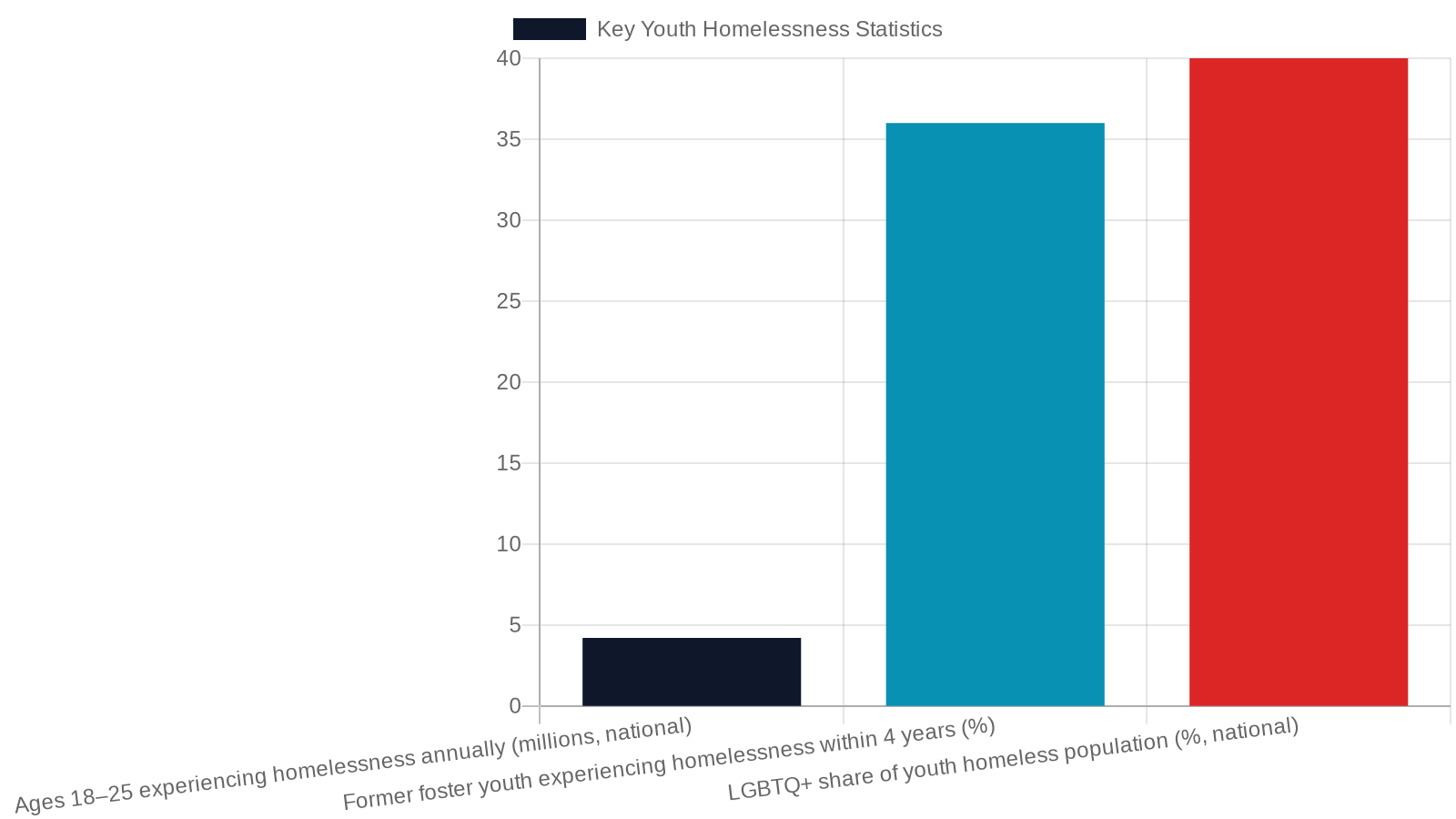
Tennessee’s annual Point-in-Time counts and youth-specific homelessness data paint a clear picture of why a statewide youth advisory board was needed. Nationally, approximately 4.2 million young adults ages 18–25 experience homelessness in a given year, according to Chapin Hall’s Voices of Youth Count research. In Tennessee, thousands of transition-age youth are counted as experiencing homelessness or housing instability each year — and those counts are widely understood to be undercounts, since many young people avoid shelters and are harder to find in a one-night census.
Young adults who have aged out of foster care face particularly acute risk: within 2 to 4 years of leaving foster care, roughly 36% of former foster youth experience homelessness, according to national research. Tennessee has approximately 800 to 1,000 young adults aging out of its foster care system each year.
Why Young Adults Need Different Solutions
Adult homelessness systems were not designed with 18-year-olds in mind. Many emergency shelters have age minimums, strict rules that feel institutional, or environments that feel unsafe for young adults — particularly LGBTQ+ youth, who are overrepresented in the youth homeless population at roughly 40% nationally. Young adults also have different needs: they need pathways to education and employment, not just a roof. They need support building credit, understanding leases, and navigating systems they’ve never had a parent guide them through.
YAAB was founded because the people who understood these distinctions most clearly were the young adults themselves — and they needed a formal structure through which to communicate that understanding to the people making decisions.
YAAB's Core Areas of Focus: What the Founders Prioritized

YAAB’s founders didn’t try to do everything at once. They identified the core areas where youth voice was most urgently needed and where young adults with lived experience had the most to contribute. Those priorities have remained central to YAAB’s work across all seven Tennessee regions.
Housing and Shelter Navigation
Housing is the foundation. YAAB’s founding made housing access and stability the primary focus — helping young adults understand their rights as tenants, navigate shelter systems, access rapid rehousing programs, and connect with transitional housing designed for youth. YAAB members are trained to understand the resources available in their CoC region and to help peers access them without stigma or gatekeeping.
Education, Employment, and Economic Mobility
A roof is not enough if a young adult can’t build a stable future. YAAB’s founders understood that housing stability and economic opportunity are inseparable. That’s why YAAB’s work extends into connecting young adults with GED and credential pathways, workforce development programs, financial literacy resources, and employment opportunities. Young adults who are economically stable are far less likely to return to housing instability — and far more likely to stay engaged in advocacy.
Mental Health and Whole-Person Support
Homelessness is traumatic, and YAAB’s founding vision included a commitment to whole-person support. Mental health, substance use, and trauma-informed care are not afterthoughts — they are central to what transition-age youth need. YAAB advocates for CoC programs to include mental health supports and for service providers to use trauma-informed, youth-centered approaches. Members also create peer support environments where young adults can talk honestly about their experiences without shame.
How YAAB Compares to Traditional Youth Advisory Models

Not all advisory boards are created equal. YAAB’s founders were aware of the limitations of typical youth advisory models and made deliberate structural choices to build something more substantive. A side-by-side look at how YAAB differs from conventional approaches helps clarify what makes it effective — and why those design choices matter for young adults in Tennessee.
Why Most Advisory Boards Fall Short for Transition-Age Youth
Many organizations create youth advisory boards as a formality — a way to say they consulted young people without giving those young people real influence. Common problems include: meetings scheduled without regard for young adults’ work or school schedules; no compensation for members’ time; no follow-through on recommendations; and a culture where adult professionals dominate the conversation. YAAB was deliberately designed to avoid these pitfalls.
YAAB's Structural Differences
YAAB is embedded in CoC governance — not bolted on as an afterthought. Members receive training, support, and in many cases stipends for their participation. The organization is explicitly peer-led, meaning young adults with lived experience set the agenda rather than simply responding to agendas set by others. And YAAB’s regional structure means that the voices shaping statewide priorities are genuinely representative of the diversity of Tennessee’s geography and communities.
These structural choices reflect the founding conviction that meaningful participation requires meaningful investment — in members’ time, capacity, and leadership development.
YAAB's Regional Chapters Across Tennessee

One of YAAB’s most important structural decisions was to organize regionally rather than centrally. A single statewide board based in Nashville would not adequately represent the experiences of young adults in rural Northeast Tennessee or West Tennessee. The regional chapter model ensures that YAAB’s founding mission — youth voice in CoC governance — is realized across the full geographic diversity of the state.
From Memphis to Northeast Tennessee
YAAB’s statewide reach is one of its defining features. Each regional chapter is tied to a specific CoC and serves the young adults in that area. The Memphis/Shelby County chapter (TN-500) serves one of Tennessee’s largest urban areas and its surrounding communities. The Nashville/Davidson County chapter (TN-501) operates in the state capital, where proximity to state government creates unique advocacy opportunities. Knoxville (TN-502), Chattanooga (TN-503), and Jackson/West Tennessee (TN-504) each bring distinct regional contexts — from Appalachian communities to rural West Tennessee.
The Upper Cumberland (TN-506) and Northeast Tennessee (TN-507) chapters address the specific challenges of more rural and mountainous regions, where services are often sparse and transportation is a major barrier for young adults trying to access housing and support.
How Regional Chapters Connect to the Statewide Network
Regional chapters don’t operate in silos. YAAB’s statewide network allows members from Memphis and members from Johnson City to share strategies, learn from each other’s advocacy wins, and present a unified voice on issues that affect all Tennessee youth. Statewide convenings, shared training resources, and cross-regional communication channels mean that the network is stronger than the sum of its parts.
If you’re a young adult in Tennessee and want to find your regional chapter, you can explore all local YAAB chapters to connect with the one serving your area.
YAAB vs. Conventional Advisory Models: What Makes the Difference
YAAB was designed from the ground up to avoid the common pitfalls of token youth advisory boards. Here's how it compares across the dimensions that matter most for transition-age youth.
The Advocacy Work YAAB Was Founded to Do
YAAB was founded to do two things simultaneously: change systems and support individuals. The advocacy dimension of YAAB’s work is where its founding mission becomes most visible — in the rooms where decisions are made, in the conversations with policymakers, and in the lived improvements in programs and policies that result from young adults having a real seat at the table.
Shaping Policy at the Local and State Level
YAAB members don’t just advise — they advocate. That means engaging with elected officials, participating in public comment processes, contributing to CoC strategic plans, and making the case for policies that prioritize transition-age youth. In a state where youth homelessness competes for attention alongside many other priorities, having organized, trained young advocates who can speak from personal experience is a powerful force for change.
YAAB’s advocacy work includes pushing for youth-specific housing programs, trauma-informed service standards, and better data collection on transition-age youth homelessness across Tennessee’s CoC regions. You can learn more about YAAB’s current advocacy priorities at the YAAB advocacy page.
Connecting Peers to Resources
Advocacy isn’t only about policy — it’s also about making sure young adults know what resources exist right now. YAAB members serve as connectors, helping peers navigate shelter systems, apply for housing programs, find employment and education opportunities, and access mental health support. This peer-navigation role is one of the most direct ways YAAB fulfills its founding mission of improving outcomes for transition-age youth in Tennessee.
If you or someone you know needs to find resources, the YAAB resources page is a good starting point for housing, employment, education, and support services across Tennessee.
What Makes YAAB Different: A Side-by-Side Look

The table below compares YAAB’s model to a conventional advisory approach across the dimensions that matter most for transition-age youth. These distinctions reflect the founding philosophy that drove YAAB’s creation — and explain why the organization is structured the way it is.
How to Get Involved with YAAB in Tennessee

YAAB’s founding mission is only fulfilled when young adults across Tennessee are actually involved. Whether you’re a young adult who wants to turn your experience into advocacy, or a service provider who wants to better support the youth you work with, there is a role for you in YAAB’s statewide network. Here’s how to take the next step.
If You're a Young Adult with Lived Experience
If you are between 17 and 25 and have experienced homelessness or housing instability — including couch-surfing, staying in a shelter, aging out of foster care, or any other form of housing insecurity — YAAB wants to hear from you. Membership is open to young adults across all seven of Tennessee’s YAAB regions, and the organization works to make participation accessible regardless of where you are in your housing journey.
Getting involved means more than attending meetings. It means having your experience taken seriously, building real advocacy and leadership skills, and connecting with a network of peers across the state who are working toward the same goals. To learn more about what membership looks like and how to get started, read about YAAB’s mission and membership — or go directly to the YAAB join page to take the first step.
If You're a Service Provider or CoC Partner
Case managers, CoC staff, nonprofit leaders, and other service providers play an important role in YAAB’s ecosystem. If you work with transition-age youth in Tennessee, YAAB’s regional chapters are a resource and a partner. Connecting the young adults you serve with YAAB membership opportunities, incorporating YAAB’s input into your program design, and advocating within your CoC for meaningful youth participation all advance the mission YAAB was founded to pursue.
Providers can also stay informed about YAAB’s work, events, and advocacy campaigns by checking the YAAB events calendar and following regional chapter activities.
Ready to Be Part of the Change?
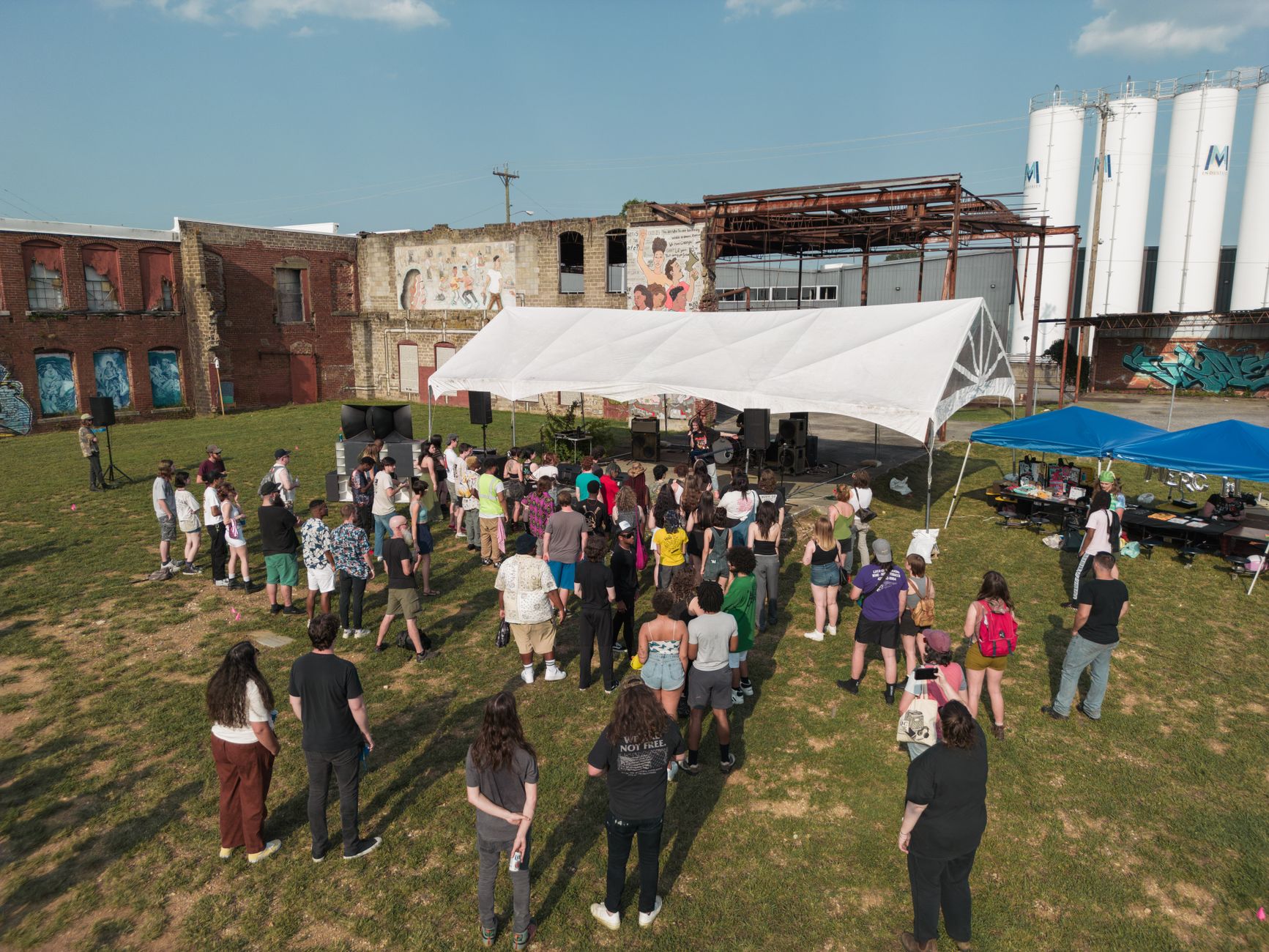
The Youth Action Board of Tennessee was founded because young adults experiencing homelessness and housing instability deserved more than programs designed without them — they deserved power, voice, and a real role in building the solutions. That founding vision is alive in every regional chapter, every CoC meeting where a YAAB member speaks, and every young adult in Tennessee who decides their experience is worth sharing. The question now is: will you be part of it?
Your Experience Is Your Qualification
YAAB was founded on the belief that the young adults who have lived through housing instability are exactly the people who should be shaping the solutions. You don’t need a degree, a title, or a polished resume to get involved. Your experience — what you’ve been through, what you’ve learned, what you know doesn’t work and what does — is the most important thing you bring to the table.
Tennessee’s CoC regions are making decisions right now about housing programs, funding priorities, and service models that will affect thousands of young adults across the state. YAAB exists so that those decisions are made with your voice in the room, not just about you from the outside.
Find Your Regional YAAB and Connect Today
YAAB chapters are active across Tennessee — from Memphis to Kingsport, from Nashville to the Upper Cumberland. Whatever region you call home, there is a local YAAB working to represent transition-age youth in your CoC. To learn more about the organization’s history, structure, and how members make a difference, visit the YAAB About page and see what’s possible when young adults lead.
If you’re ready to connect with your regional chapter, explore the full list of local YAABs to find the one serving your area of Tennessee. The work of changing systems starts with one person deciding their voice matters — and it does.
Frequently Asked Questions
Who founded the Youth Action Board of Tennessee?
YAAB was established through a collaborative effort involving Tennessee's Continuum of Care regions, homeless services stakeholders, and — critically — young adults with lived experience of homelessness themselves. It was not founded by a single individual but grew out of a recognized need to give transition-age youth a formal, structured voice in the CoC planning processes that shape housing and services across Tennessee.
What is the purpose of the Youth Action Board of Tennessee?
YAAB's purpose is to ensure that young adults ages 17 to 25 with lived experience of homelessness or housing instability have a real advisory role in the policies, programs, and funding decisions made by Tennessee's Continuum of Care regions. It connects youth voice to governance, advocacy, and peer support across all seven of Tennessee's CoC regions.
Who can join YAAB in Tennessee?
Any young adult between the ages of 17 and 25 who has experienced homelessness or housing instability — including couch-surfing, shelter stays, aging out of foster care, or other forms of housing insecurity — is eligible to join a regional YAAB chapter in Tennessee. No prior advocacy experience is required.
How many YAAB chapters are there in Tennessee?
There are seven active or developing YAAB regional chapters in Tennessee, each tied to a specific Continuum of Care region: Memphis/Shelby County (TN-500), Nashville/Davidson County (TN-501), Knoxville/Knox County (TN-502), Chattanooga/Hamilton County (TN-503), Jackson/West Tennessee (TN-504), Upper Cumberland (TN-506), and Northeast Tennessee (TN-507).
What does a YAAB member actually do?
YAAB members attend regional and statewide meetings, advise CoC boards and service providers, participate in advocacy training, help connect peers to housing and support resources, and sometimes speak publicly or meet with elected officials. Membership is structured to be accessible, with supports like stipends and flexible scheduling available in many regions.
Why does youth homelessness in Tennessee need a dedicated advocacy board?
Transition-age youth (ages 18–25) are more than twice as likely to experience homelessness as older adults, yet they have historically been underrepresented in the planning bodies that design homeless services. Adult systems were not built for young adults' specific needs around education, employment, and trauma-informed care. YAAB exists to close that gap by putting youth voices directly into Tennessee's CoC governance structures.