Quick answer: YAAB stands for Youth Action Board. In Tennessee, the Youth Action Board (YAAB) is a statewide network of young adults ages 17 to 25 who have personally experienced homelessness or housing instability. YAAB members advise local and state leaders, shape housing policy, and connect peers to resources across Tennessee's Continuum of Care regions — including Memphis, Nashville, Knoxville, Chattanooga, Jackson, Upper Cumberland, and Northeast Tennessee. It is a peer-led leadership and advocacy body, not a service agency.
1. YAAB: The Full Name and What It Actually Means

If you’ve seen the acronym YAAB in a flyer at a shelter, in a CoC meeting agenda, or in a Tennessee housing report and wondered what it stands for — you’re in the right place. This guide breaks down the full name, the mission behind it, and exactly how YAAB operates across Tennessee so you can decide whether it’s something you want to be part of.
Breaking Down the Acronym
YAAB stands for Youth Action Board. Every word in that name carries weight. Youth signals who leads it — young adults ages 17 to 25, not administrators or older professionals speaking on their behalf. Action means this is not a passive advisory committee that meets once a year and files a report nobody reads. And Board signals real governance power: YAAB members sit at decision-making tables alongside Continuum of Care (CoC) leaders, service providers, and policymakers.
In Tennessee, the acronym is sometimes written as YAAB TN to distinguish the statewide network from similar boards in other states. You may also see it referenced as a TAY board — TAY standing for Transition-Age Youth, the federal term for people ages 16 to 24 who are navigating the shift from adolescence to adulthood, often without family support.
Why the Name Matters to Young People
Names shape expectations. When a program is called a “youth shelter” or a “youth services case,” young people are positioned as recipients. When it’s called a Youth Action Board, young people are positioned as leaders. That shift is intentional. YAAB TN was built on the principle that the people most affected by a problem — in this case, youth homelessness and housing instability — are also the most qualified to design solutions to it.
Research from the National Alliance to End Homelessness consistently shows that programs co-designed with people who have lived experience of homelessness are more effective and more trusted by the communities they serve. YAAB operationalizes that principle across all seven of Tennessee’s Continuum of Care regions.
2. The Mission: More Than Just a Name

Understanding what YAAB stands for alphabetically is just the starting point. The real meaning of the organization lives in its mission — and that mission has two interlocking parts: changing systems and supporting peers. Both are essential, and neither works without the other.
Shaping Policy from the Inside
YAAB’s core mission is to ensure that young adults with lived experience of homelessness have a real, ongoing voice in the policies and programs that affect them. That means YAAB members don’t just share their stories at public hearings — they review housing program data, give formal input on Continuum of Care funding priorities, and co-create resources like toolkits, guides, and training materials used by service providers across Tennessee.
At the state level, YAAB TN engages with the Tennessee Interagency Council on Homelessness (TICH) and other bodies that set the direction for how federal and state dollars flow to youth-serving programs. This is sometimes called systems advocacy — changing the rules of the game, not just playing it better.
Peer Connection and Resource Navigation
Beyond policy, YAAB serves a peer-to-peer function. Members are trained to connect other young adults to housing, employment, education, and mental health resources in their region. Because YAAB members have navigated these systems themselves, they can explain options in plain language, without the clinical distance that can make formal case management feel intimidating.
This peer navigation role is especially important for young adults who are skeptical of formal service systems — a completely understandable response for anyone who has aged out of foster care or experienced institutional settings. A peer who says “I used that shelter and here’s what to expect” carries credibility that a brochure never will.
3. Who YAAB Is For: The 17-to-25 Window

One of the most important things to understand about YAAB is who it’s designed for. The answer is more inclusive than most people expect — and knowing you qualify might be the first step toward getting involved.
Transition-Age Youth and Why This Age Range Is Critical
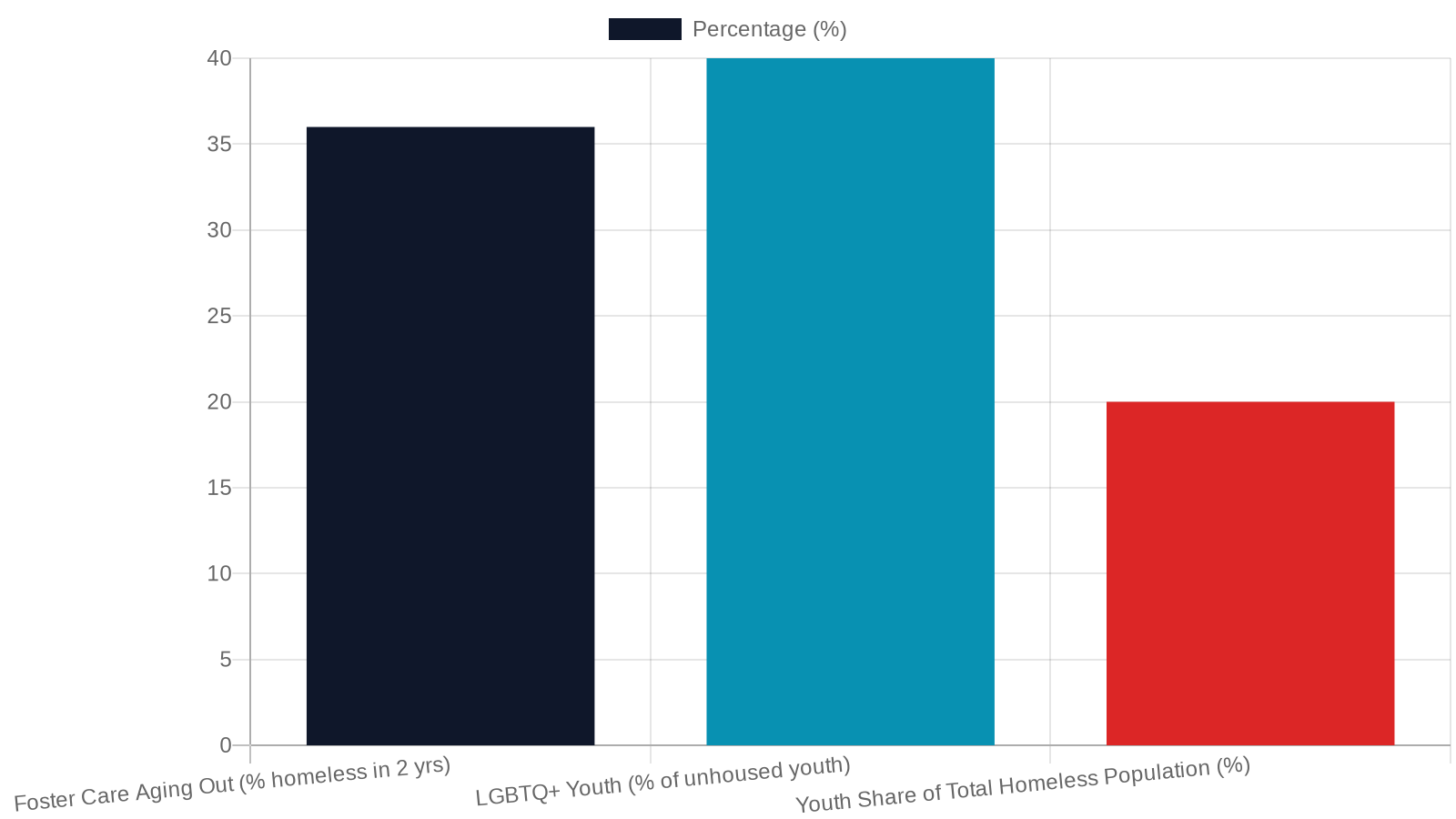
YAAB is specifically designed for transition-age youth (TAY) — young adults between the ages of 17 and 25. This is not an arbitrary cutoff. Research from the U.S. Department of Housing and Urban Development (HUD) shows that young adults in this age range represent roughly 20% of the total unhoused population on any given night, despite being one of the most underserved groups in the shelter system.
The 17-to-25 window is also when young people are most likely to age out of foster care (which happens at 18 in Tennessee, with some extended support available to age 21), exit the juvenile justice system, or lose family housing due to conflict or economic hardship. Without targeted support during this window, the risk of long-term homelessness increases significantly.
You Don't Have to Be Currently Homeless to Join
A common misconception is that YAAB is only for people who are currently experiencing homelessness. That’s not the case. YAAB welcomes young adults who have experienced housing instability at any point — whether that was couch-surfing, staying in a shelter, living in a car, or facing eviction. Lived experience, not current housing status, is the qualification.
This matters because many young people stabilize their housing situation and then want to give back or stay involved in advocacy. YAAB is designed to be a long-term community, not a crisis-only resource. If you’re between 17 and 25 and have experienced housing instability in Tennessee, you belong here.
4. Tennessee's 7 Continuum of Care Regions and Local YAABs

YAAB isn’t a single office in Nashville — it’s a statewide network with local roots. Understanding how Tennessee’s Continuum of Care system is organized helps explain why YAAB is structured the way it is and why your region matters.
What Is a Continuum of Care?
A Continuum of Care (CoC) is a regional planning body funded by HUD that coordinates housing and services for people experiencing homelessness. Tennessee has seven CoC regions, each covering a different geographic area of the state. Every CoC is responsible for its own Point-in-Time count, funding applications, and local program oversight. YAAB has a local chapter embedded in each of these regions so that youth voices are present in every corner of Tennessee — not just in the largest cities.
The Seven Local YAAB Chapters
Here’s a breakdown of Tennessee’s seven CoC regions and the corresponding local YAAB chapters:
- TN-500 — Memphis/Shelby County: The largest CoC in Tennessee by population served.
- TN-501 — Nashville/Davidson County: Covers the state capital and surrounding metro area.
- TN-502 — Knoxville/Knox County: East Tennessee’s primary urban CoC.
- TN-503 — Chattanooga/Hamilton County: Serves the greater Chattanooga area.
- TN-504 — Jackson/West Tennessee: A rural-leaning CoC covering a broad multi-county area.
- TN-506 — Upper Cumberland: Covers the Highland Rim and Cumberland Plateau region.
- TN-507 — Northeast Tennessee: Serves the Tri-Cities area and surrounding counties.
Each local YAAB operates with some autonomy to address regional priorities while staying connected to the statewide YAAB TN network. You can explore your local YAAB chapter to find out who’s active in your region and how to connect.
5. What YAAB Members Actually Do Day to Day

Joining YAAB means more than putting your name on a list. Members take on real responsibilities and gain real skills. Here’s what that looks like in practice across a typical year of involvement.
Advocacy and Policy Input
YAAB members participate in local CoC meetings, provide public comment on housing policy proposals, and contribute to the development of reports and recommendations that go to state and federal decision-makers. This isn’t symbolic participation — members have influenced real outcomes, including how Tennessee CoCs prioritize youth in their housing program funding applications.
Members also participate in advocacy days at the Tennessee State Capitol in Nashville, where they meet directly with legislators and their staff to share their experiences and push for policy changes that protect transition-age youth. If you’ve ever wanted to talk directly to a lawmaker about what you’ve been through — YAAB gives you a structured, supported way to do that. Learn more about YAAB’s advocacy work across Tennessee.
Training, Leadership Development, and Projects
Being a YAAB member isn’t just about showing up to meetings. Members receive training in public speaking, data literacy, policy analysis, and community organizing. These are transferable professional skills that look strong on a resume and are genuinely useful in any career path.
YAAB also runs specific projects — things like peer resource guides, community needs assessments, and media campaigns — that members help design and execute. These projects give members concrete, portfolio-worthy work experience while directly benefiting their communities. You can browse current and past YAAB projects to see the kind of work members have produced.
Peer Support and Community Building
Perhaps the most immediate benefit for many members is simply being in a room — virtual or physical — with other young adults who get it. YAAB creates community among people who have often been isolated by their housing experiences. Members support each other, share resources, celebrate wins, and hold space for the hard stuff without judgment.
This peer community aspect is not a side effect of YAAB — it’s a core feature. Isolation is one of the most damaging consequences of housing instability, and connection is one of the most powerful protective factors against it.
YAAB vs. Other Youth-Serving Programs: How They Compare
Not all youth programs work the same way. This table shows how YAAB stacks up against other common types of youth-serving organizations across key dimensions.
6. How YAAB Compares to Other Youth Programs in Tennessee

If you’re trying to figure out how YAAB fits into the broader landscape of youth programs in Tennessee, it helps to put it side by side with other types of organizations. The differences are significant — and they explain why YAAB fills a gap that other programs don’t.
YAAB vs. Traditional Youth Services
Most youth-serving programs in Tennessee — shelters, drop-in centers, transitional housing programs — are designed to provide services to young people. YAAB is fundamentally different: it is designed to be led by young people. Members are not clients; they are contributors. This distinction changes everything about the culture, the power dynamics, and the outcomes.
That said, YAAB is not a replacement for direct services. It works alongside shelters, housing programs, and case managers — not instead of them. The goal is to make those services better by ensuring the people who use them have a say in how they’re designed and delivered.
YAAB vs. Youth Advisory Councils
Many cities and counties have youth advisory councils attached to schools or local governments. These are valuable, but they typically focus on school-age youth (under 18) and rarely have direct influence over housing or homelessness policy. YAAB is specifically focused on transition-age youth (17-25), specifically on housing instability, and specifically embedded in the CoC system — giving it a level of policy access that most youth advisory councils don’t have.
YAAB members also have lived experience of the issues they’re advising on, which is not a requirement for most youth advisory councils. That lived experience is treated as expertise, not a liability.
7. The Issues YAAB Focuses On: A Snapshot of Youth Homelessness in Tennessee

To understand why YAAB exists, it helps to understand the scale and shape of youth homelessness in Tennessee. The data is sobering — but it also clarifies exactly what YAAB members are working to change.
By the Numbers: Youth Homelessness in Tennessee
According to HUD’s most recent Annual Homeless Assessment Report, Tennessee counted approximately 1,200 to 1,500 unhoused young adults (ages 18-24) on a single night in recent Point-in-Time counts — and experts widely acknowledge that youth homelessness is significantly undercounted because young people are more likely to be couch-surfing or staying in informal arrangements that don’t show up in shelter data.
Young adults who age out of foster care are particularly vulnerable: studies show that up to 36% of youth who age out of foster care experience homelessness within the first two years of leaving care. Tennessee has approximately 800 to 1,000 young people age out of its foster care system each year, making this a significant and ongoing pipeline into housing instability.
Key Issue Areas YAAB Addresses
YAAB members work on a range of interconnected issues, not just shelter access. The core issue areas include:
- Emergency and transitional housing: Advocating for more youth-specific shelter beds and transitional housing units across all seven CoC regions.
- Aging out of foster care: Pushing for stronger extended foster care supports and better coordination between child welfare and homeless services systems.
- Employment and income: Supporting access to job training, workforce programs, and fair hiring practices for young adults with records or gaps in work history.
- Education: Connecting peers to GED pathways, community college enrollment, and financial aid navigation.
- Mental health and substance use: Advocating for trauma-informed, youth-friendly behavioral health services that don’t require stable housing as a prerequisite.
- LGBTQ+ youth: Recognizing that LGBTQ+ young adults are disproportionately represented in the unhoused youth population — estimates suggest up to 40% of unhoused youth identify as LGBTQ+ — and advocating for affirming, safe services.
8. How to Get Involved with YAAB in Tennessee

Knowing what YAAB stands for is one thing. Taking the step to get involved is another — and it’s the step that actually changes things, for you and for your community. Here’s how to make that move across Tennessee.
Finding Your Local Chapter
The first step is finding the YAAB chapter in your Continuum of Care region. Each of Tennessee’s seven local YAABs has its own contact points, meeting schedules, and onboarding processes. Some chapters meet in person, some meet virtually, and many do both. If you’re in Memphis, Nashville, Knoxville, Chattanooga, Jackson, the Upper Cumberland, or Northeast Tennessee, there’s a local chapter for you.
You can find contact information and details for every regional chapter through the YAAB TN About page, which also explains the statewide structure and how local boards connect to the broader network. Getting connected to your local chapter is the most direct path to involvement.
What to Expect When You Join
Joining YAAB doesn’t require a perfect resume, a stable address, or any prior advocacy experience. What it does require is a willingness to show up, share your perspective, and engage with the work. Most chapters have an onboarding process that includes an orientation session, an introduction to the CoC system, and a chance to meet current members before committing to a regular role.
Members are typically asked to attend regular meetings (monthly or bi-monthly depending on the chapter), participate in at least some advocacy or project activities, and follow the group’s community agreements around respect and confidentiality. In return, members gain leadership training, professional development, a peer network, and a real platform for their voices.
For Case Managers and Service Providers
If you’re a case manager, CoC partner, or service provider reading this — YAAB is a resource for you too. Referring young adults you work with to their local YAAB chapter can open doors to leadership, community, and professional development that direct services alone can’t provide. YAAB also welcomes collaboration with providers on training, resource development, and community needs assessments. Reach out through the YAAB contact page to explore partnership opportunities.
Frequently Asked Questions
What does YAAB stand for in Tennessee?
YAAB stands for Youth Action Board. In Tennessee, YAAB TN is a statewide network of young adults ages 17 to 25 with lived experience of homelessness who advise policymakers and shape youth housing programs across all seven of Tennessee's Continuum of Care regions.
Who can join YAAB in Tennessee?
Any young adult between the ages of 17 and 25 who has experienced homelessness or housing instability in Tennessee can join YAAB. You do not need to be currently homeless — past lived experience of housing instability qualifies you. No prior advocacy experience is required.
How many YAAB chapters are there in Tennessee?
There are seven local YAAB chapters in Tennessee, one for each Continuum of Care region: Memphis/Shelby County (TN-500), Nashville/Davidson County (TN-501), Knoxville/Knox County (TN-502), Chattanooga/Hamilton County (TN-503), Jackson/West Tennessee (TN-504), Upper Cumberland (TN-506), and Northeast Tennessee (TN-507).
Is YAAB a shelter or a housing program?
No. YAAB is not a shelter or housing program — it is a peer-led advocacy and leadership organization. YAAB members work to improve housing programs and policies, but YAAB itself does not provide emergency shelter or transitional housing. It works alongside those programs to make them better.
What is a Continuum of Care and how does YAAB fit into it?
A Continuum of Care (CoC) is a HUD-funded regional planning body that coordinates housing and homeless services. Tennessee has seven CoCs. YAAB has a chapter embedded in each CoC so that young adults with lived experience have a formal voice in local housing policy and funding decisions.
Does YAAB only serve young people who are currently homeless?
No. YAAB serves young adults ages 17 to 25 who have experienced homelessness or housing instability at any point — not just those who are currently unhoused. Many YAAB members are now stably housed and participate in advocacy to help others navigate the same systems they once faced.