Quick answer: If you're a young adult between 17 and 25 in Tennessee and you're dealing with homelessness or housing instability, you are not alone — and there is real help available right now. Across the state's eight Continuum of Care regions, services exist to connect you to emergency shelter, transitional and permanent housing, mental health care, employment training, GED pathways, legal aid, and peer advocacy. This guide breaks down the 10 most important types of support, who qualifies, and exactly how to access them in Memphis, Nashville, Knoxville, Chattanooga, Jackson, and beyond.
Understanding Youth Homelessness in Tennessee

Before diving into the specific services available, it helps to understand the landscape — both who qualifies for support and how Tennessee’s system is organized. The state is divided into eight Continuum of Care (CoC) regions, each coordinating its own network of shelters, housing programs, and support services. Knowing your region is often the first step to finding the right door.
Who Counts as 'Homeless' Under Federal and State Definitions?
You don’t have to be sleeping outside to be homeless. Under the McKinney-Vento Homeless Assistance Act and HUD’s definition, you are considered homeless if you are:
- Sleeping in a shelter, motel, car, park, or place not meant for human habitation
- Staying temporarily with friends or family because you have nowhere else to go (often called couch surfing)
- Fleeing domestic violence, sexual assault, or a dangerous living situation
- Aging out of foster care without stable housing
Tennessee’s Continuum of Care (CoC) system uses these definitions to determine who qualifies for federally funded programs — and transition-age youth (TAY) ages 17 to 25 are a specifically recognized population with their own dedicated funding streams and services.
The Scale of Youth Homelessness in Tennessee
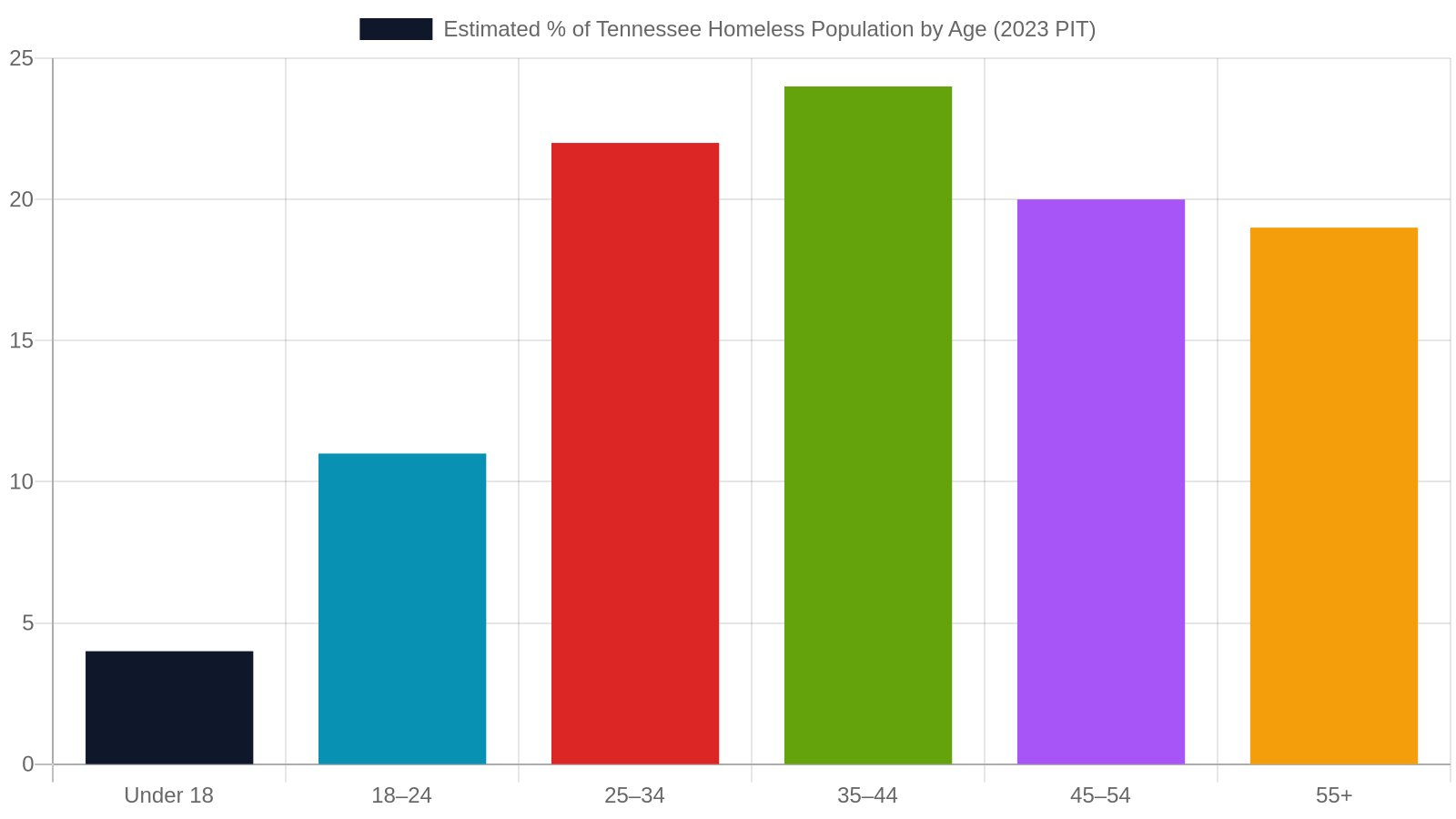
According to the 2023 Point-in-Time (PIT) Count, Tennessee recorded over 8,500 people experiencing homelessness on a single night — and young adults ages 18 to 24 made up approximately 10–12% of that count, with many more undetected because they were couch surfing or in unstable situations not captured by street counts. Nationally, an estimated 4.2 million young people experience homelessness over the course of a year (Chapin Hall, 2017). LGBTQ+ youth are 120% more likely to experience homelessness than their peers, and youth aging out of foster care face a 1-in-5 chance of homelessness within two years of aging out.
1. Emergency Shelter — Your First Safe Night
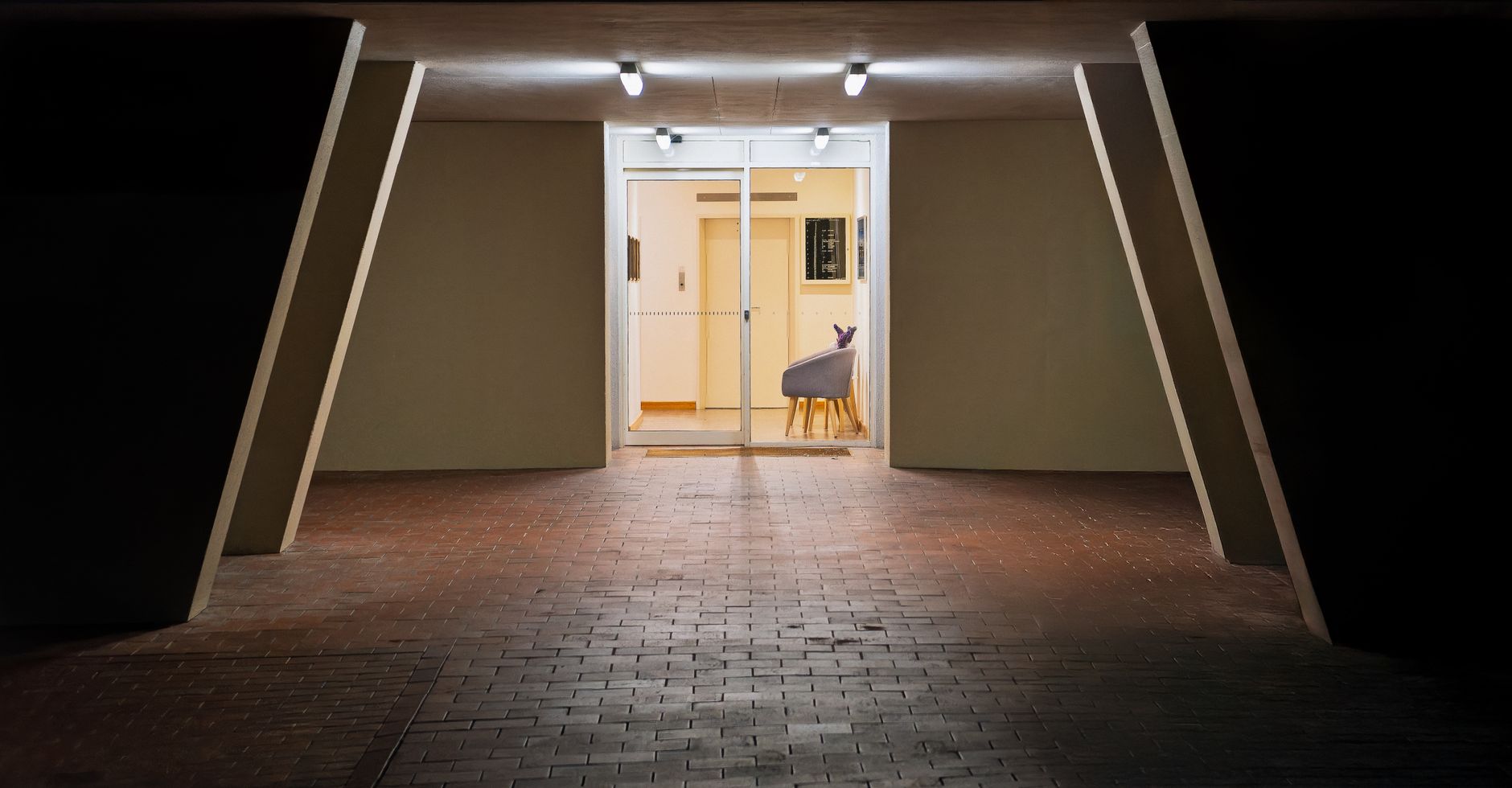
When you need a safe place to sleep tonight, emergency shelter is the immediate answer. Tennessee has a network of emergency shelters across all eight CoC regions, and several are specifically designed for young adults ages 17 to 25. Emergency shelter is not a permanent solution, but it is a critical first step that keeps you safe while you connect to longer-term support.
Youth-Specific vs. Adult Shelters
Not all shelters are the same. Youth-specific shelters are designed for people ages 17 to 24 and offer a safer, more supportive environment than general adult shelters, which can feel overwhelming or unsafe for younger people. Tennessee has youth-focused emergency shelters in several regions:
- Memphis/Shelby County: Door of Hope, Memphis Family Shelter (youth-friendly intake)
- Nashville/Davidson: Oasis Center Emergency Shelter (ages 14–24), Campus for Human Development
- Knoxville/Knox: Volunteer Ministry Center, KARM (Knox Area Rescue Ministries)
- Chattanooga/Hamilton: Chambliss Center for Children (transition-age services), Family Promise
If you are 17 and still a minor, some shelters require parental consent or have specific intake protocols — call ahead or ask your CoC’s coordinated entry point to find the best fit.
How to Access Emergency Shelter Tonight
The fastest way to find an emergency shelter bed in Tennessee is through 211 Tennessee — dial 2-1-1 from any phone, 24 hours a day, 7 days a week. The operator will connect you to the nearest available shelter. You can also text your zip code to 898-211. In most CoC regions, there is also a Coordinated Entry System (CES) — a single front door that screens you for all available housing programs. Ask any shelter, service provider, or outreach worker to connect you to coordinated entry in your area.
2. Transitional Housing — A Bridge to Stability

Emergency shelter gets you safe for tonight. Transitional housing gives you the runway to actually get stable. These programs sit between emergency shelter and permanent housing, offering a structured environment with support services built in. For young adults in Tennessee, transitional housing is often the most powerful step on the path to independence.
What Transitional Housing Actually Looks Like
Transitional housing programs typically provide a room or apartment for 6 to 24 months, combined with case management, life skills training, and help finding permanent housing. For young adults, this is often the most impactful intervention because it gives you time to get stable without the pressure of immediate rent. Programs in Tennessee include:
- Oasis Center’s Transitional Living Program (Nashville) — serves youth 18–24, up to 18 months
- Youth Villages’ Transitional Living Services — statewide, ages 17–22 aging out of foster care
- Room in the Inn (Nashville) — transitional housing with wraparound support
- Knoxville’s Volunteer Ministry Center — transitional beds with job readiness programming
What You'll Be Asked to Do in a Transitional Program
Transitional housing is not free housing with no expectations — and that’s actually a good thing. Programs typically ask you to:
- Meet regularly with a case manager (usually weekly)
- Work toward a goal like employment, school enrollment, or saving money
- Pay a small program fee (often 30% of income or $0 if you have no income)
- Follow house rules around guests, curfews, and substance use
The structure is there to help you build the habits and resources you need to maintain housing on your own. Most programs will work with you if you hit a bump — the goal is your success, not your removal.
3. Rapid Rehousing — Getting You Into Your Own Place Fast

For many young adults in Tennessee, the biggest barrier to housing isn’t willingness — it’s the upfront costs and the lack of rental history. Rapid Rehousing removes those barriers and gets you into your own place fast, with support to help you stay there. It’s one of the most effective interventions in the homelessness system, and it’s designed specifically to work for people your age.
How Rapid Rehousing Works for Young Adults
Rapid Rehousing (RRH) is a HUD-funded program that helps you move directly from homelessness into your own apartment or rental unit as quickly as possible. It covers:
- Security deposit and first/last month’s rent — so you can get in the door even with no savings
- Short-term rental assistance — typically 3 to 12 months, sometimes longer
- Case management — help with budgeting, landlord relationships, and connecting to other services
The idea is that housing first — getting you stable — makes everything else (school, work, mental health) easier to address. RRH programs for youth exist in every Tennessee CoC region and are accessed through coordinated entry.
Permanent Supportive Housing for Youth with Disabilities
If you have a disabling condition — including serious mental illness, substance use disorder, or a chronic physical health condition — you may qualify for Permanent Supportive Housing (PSH), which pairs a long-term subsidized apartment with ongoing case management. PSH has no time limit. In Tennessee, PSH slots for young adults are limited and competitive, but your coordinated entry assessment will flag you for this if you qualify. Ask your case manager specifically about youth-dedicated PSH in your CoC region.
4. Employment and Job Training — Building Your Own Income

Housing and income are deeply connected — having a job makes it easier to keep housing, and having housing makes it easier to keep a job. Tennessee’s workforce system has programs built specifically for young adults who are experiencing or have experienced homelessness, and many of them pay you while you train. Here’s what’s available and how to access it.
Tennessee Workforce Programs for Young Adults
Stable income is the foundation of stable housing. Tennessee has several workforce programs specifically designed for young adults, including those experiencing homelessness:
- Tennessee American Job Centers (AJCs) — free job search assistance, resume help, and skills training at locations statewide. Find your nearest AJC at tn.gov/workforce.
- WIOA Youth Program (Workforce Innovation and Opportunity Act) — federally funded job training for low-income youth ages 14–24. Covers occupational skills training, paid work experience, and mentoring. Eligibility includes experiencing homelessness.
- YouthBuild Tennessee — combines job skills training (construction, healthcare, IT) with GED preparation and leadership development for youth 16–24.
- Oasis Center WorkReady (Nashville) — employment readiness and job placement specifically for homeless and at-risk youth.
Getting a Job Without a Permanent Address
Not having a stable address can make job applications harder — but it’s not impossible to navigate. Here’s what to know:
- You can use a shelter address, P.O. box, or a trusted friend’s address on job applications — employers cannot legally require a permanent home address.
- Many shelters and service providers offer free printing, computers, and phone charging so you can apply online and receive calls.
- Ask your case manager or shelter staff about work-ready clothing closets — free professional attire for interviews — available in most major Tennessee cities.
- If you lack a state ID, see Section 9 of this guide — you’ll need one for most jobs, and getting it is free in Tennessee.
5. Education and GED Pathways — Credentials That Open Doors

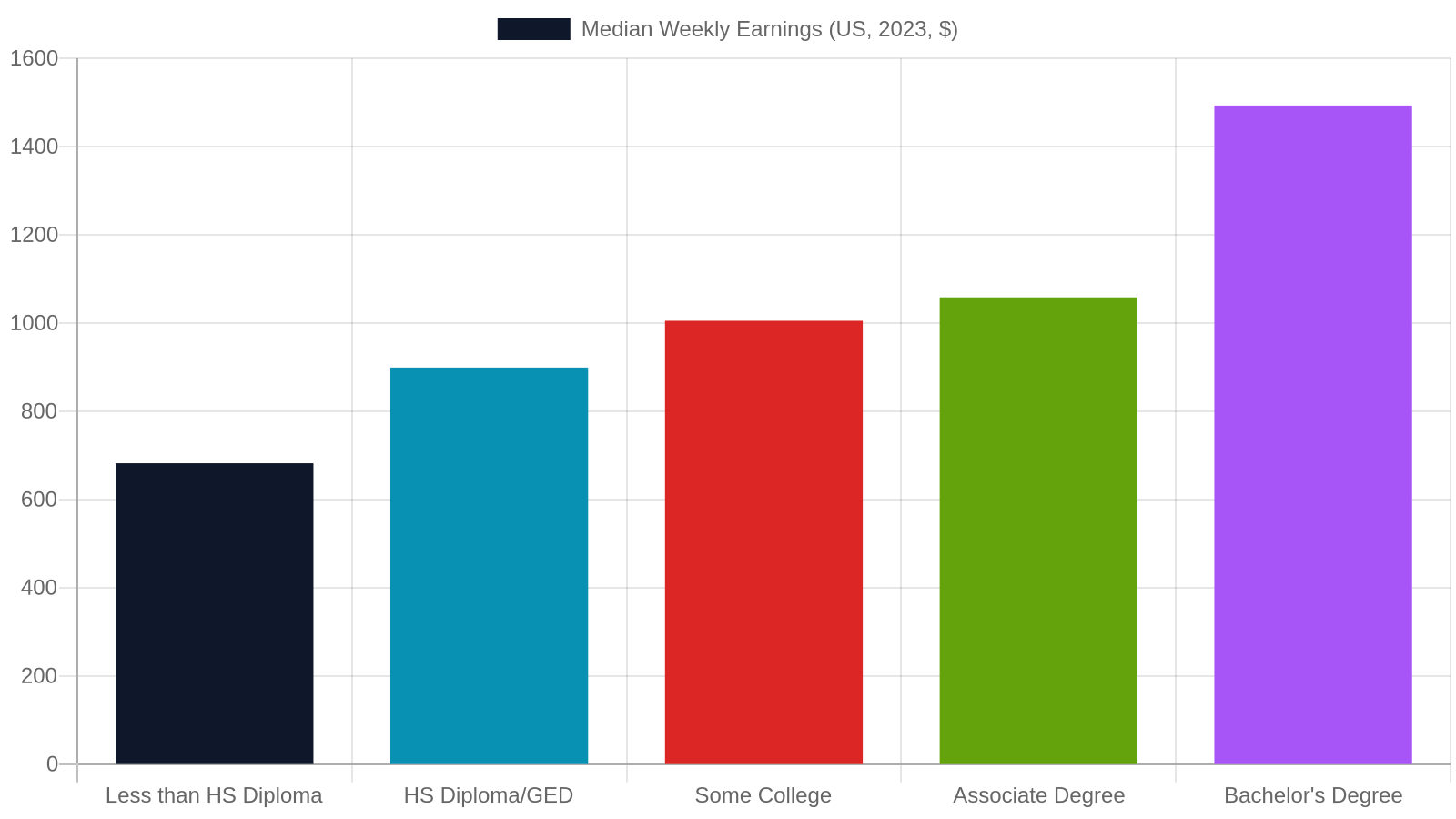
A high school diploma or GED is one of the most powerful tools you can have — it unlocks better jobs, college access, and higher lifetime earnings. If homelessness interrupted your education, Tennessee has real pathways to get you back on track, and many of them are completely free. You don’t have to choose between surviving and learning.
Free GED and Adult Education Programs in Tennessee
Tennessee offers free adult education and GED preparation through the Tennessee Department of Labor and Workforce Development’s Adult Education program. Classes are available at community colleges, libraries, and community centers across all 95 counties. Key facts:
- The GED test itself is $36 per subject in Tennessee (4 subjects = $144 total), but many programs offer fee waivers for low-income students.
- Tennessee Reconnect is a free community college program for adults without a degree — if you have your GED or diploma, you may qualify for free tuition at a Tennessee College of Applied Technology (TCAT) or community college.
- Many shelters and transitional housing programs have on-site tutoring or GED prep partnerships — ask your case manager.
Staying in or Returning to High School
If you are 17 or 18 and want to finish high school, you have rights under McKinney-Vento: you can enroll in school immediately even without records, proof of address, or immunization documents. Schools must assign you a homeless liaison who can help you get records transferred and connect you to free meals, transportation, and school supplies. If you’ve been out of school for a while, ask about alternative diploma programs — many Tennessee school districts offer flexible scheduling or credit recovery options designed for students in unstable situations.
6. Mental Health and Substance Use Support — Taking Care of Your Whole Self

Housing instability takes a real toll on mental health — and mental health challenges can make it harder to maintain housing. These two things are deeply connected, which is why the best programs in Tennessee address both at the same time. You deserve support for your whole self, not just a roof over your head.
Free and Low-Cost Mental Health Services for Young Adults
Experiencing homelessness is traumatic — and it often comes on top of other trauma. Getting mental health support is not a sign of weakness; it’s a smart move that makes everything else more manageable. Tennessee options include:
- Tennessee’s Community Mental Health Centers (CMHCs) — every county has one. Services are offered on a sliding-fee scale, meaning you pay based on what you can afford. Many young adults pay $0. Find yours at tn.gov/behavioral-health.
- Crisis Text Line — text HOME to 741741, free, 24/7
- Tennessee Statewide Crisis Line — call or text 988, available 24/7 in English and Spanish
- Oasis Center (Nashville) and Helen Ross McNabb Center (Knoxville) offer youth-specific mental health services integrated with housing support.
Substance Use Recovery Support
If you’re dealing with substance use, Tennessee has recovery resources that meet you where you are — including harm reduction programs that don’t require you to be in active recovery to access services. Key resources:
- Tennessee REDLINE — free, confidential substance use helpline: 1-800-889-9789, 24/7
- Medication-Assisted Treatment (MAT) is available at many CMHCs and Federally Qualified Health Centers (FQHCs) — often at no cost with TennCare
- Recovery housing (sober living environments) is available in most major Tennessee cities and can be a stable, supportive option if you’re in recovery
You do not have to be sober to access most housing programs in Tennessee — housing-first principles mean your housing is not contingent on sobriety.
7. Healthcare and TennCare — Staying Physically Healthy

You can’t focus on housing, work, or school if you’re sick and have no way to get care. Healthcare is a right, not a privilege — and in Tennessee, there are real options for young adults who are uninsured or underinsured. From TennCare enrollment to free clinics to street medicine teams, here’s how to get the care you need.
How to Get Health Insurance as a Homeless Young Adult in Tennessee
Tennessee’s Medicaid program, TennCare, covers many young adults experiencing homelessness. Eligibility for young adults includes:
- Foster care alumni: If you were in Tennessee foster care, you are automatically eligible for TennCare until age 26 — even if you’ve moved out of state and returned.
- Income-based eligibility: If your income is very low or zero, you may qualify for TennCare regardless of foster care history.
- Apply online at tn.gov/tenncare or at any DHS office. Many shelters have enrollment assisters on-site.
If you don’t qualify for TennCare, Federally Qualified Health Centers (FQHCs) offer primary care on a sliding-fee scale — some visits cost as little as $20 or less.
Free Clinics and Street Medicine in Tennessee
Several Tennessee cities have street medicine teams and free clinics that come to you or serve walk-in patients at no cost:
- Nashville: Matthew Walker Comprehensive Health Center, Siloam Health (free clinic)
- Memphis: Church Health (sliding scale), Mid-South Volunteers in Medicine
- Knoxville: Knoxville Community Health Clinic, Cherokee Health Systems
- Chattanooga: Cempa Community Care (FQHC), Erlanger Street Medicine
You do not need insurance, an ID, or a permanent address to be seen at most free clinics. Reproductive health, dental, and vision services are often available too.
Tennessee Youth Services at a Glance — What Each Program Offers
Not every program is the right fit for every situation. Use this table to quickly compare the main types of support available to young adults ages 17–25 across Tennessee.
8. Legal Aid and Knowing Your Rights

Knowing your rights is one of the most empowering things you can do. Whether it’s your right to a free state ID, your right to vote, or your right to legal representation, Tennessee law and federal law both offer real protections for young adults experiencing homelessness. Here’s what you need to know — and who can help if your rights are violated.
Your Rights as a Homeless Young Adult in Tennessee
Knowing your rights is power. Here are some of the most important legal protections for homeless young adults in Tennessee:
- Right to vote: You can register to vote using a shelter address or the address where you sleep. Homelessness does not disqualify you from voting.
- Right to education: Under McKinney-Vento, if you are 17–18 and in high school, you have the right to immediate school enrollment and transportation.
- Right to a free state ID: Tennessee offers a free ID card to people experiencing homelessness through the Tennessee Homeless ID Project — a critical document for housing, employment, and benefits.
- Protection from illegal eviction: Even in a shelter or transitional housing, you have rights. You cannot be removed without proper notice and process.
Free Legal Help for Young Adults in Tennessee
If you need legal help — with eviction, benefits denials, criminal records, or family law — these organizations provide free services to low-income young adults:
- Legal Aid Society of Middle Tennessee and the Cumberlands — covers Nashville and surrounding regions
- Memphis Area Legal Services — free civil legal help in West Tennessee
- Legal Aid of East Tennessee — serves Knoxville, Chattanooga, and surrounding counties
- Tennessee Justice Center — statewide, specializes in TennCare and benefits appeals
Many legal aid offices have youth-specific staff or can connect you with a law school clinic. You don’t need money to get legal help — that’s what these organizations are for.
9. Financial Literacy and Benefits Navigation — Making Your Money Work

Getting financially stable is a process, not an event — and it starts with understanding what you’re entitled to and how to manage what you have. Tennessee’s benefits system, combined with free financial coaching available through many service providers, can help you build a foundation that lasts. Here’s where to start.
Benefits You May Qualify For Right Now
Many young adults experiencing homelessness are eligible for government benefits they don’t know about. Here’s a quick rundown:
- SNAP (food stamps): If you are 18–49, able-bodied, and not in school full-time, you may qualify. Apply at tn.gov/humanservices.
- SSI/SSDI: If you have a disability, you may qualify for Supplemental Security Income — which can also unlock housing vouchers.
- Pell Grant: If you’re enrolled in college or a TCAT, you may qualify for up to $7,395 per year (2024–25) in free federal grant money — no repayment required.
- Tennessee Promise / Tennessee Reconnect: Free community college tuition for eligible students.
- Earned Income Tax Credit (EITC): If you worked at all last year, you may be owed money back at tax time. Free tax prep is available through VITA sites statewide.
Building Credit and Opening a Bank Account Without a Permanent Address
Building financial stability starts with a bank account. Here’s how to do it without a permanent address:
- Use a shelter address or P.O. box — most banks and credit unions accept these.
- Look for Bank On-certified accounts — low-fee or no-fee accounts designed for people without banking history. Available at many Tennessee credit unions and banks.
- Secured credit cards (you deposit $200–$500 as collateral) are a safe way to start building credit history.
- Ask your case manager about Individual Development Accounts (IDAs) — matched savings programs that can double your savings for housing, education, or a business.
10. Peer Advocacy and YAAB — Your Voice Matters

Services are important — but so is having a say in how those services work. The Youth Action Board of Tennessee gives young adults with lived experience of homelessness a real seat at the table, in every region of the state. This isn’t just about getting help; it’s about becoming part of the solution for the young people who come after you.
What the Youth Action Board of Tennessee Does
The Youth Action Board (YAAB) of Tennessee is a statewide network of young adults ages 17 to 25 with lived experience of homelessness and housing instability. YAAB members don’t just receive services — they shape them. Members advise local and state leaders, drive policy advocacy, and connect their peers to housing, education, employment, and support services across Tennessee’s eight CoC regions. There are local YAABs in every region of Tennessee — from Memphis to Northeast TN — and each one is led by young people who’ve been through what you’ve been through.
Joining YAAB means your experience becomes expertise. You get leadership training, a platform, and a community of peers who get it.
How to Get Involved With Your Local YAAB
Getting involved is straightforward. You don’t need any prior experience in advocacy or policy — just a willingness to show up and share your perspective. Here’s how:
- Visit yaabtn.org/join to express interest and connect with your regional YAAB coordinator.
- Attend a local YAAB meeting — most regions meet monthly, and meetings are peer-led and welcoming.
- Participate in advocacy days at the Tennessee State Capitol in Nashville, where YAAB members meet with legislators and share their stories.
- Contribute to YAAB projects, research, and resource development that directly improves services for young adults across the state.
Your lived experience is not a liability — it is the most valuable thing you bring to the table. YAAB exists because systems work better when the people they serve help design them.
Find the Right Resources for Your Region of Tennessee

Every region of Tennessee has a different mix of services, providers, and entry points — but every region has something. The key is knowing where to start. Whether you need a shelter bed tonight, a GED program next month, or a community of peers who understand what you’ve been through, Tennessee’s network of youth-serving organizations is here. Here’s how to find your regional front door.
Regional Resource Hubs Across Tennessee
Tennessee’s eight CoC regions each have their own coordinated network of services. Here’s a quick-reference guide to the primary entry points by region:
- Memphis/Shelby County (TN-500): MIFA, Memphis Family Shelter, Door of Hope — call 211
- Nashville/Davidson (TN-501): Oasis Center, Room in the Inn, Campus for Human Development — call 211
- Knoxville/Knox (TN-502): Volunteer Ministry Center, KARM, Helen Ross McNabb — call 211
- Chattanooga/Hamilton (TN-503): Chambliss Center, Family Promise, Cempa Community Care — call 211
- Jackson/West TN (TN-504): Salvation Army Jackson, West TN Legal Services — call 211
- Upper Cumberland (TN-506): Plateau Mental Health, local CMHCs — call 211
- Northeast TN (TN-507): HOPE Sullivan County, Mountain Home VA (for veterans) — call 211
- Balance of State (TN-509): Varies by county — call 211 for local referrals
Your Next Step Starts Here
No matter where you are in Tennessee — Memphis, Nashville, Knoxville, Chattanooga, or a smaller community — there are people and programs ready to help you right now. The YAAB Tennessee resource hub is a great place to start: explore housing, employment, education, and peer support resources at yaabtn.org/resources. You can also learn more about how youth homelessness works and what the system looks like so you can navigate it with confidence.
You don’t have to figure this out alone. Dial 211 from any phone to reach a live person who can connect you to services in your area — it’s free, confidential, and available 24/7. And if you want to do more than access services — if you want to help shape the system itself — join your local YAAB and become part of the change.
Frequently Asked Questions
Can I access homeless services in Tennessee if I'm only 17?
Yes. Many youth-specific shelters and programs in Tennessee serve young people ages 14 to 24, including 17-year-olds. Some programs may have specific intake protocols for minors, such as notifying a guardian, but homelessness services cannot simply turn you away. Call 211 to find the right program in your area.
Do I need a state ID to get into a shelter or access services in Tennessee?
Most emergency shelters will not turn you away for lacking an ID, though some programs require one for longer-term housing. Tennessee offers a free state ID to people experiencing homelessness through the Tennessee Homeless ID Project — ask your shelter or case manager to help you get one, as it unlocks employment, banking, and housing applications.
What is coordinated entry and how does it work for young adults in Tennessee?
Coordinated entry is a standardized process that Tennessee's Continuum of Care regions use to assess your needs and match you to the right housing program — shelter, transitional housing, rapid rehousing, or permanent supportive housing. You access it by calling 211 or walking into any participating shelter or service provider. It's designed to be a single front door so you don't have to navigate the system alone.
I aged out of foster care in Tennessee. What housing help is available to me specifically?
Tennessee has several programs specifically for foster care alumni. Youth Villages' Transitional Living Services serves youth aging out of care up to age 22. You are also automatically eligible for TennCare until age 26 if you were in Tennessee foster care. Ask your case manager or call 211 to be connected to foster care-specific housing and support programs in your CoC region.
How do I join the Youth Action Board (YAAB) of Tennessee?
Visit yaabtn.org/join to express interest and connect with your regional YAAB coordinator. YAAB is open to young adults ages 17 to 25 with lived experience of homelessness or housing instability. No prior advocacy experience is needed — just your perspective and willingness to show up.
What if I need help right now and don't know where to start?
Call or text 211 from any phone, 24 hours a day, 7 days a week. A live operator will connect you to the nearest shelter, food, and services in your area for free. You can also text your zip code to 898-211. For a mental health crisis, call or text 988 at any time.