Quick answer: Young adults ages 17 to 25 with firsthand experience of homelessness are the driving force behind better housing programs in Memphis and Shelby County. Through the Youth Action Board (YAAB) of Tennessee's TN-502 region, these young leaders advise policymakers, shape the local Continuum of Care, and connect peers to real resources — from emergency shelter to rapid rehousing and beyond. If you're a transition-age youth in Memphis who has experienced housing instability, your voice matters and there's a seat at the table for you.
What 'Lived Experience' Actually Means in Housing Policy

Before diving into Memphis-specific programs, it helps to understand what the phrase lived experience actually means in the context of housing advocacy — and why policymakers, funders, and Continuum of Care coordinators are increasingly required to center it in their work.
The U.S. Department of Housing and Urban Development (HUD) now formally encourages — and in some grant competitions, requires — that people with lived experience of homelessness be meaningfully involved in planning and decision-making processes. This isn’t charity; it’s evidence-based policy design.
More Than a Buzzword
Lived experience means you’ve been there — you’ve slept on a friend’s couch, stayed in a shelter, aged out of foster care without a stable place to land, or figured out how to survive without a consistent address. In housing policy, it means that the people who have navigated these systems firsthand are brought into the room where decisions get made.
For decades, housing programs were designed about young people without input from them. Research consistently shows that programs co-designed with people who have direct experience of homelessness are more effective, more trusted, and better used. A 2021 study published in the American Journal of Public Health found that peer-informed outreach programs increased shelter engagement rates by up to 34% compared to traditional outreach models.
Why It Matters Specifically for Transition-Age Youth
Transition-age youth (TAY) — people ages 17 to 25 — face a unique set of barriers that older adults rarely encounter: aging out of foster care with no family safety net, limited rental history, no credit score, and employers who won’t hire without a permanent address. Standard adult homeless services are often poorly fitted to these realities.
When young adults with lived experience sit on advisory boards, they flag these gaps immediately. They know which shelter intake processes feel humiliating, which rental assistance applications are impossible to complete without a printer, and which case managers actually follow through. That insider knowledge is irreplaceable — and it’s exactly what the Youth Action Board of Tennessee is built to harness.
Memphis and Shelby County's Housing Landscape for Young Adults

Memphis is Tennessee’s largest city by population, and Shelby County’s housing challenges reflect both the promise and the pressure of a major urban center. For young adults navigating housing instability here, the resources available — and the gaps in those resources — are shaped by decisions made at the local Continuum of Care level.
The Scale of Youth Homelessness in Shelby County
Memphis and Shelby County sit within HUD’s TN-502 Continuum of Care region. According to the 2023 Point-in-Time (PIT) Count for TN-502, hundreds of individuals experiencing homelessness on a single January night were under age 25 — and advocates widely acknowledge that PIT counts undercount youth, who are more likely to be in hidden or doubled-up situations rather than on the street or in a shelter.
Shelby County’s youth homelessness is driven by several intersecting factors: high rates of foster care aging-out (Tennessee has one of the highest rates of youth aging out without a permanent connection in the Southeast), concentrated poverty in neighborhoods like Frayser and South Memphis, limited affordable housing stock, and a gap in services specifically designed for the 17–25 age range.
Key Programs Serving Transition-Age Youth in Memphis
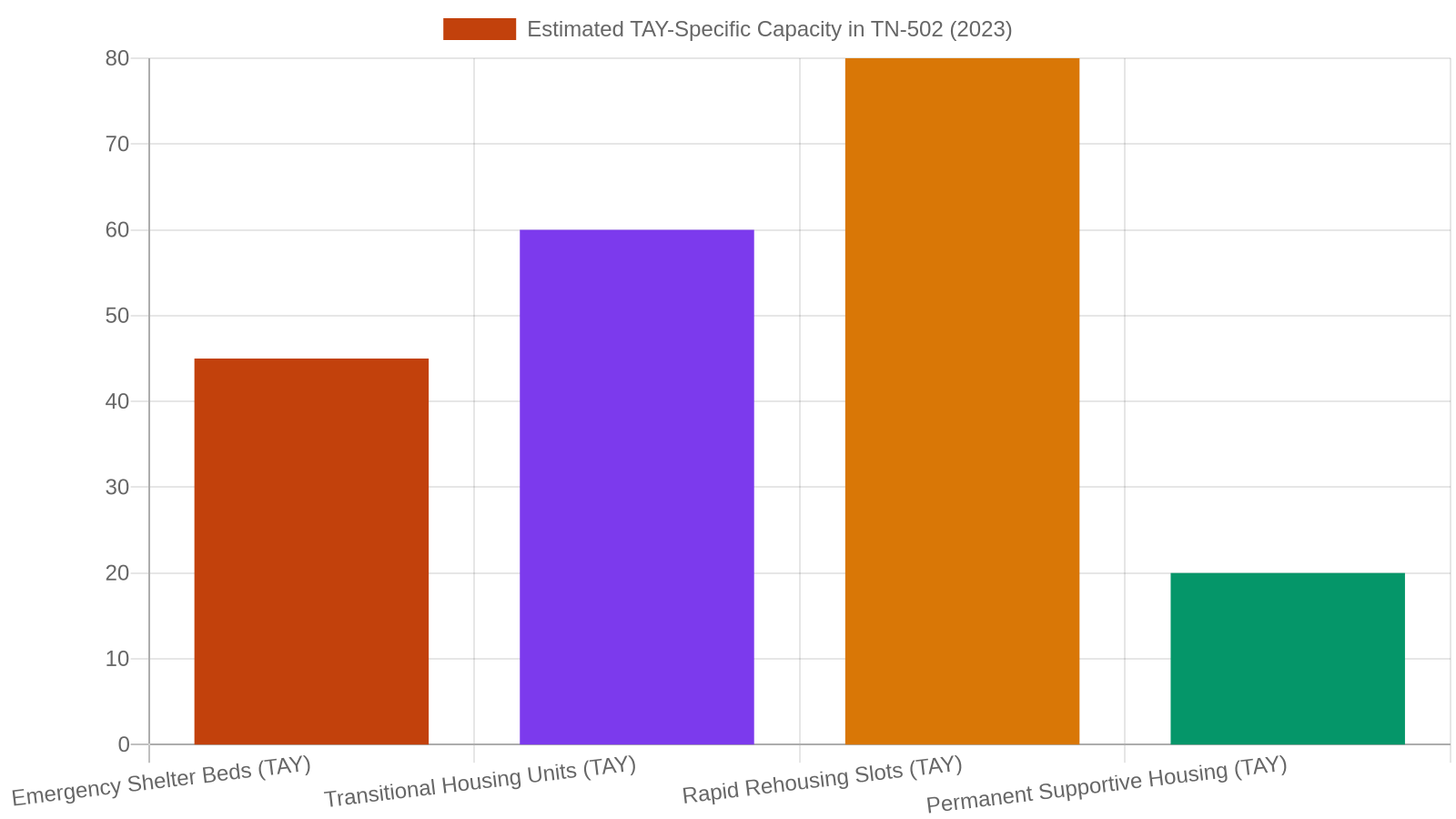
Several programs in the Memphis area specifically target transition-age youth experiencing homelessness or housing instability:
- Rapid Rehousing (RRH): Short-term rental assistance and case management to move youth quickly from homelessness into stable housing. Several TN-502 providers offer RRH specifically for TAY.
- Transitional Housing Programs: Longer-term (up to 24 months) supported housing with life-skills development, offered by organizations such as Youth Villages and Door of Hope.
- Emergency Shelter: Memphis has limited dedicated youth shelter beds; many young adults end up in adult shelters or rely on doubled-up arrangements.
- Host Home Programs: Community volunteers provide short-term housing for youth — an increasingly popular model that YAAB members have helped evaluate and improve.
- Coordinated Entry: The TN-502 Coordinated Entry system is the front door to most homeless services; understanding how to access it is critical for any young adult seeking help.
What the TN-502 Youth Action Board Does

The TN-502 Youth Action Board is the Memphis-area chapter of the statewide YAAB Tennessee network. It operates within the TN-502 Continuum of Care region and gives young adults with lived experience a formal, recognized seat at the table where local housing programs are planned, funded, and evaluated.
This isn’t a token gesture. CoC regions that include lived-experience youth advisory boards in their governance structure are better positioned for HUD funding and, more importantly, build programs that young people actually use.
Who Can Join and How Members Are Selected
The TN-502 YAAB is open to young adults ages 17 to 25 who have personal experience with homelessness or housing instability in the Memphis/Shelby County area. You don’t need a polished resume or a stable address to apply. What matters is your perspective, your willingness to show up, and your desire to make things better for yourself and your peers.
Members are recruited through partnerships with shelters, transitional housing programs, schools, and community organizations across Shelby County. The application process is designed to be accessible — no lengthy essays, no formal interviews that feel like a job you’re not qualified for. YAAB staff work with applicants to remove barriers like transportation and technology access.
Core Activities: What Members Actually Do Week to Week
YAAB membership isn’t just a title — it’s active work that has real impact. Members of the TN-502 board engage in:
- CoC Planning Meetings: Attending and providing input at Shelby County Continuum of Care meetings where funding decisions and program priorities are set.
- Policy Review: Reading and giving feedback on grant applications, program policies, and service delivery models — flagging anything that would create barriers for young people.
- Peer Outreach: Connecting other young adults to housing resources, coordinated entry, and support services.
- Advocacy Campaigns: Joining statewide YAAB efforts to influence Tennessee legislation and HUD policy on youth homelessness.
- Leadership Development: Participating in training, stipends, and skill-building that support members’ own stability and future careers.
How Lived Experience Directly Changes Memphis Housing Programs

It’s one thing to say youth voices matter. It’s another to trace the specific ways that input from young adults with lived experience has changed how Memphis housing programs operate. Here are concrete examples of how YAAB-style advocacy reshapes programs on the ground.
Real Feedback That Has Shifted Real Policies
Across YAAB regions in Tennessee, young adults with lived experience have flagged and helped change policies that were quietly pushing youth away from services. Common examples include:
- Curfew policies in transitional housing that conflicted with second-shift work schedules — youth members advocated for flexible check-in times.
- ID requirements at shelter intake that excluded youth who had lost documents — leading to partnerships with legal aid organizations to offer on-site ID recovery assistance.
- Intake forms that asked intrusive questions about family conflict or sexual orientation in ways that felt unsafe — members pushed for trauma-informed redesigns.
Each of these changes came directly from young people saying, “This is what happened to me, and here’s how to fix it.”
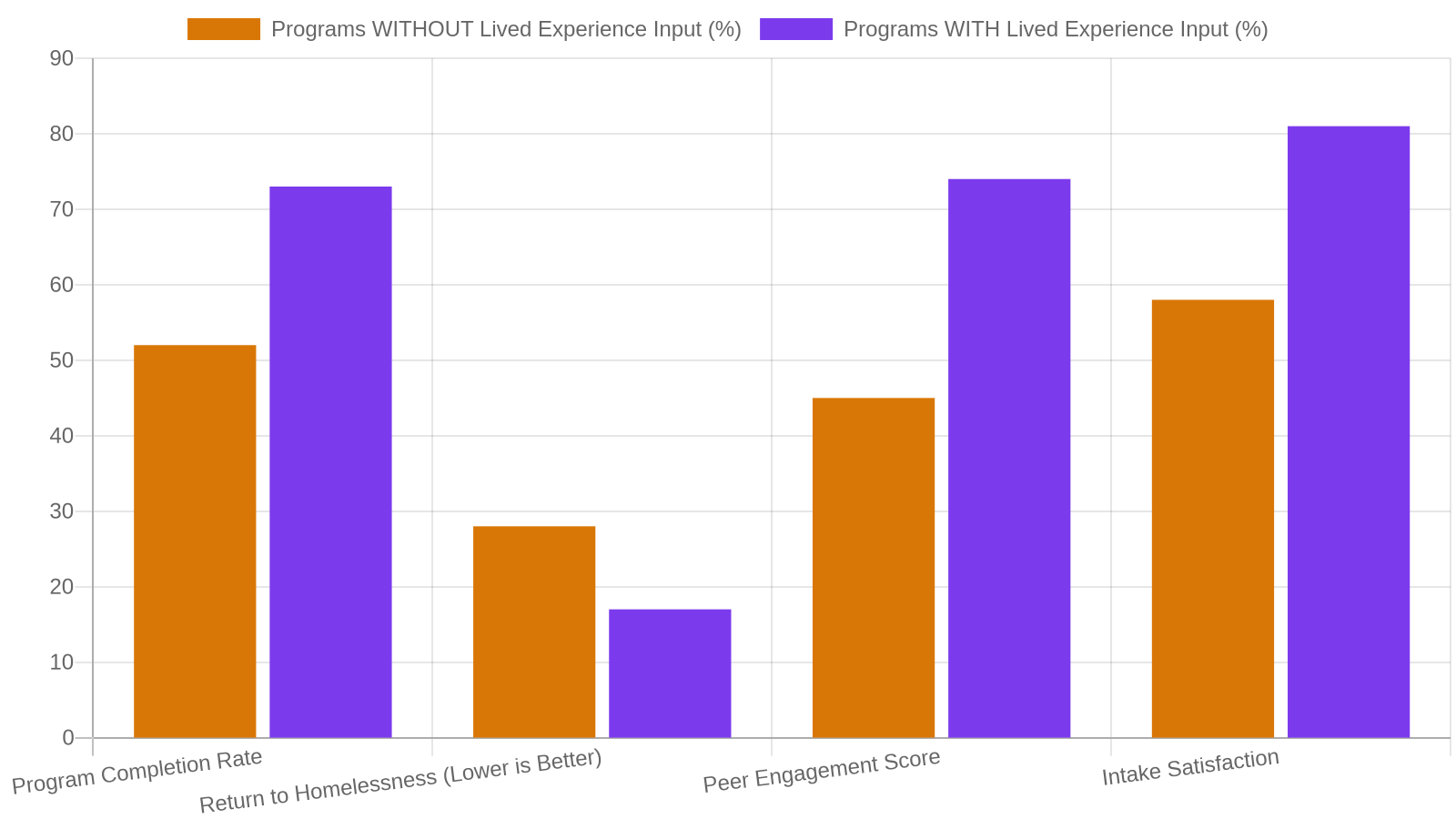
The Data Behind Peer-Informed Program Design
The evidence for centering lived experience in program design is growing. Key findings include:
- Programs with peer navigators — people with their own experience of homelessness who help others access services — show up to 40% higher program completion rates among youth (National Alliance to End Homelessness, 2022).
- Youth who feel respected and heard during intake are significantly more likely to remain engaged in housing programs through to stable placement.
- CoC regions that formally include youth advisory input in their annual planning process report higher satisfaction scores in HUD’s System Performance Measures related to returns to homelessness.
These aren’t abstract statistics — they represent real young people in Memphis staying housed instead of cycling back to the street.
Navigating Coordinated Entry in Shelby County as a Young Adult

One of the most important things YAAB members in Memphis have worked to improve is how young adults access the Continuum of Care system in the first place. Coordinated Entry is the gateway — and for many young people, it’s also the first barrier.
What Coordinated Entry Is and Why It Matters
Coordinated Entry (CE) is the standardized system that TN-502 uses to assess, prioritize, and connect people experiencing homelessness to available housing resources. Think of it as the front door to the system — you go through CE to get matched with rapid rehousing, transitional housing, or permanent supportive housing programs.
For young adults, CE can feel intimidating. The assessment tool (currently the VI-SPDAT or a youth-specific version) asks personal questions about your history, health, and safety. YAAB members across Tennessee have advocated for youth-specific CE processes that feel less clinical and more supportive — and in some regions, peer navigators are now available to walk you through the process.
Tips for Accessing CE as a Young Adult in Memphis
If you’re a young adult in Memphis experiencing homelessness or housing instability, here’s how to access Coordinated Entry in TN-502:
- Call 211: Tennessee’s 211 helpline connects you to local resources and can direct you to the CE access point nearest you in Shelby County.
- Visit a drop-in center or shelter: Many CE access points are co-located with service providers. Staff there can help you start the process.
- Bring what you have, not what you don’t: You don’t need to have all your documents to start the CE process. Staff are trained to work with you regardless of your documentation status.
- Ask for a youth-specific assessment: If you’re under 25, ask whether a youth-tailored assessment is available — it’s designed to better capture the realities of young people’s experiences.
- Know your rights: You cannot be turned away from CE based on sobriety status, criminal history, or lack of ID. If you feel you’ve been wrongly denied, YAAB members and advocates can help.
Housing Programs in Memphis Worth Knowing About
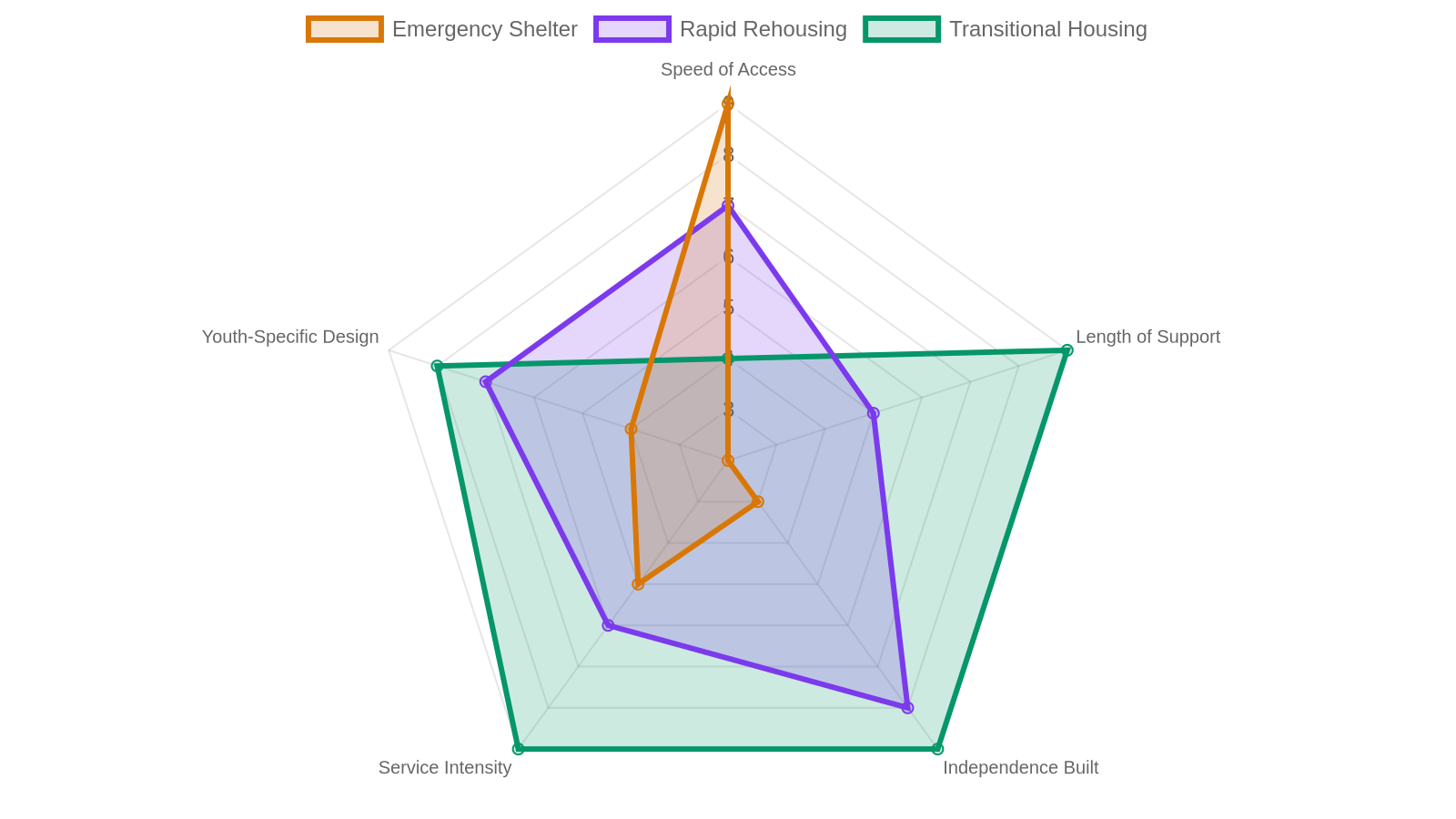
Understanding what types of programs exist — and what they’re designed to do — helps you ask for the right thing when you contact a provider or go through Coordinated Entry. Here’s a breakdown of the main housing program categories available to transition-age youth in the Memphis/Shelby County area.
Emergency and Short-Term Options
When you need somewhere safe tonight or this week, these are the types of programs to look for in Memphis:
- Emergency shelters: Provide immediate, short-term housing. Memphis has limited youth-specific shelter beds, so call 211 first to check current availability and whether a youth-specific bed is open.
- Host Home programs: Trained community volunteers open their homes to youth experiencing homelessness for short stays — often a less institutional and more supportive option than a large shelter.
- Crisis stabilization: Some providers offer brief crisis housing combined with mental health or substance use support for young adults in acute need.
Medium- and Long-Term Stability Programs
If your situation is more complex or you need more time to get stable, these program types offer longer-term support:
- Transitional Housing (TH): Up to 24 months of supported housing with case management, life-skills training, and help building toward independence. Several Memphis providers offer TH specifically for young adults.
- Rapid Rehousing (RRH): Helps you move quickly into your own apartment with short-term rental assistance (typically 3–12 months) and case management support. Designed to be a bridge, not a permanent subsidy.
- Permanent Supportive Housing (PSH): Long-term housing with ongoing support services for young adults with significant barriers (serious mental illness, chronic health conditions, etc.). Limited slots exist specifically for youth in TN-502.
- Youth-Specific Rental Assistance: Some local and state programs offer one-time or short-term rental assistance for young adults at risk of homelessness — preventing the crisis before it starts.
Aging Out of Foster Care in Tennessee: What Memphis Youth Need to Know

A significant portion of young adults experiencing homelessness in Memphis have a history with the foster care system. Aging out of foster care without a stable support network is one of the most direct pipelines into housing instability — and it’s a reality that YAAB members across Tennessee know firsthand.
The Foster Care Cliff and Why It Hits So Hard
In Tennessee, youth in foster care can remain in the system until age 21 under the state’s extended care program (called Tennessee Fostering Connections). But many young people exit care at 18 — either by choice or because they didn’t know they could stay. The moment after aging out is one of the highest-risk periods for homelessness among young adults.
Nationally, one in five youth who age out of foster care will experience homelessness within two years (Chapin Hall, 2017 Voices of Youth Count). In Tennessee, advocates estimate that youth aging out of foster care represent a significant and disproportionate share of the young adults entering the homeless services system in Memphis and across the state.
Tennessee-Specific Supports for Foster Youth Transitioning to Independence
If you’re aging out of foster care in Shelby County, you have access to specific supports that other young adults may not:
- Tennessee Fostering Connections: Allows eligible youth to remain in foster care (and receive support) until age 21. If you’re under 21 and left care at 18, you may be able to re-enter — talk to a DCS caseworker or an advocate.
- Education and Training Vouchers (ETVs): Up to $5,000 per year in funding for post-secondary education or vocational training for current and former foster youth up to age 26.
- Chafee Independent Living Funds: Federal funding administered by Tennessee DCS for life-skills training, housing assistance, and other supports for youth aging out.
- YAAB Peer Support: Many YAAB members across Tennessee have personally navigated the foster care-to-homelessness pipeline and can connect you to resources and advocacy specific to your situation.
Employment, Education, and Stability: The Full Picture

Housing, employment, and education are deeply connected for transition-age youth. YAAB members in Memphis and across Tennessee understand this from lived experience — and they’ve pushed the local Continuum of Care to think beyond shelter beds and toward the full ecosystem of stability that young adults need.
Why Housing Alone Isn't Enough
Getting housed is the critical first step — but staying housed requires income, and income requires either employment or education pathways that actually work for young adults navigating instability. YAAB members consistently raise this point: a rapid rehousing placement that doesn’t connect a young person to sustainable income is a temporary fix, not a solution.
In Memphis, transition-age youth face an employment landscape shaped by transportation gaps (Shelby County’s public transit system has limited reach in many neighborhoods), credential barriers, and employer bias against applicants without a permanent address. YAAB advocacy has pushed local CoC planning to better integrate workforce development into housing program design.
Resources for Education and Employment in Shelby County
Young adults in Memphis have access to several education and employment supports worth knowing:
- GED and HiSET Programs: Shelby County Schools Adult Education offers free GED preparation and testing. A high school equivalency credential opens doors to employment and post-secondary education.
- Tennessee Promise and Tennessee Reconnect: Free community college tuition programs for eligible Tennessee residents — including young adults who have experienced homelessness (special provisions apply).
- Memphis Works / Workforce Investment Network: Local workforce development programs offering job training, resume support, and employer connections for young adults.
- Youth Build Memphis: Combines GED preparation with job training in construction and other trades, specifically designed for young adults who are out of school and out of work.
- SNAP Employment & Training: If you receive SNAP benefits, you may be eligible for free job training and support services through Tennessee’s E&T program.
Memphis/Shelby County Housing Program Types at a Glance
Use this table to quickly compare the main housing program types available to transition-age youth in the TN-502 region and understand which might fit your situation.
Mental Health and Trauma-Informed Support for Memphis Youth

You can’t focus on housing applications or job training when you’re in crisis. Mental health support is a core part of the stability picture for transition-age youth — and it’s an area where YAAB members across Tennessee have pushed hard for better, more youth-friendly services.
The Mental Health-Homelessness Connection
Homelessness and housing instability are both a cause and a consequence of mental health challenges for many young adults. Trauma — from family conflict, abuse, neglect, community violence, or the experience of homelessness itself — is nearly universal among transition-age youth who have experienced housing instability.
Nationally, studies estimate that between 30% and 40% of youth experiencing homelessness have a diagnosable mental health condition (Substance Abuse and Mental Health Services Administration, 2020). In Memphis, access to youth-specific mental health services remains a significant gap — one that YAAB members have repeatedly raised in CoC planning conversations.
Finding Trauma-Informed Mental Health Support in Shelby County
If you’re a young adult in Memphis looking for mental health support, here are some starting points:
- Memphis Mental Health Institute (MMHI): State-operated inpatient and crisis psychiatric services for Shelby County residents.
- Centerstone Tennessee: Offers community-based mental health and substance use services, including programs for young adults.
- Crisis Text Line: Text HOME to 741741 for free, confidential crisis support 24/7 — no phone call required.
- 988 Suicide and Crisis Lifeline: Call or text 988 for immediate mental health crisis support.
- Ask your case manager: If you’re already connected to a housing program, your case manager can help you access mental health referrals and may be able to advocate for you to get seen faster.
YAAB members advocate for trauma-informed care standards across all housing and service programs — meaning staff are trained to understand how trauma affects behavior and to respond with patience and support rather than punishment.
Know Your Rights: What Memphis Youth Can Advocate For

One of the most empowering things YAAB does is help young adults understand and assert their rights within the housing and services system. Too often, young people don’t know what they’re entitled to — and providers don’t always volunteer that information. Here’s a grounding in what you can stand on.
Your Rights When Accessing Homeless Services
Young adults experiencing homelessness have legal rights that many providers don’t always make clear. In Tennessee and under federal law, you have the right to:
- Access emergency shelter regardless of sobriety status, criminal history, or lack of ID (HUD’s equal access rule).
- Be free from discrimination based on race, color, national origin, sex, disability, religion, or familial status in any HUD-funded program.
- Enroll your children in school under the McKinney-Vento Act — but remember, this article is about you, the young adult. If you are a young parent, McKinney-Vento protections also cover you.
- Privacy in your records: Your homeless services records are protected under HMIS privacy rules. Ask any provider what information they collect and who can see it.
- File a complaint if you believe you’ve been wrongly denied services or discriminated against. HUD’s Office of Fair Housing and Equal Opportunity accepts complaints online.
How YAAB Advocacy Strengthens Your Rights
Knowing your rights is powerful — but changing the systems that violate them requires organized advocacy. That’s where YAAB comes in. Members of the TN-502 board and the statewide YAAB network have:
- Pushed for written grievance procedures in transitional housing programs so youth know how to formally complain when something goes wrong.
- Advocated for anti-discrimination policies that specifically protect LGBTQ+ youth in shelter settings — a population that faces disproportionate rates of family rejection and homelessness.
- Worked with legal aid partners to ensure young adults know they can get free legal help for issues like eviction, ID recovery, and benefits appeals.
Advocacy isn’t just for policy wonks. Every time you speak up about something that isn’t working, you’re doing advocacy — and YAAB gives you a structure to make that voice count.
Statewide YAAB: How Memphis Connects to the Bigger Picture

The work happening in Memphis doesn’t exist in isolation. The TN-502 YAAB is part of a statewide movement of young adults with lived experience who are reshaping how Tennessee responds to youth homelessness — from local shelter policies to state budget decisions.
Tennessee's Regional YAAB Network
The TN-502 YAAB in Memphis is one node in a statewide network of Youth Action Boards across Tennessee’s Continuum of Care regions. Other active YAABs serve Nashville/Davidson County (TN-500), Knoxville/Knox County (TN-501), Chattanooga/Hamilton County (TN-503), and other regions. Each local board is connected to the statewide YAAB Tennessee structure, which coordinates advocacy at the state legislature and with the Tennessee Department of Human Services and Tennessee Housing Development Agency (THDA).
This network means that when Memphis YAAB members identify a problem — say, a state policy that makes it harder for youth to access emergency rental assistance — they can amplify that issue through the statewide network and push for a fix that benefits young adults across all of Tennessee, not just Shelby County.
What Statewide Advocacy Has Achieved
YAAB Tennessee’s statewide advocacy has contributed to meaningful wins for transition-age youth across the state, including:
- Increased youth representation in Tennessee’s statewide CoC planning processes.
- Advocacy for dedicated youth-specific funding streams in Tennessee’s Emergency Solutions Grant (ESG) allocations.
- Pushing for trauma-informed training requirements for staff at youth-serving homeless programs.
- Amplifying youth voices in HUD’s national conversations about the future of the youth homelessness response system.
Every local YAAB member who shows up, speaks up, and stays engaged contributes to this larger movement. Your experience in Memphis matters to young adults in Knoxville, Chattanooga, and Jackson too.
Join the TN-502 YAAB: Your Seat at the Table Is Waiting

Everything in this article points toward one thing: the most powerful change-makers in Memphis’s youth housing system are young adults with lived experience — people like you. The TN-502 Youth Action Board is how that power gets organized, amplified, and directed at the decisions that matter most.
Whether you’re currently experiencing housing instability, recently got stable, or have been housed for a while but remember what it was like — your perspective is irreplaceable. And YAAB is designed to turn that perspective into action.
What You Get as a YAAB Member
YAAB membership isn’t just about giving — it’s about growing. Members of the TN-502 board gain:
- Stipends and compensation for their time and expertise — because your lived experience is valuable and deserves to be paid.
- Leadership training in advocacy, public speaking, policy analysis, and community organizing.
- A peer community of young adults across Tennessee who understand your experience and have your back.
- A resume line that demonstrates real policy and advocacy experience — something that opens doors in social work, public health, nonprofit management, and government careers.
- Direct access to housing resources, case managers, and service providers who can support your own stability while you support others.
How to Connect with the Memphis/Shelby County YAAB
If you’re a young adult ages 17 to 25 in Memphis or Shelby County with lived experience of homelessness or housing instability, the TN-502 YAAB wants to hear from you. Learn more about the Memphis/Shelby County YAAB and how to get involved at the TN-502 local board page — you’ll find current membership information, meeting schedules, and contact details for the regional coordinator.
Not sure if you qualify or if it’s right for you? That’s okay. Reach out anyway. YAAB is built for people who have been told their whole lives that they don’t belong in rooms where decisions are made. You belong. Your experience is exactly what’s needed.
You can also explore the full list of YAAB local boards across Tennessee if you’re in a different region, or visit the YAAB Tennessee resources page for housing, employment, and support service links across the state.
Frequently Asked Questions
What is the Youth Action Board in Memphis and who can join?
The Memphis/Shelby County Youth Action Board (TN-502 YAAB) is a group of young adults ages 17 to 25 with lived experience of homelessness or housing instability who advise local housing programs and the Continuum of Care. Any young adult in that age range in the Memphis area who has experienced housing instability is eligible to apply — no formal qualifications required.
How do I access homeless services as a young adult in Memphis, Tennessee?
Start by calling 211, Tennessee's statewide helpline, which can connect you to the TN-502 Coordinated Entry system and local providers. You can also visit a shelter or drop-in center in Shelby County to begin the intake process. You don't need all your documents to start — staff are trained to help you regardless of your paperwork situation.
What housing help is available for youth aging out of foster care in Shelby County?
Youth aging out of foster care in Tennessee can access Tennessee Fostering Connections (extended care until age 21), Education and Training Vouchers (up to $5,000/year for school or training), and Chafee Independent Living funds. The TN-502 Coordinated Entry system can also connect you to rapid rehousing and transitional housing programs specifically designed for young adults.
Can I join YAAB if I'm currently experiencing homelessness?
Yes. YAAB is specifically designed for young adults who are currently or have previously experienced homelessness or housing instability. The organization works to remove barriers to participation, including providing stipends, transportation support, and flexible scheduling. Your current situation does not disqualify you — it's exactly what makes your voice valuable.
What is a Continuum of Care and how does it affect Memphis youth?
A Continuum of Care (CoC) is a regional planning body funded by HUD that coordinates homeless services across a geographic area. Memphis and Shelby County are part of the TN-502 CoC. The CoC decides which programs get funded, sets priorities for who gets served first, and oversees the Coordinated Entry system — making it one of the most important bodies shaping housing outcomes for young adults in the area.
Does YAAB pay members for their time?
Yes. YAAB Tennessee recognizes that lived experience is expertise and compensates members for their time through stipends. The specific compensation structure may vary by region and funding cycle — contact the TN-502 YAAB coordinator for current details on how Memphis-area members are compensated.