Quick answer: The Youth Action Board (YAAB) of Tennessee hosts regular meetings, advocacy sessions, workshops, and community events for young adults ages 17 to 25 across all eight Continuum of Care regions — including Memphis, Nashville, Knoxville, Chattanooga, Jackson, Upper Cumberland, and Northeast Tennessee. These gatherings are free, peer-led, and open to anyone with lived experience of homelessness or housing instability. Showing up is one of the most powerful things you can do — you get real support, real connections, and a real voice in the decisions that shape your life.
What YAAB Events Actually Are (and Why They're Different)

Before you check the calendar, it helps to know what you’re actually signing up for. YAAB events are not lectures, intake appointments, or mandatory check-ins. They are peer-powered spaces where young adults with lived experience come together to support each other, share resources, and push for real change in Tennessee’s housing and support systems.
Understanding the format makes it easier to walk through the door — especially if you’ve had negative experiences with service providers or government programs in the past.
Peer-Led, Not Program-Led
Most meetings young adults are invited to are about them — not run by them. YAAB flips that. Every regional YAAB is facilitated by young adults who have their own lived experience of housing instability, aging out of foster care, or navigating the system. That means when you walk into a YAAB meeting, you’re not a case number — you’re a colleague.
Facilitators set the agenda, drive the conversation, and report findings directly to Continuum of Care (CoC) leadership and state policymakers. Your voice carries actual weight.
What Happens at a Typical Meeting
YAAB gatherings vary by region but typically include:
- Check-ins — a low-pressure opening where everyone shares how they’re doing
- Resource sharing — members flag new housing, employment, or education opportunities in the area
- Policy discussion — reviewing proposals, data, or program changes that affect transition-age youth (TAY)
- Action planning — deciding on advocacy steps, community outreach, or upcoming projects
- Closing + stipends — many regions offer stipends or gift cards to members who participate regularly
Meetings are usually 60–90 minutes and held monthly, though some regions add extra sessions around advocacy deadlines or community events.
Who Can Show Up
If you are between 17 and 25 years old and you have experienced homelessness, housing instability, foster care, or any of the systems that intersect with those experiences — you belong at a YAAB meeting. You do not need to be currently homeless. You do not need to have a referral. You do not need to prove anything to anyone. Allies, case managers, and CoC partners are sometimes invited as guests, but the space is always centered on young adults.
The 8 Tennessee CoC Regions and Their Local YAABs

Tennessee is a big state with very different communities — from Memphis in the southwest to Johnson City in the northeast. YAAB is built to reflect that diversity. Rather than one central organization, YAAB operates through eight regional chapters, each tied to a local Continuum of Care (CoC). Your regional YAAB is the one most likely to have events near you and resources relevant to your county.
Why the CoC Structure Matters for You
Tennessee’s homeless services are organized into eight Continuum of Care (CoC) regions, each receiving federal HUD funding and managing local housing programs. Each region has — or is building — its own local YAAB chapter. This matters because the policies and resources in your county are decided at the CoC level. Showing up to your regional YAAB means you’re influencing the exact decisions that affect your zip code.
Regional YAAB Chapters at a Glance
Here’s where the eight Tennessee CoC regions are centered:
- TN-500 — Chattanooga / Hamilton County
- TN-501 — Memphis / Shelby County
- TN-502 — Knoxville / Knox County
- TN-503 — Nashville / Davidson County
- TN-504 — Northeast Tennessee
- TN-506 — Upper Cumberland
- TN-507 — Jackson / West Tennessee
- TN-509 — Balance of State (rural and smaller communities)
Each chapter operates with some independence — meeting schedules, formats, and focus areas vary. Check the local YAAB pages to find the chapter closest to you and learn about their specific meeting cadence.
Finding Your Region If You're Unsure
Not sure which CoC you fall under? A quick way to figure it out: if you live in or near one of the major cities listed above, you’re likely in that city’s CoC. If you’re in a smaller town or rural county, you may fall under TN-509 (Balance of State) or one of the regional CoCs like Upper Cumberland or Northeast Tennessee. The YAAB contact page can help connect you with the right regional coordinator if you’re still unsure.
How to Find the Most Up-to-Date Event Listings

Event schedules change, new sessions get added, and some meetings move between in-person and virtual formats depending on the region and season. Rather than relying on a static list, here’s how to stay consistently informed about what’s happening across Tennessee’s YAAB network — so you never miss a meeting that matters to you.
The YAAB Events Calendar: Your First Stop
The fastest way to see what’s coming up is to check the official YAAB events calendar. It’s updated regularly with meeting dates, workshops, advocacy days, and community events across all eight regions. You can filter by region or event type to find what’s relevant to you. Browse the full YAAB events calendar to see what’s happening near you this month and beyond.
Bookmark it. Seriously — meeting dates shift, new events get added, and virtual options sometimes open up on short notice. The calendar is the most reliable source.
Social Media and Text Alerts
Many regional YAABs also post event reminders on social media platforms and send text-based alerts to members. If you’ve connected with a regional coordinator, ask to be added to the group text or mailing list. This is especially useful for last-minute location changes or virtual meeting links that get shared close to the event date.
Asking a Case Manager or CoC Partner
If you’re currently working with a case manager, housing navigator, or any CoC-funded program, they should be able to point you toward your regional YAAB. Many service providers actively encourage their clients to participate because YAAB membership builds skills, community, and sometimes access to additional resources. Don’t be shy about asking — it’s a legitimate part of what they’re there to help with.
Types of Events You'll Find on the YAAB Calendar
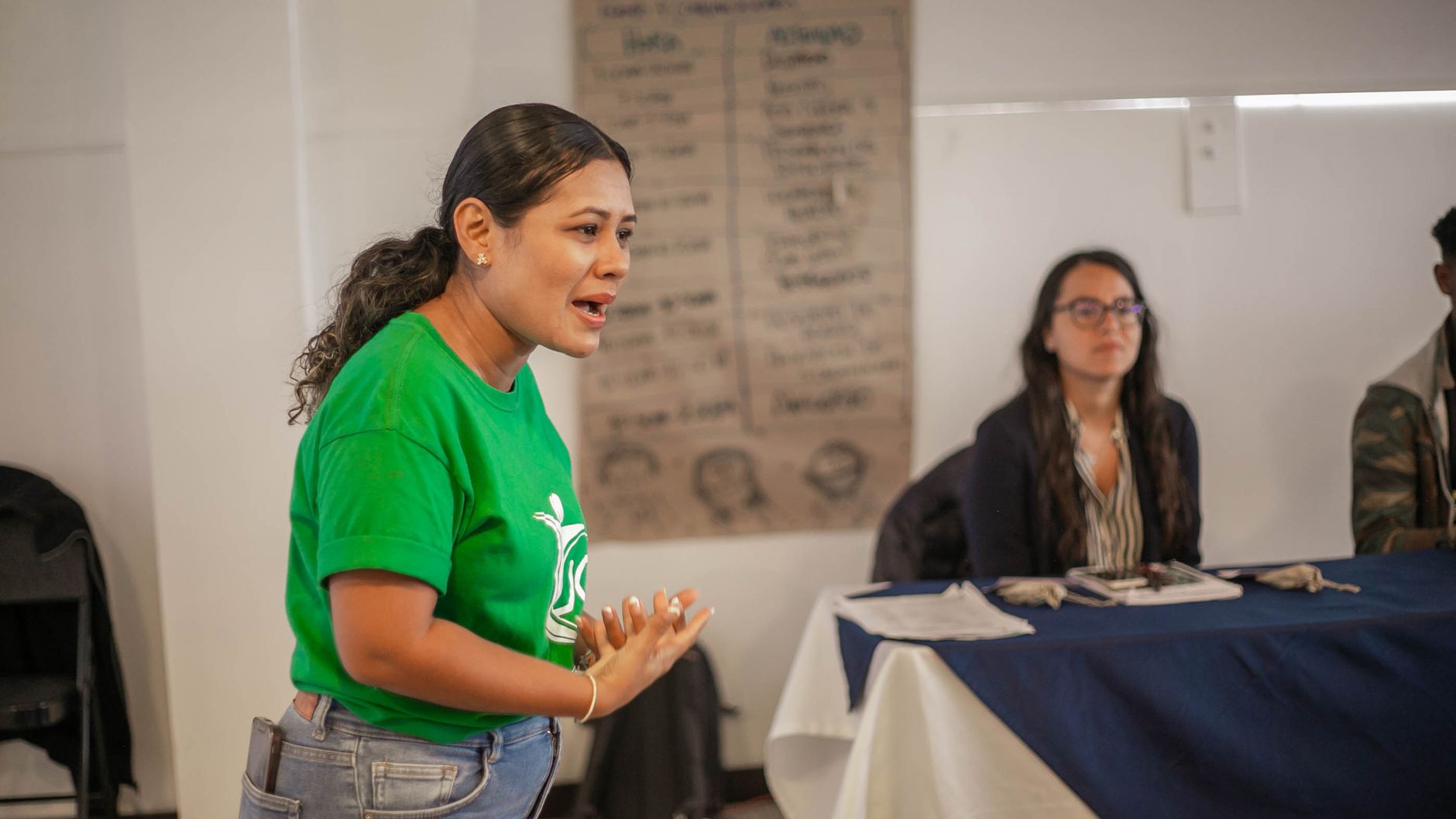
Not every YAAB event looks the same. The calendar is a mix of structured meetings, high-stakes advocacy opportunities, skill-building workshops, and low-key social events. Knowing the different types helps you figure out which ones fit where you are right now — whether you’re ready to testify before a committee or just want to meet other young people who get it.
Monthly Regional Meetings
The backbone of YAAB activity is the monthly regional meeting. These are typically held once per month per CoC region and run 60–90 minutes. They cover resource updates, policy discussions, and member check-ins. Some regions rotate between in-person and virtual formats to maximize access. Attendance at monthly meetings is how most members build their voice and earn stipends where offered.
Advocacy Days and Policy Events
Several times a year — often aligned with the Tennessee legislative calendar or HUD reporting cycles — YAAB organizes advocacy days where members can speak directly with lawmakers, testify at hearings, or present youth-informed data to CoC leadership. These events are powerful and well-supported: YAAB typically provides transportation assistance, talking-point prep, and peer coaching before you step into any official setting. No prior experience with advocacy is needed.
Workshops, Trainings, and Social Events
Beyond meetings and advocacy, the YAAB calendar regularly includes:
- Financial literacy workshops — budgeting, banking, credit-building
- Employment and resume sessions — job search skills, interview prep
- Mental health and wellness events — peer support circles, self-care workshops
- Leadership trainings — public speaking, facilitation, data literacy
- Social gatherings — cookouts, game nights, and community-building events that are just for fun
These events are free to attend and often include meals, transportation support, or small incentives.
What to Expect at Your First YAAB Meeting

If you’ve never been to a YAAB event before, it’s natural to have questions — or nerves. Here’s a realistic, honest picture of what your first meeting will feel like, from the moment you arrive to the moment you leave. No surprises, no pressure.
Before You Walk In
You don’t need to prepare a speech or bring anything special to your first meeting. If the event is in person, just show up at the listed location a few minutes early. If it’s virtual, grab the link from the calendar or your regional coordinator and log on from wherever you are. Some regions ask first-timers to fill out a short intake form — this is just to track participation for grant reporting and doesn’t affect your ability to attend.
The Vibe in the Room
YAAB meetings are intentionally low-pressure. Facilitators are peers — young adults who’ve been in the same situations you may be navigating right now. You won’t be put on the spot, asked to share anything you’re not ready to share, or judged for where you’re at. Many members describe their first meeting as the first time they felt like their experience was an asset rather than something to be ashamed of.
If you feel nervous, that’s completely normal. Most members felt the same way their first time. You can listen, observe, and participate as much or as little as you’re comfortable with.
After the Meeting: What Comes Next
After your first meeting, a coordinator or peer facilitator will usually follow up to see how you’re doing and whether you want to keep coming. There’s no obligation — but most people do come back. From there, you can get more involved by joining a working group, taking on a facilitation role, or participating in an upcoming advocacy event. YAAB is designed to grow with you, wherever you’re starting from.
Stipends, Incentives, and What You Can Gain

Let’s be direct: YAAB is worth your time, and not just because it’s a good thing to do. There are concrete, tangible benefits to showing up — financial, professional, and personal. Here’s what members across Tennessee have gained from regular participation.
Do YAAB Members Get Paid?
Many regional YAABs offer stipends or gift cards to members who attend meetings and participate in YAAB activities. The exact amount and format vary by region and funding cycle — some chapters offer $25–$50 per meeting, others provide gift cards for groceries or transportation. This isn’t charity; it’s recognition that your time and expertise have real value. Policymakers and CoC leaders pay consultants for their input — YAAB members deserve compensation for theirs.
Check with your regional coordinator for current stipend details, as availability can shift based on grant funding.
Skills and Experience That Build Your Future
Beyond stipends, YAAB participation builds a resume that stands out. Members regularly develop skills in:
- Public speaking and facilitation
- Policy analysis and advocacy
- Data collection and community research
- Project management and event planning
- Peer support and mentorship
These are skills that employers, colleges, and leadership programs actively look for. Several YAAB alumni have gone on to full-time roles in nonprofit organizations, government agencies, and community health fields — often citing YAAB as the experience that opened the door.
Community and Connection
This one is harder to put a dollar amount on, but it may be the most valuable thing YAAB offers: a community of peers who understand your experience. Isolation is one of the most damaging effects of housing instability. YAAB counters that directly by building relationships between young adults across Tennessee who are all working toward something better — for themselves and for each other.
Virtual vs. In-Person Events: What's Available in Tennessee

Tennessee is a geographically diverse state, and YAAB knows that getting to an in-person event isn’t always possible — especially if you’re in a rural county, don’t have reliable transportation, or are working around a job schedule. That’s why most regional chapters offer a mix of virtual, in-person, and hybrid event formats. Here’s how it breaks down.
How Regions Handle the Virtual Option
Since 2020, most YAAB regions have developed strong virtual meeting infrastructure. Platforms like Zoom and Google Meet are commonly used, and links are shared through the events calendar and regional coordinator networks. Virtual attendance is a legitimate, full participation option — not a lesser version of showing up. Members who attend virtually can vote, speak, and contribute to discussions just like those in the room.
When In-Person Is Worth the Trip
Some events — particularly advocacy days, leadership trainings, and social gatherings — are better experienced in person. The energy of being in the room together, especially for high-stakes advocacy moments, is something virtual can’t fully replicate. For these events, many regions offer transportation assistance or reimbursement. If getting there is a barrier, talk to your regional coordinator before you assume you can’t make it — there are often solutions available.
Hybrid Events: The Best of Both
Several Tennessee YAAB chapters are moving toward hybrid formats — where some members are in a physical location and others join remotely. This model works especially well for the larger CoC regions like Nashville/Davidson and Memphis/Shelby, where members may be spread across a wide geographic area. Hybrid events are clearly labeled on the calendar so you can plan accordingly.
Regional YAAB Event Frequency: a Quick Comparison

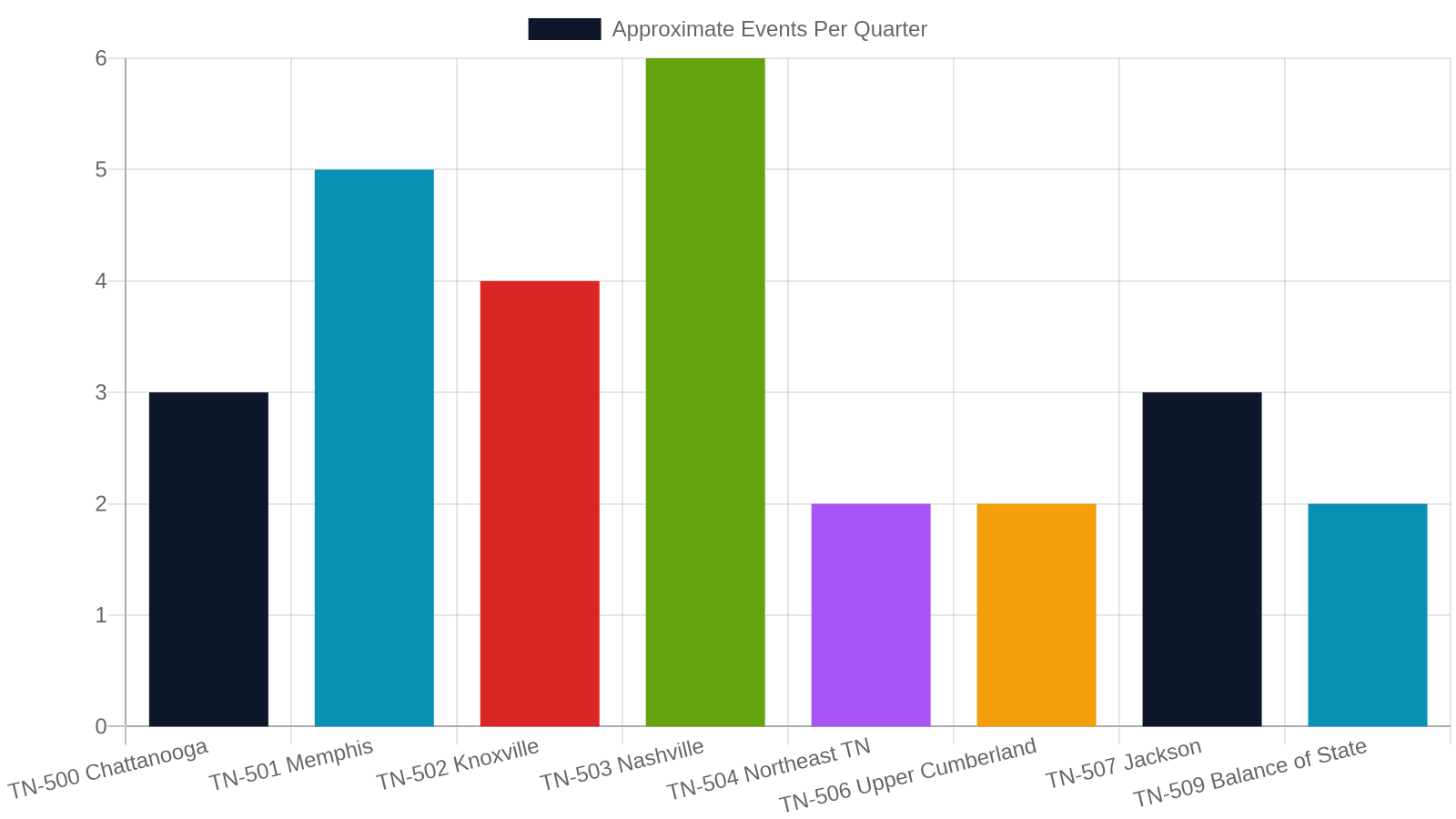
Curious how often each regional YAAB meets? The table below gives a general picture of event frequency across Tennessee’s eight CoC regions. These are approximate figures based on typical chapter activity — always check the live calendar for exact dates.
Why Frequency Varies by Region
Each regional YAAB chapter operates with its own funding, staffing, and membership base. Larger urban CoCs like Nashville (TN-503) and Memphis (TN-501) tend to have more frequent events — sometimes multiple sessions per month — while smaller or newer chapters may meet monthly or bi-monthly as they build capacity. This isn’t a reflection of how much each region values its members; it’s a function of resources and where each chapter is in its development.
Getting Involved in a Growing Chapter
If your regional YAAB is newer or meets less frequently, that’s actually an opportunity. Early members of growing chapters often have more direct influence over how the group is structured, what it focuses on, and how it grows. Being one of the first consistent voices in a chapter is a meaningful leadership role — even if it doesn’t have a formal title yet.
Check the YAAB about page to learn more about the statewide network and how regional chapters connect to the bigger picture.
YAAB Event Types at a Glance: What to Expect
Not all YAAB events are the same. Use this table to find the type of event that fits where you are right now.
How YAAB Events Connect to Real Policy Change

It’s worth understanding — concretely — what YAAB meetings actually produce beyond the meetings themselves. This isn’t just about community; it’s about power. Here’s how showing up to a regional YAAB event connects to decisions being made at the county, state, and federal level.
From Meeting Room to Decision Room
YAAB isn’t just a support group — it’s a formal advisory body. Regional YAABs feed youth-informed recommendations directly into CoC governance structures, which control how millions of dollars in HUD funding are allocated across Tennessee. When YAAB members identify a gap — say, a lack of transitional housing for youth aging out of foster care in a particular county — that feedback can directly shape how the next funding cycle is structured.
Tennessee Legislative Advocacy
YAAB members have participated in Tennessee General Assembly advocacy sessions, presenting data and personal testimony to lawmakers on issues including youth homelessness, foster care transitions, and housing affordability. These aren’t token appearances — legislators and their staff have cited YAAB testimony in committee discussions. The YAAB advocacy page tracks current campaigns and how you can get involved.
Your Story Is Data
One of the most powerful things YAAB does is translate lived experience into usable data. When you share your story in a meeting — what worked, what didn’t, what was missing — facilitators help shape that into findings that policymakers can act on. You don’t need a degree in policy or statistics. You need to show up and be honest. That’s the whole model.
Resources You Can Access Through YAAB Events

YAAB events aren’t just meetings about policy — they’re also one of the best places in Tennessee to learn about resources that are actually available to you right now. Members and coordinators actively share what they know, and the collective knowledge in a YAAB room is often more practical and current than what you’d find on a government website.
Housing and Shelter Connections
YAAB meetings regularly surface housing resources that aren’t widely advertised — rapid rehousing programs, transitional housing for TAY, emergency shelter options, and landlord partnerships that are open to young adults with limited rental history. Members share what they’ve found and what’s worked, creating a real-time resource network that’s often more current than any printed guide.
Education, Employment, and Financial Resources
Beyond housing, YAAB events frequently highlight:
- GED and HiSET programs — free or low-cost pathways to a high school credential in Tennessee
- Workforce development programs — job training, apprenticeships, and employer partnerships
- Financial coaching — help opening a bank account, building credit, and managing benefits
- Scholarship and education funding — including Tennessee’s Education and Training Voucher (ETV) program for current and former foster youth
Mental Health and Peer Support
Many YAAB events include or connect members to mental health resources — peer support specialists, community mental health centers, and crisis lines. The peer-led environment of YAAB itself is a form of support: being around people who understand your experience without judgment has real mental health benefits. If you’re going through something hard right now, showing up to a YAAB event is a legitimate form of self-care.
How to Join YAAB and Become a Regular Member

Ready to make YAAB a regular part of your life? Here’s exactly how to go from curious to connected — and eventually to leading the charge for other young adults across Tennessee.
The Joining Process Is Simple
There’s no application essay, no interview, and no waiting list. The most common way to join YAAB is to show up to a regional meeting and introduce yourself. From there, coordinators will walk you through any paperwork needed for stipend eligibility and connect you with the broader member network. You can also start by filling out a join form online to get connected before your first in-person event.
What Regular Membership Looks Like
Regular YAAB members typically attend monthly meetings, participate in at least one working group or project, and engage with advocacy opportunities when they arise. There’s no strict attendance requirement that would get you kicked out — life is unpredictable, and YAAB knows that. But consistent participation is what builds your voice and your network over time. Most members find that once they’re connected, they want to keep showing up.
Leadership Roles Within YAAB
As you get more comfortable, YAAB offers formal leadership pathways — including roles as a regional facilitator, statewide representative, or project lead. These positions come with additional training, responsibilities, and often additional compensation. Leadership within YAAB is a genuine resume-builder and a pathway to professional opportunities in advocacy, social services, and community organizing.
Show Up: Your Next Move Starts with the Calendar

You don’t have to have everything figured out to get involved with YAAB. You don’t need to be in a stable situation, have a polished story, or know anything about policy. All you need is your experience — and a willingness to show up. Tennessee’s YAAB network is here, it’s active, and there’s a seat at the table with your name on it.
One Meeting Can Change Everything
It sounds like a cliché, but YAAB members across Tennessee say it consistently: the first meeting was the turning point. Not because everything got fixed that day, but because it was the first time they were in a room where their experience was valued, their ideas were taken seriously, and they could see a path forward. That’s what YAAB is built to do — and it starts with showing up once.
Find Your Region and Get on the Calendar
Whether you’re in Memphis, Nashville, Knoxville, Chattanooga, Jackson, or anywhere else across Tennessee — there’s a YAAB chapter working in your region. Check the YAAB events calendar to find the next meeting near you, see what workshops are coming up, and add dates to your schedule. New events are added regularly, so check back often or ask to be added to your regional coordinator’s contact list.
You’ve already done the hard part by reading this far. The next step is just showing up.
Frequently Asked Questions
How do I find YAAB meetings near me in Tennessee?
Visit yaabtn.org/calendar-events/ to see all upcoming YAAB meetings and events across Tennessee's eight CoC regions. You can also contact your regional YAAB coordinator or ask a case manager to connect you with the chapter in your area.
Do I have to be currently homeless to attend a YAAB meeting?
No. YAAB is open to young adults ages 17 to 25 who have any lived experience of homelessness or housing instability — past or present. You don't need to be in a crisis right now to participate or to have your voice count.
Are YAAB events free to attend?
Yes, all YAAB meetings and events are free to attend. Many regional chapters also offer stipends, gift cards, or meal support to members who participate regularly. Transportation assistance is often available for in-person events — ask your regional coordinator.
Can I attend YAAB events virtually if I don't have transportation?
Yes. Most regional YAAB chapters offer virtual attendance options via Zoom or Google Meet. Virtual members can fully participate in discussions, votes, and resource sharing. Check the events calendar for the meeting link or contact your regional coordinator.
What is the age range for YAAB membership in Tennessee?
YAAB is for young adults ages 17 to 25. This is the transition-age youth (TAY) range recognized by HUD and Tennessee's Continuum of Care system. If you're in this age range and have lived experience of housing instability, you're eligible to participate.
How is YAAB different from other youth programs or drop-in centers?
YAAB is peer-led and advocacy-focused, not a drop-in service or case management program. Members don't just receive support — they shape the policies and programs that affect all transition-age youth in Tennessee. It's a leadership and advocacy network run by young adults, for young adults.