Quick answer: The Upper Cumberland Youth Action Board (YAAB) is a peer-led group for young adults ages 17 to 25 in Cookeville, Livingston, and across the Upper Cumberland region of Tennessee who have experienced homelessness or housing instability. Members advise local Continuum of Care leaders, advocate for better policies, build real leadership skills, and connect peers to housing, employment, and education resources — all while getting paid for their time. You don't need a résumé or a perfect past to join; you just need your lived experience and a willingness to show up.
What Is the Upper Cumberland YAAB, Exactly?

Before you can decide whether to join, you need a clear picture of what the Upper Cumberland YAAB actually is — and what it isn’t. It’s not a support group, a class, or a government agency. It’s a peer-led advocacy body made up of young adults who have been through housing instability and are now using that experience to drive real change in the Upper Cumberland region of Tennessee.
A Peer-Led Voice in Regional Decision-Making
The Upper Cumberland Youth Action Board is one of several regional YAAB chapters operating across Tennessee’s Continuum of Care (CoC) system. This particular chapter serves the Upper Cumberland CoC region — a multi-county area that includes Putnam County (Cookeville), Overton County (Livingston), and surrounding communities. The YAAB sits at the table where housing and service decisions get made, and it makes sure young people’s voices are actually heard there.
Members aren’t just consulted — they actively shape how local agencies design programs, allocate resources, and respond to youth homelessness. That’s a meaningful difference from a typical advisory group where young people are invited to speak once and then ignored.
Who Counts as a YAAB Member?
YAAB membership is open to young adults between 17 and 25 years old who have lived experience of homelessness or housing instability. That includes:
- Young people who have stayed in a shelter, transitional housing, or a place not meant for sleeping
- Youth who have couch-surfed, doubled up with friends or family, or stayed in a car
- Young adults aging out of foster care or the juvenile justice system
- Anyone who has navigated housing insecurity and wants to use that experience to help others
You do not need to currently be experiencing homelessness to join. Many members are in stable housing now and use their past experience as a foundation for advocacy.
1. Understand the Upper Cumberland Region You'd Be Serving

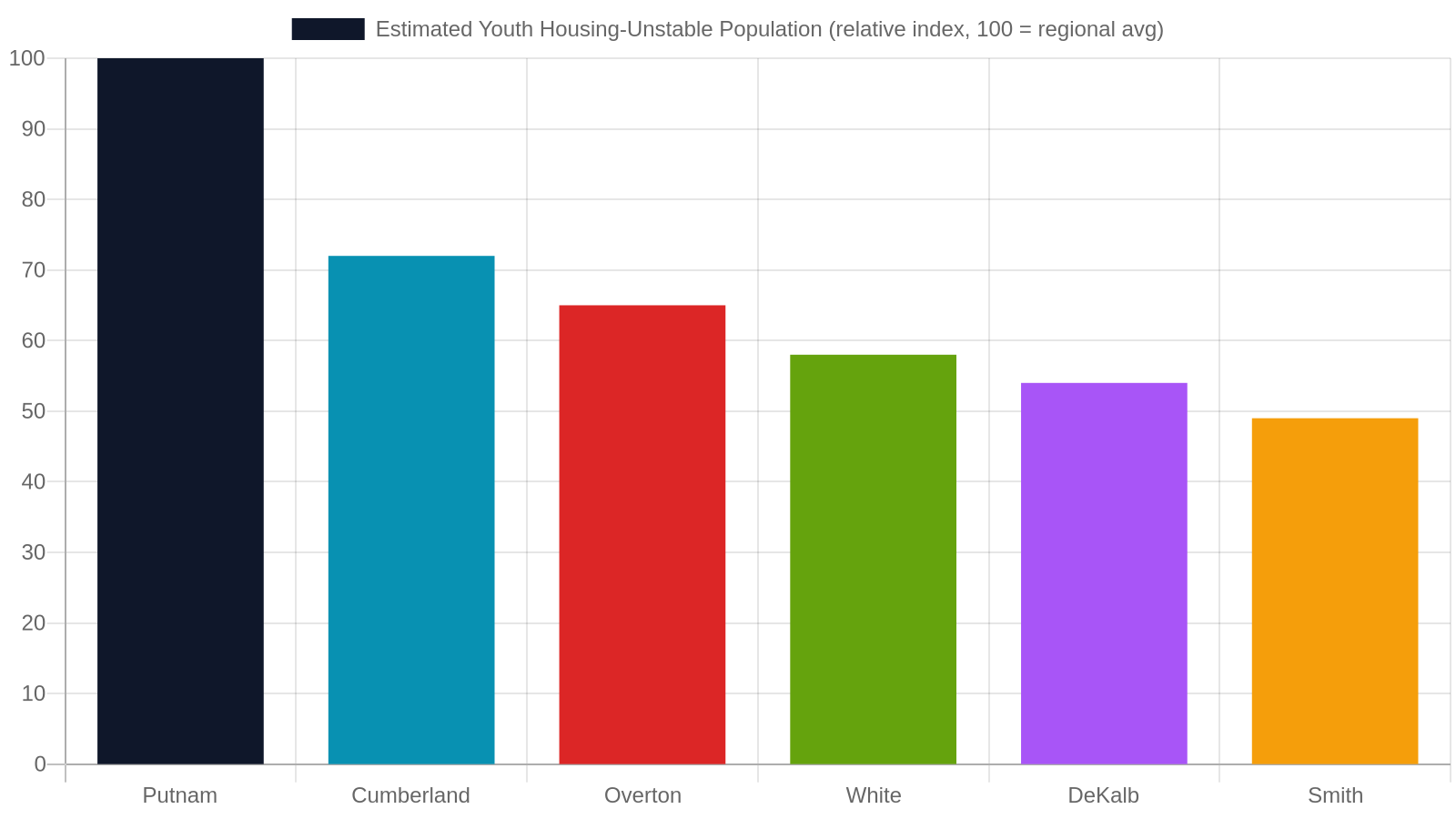
The Upper Cumberland is a region that many people outside Middle Tennessee overlook — but the young adults who live there know exactly how real the challenges are. Getting familiar with the region’s geography and the scope of youth housing instability here will help you understand why the YAAB’s work in Cookeville, Livingston, and the surrounding counties genuinely matters.
Counties and Communities in the CoC
The Upper Cumberland Continuum of Care covers a large swath of Middle Tennessee. Key counties include Putnam, Overton, Cumberland, White, DeKalb, Smith, Macon, Clay, Pickett, Fentress, Jackson, and Van Buren. Cookeville (Putnam County) is the region’s largest city and serves as a hub for services. Livingston (Overton County) is another anchor community.
Understanding this geography matters because YAAB advocacy isn’t abstract — it’s about real programs, real shelters, and real young people in these specific places. When you join, you become a representative voice for youth across all these communities, not just the town you live in.
Youth Homelessness in the Upper Cumberland: What the Numbers Say
Rural and semi-rural regions like the Upper Cumberland often have hidden homelessness — young people doubling up with relatives, sleeping in cars, or couch-surfing rather than staying in visible shelters. This means official Point-in-Time counts frequently undercount the true scope of the problem.
Nationally, studies estimate that 1 in 10 young adults ages 18–25 experience homelessness in a given year, with rural youth facing unique barriers including limited public transit, fewer shelters, and less access to mental health services. In Tennessee, the statewide YAAB network exists precisely to make sure rural youth voices — including those in the Upper Cumberland — are not drowned out by larger urban CoC regions.
2. Learn What YAAB Members Actually Do Day-to-Day

Joining a YAAB isn’t just about having your name on a list. It’s an active role with real responsibilities — and real rewards. Here’s a grounded look at what Upper Cumberland YAAB members actually spend their time doing, so you can decide if it’s the right fit for where you are right now.
Attending CoC Meetings and Advising Local Leaders
One of the core responsibilities of a YAAB member is showing up — literally. Members attend local Continuum of Care meetings alongside housing directors, nonprofit leaders, and government officials. They share firsthand perspective on what’s working, what’s failing, and what young people actually need. This isn’t performative; CoC partners are required by HUD to meaningfully involve people with lived experience in their planning processes.
For young adults in Cookeville and Livingston, this might mean attending a quarterly CoC meeting, giving feedback on a new shelter policy, or reviewing a grant application to make sure it actually addresses youth needs.
Peer Outreach and Resource Sharing
YAAB members also do on-the-ground work: connecting peers to housing programs, sharing information about emergency resources, and helping young people navigate systems that can feel overwhelming. If you’ve ever helped a friend figure out where to go for food, housing, or mental health support, you already know what this looks like.
Members are trained to do this well — you won’t be thrown into the deep end without support. YAAB provides orientation, mentorship from experienced members, and connections to statewide resources so you can show up for your community with confidence.
Advocacy, Policy, and Storytelling
Beyond local meetings, YAAB members engage in statewide advocacy. That can mean traveling to Nashville to speak with legislators, participating in public comment periods on housing policy, writing testimony, or sharing your story (on your own terms) to educate decision-makers. Some members have spoken at state legislative hearings; others have contributed to reports that shaped Tennessee’s approach to youth homelessness.
You decide how public you want to be. Advocacy looks different for every member, and your comfort level is always respected.
3. Know the Benefits You Get as a YAAB Member

Advocacy work should never be a one-way street. When you give your time and experience to the YAAB, you get real, concrete things back. Here’s what membership in the Upper Cumberland YAAB offers young adults in Cookeville, Livingston, and surrounding communities.
Stipends and Compensation for Your Time
Your time has value, and YAAB recognizes that. Members are compensated with stipends for their participation in meetings, trainings, and advocacy activities. The exact amount varies by activity and funding cycle, but the principle is consistent: young adults with lived experience should not be asked to give their time and knowledge for free.
For young adults in the Upper Cumberland who are managing tight budgets, this matters. Stipends aren’t a salary, but they’re a meaningful acknowledgment that your expertise — earned through lived experience — is worth paying for.
Leadership Skills and Résumé-Building
YAAB membership builds a real, verifiable track record of leadership. Members gain experience in:
- Public speaking and testimony
- Policy analysis and advocacy
- Community organizing and outreach
- Nonprofit and government systems navigation
- Facilitation and meeting management
These are skills that employers, colleges, and training programs value. Many former YAAB members have gone on to careers in social services, public policy, education, and community development — and they point to their YAAB experience as the foundation.
Community, Mentorship, and Belonging
Perhaps the most powerful benefit is less tangible but no less real: community. YAAB connects you with a statewide network of young adults who get it — who’ve navigated the same systems, faced similar barriers, and are committed to making things better. You’ll find mentors, collaborators, and friends.
For young adults in more rural parts of the Upper Cumberland who may feel isolated, this connection to a broader network — across Cookeville, Livingston, and all the way to Nashville and Memphis — can be genuinely life-changing.
4. Check If You Meet the Eligibility Requirements

One of the most common reasons young adults don’t apply to YAAB is that they assume they don’t qualify. Let’s clear that up. The eligibility bar is intentionally accessible — because the people who most need to be at the table are often the ones who’ve been told they don’t belong there.
Age and Experience Criteria
The core eligibility requirements for YAAB membership are straightforward:
- Age: You must be between 17 and 25 years old at the time you join.
- Lived experience: You must have personal experience with homelessness or housing instability — this is the most important qualification, and it’s one that no degree or certification can replace.
There is no minimum education level required. You don’t need a GED, a high school diploma, or any prior advocacy experience. What you need is your story and your perspective.
What 'Lived Experience' Means in Practice
Housing instability is broader than most people think. You qualify if you have ever:
- Stayed in a homeless shelter or transitional housing program
- Slept in a place not meant for human habitation (a car, a tent, an abandoned building)
- Couch-surfed or stayed temporarily with others because you had nowhere else to go
- Been evicted or faced eviction
- Aged out of foster care without stable housing
- Experienced housing instability as a result of fleeing domestic violence or family rejection
If any of these describe your experience — even if it was years ago — you have the lived experience that makes you eligible and valuable as a YAAB member.
5. Compare YAAB to Other Youth Involvement Opportunities

If you’re weighing your options for how to get involved in your community, it helps to understand exactly how YAAB stacks up against other forms of engagement. The comparison below — and the table that follows later in this article — breaks it down clearly.
How YAAB Differs from Volunteering
Traditional volunteering asks you to give your time without compensation and usually without decision-making power. YAAB is different: members are compensated, their input is structurally embedded in CoC processes, and they hold real influence over how programs are designed. You’re not handing out flyers — you’re shaping policy.
How YAAB Differs from a Job
YAAB membership is flexible in a way that a traditional job isn’t. There’s no fixed 40-hour-a-week schedule, no boss watching the clock, and no requirement to hide your housing history. The time commitment varies — some members are highly active, attending multiple meetings and events per month; others participate more occasionally. You can adjust your involvement based on what’s happening in your life, which is especially important for young adults managing housing instability, mental health challenges, or family responsibilities.
How YAAB Differs from a Support Group
YAAB is not therapy, and it’s not primarily a space for processing personal trauma (though peer support naturally happens). The focus is outward — on systems, policies, and community change. If you’re looking for mental health support, YAAB can help connect you to those resources, but the membership itself is oriented toward action and advocacy rather than personal healing. Both are valuable; they just serve different purposes.
6. Take the First Step: How to Actually Join

Knowing about YAAB is one thing. Actually joining is another. Here’s a clear, no-jargon walkthrough of exactly how young adults in Cookeville, Livingston, and across the Upper Cumberland region can take that first step — broken down into three concrete actions.
Step 1 — Express Your Interest Online
The simplest first move is to visit the YAAB Tennessee website and fill out an interest form. You can find the join page at yaabtn.org/join. The form is short — it asks for basic contact information and a brief description of your experience. You don’t need to write an essay or have a polished application. Honest and direct is exactly right.
Step 2 — Connect with the Upper Cumberland Chapter Directly
Once you’ve expressed interest, a YAAB staff member or current member will reach out to connect you with the Upper Cumberland chapter specifically. You can also get ahead of that by visiting the Upper Cumberland YAAB page (TN-506) to learn more about your regional chapter, find out about upcoming meetings, and see who’s already involved in Cookeville, Livingston, and the surrounding area.
Don’t wait for the perfect moment. The right time to reach out is now — even if your housing situation is still unstable, even if you’re not sure you’re ‘qualified,’ even if you’ve never done anything like this before.
Step 3 — Attend an Orientation or First Meeting
New members are welcomed through an orientation process that covers YAAB’s structure, the CoC system, and what to expect as a member. You’ll meet other young adults from the Upper Cumberland region and get a realistic picture of what involvement looks like. There’s no pressure to commit to a specific role right away — orientation is a chance to ask questions and see if it feels like the right fit.
Meetings may be held in person in Cookeville or Livingston, virtually, or in a hybrid format depending on the chapter’s current structure. Transportation support may be available for members who need it.
YAAB vs. Other Ways to Get Involved: A Side-by-Side Look
Not sure how YAAB compares to other opportunities for young adults in the Upper Cumberland? This table breaks down the key differences across five types of involvement so you can find the best fit.
7. Explore the Resources YAAB Can Connect You To

YAAB membership opens doors — not just to advocacy, but to a whole network of practical resources that can make a difference in your day-to-day life. Here’s a look at what the Upper Cumberland YAAB can help connect you to, whether you’re joining as an advocate or just starting to figure out your next step.
Housing and Emergency Shelter Resources
YAAB members have direct connections to housing resources across the Upper Cumberland region and statewide. Whether you need emergency shelter tonight or help navigating a longer-term housing program, YAAB can help you find the right door. The statewide YAAB resources page lists programs organized by region, including options specific to the Upper Cumberland CoC area.
For young adults aging out of foster care, there are specific transitional housing programs designed for your situation — YAAB members can help you identify which ones you’re eligible for and how to apply.
Education, Employment, and Financial Literacy
YAAB isn’t just about housing. Members regularly connect peers to:
- GED and high school equivalency programs available in Putnam and Overton counties
- Workforce development and job training programs through Tennessee’s American Job Centers
- Financial literacy workshops covering budgeting, banking, and building credit
- College access resources including information about the Tennessee Promise and FAFSA support for youth experiencing homelessness
These aren’t just referrals — YAAB members often accompany peers to appointments, help fill out paperwork, and follow up to make sure people actually get connected to what they need.
Mental Health and Peer Support
The Upper Cumberland region has limited mental health infrastructure compared to urban Tennessee, which makes peer support even more critical. YAAB members are trained to have supportive conversations, recognize crisis situations, and connect peers to mental health resources without judgment. If you’re struggling right now, YAAB can be a bridge — not a replacement for professional care, but a real human connection while you navigate the system.
8. See How the Upper Cumberland YAAB Fits into the Statewide Network

The Upper Cumberland YAAB doesn’t operate in isolation. It’s part of a carefully structured statewide network that amplifies the voices of young adults from every corner of Tennessee. Understanding where your regional chapter fits in that bigger picture can help you see the full scope of what your involvement could mean.
Tennessee's Regional YAAB Structure
Tennessee’s YAAB network is organized around the state’s Continuum of Care regions. Each regional YAAB chapter operates locally but is connected to the statewide body, which means Upper Cumberland members have access to resources, training, and advocacy opportunities that extend far beyond Cookeville and Livingston.
The statewide network includes chapters in Memphis/Shelby County, Nashville/Davidson County, Knoxville/Knox County, Chattanooga/Hamilton County, Jackson/West Tennessee, Northeast Tennessee, and the Upper Cumberland. Together, these chapters form a unified voice for transition-age youth across the entire state.
What Makes the Upper Cumberland Chapter Unique
The Upper Cumberland YAAB serves a predominantly rural region — which shapes the advocacy priorities of its members. Issues like transportation barriers, limited shelter capacity, rural broadband access, and distance from services are central to what Upper Cumberland YAAB members advocate for. These are issues that urban-focused policy often misses, and having a dedicated regional chapter ensures they stay on the agenda.
Members from Cookeville and Livingston bring a perspective that is genuinely different from their peers in Memphis or Nashville — and that difference is exactly what makes the statewide network stronger.
Cross-Regional Collaboration and Statewide Impact
Upper Cumberland YAAB members don’t just work locally. They participate in statewide convenings, collaborate with members from other regions on shared policy priorities, and contribute to Tennessee-wide advocacy campaigns. If you join the Upper Cumberland chapter, you’re not joining a small local group — you’re joining a statewide movement with real influence at the Tennessee legislature and within the HUD-funded CoC system.
Learn more about the full scope of YAAB’s statewide advocacy work at yaabtn.org/advocacy.
Real Talk: Common Questions and Hesitations About Joining

It’s normal to have doubts before joining something new — especially when you’ve had experiences that made you feel like you weren’t welcome in certain spaces. Here are honest answers to the most common hesitations young adults in the Upper Cumberland region share when they’re considering YAAB membership.
'I'm Not a Good Public Speaker — Does That Matter?'
No. YAAB needs members with all kinds of strengths. Some members are powerful public speakers; others contribute through writing, research, peer outreach, or behind-the-scenes organizing. You don’t have to stand at a podium to make a difference. And if you want to develop public speaking skills, YAAB is actually one of the best places to do it — in a supportive environment where your voice is valued from day one.
'My Housing Situation Is Still Unstable — Can I Still Join?'
Yes — and in many ways, your current experience makes your voice even more important. YAAB is designed to meet members where they are. Staff understand that housing instability is unpredictable, and the organization works to accommodate members’ real-life circumstances. If transportation, internet access, or housing instability is a barrier to participation, let the chapter know — they’ll work with you to find solutions.
'I Aged Out of Foster Care — Is YAAB for Me?'
Absolutely. Young adults who have aged out of foster care are a core part of YAAB’s membership and advocacy focus. The transition from foster care to independent living is one of the most precarious moments in a young person’s life, and YAAB members who have lived that experience are uniquely positioned to advocate for better policies, better transition planning, and better support systems. Your experience is not a liability — it’s a credential.
Ready to Join the Upper Cumberland YAAB? Here's Your Next Move

You’ve read this far, which means something about the Upper Cumberland YAAB resonates with you. That’s enough of a reason to take the next step. Here’s exactly what to do right now — no complicated process, no gatekeeping, just a clear path forward for young adults across the Upper Cumberland region who are ready to turn their experience into impact.
Start with the Upper Cumberland Chapter Page
The best first step is to visit the Upper Cumberland YAAB chapter page (TN-506) to get current information about meetings, contacts, and how to get involved in Cookeville, Livingston, and the surrounding region. This page is your direct connection to the chapter that serves your community.
From there, you can reach out to chapter contacts, find out when the next meeting is happening, and ask any questions you have before committing to anything. There’s no pressure — just an open door.
Connect with the Statewide YAAB Network
If you want to learn more about YAAB as a whole before reaching out locally, the About YAAB page gives you a full picture of the organization’s mission, structure, and impact across Tennessee. You can also browse the full list of regional chapters to see how the Upper Cumberland fits into the statewide network.
And when you’re ready to take action — whether that’s filling out an interest form, attending a meeting, or just asking a question — the YAAB team is ready to meet you where you are. Young adults in Cookeville, Livingston, and across the Upper Cumberland region have a seat at the table. It’s yours if you want it.
Frequently Asked Questions
How do I join the Upper Cumberland YAAB in Cookeville or Livingston?
Visit the Upper Cumberland YAAB chapter page at yaabtn.org/local-yaabs/tn-506/ to find contact information and meeting details, or fill out an interest form at yaabtn.org/join/. A staff member or current member will reach out to walk you through the next steps.
Do I have to currently be homeless to join YAAB in Tennessee?
No. You need lived experience of homelessness or housing instability at some point in your life, but you do not need to be currently unhoused. Many YAAB members are in stable housing now and use their past experience as the foundation for their advocacy work.
Does the Upper Cumberland YAAB pay members for their time?
Yes. YAAB members receive stipends for their participation in meetings, trainings, and advocacy activities. The exact amount varies by activity and funding cycle, but compensating members for their time and expertise is a core principle of the YAAB model.
What counties does the Upper Cumberland YAAB serve?
The Upper Cumberland Continuum of Care region includes Putnam, Overton, Cumberland, White, DeKalb, Smith, Macon, Clay, Pickett, Fentress, Jackson, and Van Buren counties. Cookeville (Putnam County) and Livingston (Overton County) are the region's primary hub communities.
Can young adults who aged out of foster care join the Upper Cumberland YAAB?
Absolutely. Youth who have aged out of foster care are a core part of YAAB's membership and one of the key populations the organization advocates for. Your experience navigating the foster care-to-independence transition is exactly the kind of lived expertise that makes YAAB stronger.
How is the Upper Cumberland YAAB different from other Tennessee YAAB chapters?
The Upper Cumberland YAAB serves a predominantly rural region, so its advocacy priorities reflect rural-specific challenges like limited transportation, fewer shelter options, and distance from services — issues that urban-focused policy often overlooks. Members from Cookeville and Livingston bring a perspective that strengthens the entire statewide YAAB network.