Quick answer: If you're a young adult ages 17–25 in Chattanooga or Hamilton County dealing with housing instability, YAAB Tennessee's TN-500 region connects you to real job training programs, workforce certifications, paid internships, and employment navigators — all shaped by peers who've been in your shoes. From Hamilton County's American Job Center to sector-specific apprenticeships and GED-to-career pipelines, there are eight concrete pathways available right now. YAAB members can help you figure out which door to walk through first.
Why Employment Is the Foundation of Stable Housing for Transition-Age Youth

Getting a stable job and getting stable housing aren’t two separate goals — they’re the same goal, just approached from different angles. For young adults in Chattanooga who are experiencing homelessness or housing instability, employment isn’t just about money. It’s about building the kind of documented income history that landlords require, the confidence that comes from having a role in the world, and the daily structure that supports mental health. YAAB Tennessee’s TN-500 region — which covers Hamilton County and the greater Chattanooga Continuum of Care — exists to help you navigate exactly this terrain.
The Housing–Employment Connection Is Real
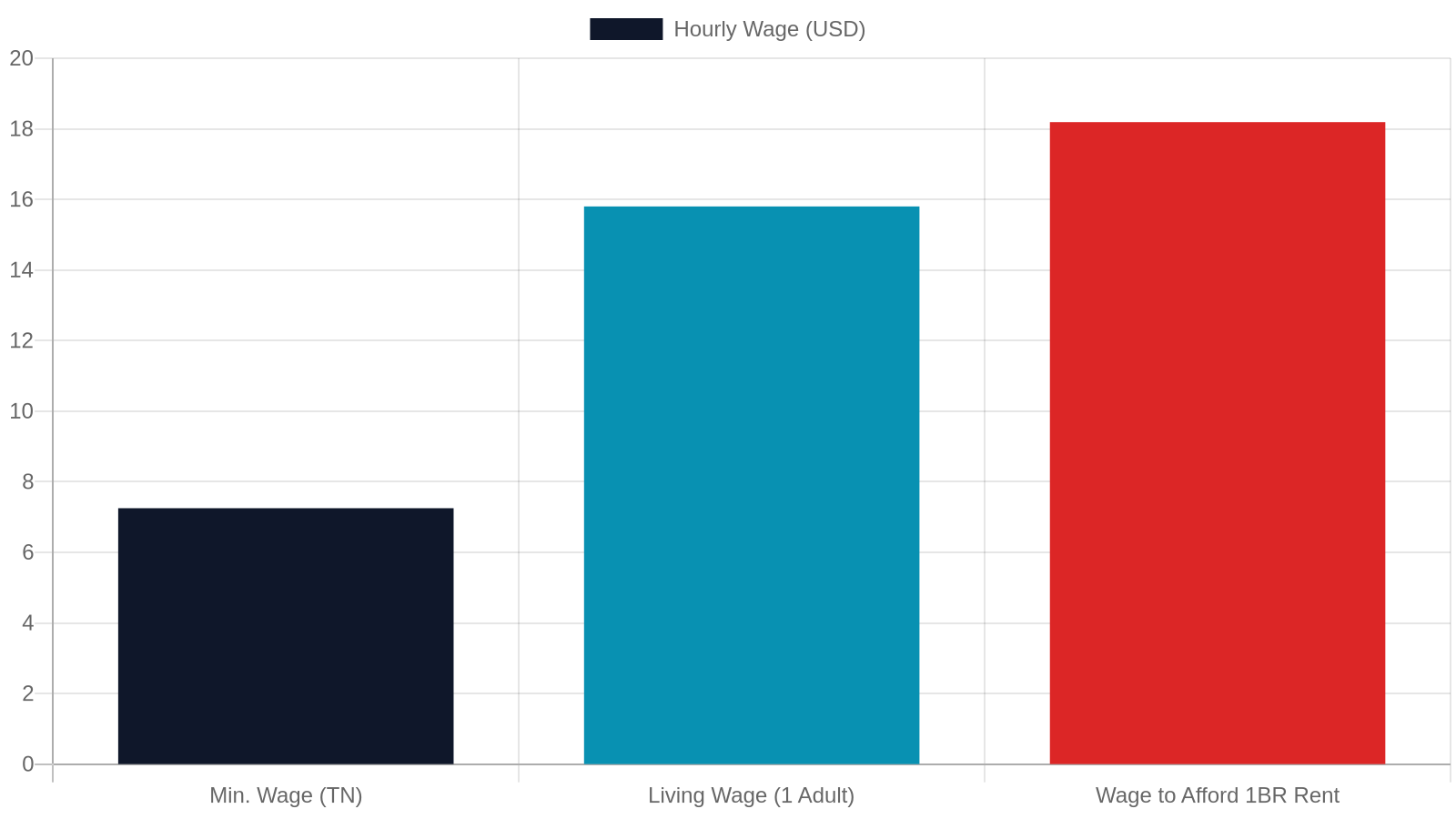
Research from the National Alliance to End Homelessness consistently shows that sustainable income is one of the top two factors — alongside affordable housing supply — that determines whether a young adult can exit homelessness and stay housed. In Tennessee, the average fair-market rent for a one-bedroom apartment in Chattanooga was $946 per month in 2024, requiring a wage of roughly $18.19 per hour to afford without being cost-burdened. Tennessee’s minimum wage sits at the federal floor of $7.25 per hour — less than half of what’s needed. That gap is exactly why job training and career-track employment matter so much for young adults navigating housing instability.
Why Chattanooga's Job Market Is Actually an Opportunity
Chattanooga has undergone a serious economic transformation over the past decade. The city’s advanced manufacturing, logistics, healthcare, and tech sectors are all actively hiring — and many of these employers have entry-level pipelines that don’t require a four-year degree. Volkswagen’s Chattanooga assembly plant, BlueCross BlueShield of Tennessee, and the city’s growing startup ecosystem have all partnered with workforce development programs that specifically recruit young adults. If you’re in Hamilton County right now, the job market is genuinely one of the more accessible in Tennessee — you just need the right on-ramp.
1. Connect With the YAAB TN-500 Chattanooga Region First

Before diving into specific programs, the single most useful first move you can make in Chattanooga is connecting with the people who already know the local landscape. YAAB’s TN-500 region is your peer network inside the Hamilton County Continuum of Care — and that network is the fastest way to cut through confusion and get to real resources.
What TN-500 Actually Does for Young Adults
YAAB’s TN-500 region is the Chattanooga/Hamilton County Continuum of Care chapter of the statewide Youth Action Board network. Members are young adults ages 17–25 with lived experience of homelessness or housing instability — people who have actually navigated the systems you’re dealing with right now. They advise local service providers, push for policy changes, and — critically — know which workforce programs in Chattanooga are actually worth your time and which ones have long waitlists or eligibility barriers you should know about upfront.
Connecting with TN-500 isn’t just about advocacy. It’s a direct peer network that can point you to warm referrals, help you prep for job applications, and make sure you’re not navigating the system alone.
How to Get Connected Right Now
You don’t need to have everything figured out to reach out. YAAB membership is open to young adults ages 17–25 who have lived experience of homelessness or housing instability — that’s the only requirement. You can learn more about the TN-500 Chattanooga region and how to connect directly on the YAAB Tennessee website. From there, a peer member or regional coordinator can help you map out which employment resources make the most sense for your situation, your schedule, and your goals.
2. Walk Into the American Job Center in Hamilton County

The American Job Center network exists specifically to connect job seekers with training, employment, and career services — and in Chattanooga, it’s one of the most accessible no-cost resources available to young adults. If you’ve never been inside an AJC, it’s worth knowing that these are not the same as old-school unemployment offices. They’re designed to be resource hubs, and for transition-age youth, the WIOA Youth Program makes them especially powerful.
What the AJC Offers at No Cost
The American Job Center (AJC) in Chattanooga — part of Tennessee’s statewide workforce network — is a federally funded, free resource for job seekers. Services include résumé writing workshops, mock interviews, job search assistance, career counseling, and access to computers and printing. For young adults who are eligible under the Workforce Innovation and Opportunity Act (WIOA) Youth Program, the AJC can also fund occupational skills training, work experiences, and even paid internships.
WIOA Youth eligibility generally covers individuals ages 14–24 who face barriers to employment — including homelessness and housing instability. If you’re in that age range and dealing with housing issues, you very likely qualify.
WIOA Youth Program: What You Can Actually Get
Through WIOA Youth funding at the Hamilton County AJC, eligible young adults can access: occupational skills training (certifications in healthcare, IT, construction trades, logistics, and more), paid work experiences including internships and on-the-job training, financial literacy education, and supportive services like transportation assistance and work-related clothing. The program also provides a dedicated career advisor — someone who stays with you through the process rather than handing you a pamphlet and sending you home.
3. Explore Sector-Specific Training Programs in Chattanooga

Not all job training is created equal. The most effective programs in Chattanooga are sector-specific — meaning they train you for jobs that are actually hiring right now in industries that pay enough to cover rent. Here are three sectors where young adults in Hamilton County have the clearest pathways from training to employment.
Healthcare: One of the Fastest Paths to a Living Wage
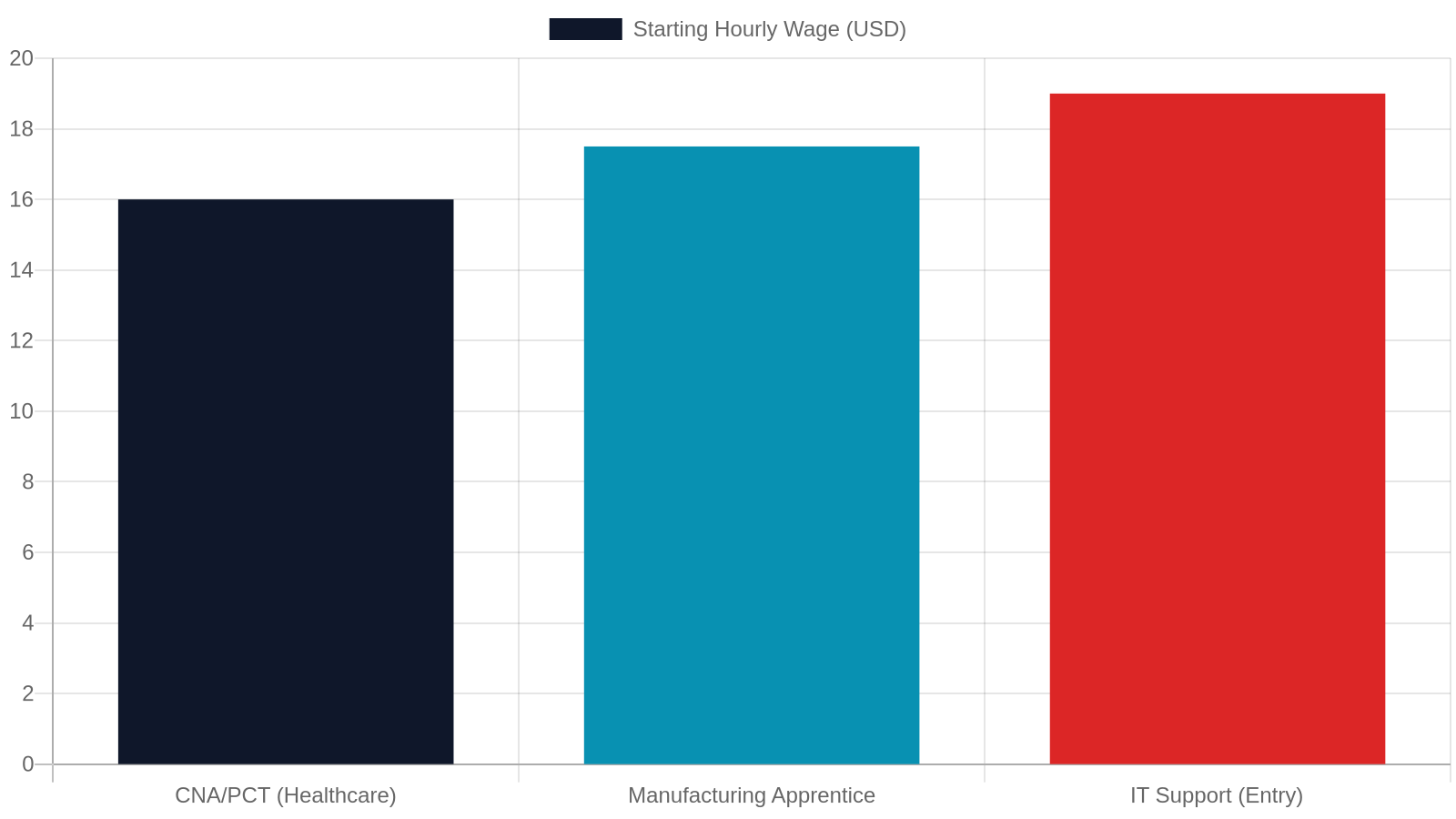
Healthcare is Chattanooga’s largest employment sector by headcount. Entry-level certifications like Certified Nursing Assistant (CNA) and Patient Care Technician (PCT) can be completed in as little as 4–8 weeks and lead to starting wages of $14–$18 per hour at facilities like Erlanger Health System and CHI Memorial. Tennessee College of Applied Technology (TCAT) Chattanooga offers these programs, and WIOA funding can often cover tuition for eligible young adults.
Manufacturing and Skilled Trades: Volkswagen and Beyond
Chattanooga is home to Volkswagen’s only U.S. manufacturing plant, and the facility has a registered apprenticeship pipeline called the Volkswagen Academy. The program combines paid on-the-job training with classroom instruction in mechatronics and industrial maintenance. Starting wages for apprentices are typically $15–$20 per hour, with full technician roles reaching $25–$35 per hour. You don’t need prior manufacturing experience — you need a high school diploma or GED and the ability to pass a skills assessment. TCAT Chattanooga also offers welding, HVAC, and electrical programs that connect to local contractors actively hiring.
Technology: Chattanooga's Gig City Advantage
Chattanooga earned the nickname ‘Gig City’ for being one of the first U.S. cities with citywide gigabit internet. That infrastructure has attracted tech employers and startups. Programs like Chattanooga’s CodeCrew and Tennessee Technology Centers offer coding bootcamps and IT support certifications (CompTIA A+, Google IT Support Certificate) that can be completed in 3–6 months. Entry-level IT support roles in Chattanooga typically start at $16–$22 per hour and often include remote work options — a real advantage if your housing situation is still in flux.
4. Get Your GED or High School Equivalency — It Unlocks Everything

If you’re 17–25 and don’t have a high school diploma or GED, it can feel like a wall between you and every opportunity. But it’s actually a door — and it opens faster than most people expect. In Chattanooga, free GED prep is available, and completing it can unlock training programs, better-paying jobs, and even college financial aid within months.
Why a Diploma or GED Is the Gatekeeper
Many of the best-paying training programs in Chattanooga — including TCAT programs, the Volkswagen Academy, and most healthcare certifications — require a high school diploma or GED as a baseline. If you don’t have one yet, getting it isn’t a detour — it’s the on-ramp. The good news: Hamilton County’s adult education programs are specifically designed for working adults and young people with complicated schedules, and they’re free.
Where to Get GED Support in Chattanooga
Hamilton County Adult Education offers free GED prep classes at multiple locations, including evening and weekend sessions. The program also provides practice tests, one-on-one tutoring, and test fee assistance. The GED exam itself costs $36 per subject ($144 total) in Tennessee, but fee waivers are available for low-income test-takers. Once you pass, you receive a Tennessee High School Equivalency Diploma — the same credential employers and colleges see as equivalent to a traditional diploma. YAAB peer members in Chattanooga can connect you to navigators who help with enrollment and scheduling.
5. Tap Into Paid Work Experience and Internship Programs

Paid work experience programs are one of the most underused resources for transition-age youth in Chattanooga. They’re not just résumé builders — they’re income sources that can help stabilize your situation while you’re still figuring out your career direction. Several programs in Hamilton County specifically prioritize young adults facing barriers to employment.
Why Paid Work Experience Matters More Than You Think
One of the biggest barriers young adults face in the job market is the classic catch-22: employers want experience, but you can’t get experience without a job. Paid work experience programs break that cycle by placing you in real work settings — with a real paycheck — while you’re still building your skills. For young adults experiencing housing instability, the income from these placements can also help with immediate needs like deposits, transportation, and food.
Programs Offering Paid Placements in Chattanooga
WIOA-funded work experiences through the Hamilton County AJC pay participants directly and can last from a few weeks to several months. YouthBuild Chattanooga — a federally funded program for young adults ages 16–24 — combines paid construction skills training with GED prep and leadership development; participants earn a stipend while learning. AmeriCorps programs operating in Hamilton County offer education awards and living stipends for service terms. Each of these programs has slightly different eligibility and application processes, which is another reason connecting with a YAAB peer navigator first can save you significant time.
6. Access Supportive Services That Make Employment Actually Possible

Getting a job isn’t just about skills and certifications. For young adults navigating housing instability, the practical barriers — no reliable transportation, no work clothes, untreated mental health challenges — can be just as significant as any skills gap. Chattanooga has resources that address these barriers directly, and most of them are free or low-cost for eligible young adults.
Transportation: The Hidden Employment Barrier
Chattanooga’s public transit system — CARTA — covers much of Hamilton County, but service gaps exist, especially for early-morning and late-night shifts common in healthcare and manufacturing. WIOA Youth supportive services can cover bus passes. The Chattanooga Area Regional Transportation Authority also offers a reduced-fare program for low-income riders. Some employers — including Volkswagen and several healthcare systems — offer shuttle services from designated pickup points. Ask your AJC career advisor specifically about transportation support when you enroll.
Work Clothes, Tools, and Licensing Fees
Showing up to a job interview or first day of work in appropriate clothes when you’re experiencing housing instability is a real logistical challenge. In Chattanooga, Goodwill Industries of the Southern Appalachians operates free professional clothing programs for job seekers. WIOA supportive services can also cover costs like work boots, uniforms, tools, and professional licensing fees — costs that can otherwise be deal-breakers. Don’t assume you have to cover these out of pocket before asking your career advisor or YAAB peer what’s available.
Mental Health and Stability Support
Trauma, anxiety, and the mental load of housing instability are real barriers to maintaining employment. Chattanooga’s Helen Ross McNabb Center and Centerstone Tennessee both offer mental health services on sliding-scale fees, with specific programs for transition-age youth. Addressing mental health isn’t a detour from employment — it’s part of the same journey. YAAB members in the TN-500 region can connect you to peer support and warm referrals to mental health services that don’t require insurance.
Chattanooga Job Training Programs at a Glance
Not every program is right for every person. Here's a side-by-side look at the main pathways available to young adults in Hamilton County so you can quickly identify which fits your situation.
7. Know Your Rights as a Young Worker in Tennessee

When you’re in a vulnerable situation, it can feel like you have to accept whatever an employer offers just to keep income coming in. But you have legal rights as a worker in Tennessee — and knowing them is part of building a stable career. Here are the most important protections for young adults entering the workforce in Chattanooga.
Wage and Hour Rights Every Young Adult Should Know
Tennessee follows federal wage and hour law. If you’re 18 or older, you’re entitled to at least $7.25 per hour for all hours worked, overtime pay at 1.5× your regular rate for hours over 40 in a workweek, and a pay stub showing your hours and deductions. If you’re 17, federal youth minimum wage rules may apply for the first 90 days of employment ($4.25/hour), after which you must receive the full minimum wage. Employers cannot legally pay you less than this, regardless of your housing situation or whether you’re in a training program.
Discrimination Protections and What to Do If You're Mistreated
Federal law prohibits workplace discrimination based on race, color, national origin, sex, religion, age (if 40+), and disability. Tennessee also has state-level protections. If you experience wage theft, harassment, or discrimination at work, you can file a complaint with the U.S. Department of Labor Wage and Hour Division or the Equal Employment Opportunity Commission (EEOC) — both free and confidential. Legal Aid of East Tennessee also provides free legal assistance to low-income individuals in the Chattanooga area. You don’t need a lawyer to start a complaint, and you cannot be fired for filing one.
8. Turn Employment Into Advocacy — Get Involved With YAAB

Getting a job is a personal win. Helping change the systems that made it hard to get that job in the first place — that’s a community win. YAAB gives young adults in Chattanooga the platform to do both. And the skills you build through advocacy are the same skills employers in leadership, policy, and community development are actively looking for.
Your Experience Is Expertise
If you’ve navigated job training programs, workforce barriers, or the gap between minimum wage and livable rent in Chattanooga, you have knowledge that policymakers and service providers genuinely need. YAAB Tennessee exists to put that knowledge to work — not just for you, but for every young adult coming behind you. Members of the TN-500 Chattanooga region advise local Continuum of Care partners, provide input on how workforce programs are designed, and advocate for policy changes at the city, county, and state level.
What YAAB Membership Looks Like in Practice
YAAB membership isn’t a full-time job or a formal commitment that conflicts with your employment goals. Members participate in meetings, provide feedback on programs and policies, and connect peers to resources. Many members find that YAAB participation itself builds real professional skills — public speaking, systems navigation, policy analysis, coalition building — that strengthen their résumés and open doors to careers in social services, government, and nonprofit leadership. If you’re ready to take that step, join YAAB Tennessee and let the network know you’re in Chattanooga.
Your Next Move: Start With One Step in Chattanooga

You don’t need to have it all figured out to take the first step. Every young adult who has found stable employment and housing in Chattanooga started exactly where you are — with a situation that felt overwhelming and a next step that felt uncertain. The difference is having people in your corner who know the landscape. That’s what YAAB’s TN-500 Chattanooga region is here for — peer support, real referrals, and advocacy from people who’ve been where you are and know what actually works.
A Simple Action Plan for Right Now
If you’re a young adult in Chattanooga or Hamilton County and you’re not sure where to start, here’s a simple sequence: First, connect with the TN-500 YAAB region to get peer guidance and warm referrals. Second, visit the Hamilton County American Job Center to find out if you qualify for WIOA Youth services. Third, identify one sector — healthcare, manufacturing, or tech — and look into TCAT Chattanooga’s programs. Fourth, if you need a GED, enroll in Hamilton County Adult Education — it’s free and flexible. You don’t have to do all of this at once. One step at a time is how it actually works.
Resources Across Tennessee
If you’re not in Chattanooga, YAAB has regional chapters across Tennessee — from Memphis and Nashville to Knoxville, Jackson, the Upper Cumberland, and Northeast TN. You can find your local YAAB region on the statewide site and connect with peers in your area who know the local resources. The YAAB Tennessee resources page also maintains a statewide directory of housing, employment, education, and support services for transition-age youth across all regions.
Frequently Asked Questions
How do I join YAAB in Chattanooga if I'm experiencing homelessness right now?
You can connect with YAAB's TN-500 Chattanooga region directly through the YAAB Tennessee website. You don't need a permanent address or stable housing to get involved — lived experience of homelessness or housing instability is exactly what makes you eligible. A peer member or coordinator can meet you where you are.
Do I need a high school diploma to access job training programs in Chattanooga?
Some programs require a diploma or GED, but not all. YouthBuild Chattanooga, for example, combines GED prep with paid skills training so you're working toward both at the same time. The Hamilton County American Job Center can help you find programs that fit your current education level.
What is WIOA and how does it help young adults in Hamilton County?
WIOA stands for the Workforce Innovation and Opportunity Act, a federal law that funds job training and employment services. The WIOA Youth Program specifically serves young adults ages 14–24 who face barriers to employment — including homelessness. In Chattanooga, WIOA funds are administered through the Hamilton County American Job Center and can cover tuition, certifications, paid work experiences, and supportive services like transportation.
Are there job training programs in Chattanooga that pay you while you learn?
Yes. The Volkswagen Academy apprenticeship pays participants while they train. YouthBuild provides a stipend. AmeriCorps programs offer living stipends plus an education award. WIOA-funded work experiences also pay participants directly. You don't have to choose between income and training.
What if I'm in Tennessee but not in Chattanooga — can YAAB still help me?
Absolutely. YAAB Tennessee has regional chapters across the state, including Memphis/Shelby County, Nashville/Davidson County, Knoxville/Knox County, Jackson/West Tennessee, Upper Cumberland, and Northeast Tennessee. You can find your local YAAB region at yaabtn.org/local-yaabs/ and connect with peers who know your area's specific resources.
How long does it take to get a job after completing a training program in Chattanooga?
It varies by program and sector. Short-term certifications like CNA or Google IT Support can lead to job offers within weeks of completion. Longer programs like TCAT trades or the Volkswagen apprenticeship take 9 months to 2 years but lead to higher starting wages. Your AJC career advisor can help you weigh timeline against earning potential based on your specific situation.