Quick answer: The Youth Action Board of Tennessee (YAAB) podcast puts real young adults — ages 17 to 25 with lived experience of homelessness and housing instability — front and center, letting them tell their own stories in their own words. Across episodes recorded in Memphis, Nashville, Knoxville, Chattanooga, and beyond, listeners hear firsthand how Tennessee's Continuum of Care system works, what gaps still exist, and how young people are driving change. Whether you're looking for hope, housing info, or a way to plug into advocacy, these episodes are a great place to start.
1. Why a Podcast? Amplifying Voices That Are Too Often Ignored

Storytelling has always been one of the most powerful tools for social change. When young people experiencing housing instability share their own journeys — in their own voices, without a filter — something shifts. The YAAB podcast was built on exactly that belief: that the most credible experts on youth homelessness in Tennessee are the young adults who have lived it.
The Problem With Being Talked About Instead of Heard
For decades, conversations about youth homelessness in Tennessee happened in conference rooms, legislative hearings, and nonprofit board meetings — almost always without the young people most affected in the room. Reports got written, budgets got approved, and programs got designed based on what adults assumed young people needed. The results were predictably mixed.
The YAAB podcast flips that script. When a 21-year-old from Memphis describes navigating the shelter intake process at 3 a.m., or a 19-year-old from Knoxville explains what it actually felt like to age out of foster care with nowhere to go, that’s not a statistic — it’s a story that sticks. Research consistently shows that narrative-driven communication shifts attitudes and policy faster than data alone. A 2022 study by the National Alliance to End Homelessness found that personal testimony increased legislator support for housing funding by up to 34% compared to data-only presentations.
Podcasts Meet Young People Where They Are
Audio is one of the most accessible media formats available. You don’t need reliable Wi-Fi to download an episode ahead of time. You don’t need a quiet room or a big screen. According to Edison Research’s 2023 Infinite Dial report, 42% of Americans ages 18–34 listen to podcasts monthly — a share that has nearly doubled since 2015. For transition-age youth who may be couch-surfing, staying in a shelter, or commuting to a new job, a podcast episode is something you can absorb on a bus ride or during a lunch break.
YAAB recognized this early. By choosing audio as a primary storytelling medium, the network ensures that the experiences of young Tennesseans reach peers, providers, and policymakers in a format that’s genuinely consumable.
2. What the YAAB Podcast Actually Covers

The YAAB podcast isn’t a single-topic show. It ranges across the full landscape of issues that affect transition-age youth in Tennessee, weaving together housing, education, employment, mental health, and advocacy into episodes that feel like honest conversations rather than lectures. Here’s a breakdown of the major themes you’ll hear across the catalog.
Housing Navigation, Shelter Systems, and the Continuum of Care
A significant portion of YAAB episodes dig into the nuts and bolts of how Tennessee’s housing system works — or doesn’t. Guests walk through what a Coordinated Entry assessment feels like, how Housing First programs differ from traditional shelter models, and what Rapid Rehousing actually provides versus what people expect. These aren’t dry explainers; they’re conversations between young people who have been through the system and want to help peers understand it before they’re in crisis.
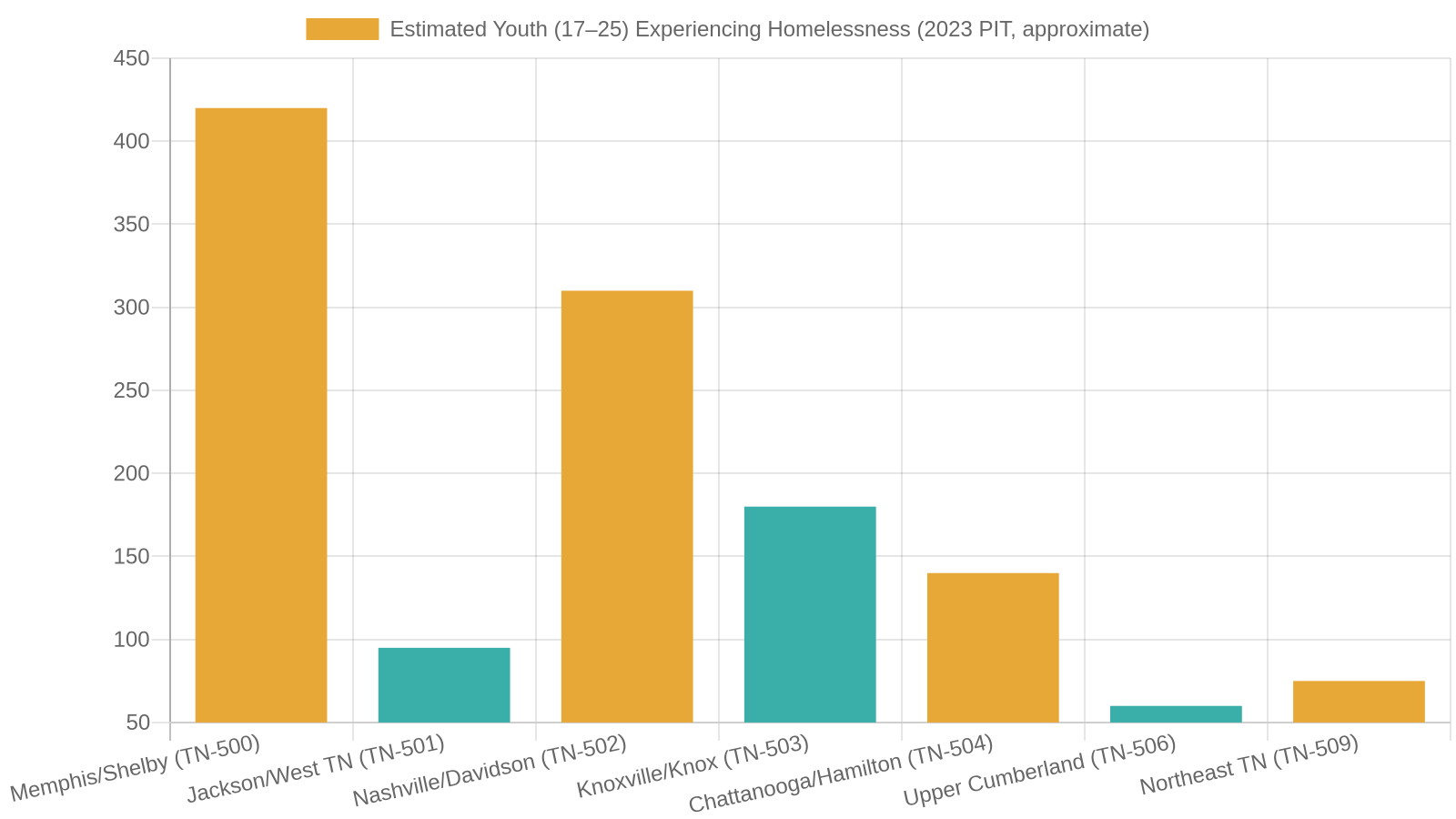
Tennessee operates eight Continuum of Care (CoC) regions, each with its own resources, waitlists, and quirks. Podcast episodes often highlight region-specific information — for example, how the Memphis/Shelby CoC (TN-500) handles youth-specific beds differently than the Nashville/Davidson CoC (TN-502). That granular, regional knowledge is hard to find anywhere else.
Education, Employment, and Financial Empowerment
Housing stability doesn’t exist in a vacuum. YAAB episodes regularly connect the dots between safe housing and other pillars of stability: finishing a GED, landing a first job with benefits, opening a bank account, or understanding a lease agreement for the first time. Guests share practical wins — like how one Nashville member used a Workforce Innovation and Opportunity Act (WIOA) grant to pay for a commercial driver’s license — alongside honest talk about setbacks.
Financial literacy is a recurring theme. Many transition-age youth have no credit history, no savings, and no adult who modeled healthy money habits. Episodes tackle topics like secured credit cards, rental assistance programs, and how to dispute an error on a background check that’s blocking a housing application.
Mental Health, Identity, and Healing
YAAB members are clear that housing instability is traumatic, and the podcast doesn’t shy away from that reality. Episodes explore the intersection of mental health and homelessness — including how untreated trauma, anxiety, and depression can make it harder to navigate bureaucratic systems, and how culturally competent care (when you can access it) changes outcomes. LGBTQ+ youth, who make up an estimated 40% of homeless youth nationally according to True Colors United, are centered in multiple episodes, with guests discussing both the additional barriers they face and the community they’ve found through YAAB.
3. Real Stories From Across Tennessee's Eight CoC Regions

One of the most valuable things about the YAAB podcast is its geographic breadth. Rather than defaulting to Nashville or Memphis as the only voices that matter, the show actively features young adults from all eight of Tennessee’s Continuum of Care regions. That regional diversity isn’t just good representation — it’s essential information, because the experience of housing instability in Cookeville looks nothing like the experience in Chattanooga.
Memphis and West Tennessee: Navigating Urban and Rural Gaps
Memphis is home to Tennessee’s largest CoC (TN-500), and YAAB members from Shelby County and the surrounding Jackson/West TN region (TN-501) bring perspectives that reflect both dense urban shelter systems and the near-total absence of services in rural counties. One recurring theme in Memphis-area episodes: the gap between the number of youth experiencing homelessness and the number of youth-designated shelter beds. As of the 2023 Point-in-Time Count, Shelby County identified over 1,600 individuals experiencing homelessness on a single night — yet youth-specific resources remain limited relative to demand.
West Tennessee guests often describe driving 45 minutes or more to reach the nearest shelter intake, a logistical barrier that effectively makes services inaccessible without reliable transportation.
Nashville, Knoxville, and Chattanooga: Policy Meets Practice
Middle and East Tennessee episodes tend to focus on the intersection of state policy and local implementation. Nashville YAAB members (TN-502) have testified before the Tennessee General Assembly and share those experiences on the podcast — what it felt like to speak to lawmakers, what questions they were asked, and whether they felt heard. Knoxville (TN-503) and Chattanooga (TN-504) guests highlight the role of university towns in both creating and solving youth housing instability, including how college students experiencing homelessness often fall through the cracks of both campus and community systems.
Upper Cumberland and Northeast Tennessee: Making Noise in Smaller Markets
Some of the most striking episodes come from YAAB members in Upper Cumberland (TN-506) and Northeast Tennessee (TN-509) — regions where the word ‘homelessness’ is often met with skepticism from local officials who assume it’s only an urban problem. Guests describe the particular challenge of advocating in communities where the issue is invisible by design: young people double up with relatives, sleep in cars, or couch-surf indefinitely rather than enter a formal shelter system that barely exists. These stories are essential for understanding why statewide data consistently undercounts rural youth homelessness.
4. How YAAB Members Prepare to Tell Their Stories

Getting on a podcast and talking about your experience with homelessness isn’t something most people do without preparation. YAAB invests real time and care into making sure members feel ready — not just technically, but emotionally and strategically. The preparation process is itself a form of leadership development.
Trauma-Informed Storytelling: Sharing Without Re-Harming
Sharing a personal story of housing instability is not a neutral act. Done without support, it can retraumatize the speaker, invite unwanted scrutiny, or reduce a complex life to a single painful moment. YAAB takes this seriously. Before members record or speak publicly, they receive training in trauma-informed storytelling — a framework that helps speakers decide what to share, how to frame their experience with agency rather than victimhood, and how to set limits on what journalists, policymakers, or audiences can ask.
The training draws on models developed by organizations like the Opportunity Agenda and the National Homelessness Law Center, adapted for young adults. The goal is for every speaker to feel empowered — not exposed — after sharing their story.
Building Confidence Through Peer Support
Many YAAB members describe their first public speaking experience as terrifying. The podcast format helps because it’s conversational rather than performative — you’re talking to another young person, not delivering a speech to a room full of strangers. Members often record episodes in pairs or small groups, which distributes the pressure and creates a natural dialogue.
Over time, the confidence built in podcast conversations translates to other advocacy settings: legislative testimony, community forums, and media interviews. Several YAAB alumni have gone on to careers in social work, public policy, and communications — skills they first practiced on the podcast.
Consent, Privacy, and Choosing Your Own Narrative
YAAB’s podcast process includes explicit conversations about consent and privacy. Members choose whether to use their full name, a first name only, or a pseudonym. They review questions in advance and can flag topics they’re not comfortable discussing. They receive a copy of the episode before it goes live and have the right to request edits. This level of control is unusual in media coverage of homelessness, where young people are often photographed or quoted without meaningful consent. YAAB’s approach models what ethical storytelling looks like — and members often say that the process itself is part of what makes participation feel worthwhile.
5. What Listeners Say: The Impact of Hearing Peer Voices

The YAAB podcast isn’t just for people who already know about youth homelessness. Its audience spans young adults in crisis, peers who want to understand what a friend might be going through, case managers looking for ground-level insight, and policymakers who need to hear what data can’t fully capture. Here’s what different listener groups say about the impact.
Young Adults Finding Recognition and Relief
For young people currently experiencing housing instability, hearing someone their own age describe a nearly identical situation — and come out the other side — can be genuinely life-changing. Multiple YAAB members have described the moment they first heard a podcast episode as the first time they felt like their experience was real and valid, not something to be ashamed of. That sense of recognition is not a small thing. Shame and isolation are among the most significant barriers to young people seeking help, and peer voices cut through those barriers in a way that no brochure or hotline can.
Case Managers and Service Providers Gaining Ground-Level Insight
Service providers — case managers, CoC staff, housing navigators — consistently report that YAAB podcast episodes help them understand the youth experience in ways that professional training alone doesn’t provide. Hearing a 20-year-old describe why they didn’t show up for a scheduled intake appointment (because they had no phone charger and missed the reminder call, not because they weren’t motivated) reframes how providers think about no-shows and engagement barriers.
Several Tennessee CoC partners have incorporated YAAB episodes into staff onboarding and training curricula, using them as primary source material for understanding transition-age youth perspectives. This is exactly the kind of system-level impact YAAB was designed to create.
Policymakers Hearing What Data Can't Say
Numbers tell part of the story. A 19-year-old describing the exact moment she realized she had nowhere to go after her foster care case closed tells the rest of it. Tennessee legislators and local officials who have listened to YAAB episodes report that the podcast helps them understand the human stakes of funding decisions in a way that budget spreadsheets don’t. In 2023, YAAB members cited podcast episodes during testimony before the Tennessee General Assembly’s Human Resources Committee, using their own recorded stories as supporting evidence — a creative and effective advocacy move.
6. Advocacy in Action: How Podcast Stories Become Policy Change

Storytelling is powerful on its own. But YAAB is deliberate about connecting the emotional impact of podcast episodes to concrete policy outcomes. The podcast is not just a platform for expression — it’s a strategic advocacy tool that feeds directly into YAAB’s legislative and systems-change work across Tennessee.
To learn more about YAAB’s full advocacy strategy and how members are shaping policy statewide, visit the YAAB advocacy page.
From Episode to Testimony: The Pipeline in Practice
YAAB has developed a deliberate pipeline from podcast storytelling to formal advocacy. When a member records an episode about a specific systemic barrier — say, the difficulty of obtaining a state ID without a permanent address, which is required to access most housing programs — that episode becomes a documented, shareable artifact. YAAB staff and member leaders then use that episode to brief local CoC boards, bring the issue to state agency meetings, and support members who want to testify in person.
Tennessee requires a state-issued ID to apply for most rental assistance programs, yet the Tennessee Department of Safety and Homeland Security requires proof of address to issue an ID. This catch-22 is one of the most commonly cited barriers in YAAB podcast episodes — and it’s now on the radar of multiple state legislators because members put it there, in their own voices.
Building a Statewide Evidence Base
Individually, each podcast episode is one person’s story. Collectively, they form a qualitative evidence base that complements quantitative data from Point-in-Time Counts, HMIS reports, and federal HUD assessments. When YAAB submits public comments on Tennessee’s Consolidated Plan or responds to federal notices of funding availability, the podcast archive provides a library of first-person evidence that strengthens every argument.
This is increasingly recognized as a legitimate form of community-based research. The University of Tennessee’s College of Social Work has cited YAAB’s peer storytelling model in academic publications on participatory action research — a validation that the work is not just meaningful but methodologically sound.
Connecting Local Stories to National Conversations
Tennessee’s youth homelessness challenges don’t exist in isolation. YAAB episodes regularly connect local experiences to national policy debates — the reauthorization of the McKinney-Vento Act, federal Continuum of Care funding formula changes, and the ongoing conversation about extending foster care support to age 21 (Tennessee currently ends extended foster care at 21, though advocates are pushing for consistency in implementation). By framing local stories within national context, YAAB members position themselves as credible contributors to conversations that happen far beyond Tennessee’s borders.
7. A Closer Look: Comparing Storytelling Formats for Youth Advocacy

YAAB uses a range of storytelling and advocacy formats, but understanding why the podcast format is particularly well-suited to youth advocacy requires comparing it honestly against alternatives. Each format has genuine strengths and real limitations — and the best advocacy strategies use several in combination.
Why Format Matters for Reach and Retention
Not all storytelling formats are equally effective for all audiences. A written op-ed in a Nashville newspaper reaches a different audience than a 30-minute podcast episode, which reaches a different audience than a 60-second Instagram Reel. YAAB uses multiple formats, but the podcast occupies a unique niche: it’s long enough to build genuine understanding, accessible enough to reach young people without reliable internet, and personal enough to create emotional connection.
The comparison table below breaks down how different advocacy storytelling formats stack up across key dimensions relevant to YAAB’s mission — reach, accessibility, emotional impact, policy credibility, and production cost.
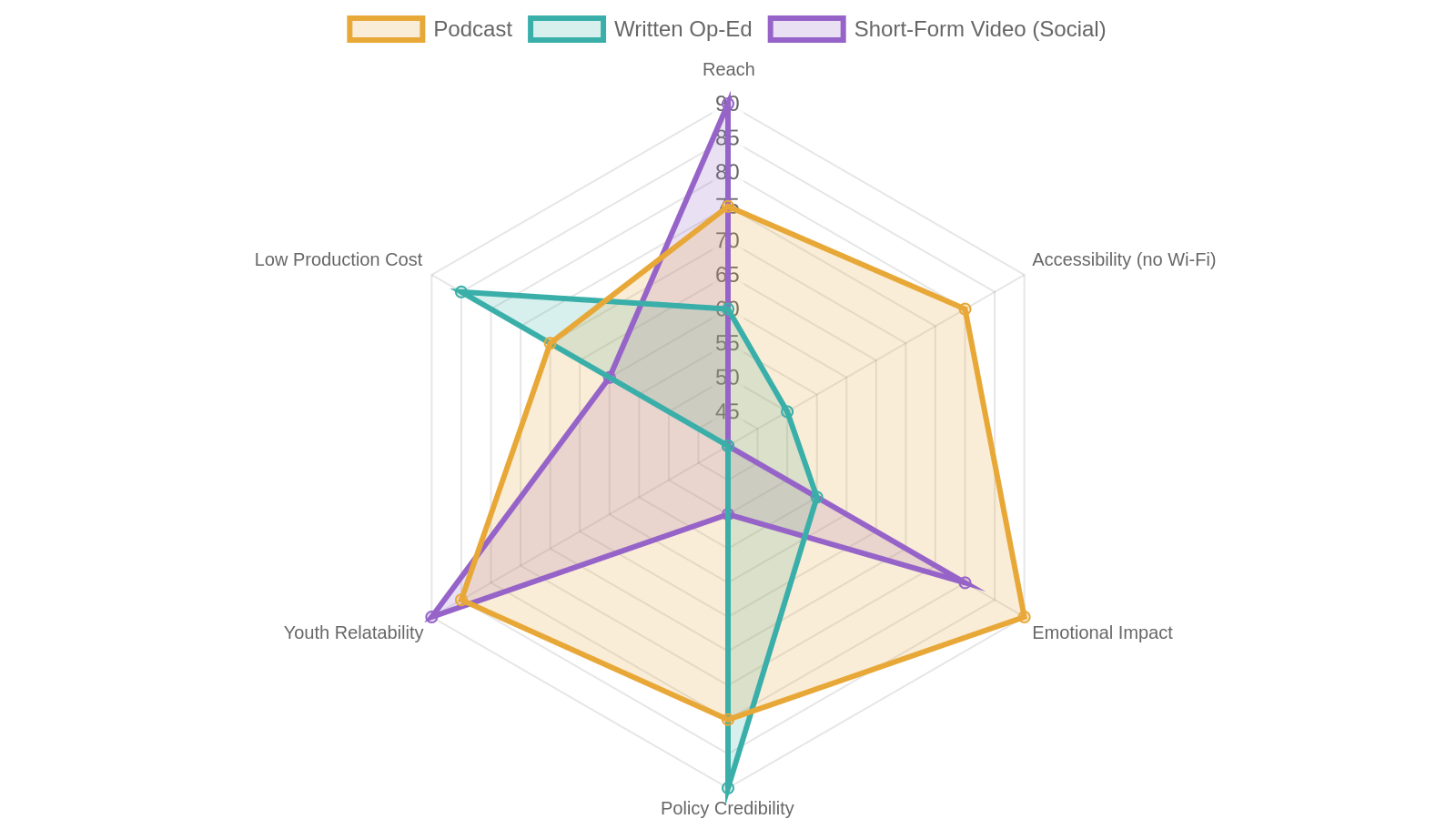
Advocacy Storytelling Formats at a Glance
YAAB uses multiple storytelling formats to reach different audiences. Here's how the podcast compares to other common advocacy communication tools across dimensions that matter for youth homelessness work.
8. How to Find and Listen to YAAB Podcast Episodes

Finding YAAB podcast content is straightforward, and access is intentionally kept as open as possible. Here’s how to tune in, whether you’re a young adult looking for peer voices, a provider looking for training resources, or an advocate who wants to amplify the work.
Where Episodes Live and How to Access Them
YAAB podcast episodes are available through the organization’s media hub, which collects audio, video, and press coverage in one place. Episodes are free to access — no subscription, no account required. The media page is updated regularly as new episodes and features are added, so it’s worth bookmarking if you want to stay current with what YAAB members across Tennessee are saying.
For young adults who are currently in a shelter or transitional housing program with limited data access, many episodes can be downloaded in advance over Wi-Fi and listened to offline. If you’re a case manager or CoC partner looking to share episodes with clients, the media page also includes links to press coverage and other multimedia resources that can be useful in group settings or one-on-one conversations.
Explore the full catalog and stay up to date at the YAAB media page — it’s your go-to hub for podcast episodes, press features, and multimedia content from young advocates across Tennessee.
Sharing Episodes: A Simple Advocacy Act
One of the easiest ways to support YAAB’s work is to share episodes with people who need to hear them. If you’re a young adult who recognizes your own experience in an episode, sharing it with a friend, a case manager, or a teacher is a low-barrier way to start a conversation about youth homelessness that might otherwise feel impossible to open. If you’re a service provider, sharing an episode in a staff meeting or training is a concrete step toward centering youth voice in your organization’s culture.
YAAB members have found that sharing a specific episode — rather than just describing YAAB in the abstract — is often the most effective way to help someone understand what the organization does and why it matters. Let the voices speak for themselves.
9. Understanding Youth Homelessness in Tennessee: The Numbers Behind the Stories

The stories on the YAAB podcast don’t exist in a vacuum — they’re grounded in real, documented patterns of youth homelessness across Tennessee. Understanding the data helps listeners contextualize what they hear and strengthens the case for systemic change. Here’s what the numbers show — and where they fall short.
For a deeper dive into the research and context behind youth homelessness in Tennessee, visit YAAB’s understanding youth homelessness page.
What the Data Actually Shows — and What It Misses
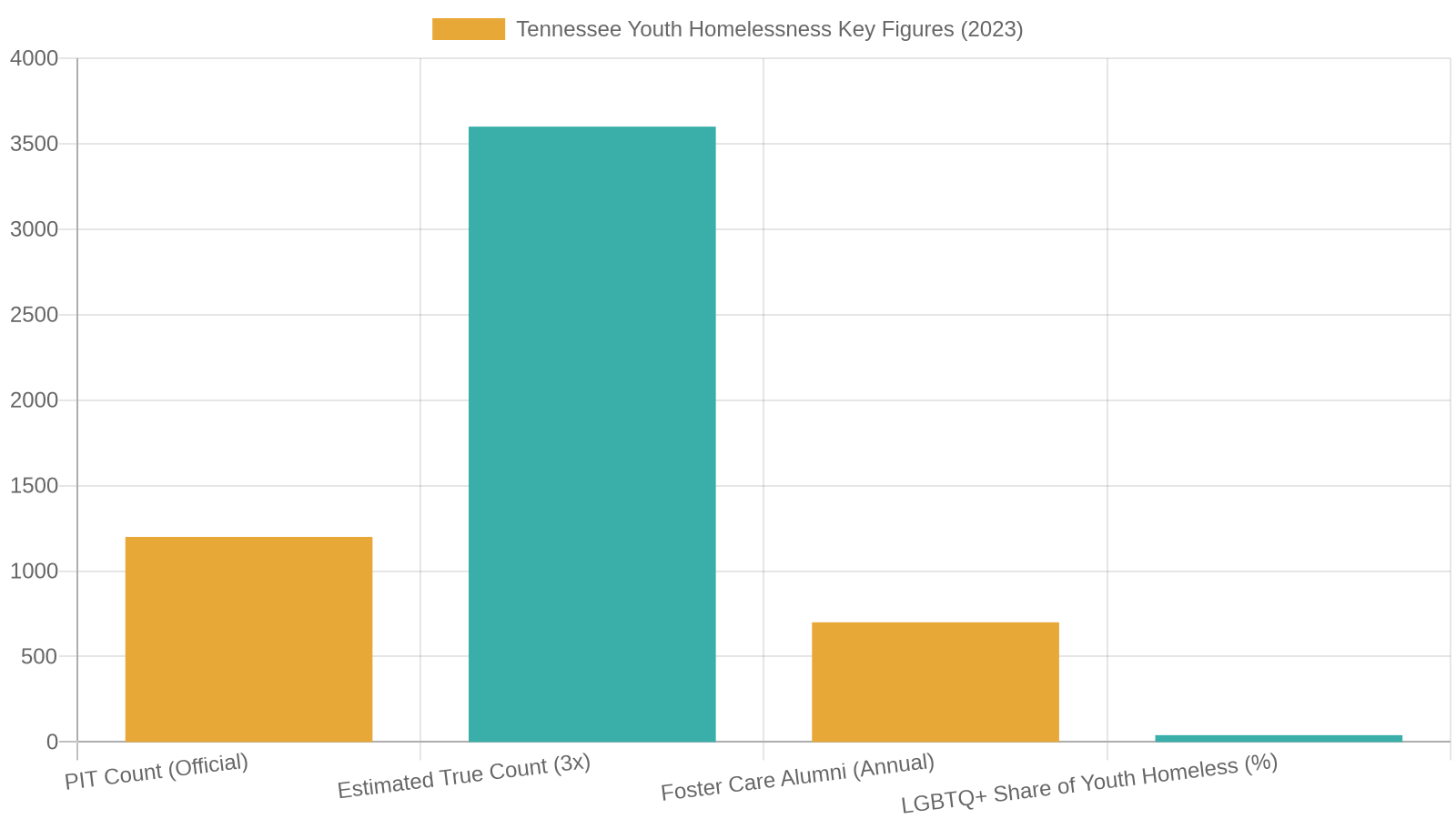
Tennessee’s annual Point-in-Time (PIT) Count provides a snapshot of homelessness on a single January night. In 2023, the statewide count identified approximately 8,500 individuals experiencing homelessness, of whom roughly 1,200 were identified as transition-age youth between 17 and 25. But housing researchers and YAAB members alike are clear that this number is a significant undercount.
The PIT Count misses young people who are couch-surfing (staying temporarily with friends or family), sleeping in cars, or avoiding shelters due to fear of discrimination, lack of youth-specific beds, or rules that prohibit couples or LGBTQ+ individuals from sharing space. The true number of Tennessee young adults experiencing housing instability in any given year is estimated to be three to five times higher than the PIT Count reflects.
Foster Care Aging Out: A Predictable Crisis
Approximately 700 young people age out of Tennessee’s foster care system each year without a permanent family connection. Research from Chapin Hall’s Voices of Youth Count found that young people who have been in foster care are more than twice as likely to experience homelessness within four years of aging out compared to their peers. Tennessee extended its foster care program (Tennessee 21) to age 21, but enrollment is voluntary and awareness remains low — meaning many young people exit the system at 18 without knowing they have options.
YAAB podcast episodes featuring foster care alumni are among the most listened-to in the catalog, precisely because this population is large, identifiable, and underserved — and because hearing from someone who navigated the system and found stability is genuinely useful for young people currently in it.
LGBTQ+ Youth: Overrepresented and Underserved
LGBTQ+ young people make up an estimated 40% of youth experiencing homelessness nationally, despite representing approximately 7% of the general youth population, according to True Colors United’s 2021 research. In Tennessee, this disparity is compounded by a policy environment that has at times been hostile to LGBTQ+ rights, making access to affirming services particularly important — and particularly uneven. YAAB actively centers LGBTQ+ voices in its podcast and advocacy work, and several episodes specifically address how to find affirming housing, mental health, and support services across Tennessee’s regions.
10. How to Get Involved With Your Local YAAB

Listening to the podcast is a great start. But if you’re a young adult in Tennessee with lived experience of housing instability, the most powerful thing you can do is add your own voice to the conversation. Here’s how to take that step.
Who Can Join and What Membership Looks Like
YAAB membership is open to young adults ages 17 to 25 who have lived experience of homelessness or housing instability — including couch-surfing, staying in a shelter, living in a car, or aging out of foster care. You don’t need to be currently homeless. You don’t need to have a polished story or public speaking experience. You just need to be willing to show up and contribute your perspective.
Each of Tennessee’s eight CoC regions has its own local YAAB chapter, and the level of activity varies by region. Some chapters meet weekly; others meet monthly. Some are heavily focused on legislative advocacy; others prioritize peer support and resource connection. The best way to find out what your local chapter is doing is to reach out directly through the local YAABs page and find the chapter nearest you.
What You'll Get Out of It
YAAB membership isn’t just about giving — it’s about growing. Members consistently describe the experience as transformative, not because YAAB changed who they are, but because it gave them a structure and a community in which to become who they already were. Concrete benefits include leadership training, public speaking experience, connections to housing and employment resources, stipends for participation in some chapters, and a network of peers across Tennessee who understand your experience without explanation.
Many YAAB alumni have gone on to jobs in social services, policy, communications, and community organizing — careers they often say they didn’t know were possible before joining. The podcast is one visible output of that development, but it’s just one piece of a much larger picture.
For Case Managers and CoC Partners: How to Connect Youth to YAAB
If you’re a case manager, housing navigator, or CoC staff member reading this, you’re in a position to make a real difference by connecting eligible young adults to their local YAAB chapter. The referral process is simple: share the YAAB website, connect young people to their regional chapter, and let the network do the rest. YAAB is not a service program — it’s a leadership and advocacy network — so it complements rather than competes with the services you’re already providing. Young adults who are engaged in advocacy often show stronger outcomes in housing stability, employment, and mental health, because engagement itself is a form of purpose and community.
11. Your Next Move: Tune In, Speak Up, and Shape What Comes Next

The YAAB podcast exists because young people in Tennessee decided that the best way to change a system is to make sure the people running it can’t ignore the people living inside it. Every episode is an act of courage and an act of strategy. Every listener is a potential ally, advocate, or future member. The conversation is already happening — and it’s happening in your state, in your region, in voices that sound like yours.
Start With One Episode
You don’t have to commit to anything to start. Pull up the YAAB media page, pick an episode that sounds relevant to where you are right now, and listen. If it resonates — if you hear something that sounds like your life, or teaches you something you didn’t know, or makes you feel less alone — that’s the point. Share it with someone. That’s already advocacy.
If you’re a provider or a CoC partner, start by listening to one episode from the region you serve. Then ask yourself: does my program’s intake process, communication style, or eligibility criteria create any of the barriers these young people describe? That’s a question worth sitting with.
Ready to Add Your Voice?
If you’re a young adult in Tennessee ages 17 to 25 with lived experience of housing instability, YAAB wants to hear from you — not to tell your story for you, but to give you the tools and the platform to tell it yourself. Whether you want to record a podcast episode, testify before a local CoC board, or simply connect with peers who get it, there’s a place for you in this network.
Visit the YAAB join page to learn how to connect with your regional chapter. Whether you’re in Memphis, Nashville, Knoxville, Chattanooga, Jackson, Cookeville, or anywhere else in Tennessee — your experience matters, your voice matters, and the system needs to hear from you.
Frequently Asked Questions
What is the YAAB podcast and who is it for?
The YAAB podcast features young adults ages 17 to 25 in Tennessee sharing their firsthand experiences with homelessness, housing instability, and advocacy. It's made for peers who want to hear real stories, for service providers who want to better understand youth experience, and for policymakers who need to hear what data alone can't show.
Where can I listen to YAAB podcast episodes?
All YAAB podcast episodes and multimedia content are available at yaabtn.org/media/. Access is free and no account is required. Episodes can be downloaded in advance for offline listening, which is helpful for young people with limited data access.
Do I have to be currently homeless to join YAAB or share my story?
No. YAAB membership is open to young adults ages 17 to 25 who have any lived experience of homelessness or housing instability — past or present. That includes couch-surfing, staying in a shelter, living in a car, or aging out of foster care. You don't need to be in crisis right now to contribute your perspective.
How does YAAB protect the privacy of young people who share their stories on the podcast?
YAAB uses a trauma-informed storytelling process that includes advance review of questions, the option to use a first name or pseudonym, and the right to review and request edits to an episode before it goes live. Members maintain full control over what they share and how they're identified.
How many Continuum of Care regions does Tennessee have, and does YAAB operate in all of them?
Tennessee has eight Continuum of Care regions, covering Memphis/Shelby, Jackson/West TN, Nashville/Davidson, Knoxville/Knox, Chattanooga/Hamilton, TN-505, Upper Cumberland, and Northeast Tennessee. YAAB has local chapters across these regions, and the podcast features voices from across the state.
Can case managers refer young adults to YAAB, and how does that work?
Yes. Case managers and CoC partners can refer eligible young adults (ages 17–25 with lived experience of housing instability) to their regional YAAB chapter by sharing yaabtn.org/local-yaabs/ and encouraging them to connect. YAAB is a leadership and advocacy network, not a direct service program, so it complements existing case management rather than replacing it.