Quick answer: Chattanooga's Youth Action Board (YAAB) members — young adults ages 17 to 25 with lived experience of homelessness — are actively shaping housing policy in Hamilton County, Tennessee. They attend Continuum of Care meetings, testify before local government, co-design programs, and connect peers to emergency shelter, rapid rehousing, and supportive services. Their advocacy has helped push for more transition-age youth beds, stronger tenant protections, and better data collection. If you're a young person in the Chattanooga area who's been through housing instability, YAAB wants your voice at the table.
1. What Is the Chattanooga YAAB and Who Does It Serve?

Before diving into the specific advocacy work happening in Hamilton County, it helps to understand exactly what the Chattanooga YAAB is — and why a peer-led board of young adults with lived experience is one of the most powerful forces for change in the local housing system. YAAB isn’t a shelter, a case management agency, or a government office. It’s a youth-driven advocacy body that sits at the intersection of policy, community organizing, and peer support.
A Peer-Led Network, Not a Top-Down Program
The Chattanooga chapter of the Youth Action Board is part of Tennessee’s statewide YAAB network, which operates across every major Continuum of Care (CoC) region in the state. What makes YAAB different from most youth-serving organizations is simple: the people most affected by the problem are the ones leading the solutions. Every YAAB member is a young adult between the ages of 17 and 25 who has personally experienced homelessness or housing instability — not a social worker speaking on their behalf.
In Hamilton County, that means YAAB members bring firsthand knowledge of what it’s actually like to navigate the local shelter system, apply for rapid rehousing assistance, or try to hold down a job while couch-surfing. That lived experience is not a liability — it is the credential that gives their advocacy credibility and power.
Who Is Considered a Transition-Age Youth (TAY)?
The term transition-age youth (TAY) refers to young people between roughly 16 and 24 who are navigating the shift from adolescence to adulthood — often without the family safety net that most young people rely on. In federal housing policy, the U.S. Department of Housing and Urban Development (HUD) defines unaccompanied homeless youth as individuals under 25 who are not in the physical custody of a parent or guardian.
- Youth aging out of Tennessee’s foster care system at 18 (or up to 21 with extended support)
- Young people fleeing unsafe home environments
- LGBTQ+ youth who have experienced family rejection
- Young adults recently released from juvenile or adult correctional facilities
- Pregnant or parenting youth without stable housing
In Chattanooga and Hamilton County, these young people interact with a patchwork of shelters, outreach workers, and CoC-funded programs — and YAAB members know that patchwork better than anyone.
2. The Housing Crisis Facing Young Adults in Hamilton County

Effective advocacy starts with understanding the problem clearly. YAAB members in Chattanooga don’t just share their personal stories — they also ground their advocacy in data, because decision-makers respond to both. Here’s a clear-eyed look at the housing landscape that young adults in Hamilton County are navigating right now.
By the Numbers: Youth Homelessness in Chattanooga
Hamilton County’s Point-in-Time (PIT) count — the annual HUD-required census of people experiencing homelessness on a single night — consistently shows that transition-age youth make up a disproportionate share of the unsheltered population. Nationally, young adults ages 18 to 24 represent roughly 13% of the total homeless population despite being only about 9% of the adult population. In mid-sized Southern cities like Chattanooga, advocates argue the real number is significantly higher because many TAY are in hidden homelessness situations — couch-surfing, staying in cars, or temporarily doubling up — that the PIT count misses entirely.
Tennessee’s statewide data shows that youth homelessness is not evenly distributed. Hamilton County, as one of the state’s four largest urban centers, sees concentrated demand for youth-specific beds, drop-in services, and rapid rehousing slots — demand that routinely outpaces available supply.
The Affordable Housing Gap for Young Adults
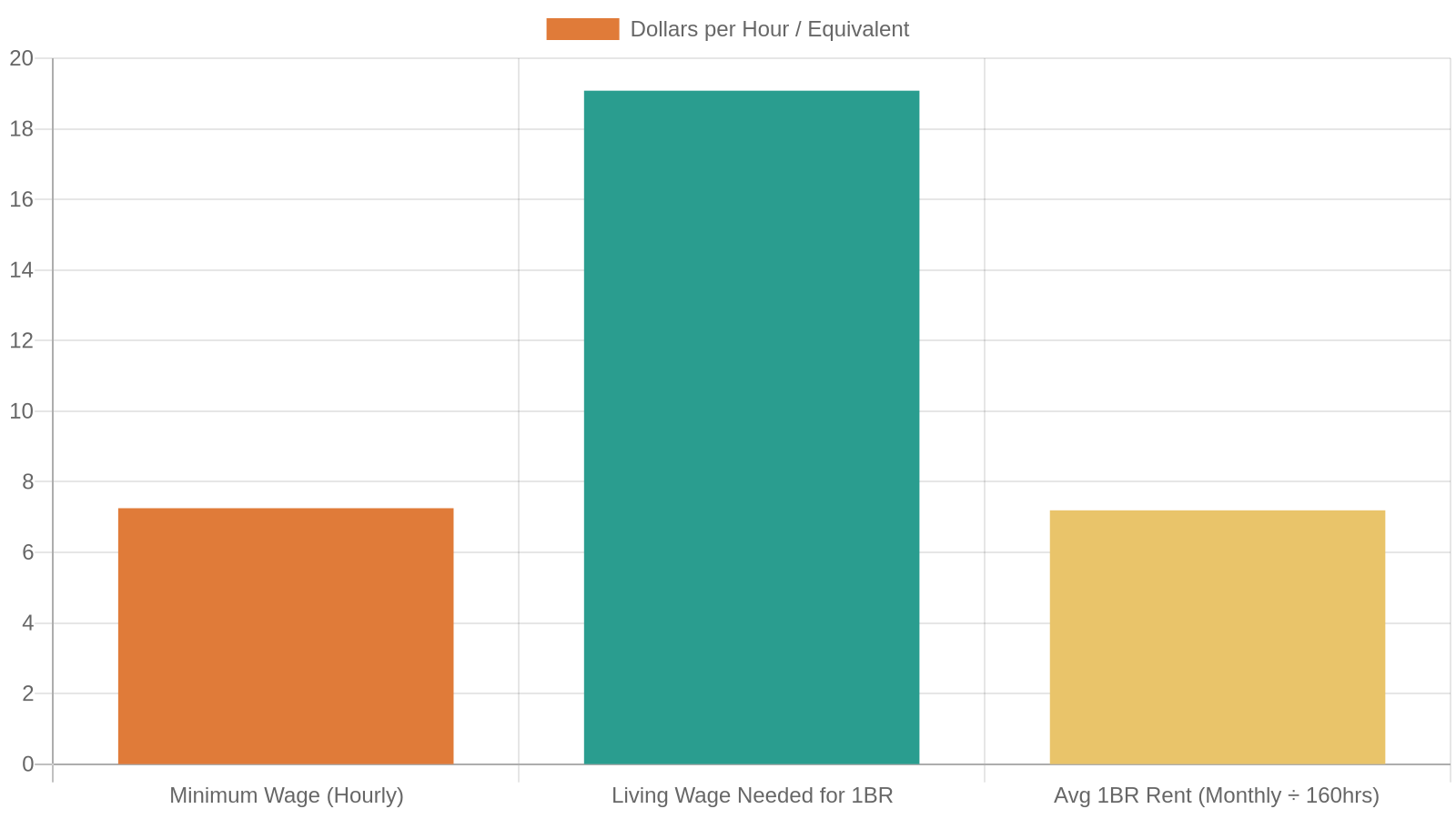
One of the most concrete barriers YAAB members in Chattanooga talk about is the affordability gap. According to the National Low Income Housing Coalition’s 2023 Out of Reach report, a Tennessee renter needs to earn approximately $19.08 per hour to afford a modest one-bedroom apartment at fair market rent without spending more than 30% of their income on housing. The Tennessee minimum wage mirrors the federal floor of $7.25 per hour — less than half that threshold.
- A young adult working 40 hours a week at minimum wage earns roughly $1,160 per month before taxes
- A one-bedroom apartment in Chattanooga averages $1,050–$1,300 per month as of 2024
- That leaves virtually nothing for food, transportation, or an emergency fund
For TAY with limited rental history, no co-signer, or a record from the justice system, even finding a landlord willing to rent is an additional hurdle before the affordability math even kicks in.
3. How the Continuum of Care System Works — and Where YAAB Fits In

To understand how Chattanooga YAAB members advocate for housing rights, you first need to understand the system they’re working within. The Continuum of Care is the engine that drives local homeless response — and getting a seat at that table is one of the most important things YAAB has accomplished in Hamilton County.
What Is a Continuum of Care (CoC)?
A Continuum of Care (CoC) is a regional planning body — funded and regulated by HUD — that coordinates housing and services for people experiencing homelessness. Tennessee has nine CoC regions. Hamilton County falls within TN-500, the Chattanooga/Hamilton County CoC, which is responsible for allocating federal homeless assistance grants, setting local priorities, and coordinating between shelters, service providers, and government agencies.
CoC boards make real decisions: which programs get funded, how many beds are designated for youth, what data gets collected, and which populations are prioritized. Historically, these boards have been dominated by service providers and government representatives — not by the young people the system is supposed to serve.
YAAB's Seat at the CoC Table
One of YAAB’s most significant structural wins in Tennessee has been securing formal representation on CoC governance boards. When a YAAB member sits on the TN-500 CoC board, they’re not there as a token voice or a feel-good addition — they have the same standing as agency directors and county officials to raise issues, ask questions, and vote on priorities.
In practice, this means Chattanooga YAAB members have been able to:
- Advocate for dedicated transition-age youth set-asides within CoC funding competitions
- Push back on eligibility criteria that unfairly screen out young adults with justice involvement
- Request that CoC-funded programs collect and report disaggregated data by age, so youth outcomes are visible and measurable
- Flag gaps in outreach — for example, the fact that many TAY don’t present at traditional adult shelters and are missed by standard intake systems
This kind of insider advocacy — showing up consistently, knowing the rules, and using formal channels — is what turns lived experience into lasting policy change.
4. Key Advocacy Wins: What Chattanooga YAAB Has Pushed For

Advocacy isn’t just about showing up and speaking — it’s about moving the needle on specific, measurable outcomes. Here are some of the concrete areas where Chattanooga YAAB members have focused their energy and made real progress in Hamilton County’s housing system.
More Transition-Age Youth Beds and Dedicated Programs
One of the most consistent asks from Chattanooga YAAB members has been simple and urgent: more beds specifically designated for young adults. Adult shelters often have age minimums of 18 or 21, strict curfews, and environments that can feel unsafe or inappropriate for younger TAY. Youth-specific programs — like those that allow young people to stay together with their peers, access case management, and work on housing plans without the chaos of a large adult shelter — produce better outcomes.
YAAB members have testified at CoC meetings and before Hamilton County commissioners to make the case that youth-specific housing is not a luxury — it’s a harm-reduction strategy that saves money downstream by preventing chronic homelessness. Every dollar invested in rapid rehousing for a 19-year-old costs far less than years of emergency services for a 35-year-old who became chronically homeless after aging out of foster care with nowhere to go.
Tenant Rights Education and Anti-Discrimination Advocacy
Many young adults in Chattanooga don’t know their rights as tenants — and some landlords count on that. YAAB members have pushed for tenant rights education to be integrated into CoC-funded programs, so that young people leaving transitional housing or rapid rehousing programs know what a lease actually says, what constitutes an illegal eviction, and how to report housing discrimination.
Tennessee law provides certain baseline tenant protections under the Uniform Residential Landlord and Tenant Act (URLTA), which applies in counties with populations over 75,000 — including Hamilton County. Key protections include:
- Landlords must provide written notice before entering a unit (typically 24 hours)
- Retaliatory evictions for reporting code violations are prohibited
- Security deposits must be returned within 30 days of move-out with an itemized statement
YAAB members have also advocated against source-of-income discrimination, which affects young adults using housing vouchers — pushing for local policies that encourage landlord participation in voucher programs.
Improving Data Collection on Youth Homelessness
You can’t fix what you don’t measure. One of YAAB’s quieter but most impactful advocacy efforts in Hamilton County has been pushing CoC partners to collect better data on transition-age youth — specifically, data broken down by age, race, sexual orientation, gender identity, and housing history. Without this disaggregated data, it’s impossible to know whether youth programs are reaching the young people who need them most or whether certain subgroups are being systematically underserved.
YAAB members have also advocated for more accurate PIT count methodology for youth, including supplemental youth counts conducted at drop-in centers, schools, and other locations where TAY are more likely to be found than at traditional shelter intake points.
5. The Tools of Youth Advocacy: How YAAB Members Make Their Voices Heard

Advocacy is a skill set, and YAAB invests in building those skills in every member. From public testimony to peer research, Chattanooga YAAB members use a range of tools to make sure the voices of transition-age youth are not just heard — but acted on.
Testifying Before Local Government and CoC Bodies
Public comment periods at CoC meetings, Hamilton County Commission sessions, and city council meetings are open to anyone — and YAAB members use them. Testimony from a young person who has lived through the system is qualitatively different from a report written by a consultant. It’s harder to dismiss, harder to reduce to a budget line, and harder to forget. YAAB members receive coaching and support to prepare testimony that is specific, evidence-based, and emotionally honest — without being reduced to a sob story.
Effective testimony typically includes: a brief personal introduction, a specific policy ask, and one or two data points that back up the ask. YAAB members practice this format so they feel confident and prepared, not exposed or vulnerable, when they speak in public settings.
Participatory Action Research and Peer Surveys
YAAB members across Tennessee have been trained in participatory action research (PAR) — a method where the people most affected by a problem help design and conduct the research that documents it. In Chattanooga, this has meant YAAB members helping to design surveys of their peers about barriers to housing, conducting interviews, and presenting findings to CoC stakeholders.
This approach does two things at once: it produces credible, community-sourced data that decision-makers can act on, and it builds the research and policy skills of the young adults doing the work. PAR is one of the clearest examples of how YAAB treats its members as leaders, not just beneficiaries.
Coalition Building with Other Youth-Serving Organizations
YAAB members in Chattanooga don’t work in isolation. They build relationships with other organizations in the Hamilton County ecosystem — including emergency shelters, rapid rehousing providers, workforce development programs, and mental health agencies — to coordinate advocacy and avoid duplication. When multiple organizations show up to a CoC meeting with a unified ask, it carries far more weight than a single voice.
Coalition building also means connecting with statewide partners. The Tennessee YAAB network allows Chattanooga members to align their local advocacy with efforts in Memphis, Nashville, Knoxville, and other regions — amplifying the impact of their work and sharing strategies that have succeeded elsewhere in the state.
6. Housing Resources Available to Young Adults in Hamilton County

Advocacy matters most when it connects people to real resources. Here’s a practical overview of the housing options and programs available to young adults in Hamilton County — the same resources YAAB members help their peers navigate every day.
Emergency Shelter and Drop-In Services
For a young adult in immediate crisis in Chattanooga, knowing where to go on the first night matters enormously. Hamilton County has several emergency resources that serve transition-age youth, including youth-specific shelters and drop-in centers where young people can access food, showers, laundry, phone charging, and case management without needing to commit to a program or meet complex eligibility criteria upfront.
YAAB members emphasize that drop-in services are often the first point of contact for TAY who are skeptical of the shelter system — and that those first interactions can either build trust or destroy it. Peer navigators — young adults with lived experience who help connect peers to services — play a crucial role in making those first contacts feel safe and non-judgmental.
Rapid Rehousing and Transitional Housing Programs
Rapid rehousing (RRH) is a HUD-funded intervention that helps people move from homelessness into permanent housing as quickly as possible, with short-to-medium-term rental assistance and case management support. In Hamilton County, CoC-funded RRH programs specifically for youth have been a major advocacy target for YAAB members, who have pushed for more slots and more flexible eligibility criteria.
Transitional housing programs offer a longer runway — typically 12 to 24 months of subsidized housing with intensive support services — for young adults who need more time and structure to stabilize before moving into independent housing. Both models have their place, and YAAB members have advocated for a housing-first approach that doesn’t require sobriety, employment, or treatment compliance as a precondition for getting housed.
Tennessee's Extended Foster Care: Know Your Rights
Young adults who were in Tennessee’s foster care system have specific rights and resources available to them. Tennessee’s Extended Foster Care program (EFC) allows young people to remain in care — with housing support, case management, and financial assistance — until age 21, and in some cases to re-enter care if they left between 18 and 21. Many eligible young adults don’t know this option exists or believe they’ve aged out permanently.
- If you left foster care at 18 and are now between 18 and 21, you may be able to re-enroll in Tennessee’s EFC program
- The Chafee Foster Care Independence Program provides funding for education, training, and housing support for former foster youth up to age 23
- Tennessee’s Education and Training Voucher (ETV) program offers up to $5,000 per year for eligible former foster youth pursuing post-secondary education or vocational training
YAAB members in Chattanooga have made it a priority to spread awareness of these rights among their peers — because a right you don’t know about is a right you can’t use.
7. Comparing Housing Intervention Models for Transition-Age Youth

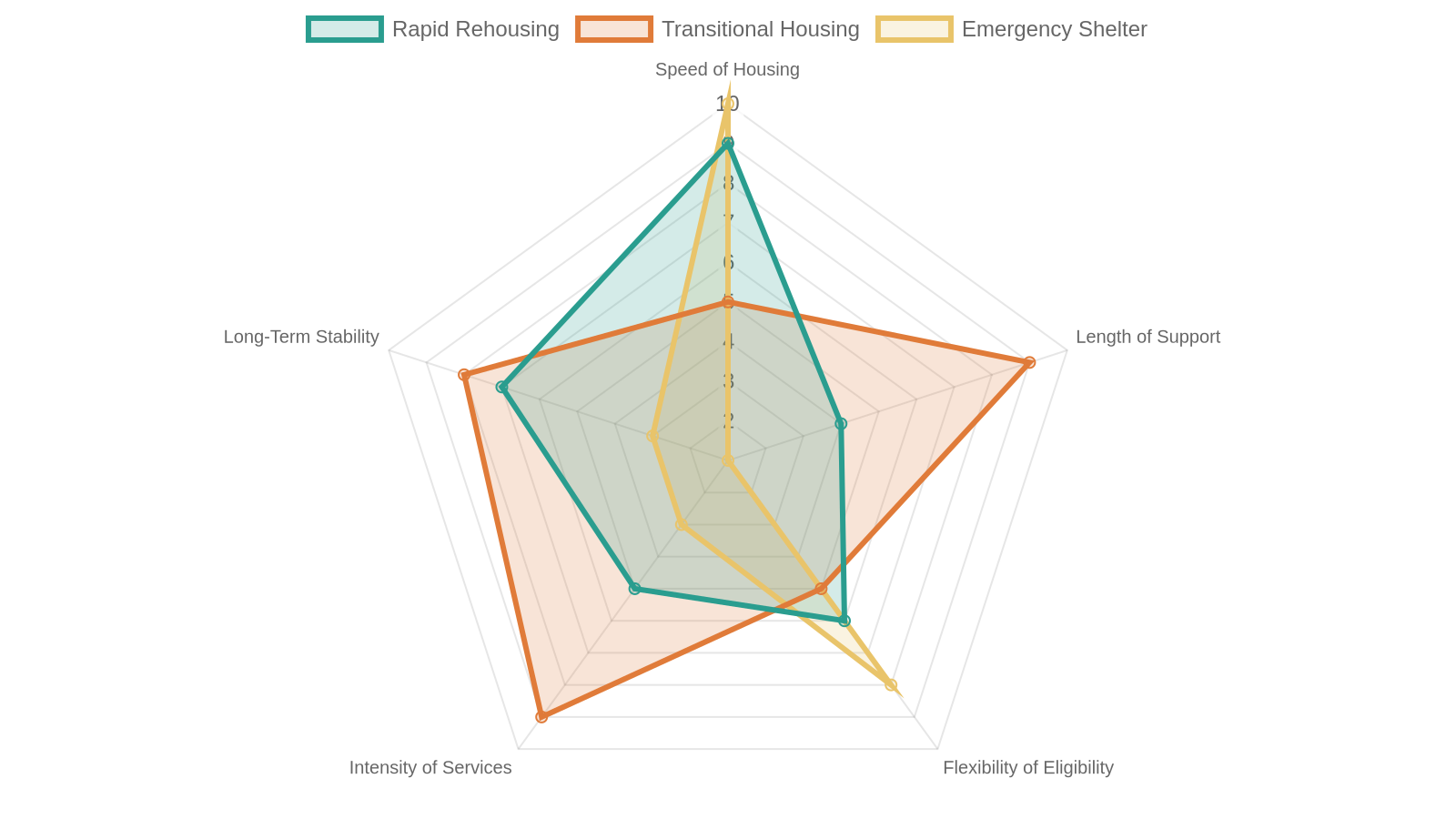
One of the things YAAB members do best is help peers understand the landscape of housing interventions — because the differences between program types matter enormously when you’re trying to find the right fit. Here’s a clear breakdown of the main models available in Hamilton County and across Tennessee’s CoC system.
Which Model Is Right for a Given Situation?
Not every housing intervention works the same way or fits every situation. YAAB members and case managers in Hamilton County often help young adults think through which type of program best fits their current needs, stability level, and goals. The key variables are: how long the support lasts, what conditions are attached, and what the exit looks like.
A young adult who has a job lined up and just needs a deposit and first month’s rent is a strong candidate for rapid rehousing. Someone who just aged out of foster care with no employment history, no ID documents, and significant trauma history may need the longer runway of transitional housing. Emergency shelter is for immediate safety — it’s a bridge, not a destination. Understanding these distinctions helps young adults advocate for the right level of support for their situation.
8. Mental Health, Trauma, and the Connection to Youth Housing Instability

Any honest conversation about youth housing rights in Hamilton County has to include mental health. YAAB members know from their own lives that the relationship between housing and mental well-being runs in both directions — and they’ve made trauma-informed services a core part of their advocacy agenda.
Why Housing and Mental Health Are Inseparable
YAAB members in Chattanooga are clear about something that research consistently confirms: housing instability and mental health are deeply intertwined, and you can’t fully address one without addressing the other. Young adults experiencing homelessness have significantly higher rates of depression, anxiety, PTSD, and substance use than their housed peers — not because of personal failings, but because of the chronic stress, trauma, and lack of safety that come with not having a stable place to sleep.
At the same time, untreated mental health challenges can make it harder to maintain housing — to pay rent on time, communicate with landlords, or hold a job. YAAB members push back against systems that use mental health status as a reason to deny housing rather than a reason to provide more support alongside it.
Advocating for Trauma-Informed Services in Hamilton County
One of YAAB’s advocacy priorities in Hamilton County has been pushing CoC-funded programs to adopt trauma-informed care (TIC) practices — an approach that recognizes the widespread impact of trauma, integrates knowledge about trauma into policies and practices, and actively avoids re-traumatizing the people being served.
In practical terms, trauma-informed housing programs in Chattanooga look like:
- Staff who are trained to understand trauma responses and don’t interpret them as non-compliance
- Flexible program rules that account for the reality of mental health crises
- Physical spaces designed to feel safe — private, clean, and not institutional
- Peer support specialists — people with lived experience — embedded in service teams
YAAB members have also advocated for co-located mental health services at housing programs, so young adults don’t have to navigate a separate system to get the support they need.
Housing Intervention Models at a Glance: Hamilton County CoC Options for Transition-Age Youth
Understanding the differences between housing intervention types helps young adults and their supporters identify the right fit for each situation. This table summarizes the key features of the four main models available through Hamilton County's CoC system.
9. Employment, Education, and the Path to Housing Stability

Housing stability doesn’t exist in a vacuum — it’s connected to income, education, and opportunity. YAAB members in Chattanooga advocate for a holistic approach that addresses all three, because a young adult who has housing but no income won’t be housed for long. Here’s what’s available in Hamilton County to help young adults build the economic foundation that makes housing sustainable.
Workforce Development Resources for Young Adults in Chattanooga
Stable housing requires income, and income requires opportunity. YAAB members in Chattanooga advocate for young adults to have access to workforce development programs that meet them where they are — not programs that require a diploma, a clean record, or a fixed address as a precondition for participation. Hamilton County has several workforce resources relevant to TAY, including American Job Centers (funded through the Workforce Innovation and Opportunity Act, or WIOA), which provide free job search assistance, skills training, and career counseling to young adults ages 16 to 24.
YAAB members have pushed for workforce programs to coordinate more closely with housing programs — so that a young adult working on their resume and a young adult looking for an apartment are getting support from the same integrated team, not bouncing between siloed systems.
GED Pathways and Post-Secondary Education
For young adults who left high school without a diploma, the GED (or HiSET in Tennessee) is a critical credential that opens doors to better employment and post-secondary education. Tennessee offers free adult education classes through the Tennessee Department of Labor and Workforce Development, including in Hamilton County. Many of these programs are offered at flexible times and locations to accommodate working adults.
For former foster youth, the Education and Training Voucher (ETV) program — mentioned earlier — can cover costs associated with post-secondary education or vocational training, including community college, trade school, or certification programs. YAAB members encourage their peers to explore these options and connect with a case manager who can help navigate the application process.
10. LGBTQ+ Youth and Youth of Color: Centering Those Most Impacted

Effective advocacy requires honesty about who is most harmed by the systems being challenged. In Hamilton County and across Tennessee, YAAB members center the experiences of LGBTQ+ youth and youth of color — not as an afterthought, but as a core commitment to equity in the housing system.
Disproportionate Impact on LGBTQ+ Youth
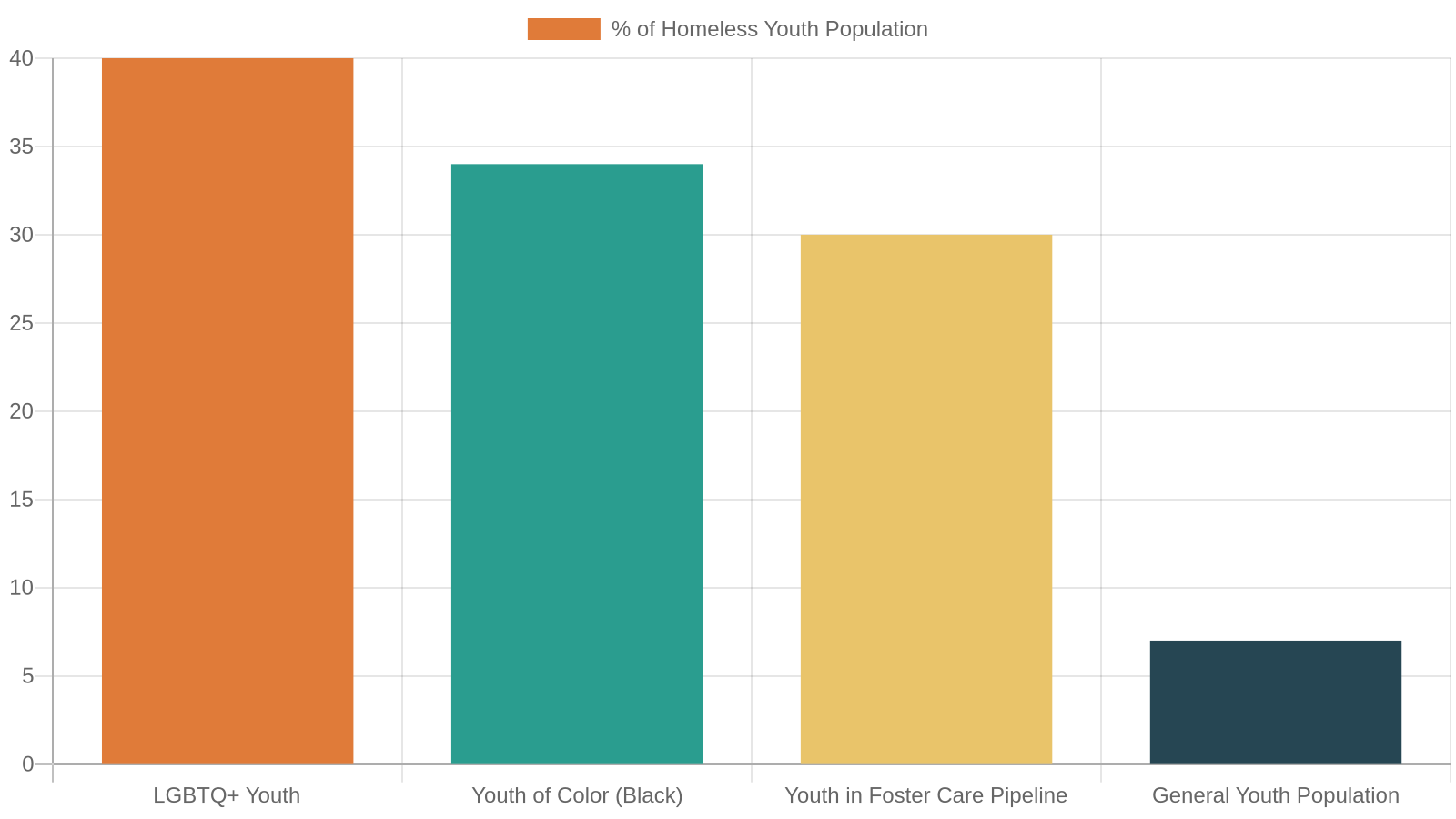
Research consistently shows that LGBTQ+ youth are dramatically overrepresented among homeless young adults. Studies estimate that LGBTQ+ youth make up approximately 40% of the homeless youth population nationally, despite being roughly 7% of the overall youth population. The primary driver is family rejection — young people who are kicked out of or flee their homes after coming out to unsupportive families.
In Chattanooga and across Tennessee, YAAB members have advocated for housing programs that are explicitly LGBTQ+-affirming — where young people won’t face discrimination, misgendering, or unsafe placement in shelter settings. This includes pushing for policies that allow transgender youth to be placed in housing aligned with their gender identity, and for staff training on LGBTQ+-competent care.
Racial Equity in Youth Housing Systems
Black youth are also significantly overrepresented in the homeless youth population — a direct legacy of systemic racism in housing, child welfare, and the justice system. In Tennessee, Black youth are disproportionately represented in the foster care system, which is itself a major pipeline into youth homelessness. YAAB members have pushed for CoC data systems to track racial disparities explicitly and for programs to adopt anti-racist practices that address these disparities rather than perpetuating them.
Centering the experiences of LGBTQ+ youth and youth of color isn’t about excluding anyone — it’s about recognizing that the most marginalized young adults face the highest barriers and need the most targeted support. Advocacy that doesn’t center those most impacted will always fall short of real equity.
11. How to Get Involved with the Chattanooga YAAB

Reading about advocacy is one thing — being part of it is another. If you’re a young adult in Chattanooga or Hamilton County who wants to turn your lived experience into real change, the TN-500 YAAB is the place to do it. Here’s what getting involved actually looks like.
You can learn more and connect with the Chattanooga-area board by visiting the TN-500 Chattanooga/Hamilton County YAAB page — it’s the fastest way to find out about upcoming meetings, current projects, and how to get connected with members in your area.
Who Can Join and What Membership Looks Like
If you’re a young adult between 17 and 25 in the Chattanooga area who has experienced homelessness or housing instability, YAAB wants you. You don’t need to have your life perfectly together, you don’t need to be currently housed, and you don’t need any prior advocacy experience. What you need is a willingness to show up, share your perspective, and engage with the work of shaping the systems that affect young people like you.
YAAB membership looks different for different people. Some members attend monthly meetings and contribute to specific projects. Others take on leadership roles — facilitating meetings, representing YAAB at CoC tables, or leading peer outreach efforts. There’s room for every level of engagement, and YAAB provides training, mentorship, and support to help members grow into whatever role fits them best.
What YAAB Members Gain
Joining YAAB isn’t just about giving — it’s also about receiving. Members gain:
- Leadership and advocacy skills — public speaking, policy analysis, research methods, and coalition building
- A peer community of young adults who understand what housing instability feels like from the inside
- Connections to resources — housing, employment, education, and mental health support — through YAAB’s network of CoC partners
- A resume-building experience that demonstrates real-world policy and community organizing skills to future employers and educational programs
- Stipends and compensation for participation in certain YAAB activities, recognizing that members’ time and expertise have real value
Many YAAB alumni have gone on to careers in social work, public policy, community organizing, and nonprofit leadership — using the foundation they built as YAAB members.
12. Your Next Move: Take Action for Youth Housing Rights in Tennessee

The work of advocating for youth housing rights in Hamilton County is ongoing — and it belongs to all of us. Whether you’re a young adult with lived experience, a service provider, a CoC partner, or a community member who cares about equity, there are concrete steps you can take right now to move this work forward in Chattanooga and across Tennessee.
For Young Adults: Start Where You Are
You don’t have to wait until you’re fully stable, fully confident, or fully sure of yourself to get involved in advocacy. Some of the most powerful YAAB members started attending meetings while they were still in transitional housing or navigating their own housing search. Your experience right now — the frustrations, the gaps, the things that don’t make sense — is exactly the information the system needs to hear.
Start by showing up. Attend a YAAB meeting. Introduce yourself. Ask questions. You’ll find a community of peers who get it, and you’ll start building skills and connections that matter — for your own future and for the young adults who come after you across Tennessee.
For Case Managers and CoC Partners: Support Youth Voice
If you’re a case manager, service provider, or CoC partner reading this, your role in amplifying youth voice is critical. YAAB can only be effective when the adults in the system treat youth advocates as genuine partners — not as token representatives or feel-good additions to a meeting agenda.
Concrete ways to support YAAB in Hamilton County:
- Actively refer clients ages 17 to 25 to YAAB and explain what membership involves
- Create time and space in CoC meetings for YAAB members to present their findings and recommendations
- Compensate youth advocates fairly for their time and expertise
- Follow up on YAAB recommendations with concrete action — and report back to members on outcomes
For a full picture of YAAB’s work across Tennessee, including statewide advocacy initiatives and resources for young adults, explore the YAAB website. The movement for youth housing rights in Hamilton County is real, it’s growing, and there’s a place in it for you.
Frequently Asked Questions
What is the YAAB and how does it help young adults in Chattanooga?
The Youth Action Board (YAAB) is a statewide network of young adults ages 17 to 25 with lived experience of homelessness who shape housing policy and connect peers to resources. In Chattanooga, the TN-500 YAAB chapter advocates at the Hamilton County Continuum of Care level, pushing for more youth housing beds, better data collection, and stronger tenant protections for transition-age youth.
What housing resources are available for homeless youth in Hamilton County, Tennessee?
Hamilton County offers emergency shelters, rapid rehousing programs, transitional housing, and permanent supportive housing for transition-age youth through the TN-500 Continuum of Care. Former foster youth may also qualify for Tennessee's Extended Foster Care program (up to age 21) and Education and Training Vouchers (up to $5,000 per year) for education and training costs.
Can I join YAAB if I'm currently experiencing homelessness or housing instability?
Yes — YAAB specifically welcomes young adults ages 17 to 25 who are currently experiencing or have recently experienced homelessness or housing instability. You don't need to be fully housed or have prior advocacy experience to join. YAAB provides training, peer support, and connections to resources as part of membership.
What tenant rights do young adults have in Chattanooga, Tennessee?
Hamilton County falls under Tennessee's Uniform Residential Landlord and Tenant Act (URLTA), which applies in counties with populations over 75,000. Key protections include the right to 24-hour notice before a landlord enters your unit, prohibition of retaliatory evictions for reporting code violations, and the requirement that security deposits be returned within 30 days of move-out with an itemized statement.
What is a Continuum of Care (CoC) and why does it matter for youth housing in Chattanooga?
A Continuum of Care is a HUD-funded regional body that coordinates homeless housing and services. Chattanooga and Hamilton County are part of the TN-500 CoC, which allocates federal grants, sets local housing priorities, and coordinates between shelters and service providers. YAAB members sit on the TN-500 CoC board to ensure transition-age youth needs are represented in funding and policy decisions.
How can I find out about YAAB meetings and events in the Chattanooga area?
You can connect with the Chattanooga-area YAAB chapter through the TN-500 local YAAB page at yaabtn.org/local-yaabs/tn-500/. The page has information about current members, upcoming meetings, and how to get involved. You can also reach out through the main YAAB website at yaabtn.org for statewide events and resources.