Quick answer: The Youth Action Board (YAAB) of Tennessee is a statewide network of young adults ages 17 to 25 with lived experience of homelessness who advise leaders, drive advocacy, and connect peers to real resources. Tennessee has eight regional YAAB chapters — covering Memphis, Nashville, Knoxville, Chattanooga, Jackson, the Upper Cumberland, Northeast Tennessee, and more. To get connected, identify your region, reach out to the local chapter, and show up. No experience or perfect situation required — your story and your voice are exactly what YAAB is built on.
1. What YAAB Actually Is — and Why It Was Built for You
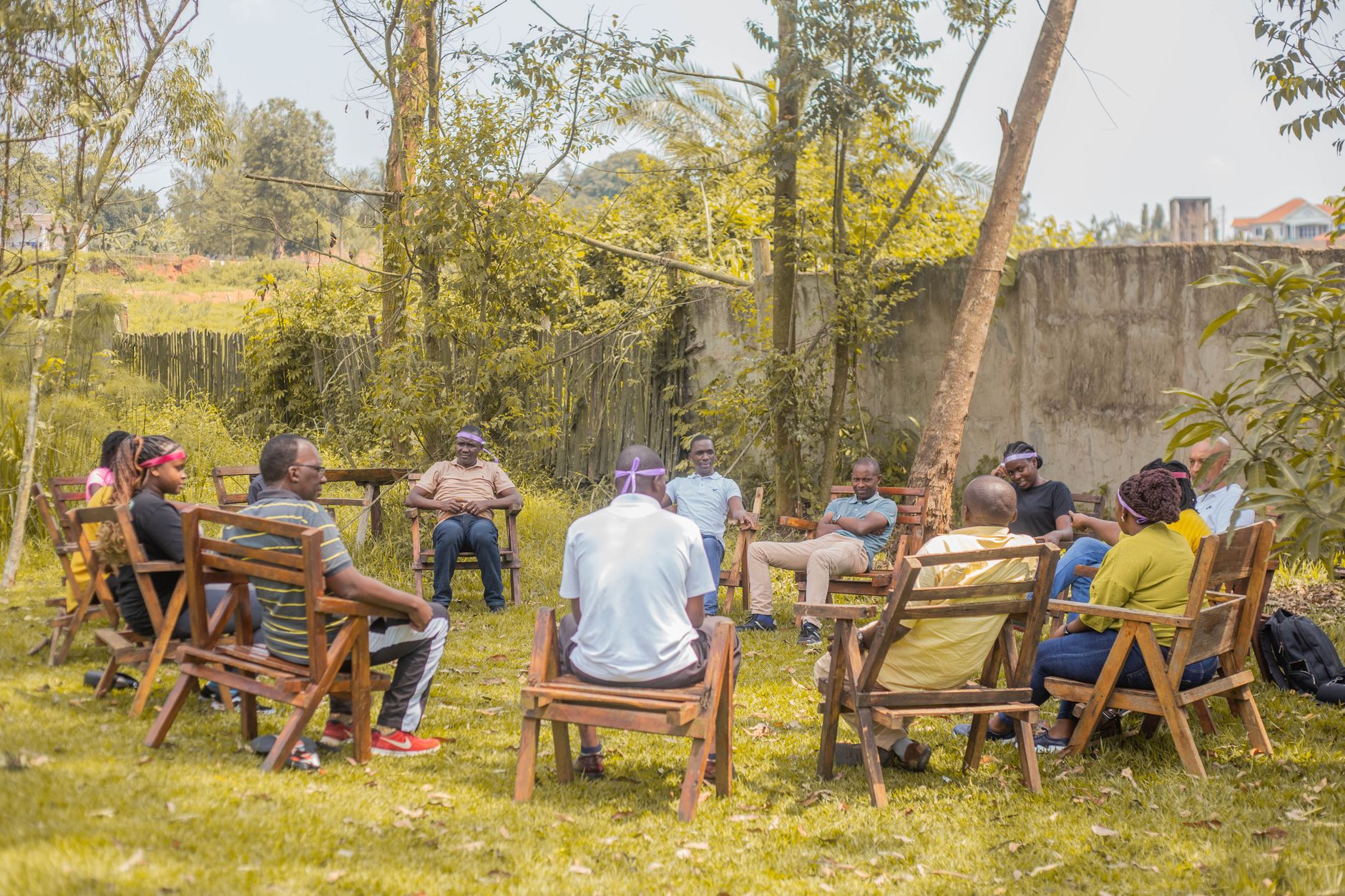
Before you can find your local chapter, it helps to understand what you’re actually walking into. The Youth Action Board of Tennessee is not a shelter, a case management program, or a government office. It is a statewide network of young adults who have been where you are — and who are now using that experience to change systems from the inside.
Peer-Led, Not Program-Run
Most support systems for young adults in housing crisis are designed for youth by adults who have never lived through it. YAAB flips that. Every chapter is led by young adults ages 17 to 25 who have personally experienced homelessness or housing instability — people who know what it feels like to couch-surf, age out of foster care with nowhere to go, or try to navigate a shelter system that wasn’t built with you in mind.
That peer-led structure isn’t just a feel-good detail. It means the advice you get, the resources you’re pointed toward, and the policies that get shaped are all filtered through real lived experience — not a textbook or a grant requirement.
What YAAB Members Actually Do
YAAB members do three big things: advise, advocate, and connect. They sit on Continuum of Care (CoC) boards and advisory committees, giving young adults a formal seat at the table where funding and policy decisions get made. They advocate at the local and state level for better housing, employment, and education outcomes for transition-age youth (TAY). And they connect their peers — people like you — to housing, mental health, employment, and education resources in their region.
- Advising local CoC boards and service providers
- Shaping state-level housing and youth policy
- Running peer outreach and resource navigation
- Hosting community events and training sessions
Who Can Join
If you are between 17 and 25 years old and have lived experience of homelessness or housing instability — including couch-surfing, staying in a shelter, aging out of foster care, or doubling up with family because you had no other option — you are exactly who YAAB was designed for. You do not need a stable address, a GED, or a polished résumé. You need your story and a willingness to show up. Case managers, CoC partners, and service providers are also welcome to engage with YAAB as allies and supporters.
2. Tennessee's 8 Regional YAAB Chapters at a Glance

Tennessee is a long state with very different communities — from the Mississippi Delta culture of Memphis to the Appalachian towns of Northeast Tennessee. That’s exactly why YAAB is organized regionally. Your local chapter knows the shelters, the landlords, the job training programs, and the CoC politics in your backyard — not just statewide generalities.
Why Tennessee Is Divided into CoC Regions
Tennessee’s homeless services system is organized through the U.S. Department of Housing and Urban Development (HUD) into regional Continuums of Care (CoC) — geographic networks of providers, funders, and advocates who coordinate housing and support services. Each CoC has its own YAAB chapter so that young adults in that region have a local voice that understands their specific community, resources, and challenges.
There are currently eight active YAAB chapters across Tennessee, each tied to a CoC region. Whether you’re in Memphis or Mountain City, there is a chapter near you — or one close enough to connect with remotely.
The Eight Chapters and Their Regions
- TN-500 — Memphis/Shelby County: Serves the greater Memphis metro area, one of Tennessee’s largest CoC regions.
- TN-501 — Nashville/Davidson County: Covers the Nashville metro, including a large population of youth aging out of foster care.
- TN-502 — Knoxville/Knox County: Serves the Knoxville area and surrounding East Tennessee communities.
- TN-503 — Chattanooga/Hamilton County: Covers the Chattanooga metro and Hamilton County region.
- TN-504 — Murfreesboro/Rutherford County: Serves the rapidly growing Middle Tennessee corridor outside Nashville.
- TN-506 — Upper Cumberland: Covers a large rural swath of Middle Tennessee including Cookeville and surrounding counties.
- TN-507 — Northeast Tennessee: Serves the Tri-Cities area and surrounding Appalachian communities.
- TN-509 — Jackson/West Tennessee: Covers Jackson and the broader West Tennessee region outside of Shelby County.
3. How to Figure Out Which Chapter Is Yours

Finding your chapter is simpler than it sounds. You don’t need to navigate a complicated government website or know the difference between a CoC and a PIT count. Here’s a straightforward way to figure out where you belong.
Start with Your County
The fastest way to find your chapter is to look up your county. Each Tennessee CoC region is defined by specific counties, and your county determines which regional YAAB you belong to. For example, if you live in Shelby County, you’re in the TN-500 Memphis chapter. If you’re in Knox County, you’re in TN-502 Knoxville. If you’re in a rural county, you may fall under the Upper Cumberland (TN-506) or Northeast Tennessee (TN-507) chapter depending on your location.
Not sure which county you’re in, or bouncing between counties? That’s okay — YAAB chapters are used to working with young adults who are mobile or unstable in their housing. You can connect with the chapter closest to where you spend most of your time, or where you’re currently staying.
Use the Local YAABs Directory
The easiest single step you can take right now is to visit the Local YAABs directory on the YAAB Tennessee website. Each chapter has its own page with contact information, upcoming events, and details about how to get involved in that specific region. You don’t need to call a hotline or fill out a long application — you can start by just reading about your local chapter and reaching out directly.
If you’re unsure which chapter covers your area, the directory pages include regional maps and county lists. You can also reach out to the statewide YAAB team and they’ll point you in the right direction.
What If You're Between Regions or Frequently Moving?
Housing instability often means moving — between counties, between cities, between couches. YAAB gets that. If you’re currently transitioning between regions, you can:
- Connect with the chapter in the region where you’re currently staying
- Participate in statewide YAAB events and calls that include members from all eight chapters
- Engage digitally — many chapters hold virtual meetings and have online communication channels
- Ask a case manager or CoC navigator to help you make a warm introduction to the right local chapter
Your zip code doesn’t define your eligibility. Your experience does.
4. What Peer Support Actually Looks Like Inside a YAAB Chapter

Getting connected to a YAAB chapter isn’t just about getting a list of phone numbers. It’s about stepping into a community where people actually understand what you’ve been through — and where your experience becomes something that helps others. Here’s what that looks like day to day.
Peer Navigation and Resource Connection
One of the most immediate ways a YAAB chapter can help you is through peer navigation — connecting you with a YAAB member who has been through similar experiences and can help you find the right resources in your region. This isn’t case management in the clinical sense. It’s more like a knowledgeable friend who knows which shelters have youth beds, which landlords work with rental assistance programs, which GED programs are actually worth your time, and which mental health services don’t have a six-month waitlist.
Peer navigators can help you access:
- Emergency and transitional housing options
- Rapid rehousing and rental assistance programs
- Youth-specific shelter beds and drop-in centers
- Food, clothing, and hygiene resources
Community, Belonging, and Shared Experience
Beyond resources, YAAB chapters offer something that’s harder to quantify but just as important: community. When you’ve been in survival mode — figuring out where you’ll sleep, how you’ll eat, whether you’ll age out of foster care with nothing — it can feel isolating. YAAB chapters create spaces where young adults who have been through it can be real with each other without judgment.
Regular chapter meetings, community events, and peer-to-peer conversations create a sense of belonging that many transition-age youth have never had access to. Members describe it as the first time they felt like their experience was an asset, not a liability.
Training, Leadership Development, and Stipends
Active YAAB members don’t just receive support — they build skills. Chapters offer training in advocacy, public speaking, policy literacy, and community organizing. Many YAAB members go on to serve on CoC boards, testify before state legislators, and lead community outreach campaigns. Some chapters offer stipends or honoraria for members who participate in formal advisory roles, recognizing that young adults’ time and expertise have real value. Specific stipend amounts vary by chapter and available funding — ask your local chapter for current details.
5. How YAAB Connects You to Housing, Jobs, and Education Resources

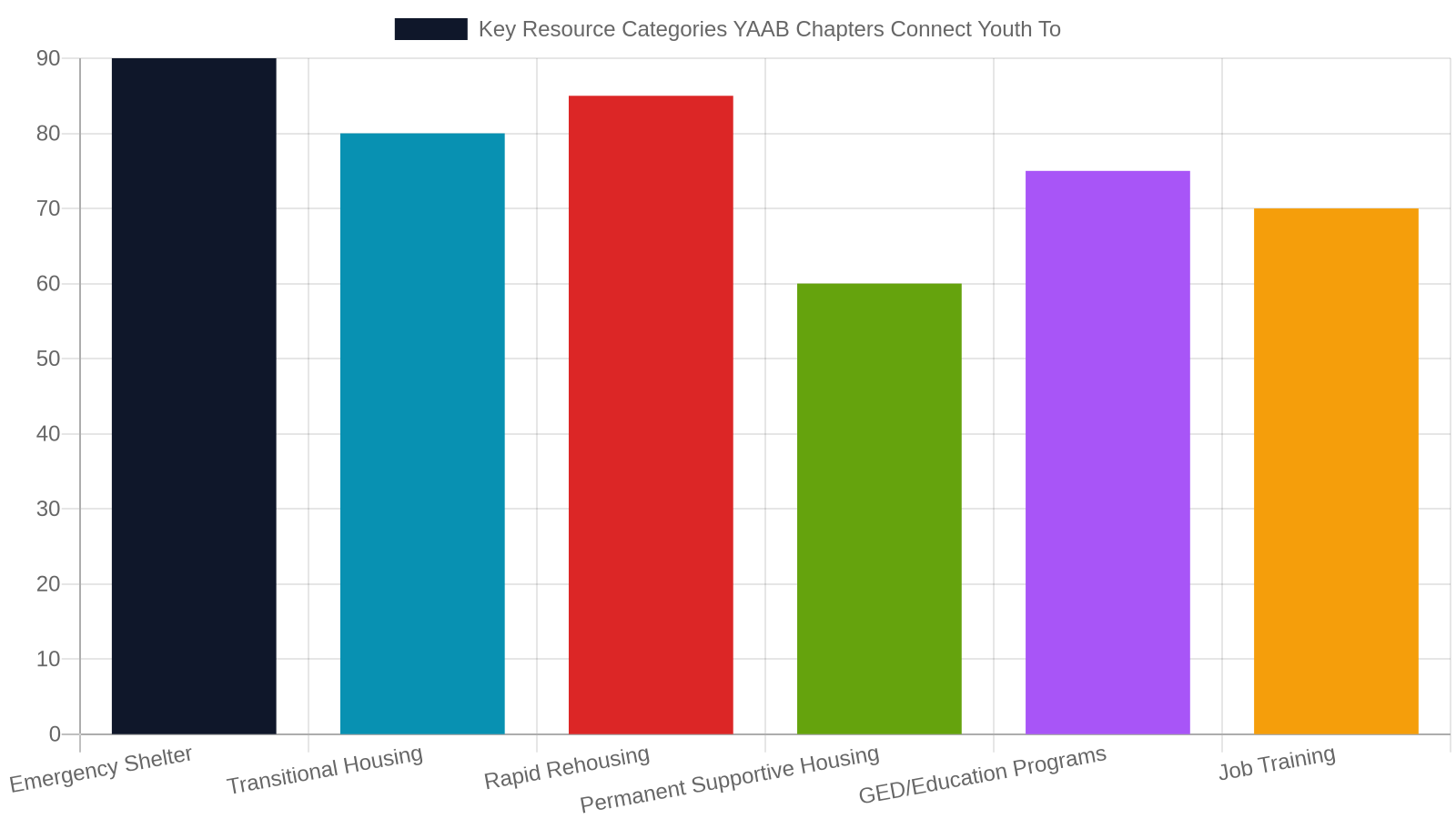
YAAB chapters are not standalone resource hubs — they are connectors. They know the local landscape of housing programs, job training, GED pathways, and mental health services in ways that a general website search can’t replicate. Here’s a breakdown of what they can help you access.
Housing Pathways for Transition-Age Youth in Tennessee
YAAB chapters work closely with local CoC partners to connect young adults to housing options that are specifically designed for people ages 17 to 25. These include:
- Emergency shelter: Short-term, immediate safety — most regions have at least one youth-designated shelter or youth wing within a larger shelter.
- Transitional housing: Programs that provide 12 to 24 months of supported housing while you work toward stability, often including life skills and employment support.
- Rapid Rehousing (RRH): Short-term rental assistance and case management to help you move into your own place quickly, with support tapering as you stabilize.
- Permanent Supportive Housing (PSH): Long-term housing with ongoing services for young adults with higher support needs.
YAAB peer navigators can help you understand which pathway makes the most sense for your situation right now — and what the real waitlists and availability look like in your region.
Employment and Education Connections
Many YAAB chapters maintain relationships with workforce development programs, GED and HiSET testing centers, community colleges, and employers who actively recruit transition-age youth. Some key Tennessee resources YAAB chapters frequently connect peers to include:
- Tennessee Reconnect: A state program offering tuition-free community college for adults without a degree
- American Job Centers: Free job search, résumé, and skills training services available in most Tennessee regions
- YouthBuild programs: Combine GED preparation with construction and trades job training
- Vocational Rehabilitation: Supports young adults with disabilities in finding and keeping employment
Your YAAB peer navigator can help you figure out which programs have current openings and how to apply without getting lost in paperwork.
Mental Health and Wellness Resources
Housing instability takes a real toll on mental health. YAAB chapters recognize that and work to connect young adults to mental health services that are youth-friendly, culturally responsive, and — where possible — low-cost or free. Many regions have community mental health centers that offer sliding-scale services, and some have specific programs for youth experiencing homelessness. YAAB peer support itself is also a form of wellness — being heard by someone who gets it is genuinely therapeutic, even when it doesn’t come with a clinical label.
6. The Continuum of Care — and Why It Matters to You

You’ve probably heard the term ‘Continuum of Care’ from a case manager or seen it on a shelter intake form. Here’s what it actually means — and why understanding it helps you see the bigger picture of what YAAB is doing.
What Is a Continuum of Care?
A Continuum of Care (CoC) is a regional planning body — funded and overseen by HUD — that coordinates housing and homeless services in a defined geographic area. Tennessee has eight CoC regions, each with its own board, funding streams, and service network. CoCs decide how federal homeless assistance dollars get allocated, which programs get funded, and what the local homeless response system looks like.
For young adults experiencing homelessness, the CoC is the system that controls access to most of the formal housing resources in your region — which is exactly why having YAAB members at the CoC table matters so much.
How YAAB Gives Youth a Seat at That Table
Before YAAB, transition-age youth were largely absent from CoC decision-making — even though they were the people most directly affected by those decisions. YAAB chapters changed that by formally embedding youth voices into CoC governance. In many Tennessee regions, YAAB members now:
- Serve on CoC boards and committees
- Participate in the annual Point-in-Time (PIT) count of people experiencing homelessness
- Review and provide feedback on funding applications for youth-serving programs
- Present lived experience testimony at public meetings and hearings
When you join YAAB, you’re not just getting support — you’re joining a system-change effort that is actively reshaping how Tennessee serves young adults in housing crisis.
Why Your Voice Has Real Policy Power
HUD increasingly requires CoCs to demonstrate meaningful youth engagement in order to access federal funding. That means your participation as a YAAB member isn’t just symbolic — it has real leverage. When YAAB members show up, speak up, and document their input, they create accountability for service providers and funders. Policies that affect thousands of young adults across Tennessee have been shaped by YAAB members who started exactly where you are now: looking for a place to sleep and someone who understood what they were going through.
7. A Region-by-Region Look at Tennessee's YAAB Chapters

Every region in Tennessee has its own housing landscape, its own challenges, and its own YAAB chapter working within it. Here’s a quick orientation to what’s happening across the state — so you can get a sense of the community you’d be joining.
West Tennessee: Memphis (TN-500) and Jackson (TN-509)
TN-500 Memphis/Shelby County is one of Tennessee’s largest and most active CoC regions, with a significant youth homelessness population. The Memphis YAAB chapter works within a dense network of shelters, transitional housing programs, and youth-serving nonprofits in the Memphis metro. TN-509 Jackson/West Tennessee covers a large, more rural area west of Nashville and north of Memphis — a region where youth homelessness is often less visible but no less real, and where YAAB’s peer connection work is especially critical for reaching isolated young adults.
Middle Tennessee: Nashville (TN-501) and Murfreesboro (TN-504)
TN-501 Nashville/Davidson County is the most populous CoC in Tennessee and has one of the state’s largest concentrations of transition-age youth experiencing homelessness, including a significant number aging out of the foster care system. The Nashville YAAB chapter is deeply embedded in the Metro Nashville CoC and has been active in shaping youth-specific housing policy at both the city and state level. TN-504 Murfreesboro/Rutherford County serves the fast-growing Middle Tennessee corridor, where rising rents and rapid population growth have increased housing instability for young adults.
East and Northeast Tennessee: Knoxville (TN-502), Chattanooga (TN-503), Upper Cumberland (TN-506), and Northeast TN (TN-507)
TN-502 Knoxville/Knox County and TN-503 Chattanooga/Hamilton County are the two major urban CoC regions in East Tennessee, each with established youth shelter and transitional housing programs. TN-506 Upper Cumberland covers a large rural region centered around Cookeville, where YAAB’s work often involves connecting young adults to resources across significant geographic distances. TN-507 Northeast Tennessee serves the Tri-Cities area (Johnson City, Kingsport, Bristol) and surrounding Appalachian communities — a region with unique economic challenges and a strong YAAB presence focused on rural youth advocacy.
Tennessee YAAB Chapters at a Glance
Here's a quick reference for all eight regional YAAB chapters across Tennessee, including their CoC designation, primary geographic area, and key focus communities.
8. How to Get Involved — Step by Step

Ready to connect? Here’s a simple, concrete path from where you are right now to being part of your local YAAB chapter. No prerequisites, no perfect circumstances required.
Step 1: Find Your Chapter and Make First Contact
Visit the Local YAABs directory at yaabtn.org to find the chapter that covers your region. Each chapter page includes contact information and details about upcoming meetings or events. You can reach out by email, through social media, or by asking a case manager or service provider to connect you. There is no formal application to start — just show up or reach out.
Step 2: Attend a Meeting or Event
Most chapters hold regular meetings — some in person, some virtual, some both. Your first meeting is low-pressure. You can listen, ask questions, and get a feel for the group before deciding how involved you want to be. Many members describe their first YAAB meeting as the first time they were in a room (or on a call) where they didn’t have to explain or justify their experience — everyone there already gets it.
Check the YAAB statewide events calendar for upcoming meetings, trainings, and community events across all eight regions.
Step 3: Define Your Level of Involvement
YAAB membership isn’t one-size-fits-all. You can engage at whatever level works for your life right now:
- Peer: Attend events, access resources, and connect with the community
- Active member: Participate in chapter meetings, help with outreach, and share your perspective in planning conversations
Advisory/leadership role: Serve on CoC committees, represent YAAB at public meetings, take on a formal advocacy or navigation role
Your level of involvement can grow over time as your situation stabilizes and your interest deepens. There is no pressure to jump to leadership before you’re ready — and no judgment if you need to step back for a while.
9. For Case Managers and CoC Partners: How to Connect Youth to YAAB

This section is for the adults in the room — case managers, CoC staff, outreach workers, and service providers who want to connect the young adults they serve to YAAB. Here’s how to do it effectively.
Why Warm Referrals Work Better Than Handouts
If you’re a case manager, outreach worker, or service provider reading this, the most effective thing you can do is make a warm referral — not just hand a young person a flyer or a URL. Introduce them to a YAAB member directly, bring them to a chapter meeting, or sit with them while they send that first email. Young adults who have experienced homelessness have often been burned by systems that overpromised and underdelivered. A trusted adult vouching for YAAB dramatically increases the likelihood that a young person will actually show up.
How YAAB Can Strengthen Your CoC's Youth Engagement
HUD’s Youth Homelessness Demonstration Program (YHDP) and CoC program regulations increasingly require documented youth engagement in CoC governance and planning. YAAB chapters provide a ready-made, credible structure for that engagement — one that is already embedded in Tennessee’s CoC system. Partnering with your regional YAAB chapter can help your organization:
- Meet HUD youth engagement requirements for CoC funding
- Improve program design through direct youth feedback
- Build trust with transition-age youth who are skeptical of formal systems
- Identify gaps in your service array that young adults actually experience
Learn more about YAAB’s advocacy and systems-change work at yaabtn.org/advocacy.
Resources for Providers Working with Transition-Age Youth
YAAB’s website includes a resources section specifically useful for providers navigating the Tennessee CoC landscape. You can also connect with the statewide YAAB team to discuss how your organization can partner with or support your regional chapter. Whether you’re a large CoC lead agency or a small community nonprofit, there’s a role for you in supporting youth-led advocacy in Tennessee.
10. Common Myths About Joining YAAB — Debunked

A lot of young adults hesitate to reach out to YAAB because they assume there’s some bar they need to clear first. There isn’t. Here are the most common misconceptions — and the truth behind them.
Myth: 'I Have to Be Housed Before I Can Join'
False. YAAB is designed specifically for young adults who are currently experiencing or have recently experienced housing instability. You do not need a stable address, a lease, or a permanent home to participate. In fact, some of the most powerful advocacy work happens when young adults who are actively navigating the system share their real-time experience with CoC boards and policymakers. Your current situation is not a barrier — it’s your credential.
Myth: 'I Need to Be Good at Public Speaking or Policy'
Also false. YAAB chapters include people at every level of experience — from first-time attendees who are still figuring out their next step to seasoned members who testify before state committees. You don’t need to know what a CoC is, understand housing policy, or be comfortable speaking in groups when you first join. Those skills develop over time, with support from your peers and chapter leadership. What you bring on day one — your experience, your perspective, your honesty — is already enough.
Myth: 'YAAB Is Only for People Who Want to Be Advocates'
YAAB is for anyone ages 17 to 25 with lived experience of homelessness — whether you want to change the world or just find a safe place to connect with people who understand you. Some members become vocal advocates. Others participate quietly, access resources, and find community. Both are valid. YAAB doesn’t require you to perform your trauma or become a spokesperson. You get to define what participation looks like for you.
11. Your Next Move: Connect with Your Local YAAB Today

Everything in this article points to one action: connecting with your local YAAB chapter. Here’s how to make that happen — and why it’s worth it.
Start Where You Are
You don’t have to have everything figured out to take the first step. If you’re 17 to 25 and you’ve experienced homelessness or housing instability anywhere in Tennessee — Memphis, Nashville, Knoxville, Chattanooga, Jackson, Cookeville, the Tri-Cities, or anywhere in between — there is a YAAB chapter that exists because of people like you and for people like you.
The first move is simple: find your chapter. Visit yaabtn.org/local-yaabs to see all eight regional chapters, find contact information, and learn about upcoming events in your area. If you’re not sure which chapter covers your county, the directory pages include regional maps and you can always reach out to the statewide team for guidance.
You Belong Here
YAAB exists because young adults who have experienced homelessness deserve more than services — they deserve power. The power to shape the programs that serve them, the policies that affect them, and the communities they live in. Every YAAB member started somewhere. Most started exactly where you are: looking for connection, looking for resources, and wondering if there was a place where their experience actually mattered.
There is. And it’s in your region, right now, waiting for you to show up. Learn more about who YAAB is and what we stand for, explore the resources available to transition-age youth across Tennessee, and then take that first step. Your voice belongs in this work.
Frequently Asked Questions
How do I find my local YAAB chapter in Tennessee?
Visit yaabtn.org/local-yaabs to see all eight regional YAAB chapters organized by Tennessee's Continuum of Care regions. Each chapter page includes contact information and upcoming events. Your county determines which chapter covers your area — if you're unsure, the directory includes regional maps and you can contact the statewide YAAB team for help.
Do I have to be housed to join YAAB?
No. YAAB is specifically designed for young adults ages 17 to 25 who are currently experiencing or have recently experienced homelessness or housing instability. You do not need a stable address or permanent housing to participate. Your lived experience is your credential.
What is the age requirement to join a YAAB chapter in Tennessee?
YAAB membership is open to young adults ages 17 to 25 with lived experience of homelessness or housing instability. This includes couch-surfing, staying in shelters, aging out of foster care, or doubling up with family due to housing crisis.
What does YAAB actually do for young adults experiencing homelessness?
YAAB chapters connect young adults to housing, employment, education, and mental health resources through peer navigation. Members also participate in Continuum of Care governance, helping shape the policies and funding decisions that affect transition-age youth across Tennessee. YAAB combines direct peer support with systems-change advocacy.
Can case managers refer young adults to YAAB?
Yes, and warm referrals work best. Case managers and service providers are encouraged to introduce young adults directly to a YAAB member or bring them to a chapter meeting rather than just sharing a link. YAAB also partners with CoC agencies across Tennessee to strengthen youth engagement in regional planning.
What is a Continuum of Care and how does it relate to YAAB?
A Continuum of Care (CoC) is a HUD-funded regional network that coordinates housing and homeless services in a defined geographic area. Tennessee has eight CoC regions, each with its own YAAB chapter. YAAB members participate in CoC governance — attending board meetings, reviewing funding applications, and providing youth input — so that young adults have a real voice in the systems that serve them.