Quick answer: Tennessee's Youth Action Board (YAAB) is a statewide network of young adults ages 17 to 25 with lived experience of homelessness who support peers aging out of foster care. YAAB offers peer mentorship, housing navigation, advocacy training, employment connections, mental health referrals, education pathways, and regional community-building across all seven of Tennessee's Continuum of Care regions — including Memphis, Nashville, Knoxville, Chattanooga, Jackson, Upper Cumberland, and Northeast Tennessee. Every service is designed by and for young people who have been there.
Why Aging Out of Foster Care in Tennessee Is So Hard

Every year in Tennessee, hundreds of young adults leave the foster care system and step into adulthood without the safety net most people take for granted — no family home to return to, no credit history, and often no idea where to start. Understanding the scale of that challenge is the first step toward changing it.
The 'Aging Out' Cliff: What the Numbers Say
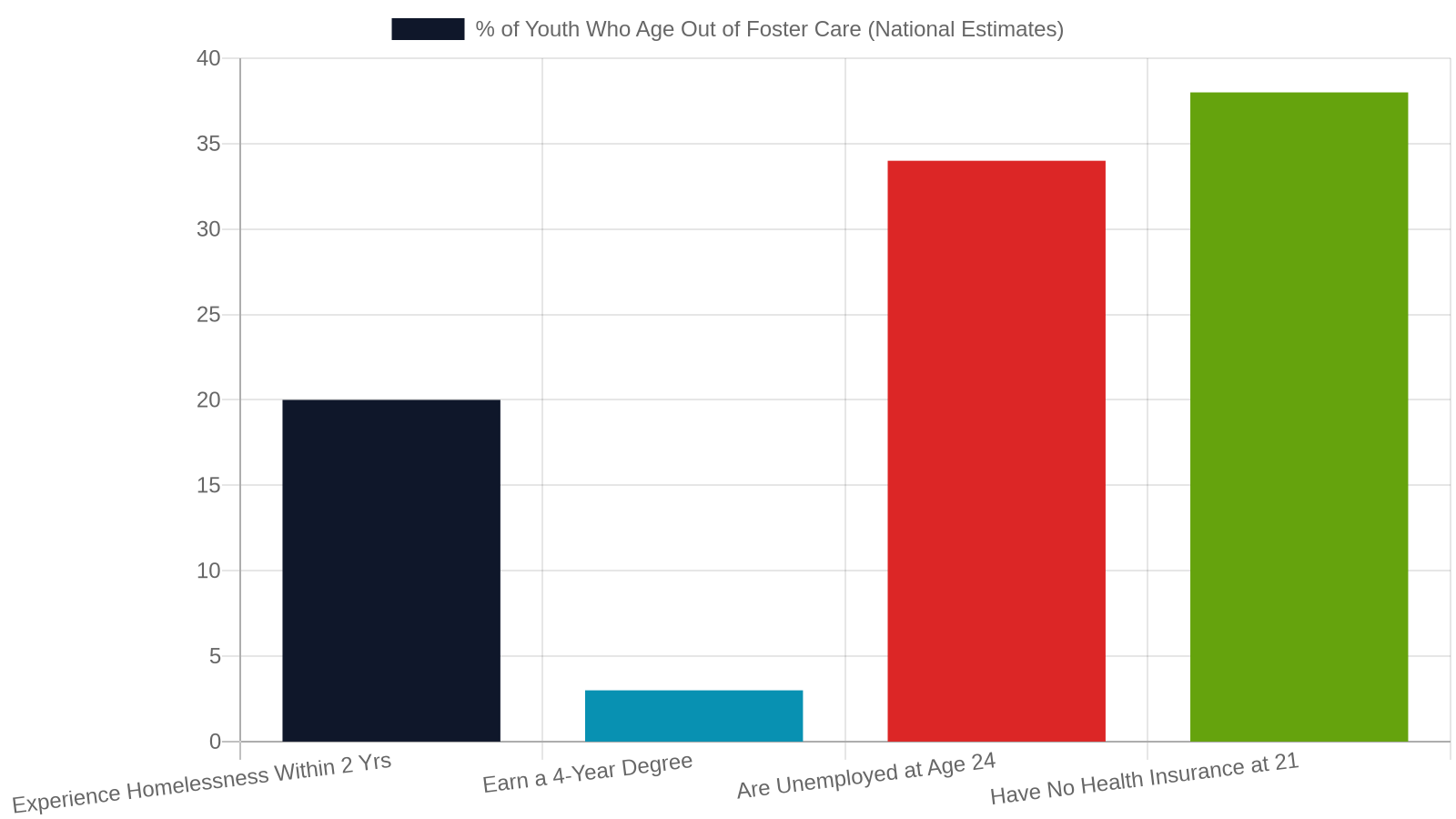
In Tennessee, young people in foster care typically age out of the system at 18, though extended care is available up to age 21 under the state’s Tennessee Fostering Connections program. Despite that extension, thousands of transition-age youth still leave care without stable housing, a support network, or a clear financial plan. Nationally, one in five youth who age out of foster care experiences homelessness within two years, and Tennessee mirrors that trend across its urban and rural regions alike.
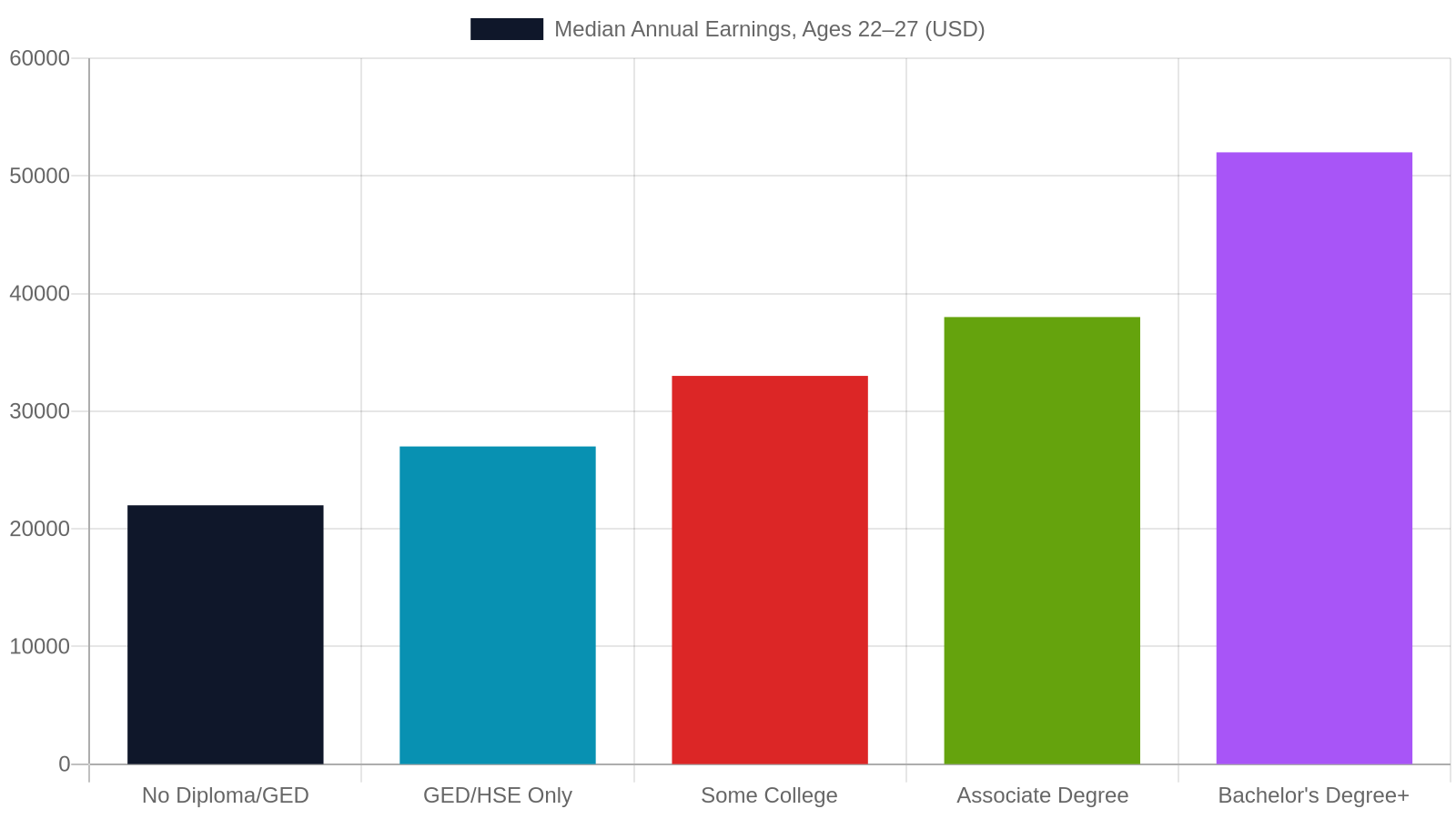
The numbers behind the cliff are stark: fewer than 3% of youth who age out of foster care earn a four-year college degree. Unemployment rates among this group run two to three times higher than the general youth population. And in Tennessee, where affordable housing vacancy rates in cities like Memphis and Nashville regularly fall below 5%, the math is brutal for a young person starting with zero savings and no co-signer for a lease.
What Makes the Transition-Age Years (17–25) Unique
The years between 17 and 25 are developmentally distinct. Brain science tells us the prefrontal cortex — the part responsible for long-term planning and risk assessment — isn’t fully developed until the mid-twenties. Combine that biological reality with the trauma, instability, and loss of connection that many foster youth carry, and it becomes clear why a one-size-fits-all adult services model fails this group. Transition-age youth need flexible, youth-centered support that meets them where they are — not where a system assumes they should be.
That’s exactly the gap YAAB was built to fill. Rather than a top-down program designed by adults about young people, YAAB is designed by young people who have navigated these exact challenges — and who know what actually helps.
1. Peer Mentorship — Learning From Someone Who's Been There

Of all the services YAAB offers, peer mentorship may be the most foundational. When you’re 18 and aging out of foster care, the most valuable resource isn’t always a hotline number — it’s a real person who gets it, who has been through something similar, and who can walk alongside you without judgment.
What Peer Mentorship Looks Like Inside YAAB
YAAB’s peer mentorship model is built on a simple but powerful truth: you trust advice more when it comes from someone who has lived the same experience. YAAB members — young adults ages 17 to 25 with their own histories of housing instability or foster care — serve as peer mentors for youth who are currently navigating those same challenges. This isn’t a formal case-management relationship. It’s a real, human connection between peers.
Peer mentors inside YAAB help newer members understand how to access local resources, how to talk to a landlord, how to navigate a Continuum of Care intake process, and how to set realistic short-term goals. Mentors share what worked for them, what didn’t, and what they wish they’d known at 18. That kind of honest, non-judgmental guidance is something no pamphlet can replicate.
Why Peer Support Outperforms Traditional Case Management for This Group
Research consistently shows that peer support improves engagement, retention, and outcomes for transition-age youth more than traditional professional-only models. A 2020 study published in the Journal of Youth and Adolescence found that youth who had access to peer support were 40% more likely to maintain stable housing over a 12-month period compared to those receiving only professional case management.
For young adults who have experienced trauma, distrust of authority figures is common and understandable. A peer mentor doesn’t represent a system that may have failed them — they represent proof that things can get better. That shift in dynamic changes everything about how a young person receives help.
2. Housing Navigation — Finding a Roof Without a Roadmap

Finding housing as a young adult with no rental history, no co-signer, and limited income is one of the biggest barriers youth aging out of foster care face in Tennessee. YAAB doesn’t just hand you a list of shelters — it helps you understand the system well enough to work it strategically and advocate for yourself inside it.
How YAAB Helps You Understand the Housing System
Tennessee’s housing support landscape for transition-age youth is spread across seven Continuum of Care (CoC) regions: Memphis/Shelby (TN-500), Nashville/Davidson (TN-501), Knoxville/Knox (TN-502), Chattanooga/Hamilton (TN-503), Jackson/West TN (TN-504), Upper Cumberland (TN-506), and Northeast TN (TN-507). Each region has its own Coordinated Entry System, its own housing providers, and its own waitlists. Navigating all of that alone — especially without a car, a phone plan, or a trusted adult — is genuinely overwhelming.
YAAB members and regional coordinators help young adults understand how Coordinated Entry works, what documents they need to gather (ID, Social Security card, proof of age), and which local providers serve transition-age youth specifically. They also help youth understand the difference between emergency shelter, transitional housing, and rapid rehousing — three very different types of support with different eligibility rules and timelines.
Tenant Rights and Lease Literacy for First-Time Renters
One of the most practical things YAAB does is help young adults understand their rights as renters before they sign anything. Tennessee’s landlord-tenant law (Tennessee Code Annotated § 66-28) gives renters specific protections — including the right to a habitable unit, proper notice before entry, and a written accounting of any security deposit deductions. Most 18-year-olds aging out of foster care have never seen a lease before, let alone know what clauses to watch out for.
YAAB peer educators walk members through common lease terms, red-flag clauses, and what to do if a landlord violates their rights. This kind of lease literacy can be the difference between keeping housing and losing it over a misunderstood clause in month three.
3. Advocacy Training — Your Voice Shapes the System

One of YAAB’s most distinctive offerings is the belief that young adults with lived experience of homelessness are not just people who need help — they are experts whose knowledge should drive policy. Advocacy training is how YAAB turns that belief into action.
What YAAB Advocacy Actually Involves
YAAB members don’t just receive services — they help design them. Through structured advocacy training, YAAB equips young adults to speak at public hearings, present to Continuum of Care boards, testify before Tennessee state legislative committees, and participate in national convenings like the True Colors United and National Alliance to End Homelessness forums. This isn’t token participation — YAAB members hold seats at real decision-making tables.
Advocacy training inside YAAB covers public speaking, storytelling for policy change (how to share your experience without re-traumatizing yourself), understanding how the CoC funding process works, and how to read and respond to a Request for Proposals (RFP) from a housing funder. These are skills that translate directly into careers in social work, public policy, community organizing, and nonprofit leadership.
From Local Boards to the Tennessee State Legislature
YAAB members have presented testimony to the Tennessee General Assembly and engaged with the Tennessee Department of Children’s Services (DCS) on policy changes affecting youth transitioning out of foster care. In 2022 and 2023, YAAB-connected youth advocates helped push for expanded awareness of Tennessee’s extended foster care option — a program that allows eligible youth to remain in care until age 21 and that many young people don’t know they can access.
At the local level, YAAB members sit on CoC planning committees in regions including Memphis, Nashville, and Knoxville, where they provide direct input on how federal HUD funding is allocated for youth housing programs. That’s real power — and YAAB training is what makes it possible for a 19-year-old with lived experience to walk into that room with confidence.
4. Employment Connections — Building a Career, Not Just a Job

Stable housing and stable employment are deeply linked — you need income to keep housing, and you need an address to get most jobs. YAAB understands that cycle and works to help young adults break into it from both sides at once, connecting them to real workforce opportunities while keeping the housing side of the equation in view.
Workforce Pathways YAAB Connects Youth To
YAAB isn’t a workforce development program itself, but it serves as a trusted connector between young adults and the employment resources that exist across Tennessee. That includes Tennessee’s American Job Centers (there are more than 60 across the state), the Tennessee Promise and Tennessee Reconnect free community college programs, registered apprenticeship programs through the Tennessee Department of Labor and Workforce Development, and employer partners who have committed to hiring transition-age youth with housing instability backgrounds.
YAAB peer navigators can help a young adult figure out which pathway makes sense for their situation — whether that’s a short-term certification program in healthcare, construction, or IT, or a longer academic route. They also help youth understand how employment income interacts with housing subsidies, so taking a job doesn’t accidentally disqualify them from a housing program they depend on.
Resume Building, Interview Prep, and Workplace Rights
Beyond connections, YAAB offers peer-led workshops on practical job-readiness skills: building a first resume when you have gaps in your history, preparing for common interview questions, understanding a pay stub, and knowing your rights as a worker under the Fair Labor Standards Act. For young adults who may have spent time in shelter or transitional housing during what would have been their first work years, these workshops fill gaps that most employers assume applicants already have.
YAAB also helps young adults understand how to disclose (or not disclose) their background in job applications — a nuanced topic that peer educators with similar experiences are uniquely equipped to address without shame or judgment.
5. Education and GED Pathways — Getting Your Credentials on Your Timeline

Education is one of the most reliable long-term pathways out of housing instability — but the traditional school system wasn’t designed with the realities of transition-age youth in mind. YAAB helps young adults find the education pathway that fits their actual life, not the one that assumes they have a stable home and a full-time support system behind them.
Why Education Gets Interrupted — and How to Restart It
Youth who experience homelessness or housing instability miss school at dramatically higher rates than their housed peers. The McKinney-Vento Homeless Assistance Act gives K-12 students experiencing homelessness specific rights — including the right to remain enrolled in their school of origin and to receive transportation — but those protections often aren’t enforced consistently, and they end at high school graduation or age 22. For transition-age youth who aged out of foster care without a diploma or GED, the path back to education can feel invisible.
YAAB peer navigators help young adults identify free or low-cost GED preparation programs in their region, including those offered through Tennessee’s Adult Education program (administered by the Tennessee Department of Labor), local community colleges, and nonprofit partners. In Tennessee, the GED test costs approximately $36 per subject area, and fee waivers are available for income-qualifying individuals.
Tennessee Promise, Tennessee Reconnect, and FAFSA Navigation
Tennessee Promise provides last-dollar scholarship funding for recent high school graduates to attend community college or technical school tuition-free. Tennessee Reconnect extends similar benefits to adults without a degree who want to return to school. Both programs are available to youth aging out of foster care, and YAAB peer educators can walk members through the FAFSA process — which is especially important because foster youth who are legally independent may qualify for independent student status, significantly increasing their federal aid eligibility regardless of their foster parents’ income.
Many young adults don’t know that the FAFSA has a specific designation for youth who were in foster care or are legally emancipated — checking that box can unlock thousands of dollars in Pell Grant funding that would otherwise be unavailable. YAAB peer navigators help make sure no one misses that box.
6. Mental Health Referrals and Trauma-Informed Peer Support

Mental health is inseparable from housing stability, employment success, and educational achievement. YAAB takes a whole-person approach that recognizes the emotional weight transition-age youth carry — and provides both peer-level support and pathways to professional care when that’s what a young adult needs.
Acknowledging Trauma Without Defining You By It
Youth who have experienced foster care, family separation, and housing instability carry real trauma — and YAAB’s approach is to acknowledge that reality without letting it become the only story told about a young person. Trauma-informed peer support means that YAAB members are trained to recognize signs of trauma responses in their peers, to avoid re-traumatizing language, and to create space for young adults to share their experiences on their own terms and timeline.
YAAB doesn’t provide clinical mental health services — but it does provide something equally important: a community where it’s normal to talk about hard things, where asking for help is seen as strength, and where young adults aren’t pathologized for struggling. That kind of peer community has its own therapeutic value, and research in the field of peer support specialist practice consistently supports it.
Connecting to Tennessee Mental Health Resources
When a young adult is ready for professional mental health support, YAAB peer navigators can help connect them to resources including Tennessee’s statewide 988 Suicide and Crisis Lifeline, community mental health centers in each CoC region, and programs specifically designed for transition-age youth such as those offered through Centerstone (statewide), Helen Ross McNabb Center (Knoxville), and Frontier Health (Northeast Tennessee).
YAAB also helps young adults understand how to access mental health services through TennCare (Tennessee’s Medicaid program), which covers most transition-age youth who meet income requirements. Youth who were in foster care may qualify for TennCare coverage through age 26 under the former foster youth Medicaid extension — another benefit that many young adults don’t know they’re eligible for.
7. Regional Community Building — Finding Your People Across Tennessee

One of the loneliest parts of aging out of foster care is the sudden absence of a built-in community. YAAB’s regional structure means that wherever you are in Tennessee — Memphis, Knoxville, Jackson, or a small town in the Upper Cumberland — there are peers nearby who understand your experience and want to build something together with you.
How the Seven Regional YAABs Work
YAAB isn’t a single office in Nashville — it’s a statewide network with regional chapters embedded in each of Tennessee’s seven Continuum of Care regions. Each regional YAAB has its own membership, its own local partners, and its own focus areas shaped by the specific housing landscape of that region. The Memphis/Shelby CoC (TN-500) YAAB, for example, operates in a very different context than the rural Northeast Tennessee (TN-509) YAAB — different housing stock, different employer base, different service providers.
That regional structure matters because it means peer support is local. A young adult in Chattanooga isn’t getting advice calibrated to Nashville’s housing market. They’re getting guidance from peers who know the Hamilton County CoC, who know which landlords work with housing vouchers, and who know the specific intake process at local shelters. That local knowledge is irreplaceable.
Events, Gatherings, and the Power of Belonging
Beyond formal services, YAAB builds community through regular events — regional meetups, statewide convenings, leadership retreats, and online spaces where members across Tennessee can connect. For young adults who aged out of foster care without a stable family network, community belonging is not a soft benefit — it is a core protective factor against homelessness recurrence.
Studies on youth homelessness consistently find that social connectedness — having even one or two trusted relationships — is one of the strongest predictors of housing stability over time. YAAB’s community-building work is, in that sense, direct homelessness prevention. Check the YAAB events calendar to find upcoming gatherings in your region.
YAAB Peer Support vs. Traditional Youth Services: How They Compare
Both peer-led and traditional professional services play important roles in supporting youth aging out of foster care. Here's how they differ across key dimensions.
How YAAB's Services Compare to Traditional Youth Support Programs

Understanding where YAAB fits in the broader ecosystem of youth support services helps young adults and their case managers make the most of what’s available. YAAB isn’t trying to replace existing services — it’s trying to make sure young adults have a peer community and a voice inside the system that’s supposed to serve them.
The Peer-Led Difference
Traditional youth-serving organizations — case management agencies, shelters, government programs — provide essential services, but they operate on a fundamentally different model than YAAB. In a traditional model, a trained professional (who may or may not have lived experience of homelessness) assesses a young person’s needs and connects them to resources. The young person is largely a recipient of services.
In YAAB’s model, young adults with lived experience are the designers, deliverers, and evaluators of support. They sit on CoC boards. They shape RFPs. They train case managers on what young people actually need. That inversion of the traditional power dynamic is not just philosophically important — it produces measurably better outcomes, as the peer support research literature consistently demonstrates.
What YAAB Is Not — And Why That Matters
It’s worth being clear about what YAAB is not, so young adults and service providers can set accurate expectations. YAAB is not an emergency shelter, not a housing provider, not a clinical mental health service, and not a legal aid organization. It is a peer network and advocacy body that connects, trains, and amplifies young adults with lived experience.
That means YAAB works best alongside traditional services, not instead of them. A young adult in crisis should still call 211 for immediate shelter referrals or 988 for mental health crisis support. YAAB is the layer of peer connection, systems navigation, and advocacy that makes those other services more accessible and more effective over time. Learn more about how youth homelessness works in Tennessee and how the system is designed to respond.
Know Your Rights — What Tennessee Law Protects for Transition-Age Youth

One of the most empowering things YAAB does is make sure young adults know what they’re legally entitled to — because systems don’t always volunteer that information. Knowing your rights is the foundation of self-advocacy, and self-advocacy is the foundation of long-term stability.
Extended Foster Care and the Fostering Connections Act
Under Tennessee’s implementation of the federal Fostering Connections to Success and Increasing Adoptions Act, eligible youth can remain in foster care — and continue receiving services and support — until age 21. To qualify, a young adult must be enrolled in school, employed, participating in a vocational program, or have a documented barrier to any of those activities. Many youth don’t know this option exists or feel pressured to leave care at 18 without understanding what they’re giving up.
YAAB peer educators actively spread awareness of extended foster care eligibility because staying in care even one additional year can dramatically change a young person’s trajectory — providing housing stability, Medicaid coverage, and case management support during the most vulnerable transition period.
McKinney-Vento Rights and the HEARTH Act
The McKinney-Vento Homeless Assistance Act gives students experiencing homelessness the right to immediate school enrollment, the right to remain in their school of origin, and the right to receive transportation to maintain school stability. These rights apply through high school and are enforced by a designated McKinney-Vento liaison in every Tennessee school district.
The HEARTH Act (Homeless Emergency Assistance and Rapid Transition to Housing) shapes how federal HUD funding flows to Tennessee’s Continuum of Care regions and requires each CoC to have a specific plan for serving transition-age youth. YAAB members participate in those CoC planning processes to make sure youth voices shape how those funds are spent — which is one of the most direct ways peer advocacy translates into real-world housing resources.
How to Get Involved With Your Regional YAAB in Tennessee

Whether you’re a young adult looking for community and support, or a service provider looking to strengthen your work with transition-age youth, YAAB has a place for you. Getting involved is straightforward — and the impact, both for you and for the young people around you, is real.
Who Can Join and What Membership Looks Like
YAAB membership is open to young adults ages 17 to 25 who have lived experience of homelessness or housing instability — including youth who have aged out of foster care, youth who have experienced family rejection, youth who have couch-surfed or stayed in shelters, and youth who are currently housed but carry that history. You don’t have to be in crisis to join. You don’t have to have a perfect story. Your experience is exactly what makes you qualified.
Membership looks different in different regions — some YAABs meet weekly, some monthly, some primarily online. All YAAB members receive peer support, leadership training, and the opportunity to participate in local and statewide advocacy. Some members go on to paid roles as peer navigators, community health workers, or CoC committee members. Explore the full list of regional YAABs to find the one closest to you.
For Case Managers and Service Providers: Partnering With YAAB
If you’re a case manager, CoC partner, or service provider working with transition-age youth in Tennessee, YAAB is one of the most valuable resources you can connect your clients to — and one of the best ways to make your own programs more effective. YAAB can help your organization conduct youth-centered program reviews, train staff on trauma-informed and peer-support approaches, and ensure that the young people you serve have a pathway to leadership and advocacy beyond the immediate crisis.
Reach out through the YAAB contact page to start a conversation about partnership, referral pathways, or bringing YAAB training to your organization. The more providers who understand and connect to the YAAB network, the stronger the entire Tennessee youth-serving ecosystem becomes.
Ready to Connect? Your Next Step With Tennessee YAAB

Every YAAB member started somewhere — often in the exact situation you might be in right now. The peer support, housing navigation, advocacy training, employment connections, education pathways, mental health referrals, and regional community that YAAB offers across Tennessee exist because young adults with lived experience decided to build something better. You can be part of that.
Start Where You Are
You don’t need to have everything figured out to reach out to YAAB. You don’t need stable housing, a job, or a plan. You just need to be a young adult between 17 and 25 in Tennessee who wants connection, support, or a chance to use your experience to make things better for other young people. That’s enough. That’s exactly enough.
YAAB is active in all seven of Tennessee’s Continuum of Care regions — from Memphis to Mountain City, from Nashville to Cookeville. Wherever you are in the state, there is a regional YAAB community that wants to hear from you. Visit the YAAB Tennessee homepage to find your regional chapter, learn about upcoming events, and take the first step toward getting connected. If you’re ready to make it official, head to the YAAB join page and put your name in.
What Happens After You Reach Out
After you connect with your regional YAAB, you’ll typically be invited to an orientation or introductory meeting where you can learn more about how the group works, meet other members, and decide what level of involvement feels right for you. There’s no pressure to take on a leadership role immediately — some members participate quietly for months before stepping into advocacy work, and that’s completely valid.
Over time, YAAB members often find that what started as looking for support becomes something more: a sense of purpose, a professional network, and a community of peers who genuinely have each other’s backs. For young adults who aged out of foster care without a family safety net, that community can be life-changing — and it’s built by people just like you, across Tennessee, every single day.
Frequently Asked Questions
What is the Youth Action Board of Tennessee and who can join?
The Youth Action Board (YAAB) of Tennessee is a statewide network of young adults ages 17 to 25 with lived experience of homelessness or housing instability. Any young adult in that age range who has experienced housing instability — including aging out of foster care — can join their regional YAAB chapter.
Does YAAB provide emergency shelter or housing directly?
No. YAAB is a peer support and advocacy network, not a housing provider or emergency shelter. It helps young adults navigate the housing system, understand their rights, and connect to local housing resources — but for immediate shelter needs, young adults should call 211 for local referrals.
Can I join YAAB if I am currently housed but used to experience homelessness?
Yes, absolutely. YAAB membership is open to young adults ages 17 to 25 who have lived experience of homelessness or housing instability at any point — you do not have to be in crisis right now. Your past experience is what qualifies you and makes your perspective valuable.
How do I find the YAAB chapter in my part of Tennessee?
Tennessee has seven regional YAAB chapters corresponding to its Continuum of Care regions: Memphis/Shelby, Nashville/Davidson, Knoxville/Knox, Chattanooga/Hamilton, Jackson/West TN, Upper Cumberland, and Northeast TN. Visit yaabtn.org/local-yaabs/ to find the chapter closest to you.
What is extended foster care in Tennessee and how does YAAB help youth access it?
Tennessee's extended foster care program allows eligible youth to remain in foster care — with housing support, Medicaid, and case management — until age 21, as long as they are enrolled in school, working, or have a documented barrier. YAAB peer educators help spread awareness of this option because many youth don't know they qualify or feel pressured to leave care at 18.
Does YAAB offer mental health services for young adults?
YAAB provides trauma-informed peer support and can connect young adults to professional mental health resources in their region, including community mental health centers and TennCare-covered services. YAAB does not provide clinical therapy or counseling directly, but its peer community and trained navigators can help you find the right support.