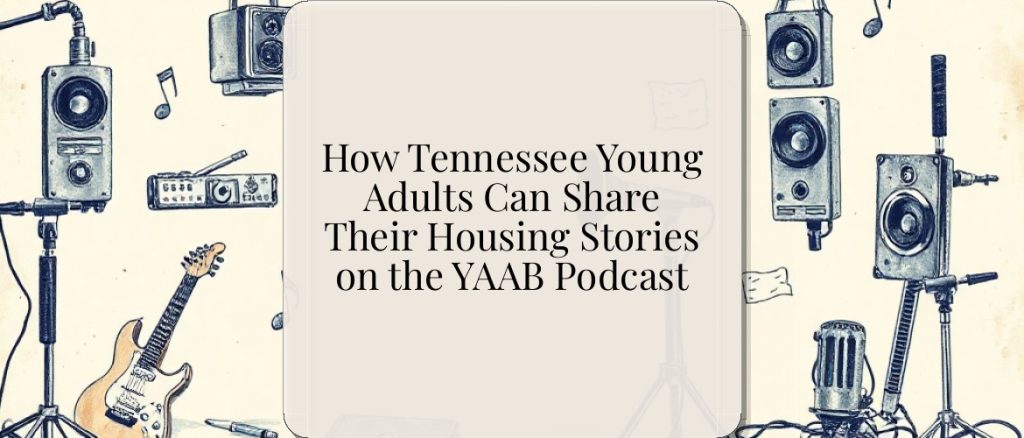
Quick answer: The Youth Action Board (YAAB) of Tennessee runs a podcast where young adults ages 17 to 25 who have experienced homelessness or housing instability can share their stories, advocate for change, and connect their peers to resources across Tennessee's Continuum of Care regions — from Memphis to Knoxville. Participating is straightforward: you reach out to your local YAAB, prepare your story, record in a supportive environment, and your voice becomes part of a statewide conversation that actually shapes housing policy. No prior experience is needed — just your truth.
What Is the YAAB Podcast and Why Does It Exist?
The Youth Action Board of Tennessee operates across eight Continuum of Care regions — from Memphis/Shelby County all the way to Upper Cumberland and Northeast Tennessee. One of YAAB’s most accessible and powerful tools for youth advocacy is its podcast, a media platform where young adults share firsthand accounts of housing instability, highlight local resources, and push for systemic change. Understanding what the podcast is — and why it was created — is the first step toward deciding whether sharing your story is right for you.
A Platform Built by and for Transition-Age Youth
The YAAB podcast isn’t produced by a think tank or a government agency — it’s driven by young adults with lived experience of homelessness and housing instability in Tennessee. That distinction matters. When a 20-year-old from Memphis describes what it felt like to age out of foster care with nowhere to go, that story carries weight that a policy brief simply cannot. The podcast creates a space where that weight is honored, amplified, and directed toward real change.
Transition-age youth — people between 17 and 25 — are one of the fastest-growing groups experiencing homelessness in the United States. In Tennessee alone, thousands of young adults navigate housing instability every year across regions from Shelby County to Northeast Tennessee. The YAAB podcast puts their voices at the center of the conversation, rather than the margins.
Storytelling as Advocacy: Why Your Voice Is a Policy Tool
Advocacy doesn’t always look like a march or a legislative hearing. Sometimes it looks like sitting down in front of a microphone and telling the truth about what you’ve been through. Research consistently shows that personal narrative is one of the most persuasive forces in policy change — more memorable than statistics alone, and more humanizing than case files.
When YAAB members share their experiences on the podcast, those recordings reach case managers, Continuum of Care partners, elected officials, and other young adults who may be going through the exact same thing right now. A single episode can validate someone’s experience, connect them to a resource they didn’t know existed, or convince a local leader to fund a new shelter bed. That’s real, measurable impact — and it starts with your story.
Who Can Participate in the YAAB Podcast?

Before you decide to participate, it helps to know exactly who the YAAB podcast is designed for — and to confirm that the bar for entry is much lower than you might think. The short answer: if you’re a young adult in Tennessee with a housing story, you’re eligible. Here’s the fuller picture.
The Age and Experience Requirements
The YAAB podcast is open to young adults ages 17 to 25 who have lived experience of homelessness or housing instability in Tennessee. That includes people who have slept in shelters, stayed with friends or family because they had nowhere else to go (sometimes called “couch surfing” or “doubling up”), lived in cars or motels, or aged out of the foster care system without stable housing. You don’t need to have been literally unsheltered — housing instability takes many forms, and all of them count.
You also don’t need to be a current YAAB member to express interest, though many podcast guests do connect with their local YAAB chapter through the process. If you’re unsure whether your experience qualifies, reach out anyway — the team will never turn away a young person who wants to share their truth.
No Prior Media or Public Speaking Experience Needed
One of the most common reasons young adults hesitate to share their story is fear — fear of judgment, fear of saying the wrong thing, fear of not sounding “professional.” The YAAB team wants you to know: none of that is required here. The podcast is not a news interview with a hostile anchor. It’s a conversation, facilitated by people who have been through similar experiences and who are trained to make guests feel safe and supported.
YAAB staff and peer facilitators will help you prepare talking points, explain what to expect before and during recording, and give you full control over what you share. You can stop at any time, request edits, and review the episode before it goes live. Your comfort and consent are non-negotiable parts of the process.
Participants Across All Tennessee Regions Are Welcome
Whether you’re in Nashville/Davidson County, Chattanooga/Hamilton County, Jackson/West Tennessee, Knoxville/Knox County, or any other region in the state, your story belongs on this platform. YAAB has local chapters in every Continuum of Care region, and podcast participation can happen remotely via phone or video call — so geography is never a barrier. If you’re in a rural area of Upper Cumberland or Northeast Tennessee with limited transportation, that’s not a problem. The process is designed to meet you where you are.
Why Sharing Your Story Matters — the Real Impact

It’s fair to ask: does sharing my story on a podcast actually do anything? The answer, backed by YAAB’s work across Tennessee, is yes — in at least three distinct ways. The impact operates at the policy level, the peer level, and the personal level simultaneously.
Changing Minds at the Policy Level
Tennessee’s Continuum of Care system — the network of agencies, nonprofits, and government bodies that coordinate homeless services — makes decisions that directly affect where young adults sleep, what resources they can access, and how funding is distributed. YAAB exists specifically to inject youth lived experience into those decision-making spaces, and the podcast is one of the most effective ways to do that at scale.
When a policymaker or CoC coordinator listens to a 22-year-old describe how a lack of transitional housing in their county forced them to drop out of community college, that’s not an abstraction — it’s a constituent with a name and a face. Podcast episodes have been cited in advocacy presentations, shared in stakeholder meetings, and used to support funding requests across multiple Tennessee regions. Your story could be the one that tips the balance.
Connecting Peers to Resources They Didn't Know Existed
Not every listener is a policymaker. Many are young adults in the same situation you’ve been in, scrolling through their phone at 2 a.m. trying to figure out what to do next. When they hear someone who sounds like them — same age, same state, maybe even the same city — talk about how they found a shelter bed, applied for rapid rehousing, or got connected to a workforce program, that’s peer-to-peer education at its most powerful.
Studies on peer support in homelessness services show that young adults are significantly more likely to engage with resources when they hear about them from someone with shared lived experience, compared to a flyer or a website. A single YAAB podcast episode can function as a lifeline for a listener who didn’t know help was available.
Building Your Own Leadership and Advocacy Skills
Sharing your story isn’t just about helping others — it’s also about your own growth. Many YAAB podcast guests report that the experience helped them process their own journey, articulate their needs and strengths more clearly, and feel a renewed sense of purpose. These are skills that translate directly into employment interviews, educational settings, and community leadership roles.
YAAB members who participate in media and advocacy activities also gain tangible resume experience: public speaking, media literacy, community organizing, and policy advocacy are all skills that employers and educational institutions recognize and value. You’re not just telling your story — you’re building a portfolio.
How to Prepare Your Story Before You Record

Preparation is the difference between a recording session that feels overwhelming and one that feels empowering. The good news: you don’t need weeks of prep or a media coach. A few intentional steps in the days before your session will help you walk in — or log on — feeling ready.
Identifying Your Core Message
You don’t need a perfectly polished narrative — but it helps to have a sense of what you most want listeners to understand. Start by asking yourself: What’s the one thing I wish someone had known about my situation? That could be a gap in services, a moment where the system failed you, a resource that actually helped, or simply what it felt like to be a young adult without stable housing in Tennessee. Your answer to that question is your core message, and everything else in your episode can orbit around it.
YAAB facilitators can help you identify and sharpen this message during prep sessions. You don’t have to figure it out alone before you even make contact.
Deciding What to Share — and What to Keep Private
You are always in control of your story. Before recording, think about which details feel safe to share publicly and which you’d prefer to keep private. You can use a first name only, change identifying details about locations or people, or speak in general terms about certain experiences. There is no pressure to disclose trauma in graphic detail — in fact, YAAB’s approach to storytelling is trauma-informed, meaning facilitators are trained to help you share powerfully without re-traumatizing yourself or your listeners.
A good rule of thumb: share what you’re comfortable with a stranger hearing, because podcast audiences are exactly that. You can always share more in a future episode as your comfort grows.
Practical Prep Steps: What to Do in the Week Before Recording
Once you’ve connected with YAAB and confirmed your recording date, here are some practical steps to set yourself up for a great episode:
- Jot down 3-5 key moments or points you want to touch on — not a script, just anchors to keep you on track.
- Listen to 1-2 existing YAAB episodes to get a feel for the format and tone.
- Find a quiet space for your recording session, whether in-person or remote — background noise is the enemy of clear audio.
- Get a good night’s sleep the night before if possible — you’ll feel more grounded and articulate.
- Bring a support person if it helps — a friend, peer mentor, or case manager can sit with you during the session.
The Recording Process: What to Expect Step by Step

Knowing exactly what will happen — from first contact to published episode — removes a lot of the anxiety around participating. Here’s a transparent, step-by-step look at how the YAAB podcast recording process works in Tennessee.
Step 1 — Initial Contact and Intake
The process begins when you reach out to YAAB — either through your local YAAB chapter or directly through the main contact page. A YAAB staff member or peer facilitator will connect with you to learn a little about your background, explain the podcast format, and answer any questions you have. This conversation is low-pressure and confidential. You’re not committing to anything by having it — you’re just exploring whether this is right for you.
During intake, you’ll also discuss any accommodations you might need, preferred recording method (in-person or remote), and your availability. YAAB works around your schedule, not the other way around.
Step 2 — Pre-Recording Prep Session
Before the actual recording, you’ll have at least one prep session with a YAAB facilitator. This is where you’ll talk through your core message, identify the moments you want to highlight, and get comfortable with the format. The facilitator may share sample questions in advance so you’re not caught off guard. Nothing in the recording will be a surprise — every question is shared beforehand, and you can veto any topic at any time.
This session typically lasts 30 to 60 minutes and can happen by phone, video call, or in person depending on your region and preference.
Step 3 — Recording, Review, and Release
The actual recording session usually runs 45 to 90 minutes, though the final edited episode may be shorter. After recording, the YAAB media team edits the audio for clarity and pacing. You will have the opportunity to review the episode before it is published and request changes or removals. Your consent is required at every stage.
Once you approve the episode, it’s released on YAAB’s podcast platform and shared across YAAB’s social media and partner networks. You’ll receive a link to share however you choose — or not at all. Participation in promotion is entirely optional.
Types of Stories YAAB Is Looking to Amplify

YAAB doesn’t have a narrow definition of the “right” kind of housing story. The podcast is designed to reflect the full, complex reality of what transition-age youth in Tennessee experience. That said, there are a few themes that are especially timely and impactful right now.
Aging Out of Foster Care in Tennessee
Tennessee’s foster care system transitions young people out at age 18 — sometimes with very little support for what comes next. Young adults who have navigated this transition, whether they found stable housing or experienced instability afterward, have a perspective that is urgently needed in policy conversations. Tennessee has been working to expand extended foster care and transitional housing options, and first-person accounts from people who’ve lived through the gap are central to making the case for more resources.
If you aged out of foster care in any Tennessee county — Shelby, Davidson, Knox, Hamilton, or elsewhere — your story is one that YAAB specifically wants to amplify.
Navigating Shelter Systems and Rapid Rehousing
What was it actually like to call a shelter hotline at midnight? What did rapid rehousing feel like from the inside — the paperwork, the waiting, the case manager relationships? These ground-level accounts are invaluable to both peers who are currently in the system and to the providers who run it. Honest feedback, even when it’s critical, helps YAAB’s advocacy partners understand where the system is working and where it’s failing transition-age youth.
You don’t need a success story to participate. An account of a system that let you down is just as important — maybe more so — than a story with a tidy resolution.
Education, Employment, and Housing Intersections
Housing instability rarely travels alone. It shows up alongside interrupted education, job loss, mental health challenges, and financial crisis. YAAB is especially interested in stories that explore these intersections — how losing housing affected your ability to stay in school, how a job training program helped you stabilize, or how a financial literacy resource changed your trajectory. These multi-dimensional stories help policymakers understand that housing is not a siloed issue and that solutions need to be equally interconnected.
How Podcast Participation Connects to Broader YAAB Advocacy

The YAAB podcast doesn’t exist in isolation — it’s one piece of a larger advocacy infrastructure that gives Tennessee young adults real influence over the systems that affect their lives. Understanding how podcast participation connects to that bigger picture can help you see the full value of getting involved.
From Podcast Guest to Policy Advocate
For many young adults, the podcast is a first step into YAAB’s broader advocacy ecosystem. Once you’ve shared your story, you may find yourself invited to present at a Continuum of Care meeting, participate in a legislative advocacy day in Nashville, or join a local YAAB chapter as a voting member. None of this is required — but the option is always there, and many past guests have found that speaking publicly for the first time on the podcast gave them the confidence to take those next steps.
YAAB’s advocacy work spans housing policy, education access, employment pathways, and mental health services — all areas where youth voice is needed and often absent from official decision-making tables.
YAAB's Regional Chapters and How They Support Members
Tennessee’s eight Continuum of Care regions each have a local YAAB chapter that provides on-the-ground support for young adults in that area. These chapters are not just advocacy groups — they’re peer communities where members share resources, support each other through challenges, and collectively push for change in their specific region. Podcast participation is one of many ways to engage, alongside attending meetings, joining working groups, and participating in community events.
If you’re not sure which regional chapter serves your area, the YAAB website has a full directory organized by CoC region, from TN-500 (Memphis/Shelby) to TN-509 (Northeast Tennessee).
Using Your Episode as a Personal Advocacy Tool
Once your episode is live, it belongs to you as much as it does to YAAB. You can share it with a case manager to help them understand your background, use it as a portfolio piece when applying for jobs or educational programs, or send it to a local elected official as part of a personal advocacy effort. Your recorded story is a durable asset — it doesn’t expire after the news cycle moves on. It can be referenced, cited, and shared for years.
Some YAAB guests have used their episodes to open conversations with landlords, employers, and school administrators that would have been much harder to start from scratch. A podcast episode is a credible, humanizing introduction that does a lot of the explaining for you.
Trauma-Informed Storytelling: Your Safety Comes First

Sharing a personal story about homelessness or housing instability is an act of courage — and it can also be emotionally demanding. YAAB takes this seriously. The podcast process is built on trauma-informed principles that put your safety, comfort, and consent above everything else.
What Trauma-Informed Means in Practice
“Trauma-informed” is a phrase that gets used a lot, but in the context of the YAAB podcast it has specific, practical meaning. It means that every person involved in the production process — facilitators, editors, producers — is trained to recognize the signs of distress, to create space for pauses and breaks, and to never push a guest toward content they’re not ready to share. It means that the goal of the episode is never to extract the most dramatic or painful details of your experience — it’s to share what you choose to share in a way that serves your goals and your audience.
If at any point during prep or recording you feel overwhelmed, the session stops. Full stop. Your wellbeing is never traded for content.
Consent, Anonymity, and Your Right to Withdraw
Before any recording is published, you will sign a release form that clearly outlines how your story will be used. You have the right to request anonymity — using only a first name or a pseudonym — and to exclude any specific details from the final edit. You also have the right to withdraw your consent after recording, up until the episode is published. If your circumstances change or you simply change your mind, YAAB will not publish your episode without your approval.
These protections are not just ethical best practices — they’re foundational to YAAB’s model. Young adults with lived experience of homelessness have often had their autonomy disregarded by systems and institutions. YAAB is committed to being different.
Mental Health Support During and After Participation
Sharing a difficult story can bring up emotions you didn’t anticipate. YAAB facilitators are prepared for this and can connect you with mental health resources during or after your session if needed. Tennessee has several crisis and support lines specifically for young adults, and YAAB maintains relationships with providers across all eight CoC regions who offer services on a sliding scale or at no cost.
You don’t have to process the experience alone. YAAB’s peer community is also a source of informal support — many past podcast guests have found it helpful to connect with other members who’ve been through the same process.
YAAB Podcast vs. Other Advocacy Formats: What's Right for You?
YAAB offers several ways for young adults to share their stories and get involved. This table compares the podcast to other common formats so you can choose the approach that fits your comfort level, goals, and availability.
What Young Adults Across Tennessee Have Gained from Participating

Sometimes the best way to understand what an experience offers is to hear from people who’ve already done it. While every guest’s journey is different, there are common themes in what young adults across Tennessee — from Memphis to Knoxville — have taken away from participating in the YAAB podcast.
Confidence and a Sense of Purpose
One of the most consistent things past YAAB podcast guests report is a shift in how they see themselves. Before participating, many describe feeling like their experience was something to hide — a source of shame rather than strength. After recording and hearing their episode played back, something changes. The story stops being a wound and starts being a credential. You were the person who navigated that. You survived it, learned from it, and now you’re using it to help someone else. That reframe is powerful and lasting.
Several past guests have gone on to become full YAAB members, peer mentors, or community organizers — a trajectory that began with a single podcast conversation.
Connections to Resources and Opportunities
The YAAB network is wide. When you participate in the podcast, you’re not just recording an episode — you’re entering a community of young adults, case managers, housing advocates, educators, and employers across Tennessee who are all connected through YAAB’s work. Past guests have been connected to job training programs, scholarship opportunities, transitional housing openings, and peer support groups through relationships that started with their podcast episode.
YAAB’s resources page is a good starting point for exploring what’s available in your region, and YAAB staff can help you navigate options specific to your county and situation.
A Permanent Record of Your Advocacy
Unlike a speech at a community meeting or a comment at a public hearing, a podcast episode is permanent and searchable. It can be found by someone in Chattanooga three years from now who is going through exactly what you went through. It can be cited in a research paper on youth homelessness in Tennessee. It can be played at a training for new case managers. The reach of a single episode extends far beyond its initial release, and that reach compounds over time as the YAAB podcast library grows.
You’re not just sharing your story — you’re adding a brick to a permanent archive of Tennessee youth experience that will inform decisions for years to come.
A Closer Look: Podcast vs. Other YAAB Advocacy Formats

The podcast is one of several ways young adults can share their stories and get involved with YAAB advocacy in Tennessee. Understanding how it compares to other formats can help you choose the approach — or combination of approaches — that fits your comfort level and goals.
How to Find and Listen to Existing YAAB Podcast Episodes

You don’t have to be a guest to benefit from the YAAB podcast — and listening to existing episodes is actually a great way to prepare if you’re thinking about participating. Here’s where to find the content and how to get the most out of it.
Where the Podcast Lives Online
Before you decide to participate, it’s worth spending some time listening to existing episodes. The YAAB podcast is available through YAAB’s media hub, where you can browse episodes by topic, region, and theme. Listening first gives you a realistic sense of the format, the tone, and the kinds of stories that have already been shared — which can help you figure out where your story fits and what you might want to add to the conversation.
You can explore all of YAAB’s media content, including podcast episodes, video features, and press coverage, at the YAAB media page. It’s a good place to start whether you’re a prospective guest, a case manager looking for resources to share with clients, or a CoC partner wanting to understand YAAB’s reach.
Sharing Episodes with Your Network
Every YAAB podcast episode is designed to be shareable. If you listen to an episode that resonates with you — even before you’ve participated yourself — share it. Send it to a friend who’s going through something similar. Post it in a group chat. Share it with your case manager or school counselor. Every share extends the reach of a young Tennessean’s story and increases the chance that it reaches someone who needs it.
YAAB’s social media accounts regularly feature new episodes and clips, so following those accounts is an easy way to stay current and share content as it drops.
Using Episodes as Educational Resources
Case managers, educators, and Continuum of Care partners across Tennessee have used YAAB podcast episodes as training tools, discussion starters, and awareness resources. If you work with or alongside transition-age youth in any capacity, incorporating YAAB episodes into your practice is a low-effort, high-impact way to center youth voice in your work.
YAAB welcomes outreach from service providers who want to use episodes in professional development contexts and can provide additional context or speaker follow-up for organizations that want to go deeper.
Ready to Share Your Story? Here's Your Next Move

You’ve read this far, which means something about this opportunity resonates with you. Here’s the clearest possible path from where you are right now to having your story on the YAAB podcast — and into the broader movement for housing justice for young adults across Tennessee.
Step One: Connect with Your Local YAAB Chapter
The fastest path to podcast participation runs through your local YAAB chapter. Tennessee has eight regional chapters, each serving a specific Continuum of Care area. Whether you’re in Memphis/Shelby County, Nashville/Davidson County, Knoxville/Knox County, Chattanooga/Hamilton County, Jackson/West Tennessee, the Upper Cumberland region, or Northeast Tennessee, there’s a local team ready to connect with you. You can find your regional chapter and contact information at yaabtn.org/local-yaabs.
If you’re not sure which region you’re in or you’d prefer to reach out centrally, the main YAAB contact page works just as well. Someone will get back to you and route your inquiry to the right team.
What to Say When You Reach Out
You don’t need a polished pitch or a fully formed story to make first contact. A simple message — “I’m interested in sharing my housing story on the YAAB podcast” — is enough to get the conversation started. From there, the YAAB team will guide you through everything. You can also mention your region, your age, and a very general sense of your experience if that feels comfortable, but none of that is required upfront.
If you want to learn more about YAAB before reaching out, the About YAAB page gives a full overview of the organization’s mission, structure, and the communities it serves across Tennessee.
Join the Movement — Your Story Is Already Powerful
Tennessee’s housing landscape for transition-age youth is changing — slowly, imperfectly, but genuinely — because young adults are refusing to let their experiences go unheard. The YAAB podcast is one of the clearest expressions of that refusal. Every episode is proof that the people most affected by housing instability are also the most qualified to shape the solutions.
You don’t need to have everything figured out. You don’t need a happy ending. You just need your truth and the willingness to share it. YAAB will handle the rest. Your story matters — not someday, but right now, in Tennessee, in the communities where young adults are still waiting for systems to catch up with their needs. Show up. Speak up. The microphone is ready when you are.
Frequently Asked Questions
Do I have to be a current YAAB member to be on the podcast?
No. You don't need to be a YAAB member to participate in the podcast. Many guests connect with YAAB for the first time through the podcast process. You just need to be between 17 and 25 and have lived experience of homelessness or housing instability in Tennessee.
Can I stay anonymous on the YAAB podcast?
Yes. You can use only a first name, a pseudonym, or have your voice altered if you prefer. YAAB's process is built around your consent, and you control exactly how much identifying information is shared in your episode.
What if I live in a rural part of Tennessee with no transportation?
Remote participation via phone or video call is fully supported. You don't need to travel to a studio or a YAAB office. YAAB works with young adults across all eight Continuum of Care regions, including rural areas in Upper Cumberland and Northeast Tennessee.
What happens if I change my mind after recording?
You can withdraw your consent at any time before the episode is published. YAAB will not release your episode without your approval, and you have the right to request edits or removal of specific content after the recording session.
How long does the whole process take from first contact to published episode?
The timeline varies, but most participants go from first contact to published episode within two to four weeks. This includes an initial intake conversation, one or more prep sessions, the recording itself, editing, and your review before release.
Can case managers or service providers recommend clients for the podcast?
Yes. Case managers and CoC partners can refer young adults they work with to the YAAB podcast process. It's best to make sure the young person is genuinely interested and has given their own consent to be referred before reaching out on their behalf.