Quick answer: The Youth Action Board (YAAB) of Tennessee is a statewide network of young adults ages 17 to 25 with lived experience of homelessness who shape the policies and programs that affect their own lives. Across all eight Continuum of Care regions — from Memphis to Northeast Tennessee — YAAB runs advocacy campaigns, peer-led projects, and resource initiatives that directly address housing instability. Their work proves that young people closest to the problem are also closest to the solution, and that peer leadership changes outcomes in real, measurable ways.
What Housing Instability Actually Looks Like for Young Adults in Tennessee

Before you can understand what YAAB’s statewide projects do, it helps to understand the problem they are solving. Housing instability among young adults in Tennessee is not a single, simple situation — it is a layered crisis that shows up differently depending on the region, the individual, and the systems they have interacted with. Across Memphis, Nashville, Knoxville, Chattanooga, Jackson, and rural corridors like the Upper Cumberland and Northeast Tennessee, young adults face a patchwork of risks and resources.
More Than Just 'Being Homeless'
Housing instability is a wide spectrum. It includes sleeping outside or in a shelter, but it also means couch-surfing at a friend’s place, doubling up with family in overcrowded apartments, staying in a motel paid for week-to-week, or living somewhere that isn’t safe. For young adults ages 17 to 25 in Tennessee, any of these situations can derail education, employment, and long-term health.
The National Alliance to End Homelessness estimates that 4.2 million young people experience homelessness in the United States each year. Tennessee’s own Point-in-Time counts consistently show that transition-age youth (TAY) — those between 18 and 24 — make up a disproportionately large share of people experiencing homelessness relative to their share of the general population.
Who Is Most Affected in Tennessee?
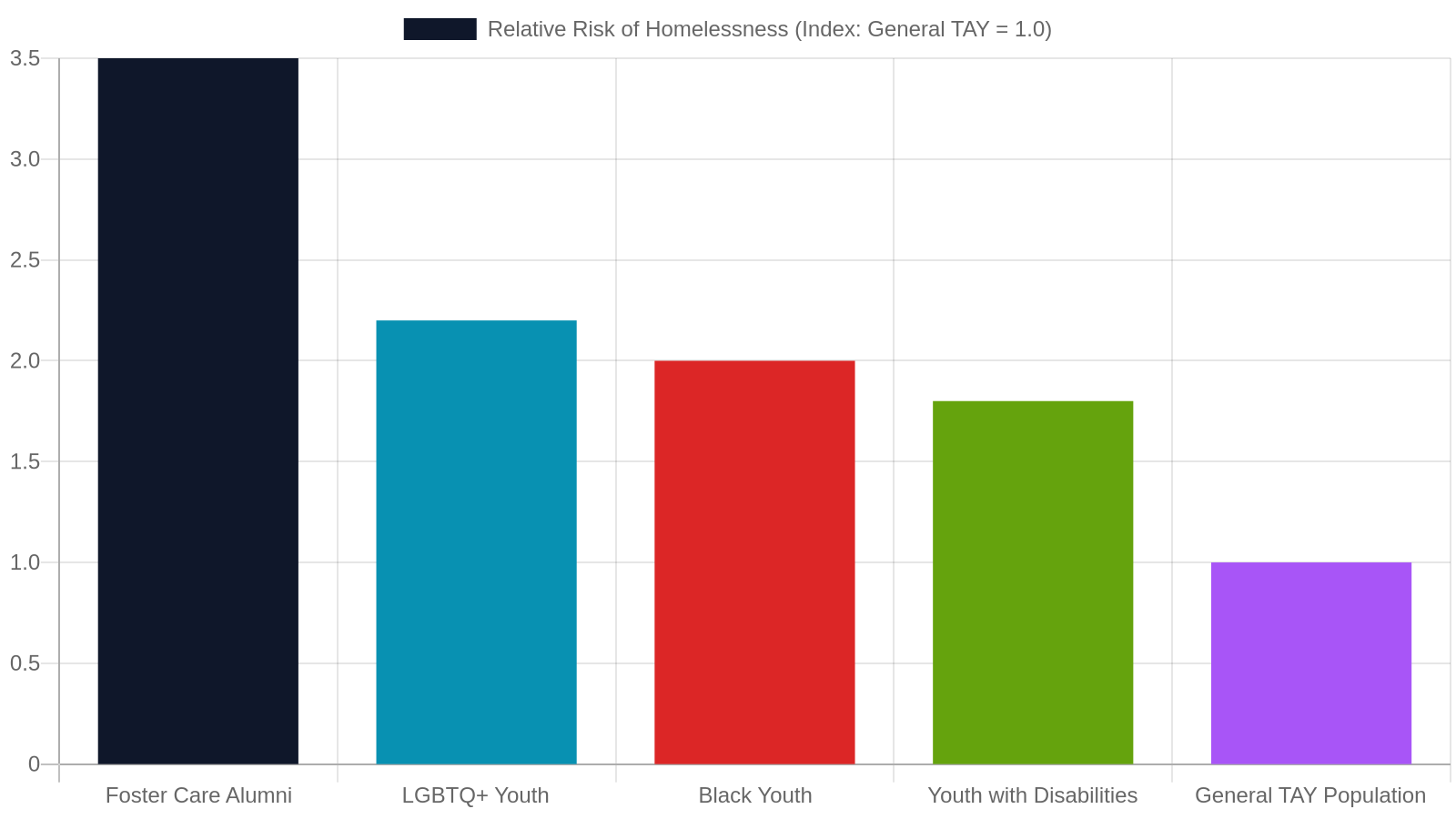
Certain groups of young adults in Tennessee face compounded risk. Youth aging out of foster care lose their state support at age 18 (or 21 under extended care), often with no family safety net. LGBTQ+ youth are 120% more likely to experience homelessness than their peers, frequently due to family rejection. Black and Latino young adults face housing instability at higher rates because of systemic inequities in housing access and wealth. Young parents, young adults with disabilities, and those with justice involvement also face additional barriers.
Understanding who is most affected is the first step toward designing programs that actually work — and that is exactly the kind of insight YAAB members bring to the table.
What YAAB Is and Why Lived Experience Changes Everything

YAAB’s power comes from a simple but radical idea: the people who have lived through a problem understand it better than anyone who has only studied it. That principle — called lived experience leadership — is baked into every project YAAB runs. When young adults with firsthand knowledge of housing instability help design the systems meant to address it, those systems work better. It is not a theory; it is backed by decades of research in participatory design and community health.
The YAAB Model: Peer Experts, Not Just Participants
The Youth Action Board of Tennessee is not a support group or a drop-in program. It is a structured advisory and advocacy network made up of young adults who have personally navigated homelessness or housing instability. Members are recruited, trained, and compensated for their time — because their knowledge is expertise, not charity.
YAAB members attend Continuum of Care (CoC) meetings, sit on planning committees, review funding applications, and give direct feedback to service providers and policymakers. They are the people in the room making sure that programs designed for young adults actually reflect what young adults need.
The Eight Tennessee CoC Regions YAAB Serves
Tennessee’s homelessness response is organized through eight regional Continuums of Care, each coordinating local shelters, outreach workers, housing programs, and funding. YAAB has a presence in all eight:
- TN-500 — Chattanooga/Hamilton County
- TN-501 — Memphis/Shelby County
- TN-502 — Knoxville/Knox County
- TN-503 — Nashville/Davidson County
- TN-504 — Memphis Tri-County (Shelby, Tipton, Fayette)
- TN-506 — Upper Cumberland
- TN-507 — Northeast Tennessee
- TN-509 — Jackson/West Tennessee
Each local YAAB chapter reflects the specific housing landscape of its region, from urban shelter systems to rural areas with almost no dedicated youth services.
Advocacy Projects That Shape Tennessee Housing Policy

One of YAAB’s most powerful functions is its role as an advocacy engine. Young adults who have experienced housing instability are uniquely qualified to speak to policymakers about what works, what fails, and what is missing entirely. YAAB channels that expertise into structured advocacy at both the regional CoC level and the Tennessee state legislature. These are not symbolic gestures — they are sustained campaigns designed to move dollars and change rules.
Influencing the Continuum of Care Planning Process
Each Tennessee CoC is required by the U.S. Department of Housing and Urban Development (HUD) to develop an annual plan that sets priorities for funding and services. YAAB members participate directly in this process — reviewing plans, flagging gaps in youth services, and pushing for dedicated youth-specific funding streams. In practical terms, this means YAAB voices influence which programs get funded and which populations get prioritized.
HUD’s CoC Program Notice of Funding Opportunity (NOFO) explicitly encourages — and increasingly requires — meaningful youth participation. YAAB’s presence in all eight Tennessee CoCs positions member organizations to meet that standard and access more federal dollars for youth housing.
State-Level Legislative Advocacy
Beyond the CoC process, YAAB members engage with Tennessee state government. This includes testifying at legislative hearings, meeting with state agency staff, and contributing to reports that inform budget decisions. Key advocacy priorities have included extending foster care support beyond age 18, increasing funding for Rapid Rehousing programs targeted at youth, and improving data collection on youth homelessness so the problem is accurately counted and resourced.
Advocacy is not just about showing up — YAAB members receive training in public speaking, policy analysis, and legislative process so they can participate effectively and confidently.
Peer-Led Outreach: Reaching Young Adults Where They Are

Formal service systems — shelters, case management offices, Coordinated Entry — are essential, but they do not reach everyone. Many young adults experiencing housing instability actively avoid systems they associate with surveillance, judgment, or past negative experiences. Peer outreach is the bridge between the street and the service, and YAAB members are trained to be that bridge across Tennessee’s diverse urban and rural communities.
Why Peer Outreach Works Better Than Traditional Approaches
Research consistently shows that young adults experiencing homelessness are more likely to engage with services when the outreach worker is someone who looks like them and has been through similar experiences. A 2019 study published in Children and Youth Services Review found that peer-delivered services increased engagement rates by up to 40% compared to traditional professional-only outreach in homeless youth populations.
YAAB members serve as trusted connectors — not just referring peers to services, but walking alongside them, helping them navigate systems that can feel confusing or hostile. That trust is built on shared experience, and it cannot be replicated by a pamphlet or a hotline.
What Peer Outreach Looks Like on the Ground in Tennessee
In Memphis, Nashville, Knoxville, and Chattanooga, YAAB-connected peer outreach means showing up at drop-in centers, libraries, fast food restaurants, and social media spaces where young adults actually spend time. Outreach workers share information about shelter availability, Coordinated Entry access points, and immediate resources like food, hygiene supplies, and phone charging.
In rural regions like Northeast Tennessee and the Upper Cumberland — where services are sparse and transportation is a major barrier — peer outreach often happens digitally, through group chats, social media, and text-based resource sharing. YAAB members in these regions are especially important because they understand the specific geography of rural housing instability.
Resource Navigation Projects: Connecting Youth to Housing, Jobs, and Education

Knowing that a resource exists and actually being able to access it are two very different things. Tennessee has a range of housing, education, and employment programs for young adults — but the system is fragmented, and navigating it without help is genuinely hard. YAAB projects focus heavily on resource navigation: helping young adults understand what is available, how to qualify, and how to actually get in the door. You can explore the full YAAB Tennessee resource directory to find region-specific options near you.
Housing Resources: From Emergency Shelter to Rapid Rehousing
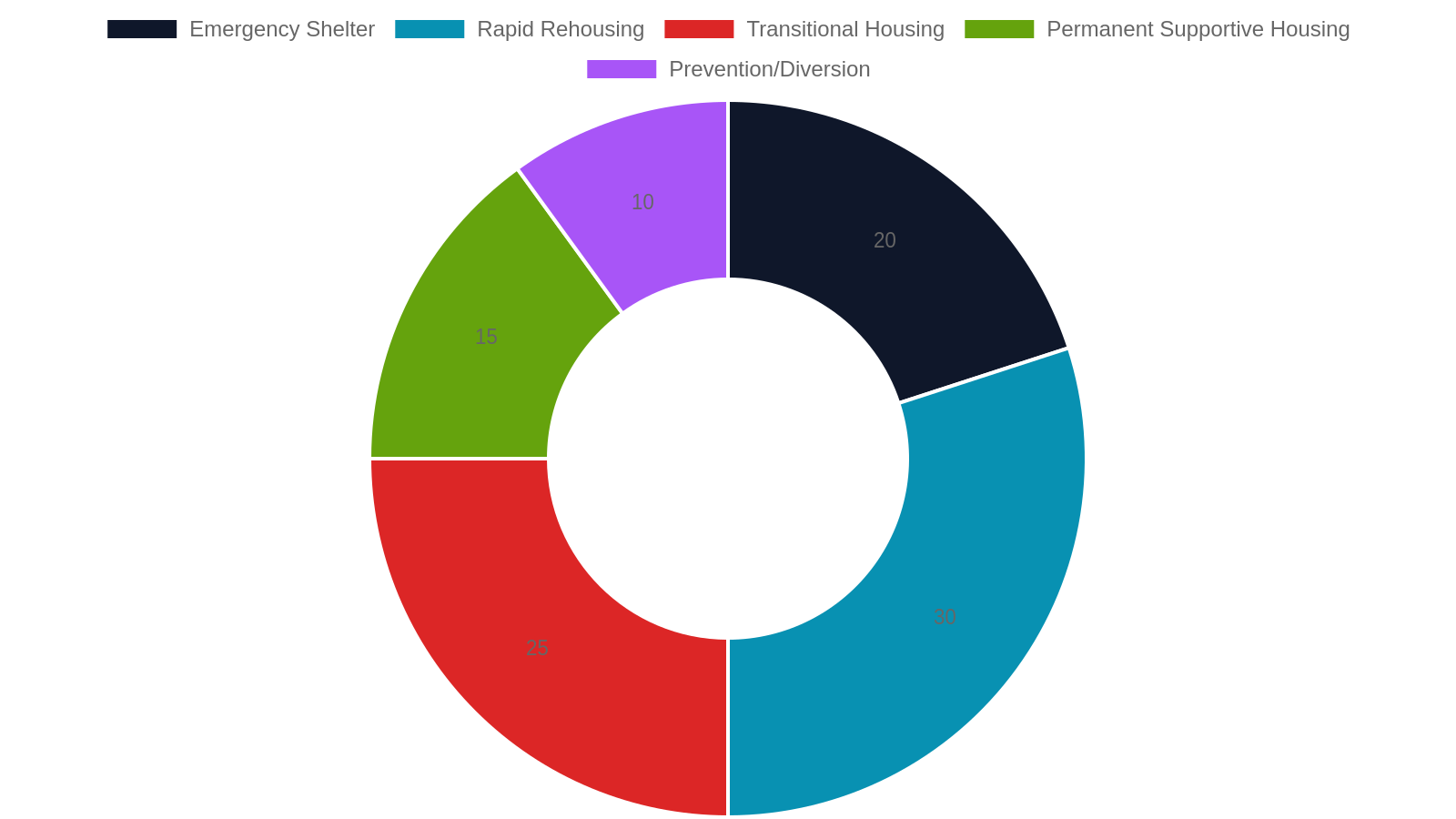
YAAB projects help young adults understand and access the full continuum of housing options available in Tennessee. Emergency shelter is the immediate safety net — Tennessee has youth-specific shelters in Memphis (Door of Hope), Nashville (Campus for Human Development, Oasis Center), Knoxville (Volunteer Ministry Center), and Chattanooga (Chambliss Center). YAAB members help peers navigate Coordinated Entry, the standardized process for accessing homeless services in each CoC region.
Beyond emergency shelter, Rapid Rehousing programs provide short-term rental assistance and case management to help young adults move quickly into their own housing. Transitional Housing programs offer longer-term support — typically 18 to 24 months — for young adults who need more time to stabilize. YAAB advocates for adequate funding for all three levels in every Tennessee CoC.
Education and Employment: Stability Requires More Than a Roof
Housing stability is not just about having a place to sleep — it requires income and skills. YAAB’s resource navigation work connects young adults to GED and high school equivalency programs (Tennessee offers free GED testing statewide), vocational training, and employment programs specifically designed for young adults with housing barriers. The Tennessee College of Applied Technology (TCAT) system offers low-cost credential programs in trades, healthcare, and technology across the state.
Employment barriers for young adults experiencing homelessness often include lack of ID, no permanent address for applications, no transportation, and gaps in work history. YAAB members who have navigated these barriers themselves are the most effective guides for peers facing the same obstacles.
Mental Health and Wraparound Supports
Housing instability and mental health are deeply connected. Studies show that over 50% of youth experiencing homelessness meet criteria for at least one mental health condition, and trauma exposure is nearly universal. YAAB projects work to connect young adults to trauma-informed mental health services, peer support specialists, and crisis intervention resources.
Tennessee’s statewide crisis line (855-CRISIS-1) and local mental health centers are part of the resource ecosystem YAAB members help peers access. Critically, YAAB advocates for mental health services to be co-located with or closely linked to housing programs, so young adults do not have to navigate multiple disconnected systems alone.
Data and Research Projects: Making Youth Homelessness Visible

You cannot solve a problem you cannot see. One of YAAB’s most important — and least visible — project areas is data advocacy: pushing for better, more accurate, and more youth-centered data collection on homelessness across Tennessee. When the numbers are wrong, the resources are wrong. YAAB members work to fix the numbers so the resources can follow.
The Problem With How Youth Homelessness Is Counted
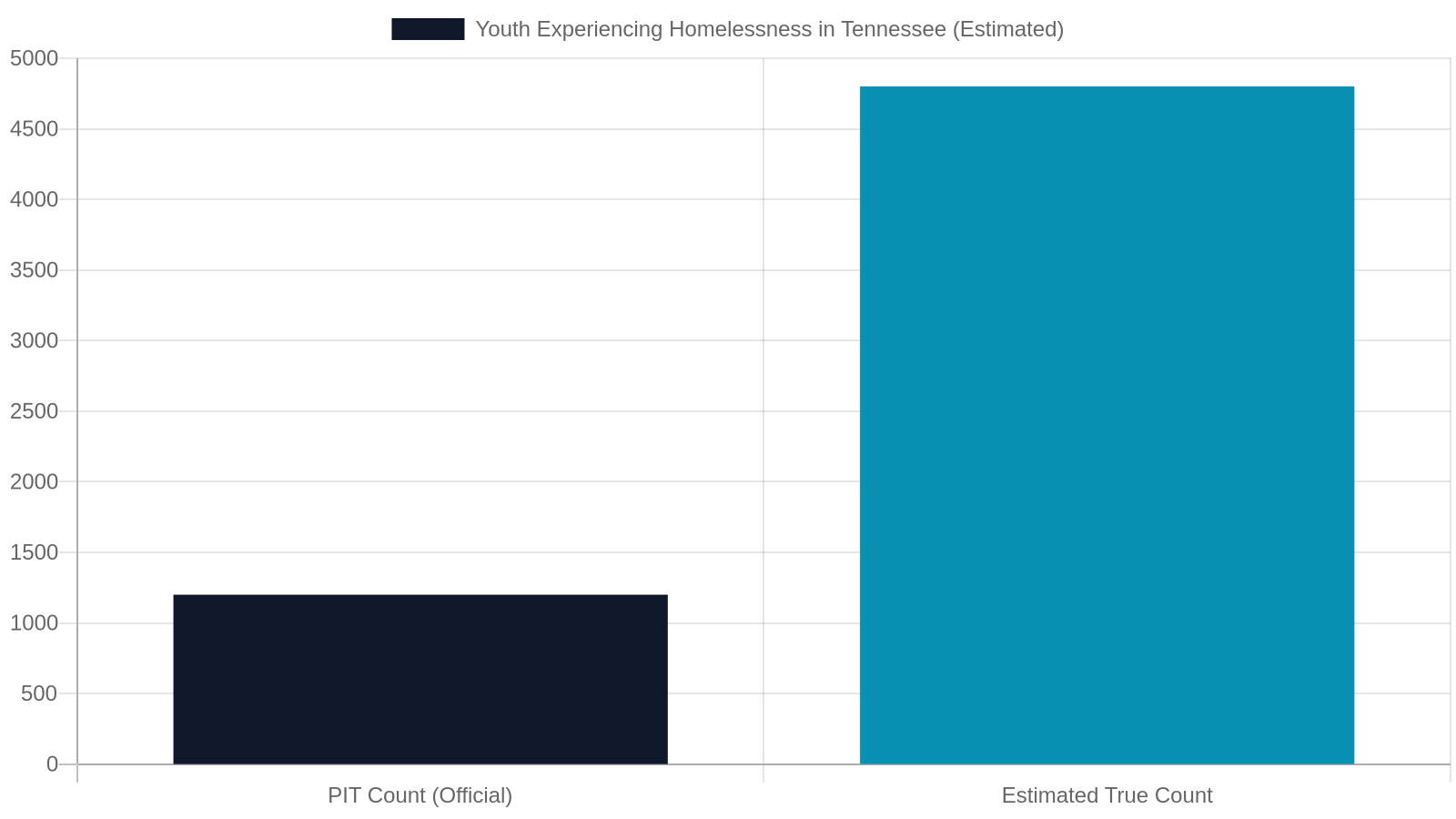
The annual Point-in-Time (PIT) count — a single-night census of people experiencing homelessness conducted every January — is the primary data tool used to allocate federal housing resources. But it dramatically undercounts youth homelessness. Young adults who are couch-surfing, staying in motels, or hiding their situation are rarely captured. The true number of young adults experiencing housing instability in Tennessee is estimated to be three to five times higher than PIT count figures suggest.
This undercounting has real consequences: when youth are not counted, funding and programs are not sized to meet actual need. YAAB members advocate for improved counting methods, including youth-specific supplemental surveys and year-round data collection.
YAAB's Role in Improving Data Quality
YAAB members participate in PIT counts and help design outreach strategies that reach hidden youth populations. They also contribute to Homeless Management Information System (HMIS) improvement efforts — pushing for better data fields that capture youth-specific experiences like foster care history, LGBTQ+ identity, and family rejection.
Better data means better advocacy. When YAAB can point to specific numbers showing gaps in youth services in a particular Tennessee region, those numbers carry weight in CoC planning meetings and legislative hearings. Data is a tool for justice, and YAAB members are learning to use it.
Leadership Development: Building the Next Generation of Advocates

YAAB’s statewide projects are not just about fixing systems — they are about developing the people who will lead those systems in the future. Every young adult who joins YAAB gains skills, credentials, connections, and confidence that extend far beyond their time as a member. Leadership development is embedded in every project, every meeting, and every advocacy campaign YAAB runs across Tennessee.
Training and Skills YAAB Members Gain
YAAB is not just about what members give — it is equally about what they gain. Members receive structured training in public speaking, policy literacy, meeting facilitation, data analysis, and community organizing. Many YAAB members use these skills to pursue careers in social work, public policy, community health, and nonprofit leadership.
Training is delivered in accessible formats — workshops, peer mentorship, and online modules — designed for young adults who may be balancing housing instability, employment, and education at the same time. YAAB meets members where they are, not where a traditional professional development program expects them to be.
Compensation and Recognition
YAAB members are compensated for their time and expertise. This is a non-negotiable principle: asking people with lived experience to volunteer their knowledge while they are still navigating housing instability is exploitative. Stipends, gift cards, transportation reimbursement, and meals at meetings are standard practice across YAAB chapters.
Recognition matters too. YAAB members have presented at state conferences, been quoted in news coverage, and testified before legislative committees. These experiences build confidence and create pathways to professional opportunity that many YAAB members did not previously believe were available to them.
Alumni and Long-Term Pathways
Some YAAB members age out of the 17–25 eligibility range and transition into alumni roles, mentoring newer members and staying connected to the network. Others move into paid positions with CoC partner organizations, state agencies, or advocacy nonprofits. The YAAB model is designed to create a pipeline of young adults with lived experience who move into positions of real influence over housing systems — not just as advisors, but as decision-makers.
Regional Spotlight: How YAAB Projects Differ Across Tennessee

Tennessee is not one housing market — it is eight distinct regional realities, each with its own mix of resources, gaps, and community dynamics. YAAB’s statewide structure is designed to honor that diversity. Rather than running identical programs in every region, YAAB chapters develop projects that respond to local conditions while staying connected to a shared statewide advocacy agenda. Here is a look at how that plays out across the state.
Urban Regions: Memphis, Nashville, Knoxville, Chattanooga
Tennessee’s four largest cities have more established homeless service infrastructures, but youth-specific gaps remain significant. In Memphis (TN-501), YAAB members have focused on Coordinated Entry access and shelter capacity for young adults fleeing unsafe home situations. In Nashville (TN-503), YAAB has engaged with rapid growth and gentrification that is pushing low-income young adults further from services and employment. In Knoxville (TN-502) and Chattanooga (TN-500), YAAB members have prioritized expanding Rapid Rehousing slots and improving connections between the justice system and housing services.
Rural and Underserved Regions: Upper Cumberland, Northeast TN, West TN
Rural Tennessee presents a different set of challenges. In the Upper Cumberland (TN-506) and Northeast Tennessee (TN-507), there are few dedicated youth shelters, limited public transportation, and significant stigma around seeking help. YAAB members in these regions often serve as the primary — and sometimes only — peer resource for young adults experiencing housing instability.
In Jackson and West Tennessee (TN-509), agricultural economy dynamics and high poverty rates create housing instability patterns that differ from urban areas. YAAB’s regional approach means these differences are recognized and addressed, rather than forcing a one-size-fits-all urban model onto communities where it will not work.
Tennessee CoC Regions at a Glance: Youth Housing Landscape
Each of Tennessee's eight Continuum of Care regions has a distinct youth housing profile. This table summarizes key characteristics to help young adults and service providers understand what resources and gaps exist in each area.
How YAAB Projects Connect to the Broader Continuum of Care System

YAAB does not operate in isolation — it is woven into the formal homeless response system through the Continuum of Care structure. Understanding how CoCs work helps explain why YAAB’s participation in them is so strategically important. Federal dollars, local policies, and service designs all flow through the CoC process. YAAB’s seat at that table is not ceremonial — it is structural.
What the Continuum of Care Is and Why It Matters
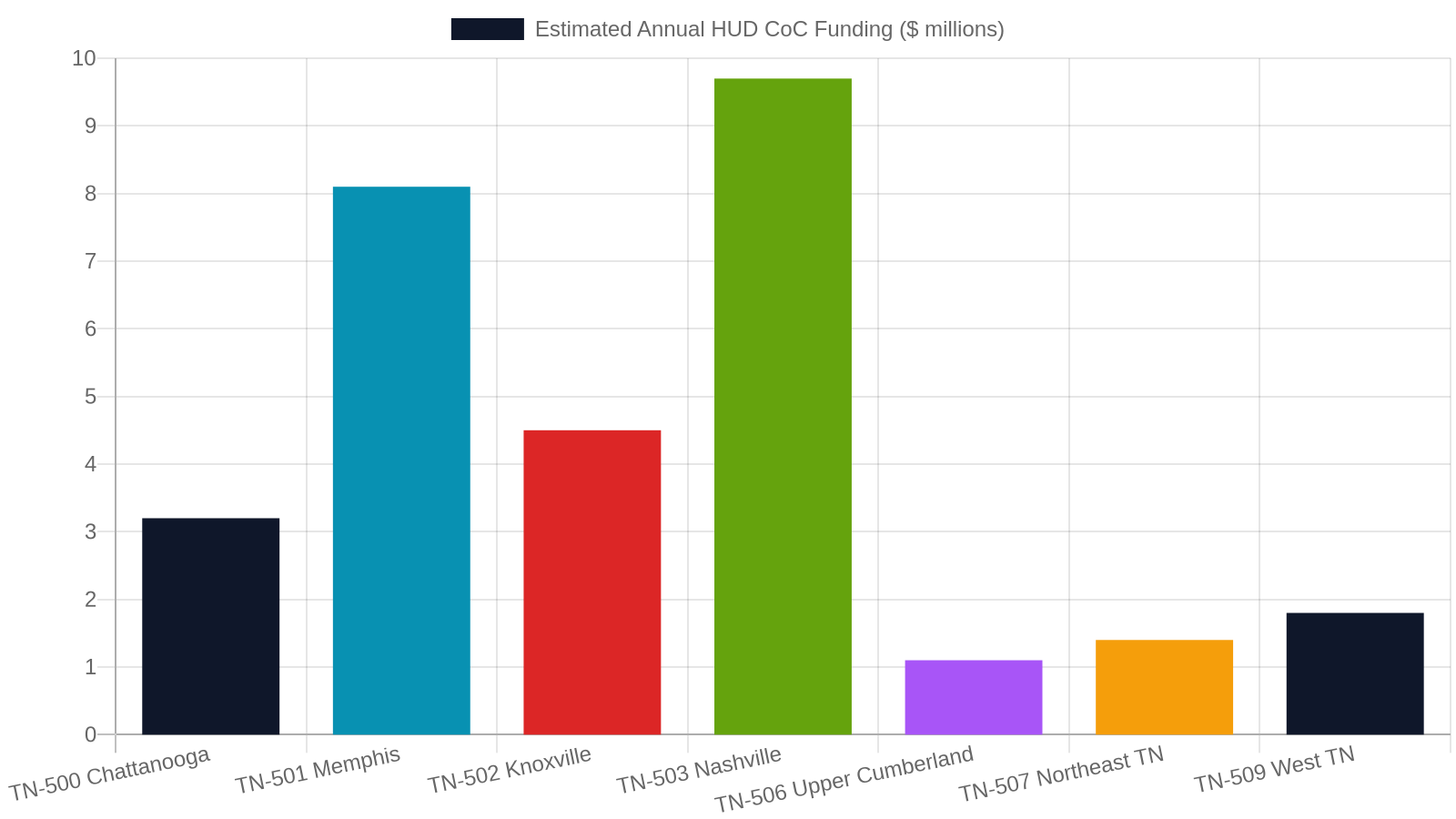
The Continuum of Care (CoC) is a HUD-mandated regional planning body that coordinates the full range of homeless services — from street outreach to permanent housing — in a defined geographic area. Each of Tennessee’s eight CoCs receives federal funding through HUD’s CoC Program, which in recent years has totaled over $30 million annually for Tennessee as a whole.
CoC decisions — which programs get funded, how Coordinated Entry works, what data gets collected — directly affect the daily lives of young adults experiencing homelessness. YAAB’s presence in all eight Tennessee CoCs means youth voices are part of those decisions, not an afterthought.
YAAB as a Bridge Between Youth and Systems
Service providers, CoC staff, and policymakers often have genuine intentions but limited understanding of what young adults actually experience when they try to access services. YAAB members serve as a real-time feedback loop — reporting back to CoC planning bodies about what is working, what is confusing, and what is actively harmful.
This feedback has led to concrete changes in Tennessee CoCs: simplified intake processes, more youth-friendly shelter rules (like allowing couples to stay together and permitting pets), extended hours at drop-in centers, and better training for frontline staff on trauma-informed approaches. These changes happen because YAAB members are in the room and their input is taken seriously.
What Makes YAAB's Approach Different From Traditional Youth Services

YAAB’s statewide projects do not just add youth voices to existing systems — they challenge the fundamental assumptions of how those systems are built. That distinction matters enormously for understanding why YAAB produces different results than traditional youth service programs. The model is replicable, evidence-informed, and growing — and it starts from a place of respect for young adults’ knowledge and capacity.
Youth-Driven vs. Youth-Serving
There is an important distinction between programs that serve young adults and programs that are driven by young adults. Traditional youth services — however well-intentioned — are typically designed by adults, evaluated by adults, and adjusted based on adult judgment about what young people need. YAAB flips that model. Young adults with lived experience are the designers, evaluators, and adjusters. Adults in the system are partners and supporters, not directors.
This shift in power is not just philosophically meaningful — it produces better outcomes. Programs designed with meaningful youth input have higher engagement rates, lower dropout rates, and better housing stability outcomes than those designed without it.
Non-Stigmatizing Language and Culture
YAAB is intentional about language. Members do not use terms like ‘homeless youth’ as an identity label — instead, they say ‘young adults experiencing homelessness’ or ‘young adults with lived experience of housing instability.’ This is not just semantics: language shapes how people see themselves and how systems treat them.
YAAB’s culture is explicitly non-stigmatizing, peer-to-peer, and strengths-based. Members are recognized for what they know and what they contribute, not defined by their hardest moments. That cultural foundation makes YAAB a space where young adults can engage authentically — and that authenticity is what makes the advocacy credible.
How to Get Involved With YAAB Across Tennessee

Reading about YAAB’s work is one thing — being part of it is another. Whether you are a young adult with lived experience who wants to turn that experience into advocacy, or a service provider who wants to build stronger partnerships with the young adults you serve, there is a role for you in YAAB’s statewide network. Getting involved is straightforward, and the impact is real.
Joining Your Local YAAB Chapter
If you are a young adult between 17 and 25 with lived experience of homelessness or housing instability in Tennessee, you are exactly who YAAB is looking for. Each of the eight regional chapters recruits members on a rolling basis. You do not need a resume, a referral, or a perfect situation — you need your experience and your voice.
To find your local chapter and learn about membership, visit the YAAB Local Chapters page and select your region. You can also reach out through the statewide contact page if you are not sure which region you belong to or if you want more information before committing.
For Case Managers and Service Providers
If you work with transition-age youth in Tennessee — as a case manager, outreach worker, CoC staff member, or service provider — YAAB is a resource and a partner. Connecting your clients to YAAB gives them access to peer support, advocacy training, and a community of young adults who understand what they are going through.
You can also partner with YAAB to improve your own programs. YAAB members can consult on program design, review intake processes, and provide feedback on how your services feel from the inside. That kind of partnership makes programs better — and it is what YAAB exists to do.
Take the Next Step: Explore YAAB's Statewide Projects

YAAB’s statewide projects are proof that young adults with lived experience of homelessness are not just the people who need housing solutions — they are the people best equipped to build them. Across all eight Tennessee Continuum of Care regions, YAAB members are doing the work: advocating, connecting peers to resources, improving data, shaping policy, and developing the next generation of leaders who will keep pushing until every young adult in Tennessee has a safe place to call home.
What You Will Find at YAAB Tennessee
YAAB’s statewide work is ongoing, evolving, and driven by the young adults who make it happen. From advocacy campaigns at the Tennessee state capitol to peer outreach in rural communities with no dedicated youth shelter, YAAB projects are changing what housing instability looks like for young adults across the state — one region, one policy, one person at a time.
To learn more about the full scope of YAAB’s work — including current campaigns, regional initiatives, and how member input shapes CoC decisions — explore the YAAB Statewide Projects page. You will find detailed information about active projects, past wins, and how you can plug in no matter where you are in Tennessee.
Your Voice Belongs in This Work
If you are a young adult in Tennessee who has experienced housing instability — in Memphis, Nashville, Knoxville, Chattanooga, Jackson, the Upper Cumberland, Northeast Tennessee, or anywhere in between — your experience is not a liability. It is expertise. YAAB was built by and for people like you, and the projects described in this article exist because young adults decided they were not going to wait for someone else to fix the system.
You can learn more about what YAAB is and how it started at the About YAAB page, or go straight to the Join YAAB page if you are ready to get involved. The door is open — and the people on the other side have been where you are.
Frequently Asked Questions
What is the Youth Action Board (YAAB) of Tennessee?
YAAB Tennessee is a statewide network of young adults ages 17 to 25 with lived experience of homelessness or housing instability. Members advise Continuum of Care planning bodies, advocate for better policies, and connect peers to housing, education, and employment resources across all eight Tennessee CoC regions.
How can I join YAAB if I am a young adult experiencing homelessness in Tennessee?
If you are between 17 and 25 and have lived experience of housing instability, you can join your regional YAAB chapter. Visit the YAAB Local Chapters page at yaabtn.org/local-yaabs to find your region and learn about membership. No referral or resume is required — your experience is what matters.
What is a Continuum of Care and why does it matter for youth homelessness?
A Continuum of Care (CoC) is a HUD-mandated regional body that coordinates homeless services and funding in a defined area. Tennessee has eight CoCs. CoC decisions determine which programs get funded and how services are delivered — which is why YAAB's participation in all eight Tennessee CoCs directly affects outcomes for young adults experiencing homelessness.
Does YAAB pay members for their time and participation?
Yes. YAAB members are compensated for their expertise through stipends, gift cards, transportation reimbursement, and meals at meetings. Compensating members is a core principle — asking people with lived experience of housing instability to volunteer their knowledge without pay is not an equitable practice.
What housing resources are available for young adults experiencing homelessness in Tennessee?
Tennessee has emergency shelters, Rapid Rehousing programs, and Transitional Housing options across its eight CoC regions. Urban areas like Nashville, Memphis, Knoxville, and Chattanooga have the most options. Rural regions have fewer dedicated youth services. YAAB's resource directory at yaabtn.org/resources lists region-specific options.
How does YAAB address youth homelessness in rural Tennessee?
In rural regions like Northeast Tennessee (TN-507) and the Upper Cumberland (TN-506), YAAB members use digital peer outreach — group chats, social media, and text-based resource sharing — because in-person services are sparse and transportation is a major barrier. YAAB also advocates for rural-specific funding and capacity building in these underserved CoC regions.