Quick answer: Knox County, Tennessee has a network of housing programs, shelters, and support services specifically for young adults ages 17 to 25 who are experiencing or have experienced homelessness. The local Youth Action Board (YAAB TN-501) gives young people with lived experience a direct seat at the table — shaping how these programs are designed, funded, and delivered. Whether you need emergency shelter tonight or want to help fix the system long-term, this guide breaks down what's available in Knoxville and how you can get involved.
What 'Lived Experience' Actually Means — and Why It Matters in Knox County

Before diving into specific programs, it helps to understand the framework that shapes how Knox County approaches youth homelessness — and why the voices of young people who’ve lived it are now central to that framework.
More Than a Buzzword
Lived experience means you’ve been through it yourself — couch-surfing, staying in a shelter, sleeping in a car, aging out of foster care without a safe place to land. In the world of housing policy, it means your firsthand knowledge is treated as expertise, not just a personal story to be pitied.
In Knox County, programs that serve transition-age youth (TAY) — young adults ages 17 to 25 — are increasingly required by the U.S. Department of Housing and Urban Development (HUD) to include people with lived experience in their planning and decision-making. That’s not just a feel-good policy. Research from the National Alliance to End Homelessness shows that programs co-designed with people who’ve experienced homelessness are more effective, better trusted, and more likely to be used by the people they’re meant to serve.
Why Transition-Age Youth Are a Distinct Group
Young adults between 17 and 25 face a unique set of challenges that neither child-focused nor adult-focused systems are built to handle well. You may be aging out of foster care, leaving a juvenile justice program, or simply cut off from family support. You’re legally an adult but often lack the credit history, rental history, or co-signers that landlords demand.
In Knoxville and Knox County, the Continuum of Care (CoC) — the regional network of agencies, shelters, and funders — is required to track and serve this population separately. HUD’s 2023 Annual Homeless Assessment Report found that young adults make up roughly 10–12% of the sheltered homeless population nationally, but are dramatically undercounted because many avoid formal shelter systems entirely.
The Power Shift That Lived Experience Creates
When a young person who has navigated Knox County’s shelter intake process sits on the committee that designs that process, things change. Forms get simplified. Hours get adjusted. Trauma-informed language replaces clinical jargon. Staff training improves. These aren’t small tweaks — they’re the difference between a program someone actually uses and one they avoid.
The Youth Action Board of Tennessee exists precisely to make this power shift real and sustained, not just symbolic. YAAB members in the Knoxville region (TN-501) bring that perspective directly to local Continuum of Care meetings, grant reviews, and policy conversations.
Knox County's Continuum of Care: The System Behind the Services

Knox County’s housing programs don’t exist in isolation. They’re part of a structured federal-local system called the Continuum of Care — and understanding how it works helps you navigate it, advocate within it, or hold it accountable.
What a Continuum of Care Is
A Continuum of Care (CoC) is a regional planning body funded and overseen by HUD. It coordinates all the organizations in a geographic area that work on homelessness — from emergency shelters to rapid rehousing to permanent supportive housing. Knox County falls within TN-501, which covers Knoxville and surrounding counties.
The CoC receives federal funding each year through HUD’s CoC Program grants. In recent grant cycles, Tennessee CoCs collectively received tens of millions of dollars annually. How that money gets allocated — which programs get funded, which populations are prioritized — is decided through a competitive process that the CoC governs locally.
How Funding Flows to Youth Programs
Within the CoC, youth-specific programs compete for funding alongside adult and family programs. HUD has increasingly pushed CoCs to dedicate resources to transition-age youth, especially following the Homeless Emergency Assistance and Rapid Transition to Housing (HEARTH) Act and subsequent guidance requiring youth-specific program models.
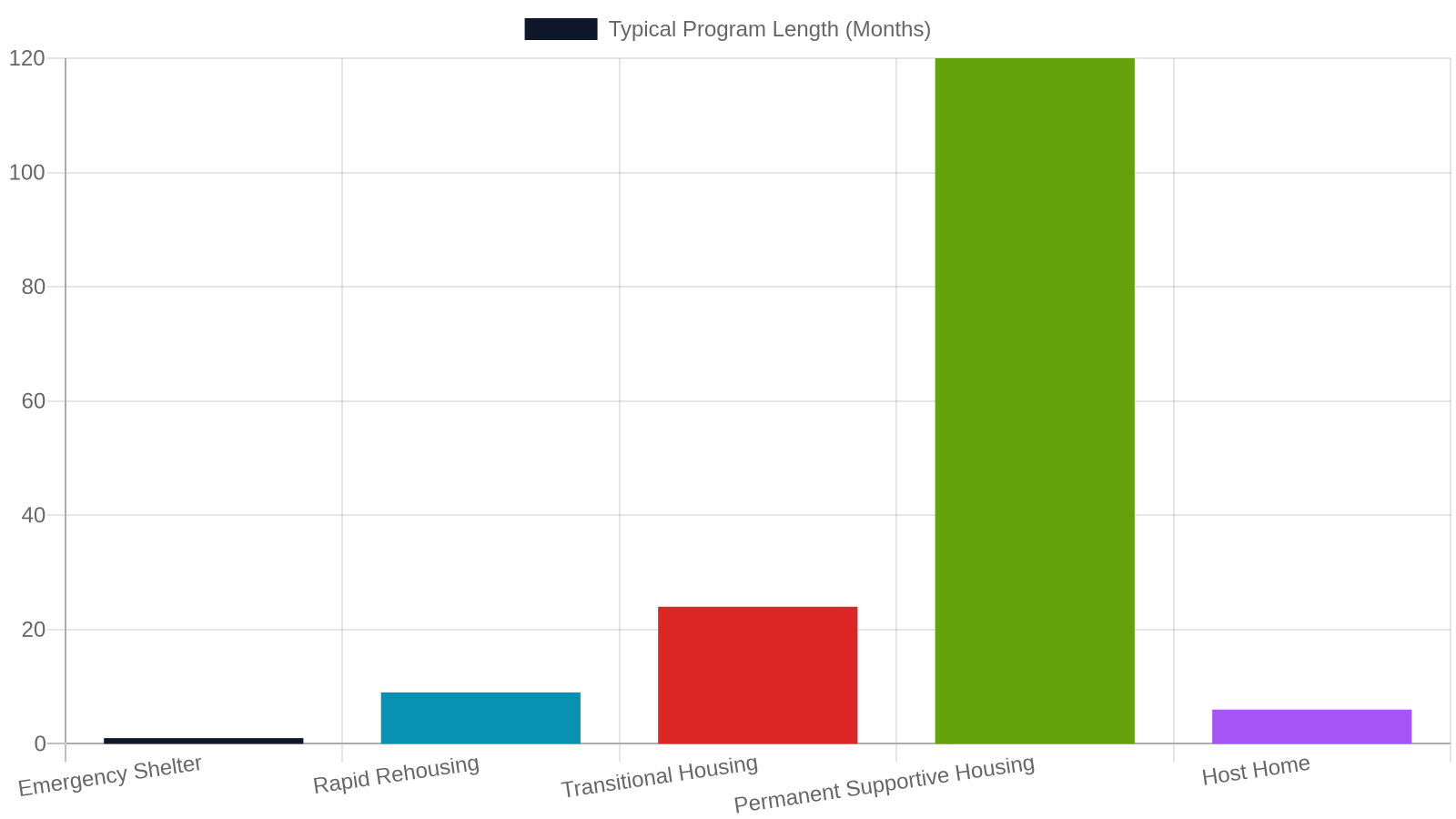
Key program types funded through the CoC include: Emergency Shelter (short-term, immediate safety), Transitional Housing (up to 24 months with services), Rapid Rehousing (short-term rental assistance plus case management), and Permanent Supportive Housing (long-term housing with wraparound services for those with disabilities).
Youth Set-Aside and the YAAB's Role in TN-501
HUD guidance encourages CoCs to establish a youth set-aside — a dedicated portion of funding specifically for transition-age youth programs. Whether and how TN-501 implements this is directly influenced by advocacy from YAAB members who attend CoC meetings, submit public comments, and build relationships with CoC leadership.
YAAB members in Knoxville have the opportunity to participate in CoC committee meetings, review Requests for Proposals (RFPs) for new funding, and provide feedback on how existing programs are performing. This is real policy influence, not just consultation theater.
Emergency Shelter Options for Young Adults in Knoxville

When you need a safe place tonight, knowing exactly where to go in Knoxville can make all the difference. Here’s what’s available for young adults in Knox County — along with the honest gaps that still need to be filled.
Volunteer Ministry Center (VMC)
The Volunteer Ministry Center is one of Knoxville’s largest providers of services for people experiencing homelessness. VMC operates day services, a resource center, and connects individuals to shelter and housing programs. For young adults, VMC can serve as a critical first point of contact to get connected to the broader system — including youth-specific programs.
VMC’s resource center is located at 511 N. Broadway, Knoxville, TN 37917. Services include meals, showers, laundry, case management referrals, and help with IDs and benefits enrollment. Hours vary, so calling ahead or checking their current schedule is recommended.
KARM (Knox Area Rescue Ministries)
Knox Area Rescue Ministries (KARM) operates emergency shelter beds in Knoxville for men, women, and families. While KARM is not exclusively a youth program, young adults 18 and older can access shelter there. KARM also offers a Hope Center for Women and Children and a men’s shelter. They served more than 2,000 unique individuals in a recent program year.
KARM’s intake process starts at their main campus at 418 N. Broadway, Knoxville, TN 37917. They also offer a KARM Store where individuals can access donated clothing and household items at low or no cost — useful when you’re moving into housing and need to furnish a space.
Youth-Specific Shelter and the Gap That Still Exists
Here’s the honest reality: Knox County, like most mid-sized cities, has a significant gap in dedicated youth shelter beds. Most emergency shelters are designed for adults or families with minor children — not for a 19-year-old on their own. This is one of the core issues YAAB TN-501 members have identified and continue to advocate around.
If you are under 18 and homeless in Knox County, the Tennessee Department of Children’s Services (DCS) has legal obligations to you. If you are 18 or older, you navigate the adult system, which is why peer navigation — knowing someone who’s been through it — is so valuable. YAAB members often serve informally as that guide for their peers.
Rapid Rehousing: Getting Into a Place of Your Own Faster

Rapid Rehousing is one of the most effective tools in Knox County’s housing toolkit for young adults — and understanding how it works can help you access it faster and make the most of it once you’re in.
How Rapid Rehousing Works
Rapid Rehousing (RRH) is a housing intervention model that moves people from homelessness into permanent housing as quickly as possible, then provides short-term rental assistance and case management to help them stay housed. It’s one of HUD’s preferred models for transition-age youth because it prioritizes independence and avoids the institutional feel of long-term shelter stays.
In a typical RRH program, a case manager helps you find a unit, the program pays a portion of your rent (often for 3 to 12 months), and you work with a case manager on goals like employment, budgeting, and building rental history. The goal is that by the time the subsidy ends, you can sustain the rent on your own — or have transitioned to another subsidy.
RRH Programs Available Through TN-501
Several agencies in the Knox County CoC operate Rapid Rehousing programs, some of which have youth-specific components. Organizations like Emerald Youth Foundation, Young-Williams Animal Center (which also operates human services), and CoC-funded nonprofits may have RRH slots at any given time. Availability changes based on funding cycles, so the best way to access RRH is through a Coordinated Entry assessment.
Coordinated Entry is the standardized intake process that all CoC-funded programs in Knox County use. You complete a housing assessment (often the VI-SPDAT or a youth-specific tool), and based on your score and needs, you’re matched to the most appropriate program. You don’t have to apply to each agency separately.
What to Bring and What to Expect
To access Rapid Rehousing or any CoC-funded program, you’ll typically need some combination of: a photo ID, Social Security card or number, proof of homelessness (a shelter stay record, a letter from a case manager, or a self-certification in some cases), and income documentation if you have any income. Don’t let missing documents stop you from starting the process — many programs can help you obtain IDs and documents as part of their services.
The timeline from assessment to housing varies. Some people are housed within 30 days; others wait weeks or months depending on unit availability and program capacity. Staying in contact with your case manager and being flexible about neighborhood and unit type can speed things up significantly.
Transitional Housing vs. Rapid Rehousing vs. Permanent Supportive Housing: What's the Difference?

Not all housing programs are the same, and knowing the difference helps you figure out which one fits your situation — and helps you advocate for the right mix of options in Knox County.
Transitional Housing (TH): Structured Support for Up to 24 Months
Transitional Housing programs provide a place to live — often in a shared house or apartment building — along with intensive case management, life skills training, and programming for up to 24 months. They’re designed for young adults who need more structure and support than RRH provides, but who aren’t ready for fully independent living.
In Knox County, transitional housing programs for youth may include requirements like attending house meetings, working with a case manager on a service plan, and participating in employment or education activities. These requirements can feel strict, but they’re designed to build the skills and stability needed for long-term housing success. If the rules feel unworkable for your situation, YAAB members can help you advocate for accommodations or find an alternative program.
Permanent Supportive Housing (PSH): Long-Term Stability for Those Who Need It Most
Permanent Supportive Housing combines affordable housing with voluntary wraparound services — mental health support, substance use treatment, life skills — for people with disabilities who have experienced chronic homelessness. For young adults, PSH is typically reserved for those with the most complex needs and longest histories of homelessness.
PSH is not a stepping stone — it’s meant to be a permanent home. Tenants have full tenant rights and can stay as long as they need. In Knox County, PSH units are limited and waitlists can be long, which is why YAAB advocacy for more PSH investment matters for the young adults who need it most.
Host Home Programs: An Emerging Option for Youth
A newer model gaining traction nationally — and in some Tennessee CoC regions — is the Host Home program, where a young person experiencing homelessness is matched with a vetted community host who provides a spare room in their home, often for 3 to 12 months. Host Home programs are less institutional than shelter and can be a good bridge for youth who aren’t ready for independent housing but don’t need intensive programming.
Host Home availability in Knox County is limited but growing. If this model interests you or you think it could help a peer, raising it with your YAAB chapter or local CoC is a way to advocate for its expansion in the region.
Education and Employment: The Other Half of Stable Housing

Getting housed is step one. Staying housed long-term almost always requires income — which means education and employment matter as much as the housing program itself. Here’s what’s available in Knoxville for young adults navigating both at once.
GED and Adult Education Pathways in Knox County
Housing stability and education are deeply connected — and Knox County has real resources for young adults who need to complete their education. Pellissippi State Community College offers Adult Education and GED preparation programs, including free classes for eligible adults. The Tennessee Department of Labor and Workforce Development also funds adult education programs across the state.
If you’re working with a case manager through a housing program, ask them specifically about education support — many CoC-funded programs can provide bus passes, childcare referrals, or flexible scheduling accommodations to help you attend classes while also managing housing instability.
Workforce Programs for Transition-Age Youth
The American Job Center in Knoxville (part of the Tennessee Department of Labor network) offers free career services including resume help, job search assistance, and connections to training programs. Young adults who qualify may also access WIOA Youth Program services — the Workforce Innovation and Opportunity Act funds specific programming for youth ages 16 to 24 who face barriers to employment, including those experiencing homelessness.
WIOA Youth services can include occupational skills training, paid work experience, mentorship, and financial literacy education. Eligibility is income-based, and young adults experiencing homelessness typically qualify. Ask your case manager or the American Job Center about WIOA Youth enrollment.
Why YAAB Members Advocate for Integrated Services
One of the consistent themes YAAB members across Tennessee raise is that housing programs, education programs, and employment programs are often siloed — they don’t talk to each other, their eligibility rules conflict, or their hours don’t work for someone trying to do all three at once. A young person might lose their housing subsidy if they take a job that pushes them slightly over an income threshold, creating a perverse disincentive to work.
YAAB members in Knox County advocate for integrated, flexible service delivery — programs that recognize you’re a whole person with multiple needs, not a case file to be processed. This systems-level advocacy is just as important as individual program access.
Mental Health and Trauma-Informed Support in Knox County

Mental health is not separate from housing — it’s woven into every part of the experience of homelessness and recovery. Knox County has real resources, and you deserve support that meets you where you are.
Why Mental Health Support Is Part of Housing Stability
Research consistently shows that untreated mental health challenges are both a driver of and a result of homelessness. For young adults, the connection is especially strong — the National Center for Homeless Education estimates that over 30% of youth experiencing homelessness have a diagnosable mental health condition, and many more have experienced significant trauma that affects their ability to navigate systems, maintain relationships with landlords, and hold employment.
This isn’t about labeling or stigmatizing. It’s about recognizing that housing programs work better when they’re paired with accessible, voluntary mental health support — and that young people deserve care that doesn’t require them to be in crisis to access it.
Resources in Knoxville
Cherokee Health Systems is one of the most significant behavioral health providers in East Tennessee, offering mental health services, substance use treatment, and integrated primary care. Cherokee operates on a sliding-fee scale and serves uninsured and TennCare-enrolled clients. They have multiple locations in Knox County and are experienced working with young adults navigating housing instability.
Helen Ross McNabb Center is another major provider, offering crisis services, outpatient mental health, and specialized programming for young adults. If you’re in a mental health crisis in Knox County, the 988 Suicide and Crisis Lifeline (call or text 988) connects you to local crisis support 24/7.
Trauma-Informed Practice and What to Expect
A trauma-informed approach means that providers understand that many of their clients have experienced significant trauma — abuse, neglect, violence, loss — and they adjust how they interact accordingly. This means not asking intrusive questions unnecessarily, explaining why information is being collected, giving you choices, and not reacting punitively when you miss an appointment or struggle to follow through.
Not every provider in Knox County is equally trauma-informed, and YAAB members have a role in holding providers accountable to these standards. If you experience a provider who is dismissive, punitive, or re-traumatizing, that feedback — brought to a YAAB meeting or a CoC partner meeting — can lead to real change in how that provider operates.
Aging Out of Foster Care in Knox County: What You Need to Know

Aging out of foster care without a stable home is one of the most common pathways into youth homelessness — but Tennessee has specific programs and funding streams designed to help. Here’s what you’re entitled to know about.
Tennessee's Extended Foster Care and Voluntary Services
In Tennessee, young people who were in foster care can access extended foster care services through age 21 under the state’s Fostering Connections implementation. This includes housing support, case management, and connections to education and employment. If you aged out of foster care in Tennessee and are between 18 and 21, you may still be eligible for these services even if you didn’t know about them at the time.
The Tennessee Department of Children’s Services (DCS) administers these programs. If you’re not sure whether you qualify or how to re-engage, a YAAB peer navigator or a case manager at a local CoC agency can help you figure out your options without judgment.
Chafee Funds and Education and Training Vouchers (ETVs)
The John H. Chafee Foster Care Program funds a range of independent living services for current and former foster youth, including life skills training, financial literacy, and housing assistance. Tennessee also participates in the Education and Training Voucher (ETV) program, which provides up to $5,000 per year in funding for post-secondary education or vocational training for eligible former foster youth up to age 23.
ETVs are underutilized — many eligible young people don’t know they exist. If you were in foster care in Tennessee and are pursuing education or job training, ask your DCS caseworker or a local independent living coordinator about ETV eligibility. This money doesn’t have to be repaid.
How YAAB Supports Foster Care Alumni
Many YAAB members across Tennessee have personal experience with the foster care system, and that shared experience is one of the most powerful things about peer-led advocacy. YAAB members can help you navigate the DCS bureaucracy, understand your rights, and connect to services — not because they read about it in a manual, but because they’ve been through it themselves.
Foster care alumni are also a key voice in YAAB’s statewide advocacy work. Tennessee’s extended foster care policies, ETV funding levels, and transition planning practices are all areas where YAAB has engaged with state lawmakers and DCS leadership to push for improvements.
Knox County Housing Program Types at a Glance
Use this table to quickly compare the main housing program types available to transition-age youth in Knox County by eligibility, length, services, and best fit.
Your Rights as a Young Adult Experiencing Homelessness in Tennessee

Knowing your rights isn’t just important — it’s protective. Whether you’re accessing shelter, navigating the school system, or moving into your first apartment, these are the legal protections that apply to you in Tennessee.
The McKinney-Vento Act: Education Rights
The McKinney-Vento Homeless Assistance Act guarantees that children and youth experiencing homelessness have the right to immediate enrollment in school, transportation to their school of origin, and access to the same educational programs as housed students. For young adults still enrolled in K-12 (which can include those up to age 22 in some circumstances), these protections are federally guaranteed.
If you’re in a Knox County school and experiencing homelessness, the school district is required to have a McKinney-Vento Liaison who can help you enroll, get transportation, and access school supplies and meals without waiting for documentation.
Tenant Rights and Landlord Obligations
Once you’re housed — even in a transitional housing program — you have tenant rights under Tennessee law. Landlords must provide written notice before entering your unit (except in emergencies), maintain the property in habitable condition, and follow proper legal eviction procedures if they want you to leave. They cannot simply lock you out or remove your belongings without a court order.
If you’re in a CoC-funded program and feel your rights are being violated, you can file a complaint with the program, the CoC, or HUD’s Office of Fair Housing and Equal Opportunity. YAAB members can help you document issues and navigate the complaint process.
Privacy, Consent, and HMIS
When you access a CoC-funded program in Knox County, you’ll likely be asked to consent to having your information entered into the Homeless Management Information System (HMIS) — a shared database that CoC agencies use to coordinate services and track outcomes. You have the right to understand what data is collected, who can see it, and how it’s used. You can ask questions before signing consent forms.
Some programs — particularly those serving survivors of domestic violence — use a separate, confidential database instead of HMIS. If privacy is a concern for your safety, ask about this when you first engage with a program.
How YAAB TN-501 Works: Knoxville's Youth Advisory Board in Action

Understanding what YAAB TN-501 actually does — not in abstract terms, but in concrete day-to-day terms — helps you decide whether joining is right for you, and helps service providers understand how to partner with the board effectively.
What YAAB Members Actually Do
YAAB TN-501 is the local chapter of the statewide Youth Action Board network serving the Knox County Continuum of Care region. Members — young adults ages 17 to 25 with lived experience of homelessness or housing instability — meet regularly to share information, plan advocacy actions, review local programs, and connect peers to resources.
YAAB members attend CoC meetings, participate in Homeless Point-in-Time Count planning, give feedback on program design, and sometimes testify before local government bodies. This is not passive participation — it’s real influence over real decisions that affect real people in Knoxville and Knox County.
The Statewide Network and Why It Matters Locally
TN-501 is one of several regional YAAB chapters across Tennessee, connected through the statewide YAAB network. This means that issues identified in Knoxville can be elevated to state-level advocacy, and resources or strategies developed elsewhere in Tennessee can be brought back to Knox County. The network also creates a community of peers across the state — young people who understand each other’s experiences and can support each other across regions.
Statewide YAAB convenings bring members from Memphis, Nashville, Chattanooga, Jackson, and other regions together to coordinate on shared priorities — like pushing for more youth-specific funding in the state’s CoC allocations or advocating for policy changes at the Tennessee General Assembly.
What Being a YAAB Member Looks Like Day to Day
There’s no single model for YAAB membership. Some members are deeply involved — attending every meeting, leading projects, speaking at public events. Others participate more occasionally, sharing their perspective when they can and connecting peers to resources. Both kinds of participation are valued.
YAAB is not a job, but members often develop real skills — public speaking, policy analysis, community organizing, data literacy — that strengthen their resumes and open doors. Many YAAB alumni have gone on to careers in social work, public policy, nonprofit management, and community organizing. The experience is genuinely career-building, not just volunteer work.
How Knox County Housing Programs Compare: A Practical Overview

Not every program is right for every situation. The table below breaks down the main housing program types available to young adults in Knox County by key factors — so you can quickly identify which options might fit your current circumstances and what to ask about when you reach out to a provider.
Ready to Get Involved? Your Next Steps in Knoxville

Whether you need housing support today, want to shape the programs that serve your community, or are a provider looking to build more effective partnerships — here’s exactly how to take your next step in Knoxville and across Tennessee.
If You Need Housing Help Right Now
If you’re in immediate need of shelter or housing support in Knox County, start with the Coordinated Entry system — this is your gateway to all CoC-funded programs. Contact a local access point such as the Volunteer Ministry Center or KARM to begin a housing assessment. You don’t need to have everything figured out before you reach out. Show up, be honest about your situation, and let the system work for you while you advocate for what you need.
If you’re not sure where to start, you can also call 211 — Tennessee’s statewide information and referral line — to be connected to local resources including housing, food, mental health, and more. It’s free, confidential, and available 24/7.
If You Want to Get Involved with YAAB TN-501
If you’re a young adult ages 17 to 25 in the Knoxville/Knox County area with lived experience of homelessness or housing instability, YAAB TN-501 wants to hear from you. You don’t need a polished resume or a specific level of involvement in mind — you just need your experience and your willingness to show up.
Learn more about YAAB TN-501 and how to connect with the Knoxville chapter — the page includes information on meeting times, current projects, and how to get in touch with local YAAB leadership. You can also explore all regional YAAB chapters across Tennessee if you’re in a different part of the state.
If You're a Service Provider or CoC Partner
If you work for an agency, shelter, or program serving transition-age youth in Knox County, partnering with YAAB TN-501 is one of the most effective things you can do to improve your program’s reach and effectiveness. YAAB members can provide honest feedback on your intake processes, help you recruit peer navigators, and connect you with the broader statewide network of youth-led advocacy.
Start by visiting the YAAB About page to understand the network’s structure and values, then reach out through the contact page to explore partnership opportunities. The young people you serve are already the experts on what works — YAAB is how you tap into that expertise systematically.
Frequently Asked Questions
How do I access housing programs in Knox County if I'm under 25 and homeless?
Start with Coordinated Entry — the unified intake system for all CoC-funded housing programs in Knox County. Contact the Volunteer Ministry Center or KARM to begin a housing assessment, or call 211 to be connected to local resources. You don't need all your documents to start the process.
What is the Youth Action Board and how do I join in Knoxville?
The Youth Action Board (YAAB) TN-501 is a group of young adults ages 17 to 25 with lived experience of homelessness who advise local housing programs and advocate for policy change in Knox County. Visit yaabtn.org/local-yaabs/tn-501/ to learn how to connect with the Knoxville chapter.
Can I get housing help in Knox County if I aged out of foster care?
Yes. Tennessee offers extended foster care services through age 21 for former foster youth, plus Education and Training Vouchers (ETVs) worth up to $5,000 per year for education or job training through age 23. Contact Tennessee DCS or a local independent living coordinator to find out what you're eligible for.
What's the difference between rapid rehousing and transitional housing for youth?
Rapid Rehousing moves you into your own apartment quickly with short-term rental assistance (typically 3–12 months) and light case management. Transitional Housing provides a place to live for up to 24 months with more intensive programming and structure. Rapid Rehousing is better for those ready for independence; Transitional Housing suits those who need more support first.
Are there mental health services in Knoxville that work with homeless youth?
Yes. Cherokee Health Systems and Helen Ross McNabb Center both serve young adults experiencing homelessness in Knox County on sliding-fee scales and accept TennCare. For immediate mental health crises, call or text 988 (Suicide and Crisis Lifeline) any time, 24/7.
What rights do I have as a young adult experiencing homelessness in Tennessee?
If you're still enrolled in K-12, the McKinney-Vento Act guarantees your right to immediate school enrollment and transportation. Once housed, Tennessee landlord-tenant law protects you from illegal lockouts and requires proper eviction procedures. In CoC programs, you have the right to understand how your data is used in the HMIS system before consenting.