Quick answer: Memphis YAAB (Tennessee's TN-502 Continuum of Care region) is a group of young adults ages 17 to 25 who have personally experienced homelessness or housing instability in Shelby County. These members sit at the table with county officials, Continuum of Care planners, and service providers to shape the policies and programs that affect transition-age youth — from shelter access rules to funding priorities. Their lived experience is treated as expertise, not a backstory. If you're a young adult in Memphis who has faced housing instability, you can join and get paid to make real change.
What Is the Memphis YAAB and Who Does It Serve?

The Memphis Youth Action Board — part of Tennessee’s statewide YAAB network — is a peer-led advisory body rooted in Shelby County. It exists because research and common sense agree on one thing: the people most affected by a problem are the most qualified to help solve it. For youth homelessness in Memphis, that means young adults with lived experience must have a real seat at the table — not just a token mention in a report.
Understanding who Memphis YAAB members are, and what authority they actually hold, is the first step to understanding why this model works.
Lived Experience as a Leadership Credential
In most policy rooms, young adults who have experienced homelessness are talked about — not talked to. The Memphis Youth Action Board flips that script. Every member is a young adult between the ages of 17 and 25 who has personally navigated housing instability, shelter systems, foster care transitions, or street homelessness in the Shelby County area. That experience isn’t a barrier to entry — it is the credential.
YAAB members bring something no consultant or administrator can replicate: they know what it actually feels like to be turned away from a shelter at 2 a.m., to age out of foster care without a housing plan, or to couch-surf for months while trying to finish a GED. That knowledge shapes better policy.
The TN-502 Continuum of Care Region
Memphis YAAB operates within the TN-502 Continuum of Care (CoC), which covers Shelby County. The CoC is the federally recognized planning body that coordinates housing and homeless services in the region — it decides how HUD funding gets allocated, which programs get priority, and what gaps need to be addressed. YAAB members participate directly in TN-502 planning meetings, subcommittees, and funding review processes. This isn’t symbolic participation: their input influences real budget decisions affecting thousands of young people across Memphis every year.
The Scale of Youth Homelessness in Shelby County

Before you can understand how YAAB members shape policy, it helps to understand the problem they’re working to solve. Youth homelessness in Shelby County is not a small or niche issue — it touches thousands of young people and is deeply connected to systemic gaps in affordable housing, living-wage employment, and youth-specific services.
What the Numbers Tell Us
According to the most recent Point-in-Time (PIT) Count data collected by the TN-502 CoC, Shelby County consistently identifies several hundred unaccompanied youth and young adults experiencing homelessness on any given night — and advocates widely acknowledge that PIT counts undercount the true number, since many young people are couch-surfing, staying in cars, or doubling up in ways that make them invisible to counters. Nationally, the True Gap estimate suggests the real number is 3 to 10 times higher than what PIT counts capture.
For transition-age youth (TAY) specifically — those ages 18 to 24 — homelessness often looks different than it does for adults. It’s more likely to be hidden, more likely to involve trading unsafe situations for a place to sleep, and more likely to be linked to aging out of foster care or family rejection.
Why Memphis-Specific Context Matters
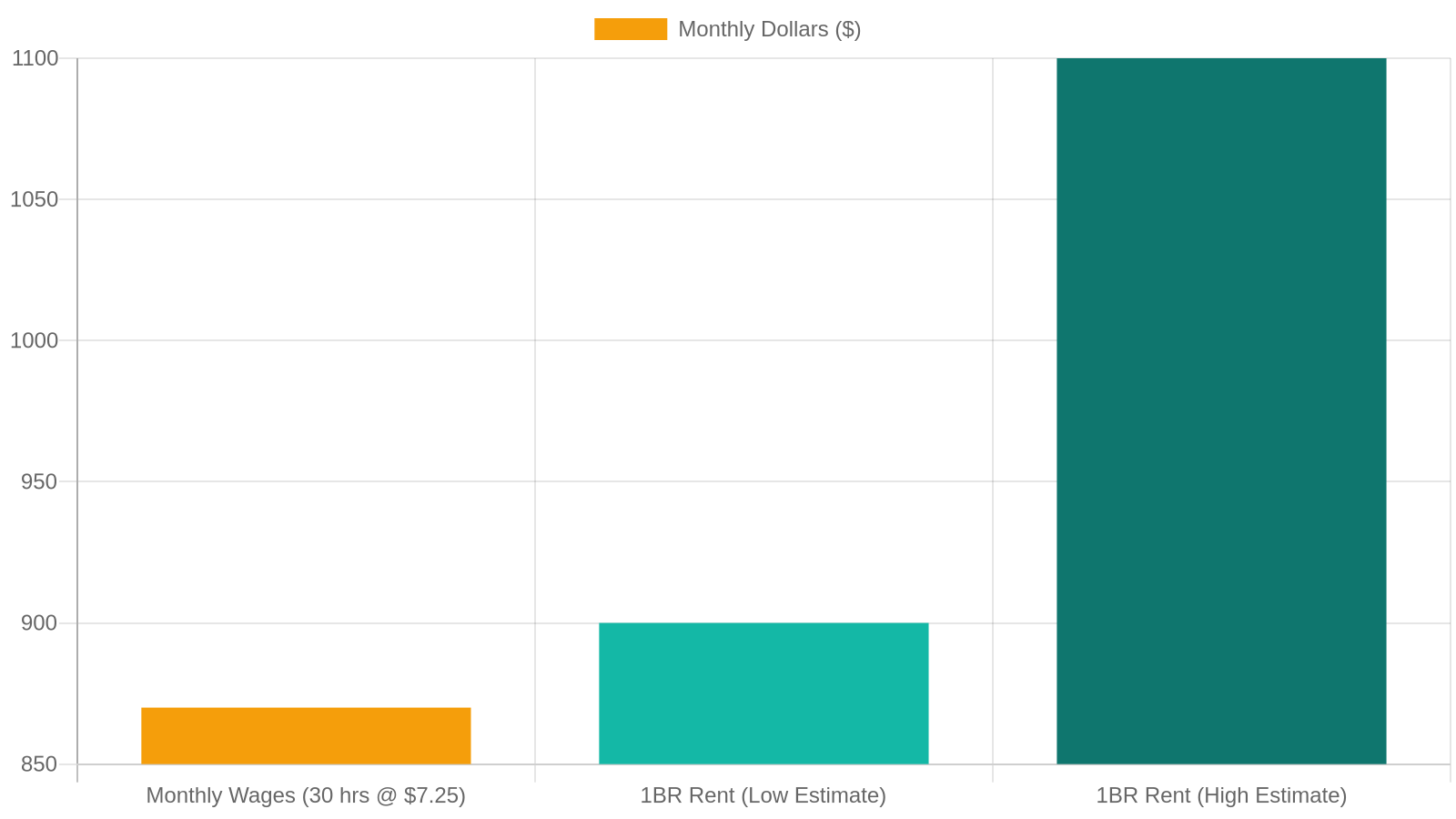
Memphis faces a distinct set of challenges. The city has one of the highest child poverty rates among major U.S. cities, a legacy of disinvestment in certain ZIP codes, and a housing market that — while cheaper than coastal cities — still places enormous pressure on young adults earning minimum wage or less. A young adult working 30 hours a week at Tennessee’s minimum wage of $7.25/hour brings home roughly $870/month before taxes. Average rent for even a one-bedroom apartment in Memphis runs $900–$1,100/month as of 2024. The math doesn’t work — and YAAB members live that math every day.
How YAAB Members Actually Influence Policy

The word ‘advisory’ can sound vague — like a group that meets, talks, and then watches nothing happen. Memphis YAAB is built differently. Members engage through multiple, concrete channels that connect their recommendations directly to decision-makers who control funding, policy, and program design in Shelby County.
Formal Seats at CoC Planning Tables
Memphis YAAB members don’t just submit comment letters and hope for the best. They hold formal advisory roles within the TN-502 Continuum of Care structure. This means attending CoC board meetings, participating in subcommittees focused on youth homelessness, and reviewing funding applications from service providers. When a shelter or transitional housing program applies for HUD funding through the CoC, YAAB members can weigh in on whether that program’s design actually serves young people well — or whether it has age-inappropriate rules, barriers to entry, or gaps in services.
Policy Feedback and Program Design
One of the most concrete ways YAAB members influence outcomes is through program design feedback. Service providers often design programs based on what they think young people need — but YAAB members can identify mismatches between program rules and real-world youth behavior. Examples include curfew policies that conflict with late-shift work schedules, intake paperwork that requires ID documents youth don’t have, or sobriety requirements that exclude young people with substance use challenges rather than connecting them to treatment. YAAB feedback has led to real changes in how programs operate across Tennessee’s CoC regions.
Testimony and Advocacy Before County Leaders
YAAB members also engage directly with elected officials and county government. This includes providing public testimony at Shelby County Commission meetings, briefing county staff on youth homelessness data, and advocating for budget allocations that prioritize transition-age youth. Speaking in front of a commission can feel intimidating, but YAAB provides training, preparation support, and a peer community so members never walk into those rooms alone. The goal is always to center the member’s own story and expertise — not to perform vulnerability for an audience.
Key Policy Areas Memphis YAAB Members Are Shaping

YAAB members don’t just show up to meetings — they come with specific policy asks. The issues below represent the core areas where Memphis YAAB has been most active in advising Shelby County leaders, CoC planners, and state-level decision-makers.
Youth-Specific Shelter Access and Low-Barrier Housing
One of the most urgent issues YAAB members advocate for is low-barrier, youth-specific shelter. Many adult shelters have rules — sobriety requirements, curfews, mandatory religious programming — that make them inaccessible or unsafe for young adults. YAAB members push for shelters and transitional housing programs that meet young people where they are, with trauma-informed staff, flexible entry requirements, and services that address the full range of needs TAY face. Increasing the number of youth-designated shelter beds in Shelby County is a consistent YAAB priority.
Rapid Rehousing and Rental Assistance for TAY
Rapid Rehousing (RRH) is a housing intervention that helps people move quickly from homelessness into their own apartment, with short-to-medium-term rental assistance and case management support. For young adults, RRH can be life-changing — but programs must be designed with TAY in mind. YAAB members advocate for RRH programs that include credit-building support, landlord engagement to reduce screening barriers, and case managers who understand youth development rather than treating young clients like small adults. They also push for longer subsidy periods, since young adults often need more time to stabilize income than older adults do.
Aging Out of Foster Care: Closing the Gap
In Tennessee, young people can remain in foster care until age 21 under extended care provisions — but many still exit without stable housing, a job, or a support network. YAAB members who have aged out of foster care bring firsthand knowledge of this gap and advocate for stronger bridge programs between the child welfare system and adult housing resources. This includes pushing for earlier housing planning (starting at age 14–16), automatic enrollment in transitional housing programs upon exit, and better coordination between the Tennessee Department of Children’s Services (DCS) and CoC housing providers in Shelby County.
The Role of Lived Experience in Evidence-Based Policy

There’s a growing movement in social policy called evidence-based practice — the idea that programs should be built on what research shows works. YAAB adds a critical layer: experience-based evidence. The young adults who have lived through homelessness in Memphis carry knowledge that no study can fully capture, and that knowledge makes policies smarter, more humane, and more effective.
Why Data Alone Isn't Enough
Policymakers love data — and data matters. But numbers on a spreadsheet can’t tell you why young people avoid certain shelters, what makes a case manager trustworthy, or why a young adult might choose to sleep outside rather than enter a facility with certain rules. Lived experience fills the gap between what data shows and what it means. YAAB members provide the qualitative context that makes quantitative data actionable. A 20% shelter utilization rate for youth is a number; a YAAB member explaining that the shelter requires a valid state ID and most youth don’t have one is the reason — and the solution.
Centering Youth Voice in HUD Requirements
HUD’s guidelines for Continuums of Care increasingly require meaningful youth input in planning processes — not just a checkbox, but documented, ongoing engagement. Memphis YAAB fulfills this requirement in a way that goes beyond compliance. By embedding young adults in CoC governance, the TN-502 region can demonstrate to federal funders that youth voice is structurally integrated, not an afterthought. This matters for competitive grant applications: CoCs that show robust youth engagement are better positioned to win funding for youth-specific programs.
How YAAB Members Are Trained and Supported

Meaningful participation requires meaningful support. YAAB doesn’t just recruit young adults and drop them into policy rooms — it invests in their development, compensates their time, and builds the kind of community that makes sustained engagement possible.
Leadership Development and Advocacy Training
Joining YAAB doesn’t mean you walk in already knowing how to testify before a county commission or read a HUD funding application. The organization provides structured leadership development so members can grow into their roles. This includes training on public speaking, policy literacy, how CoC systems work, trauma-informed communication, and how to translate personal experience into policy language without losing its power. Members learn alongside peers who have been through similar experiences — which makes the learning environment feel safe and real, not like a classroom lecture.
Stipends and Compensation for Member Time
YAAB recognizes that asking young adults — many of whom are working multiple jobs, in school, or managing housing instability — to volunteer their time and expertise for free is extractive and inequitable. That’s why YAAB members receive stipends for their participation in meetings, trainings, and advocacy activities. This isn’t charity — it’s compensation for skilled advisory work. It also signals to members that their time and knowledge have real value, which is an important message for young people who have often been told the opposite.
Peer Community and Mentorship
Beyond formal training, one of the most powerful things YAAB offers is community. Members build relationships with peers across Tennessee’s CoC regions who understand what they’ve been through. Statewide convenings bring Memphis YAAB members together with peers from Nashville, Knoxville, Chattanooga, Jackson, and other regions to share strategies, celebrate wins, and support each other. For young adults who have often experienced isolation as part of their housing instability, this network can be genuinely life-changing — not just professionally, but personally.
Memphis YAAB vs. Other Youth Advisory Models: What Makes It Different

Youth advisory boards exist in many cities and states. What sets Memphis YAAB apart — and what makes the Tennessee statewide model worth understanding — is the combination of structural authority, peer leadership, and genuine compensation that distinguishes it from more tokenistic approaches.
Authority, Not Just Access
Many youth advisory programs give young people access — a seat in the room, a chance to speak — without giving them real authority. Their input is heard and then often ignored. Memphis YAAB is designed to be different: members participate in formal CoC governance structures where their recommendations carry weight in funding and policy decisions. This isn’t guaranteed to be perfect, and advocacy is always an ongoing process — but the structural integration of YAAB into TN-502 planning creates accountability that a standalone advisory panel does not.
Peer-to-Peer, Not Top-Down
Traditional service delivery is top-down: professionals decide what young people need and deliver it to them. YAAB inverts this. Members are peers first — they understand the experience of navigating these systems because they’ve done it. This peer dynamic changes the quality of the advice given, the trust built with other young people in the community, and the culture of the organization itself. It also means YAAB can reach young adults who would never walk into a traditional service provider’s office but would talk to someone their own age who gets it.
Wins: Real Policy Changes Driven by YAAB Input

Advocacy can feel abstract — but YAAB’s work has produced real, documented outcomes. Here are some of the categories of change that YAAB member input has helped drive in Tennessee, including in the Memphis/Shelby County region.
Shelter Rule Reforms
YAAB member feedback across Tennessee’s CoC regions has contributed to concrete changes in shelter policies — including the removal or modification of blanket curfew rules that conflicted with young adults’ work schedules, the addition of youth-designated beds in facilities that previously served only adults, and the adoption of trauma-informed intake processes that reduce the interrogative, punitive feel of entering a shelter. These aren’t abstract wins — they represent real nights of safe sleep for real young people in Memphis and across the state.
Funding Prioritization for Transition-Age Youth
Through participation in CoC funding review processes, YAAB members have helped make the case for dedicating a larger share of CoC resources specifically to transition-age youth. Historically, TAY have been underserved relative to their share of the homeless population because they’re less visible and less politically organized than other groups. YAAB changes that calculus. When funders see organized, articulate young adults making the case for youth-specific programs — with data and personal testimony — it shifts priorities.
Statewide Policy Influence
Memphis YAAB members don’t only work at the county level. As part of Tennessee’s statewide YAAB network, they contribute to state-level advocacy — including input on Tennessee’s Consolidated Plan (which governs how federal housing funds are spent statewide), recommendations to the Tennessee Interagency Council on Homelessness, and engagement with state legislators on bills affecting youth homelessness, foster care, and housing. Local wins in Shelby County can become models for the rest of the state.
Memphis YAAB vs. Traditional Youth Advisory Models: Key Differences
Not all youth advisory boards are created equal. Here's how Memphis YAAB compares to more common — and more limited — models of youth engagement in policy settings.
How Case Managers and Service Providers Can Partner with YAAB

YAAB’s impact multiplies when service providers and CoC partners actively engage with the network rather than waiting for YAAB to knock on their door. Here’s how professionals working with transition-age youth in Memphis can strengthen this partnership.
Referring Young Adults to YAAB
If you’re a case manager, outreach worker, or service provider working with transition-age youth in Shelby County, one of the most powerful things you can do is tell your clients about YAAB. Many young adults who would be excellent advocates have never heard of the organization. A warm, personal referral — ‘I know a group of young people your age who get paid to work on housing policy, and I think you’d be great at it’ — is far more effective than a flyer. YAAB is especially interested in connecting with young adults who have strong opinions about what’s broken in the system and ideas for how to fix it.
Opening Your Programs to YAAB Review
Service providers can also invite YAAB members to conduct program reviews or focus groups — structured conversations where young adults with lived experience give honest feedback on what’s working and what isn’t. This is valuable for quality improvement, and it signals to young clients that the organization takes their perspective seriously. It can also strengthen grant applications by demonstrating community engagement and continuous improvement practices. Reach out through the YAAB network to explore what a partnership could look like for your organization.
YAAB Across Tennessee: The Statewide Network

Understanding Memphis YAAB means understanding its place within a larger statewide movement. Tennessee’s Youth Action Board network is one of the most comprehensive state-level youth advisory structures for homelessness policy in the country — and Memphis plays a central role in that network.
Regional YAABs Beyond Memphis
Memphis YAAB is one node in a statewide network of Youth Action Boards spanning Tennessee’s Continuum of Care regions. Young adults in Nashville/Davidson County (TN-500), Knoxville/Knox County (TN-501), Chattanooga/Hamilton County (TN-503), Jackson/West Tennessee (TN-504), the Upper Cumberland region (TN-506), and Northeast Tennessee (TN-507) all have their own regional YAABs with members doing parallel work in their communities. This statewide structure allows for shared learning, coordinated advocacy at the state level, and a collective voice that no single regional board could achieve alone.
Shared Learning Across Regions
When Memphis YAAB members figure out an effective strategy for engaging a reluctant CoC partner, or when Nashville members develop a new approach to public testimony, those lessons flow across the network. Statewide convenings — held multiple times per year — bring members from all regions together to share what’s working, troubleshoot challenges, and build the relationships that make cross-regional advocacy possible. This means that a win in Shelby County can inform practice in Hamilton County, and vice versa. The whole network gets stronger when any part of it grows.
What Being a YAAB Member Actually Looks Like Day to Day

For a young adult considering whether to join YAAB, the most practical question is often: what does this actually look like in real life? Here’s an honest picture of what membership involves — and what members say they get out of it.
A Typical Month for a Memphis YAAB Member
Being a YAAB member isn’t a full-time job — it’s designed to fit into the reality of young adults who are also working, studying, parenting, or managing their own housing situations. In a typical month, a Memphis YAAB member might attend one to two CoC subcommittee meetings, participate in a virtual training session on a policy topic, connect with peers in a group chat or video call, and contribute to a written comment or testimony on a specific funding decision. Some months are busier — especially around CoC annual planning cycles or legislative sessions — and some are lighter.
What Members Say About the Experience
YAAB members across Tennessee consistently describe the experience in terms of transformation and purpose. Many say it’s the first time they’ve been in a room where their opinion was genuinely sought and valued. Others describe the stipend as meaningful not just financially, but symbolically — proof that their knowledge has worth. And many point to the peer community as the most unexpected gift: finding other young adults who have been through similar experiences and are channeling that into action rather than letting it define them as victims. YAAB doesn’t erase what members have been through — it turns it into power.
Ready to Join Memphis YAAB or Connect with the Network?

Everything described in this article — the policy influence, the leadership development, the stipends, the community — is available to young adults in Memphis right now. YAAB is not a distant organization or a waitlist. It’s a living network of peers who are actively working to change the systems that affect your life, and they want you in the room.
Youth homelessness in Shelby County is a solvable problem. It won’t be solved by administrators alone — it will be solved by the young adults who have lived it, supported by systems that finally listen. That’s what Memphis YAAB is building, one meeting, one testimony, and one policy change at a time.
Who Should Apply
If you are a young adult between the ages of 17 and 25 in the Memphis/Shelby County area who has experienced homelessness, housing instability, foster care, or any form of housing insecurity — YAAB wants to hear from you. You don’t need a resume, a college degree, or any prior advocacy experience. You need lived experience, a willingness to show up, and something to say about what needs to change. YAAB will provide the training, the community, and the platform. You bring the expertise that only you have.
How to Get Connected
The best first step is to learn more about the Memphis YAAB (TN-502) and reach out directly through the site. You can also explore the full list of Tennessee’s regional YAABs if you’re located outside Shelby County, or visit the YAAB membership page to start the process of getting involved. If you’re a case manager or service provider looking to refer a young adult, those same pages have the information you need. The door is open — and the people on the other side of it have been where you are.
Frequently Asked Questions
How do I join the Memphis YAAB if I've experienced homelessness in Shelby County?
Visit the Memphis YAAB page at yaabtn.org/local-yaabs/tn-502/ and reach out through the contact information provided. You need to be between 17 and 25 years old and have lived experience of homelessness or housing instability. No prior advocacy experience is required — YAAB provides all the training you need.
Do YAAB members get paid for their time?
Yes. YAAB members receive stipends for participating in meetings, trainings, and advocacy activities. This compensation recognizes that young adults' time and expertise have real value, and it makes sustained participation possible for people who are also managing work, school, or housing challenges.
What is the TN-502 Continuum of Care and why does it matter for Memphis youth?
TN-502 is the federally recognized Continuum of Care for Shelby County, Tennessee. It coordinates how HUD funding for homeless services is allocated in the Memphis area — including which programs get funded and what gaps are prioritized. Memphis YAAB members participate directly in TN-502 planning, giving young adults a real voice in those funding decisions.
Can I join YAAB if I'm currently experiencing homelessness?
Yes. YAAB is designed for young adults who are currently experiencing or have recently experienced homelessness or housing instability. The organization understands the realities of members' lives and works to make participation accessible, including through flexible meeting formats and stipend payments.
How is Memphis YAAB different from other youth programs in Tennessee?
Memphis YAAB gives young adults formal authority in policy and funding decisions — not just a chance to be heard. Members sit in CoC governance structures, review funding applications, and testify before county leaders. Combined with paid stipends, structured training, and a statewide peer network, this goes well beyond typical youth advisory or mentorship programs.
I'm a case manager in Memphis. How can I refer a young adult to YAAB?
The most effective referral is a warm, personal one — tell your client directly about YAAB, what it involves, and why you think they'd be a good fit. Then point them to yaabtn.org/local-yaabs/tn-502/ for details. You can also contact YAAB directly to learn more about partnership opportunities for your organization.