Quick answer: The Youth Action Board (YAAB) of Tennessee is a statewide network of young adults ages 17 to 25 with lived experience of homelessness who are actively shaping housing policy — not just talking about it. Across all eight Continuum of Care regions, from Memphis to Northeast Tennessee, YAAB members are leading projects that reform shelter access, expand youth-specific housing programs, strengthen data collection, influence state legislation, and build peer leadership pipelines. These aren't top-down programs designed for young people — they are projects designed and driven by young people who've been there.
What Tennessee YAAB Actually Does — and Why It Matters

Before diving into the specific projects, it helps to understand what the Youth Action Board of Tennessee actually is and how it’s structured. YAAB is not a nonprofit that serves young people — it is young people. Members are between 17 and 25 years old, and all have lived experience of homelessness or housing instability. That’s the baseline requirement, and it’s intentional. The organization operates statewide but is organized through Tennessee’s eight Continuum of Care (CoC) regions, giving it both local roots and statewide reach.
Lived Experience as a Policy Tool
Most housing policy gets written in rooms where young people who’ve actually slept in shelters, couch-surfed, or aged out of foster care are nowhere to be found. YAAB flips that. Every YAAB member brings firsthand knowledge of what it’s like to navigate Tennessee’s housing system as a young adult — and that knowledge is treated as expertise, not just a story to be shared and forgotten.
When a CoC coordinator or a state legislator hears directly from a 20-year-old who aged out of foster care in Jackson and spent three months in a shelter before finding stable housing, the conversation changes. YAAB’s model makes that conversation happen systematically, across all eight Tennessee CoC regions.
The Eight Regions YAAB Covers
Tennessee’s Continuum of Care system is divided into eight regional CoCs, and YAAB has a presence in every one of them:
- TN-500 — Memphis/Shelby County
- TN-501 — Nashville/Davidson County
- TN-502 — Knoxville/Knox County
- TN-503 — Chattanooga/Hamilton County
- TN-504 — Murfreesboro/Rutherford County
- TN-506 — Upper Cumberland
- TN-507 — Northeast Tennessee
- TN-509 — Jackson/West Tennessee
Each local YAAB feeds into the statewide network, meaning projects launched in one region can be replicated or scaled across the state. That’s a rare and powerful structure in youth advocacy.
1. Youth-Specific Point-in-Time Count Advocacy

One of YAAB’s most foundational statewide projects targets something that most people outside the housing policy world have never heard of: the Point-in-Time Count. This annual census of people experiencing homelessness shapes federal funding allocations, state priorities, and public perception — and YAAB members have identified serious flaws in how it captures (or fails to capture) young adults across Tennessee.
Why the Standard PIT Count Undercounts Young People
The annual Point-in-Time (PIT) Count is the official federal snapshot of homelessness on a single night in January. But young adults are notoriously hard to count — they’re more likely to be couch-surfing, staying in cars, or hiding from authorities than sleeping in a shelter where counters can find them. The result: youth homelessness is systematically undercounted, and when the numbers look small, funding and policy attention follow suit.
According to the National Alliance to End Homelessness, young adults ages 18 to 24 are among the fastest-growing segments of the homeless population, yet they remain underrepresented in PIT data. In Tennessee, YAAB members have flagged this gap repeatedly in CoC meetings across all eight regions.
What YAAB Is Doing About It
YAAB members across Tennessee are advocating for — and in some regions, directly participating in — youth-specific PIT Count methodologies. This includes training peer outreach volunteers who know where young people actually are (not just shelters), pushing for the use of the federal Youth Homelessness Supplemental Report (YHSR), and working with CoC leads to add youth-focused questions to count surveys.
In practical terms, better data means more accurate HMIS records, stronger grant applications for youth-specific housing programs, and a clearer picture for state legislators about the true scale of youth homelessness in Tennessee. YAAB’s position is simple: you can’t fix what you don’t measure correctly.
2. Reforming Shelter Access Rules That Lock Young Adults Out

Getting into a shelter as a young adult in Tennessee is harder than most people realize. The rules, age limits, and design of most emergency shelters were built around different populations — and YAAB members across the state are working to change that through direct advocacy with CoC coordinators, shelter operators, and state housing officials.
The Age-Gap Problem in Tennessee Shelters
Here’s a reality that surprises a lot of people: many emergency shelters in Tennessee are designed for either families with children or adults 25 and older. A 19-year-old on their own often falls into a gap — too old for youth shelters that cap at 18, and uncomfortable or unsafe in adult shelters designed for a much older population. This is sometimes called the transition-age youth shelter gap, and it’s a documented problem in CoC planning across the country.
YAAB members in Memphis, Nashville, Knoxville, and Chattanooga have all raised this issue in their regional CoC meetings, citing personal experiences of being turned away or placed in inappropriate settings.
Policy Changes YAAB Is Pushing For
YAAB’s statewide advocacy on shelter access focuses on three specific reforms:
- Raising youth shelter age caps to 24 or 25 in programs that currently cut off at 18 or 21
- Creating youth-designated beds within adult shelters, with separate programming and staff trained in trauma-informed care for young adults
- Eliminating punitive rules — like curfews, sobriety requirements, and ID mandates — that disproportionately exclude young adults who are still getting their lives together
These aren’t abstract policy positions. They come directly from YAAB members’ own experiences of being turned away from shelter. When those experiences are presented to CoC boards with specific data and proposed solutions, they carry a weight that no outside consultant’s report can match.
3. Expanding Youth Rapid Rehousing and Transitional Housing Programs

Getting off the street or out of a shelter is only the first step. Staying housed — and building toward long-term stability — requires the right kind of housing program at the right moment. YAAB’s statewide work includes a major push to expand two specific housing interventions that research shows work best for transition-age youth: Rapid Rehousing and Transitional Housing.
What Rapid Rehousing Looks Like for Young Adults
Rapid Rehousing (RRH) is a housing intervention that moves people from homelessness into permanent housing quickly, then provides short-term rental assistance and services to help them stay housed. For young adults, RRH is often the most effective intervention — faster than transitional housing, more flexible than permanent supportive housing, and better suited to the developmental stage of someone who is 19 or 22 and still building life skills.
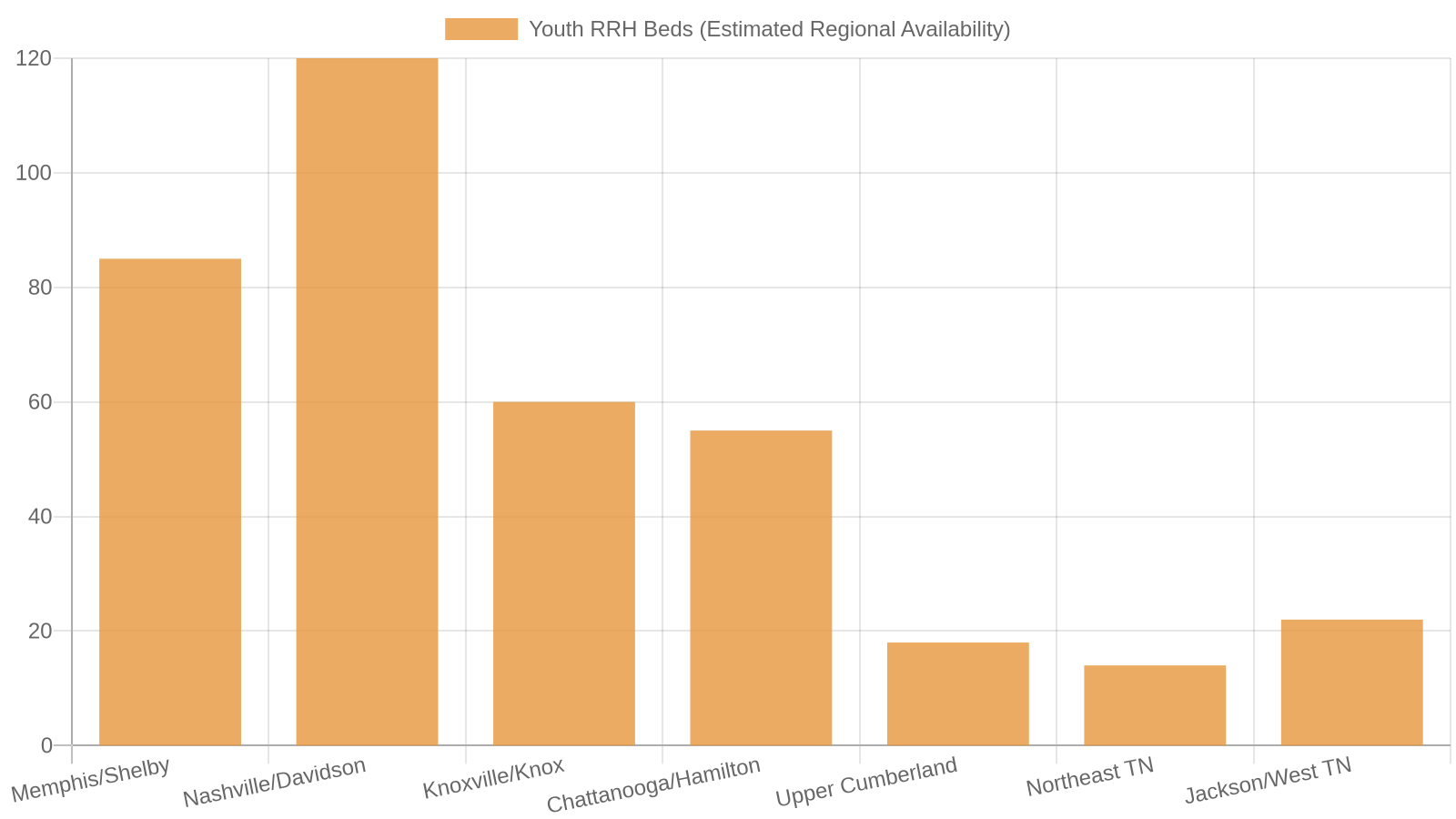
HUD data consistently shows that youth-specific RRH programs have high success rates when they include wraparound services like employment support, financial coaching, and mental health care. Tennessee has some RRH capacity for youth, but YAAB members report that it’s unevenly distributed — robust in Nashville and Memphis, much thinner in rural regions like Upper Cumberland and Northeast Tennessee.
Transitional Housing: The Bridge That's Often Missing
Transitional housing programs — typically 12 to 24 months of supported housing with services — can be a critical bridge for young adults who aren’t ready to manage a lease independently. But in many Tennessee regions, transitional housing for young adults is scarce or has long waitlists. YAAB is advocating for:
- Increased CoC funding allocations for youth transitional housing in underserved regions
- Host home programs that pair young adults with screened community hosts as an alternative to congregate shelter
- Flexible program rules that don’t penalize young people for the normal ups and downs of being in their late teens or early twenties
The goal isn’t just to get young people into housing — it’s to make sure they can stay there and build a foundation for the rest of their lives.
4. Influencing State Legislation on Youth Housing and Foster Care Aging Out

Shelter rules and housing programs matter enormously — but the biggest lever for long-term change is state law. YAAB members across Tennessee are not just advising local CoC boards; they’re showing up at the Tennessee General Assembly, engaging with state agencies, and pushing for legislative changes that will affect thousands of young people for years to come.
The Foster Care Cliff: Tennessee's Aging-Out Crisis
In Tennessee, young people in foster care can receive extended services through age 21 under the state’s Extended Foster Care program — but many don’t know it exists, don’t qualify, or age out before they can access stable housing. Research from the Annie E. Casey Foundation found that one in five young adults who age out of foster care will experience homelessness within two years. In Tennessee, that translates to hundreds of young people every year hitting a cliff with no safety net.
YAAB members who have personally aged out of foster care are among the most powerful voices in this conversation — and they’re using that voice in front of state legislators, not just in community meetings.
YAAB's Legislative Advocacy Strategy
YAAB’s approach to state-level policy change is deliberate and multi-pronged:
- Testimony at the Tennessee General Assembly — YAAB members have provided direct testimony to legislative committees on bills affecting youth housing, foster care, and homeless services funding
- Coalition building — partnering with Tennessee’s Department of Children’s Services (DCS), the Tennessee Coalition to End Domestic and Sexual Violence, and other statewide organizations to align advocacy priorities
- Policy briefs and data reports — producing written materials that translate lived experience into actionable policy language that legislators and agency staff can use
The goal is to make sure that when Tennessee lawmakers vote on anything touching youth housing or foster care, they’ve heard directly from young people who’ve lived it — not just from lobbyists or agency directors.
5. Building a Peer Leadership Pipeline Across All Eight CoC Regions

One of YAAB’s most distinctive statewide projects isn’t about changing a specific policy — it’s about changing who gets to be in the room when policy is made. The peer leadership pipeline YAAB is building across all eight Tennessee CoC regions is both a workforce development initiative and a long-term strategy for sustainable advocacy.
Why Peer Leadership Is a Housing Intervention
It might not look like a housing program on paper, but building peer leadership capacity is one of the most effective things YAAB does. When a young adult who has experienced homelessness becomes a trained advocate, they don’t just help themselves — they become a resource for dozens of peers who trust them in ways they’ll never trust a case manager or a social worker. Peer navigators and peer advocates reduce barriers to service access in ways that no professional outreach worker can fully replicate.
YAAB’s peer leadership model is built on the principle that the young people closest to the problem are closest to the solution. That’s not a slogan — it’s a program design philosophy backed by research in public health, social work, and housing services.
Training, Stipends, and Real Roles
YAAB doesn’t ask young people to volunteer their trauma for free. Members who take on leadership roles receive:
- Stipends for advocacy work — compensation for time spent in CoC meetings, providing testimony, or participating in policy working groups
- Leadership training — skills in public speaking, policy analysis, data literacy, and coalition building
- Mentorship connections — links to professionals in housing, social work, law, and government who can support long-term career development
This model creates a pipeline: a 17-year-old who joins a local YAAB chapter in Knoxville or Chattanooga can develop real skills, earn income, and potentially move into a career in housing advocacy, social services, or public policy — all while still navigating their own path to stability.
6. Improving HMIS Data and Youth-Centered Reporting Across Tennessee

Policy change requires evidence, and evidence requires good data. YAAB’s sixth major statewide project targets the infrastructure that produces housing data across Tennessee — the Homeless Management Information System (HMIS) — and works to make it more accurate, more youth-friendly, and more useful for driving policy decisions that actually reflect the reality of young adults’ experiences.
What HMIS Is and Why It Matters to Young Adults
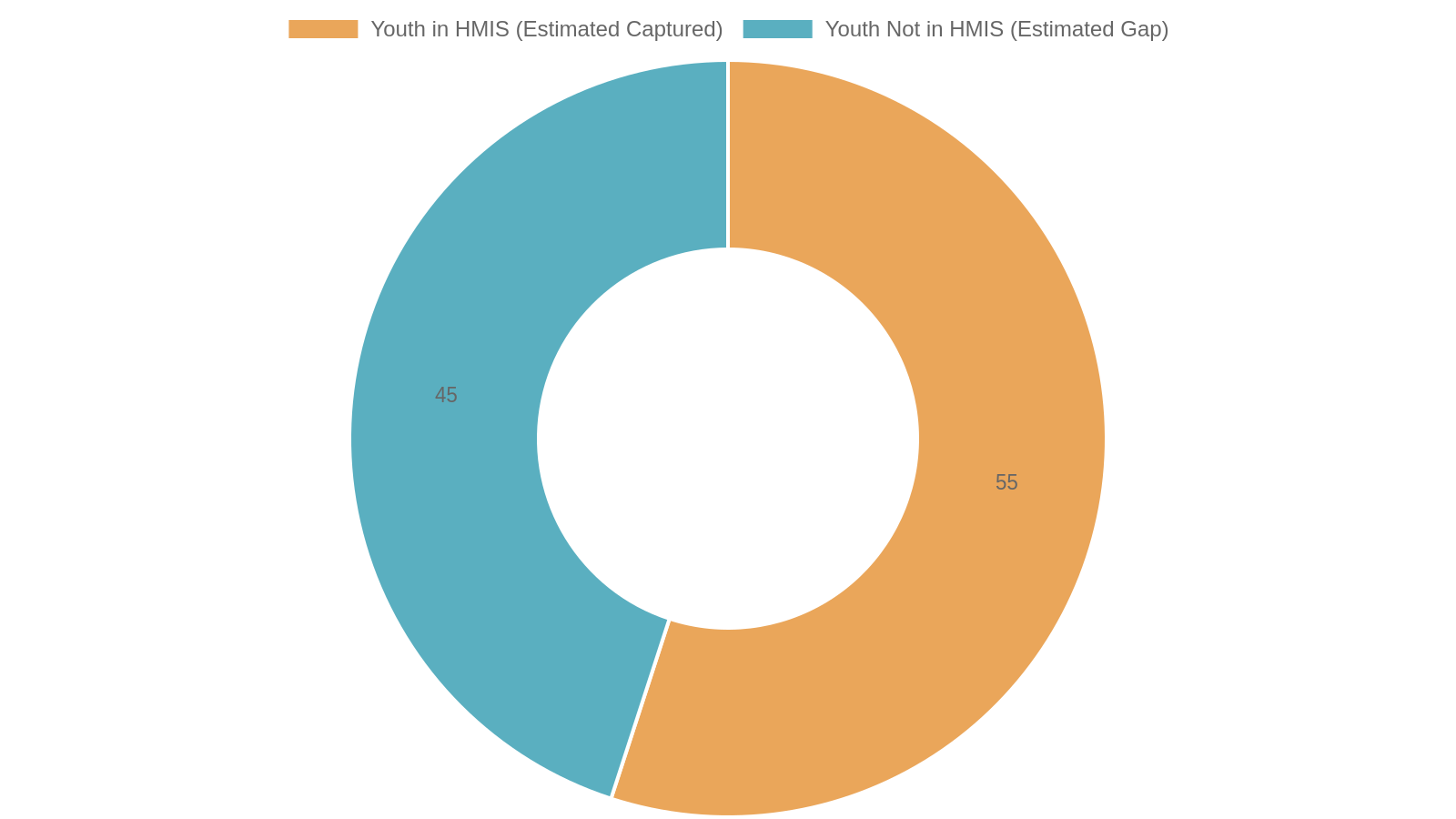
The Homeless Management Information System (HMIS) is the database that CoCs across the country use to track who is experiencing homelessness, what services they’re receiving, and what outcomes they’re achieving. It’s the backbone of federal reporting and a major driver of funding decisions. But HMIS has a youth problem: young adults are often reluctant to enter the system because of privacy concerns, distrust of institutions, or fear that their data will be shared with law enforcement, immigration authorities, or family members they’re trying to stay safe from.
The result is that youth homelessness is underrepresented in HMIS data — which means it’s underrepresented in funding formulas and policy priorities. YAAB members across Tennessee have identified this as a critical gap.
YAAB's Data Advocacy Work
YAAB is working with CoC leads and HMIS administrators across Tennessee’s eight regions to improve youth data quality and trust. Specific initiatives include:
- Youth-friendly HMIS intake processes — simplifying intake forms, reducing the number of required fields for initial entry, and creating clear privacy disclosures written in plain language that young people can actually understand
- Peer-assisted data entry — training YAAB members to help peers navigate HMIS enrollment in ways that feel safe and non-threatening
- Advocating for the Youth Homelessness Supplemental Report (YHSR) — pushing all Tennessee CoCs to submit the optional YHSR to HUD, which provides a more detailed picture of youth-specific homelessness data
Better data doesn’t just help agencies — it helps young people get connected to the right services faster and more accurately.
Tennessee YAAB's 7 Statewide Projects at a Glance
Here's a quick reference comparing all seven of YAAB's statewide projects by focus area, primary target, and the type of change they're designed to create.
7. Connecting Young Adults to Education, Employment, and Financial Resources

Housing is the foundation — but it’s not the whole building. YAAB’s seventh major statewide initiative focuses on the wraparound supports that make housing stick: education, employment, and financial literacy. This work happens at the regional level, with local YAAB chapters serving as connectors between young adults and the programs that can change their long-term trajectory.
Why Housing Stability Requires More Than a Roof
A young adult who gets housed but has no income, no GED, and no connection to support services will likely become homeless again within months. YAAB’s statewide work recognizes that housing stability for young adults is inseparable from economic stability. That’s why several of YAAB’s regional projects focus specifically on connecting members and their peers to education pathways, job training, and financial literacy resources — not as add-ons, but as core components of a housing stability strategy.
Tennessee has a range of resources available to young adults — including Tennessee Promise, the state’s free community college program, and various workforce development initiatives — but many young adults experiencing homelessness don’t know these programs exist or don’t believe they qualify.
Specific Programs YAAB Connects Young Adults To
Across Tennessee’s eight CoC regions, YAAB members and peer navigators are actively connecting young adults to:
- GED and adult education programs — through Tennessee’s Adult Education system, available in every county
- Tennessee Promise and Tennessee Reconnect — free community college for eligible young adults, including those who have experienced homelessness
- Workforce development programs — including YouthBuild, Job Corps, and regional workforce boards
- Bank On Tennessee — a program helping young adults open safe, low-cost bank accounts and build credit
- Benefits enrollment — connecting young adults to TennCare (Medicaid), SNAP, and other public benefits they’re entitled to but often don’t access
YAAB’s peer navigators are often the most effective connectors because they’ve used these programs themselves and can speak honestly about what works and what doesn’t.
How These Projects Connect: A Statewide Systems-Change Strategy

Taken individually, each of YAAB’s seven statewide projects is meaningful. Taken together, they form something more powerful: a coherent, youth-led strategy for transforming how Tennessee’s housing and support systems treat young adults. Understanding how these pieces connect helps explain why YAAB’s model is gaining attention from policymakers and housing advocates across the state.
From Local Action to Statewide Impact
What makes YAAB’s approach distinctive is that these seven projects aren’t siloed — they’re designed to reinforce each other. Better PIT Count data (Project 1) strengthens the case for more shelter beds (Project 2) and more Rapid Rehousing funding (Project 3). Legislative advocacy (Project 4) creates the policy environment for expanded programs. Peer leadership (Project 5) provides the human infrastructure to run those programs. Better HMIS data (Project 6) measures whether they’re working. And education and employment connections (Project 7) make sure that housing stability lasts.
This is what systems-change looks like when it’s led by the people who actually live inside the system.
Regional Variation and Local Adaptation
Not every project looks the same in every region. Memphis/Shelby (TN-500) faces different challenges than Northeast Tennessee (TN-507) — different population sizes, different service landscapes, different political contexts. YAAB’s statewide structure allows for this variation while still maintaining a unified advocacy agenda. A win in Nashville can become a model for Chattanooga. A peer navigation approach developed in Knoxville can be adapted for Jackson.
That’s the power of a statewide network with genuine local roots. You can learn more about each regional YAAB chapter and what they’re working on — every chapter has its own priorities shaped by the young people in that community.
What the Research Says: Why Youth-Led Advocacy Works

YAAB’s projects are grounded in more than passion — they’re grounded in evidence. A growing body of research on youth homelessness, peer support, and systems change supports the core assumptions behind YAAB’s model. Here’s what the data says — and what it means for Tennessee specifically.
The Evidence Base for Lived-Experience Leadership
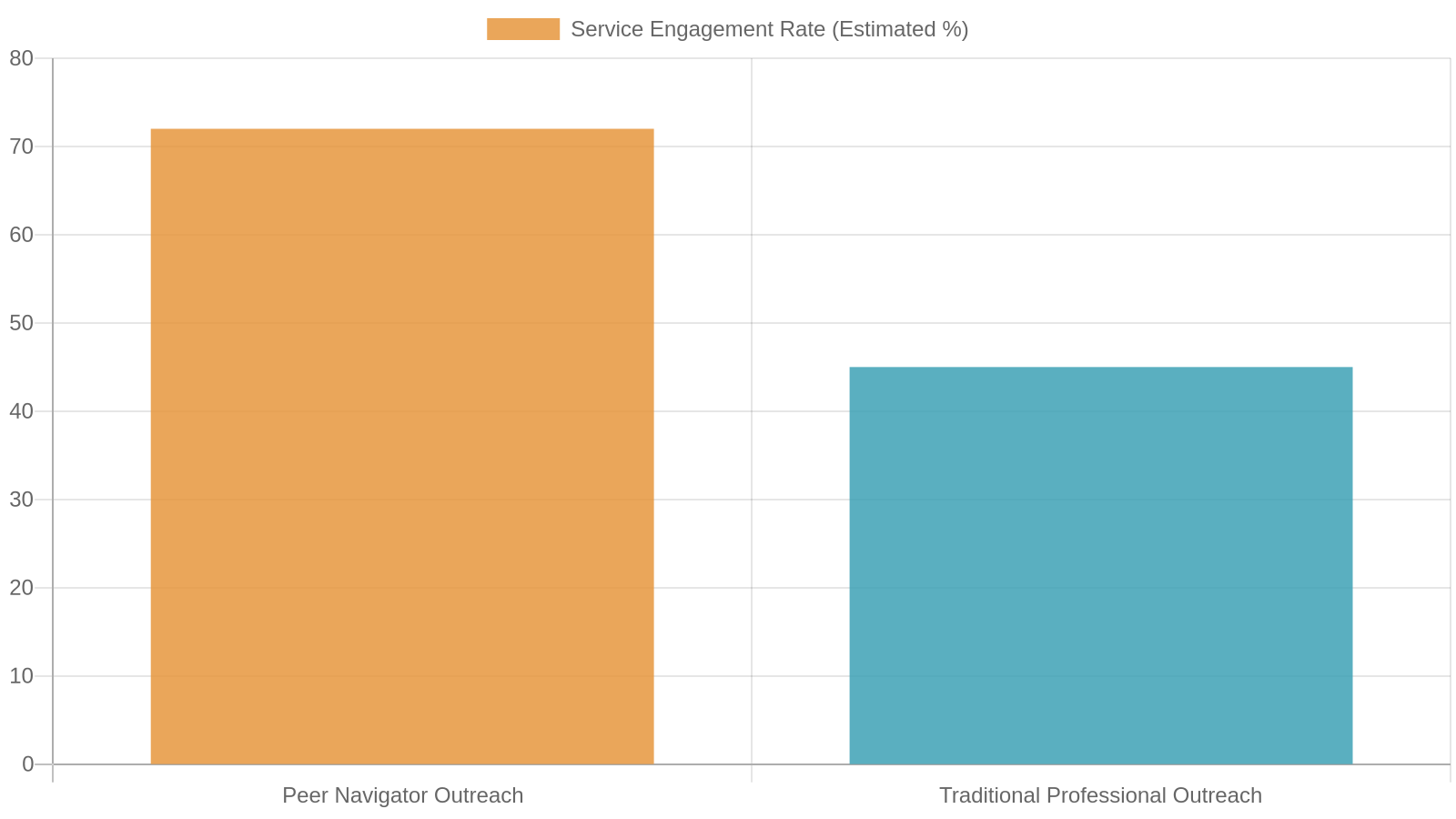
YAAB’s model isn’t just philosophically appealing — it’s backed by a growing body of research. Studies on peer support in housing services consistently find that peer navigators improve service engagement by 30 to 50 percent compared to traditional outreach approaches. Young adults who distrust institutions are significantly more likely to accept help from someone who has been where they are.
The U.S. Interagency Council on Homelessness (USICH) explicitly recommends youth advisory boards as a best practice in its guidance on ending youth homelessness — and YAAB’s structure aligns directly with that recommendation. HUD’s Youth Homelessness Demonstration Program (YHDP) also requires meaningful youth engagement as a condition of funding, which means YAAB’s work directly supports Tennessee CoCs’ ability to access federal dollars.
Tennessee-Specific Context
Tennessee’s youth homelessness landscape has some specific features that make YAAB’s work especially important:
- Tennessee has one of the highest rates of youth aging out of foster care in the Southeast
- Rural regions like Upper Cumberland and Northeast Tennessee have very limited youth-specific housing resources compared to urban CoCs
- Tennessee’s relatively low minimum wage (following the federal floor of $7.25/hour as of 2024) makes housing affordability especially challenging for young adults in entry-level jobs
- The state’s LGBTQ+ youth population is disproportionately represented among young adults experiencing homelessness — a reality YAAB members address directly in their advocacy
Understanding the full picture of youth homelessness in Tennessee is essential context for understanding why these seven projects matter so much.
Get Involved: How to Join or Support YAAB in Your Tennessee Region

Reading about YAAB’s projects is one thing — getting involved is another. Whether you’re a young adult in Memphis, Knoxville, Chattanooga, Jackson, or anywhere else in Tennessee, or a professional who works with transition-age youth, there are concrete ways to plug into this work right now. YAAB is a statewide network, which means no matter where you are in Tennessee, there’s a local chapter near you.
If You're a Young Adult Ages 17 to 25
If you’re between 17 and 25, live in Tennessee, and have experienced homelessness or housing instability — even if that means couch-surfing, staying with relatives because you had nowhere else to go, or living in a car — you may be eligible to join your local YAAB chapter. You don’t need to have all the answers. You don’t need to have your own situation fully figured out. YAAB is a place where your experience is valued exactly as it is.
Joining YAAB means getting access to leadership training, stipends for advocacy work, connections to housing and employment resources, and a community of peers who get it. Find out how to join YAAB in your region — the process is straightforward and designed to be accessible.
If You're a Service Provider or CoC Partner
If you’re a case manager, CoC coordinator, shelter director, or service provider working with transition-age youth in Tennessee, YAAB is one of your most valuable partners. Connecting your clients to their local YAAB chapter gives them access to peer support, advocacy opportunities, and a community of young adults who understand their experience. Supporting YAAB’s policy work means amplifying the voices of the young people your programs are designed to serve.
You can learn more about YAAB’s current statewide and regional initiatives — and find ways to partner — by exploring YAAB’s active projects across Tennessee. Whether you want to refer a young adult, participate in a CoC working group, or support YAAB’s advocacy at the state level, there’s a role for you.
Frequently Asked Questions
What is the Youth Action Board of Tennessee and who can join?
The Youth Action Board (YAAB) of Tennessee is a statewide network of young adults ages 17 to 25 with lived experience of homelessness or housing instability who help shape housing policy and programs across all eight of Tennessee's Continuum of Care regions. Any young adult in that age range who has experienced homelessness — including couch-surfing, doubling up, or living in a car — may be eligible to join their local chapter.
How does YAAB influence housing policy in Tennessee?
YAAB members influence housing policy through direct testimony at the Tennessee General Assembly, participation in regional Continuum of Care boards, advocacy for better data collection and HMIS practices, and coalition building with state agencies like the Department of Children's Services. Their lived experience gives their advocacy a credibility and specificity that outside experts can't replicate.
What is the transition-age youth shelter gap in Tennessee?
The transition-age youth shelter gap refers to the fact that many Tennessee emergency shelters are designed for either families with children or adults 25 and older, leaving young adults ages 18 to 24 without appropriate shelter options. YAAB is advocating for higher age caps, youth-designated beds in adult shelters, and the elimination of rules that disproportionately exclude young adults.
Does YAAB pay members for their advocacy work?
Yes. YAAB members who take on leadership and advocacy roles receive stipends for their time — including participation in CoC meetings, legislative testimony, and policy working groups. YAAB's model is built on the principle that young people should be compensated for their expertise and time, not asked to volunteer their lived experience for free.
Which Tennessee regions does YAAB operate in?
YAAB operates in all eight of Tennessee's Continuum of Care regions: Memphis/Shelby County (TN-500), Nashville/Davidson County (TN-501), Knoxville/Knox County (TN-502), Chattanooga/Hamilton County (TN-503), Murfreesboro/Rutherford County (TN-504), Upper Cumberland (TN-506), Northeast Tennessee (TN-507), and Jackson/West Tennessee (TN-509).
How does YAAB help young adults aging out of foster care in Tennessee?
YAAB advocates for stronger state policies around Tennessee's Extended Foster Care program, provides peer navigation to connect young adults to housing and services, and delivers direct testimony to state legislators about the housing challenges faced by young people who age out of the foster care system. One in five young adults who age out of foster care experience homelessness within two years — a statistic YAAB is working to change in Tennessee.