From Couch-Surfing to Stability: 10 Resources for Young Adults in Tennessee
Quick answer: If you’re a young adult in Tennessee between 17 and 25 who is couch-surfing, staying in a shelter, or just one argument away from the street, you are not alone — and there are real, concrete resources built for you. From emergency shelter and rapid rehousing programs to job training, GED pathways, mental health support, and peer advocacy through YAAB, Tennessee’s Continuum of Care network covers every major region. This guide walks you through 10 types of resources, who qualifies, how to access them, and how to turn short-term survival into long-term stability.
What 'Youth Homelessness' Actually Means in Tennessee
Before diving into specific resources, it helps to understand what the system actually recognizes as youth homelessness — because the definition is broader than most people think, and knowing it can open doors. Tennessee’s Continuum of Care (CoC) regions — including Shelby/Memphis, Davidson/Nashville, Knox/Knoxville, Hamilton/Chattanooga, West Tennessee/Jackson, Upper Cumberland, and Northeast Tennessee — each have their own coordinated entry systems, but they all use a shared federal framework.
The Hidden Homeless: Couch-Surfing Counts
A lot of young people don’t think of themselves as “homeless” because they’re not sleeping under a bridge. But if you’re bouncing between friends’ couches, staying with a relative who could ask you to leave at any moment, sleeping in a car, or trading favors for a place to crash — that is called hidden homelessness, and it absolutely counts.
Under the McKinney-Vento Act, the federal law that defines homelessness for youth and education purposes, couch-surfing, doubled-up living, and staying in motels without a stable lease all qualify as experiencing homelessness. That matters because it unlocks access to programs that can help you.
Tennessee by the Numbers
Tennessee’s most recent Point-in-Time (PIT) count — a single-night snapshot conducted every January — recorded roughly 1,000 to 1,200 unaccompanied youth experiencing homelessness statewide, but advocates widely agree the real number is 3 to 5 times higher because hidden homelessness is nearly impossible to count on a single night.
Young adults ages 18–24 make up the fastest-growing segment of the homeless population in Tennessee. Youth aging out of foster care face especially steep odds: 20% of youth who age out of Tennessee’s foster care system experience homelessness within two years of leaving care. Knowing these numbers isn’t meant to be discouraging — it’s meant to show you that this is a systemic issue, not a personal failure.
1. Coordinated Entry: Your First Call in Any Tennessee Region
If you only remember one thing from this entire article, make it this: call 2-1-1. That three-digit number is Tennessee’s statewide helpline and will connect you to your regional Coordinated Entry system — the gateway to shelter, housing, case management, and more. It’s free, confidential, and available around the clock.
How Coordinated Entry Works
Coordinated Entry (CE) is the front door to almost every housing resource in your region. Instead of calling 20 different organizations and getting put on 20 different waitlists, you make one call or visit one access point, complete a standardized assessment (usually the VI-SPDAT or a youth-specific version), and get matched to the right program for your situation.
Think of it like a triage system at a hospital — it figures out what level of help you need and routes you there. You do NOT need an ID, a Social Security card, or proof of income to start the process. You just need to show up or call.
Regional Access Points in Tennessee
Each Tennessee CoC region has its own coordinated entry access point:
Knoxville/Knox County: KARM (Knox Area Rescue Ministries) — (865) 673-6540
Chattanooga/Hamilton: United Way 2-1-1 or CARES (Chattanooga Area Reentry Services)
Jackson/West TN: Contact your local CoC lead agency or dial 2-1-1
Upper Cumberland & Northeast TN: Dial 2-1-1 statewide for the nearest access point
2-1-1 Tennessee is available 24/7 and connects you to your regional entry point from anywhere in the state.
2. Emergency Shelter Options for Ages 17–25
Emergency shelter is the most immediate safety net when you have nowhere safe to sleep tonight. Tennessee has a patchwork of shelters across its regions, and while bed availability fluctuates, knowing your options means you can move fast when you need to. Always call before you go — many shelters require a brief phone intake first.
Youth-Specific Shelters vs. Adult Shelters
Not all shelters are the same, and for young adults — especially those under 18 — the difference matters enormously. Youth-specific shelters are designed for transition-age youth (TAY), meaning they have staff trained in trauma-informed care, peer support, and the specific challenges of being young and unhoused. Adult shelters can feel unsafe or overwhelming, and some have minimum age requirements of 18 or older.
Key youth shelters in Tennessee include Oasis Center (Nashville, ages 14–24), Youth Villages (multiple locations), Memphis Youth Villages, and Chattanooga’s Chambliss Center for Children. Call ahead to confirm current bed availability and age requirements, as these change frequently.
What to Expect When You Walk In
Walking into a shelter for the first time can feel intimidating. Here’s what usually happens: you’ll be greeted by an intake worker, asked some basic questions about your situation (no judgment, no pressure), and given a bed, a meal, and access to a shower. Most youth shelters also offer case management — a person who helps you figure out next steps toward more stable housing.
You do not need to have everything figured out before you walk in. You don’t need an ID (though staff can help you get one). You don’t need to be sober. You just need to show up. Shelter is a bridge, not a destination — and the staff there know that.
3. Rapid Rehousing: Getting Your Own Place Faster
Emergency shelter is a roof for tonight. Rapid Rehousing is a path to your own front door — often within weeks, not years. It’s one of the most powerful tools in Tennessee’s housing toolkit for young adults, and it’s specifically designed for people who just need a bridge, not a permanent subsidy.
What Rapid Rehousing Actually Pays For
Rapid Rehousing (RRH) is a federally funded program that helps you move into a private-market apartment quickly by covering short-term rental assistance and case management. Depending on the program and your situation, RRH can cover security deposits, first and last month’s rent, and ongoing rental subsidies for 3 to 24 months while you stabilize your income.
The goal isn’t to keep you dependent on the subsidy forever — it’s to get you housed fast so you can focus on employment, school, and building your life, rather than spending all your energy on survival. Case managers work with you on a housing stability plan during the subsidy period.
Who Qualifies and How to Apply
To access Rapid Rehousing in Tennessee, you typically need to: (1) be assessed through Coordinated Entry, (2) meet the federal definition of homelessness or be at imminent risk, and (3) demonstrate that you can sustain housing with short-term help. You do not need perfect credit, a rental history, or a job offer in hand to start — those are things the program helps you build.
Youth-specific RRH programs exist in Memphis (MIFA), Nashville (Oasis Center, Conexión Américas), Knoxville (KARM, Volunteer Ministry Center), and Chattanooga (Chambliss, Signal Centers). Access all of them through your regional Coordinated Entry point. Waitlists exist but move faster than permanent housing lists — typical placement time is 30 to 90 days from assessment.
4. Transitional Housing and Longer-Term Programs
Not every path to stability looks the same. For some young adults, the right move is jumping straight into their own apartment with Rapid Rehousing support. For others, a transitional housing program — with built-in community, coaching, and structure — is the foundation they need first. Tennessee has both, and neither is better than the other. It depends entirely on where you are right now.
How Transitional Housing Differs from Rapid Rehousing
While Rapid Rehousing moves you into your own apartment quickly, Transitional Housing (TH) programs provide a structured living environment — often shared housing or a group home setting — for a period of 6 to 24 months. They’re designed for young adults who need more intensive support: life skills coaching, mental health services, employment help, and peer community, all under one roof.
Transitional housing is a good fit if you’ve experienced trauma, are aging out of foster care, or feel like you’re not quite ready to manage an apartment alone. It’s not a step down — it’s a different tool for a different set of needs, and many young adults say it was the most transformative experience of their path to stability.
Notable Transitional Programs in Tennessee
Key transitional housing providers for TAY in Tennessee include:
Oasis Center (Nashville): The Next Door program and transitional living for youth 18–24
Youth Villages Transitional Living (statewide): Structured apartments with intensive case management
Restoration Youth Academy (Memphis): Faith-based transitional housing for young adults
CARES (Chattanooga): Transitional housing with workforce development
Appalachian Regional Coalition on Homelessness (Northeast TN): Transitional programs for rural youth
Program lengths, rules, and eligibility vary. Ask your case manager or Coordinated Entry worker which program is the best fit for your specific goals.
5. Employment and Job Training Resources for Young Adults
Stable housing and stable income are deeply connected — it’s hard to keep an apartment without income, and hard to focus on a job search without stable housing. Tennessee’s workforce system has programs designed specifically for young adults navigating both at once. You don’t have to choose which problem to solve first.
American Job Centers: Free and Statewide
Tennessee has American Job Centers (AJCs) — also called Tennessee Career Centers — in every major region. They are completely free to use and offer resume help, job search assistance, interview coaching, and connections to paid job training programs. For young adults 16–24, the WIOA Youth Program (Workforce Innovation and Opportunity Act) provides intensive services including paid work experience, occupational skills training, and mentoring.
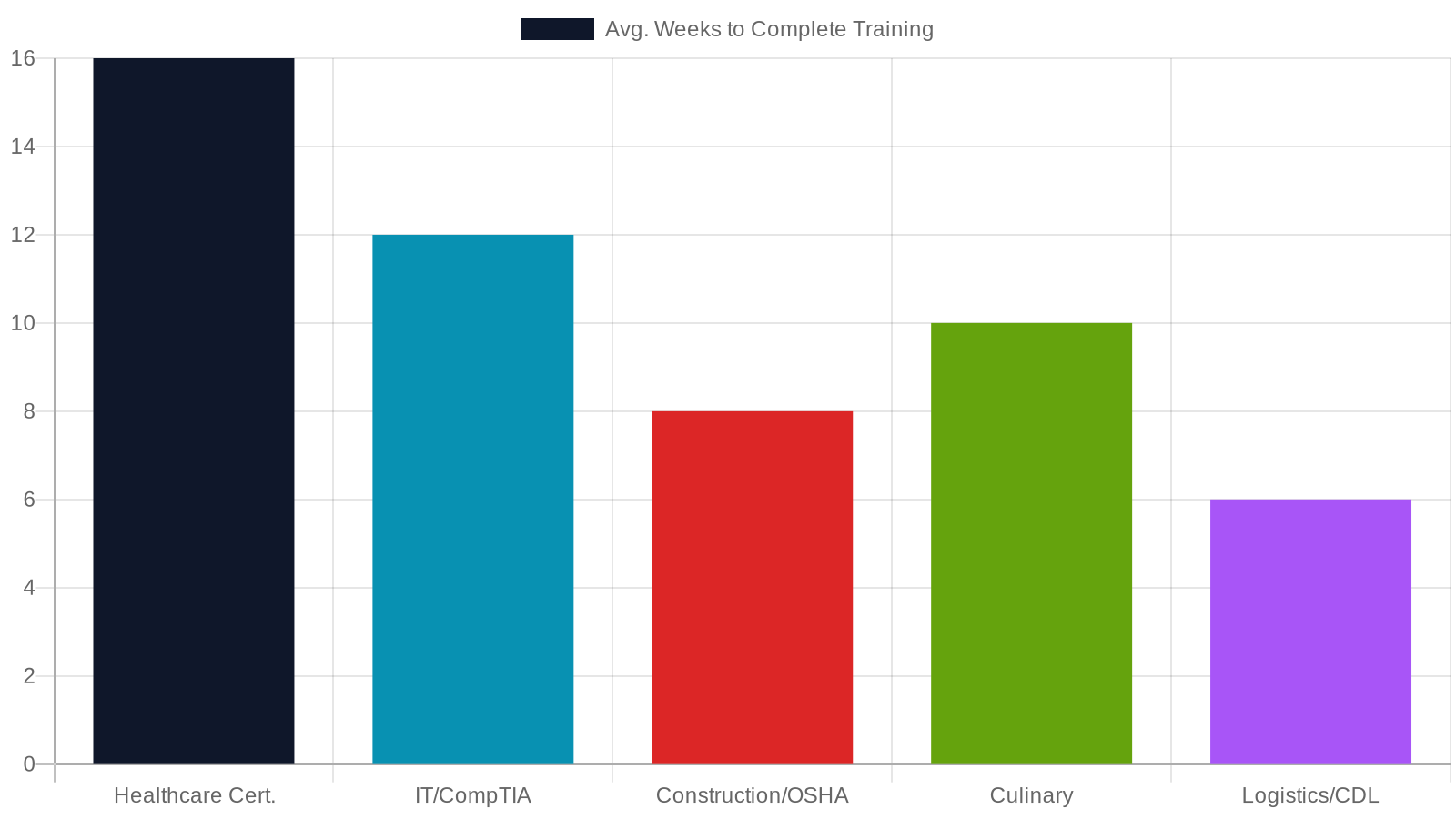
WIOA Youth funding can pay for certifications in fields like healthcare, construction, IT, and logistics — industries with strong hiring pipelines in Memphis, Nashville, and Knoxville. You don’t need a high school diploma to enroll; the program can help you get your GED or HiSET at the same time.
Social Enterprises and Youth-Focused Employers
Several Tennessee organizations run social enterprises that specifically hire young adults with barriers to employment — including those experiencing homelessness. Examples include:
Thistle Farms (Nashville): Employment and training for survivors of trafficking and homelessness
Memphis Goodwill Excel Center: Combines adult diploma program with job placement
Knoxville’s Community Kitchen: Culinary job training with placement support
Conexión Américas (Nashville): Bilingual workforce programs for Latinx youth
These aren’t charity jobs — they’re real paid positions with real skill-building. Many alumni go on to careers in their trained field within 12 months. Ask your case manager or check YAAB Tennessee’s resource directory for the most current listings in your region.
Estimated weeks to complete common WIOA-eligible certifications available through Tennessee Career Centers. Actual timelines vary by provider and individual pace.
6. GED, HiSET, and Education Pathways in Tennessee
A diploma or credential isn’t just a piece of paper — it’s a key that unlocks higher wages, better housing applications, and more options. Tennessee has invested heavily in adult education and free college pathways, and young adults experiencing housing instability have specific protections and benefits built into those systems. Here’s what’s available to you.
Getting Your Diploma Equivalent — Free or Low Cost
Tennessee offers the HiSET exam (an alternative to the GED) through its Adult Education program, and for most Tennesseans, preparation classes are completely free through Tennessee College of Applied Technology (TCAT) campuses and community college adult education centers. The HiSET exam itself costs around $50–$75 per subject test, but fee waivers are available for low-income applicants.
If you’re currently enrolled in a WIOA Youth program, your exam fees may be covered entirely. Don’t let cost stop you from even asking — always ask about waivers first.
College and Vocational Pathways: Tennessee Promise and More
Tennessee Promise provides last-dollar scholarship funding for two years of community college or TCAT — and it’s available to students who aged out of foster care up to age 26 under the Tennessee Promise for Foster Youth provision. If you aged out of state custody, you may also qualify for tuition-free attendance at a Tennessee public college or university under state law.
Additionally, the FAFSA (Free Application for Federal Student Aid) has a specific question for students who are homeless or self-supporting — answering yes makes you an independent student, which typically increases your Pell Grant eligibility significantly. A financial aid counselor at any Tennessee community college can walk you through this in about 30 minutes.
7. Mental Health and Substance Use Support
Housing instability and mental health challenges feed each other in a cycle that’s hard to break alone. Tennessee has more mental health resources than most people realize — and many of them are free or low-cost. You deserve support that sees the whole you, not just your housing status. Here’s where to start.
Tennessee's Crisis Line and Walk-In Options
If you’re in a mental health crisis right now, call or text 988 — the Suicide and Crisis Lifeline, available 24/7 in Tennessee. You can also text HOME to 741741 (Crisis Text Line) if you’d rather not talk on the phone. Both are free, confidential, and staffed by trained counselors.
For non-emergency mental health support, Tennessee’s Community Mental Health Centers (CMHCs) provide sliding-scale therapy and psychiatric services in every region. You do not need insurance to be seen — Medicaid/TennCare covers mental health services, and enrollment assistance is available at most CMHCs if you’re not yet enrolled.
Trauma-Informed Care: Why It Matters for TAY
The vast majority of young adults experiencing homelessness have also experienced significant trauma — abuse, neglect, family rejection, trafficking, or violence. Trauma-informed care (TIC) means that the provider understands this and doesn’t treat your reactions to trauma as character flaws or behavioral problems.
When you’re looking for a therapist or counselor, it’s completely okay to ask: “Are you trauma-informed?” and “Do you have experience working with young adults who’ve experienced homelessness?” Good providers will welcome those questions. Organizations like Oasis Center (Nashville), Youth Villages (statewide), and Signal Centers (Chattanooga) specifically train their mental health staff in trauma-informed approaches for transition-age youth.
Tennessee Housing Program Comparison at a Glance
Not sure which type of program fits your situation? Here’s a side-by-side look at the main housing options available to young adults in Tennessee.
Program Type
Who It’s For
Typical Length
What It Covers
How to Access
Emergency Shelter
Anyone needing safe shelter tonight, ages 17–24
1 night to 90 days
Bed, meals, basic case management
Call 2-1-1 or walk in
Rapid Rehousing (RRH)
Youth ready to live independently with short-term help
3 to 24 months
Security deposit, rent subsidy, case management
Coordinated Entry assessment
Transitional Housing
Youth needing structured support and life skills
6 to 24 months
Housing, coaching, mental health, job help
Coordinated Entry or direct referral
Permanent Supportive Housing
Youth with long-term disabilities or high needs
Long-term / indefinite
Subsidized housing + ongoing services
Coordinated Entry (longer waitlist)
Extended Foster Care
Youth currently or formerly in TN foster care, under 21
Until age 21
Housing support, Medicaid, stipend, case manager
Contact TN DCS: (615) 741-9701
WIOA Youth Program
Youth 16–24 needing job training or education
Up to 12 months of services
Paid work experience, certifications, GED support
Tennessee Career Center (free)
ETV Grant (Foster Youth)
Youth who aged out of foster care, under 26
Up to 5 years
Up to $5,000/year for education/training
Apply through TN DCS aftercare
8. Knowing Your Rights: Legal Protections for Young Adults
Knowing your rights isn’t just for lawyers — it’s for you. Young adults experiencing housing instability are frequently taken advantage of precisely because they don’t know what protections they have. This section covers the basics, but always remember: free legal help exists in Tennessee, and you should use it.
Your Rights If You're Under 18 and Unhoused
If you’re 17 and unhoused in Tennessee, you have specific legal protections. Under the Runaway and Homeless Youth Act, shelters can provide you with services without parental consent for up to 72 hours (and longer in many cases). You also have the right to enroll in school under McKinney-Vento regardless of your housing situation — no school can turn you away because you don’t have a permanent address.
Tennessee also has a judicial bypass process that allows minors to petition a court for certain decisions without parental involvement. Legal aid organizations like Legal Aid Society of Middle Tennessee and Memphis Area Legal Services offer free representation for young people navigating these situations.
Your Rights as an Adult Tenant
Once you’re 18 and signing a lease, Tennessee landlord-tenant law gives you specific protections. Landlords must give at least 30 days’ written notice before eviction (14 days for non-payment of rent, with a right to cure). They cannot change your locks, remove your belongings, or shut off utilities without a court order — that’s called an illegal eviction, and it’s actionable.
If you’re facing eviction, contact your regional legal aid office immediately. Tennessee Alliance for Legal Services (TALS) runs a statewide hotline at (615) 244-6610 and can connect you with free legal help. Many eviction cases can be resolved or delayed with proper legal representation — don’t just not show up to court.
9. Aging Out of Foster Care: Specific Resources and Supports
Aging out of foster care is one of the most abrupt transitions a young person can face — one day you have a system behind you, the next you’re expected to figure everything out alone. But Tennessee has specific programs designed to extend that support and help you build real independence. If you aged out, or are about to, this section is specifically for you.
Tennessee's Extended Foster Care: Stay Until 21
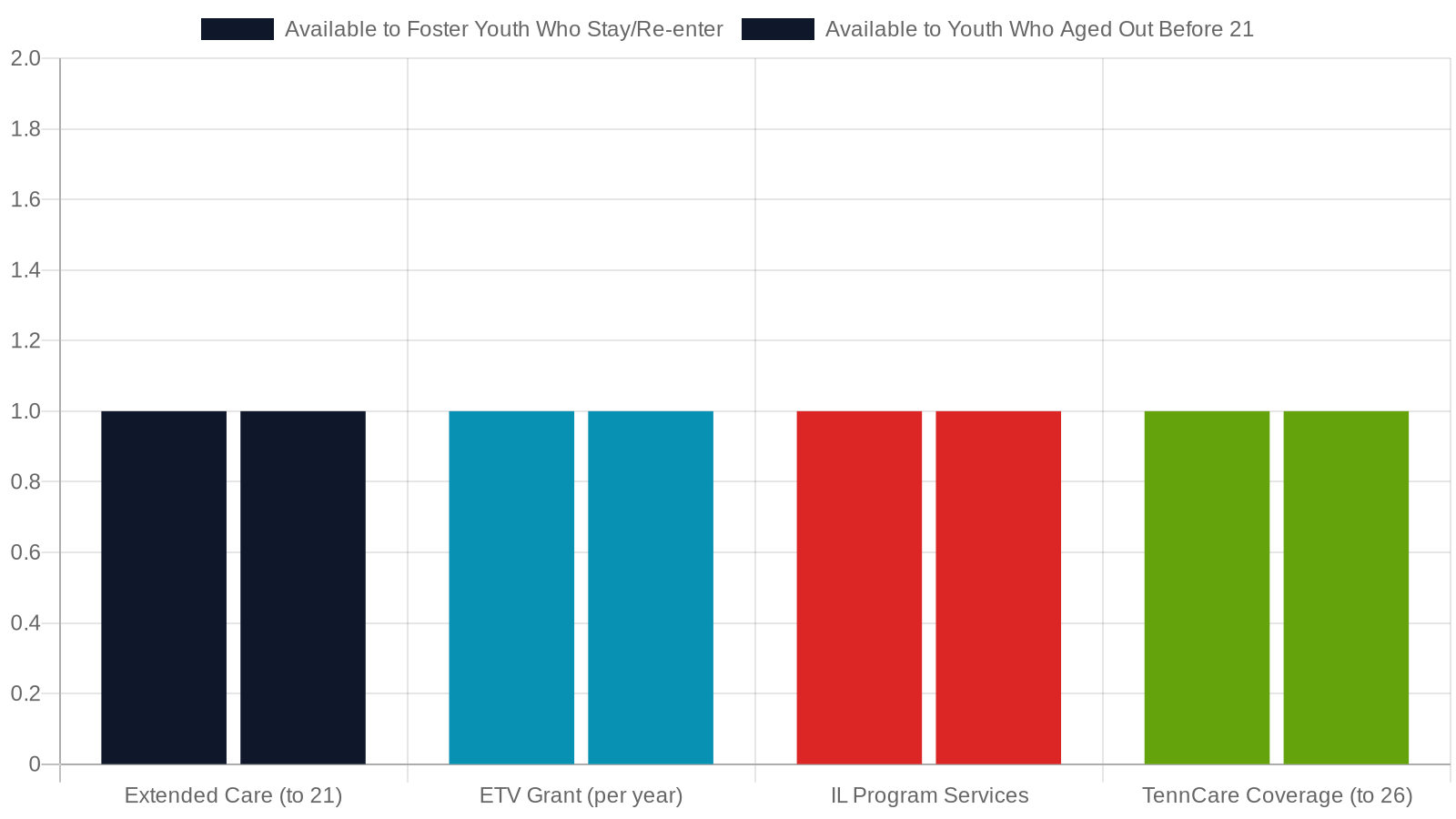
Tennessee allows youth in foster care to voluntarily remain in extended care until age 21 under the Fostering Connections Act. If you’re approaching 18 in Tennessee’s foster care system, you have the right to stay — and you should seriously consider it. Extended care gives you continued housing support, Medicaid coverage, a monthly stipend, and connection to your case manager while you build independence.
If you already aged out and are now struggling, you can re-enter extended care in Tennessee if you’re under 21. Contact the Tennessee Department of Children’s Services (DCS) at (615) 741-9701 to ask about re-entry eligibility. Many young adults don’t know this option exists.
Independent Living Programs and ETV Funding
Tennessee’s Independent Living (IL) program through DCS provides life skills training, financial literacy workshops, and connections to housing for current and former foster youth. Additionally, the federal Education and Training Voucher (ETV) program provides up to $5,000 per year for post-secondary education or training for youth who aged out of foster care — this is money you don’t have to pay back.
ETV applications are processed through Tennessee DCS. You must apply before age 26. Eligible expenses include tuition, books, housing, and transportation. Pair ETV with Tennessee Promise for Foster Youth and your education can be essentially cost-free. Talk to a DCS aftercare worker or an Oasis Center/Youth Villages case manager to start the application.
All four benefits are available to both current extended care participants and youth who have already aged out (subject to age limits). Contact Tennessee DCS to confirm your individual eligibility.
10. YAAB Tennessee: Peer Advocacy and Getting Involved
Resources are important. But so is power — the power to change the systems that created the problem in the first place. YAAB Tennessee exists because young adults with lived experience of homelessness are the most credible, most essential voices in conversations about housing policy. If you’ve been through it, you have something to contribute that no researcher or policymaker can replicate.
What YAAB Is and Why It Exists
The Youth Action Board (YAAB) of Tennessee is a statewide network of young adults ages 17 to 25 with lived experience of homelessness and housing instability. YAAB members don’t just receive services — they shape them. YAAB advises local Continuum of Care boards, testifies before state legislators, reviews funding proposals, and ensures that the people most affected by housing policy actually have a seat at the table where decisions get made.
YAAB has regional chapters across Tennessee’s CoC regions — Memphis/Shelby, Nashville/Davidson, Knoxville/Knox, Chattanooga/Hamilton, Jackson/West TN, Upper Cumberland, and Northeast TN. Each local YAAB is led by young people, for young people. Learn more about your regional chapter at YAAB Tennessee’s local YAABs page.
How to Join and What Membership Looks Like
Joining YAAB doesn’t require a perfect history, a resume, or any prior advocacy experience. It requires lived experience and a desire to make things better for other young people in Tennessee. Members participate in monthly meetings, leadership training, policy workshops, and community events. Many members say YAAB gave them their first real sense of professional identity and community.
YAAB members receive stipends for their participation, which recognizes that your time and expertise have real value. You also build a network of peers, mentors, and system partners that can open doors in housing, employment, and education. If you’re ready to turn your experience into power, apply to join YAAB Tennessee today.
Your Next Move: From Reading to Acting in Tennessee
You made it through a lot of information. That matters. Now the question is: what’s the one thing you’re going to do in the next 24 hours? Whether it’s calling 2-1-1, looking up your nearest Career Center, or reaching out to your regional YAAB chapter — every step forward counts. Tennessee’s resources are real, they’re funded, and they’re waiting for you to use them.
A Simple Action Checklist
Feeling overwhelmed is normal. Here’s a simple sequence to start with:
Tonight or this week: Call 2-1-1 or your regional Coordinated Entry access point. Just make the call.
This month: Ask about Rapid Rehousing, transitional housing, and any emergency rental assistance in your area.
In the next 90 days: Connect with a WIOA Youth program at your nearest Tennessee Career Center for job training or education support.
Ongoing: Know your rights. Save the Tennessee Alliance for Legal Services number: (615) 244-6610.
When you’re ready: Consider joining your local YAAB and turning your experience into advocacy.
You don’t have to do all of this at once. One call, one step, one day at a time.
Find More Resources at YAAB Tennessee
YAAB Tennessee maintains a living directory of housing, employment, education, mental health, and legal resources organized by region — updated regularly by YAAB members and CoC partners. Visit yaabtn.org/resources to search by county or service type. You can also contact YAAB Tennessee directly if you’re not sure where to start — we’ll connect you with the right people in your region.
Stability is possible. Thousands of young adults across Tennessee — from Memphis to Mountain City — have moved from couch-surfing to their own front door, from survival mode to building something real. The resources exist. The community exists. You belong in it.
Frequently Asked Questions
Can I get housing help in Tennessee if I don't have an ID?
Yes. You do not need an ID to start the Coordinated Entry process or to access emergency shelter in Tennessee. Staff at most programs can actually help you obtain a state ID — it’s one of the most common things case managers assist with. Don’t let a missing ID stop you from reaching out.
What is couch-surfing and does it count as homelessness?
Couch-surfing — staying temporarily with friends, family, or acquaintances because you have no stable place of your own — counts as homelessness under the McKinney-Vento Act. This means you qualify for many programs designed for unhoused youth, including school enrollment protections, Coordinated Entry services, and housing assistance programs.
I aged out of foster care in Tennessee. What housing help is available to me?
If you’re under 21, you may be able to re-enter Tennessee’s extended foster care program through DCS. You may also qualify for up to $5,000 per year in Education and Training Vouchers (ETV) and tuition-free community college through Tennessee Promise for Foster Youth. Call TN DCS at (615) 741-9701 to explore your options.
How do I find my local YAAB chapter in Tennessee?
YAAB Tennessee has regional chapters in Memphis/Shelby, Nashville/Davidson, Knoxville/Knox, Chattanooga/Hamilton, Jackson/West TN, Upper Cumberland, and Northeast TN. Visit yaabtn.org/local-yaabs to find the chapter nearest you and learn how to connect with local members and meetings.
What is Coordinated Entry and how do I access it in Tennessee?
Coordinated Entry is the unified intake system for housing programs in each Tennessee Continuum of Care region. It matches you to the right program based on your needs rather than making you apply to each organization separately. The easiest way to access it statewide is to dial 2-1-1, which is free and available 24/7.
Are there free job training programs in Tennessee for young adults without a high school diploma?
Yes. The WIOA Youth Program at Tennessee Career Centers provides free job training, paid work experience, and GED/HiSET support for young adults ages 16–24. You do not need a diploma to enroll — the program can help you earn one while you train. Visit your nearest Tennessee Career Center or call 2-1-1 for a referral.