Find Your Region: a Guide to Tennessee’s Local YAABs for Young Adults
Quick answer: Tennessee’s Youth Action Board (YAAB) network is organized into regional chapters across the state — including Memphis/Shelby County, Nashville/Davidson County, Knoxville/Knox County, Chattanooga/Hamilton County, Jackson/West Tennessee, the Upper Cumberland, and Northeast Tennessee. Each local YAAB is made up of young adults ages 17 to 25 with lived experience of homelessness or housing instability. Members advise their regional Continuum of Care, advocate for better services, and connect peers to real resources. You don’t need a perfect story or a résumé — you need your experience and your voice.
What Is a YAAB and Why Does It Exist?
The Youth Action Board of Tennessee (YAAB) is a statewide network of young adults — ages 17 to 25 — who have personally experienced homelessness or housing instability. YAAB isn’t a support group or a case-management program. It’s a leadership and advocacy body. Members shape the policies and programs that affect transition-age youth across Tennessee, and they do it from the inside of the systems that matter most.
Founded on the principle that nothing about us without us, YAAB gives young people a seat at the table in every region of the state. If you’re between 17 and 25 and you’ve dealt with housing instability — even once — you are exactly who this network was built for.
Lived Experience as a Superpower
Most housing and homelessness policy is written by people who have never slept in a car, couch-surfed for months, or aged out of foster care with nowhere to go. YAABs exist to fix that. When a young person who has actually navigated the shelter system sits at the table where decisions are made, the decisions get better — full stop.
Research from the National Alliance to End Homelessness consistently shows that youth-informed programs have higher engagement rates and better outcomes than programs designed without youth input. Tennessee’s YAAB network puts that principle into practice at the regional level, so the feedback loop is short and the impact is local.
The Continuum of Care Connection
Each local YAAB is embedded in a Continuum of Care (CoC) — the regional planning body that coordinates homeless services and distributes federal HUD funding. Tennessee has multiple CoCs, and each one is responsible for counting unhoused people, allocating shelter beds, and setting priorities for the region.
By sitting inside the CoC structure, YAAB members don’t just advise from the outside — they influence how millions of dollars in housing resources are spent. That’s real power, and it belongs to young people with real experience.
Tennessee's 7 YAAB Regions at a Glance
Tennessee’s YAAB network is organized into seven regional chapters, each aligned with a local Continuum of Care. The regions span the full width of the state — from the Mississippi River bluffs of Memphis to the mountain communities of Northeast Tennessee. Below is an overview of each region, the counties it covers, and what makes it distinct. Use this as your starting point to find the chapter closest to where you live — or where you want to make an impact.
How the Regions Were Drawn
Tennessee’s YAAB regions follow the boundaries of the state’s existing Continuum of Care (CoC) regions, which are themselves based on county groupings recognized by the U.S. Department of Housing and Urban Development (HUD). This alignment is intentional: it means each local YAAB feeds directly into the planning body that controls local homeless-services funding.
The seven regions cover all 95 Tennessee counties. Whether you’re in a major metro or a rural county, there is a YAAB region that includes you — and a local chapter working on issues that affect your community specifically.
Why Region Matters for Resources
The resources available to you — emergency shelter beds, rapid rehousing funds, transitional housing units, mental health services — vary significantly by region. A bed available in Nashville may not be accessible to someone in Johnson City, and vice versa. Knowing your region helps you find the services that are actually within reach, and it helps your local YAAB advocate for the gaps that exist in your community, not just statewide averages.
Each region also has its own HUD Point-in-Time (PIT) count, which is conducted every January and shapes how much federal funding flows into that area. YAAB members often participate in PIT counts, making their presence directly connected to the dollars their communities receive.
Region 1: Memphis and Shelby County
Memphis is Tennessee’s most populous city and sits at the western edge of the state on the Mississippi River. The Memphis/Shelby County YAAB operates within one of the most resource-rich — but also highest-need — CoC regions in Tennessee. Young adults here face a combination of high poverty rates, limited affordable housing stock, and significant racial disparities in who experiences homelessness. The local YAAB is positioned to address all of these through advocacy and peer leadership.
Who This Region Serves
The Memphis/Shelby County region is Tennessee’s largest urban CoC and one of the most active in the state. The local YAAB here works alongside Memphis Shelby County CoC partners including Memphis Union Mission, MIFA, and Door of Hope. The region covers Shelby County and is home to a large population of transition-age youth navigating homelessness, foster care exits, and economic instability.
According to the 2023 HUD Point-in-Time count, Shelby County recorded over 1,400 unhoused individuals on a single night — a significant portion of whom were young adults under 25. The Memphis YAAB focuses on rapid rehousing access, employment pathways, and reducing barriers to ID and benefits enrollment.
Getting Involved in Memphis
If you’re in Memphis or Shelby County and you’re between 17 and 25, the local YAAB meets regularly and welcomes new members year-round. You don’t need to be currently unhoused — if you have lived experience of housing instability at any point, your perspective is valuable. Members receive leadership training, stipends for participation, and connections to employment and education resources in the region.
Reach out through the YAAB local chapters page to find current meeting times and a contact for the Memphis chapter. Showing up once is enough to get started.
Region 2: Nashville and Davidson County
As Tennessee’s state capital and fastest-growing city, Nashville presents both the greatest concentration of resources and some of the most acute housing affordability challenges for young adults in the state. The Nashville/Davidson County YAAB is at the center of statewide advocacy efforts, with direct access to state legislators, Metro Nashville government, and a dense network of nonprofit housing providers.
The Nashville Housing Crunch
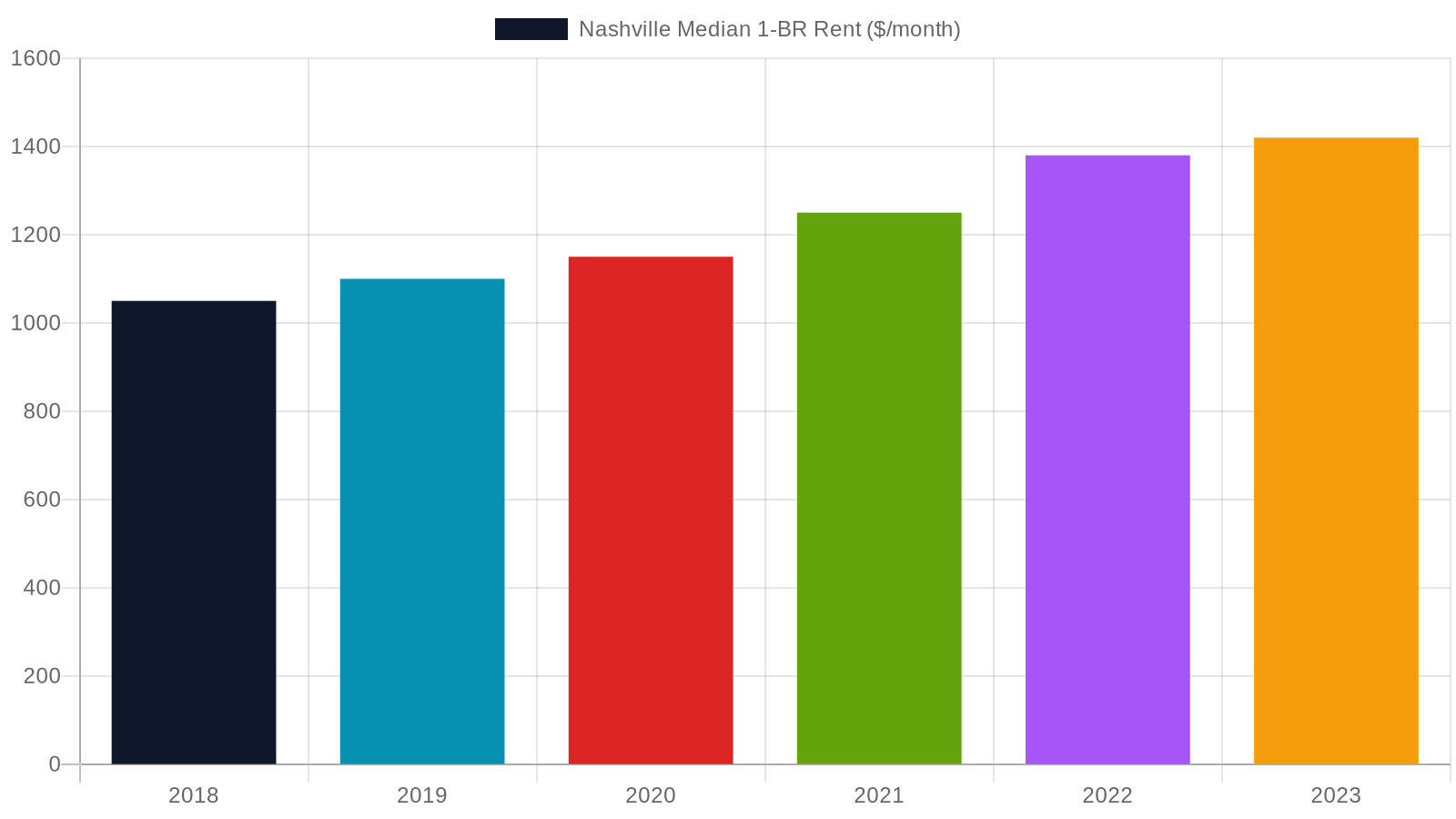
Nashville has experienced explosive population growth over the past decade — the metro area grew by more than 20% between 2010 and 2020, according to U.S. Census data. That growth has driven median rent up dramatically: the median one-bedroom apartment in Nashville now exceeds $1,400/month, making it one of the least affordable cities in the Southeast for young adults earning entry-level wages.
The Nashville/Davidson County YAAB works within the Tennessee Balance of State CoC and local partners like Oasis Center, Campus for Human Development, and Safe Haven Family Shelter to push for more youth-specific housing units and faster access to rapid rehousing funds for people under 25.
Advocacy Wins in Nashville
Nashville YAAB members have participated in Metro Council briefings, testified at state legislative hearings, and contributed to the development of Nashville’s youth homelessness action plan. This kind of direct policy engagement is what separates YAAB from a peer support group — members aren’t just sharing stories, they’re changing systems.
If you’re in Davidson County or the surrounding Middle Tennessee area, the Nashville chapter is one of the most active in the state. New members are welcomed at any point in the year, and the chapter offers peer mentorship, stipends, and connections to Nashville-area employment and education programs.
Rising rents in Nashville make affordable housing advocacy increasingly urgent for transition-age youth. Sources: Apartment List, Zillow Research.
Region 3: Knoxville and Knox County
The Knoxville/Knox County YAAB serves East Tennessee’s largest metro area and a wide swath of surrounding rural counties. Knoxville’s YAAB chapter is particularly focused on the intersection of rural housing instability and urban resource access — a challenge that is unique to regions where young people may travel significant distances to reach services.
East Tennessee's Housing Landscape
Knoxville sits at the gateway to the Great Smoky Mountains and serves as the economic hub of East Tennessee. The city’s housing market has tightened significantly since 2020, with average rents increasing roughly 30% in three years. For young adults aging out of foster care or leaving unstable family situations, that squeeze is felt immediately.
The Knoxville/Knox County CoC includes partners like Volunteer Ministry Center, KARM (Knox Area Rescue Ministries), and Restoration House. The local YAAB works alongside these organizations while maintaining its independent youth-led voice — advocating for lower barriers to shelter entry, better transition planning for foster youth, and expanded mental health services.
University Town Dynamics
Knoxville is home to the University of Tennessee, which creates a unique dynamic: a large student population competes for affordable housing, driving up costs for young adults who aren’t enrolled. At the same time, the university and its surrounding ecosystem offer workforce development, GED pathways, and employment opportunities that YAAB members can help peers navigate.
If you’re in Knox County or the surrounding East Tennessee area — including Anderson, Blount, Grainger, Jefferson, Loudon, Morgan, Scott, Union, or Campbell counties — the Knoxville YAAB chapter is your regional home. Check the local YAABs page for current contact information and meeting schedules.
Region 4: Chattanooga and Hamilton County
The Chattanooga/Hamilton County YAAB operates in one of Tennessee’s most geographically and economically dynamic regions. Chattanooga’s rapid growth has created both opportunity and displacement — and the local YAAB is working to make sure young adults with lived experience of homelessness aren’t left behind in the city’s transformation.
A City in Transition
Chattanooga has undergone significant economic revitalization since the 1990s, transforming from a struggling industrial city into a tech and tourism hub. That transformation has brought investment — but also rapid gentrification in neighborhoods that once offered affordable housing to low-income young adults. The median rent for a one-bedroom apartment in Chattanooga reached approximately $1,200/month in 2023, up from under $800 in 2018.
The Chattanooga/Hamilton County CoC includes partners like Chattanooga Community Kitchen, Bethel Bible Village, and Signal Centers. The local YAAB advocates for youth-specific shelter options, improved access to mental health services, and stronger connections between the homeless services system and Chattanooga’s growing tech workforce pipeline.
Cross-State Connections
Chattanooga sits at the corner of four states — Tennessee, Georgia, Alabama, and North Carolina — which means many young adults in the region move across state lines for work, school, or family reasons. This creates unique challenges: benefits, shelter eligibility, and CoC resources often don’t transfer across state boundaries.
The Chattanooga YAAB is experienced in helping members understand what resources are Tennessee-specific and how to navigate cross-state transitions. If you’re in Hamilton, Bradley, Marion, Sequatchie, Grundy, or surrounding counties, this is your regional chapter.
Region 5: Jackson and West Tennessee
The Jackson/West Tennessee YAAB covers the largest geographic footprint of any regional chapter — a wide stretch of rural and small-city communities between Memphis and the Tennessee River. This region’s YAAB is doing some of the most important work in the state precisely because it’s in places where youth homelessness is least visible and least funded.
Rural and Small-City Challenges
West Tennessee outside of Memphis is largely rural, with Jackson serving as the region’s largest city at roughly 65,000 residents. For young adults in this region, the challenges are different from the big metros: there are fewer shelter beds per capita, public transportation is extremely limited, and the distance between a young person and the nearest service provider can be 30 to 60 miles.
The Jackson/West Tennessee YAAB focuses heavily on transportation access, telehealth mental health services, and connecting rural young adults to benefits they may not know they qualify for — including SNAP, TennCare, and Tennessee’s Families First program.
Building Power in Smaller Communities
One of the most important things the West Tennessee YAAB does is simply make young adults in rural areas feel seen. Housing instability in small towns and rural counties is often invisible — people couch-surf, double up in overcrowded homes, or live in substandard conditions rather than accessing a shelter system that may not exist nearby.
If you’re in Madison, Henderson, Chester, Haywood, Crockett, Hardeman, McNairy, Hardin, Decatur, Benton, Carroll, Henry, Weakley, Obion, Dyer, Gibson, or Lauderdale counties, the Jackson/West Tennessee chapter is your regional YAAB. Explore YAAB’s statewide resources page for services available in your area.
Region 6: the Upper Cumberland
The Upper Cumberland YAAB serves a 14-county region in the heart of Tennessee that is often underrepresented in statewide policy discussions. The region’s mix of rural poverty, limited transportation, and scarce mental health infrastructure makes YAAB membership here especially impactful — and especially needed.
A Region Often Overlooked
The Upper Cumberland — centered around Cookeville and Putnam County — is a mid-state region that often falls between the cracks of both Nashville-focused and East Tennessee-focused policy conversations. The region includes 14 counties and a population of roughly 300,000, with significant rural poverty and limited affordable housing stock in most communities.
Tennessee Tech University in Cookeville creates some economic activity, but also drives up local rents in ways that affect non-student young adults. The Upper Cumberland YAAB works with local CoC partners to improve shelter access, advocate for transitional housing, and connect young adults to workforce development programs offered through Tennessee College of Applied Technology (TCAT) campuses in the region.
Counties in the Upper Cumberland Region
The Upper Cumberland region includes: Putnam, White, Cumberland, Fentress, Overton, Pickett, Clay, Jackson, Smith, Macon, Trousdale, DeKalb, Cannon, and Van Buren counties. If you live in any of these counties, the Upper Cumberland chapter is your regional YAAB home.
Members in this region have been particularly active in advocating for better mental health crisis response for young adults — a critical issue in a region where inpatient psychiatric beds are scarce and the nearest major hospital may be an hour away. Your voice on these issues matters enormously to the people making decisions in Nashville and Washington, D.C.
The Northeast Tennessee YAAB covers the state’s mountainous eastern corner — a region with deep Appalachian roots, significant economic challenges, and a YAAB chapter that brings a perspective unlike any other in the state. Young adults here are navigating homelessness in a context shaped by rural isolation, generational poverty, and the legacy of the opioid crisis — and their voices are essential to getting Tennessee’s policy responses right.
Appalachian Context
Northeast Tennessee — anchored by the Tri-Cities metro of Johnson City, Kingsport, and Bristol — sits deep in the Appalachian Mountains. The region has historically high rates of poverty and substance use disorder, both of which intersect with youth homelessness in complex ways. Young adults here often face the additional challenge of navigating stigma around asking for help in tight-knit, rural communities.
The Northeast Tennessee CoC includes partners like ETSU (East Tennessee State University), Frontier Health, and local faith-based shelters. The YAAB chapter here has been vocal about the need for low-barrier shelter options and harm-reduction approaches that meet young people where they are, without requiring sobriety as a condition of housing access.
Strengths of the Northeast Region
Northeast Tennessee also has real strengths: ETSU’s public health and social work programs create a pipeline of engaged professionals who want to work alongside YAAB members. The Tri-Cities area has a growing healthcare sector with entry-level employment opportunities, and the region’s natural beauty draws tourism that creates seasonal work for young adults building financial stability.
If you’re in Sullivan, Washington, Carter, Unicoi, Johnson, Hawkins, Greene, Hancock, or Cocke counties, Northeast Tennessee is your YAAB region. Getting involved means adding your Appalachian perspective to a statewide conversation that needs it.
What YAAB Members Actually Do: Beyond the Meeting Room
Understanding the regional structure of YAAB is important — but what does membership actually look like day to day? Across all seven Tennessee regions, YAAB members engage in a consistent set of activities that combine real-world advocacy with personal leadership development. Here’s what you can expect when you join your local chapter.
Policy Advocacy and Testimony
YAAB members don’t just attend meetings — they testify. Members have spoken at Tennessee General Assembly committee hearings, presented at HUD-sponsored CoC planning sessions, and contributed to the development of Tennessee’s state plan to end youth homelessness. When a lawmaker hears directly from a 20-year-old who aged out of foster care and spent six months couch-surfing, it changes the conversation in ways that no policy brief can replicate.
Members receive coaching and preparation support before any public testimony — you won’t be thrown in front of a microphone without support. YAAB’s advocacy team helps members frame their stories powerfully and protect their privacy when needed.
Peer Navigation and Resource Sharing
Many YAAB members also serve informally as peer navigators — connecting friends, classmates, and community members to housing resources, mental health services, and employment opportunities. This peer-to-peer trust is something no case manager can fully replicate. When someone who has been through the system tells you which shelter has the best staff or which workforce program actually helps you get hired, you listen.
YAAB’s statewide resources directory is built in part by members who know what actually works in their regions — making it one of the most practical tools available to young adults navigating Tennessee’s homeless services system.
Leadership Development and Stipends
YAAB membership comes with real investment in your growth. Members receive stipends for their time — because advocacy is work, and your time has value. Members also access leadership training, public speaking coaching, resume support, and connections to education and employment pathways. Several YAAB alumni have gone on to careers in social work, public policy, and nonprofit management — using the skills and networks they built as members.
This is not a program where you give your story and get nothing back. YAAB is designed to develop leaders, and every member is treated as one from day one.
Who Can Join a Local YAAB? Eligibility and What to Expect
One of the most common questions young adults ask about YAAB is: Am I eligible? Is this for someone like me? The answer, almost certainly, is yes. YAAB was built specifically for young adults who have been through hard housing situations — not for people who have their lives perfectly together. Here’s a clear breakdown of who can join and what the process looks like.
The Core Eligibility Criteria
To join a local YAAB chapter in Tennessee, you need to meet two basic criteria:
Age: You must be between 17 and 25 years old.
Lived experience: You must have personal experience with homelessness or housing instability — this includes couch-surfing, staying in a shelter, living in a car, doubling up in overcrowded housing, aging out of foster care, or any situation where you lacked stable, safe housing.
You do not need to be currently unhoused. You do not need a GED or high school diploma. You do not need prior advocacy experience. You need your experience and your willingness to show up.
What the Onboarding Process Looks Like
Every regional YAAB chapter has a slightly different onboarding process, but most follow a similar arc: you reach out through the YAAB join page or through a local partner organization, attend an orientation meeting, and then begin participating in regular chapter meetings. Most chapters meet monthly, with additional working groups and advocacy events throughout the year.
New members are paired with experienced members who can answer questions and help them navigate the chapter’s culture and activities. There is no probationary period where you have to prove yourself — you are a full member from your first meeting.
Ready to Find Your YAAB? Your Next Move Starts Here
Tennessee’s seven regional YAABs are waiting for you — in Memphis, Nashville, Knoxville, Chattanooga, Jackson, the Upper Cumberland, and Northeast Tennessee. Wherever you are in this state, there is a chapter of young adults with lived experience who are doing real work to make housing, employment, and support systems better for everyone who comes after them. You can be part of that work. Your experience is not a liability — it is exactly the credential that YAAB is looking for.
YAAB Tennessee is a statewide movement built by and for young adults like you. The most important thing you can do right now is take the first step and connect with your local chapter. Everything else follows from there.
Three Steps to Get Connected
Identify your region. Use the regional breakdowns in this guide to find which of Tennessee’s seven YAAB chapters covers your county.
Reach out. Visit yaabtn.org/local-yaabs to find contact information for your regional chapter. You can also reach the statewide YAAB team through the contact page if you’re not sure where to start.
Show up once. Attend one meeting, one orientation, one event. That’s all it takes to get started. Everything else — the training, the stipends, the connections — follows from that first step.
For Case Managers and CoC Partners
If you work with transition-age youth in Tennessee — as a case manager, shelter staff member, CoC coordinator, or service provider — YAAB is one of the most powerful referral resources available to you. When a young person is ready to move from surviving to leading, YAAB is where that transition happens.
Encourage your clients to explore YAAB membership. Connect them to their regional chapter. And consider how your organization can partner with local YAAB chapters to ensure that youth voice is embedded in your own programs and planning processes. Learn more about partnership and advocacy opportunities at yaabtn.org/advocacy.
Frequently Asked Questions
How do I find my local YAAB chapter in Tennessee?
Visit yaabtn.org/local-yaabs to find contact information and meeting details for all seven regional YAAB chapters. You can also use the county-by-region breakdown in this guide to identify which chapter covers where you live.
Do I have to be currently homeless to join a YAAB in Tennessee?
No. You need lived experience of homelessness or housing instability at any point in your life — past or present. This includes couch-surfing, shelter stays, living in a car, doubling up in overcrowded housing, or aging out of foster care without stable housing.
What age do you have to be to join a Tennessee YAAB?
You must be between 17 and 25 years old. YAAB is specifically designed for transition-age youth, and all seven regional chapters serve members in this age range.
Do YAAB members get paid for their participation?
Yes. YAAB members receive stipends for their time and participation. Advocacy is work, and YAAB recognizes that by compensating members for attending meetings, providing testimony, and contributing to planning processes.
What is a Continuum of Care and why does it matter for YAAB?
A Continuum of Care (CoC) is a regional planning body that coordinates homeless services and distributes federal HUD funding. Tennessee’s seven YAAB regions are aligned with CoC boundaries, meaning YAAB members directly influence how housing resources are allocated in their communities.
I live in a rural Tennessee county — is there a YAAB for me?
Yes. All 95 Tennessee counties are covered by one of the seven regional YAAB chapters. The Jackson/West Tennessee, Upper Cumberland, and Northeast Tennessee chapters specifically serve large rural areas, and their members are doing critical work to address housing instability in communities that are often overlooked.