Quick answer: Tennessee's Youth Action Board (YAAB) is a statewide peer-led network of young adults ages 17 to 25 who have experienced homelessness or housing instability. Across eight Continuum of Care regions — from Memphis and Nashville to Knoxville, Chattanooga, and rural Upper Cumberland — YAAB members advise local leaders, shape housing policy, and connect peers to shelter, employment, education, and mental health services. If you're a young adult in Tennessee navigating housing instability, or you want to turn your experience into advocacy, YAAB is built for you.
1. What Is Transition-Age Youth Housing — and Why Does It Matter in Tennessee?

Before diving into the network itself, it helps to understand who transition-age youth are and why housing instability hits this age group so hard in Tennessee. The 17-to-25 window is one of the most vulnerable periods in anyone’s life — and without the right support, it can set the trajectory for years to come.
Defining Transition-Age Youth (TAY)
Transition-age youth (TAY) are young adults between the ages of 17 and 25 who are navigating major life transitions — finishing school, leaving foster care, entering the workforce, or simply trying to find a stable place to sleep. The term is used by the U.S. Department of Housing and Urban Development (HUD) and by Tennessee’s Continuum of Care (CoC) system to identify a population with distinct needs that differ from both children and older adults.
Unlike adults over 25, TAY often lack the credit history, rental references, or family safety nets that landlords typically require. Unlike younger minors, they usually can’t access child welfare protections. That gap — sometimes called the “age cliff” — is exactly where housing instability spikes.
The Scale of Youth Homelessness in Tennessee
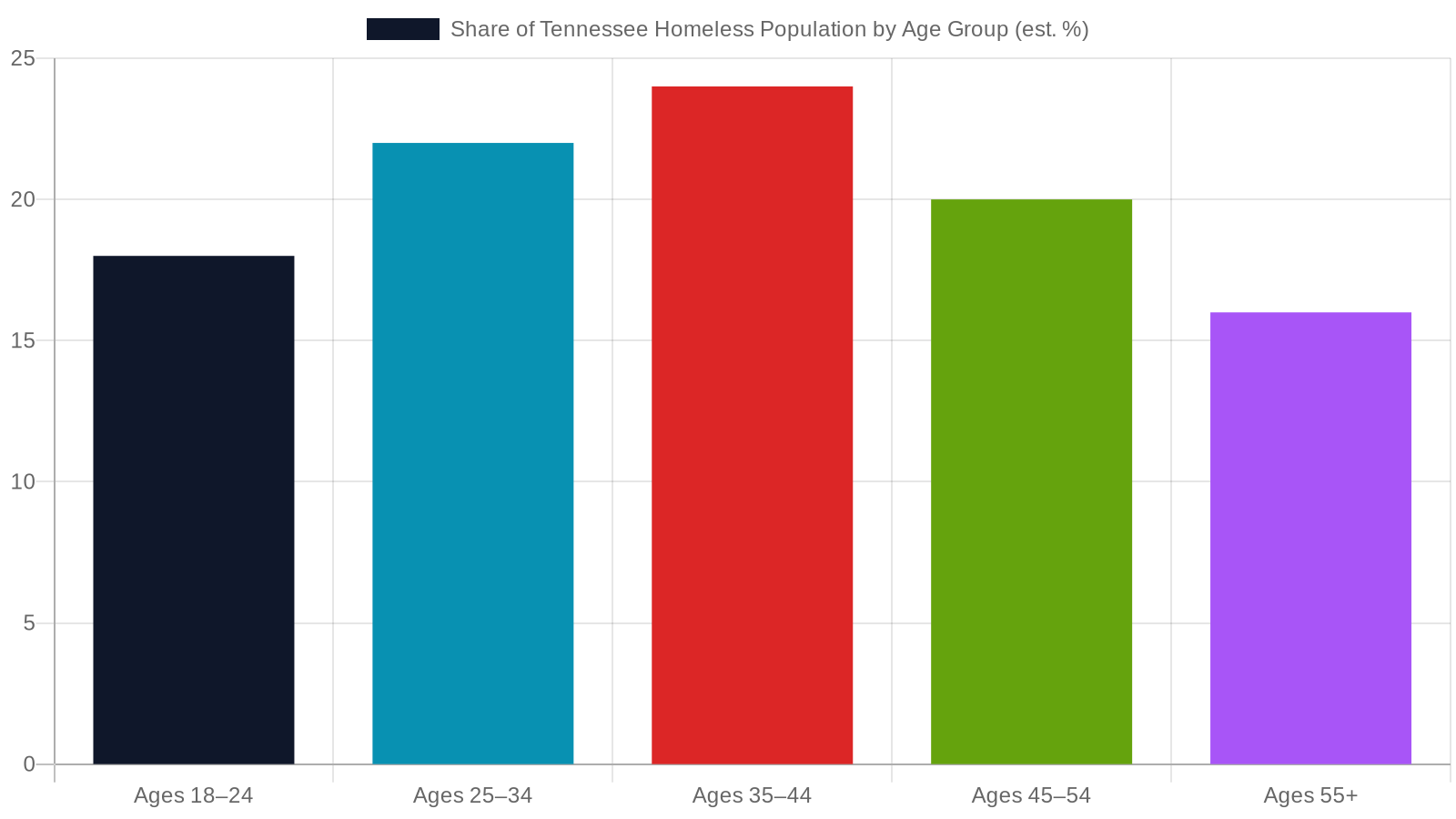
On a single night in January 2023, Tennessee’s Point-in-Time (PIT) count recorded over 8,000 people experiencing homelessness statewide — and young adults ages 18 to 24 represented a significant share of that number. Nationally, HUD estimates that roughly 4.2 million young adults experience some form of homelessness in a given year, including couch-surfing, doubling up, and staying in shelters or on the street.
Tennessee-specific factors — limited affordable housing stock, rural isolation in areas like Upper Cumberland and Northeast Tennessee, and a large foster care system that discharges thousands of youth annually — make the challenge especially acute. Understanding the scale is the first step toward solving it.
Why TAY Need Specialized Supports
Standard adult homeless services often don’t fit young adults. Shelter rules designed for older populations can feel unsafe or alienating. Rapid Rehousing programs may require income documentation that a 19-year-old simply doesn’t have yet. TAY-specific programs recognize that young adults need housing plus: stable housing bundled with education support, job training, life-skills coaching, and mental health care — all delivered in a way that respects their autonomy and lived experience.
Tennessee’s Continuum of Care regions have increasingly adopted TAY-specific strategies, driven in large part by peer advocates inside the Youth Action Board.
2. Tennessee's Continuum of Care: How the System Is Organized

Tennessee doesn’t have one single homeless services system — it has eight regional systems, each coordinated through a Continuum of Care. Knowing how these regions work helps young adults find the right resources in their area and helps advocates understand where to direct their energy.
What Is a Continuum of Care (CoC)?
A Continuum of Care (CoC) is a regional planning body funded and recognized by HUD. Each CoC coordinates homeless services across a geographic area — from street outreach and emergency shelter to transitional housing, rapid rehousing, and permanent supportive housing. CoCs apply for federal McKinney-Vento Act funds and distribute them to local service providers.
Think of a CoC as the backbone infrastructure of a region’s response to homelessness. It doesn’t usually provide services directly; instead, it coordinates the agencies, nonprofits, and government bodies that do — making sure resources reach the people who need them most, including transition-age youth.
Tennessee's Eight CoC Regions
Tennessee is divided into eight Continuum of Care regions, each with its own local YAAB chapter and service ecosystem:
- TN-500 — Memphis / Shelby County
- TN-501 — Nashville / Davidson County
- TN-502 — Knoxville / Knox County
- TN-503 — Chattanooga / Hamilton County
- TN-504 — Jackson / West Tennessee
- TN-506 — Upper Cumberland
- TN-507 — Northeast Tennessee
- TN-509 — Southeast Tennessee
Each region faces unique challenges — urban density in Memphis and Nashville, rural isolation in Upper Cumberland, economic transition in Northeast Tennessee — and each local YAAB tailors its advocacy accordingly.
How CoC Funding Flows to TAY Programs
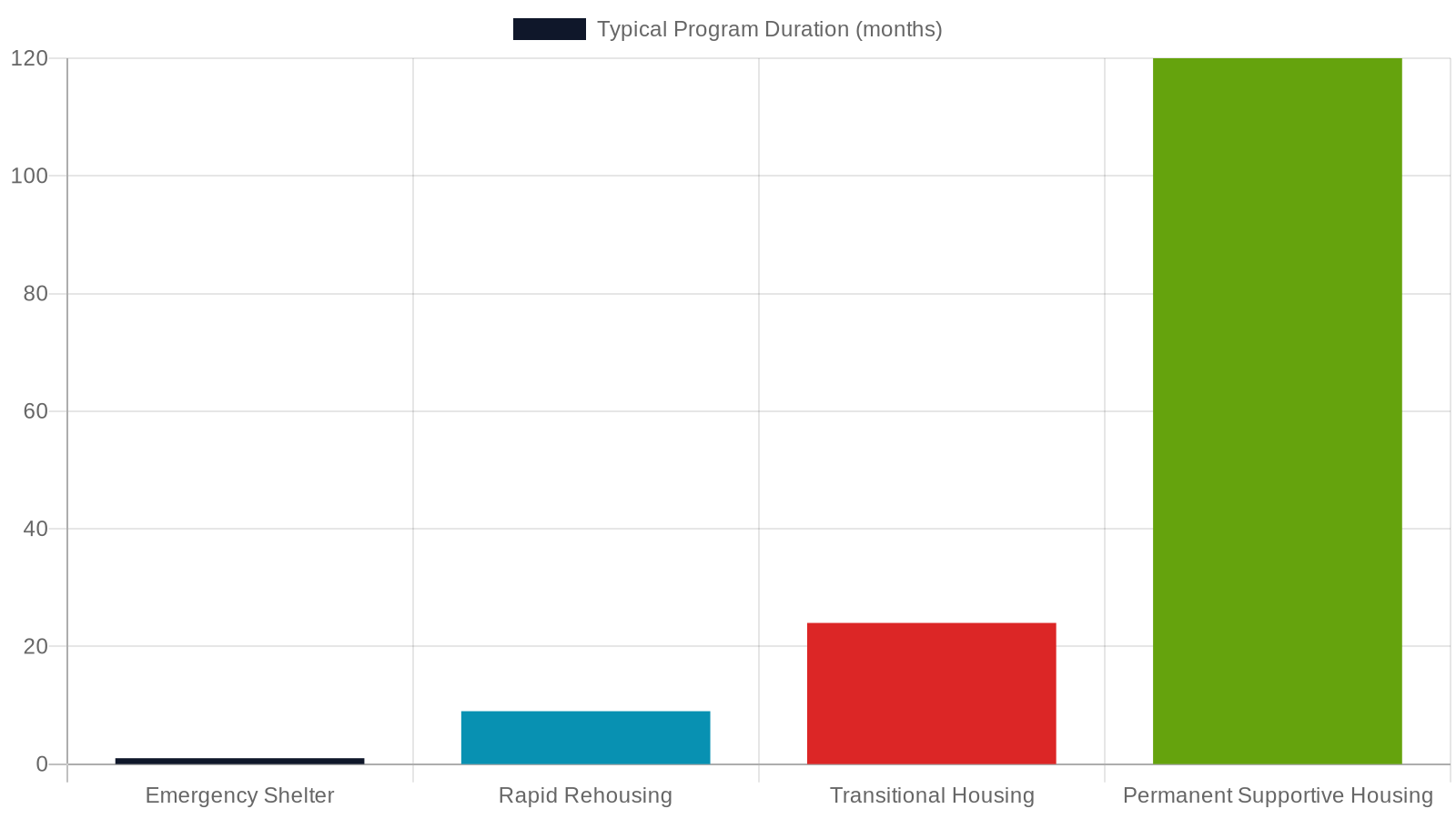
CoCs receive federal funds through HUD’s CoC Program, Emergency Solutions Grants (ESG), and Youth Homelessness Demonstration Program (YHDP) grants. These dollars fund specific program types: Rapid Rehousing (RRH) helps youth move quickly from shelter to their own apartment with short-term rental assistance; Transitional Housing (TH) provides a structured living environment for up to 24 months; and Permanent Supportive Housing (PSH) offers long-term housing with ongoing services for youth with disabilities or complex needs.
Understanding how money moves through the system helps young advocates — including YAAB members — push for more TAY-specific funding at the local and state level.
3. Meet the Youth Action Board: A Peer-Led Network Built by and for TAY

The Youth Action Board of Tennessee is not a program that serves young adults — it’s a network led by young adults. That distinction matters. YAAB flips the traditional service model on its head, putting people with lived experience in the driver’s seat of policy and program design.
Who YAAB Members Are
YAAB members are young adults ages 17 to 25 who have lived experience of homelessness or housing instability. That lived experience isn’t a qualifier to be pitied — it’s a credential. It means YAAB members understand the system from the inside: the shelter rules that don’t work, the gaps in services, the moments when a case manager’s advice missed the mark, and the resources that actually helped.
Members come from every corner of Tennessee — from Memphis’s urban core to the rural hollows of Northeast Tennessee. They represent the full diversity of young people who experience housing instability: youth aging out of foster care, young parents, LGBTQ+ youth who faced family rejection, young adults with justice involvement, and many others.
What YAAB Does Day to Day
YAAB members don’t just sit in meetings. They:
- Advise CoC leadership on which programs are working and which aren’t
- Participate in Point-in-Time counts to help identify peers who are unsheltered
- Testify at city councils and state legislative hearings on youth housing policy
- Co-design programs with service providers to make them more youth-friendly
- Connect peers to housing, employment, education, and mental health resources
- Lead community outreach at schools, shelters, and community events
Every action is grounded in the principle that young people with lived experience should be at the decision-making table — not just as tokens, but as genuine leaders shaping the systems that affect their lives.
The Statewide Structure: Local Chapters, One Voice
Each of Tennessee’s eight CoC regions has a local YAAB chapter that operates within its community while connecting to the statewide network. Local chapters meet regularly, elect their own leadership, and set their own advocacy priorities. The statewide YAAB network coordinates shared campaigns, training opportunities, and policy advocacy at the Tennessee General Assembly level.
This structure means a young adult in Cookeville (Upper Cumberland) has the same peer-advocacy infrastructure as someone in Memphis — and that voices from rural Tennessee carry weight in statewide conversations. Learn more about who YAAB is and how the network was built.
4. Housing Resources and Pathways Available to TAY in Tennessee

Knowing what housing options exist is half the battle. Tennessee’s CoC system funds several distinct program types, each designed for a different stage of a young adult’s journey toward stability. Here’s a plain-language breakdown of what’s available and who it’s for.
Emergency Shelter and Safe Havens
When a young adult needs a safe place tonight, emergency shelter is the first step. Tennessee has TAY-specific shelters in major metros — including Memphis, Nashville, Knoxville, and Chattanooga — as well as general adult shelters that accept youth 18 and older. Youth under 18 may access runaway and homeless youth (RHY) shelters funded through the Family and Youth Services Bureau (FYSB).
Key things to know: many TAY shelters have lower barriers than traditional adult shelters (no sobriety requirement, pets allowed, flexible curfews) because research shows low-barrier approaches keep young people safer and more engaged with services. If a shelter feels unsafe or unwelcoming, you have the right to ask about alternatives.
Rapid Rehousing: Your Own Place, Fast
Rapid Rehousing (RRH) is one of the most effective tools for TAY. The model provides short-term rental assistance — typically 3 to 12 months — plus case management to help a young adult move quickly into their own apartment and build stability. Studies show that over 80% of youth who complete RRH programs remain housed 12 months later.
In Tennessee, RRH programs for TAY are funded through CoC grants and administered by local nonprofits in each region. Eligibility generally requires being 18–24 (some programs serve 17 with parental consent waivers), experiencing literal homelessness, and having some income or a plan to obtain income. Your local YAAB chapter can help you connect with the right program.
Transitional and Permanent Housing Options
Transitional Housing (TH) programs offer a structured living environment — often a shared house or apartment — for up to 24 months, with intensive case management, life-skills training, and support for education and employment goals. These programs are a good fit for young adults who need more time and support before living fully independently.
Permanent Supportive Housing (PSH) is designed for young adults with disabilities or complex behavioral health needs who require long-term housing with ongoing services. PSH removes the clock pressure of transitional programs and provides stability as a foundation for everything else.
Explore the full range of housing and support resources available to Tennessee TAY on the YAAB resources page.
5. Education and Employment: The Two Pillars of Long-Term Stability

Stable housing is the foundation — but education and employment are what make that foundation last. Tennessee’s TAY support network increasingly treats these three things as inseparable, and YAAB members have been central to making that shift happen at the program and policy level.
Education Pathways for TAY in Tennessee
Housing instability often disrupts education — but it doesn’t have to end it. Tennessee offers several pathways for young adults who need to finish high school or earn credentials:
- HiSET (formerly GED): Tennessee uses the HiSET exam for high school equivalency. Testing centers are located across the state, and many CoC-funded programs help cover exam fees for youth experiencing homelessness.
- Tennessee Promise and Tennessee Reconnect: These state scholarship programs cover community college tuition for eligible young adults. Youth who have been in foster care or experienced homelessness may qualify for additional waivers and priority enrollment.
- Dual Enrollment: Some TAY programs partner with community colleges to allow young adults to earn college credits while completing their high school equivalency.
YAAB members have advocated successfully for policies that make Tennessee’s education programs more accessible to youth experiencing homelessness, including McKinney-Vento Act protections that extend to young adults in some programs.
Employment and Workforce Development
Getting a job is rarely as simple as submitting an application — especially when you don’t have a stable address, a work history, or professional references. Tennessee’s TAY support network includes several workforce resources:
- American Job Centers (AJCs): Located in every major Tennessee metro, AJCs offer free job search assistance, resume help, and connections to paid training programs. Youth 16–24 may qualify for WIOA Youth formula funds, which pay for occupational training.
- YouthBuild Tennessee: YouthBuild programs combine construction job training with education and leadership development, serving young adults 16–24 who are out of school and out of work.
- Social Enterprise and Transitional Jobs: Some TAY-serving nonprofits operate social enterprises — cafes, landscaping crews, print shops — that provide paid work experience in a supported environment.
Why YAAB Connects Housing and Economic Mobility
YAAB’s advocacy recognizes that housing alone isn’t enough. A young adult who has an apartment but no income will lose that apartment within months. That’s why YAAB members push for coordinated entry systems that connect youth to education and employment at the same time as housing — not sequentially, but simultaneously.
In several Tennessee CoC regions, YAAB members have helped design intake processes that ask about education and employment goals from day one, ensuring case managers connect young adults to the full ecosystem of support rather than just a bed.
6. Mental Health, Trauma, and Whole-Person Support for Young Adults

You can’t build a stable life if you’re carrying unprocessed trauma without support. Tennessee’s TAY network increasingly understands that mental health care isn’t a luxury add-on — it’s a core component of any effective housing strategy. Here’s what’s available and what YAAB is doing to expand access.
The Mental Health Reality for TAY Experiencing Homelessness
Research consistently shows that young adults experiencing homelessness have significantly higher rates of depression, anxiety, PTSD, and substance use than their housed peers — not because something is wrong with them, but because housing instability is traumatic. Sleeping in unsafe places, losing belongings, experiencing violence or exploitation, and navigating an often-confusing service system all take a real toll.
Nationally, studies estimate that up to 50% of youth experiencing homelessness have a diagnosable mental health condition. In Tennessee, access to mental health care varies significantly by region — urban areas like Nashville and Memphis have more providers, while rural CoC regions like Upper Cumberland and Northeast Tennessee face severe shortages.
Trauma-Informed Care: What It Means and Why It Matters
Trauma-informed care (TIC) is an approach that recognizes the widespread impact of trauma and integrates that understanding into every interaction — from how a shelter staff member greets a new resident to how a case manager structures a meeting. In a trauma-informed program, staff don’t ask “What’s wrong with you?” — they ask “What happened to you?”
YAAB members have been vocal advocates for trauma-informed practices across Tennessee’s CoC system. Through training sessions, program evaluations, and direct feedback to CoC leadership, young adults with lived experience have helped shift shelter cultures toward approaches that feel safer and more respectful.
Mental Health Resources Available to TAY in Tennessee
Several mental health resources are specifically available to or accessible by TAY in Tennessee:
- 988 Suicide and Crisis Lifeline: Call or text 988 anytime for free, confidential crisis support.
- TennCare (Medicaid): Most young adults experiencing homelessness qualify for TennCare, which covers mental health and substance use treatment. Enrollment can often be completed at a shelter or through a CoC partner.
- Community Mental Health Centers (CMHCs): Tennessee has a network of CMHCs that provide sliding-scale or no-cost mental health services. Many have TAY-specific programs or staff.
- Peer Support Specialists: Some CoC programs employ certified peer support specialists — adults with their own lived experience of mental health challenges — who provide one-on-one support to TAY.
7. Aging Out of Foster Care in Tennessee: What You Need to Know

Aging out of foster care is one of the highest-risk pathways to youth homelessness in Tennessee. But it doesn’t have to be. Knowing your rights and the resources available to you can make a real difference — and YAAB members who have walked this path are some of the most powerful voices for change.
The Foster Care Cliff and Housing Risk
In Tennessee, youth in foster care can remain in care until age 21 under the state’s extended foster care program (known as Tennessee Fostering Connections). But many youth exit care earlier — at 18 — and face an abrupt transition with little preparation. Nationally, one in five youth who age out of foster care will experience homelessness within two years of leaving the system.
The reasons are structural: youth aging out often lack family support networks, have limited rental history, and may have experienced placement instability that disrupted their education and employment. Tennessee’s CoC regions have identified former foster youth as a priority population for TAY housing programs.
Tennessee Fostering Connections and Extended Care
If you are currently in foster care in Tennessee, you have the right to remain in care until age 21 if you are:
- Enrolled in and regularly attending high school or a GED program
- Enrolled in post-secondary education or a vocational program
- Employed at least 80 hours per month
- Participating in a program designed to remove barriers to employment
- Unable to do any of the above due to a medical condition
Staying in extended care gives you more time to build the skills and resources you need before living independently. If your caseworker hasn’t discussed this option with you, ask directly — it’s your right.
Chafee Funds and Independent Living Programs
The John H. Chafee Foster Care Program for Successful Transition to Adulthood provides federal funds to states to support youth transitioning out of foster care. In Tennessee, Chafee funds support:
- Independent Living skills training (budgeting, cooking, renting an apartment)
- Education and training vouchers (ETVs) worth up to $5,000 per year for post-secondary education
- Room and board assistance for youth 18–21 who have left foster care
- Aftercare services for youth up to age 23
YAAB members who have aged out of foster care have been especially effective advocates for expanding Chafee-funded services in Tennessee, drawing on their own experiences to make the case for better preparation and longer support timelines.
TAY Housing Program Types at a Glance
Not all housing programs work the same way. Here's a side-by-side look at the four main program types available to transition-age youth in Tennessee's Continuum of Care system.
8. Knowing Your Rights: Legal Protections for TAY Experiencing Homelessness

You have rights — even when you’re experiencing homelessness. Knowing those rights is one of the most empowering things a young adult can do. YAAB members have made legal literacy a priority, because understanding the law is the first step to using it.
The McKinney-Vento Act and Education Rights
The McKinney-Vento Homeless Assistance Act guarantees the right to a free, appropriate public education for children and youth experiencing homelessness. For TAY, this means:
- You can enroll in school without a permanent address
- You can stay in your school of origin even if you move to a different district
- You are entitled to transportation to your school of origin
- Your school must have a homeless liaison who can connect you to services
While McKinney-Vento primarily covers K–12, its protections can extend to young adults in some TAY-specific programs. Ask your case manager or school counselor about your specific situation.
Fair Housing Rights and Tenant Protections
Once you have housing, the law protects you. Under the Fair Housing Act, landlords cannot discriminate based on race, color, national origin, religion, sex, familial status, or disability. Tennessee also has state-level tenant protections, including:
- Landlords must provide written notice before entering your unit (typically 24 hours)
- Security deposits must be returned within 30 days of move-out (minus documented damages)
- Eviction requires a court process — a landlord cannot simply lock you out
If you believe your rights have been violated, contact Tennessee’s Legal Aid Society or a HUD-approved housing counselor. Many provide free services to low-income young adults.
ID, Benefits Access, and Legal Barriers
One of the most practical barriers TAY face is simply not having identification. Without a state ID or birth certificate, it’s nearly impossible to access shelter, employment, or benefits. In Tennessee, several organizations help youth obtain IDs at no cost, including some CoC-funded case management programs.
Young adults experiencing homelessness may be eligible for:
- TennCare (Medicaid) — health insurance
- SNAP (food stamps) — food assistance
- SSI/SSDI — if you have a qualifying disability
- TANF — if you have a dependent child
YAAB members have advocated for simplified enrollment processes and “no wrong door” approaches so that young adults can access multiple benefits through a single point of contact.
9. How YAAB Drives Advocacy and Policy Change Across Tennessee

Advocacy is at the heart of what YAAB does. The network exists not just to connect young adults to existing resources, but to change the systems that create housing instability in the first place. Here’s how YAAB members are driving real policy change across Tennessee.
From Lived Experience to Legislative Testimony
YAAB members don’t just talk about policy in meetings — they show up where policy is made. Members have testified before Tennessee General Assembly committees, presented to HUD regional staff, and participated in national advocacy convenings like the National Alliance to End Homelessness conference.
That direct advocacy has produced real results: expanded TAY-specific funding in several CoC regions, policy changes to shelter intake processes, and increased youth representation on CoC governing boards. When a young adult who has slept on the street walks into a legislative hearing and speaks with clarity and authority, it changes the conversation in ways that data alone cannot.
YAAB's Role in the Coordinated Entry System
The Coordinated Entry System (CES) is the front door to homeless services in each CoC region. When a young adult reaches out for help, CES is supposed to assess their needs and connect them to the most appropriate program. YAAB members have worked to make CES more TAY-friendly by:
- Reviewing and revising assessment tools that felt stigmatizing or irrelevant to young adults
- Advocating for youth-specific assessment pathways within CES
- Pushing for mobile and text-based access to CES for youth who don’t have consistent phone access
- Training outreach workers on how to engage young adults who are skeptical of the system
Explore the full scope of YAAB’s advocacy work and how young adults are shaping Tennessee’s homeless response system.
Data, Research, and Amplifying Youth Voice
YAAB members also contribute to data collection and research that makes the case for better TAY policies. Members participate in Point-in-Time counts, help design surveys, and contribute to reports that CoC leadership use when applying for federal funding.
This isn’t just about numbers — it’s about making sure that the stories behind the numbers are told accurately and with dignity. YAAB members have pushed back on data collection methods that felt dehumanizing and advocated for approaches that treat young adults as partners in research, not just subjects of it.
10. How to Find Your Local YAAB Chapter in Tennessee
YAAB has chapters in all eight of Tennessee’s Continuum of Care regions. Whether you’re in Memphis, Nashville, Knoxville, Chattanooga, Jackson, the Upper Cumberland, Northeast Tennessee, or Southeast Tennessee, there’s a local group of peers ready to connect with you.
YAAB Chapters by Region
Every Tennessee CoC region has a local YAAB chapter. Here’s where to look based on where you are:
- Memphis / Shelby County (TN-500): Serving the greater Memphis metro and surrounding Shelby County communities
- Nashville / Davidson County (TN-501): Covering Nashville and the broader Davidson County area
- Knoxville / Knox County (TN-502): Serving Knoxville and Knox County
- Chattanooga / Hamilton County (TN-503): Covering Chattanooga and Hamilton County
- Jackson / West Tennessee (TN-504): Serving Jackson and the broader West Tennessee region
- Upper Cumberland (TN-506): Covering the Upper Cumberland plateau and surrounding counties
- Northeast Tennessee (TN-507): Serving the Tri-Cities area and surrounding Northeast Tennessee counties
- Southeast Tennessee (TN-509): Covering Southeast Tennessee communities
What to Expect When You Get Involved
Joining a local YAAB chapter doesn’t require a resume or a perfect past. It requires that you are between 17 and 25, that you have some lived experience with housing instability, and that you want to be part of making things better for yourself and your peers.
When you connect with your local chapter, you can expect:
- A welcoming, peer-led environment where your experience is valued
- Regular meetings (in-person and/or virtual) with your regional group
- Opportunities to participate in advocacy, outreach, and program design
- Leadership development training and skill-building workshops
- Connections to housing, employment, and education resources in your area
- A community of people who get it — because they’ve been there too
Connecting Virtually and Across Regions
Not sure which chapter is closest to you, or living somewhere between regions? The statewide YAAB network connects all eight chapters and offers virtual participation options so that geography doesn’t have to be a barrier. Whether you’re in a rural county without a nearby chapter meeting or you’re navigating housing instability and can’t commit to in-person attendance right now, there’s a way to plug in.
Visit the local YAABs page to find your regional chapter and learn how to get connected.
Ready to Get Involved? Your Next Move Starts Here

Whether you’re looking for housing support, wanting to get involved in advocacy, or a service provider looking to partner with youth leaders — YAAB Tennessee has a place for you. Here’s how to take your next step, wherever you’re starting from.
For Young Adults Seeking Housing and Support
If you’re a young adult in Tennessee between 17 and 25 who is experiencing homelessness or housing instability, the most important thing to know is this: you don’t have to figure it out alone. Tennessee’s CoC system has programs specifically designed for people in your situation, and YAAB members in your region can help you navigate them.
Start by reaching out to your local CoC’s Coordinated Entry System — your YAAB chapter can help you find the right contact. You can also explore the full range of resources available to Tennessee TAY on the YAAB website, including housing, employment, education, and mental health supports.
For Young Adults Who Want to Lead and Advocate
If you have lived experience of housing instability and you want to turn that experience into something that helps others, YAAB is the place for you. Members describe joining YAAB as one of the most transformative decisions they’ve made — not just because of the skills they’ve built, but because of the community they’ve found and the real change they’ve been part of making.
You don’t need to have everything figured out. You just need to show up. Visit the YAAB Tennessee homepage to learn more, find your local chapter, and take the first step toward getting involved in the statewide network that’s changing how Tennessee serves transition-age youth.
For Service Providers and CoC Partners
If you’re a case manager, CoC coordinator, or service provider working with transition-age youth in Tennessee, YAAB wants to partner with you. Young adults with lived experience are your most valuable consultants — they can tell you what’s working, what isn’t, and what would actually make a difference.
Reach out through the YAAB contact page to explore partnership opportunities, invite YAAB members to participate in program design, or learn how to support youth leadership in your CoC region. The most effective TAY programs in Tennessee are the ones built with young people — not just for them.
Frequently Asked Questions
What is the Youth Action Board of Tennessee and who can join?
The Youth Action Board (YAAB) of Tennessee is a statewide peer-led network of young adults ages 17 to 25 who have lived experience of homelessness or housing instability. Any young adult in that age range who has experienced housing instability and wants to get involved in advocacy and leadership can join their regional YAAB chapter.
What housing help is available for young adults ages 18 to 25 in Tennessee?
Tennessee's Continuum of Care system funds several TAY-specific programs including emergency shelter, Rapid Rehousing (short-term rental assistance), Transitional Housing (up to 24 months), and Permanent Supportive Housing for youth with disabilities. Access typically starts through your local CoC's Coordinated Entry System.
How do I find homeless services for young adults near me in Tennessee?
Start by contacting your regional Continuum of Care's Coordinated Entry System, which is the single access point for homeless services in each area. You can also visit yaabtn.org to find your local YAAB chapter, whose members can help you navigate the system in Memphis, Nashville, Knoxville, Chattanooga, Jackson, Upper Cumberland, Northeast Tennessee, or Southeast Tennessee.
What rights do I have if I'm a young adult experiencing homelessness in Tennessee?
You have the right to enroll in school without a permanent address under the McKinney-Vento Act, the right to fair housing protections, the right to a court process before any eviction, and the right to apply for TennCare, SNAP, and other benefits. Many CoC-funded programs can help you access free legal aid and ID documents.
I aged out of foster care in Tennessee — what housing help do I qualify for?
Youth who have aged out of Tennessee foster care may qualify for Chafee-funded independent living services, Education and Training Vouchers (ETVs) worth up to $5,000 per year, and TAY-specific Rapid Rehousing or Transitional Housing programs. You may also be eligible to remain in extended foster care until age 21 if you meet certain education or employment criteria.
How is YAAB different from a regular homeless services program?
YAAB is not a direct service program — it's a peer-led advocacy network run by young adults with lived experience of homelessness. Rather than providing shelter or case management directly, YAAB members shape the policies and programs that govern those services, ensuring that the voices of young adults are at the decision-making table in Tennessee's CoC system.