Quick answer: If you're between 17 and 25 and dealing with housing instability or homelessness in Knoxville, Tennessee, you are not alone — and you have real options. Knox County is home to emergency shelters, rapid rehousing programs, workforce development centers, mental health clinics, GED pathways, and peer-led advocacy networks. Key starting points include Volunteer Ministry Center, KARM, Helen Ross McNabb Center, and the local YAAB TN-506 chapter. This guide walks you through 10 specific places to get help, what each one offers, and how to take your first step today.
Why Knoxville Matters for Transition-Age Youth

Knoxville is a mid-sized city with a surprisingly robust network of services for young adults facing housing instability. Whether you just turned 18 and aged out of foster care, left an unsafe living situation, or are simply trying to get stable for the first time, Knox County has programs built with people your age in mind. This section sets the context so the resources that follow make more sense.
The Scale of Youth Homelessness in Knox County
Knox County’s annual Point-in-Time (PIT) count consistently identifies transition-age youth (TAY) — people ages 17 to 25 — as one of the fastest-growing segments of the unhoused population. In the 2023 PIT count for the Knoxville/Knox County Continuum of Care (CoC TN-506), roughly 15–20% of individuals counted were between 18 and 24 years old. Many more go uncounted because they are couch-surfing, staying in cars, or doubling up with friends — situations that are technically homelessness but rarely show up in shelter data.
Understanding the local landscape is the first step to navigating it. Knoxville’s CoC is coordinated through the Community Coalition on Homelessness (CCH), which connects dozens of service providers across the region.
What 'Transition-Age Youth' Actually Means Here
The term transition-age youth (TAY) refers specifically to young adults ages 17 to 25 who are navigating the gap between adolescence and stable adulthood — often without a family safety net. This includes youth aging out of Tennessee’s foster care system (DCS custody ends at 18, with extended support available to 21), young people fleeing unsafe home environments, and those who simply ran out of options.
Federal programs like HUD’s Youth Homelessness Demonstration Program (YHDP) and Tennessee’s own Coordinated Entry system treat TAY as a distinct population with distinct needs — which means there are resources designed specifically for you, not just general adult shelter beds. You can learn more about the broader picture at YAAB Tennessee’s youth homelessness overview.
1. Volunteer Ministry Center (VMC) — Your First Stop for Housing Help

If you only remember one name from this entire article, make it the Volunteer Ministry Center. It serves as both a direct service provider and an access point for Knoxville’s Coordinated Entry system — which is the official on-ramp to most federally funded housing programs in the region. Starting here saves time and connects you to a case manager who can map out your options.
What VMC Offers TAY Specifically
The Volunteer Ministry Center (VMC), located at 511 N. Broadway in Knoxville, is one of the most comprehensive one-stop service hubs in East Tennessee. For transition-age youth, VMC offers:
- Coordinated Entry assessment — the official gateway to most HUD-funded housing programs in Knox County
- Rapid Rehousing assistance — short-term rental subsidies plus case management to help you move into your own place
- Street outreach — VMC’s outreach team actively connects with unsheltered youth across Knoxville
- Basic needs — meals, hygiene supplies, laundry, and mail services while you stabilize
VMC is open Monday through Friday, 8 a.m. to 4 p.m. Walk-ins are accepted for many services. Phone: (865) 524-3926.
How Coordinated Entry Works in TN-506
Coordinated Entry is the system Knox County uses to match people experiencing homelessness to the right housing resources in the right order. Think of it as a triage process — not a waitlist. When you complete a VI-SPDAT or youth-specific assessment at VMC (or another access point), your information goes into a shared system that CoC partners use to prioritize housing placements.
For youth, the assessment is shorter and less invasive than the adult version. You do not need an ID to start the process, though having one speeds things up. If you don’t have a Tennessee ID, VMC staff can connect you with free ID recovery services through Tennessee’s Department of Safety and Homeland Security.
2. Knox Area Rescue Ministries (KARM) — Emergency Shelter and Beyond

KARM has served Knoxville since 1960 and is one of the most established emergency shelter providers in East Tennessee. While it serves all ages, its low-barrier intake policy and range of programs make it a realistic option for transition-age youth who need a safe place tonight — and a path toward something more stable tomorrow.
Emergency Shelter Options at KARM
Knox Area Rescue Ministries (KARM) operates the largest emergency shelter system in Knox County, with separate facilities for men, women, and families. For transition-age youth, the most relevant options are:
- Men’s Hope Center (816 N. 4th Ave) — accepts males 18 and older; includes dorm-style shelter, meals, and case management
- Women’s Hope Center — accepts women and female-identifying youth 18 and older
- KARM Stores — thrift stores where you can access clothing vouchers for employment interviews or school
KARM’s emergency shelter is low-barrier, meaning you don’t need to be sober or have ID to access a bed on your first night. Call their 24-hour crisis line at (865) 673-6540.
KARM's Restoration Programs for Young Adults
Beyond emergency beds, KARM runs long-term restoration programs that include life-skills classes, financial literacy coaching, employment readiness, and spiritual support (participation in faith programming is voluntary). For young adults who want a structured environment while they build stability, these programs can last 6 to 18 months and include transitional housing on-site.
KARM also partners with local employers to provide job placement assistance. In 2022, KARM reported placing over 200 individuals into employment through their workforce programs — a significant pipeline for TAY looking to earn their first stable paycheck in Knoxville.
3. Helen Ross McNabb Center — Mental Health and Substance Use Support

Mental health is not a luxury — it’s infrastructure. For young adults who have experienced homelessness, foster care, abuse, or chronic stress, getting mental health support is often the thing that makes everything else (housing, jobs, school) actually stick. The Helen Ross McNabb Center is the primary community mental health provider for Knox County and has specific programs designed for young adults.
Youth-Focused Mental Health Services
The Helen Ross McNabb Center is one of Tennessee’s largest community mental health organizations, with a major presence in Knoxville. For transition-age youth, key services include:
- Outpatient therapy — individual and group counseling for anxiety, depression, trauma, and more
- Crisis stabilization — the McNabb Center operates a 24/7 crisis line at (865) 539-2409 and a walk-in Crisis Stabilization Unit (CSU) at 1520 Cherokee Trail
- Assertive Community Treatment (ACT) — intensive, mobile support for young adults with serious mental illness who need help in the community, not just a clinic
Sliding-scale fees and TennCare (Medicaid) are accepted. If you don’t have insurance, staff can help you apply for TennCare on the spot.
Substance Use Recovery Programs
Substance use and housing instability are deeply connected — not because young people are reckless, but because trauma, stress, and lack of support make coping harder. McNabb Center’s Alcohol and Drug Treatment Services include outpatient counseling, Medication-Assisted Treatment (MAT) for opioid use disorder, and peer recovery coaching.
Critically, McNabb Center uses a harm reduction approach — you don’t have to be fully sober to access services. This is especially important for TAY who might avoid help because they fear judgment or losing housing access. Recovery is a process, and McNabb Center meets you where you are.
4. Tennessee Department of Children's Services (DCS) — Extended Foster Care

If you’ve been in Tennessee’s foster care system, the state has specific legal obligations to support you through young adulthood — obligations that go well beyond your 18th birthday. Many youth age out without knowing the full range of benefits they’re entitled to. This section breaks down what DCS offers and how to claim it before the window closes.
Fostering Futures: Support Until Age 21
If you were in Tennessee DCS custody before turning 18, you may qualify for Fostering Futures — Tennessee’s extended foster care program that keeps support active until age 21. Benefits include:
- Continued monthly stipend and housing assistance
- Health insurance through TennCare until age 26
- Educational support, including tuition assistance at Tennessee public colleges and universities
- A dedicated case manager who helps with life skills, employment, and housing transitions
Enrollment in Fostering Futures is voluntary — you have to opt in. If you aged out at 18 without enrolling, contact the Knox County DCS office at (865) 594-5800 to ask about re-enrollment options before you turn 21.
Tennessee's Independent Living Program
Even if you are no longer in DCS custody, Tennessee’s Independent Living Program offers services to current and former foster youth up to age 23. Services include:
- Life-skills workshops (budgeting, cooking, renting an apartment)
- Educational and vocational guidance
- Connections to the Education and Training Voucher (ETV) — up to $5,000 per year for post-secondary education or vocational training
The ETV is a significant financial resource that many eligible youth never claim simply because they didn’t know it existed. Ask your DCS case manager or a VMC case manager to help you apply.
5. Knoxville's WorkSource Tennessee — Jobs and Career Pathways

Stable income is the engine of stable housing. Knoxville’s WorkSource Tennessee center connects young adults to paid work experiences, free job training, and career coaching — all at no cost. The WIOA Youth Program in particular is designed for people your age who are dealing with real barriers, and it pays you while you train.
American Job Center Services for TAY
The WorkSource Tennessee American Job Center in Knoxville (located at 814 Division St.) is a federally funded one-stop employment center. For transition-age youth, free services include:
- Résumé writing and interview coaching
- Job search computers and Wi-Fi — critical if you don’t have reliable internet access
- WIOA Youth Program — the Workforce Innovation and Opportunity Act (WIOA) funds paid work experiences, occupational skills training, and mentoring specifically for youth ages 16–24 who face barriers to employment
- Apprenticeship connections — links to registered apprenticeships in construction, healthcare, and IT
Call (865) 594-3900 or walk in Monday–Friday, 8 a.m. to 4:30 p.m.
WIOA Youth Program: What You Can Actually Earn
The WIOA Youth Program is one of the most underutilized resources for TAY in Knox County. Eligible participants can receive:
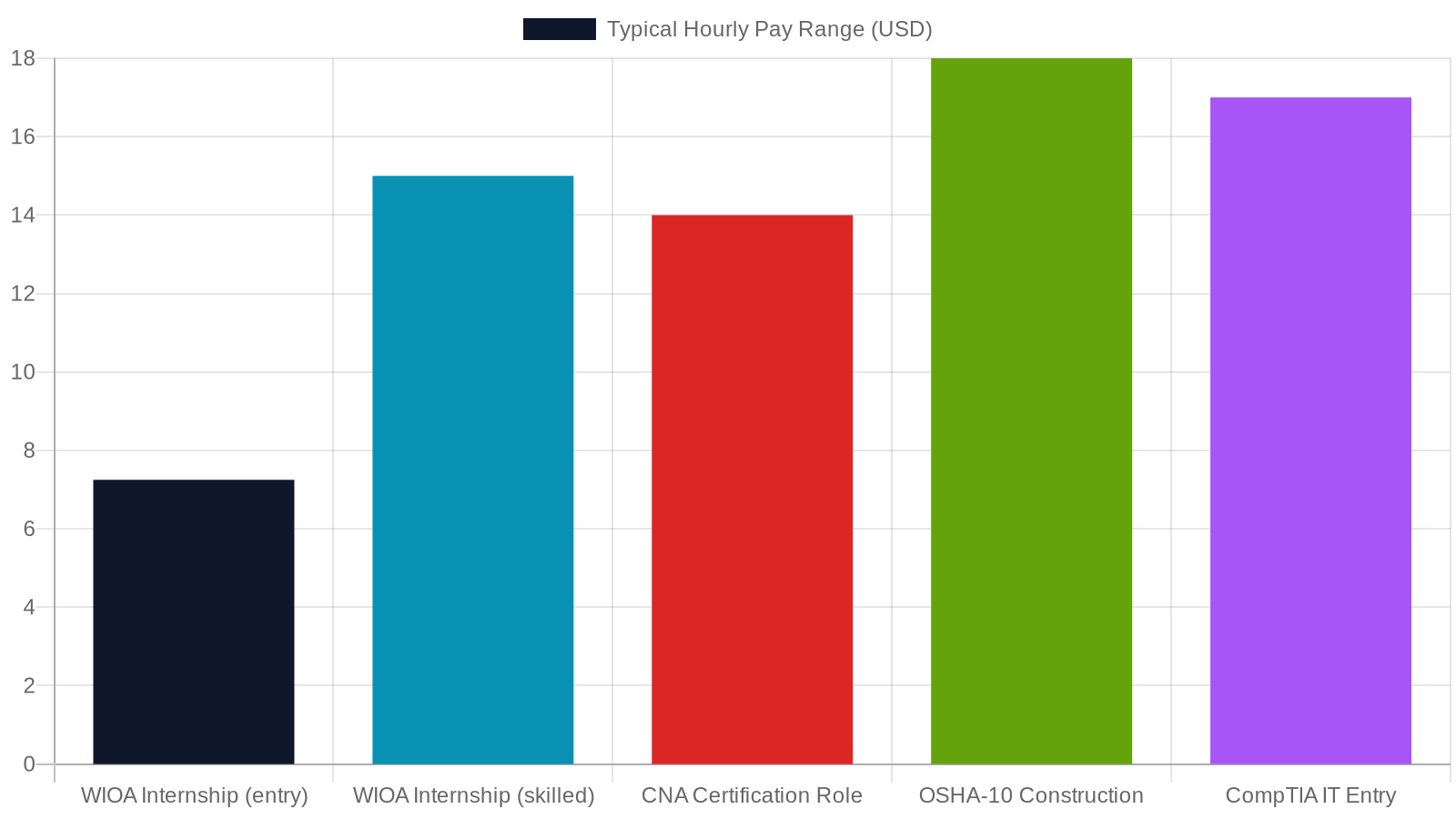
- Paid internships — typically 8–26 weeks at or above Tennessee’s minimum wage ($7.25/hr, though many placements pay $12–$15/hr)
- Occupational certifications — OSHA-10, forklift, CNA, CompTIA IT Fundamentals, and more — fully paid
- Supportive services — transportation stipends, work clothing, and childcare assistance during training
Eligibility is based on income and barriers, not grades or work history. Being homeless or housing-unstable automatically qualifies you as a low-income individual with barriers under WIOA definitions.
6. Knoxville's Education Pathways — GED, College, and Vocational Training

Education opens doors — and in Tennessee, those doors are more affordable than most people realize. Whether you want to finish your high school credential, earn a technical certificate, or start a two-year degree, Knoxville has free and low-cost pathways designed for young adults who are working and navigating life at the same time.
Getting Your GED or HiSET in Knox County
Not having a high school diploma is one of the most common barriers TAY face when applying for jobs or housing. In Knox County, you can earn your GED or HiSET credential for free or low cost through:
- Pellissippi State Community College Adult Education — free GED prep classes, flexible scheduling, and testing at the Knoxville campus. Call (865) 694-6400.
- Knox County Schools Adult High School — earn an actual high school diploma (not just a GED) through evening classes. Tuition-free for Knox County residents.
- Literacy Council of Knoxville — free one-on-one tutoring for foundational reading and math skills before GED prep
Many of these programs offer childcare and transportation assistance — ask when you enroll.
Tennessee Promise and the Tennessee Reconnect Grant
Tennessee has two powerful free college programs that TAY should know about:
- Tennessee Promise — covers tuition and fees at any Tennessee community college or college of applied technology (TCAT) for recent high school graduates or GED completers under 23. Apply at tnpromise.gov.
- Tennessee Reconnect — the same free tuition benefit for adults 18 and older who don’t already have a college degree. No age cap. Apply at tnreconnect.gov.
Both programs are last-dollar scholarships, meaning they fill the gap after Pell Grant and other aid. For many TAY, the total out-of-pocket cost for a two-year degree or technical certificate is $0. Pellissippi State and Tennessee College of Applied Technology (TCAT) Knoxville are both excellent options in the area.
7. Healthcare Without Insurance — Free and Low-Cost Clinics in Knoxville

Healthcare is a basic need, not a privilege — and in Knoxville, there are real options for young adults who are uninsured or underinsured. Skipping medical or mental health care because of cost is a trap that makes everything else harder. Here’s where to go in Knox County when you don’t have insurance or can’t afford a copay.
Cherokee Health Systems
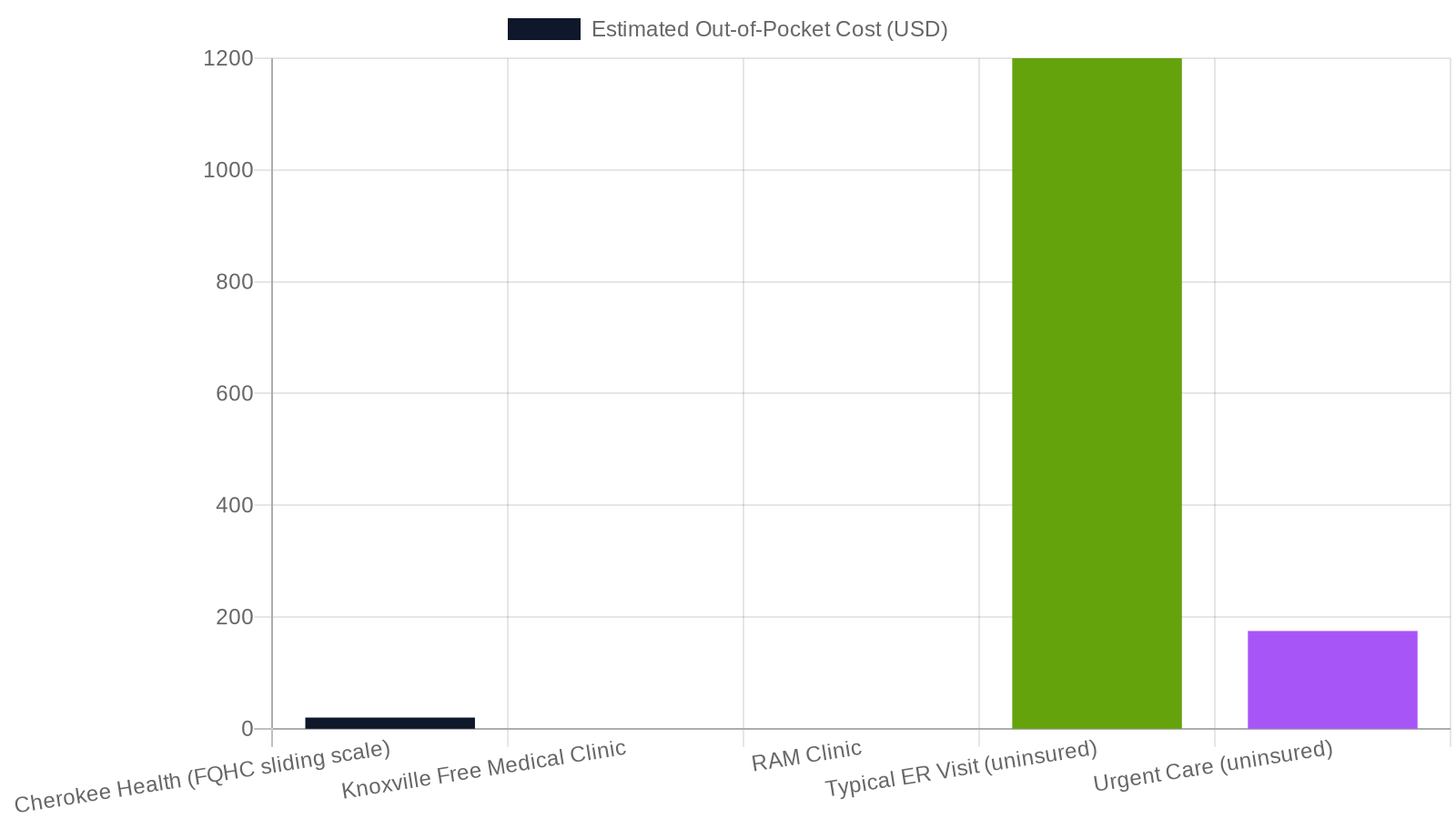
Cherokee Health Systems is a Federally Qualified Health Center (FQHC) with multiple Knoxville locations. FQHCs are required by federal law to serve patients regardless of ability to pay, using a sliding-fee scale based on income. For a young adult with no income, a primary care visit can cost as little as $20 or less.
Cherokee offers:
- Primary and preventive care
- Dental services
- Integrated behavioral health — a therapist is embedded in the same clinic as your doctor, so mental health support is built in
- Reproductive health and STI testing
- TennCare enrollment assistance
Main Knoxville location: 2018 Western Ave. Call (865) 524-0491 for appointments.
Remote Area Medical (RAM) and Free Clinics
Remote Area Medical (RAM), headquartered in Knoxville, hosts free multi-day clinics in the region where volunteers provide dental, vision, and medical care at no cost. RAM clinics are typically announced 4–6 weeks in advance — check ram-usa.org for the schedule.
The Knoxville Free Medical Clinic (1801 Clinch Ave) provides free primary care to uninsured adults, including TAY. Services include chronic disease management, prescriptions at reduced cost, and referrals. No appointment needed for walk-in hours on Tuesday and Thursday evenings.
If you are uninsured and under 26, you may also qualify for TennCare (Tennessee Medicaid). A VMC or Cherokee Health case manager can help you apply — the process takes about 45 minutes.
Knoxville TAY Services at a Glance — 10-Point Comparison
Use this table to quickly match your most urgent need to the right organization in Knox County. Most services are free or low-cost for transition-age youth.
8. Food, Transportation, and Basic Needs Resources

Stability isn’t just about housing — it’s about having enough food to eat and being able to get where you need to go. These practical resources address the day-to-day survival needs that can derail everything else if they go unmet. Knowing where to get a free meal or a bus pass can make the difference between making it to a job interview or not.
Food Access in Knox County
Food insecurity and housing instability go hand in hand. Key food resources for TAY in Knoxville include:
- Second Harvest Food Bank of East Tennessee — operates a network of over 300 partner agencies across the region. Use their agency locator at secondharvestknox.org to find the nearest pantry.
- KARM and VMC — both serve free daily meals. No ID required.
- SNAP (Food Stamps) — young adults 18–49 without dependents face a 3-month time limit unless they meet work requirements. However, if you are homeless or housing-unstable, you may qualify for an exemption. A VMC case manager can help you apply and document your status.
- Knoxville Community Food Pantries — neighborhood-level pantries operated by churches and community groups. Many are walk-in, no-questions-asked.
Getting Around Knoxville Without a Car
Transportation is a major barrier for TAY trying to reach services, jobs, and school. In Knoxville:
- Knoxville Area Transit (KAT) — fixed-route bus service covers most of the city. A single ride is $1.00; a monthly pass is $40. Low-income riders may qualify for a reduced-fare pass through KAT’s program.
- KAT’s Zero-Fare Zones — several downtown routes are free to ride.
- WIOA transportation stipends — if you’re enrolled in a WIOA Youth Program, you may receive a monthly bus pass or mileage reimbursement.
- Bikes and e-scooters — Bird and Spin scooters operate in downtown Knoxville; both have low-income discount programs ($5–$10/month unlimited).
9. Know Your Rights — Legal Aid and Tenant Protections in Knoxville

Housing instability often comes with legal complications — evictions, criminal records, denied benefits, unsafe living conditions. Knowing your rights and having access to free legal help can change outcomes dramatically. In Knoxville, there are organizations whose entire job is to make sure young adults aren’t taken advantage of by landlords, employers, or government agencies.
Legal Aid Society of Middle Tennessee and the Cumberlands
The Legal Aid Society of Middle Tennessee and the Cumberlands serves Knox County and provides free civil legal help to low-income individuals, including TAY. Services relevant to young adults include:
- Eviction defense — if you receive an eviction notice, you have legal rights. Tennessee law requires a 14-day notice to pay or vacate for nonpayment of rent. Legal Aid can help you respond.
- Record expungement — certain juvenile and adult criminal records can be expunged in Tennessee, which can remove barriers to housing and employment
- Benefits appeals — if you were denied SNAP, TennCare, or other benefits, Legal Aid can help you appeal
Call their statewide intake line at 1-800-238-1443 or apply online at las.org.
Tenant Rights Every TAY Renter Should Know
Tennessee’s landlord-tenant law (Tennessee Code Annotated Title 66) gives renters specific protections, even if you’re young or on a month-to-month lease:
- Landlords must give 30 days written notice before terminating a month-to-month tenancy without cause
- Security deposits must be returned within 30 days of move-out with an itemized deduction list
- Landlords cannot legally lock you out, remove your belongings, or shut off utilities as a way to force you to leave — this is called self-help eviction and is illegal in Tennessee
- You have the right to a habitable unit — if your landlord refuses to make essential repairs (heat, plumbing, safety), you have legal remedies
Knowing these rights before you sign a lease — or before a landlord tries to intimidate you — is one of the most powerful tools you have.
10. YAAB TN-506 — Peer Leadership and Advocacy in Knoxville

Every other resource on this list is something you go to for help. YAAB TN-506 is something you join to become the help — for yourself and for others. The Youth Action Board is a peer-led network of young adults across Tennessee who use their own lived experience to make the systems that serve TAY actually work. In Knoxville, the TN-506 chapter is an active voice in the Knox County CoC.
What the Local YAAB Does
The Youth Action Board (YAAB) TN-506 is the Knoxville/Knox County chapter of the statewide YAAB Tennessee network. It is made up of young adults ages 17 to 25 with lived experience of homelessness and housing instability — people who have been where you are and are now helping shape the systems that affect your life.
YAAB TN-506 members:
- Advise the Knox County Continuum of Care on housing policy and program design
- Participate in local and state advocacy, including testimony at the Tennessee General Assembly
- Connect peers to services and navigate the CoC system alongside them
- Receive training, stipends, and leadership development opportunities
Learn more and connect with the Knoxville chapter at YAAB TN-506’s local page.
Why Peer Support Changes Everything
Research consistently shows that peer-led support is more effective than professional-only models for transition-age youth — not because professionals don’t matter, but because someone who has lived your experience carries a different kind of credibility and trust. YAAB members aren’t case managers; they’re peers who have figured some things out and want to share what they know.
Joining YAAB isn’t just about getting help — it’s about having power. When you sit at the table where housing decisions are made, you change what gets decided. That’s not charity. That’s leadership. If you’re in Knoxville and want to get involved, the YAAB is one of the most direct ways to turn your own experience into something that helps the next person behind you.
Your Next Move — How to Start Accessing Services in Knoxville Today

You now have a map of 10 real, accessible places to get help in Knoxville, Tennessee — from emergency shelter tonight to a two-year degree for free. The hardest part is usually the first step. This section gives you the clearest possible path to taking it, whether you need something right now or you’re planning ahead.
The Three-Step Quick-Start Plan
If you’re reading this because you need help right now, here’s the simplest path forward:
- Step 1: Call or walk into VMC (511 N. Broadway, (865) 524-3926) to complete a Coordinated Entry assessment. This is your on-ramp to housing programs.
- Step 2: Call KARM’s 24-hour line ((865) 673-6540) if you need a safe place to sleep tonight. You don’t need ID or sobriety to get a bed.
- Step 3: Explore the full resource directory — visit YAAB Tennessee’s statewide resources page to find additional tools, program listings, and guides organized by region and need.
You don’t have to figure all of this out at once. Start with one call, one visit, one step. The resources are there — and so are people who want to help you use them.
Get Connected Across Tennessee
If you’re in Knoxville but have connections to other parts of Tennessee — or if you’re reading this from Memphis, Nashville, Chattanooga, Jackson, or anywhere else in the state — YAAB has local chapters across all of Tennessee’s Continuum of Care regions. Each region has its own set of services, shelters, and advocacy networks.
To find your local YAAB chapter or explore what’s available statewide, visit the YAAB local chapters page. You can also learn more about how YAAB is working to change policy and build power for TAY across Tennessee at the YAAB advocacy page. No matter where you are in Tennessee, you are not navigating this alone.
Frequently Asked Questions
Where can I find emergency shelter in Knoxville if I'm under 25?
Knox Area Rescue Ministries (KARM) operates 24/7 emergency shelter for adults 18 and older and accepts walk-ins without requiring ID or sobriety. Call their crisis line at (865) 673-6540. The Volunteer Ministry Center (VMC) also connects youth to shelter and housing programs through Knoxville's Coordinated Entry system.
What is Coordinated Entry and how do I access it in Knox County?
Coordinated Entry is the system Knox County uses to assess and match people experiencing homelessness to the right housing programs. The main access point is the Volunteer Ministry Center at 511 N. Broadway. Walk-ins are accepted Monday–Friday, 8 a.m. to 4 p.m. You do not need an ID to start the process.
Can I get free healthcare in Knoxville if I don't have insurance?
Yes. Cherokee Health Systems offers sliding-scale primary care (as low as $20 per visit) and accepts TennCare. The Knoxville Free Medical Clinic provides completely free care on Tuesday and Thursday evenings with no appointment needed. Remote Area Medical (RAM) also hosts periodic free dental, vision, and medical clinics in the region.
How do I get my GED for free in Knoxville, Tennessee?
Pellissippi State Community College's Adult Education program offers free GED and HiSET preparation classes at its Knoxville campus. Knox County Schools also offers a free Adult High School diploma program through evening classes. After earning your credential, Tennessee Promise and Tennessee Reconnect can cover tuition at a community college or TCAT at no cost.
What is the YAAB and how do I join the Knoxville chapter?
The Youth Action Board (YAAB) is a statewide network of young adults ages 17–25 with lived experience of homelessness who advise policymakers and connect peers to services. The Knoxville chapter is YAAB TN-506. You can learn more and get connected at yaabtn.org/local-yaabs/tn-506/. Members receive training, stipends, and leadership development opportunities.
I aged out of foster care in Tennessee — what benefits am I still entitled to?
If you were in Tennessee DCS custody before 18, you may qualify for Fostering Futures, which provides housing assistance, a monthly stipend, and TennCare health coverage until age 26. The Education and Training Voucher (ETV) offers up to $5,000 per year for college or vocational training. Contact Knox County DCS at (865) 594-5800 or ask a VMC case manager to help you apply before you turn 21.