Quick answer: The Tennessee Youth Action Board (YAAB) is a statewide network of young adults ages 17 to 25 with lived experience of homelessness who shape housing policy, expand services, and build leadership across all of Tennessee's Continuum of Care regions. YAAB's active projects span housing advocacy, peer navigation programs, data collection reform, mental health access, employment pathways, foster-care transition support, and more — all led by and for transition-age youth across Memphis, Nashville, Knoxville, Chattanooga, Jackson, the Upper Cumberland, and Northeast Tennessee.
What Is the Tennessee Youth Action Board and Why Does It Matter?

Before diving into specific projects, it helps to understand what the Youth Action Board of Tennessee (YAAB) actually is and why its statewide work is different from a typical nonprofit program. YAAB is a peer-led advisory body embedded inside Tennessee’s Continuum of Care infrastructure — which means its projects carry real institutional weight, not just symbolic representation.
A Network Built on Lived Experience
YAAB Tennessee is not a program designed for young people from the outside — it is a movement built <em by young people from the inside. Every member is between 17 and 25 years old and has personal experience with homelessness or housing instability. That lived experience is treated as expertise, not a deficit. When a YAAB member walks into a policy meeting, they bring knowledge that no researcher or administrator can replicate.
Across Tennessee’s eight Continuum of Care (CoC) regions — including Memphis/Shelby County (TN-500), Nashville/Davidson County (TN-501), Knoxville/Knox County (TN-502), Chattanooga/Hamilton County (TN-503), Jackson/West Tennessee (TN-504), Upper Cumberland (TN-506), Northeast Tennessee (TN-507), and the Balance of State (TN-509) — local YAABs feed into a statewide network that amplifies youth voices at every level.
Why Transition-Age Youth Need Their Own Seat at the Table
Transition-age youth (TAY), generally defined as ages 16 to 24, represent a distinct population within the homeless services system. According to the 2023 Annual Homeless Assessment Report, approximately 35,000 unaccompanied youth experience homelessness on any given night across the United States. In Tennessee, the most recent Point-in-Time counts consistently show youth making up roughly 8 to 12 percent of the total homeless population — yet historically, system design decisions were made without their input.
YAAB exists to close that gap. By embedding youth advisors inside CoC governance structures, YAAB ensures that the people most affected by homelessness policy have a direct line to the people who write it.
1. Youth-Centered Housing Policy Advocacy

Housing policy is the heartbeat of YAAB’s statewide work. Young adults with lived experience of homelessness understand better than anyone that the rules governing who gets housed — and how quickly — can mean the difference between stability and another night without shelter. YAAB’s housing advocacy projects operate at both the local CoC level and the state policy level simultaneously.
Pushing for Low-Barrier and Youth-Specific Housing Units
One of YAAB’s most consistent statewide priorities is advocating for low-barrier housing options that don’t require young people to jump through impossible hoops — like credit checks, rental history, or co-signers — just to get a roof over their heads. Many shelters and transitional housing programs were designed with older adults in mind, creating gaps that leave youth cycling between couch-surfing, cars, and the street.
YAAB members have testified before local CoC boards and state legislative committees to push for dedicated youth-specific units within Rapid Rehousing and Permanent Supportive Housing programs. In practical terms, this means advocating for funding allocations that ring-fence a percentage of new housing vouchers for the 17-to-25 age group.
Shaping Tennessee's Coordinated Entry System for Youth
Tennessee’s Coordinated Entry System (CES) is the front door to homeless services — it’s how someone gets assessed, prioritized, and connected to housing. YAAB members across the state have worked to identify where that front door is effectively locked for young adults: assessment tools that don’t capture youth-specific vulnerabilities like LGBTQ+ identity, aging out of foster care, or survival sex work.
YAAB’s advocacy has pushed CoC partners to adopt the Transition Age Youth Vulnerability Index – Service Prioritization Decision Assistance Tool (TAY-VI-SPDAT) and to train frontline staff on trauma-informed, youth-specific intake practices. This isn’t abstract policy work — it directly changes who gets housed first.
2. Peer Navigation and Peer Support Programs

Some of the most powerful work YAAB does doesn’t happen in a policy meeting — it happens one-on-one, when a young person who has been through the system helps another young person find their way through it. YAAB’s peer navigation projects are built on a simple but radical idea: lived experience is a qualification, not a disqualifier.
What a Peer Navigator Actually Does
A peer navigator is a young adult who has been through the homeless services system and now helps other young people move through it — not as a caseworker, but as someone who genuinely gets it. YAAB has championed the development and expansion of paid peer navigator roles across Tennessee’s CoC regions, arguing that peer support is not just a nice-to-have but a proven, evidence-based intervention.
Research from the Homeless Youth Research Program shows that youth are significantly more likely to engage with services when they are introduced by a peer rather than a professional. YAAB members have used this data in budget conversations to secure funding for peer navigator positions in at least four CoC regions, with ongoing advocacy in the remaining regions.
Training the Next Generation of Peer Leaders
YAAB doesn’t just place peer navigators — it builds their capacity. The statewide board has developed and piloted peer leadership training curricula that cover motivational interviewing basics, trauma-informed communication, boundaries, self-care, and how to navigate the CoC system on behalf of a peer. These trainings are designed to be accessible to young adults who may not have a GED or college degree, centering practical skills over credentials.
Graduates of YAAB’s peer leadership training become stronger advocates within their own communities and often move into paid roles with CoC partner agencies — creating a pipeline from lived experience to professional employment in the social services sector.
3. Data Collection Reform and Youth-Inclusive HMIS
It might not sound glamorous, but data reform is one of the most impactful projects YAAB works on statewide. The way communities count, categorize, and track young people experiencing homelessness directly shapes how much funding flows to youth programs — and which young adults get prioritized for housing. YAAB members have become unexpected experts in data advocacy, and their work is changing how Tennessee measures the problem.
Why Bad Data Means Bad Policy
The Homeless Management Information System (HMIS) is the database that CoCs use to track who is experiencing homelessness, what services they received, and what outcomes they achieved. The problem? For years, HMIS data on youth was incomplete, inconsistently collected, and often failed to capture the specific circumstances — like LGBTQ+ identity, foster care history, or trafficking victimization — that drive youth homelessness in the first place.
YAAB members have been vocal in pointing out that you can’t solve a problem you’re not measuring correctly. Across multiple CoC regions in Tennessee, YAAB has pushed for expanded HMIS data fields, better intake training, and regular youth-specific data pulls that allow communities to see exactly how many young adults are in the system and what’s happening to them.
Youth Counts: Improving Point-in-Time Data
The annual Point-in-Time (PIT) count is a one-night snapshot of homelessness in every community. Youth are notoriously undercounted in PIT counts because they often avoid shelters, sleep in hidden locations, or don’t identify as homeless even when they are. YAAB has worked with CoC partners across Tennessee to design youth-specific PIT count strategies — including youth-led outreach teams, counts at drop-in centers and schools, and online survey tools that reach couch-surfing youth who would never show up at a shelter.
Better counts mean better funding formulas. When Tennessee communities can demonstrate the true scale of youth homelessness, they are better positioned to compete for federal HUD funding specifically designated for youth programs.
4. Mental Health Access and Trauma-Informed Care Advocacy

You cannot talk about youth homelessness without talking about mental health. Trauma, instability, and the daily stress of not knowing where you’ll sleep tonight take a real toll — and Tennessee’s mental health system has not always been equipped to meet young people where they are. YAAB’s mental health advocacy projects are pushing for systemic change, not just individual referrals.
Closing the Mental Health Gap for Homeless Youth
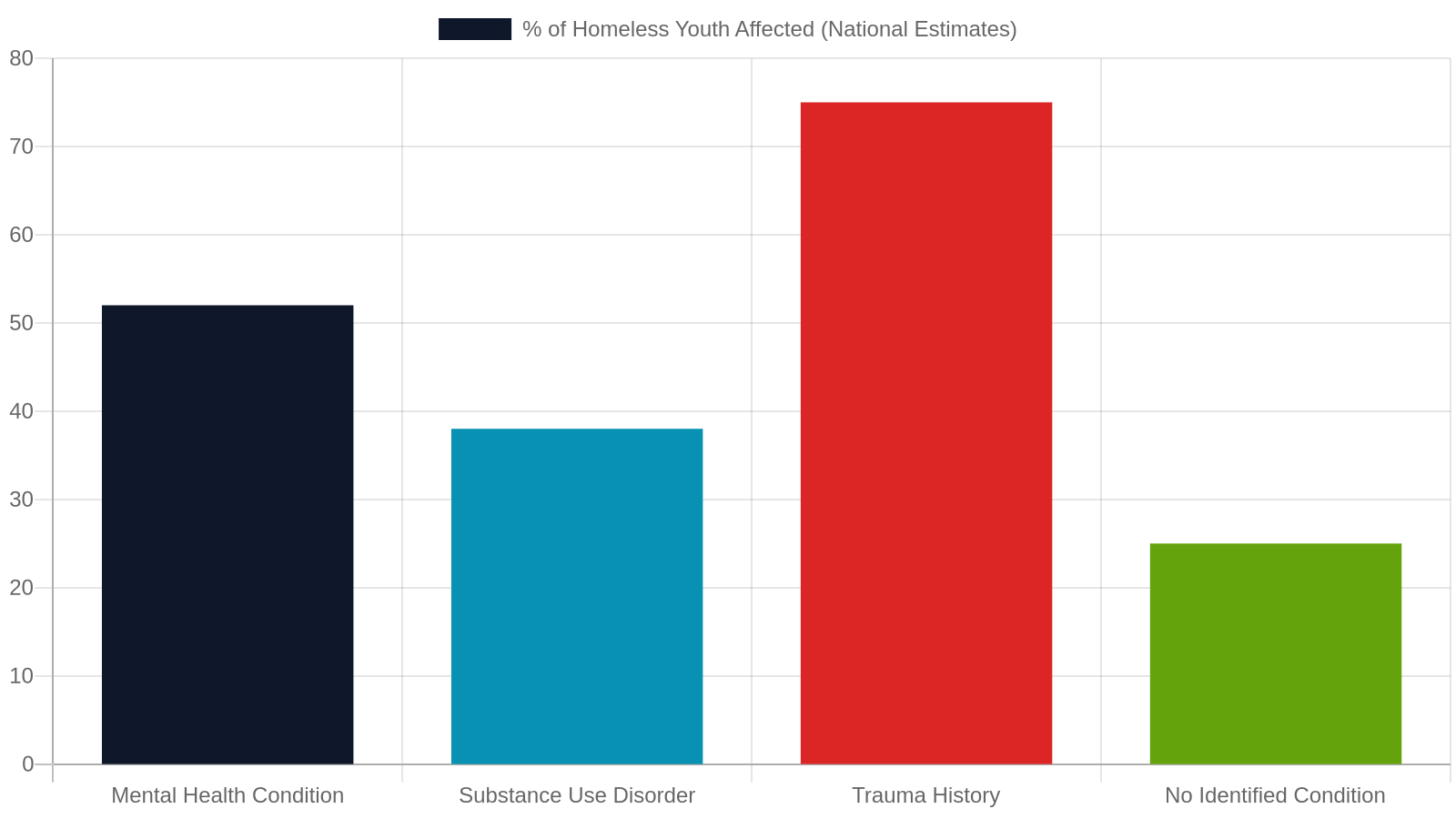
Studies consistently show that more than 50 percent of youth experiencing homelessness have a diagnosable mental health condition, yet access to affordable, youth-appropriate mental health services remains one of the biggest gaps in Tennessee’s service landscape. Long wait lists, lack of transportation, insurance barriers, and providers who are not trained to work with trauma-affected young adults all contribute to a system that fails youth at the moment they need it most.
YAAB has advocated at the state level for increased funding for community mental health centers that serve transition-age youth without insurance, and for the integration of mental health screening into CoC intake processes so that young adults are connected to services from day one — not after months on a wait list.
Defining Trauma-Informed Care from a Youth Perspective
YAAB members have been clear: trauma-informed care is not just a training certificate on a provider’s wall. It shows up in whether a staff member believes you when you tell them what happened to you. It shows up in whether a shelter has private spaces or forces everyone into a large open room. It shows up in whether a program’s rules feel punitive or supportive.
YAAB has developed youth-led feedback tools — essentially report cards for service providers — that allow young adults to rate their experiences with shelters, case managers, and housing programs on trauma-informed dimensions. These tools are being piloted in multiple Tennessee CoC regions as a quality-improvement mechanism that centers the voices of the people being served.
5. Employment Pathways and Economic Stability Projects

Housing stability and economic stability are inseparable. You can’t keep an apartment if you can’t pay rent, and you can’t pay rent if you can’t get and keep a job. YAAB’s employment and financial literacy projects attack both sides of this equation — working to make Tennessee’s workforce and financial systems more accessible to young adults who are starting from a place of disadvantage through no fault of their own.
Removing Barriers to First Jobs and Career Pathways
Getting a job when you’re experiencing homelessness is harder than it sounds. You may not have a permanent address for a job application. You may not have a state ID or Social Security card. You may have gaps in your work history or a record that shows up on a background check. YAAB’s employment projects focus on removing these structural barriers — not lecturing young adults about work ethic.
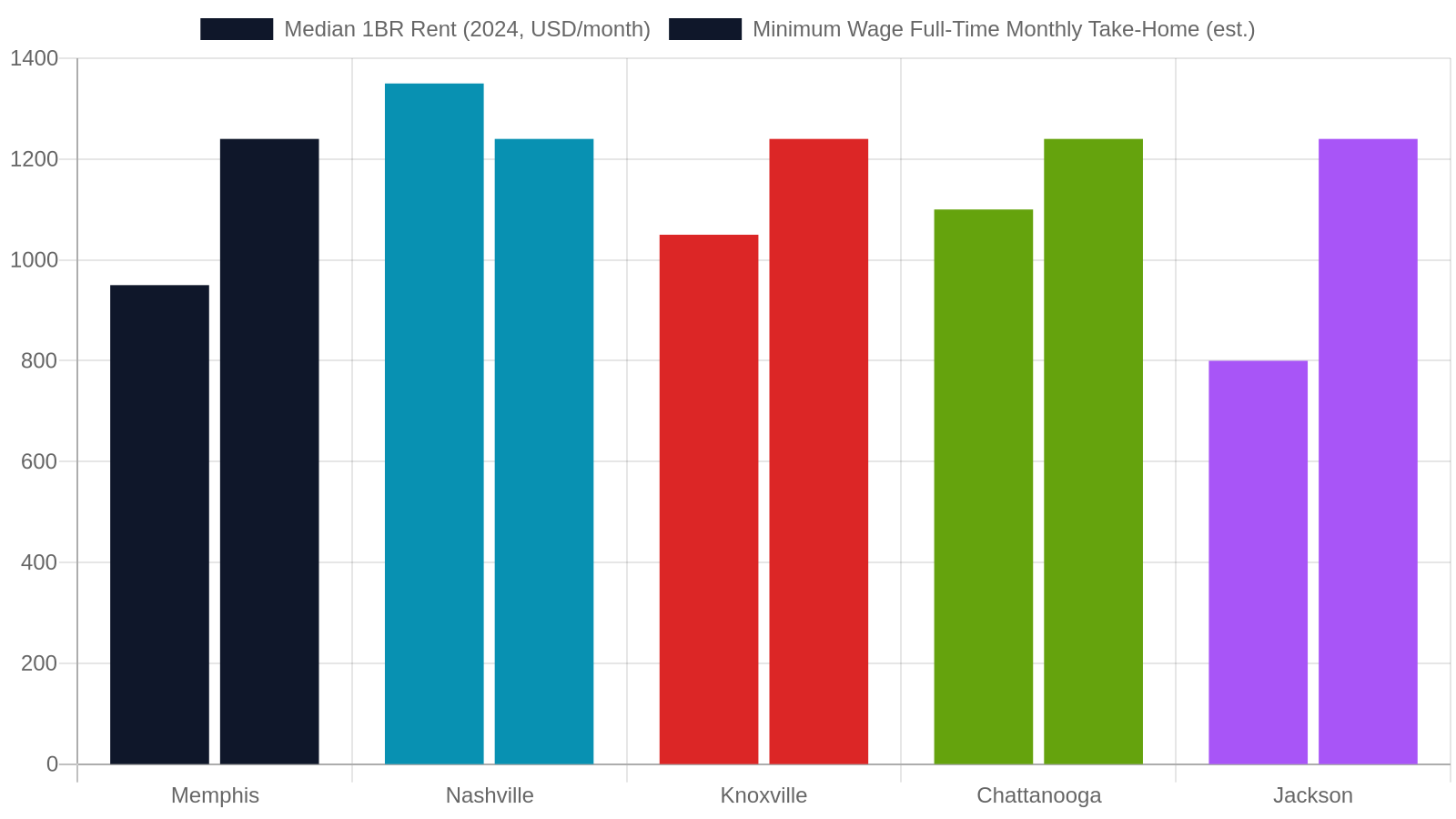
YAAB has partnered with Tennessee workforce development agencies and American Job Centers to advocate for youth-specific employment tracks that include ID recovery assistance, résumé support, interview coaching, and connections to employers who have committed to fair-chance hiring practices. The goal is not just any job — it’s a job that pays enough to afford housing in Tennessee’s increasingly expensive rental market.
Financial Literacy as a Stability Tool
Many young adults aging out of foster care or leaving homelessness have never had a bank account, never paid a utility bill, and have no credit history — or worse, a damaged credit history from debts incurred during a period of instability. YAAB’s financial literacy initiatives work to change that by connecting young adults to Bank On Tennessee accounts, credit-building programs, and financial coaching services that are designed for people starting from zero.
YAAB members have also advocated for CoC-funded programs to include financial literacy components as a standard part of rapid rehousing and transitional housing case management — because getting housed is only the first step; staying housed requires financial skills that many young adults were never taught.
6. Foster Care Transition and Aging-Out Support

A disproportionate number of young adults experiencing homelessness in Tennessee have a history with the foster care system. The transition out of foster care — sometimes called the ‘cliff’ — is one of the most dangerous moments in a young person’s life, and YAAB has made supporting youth through that transition a core statewide priority.
The Foster Care Cliff: What Happens at 18 (and 21)
In Tennessee, young people can remain in foster care until age 21 under the state’s Extended Foster Care program, but a significant number still exit the system without stable housing, employment, or a support network. Research from Chapin Hall at the University of Chicago found that 1 in 3 youth who aged out of foster care experienced homelessness within two years of exiting — a statistic that YAAB members cite regularly in advocacy conversations.
YAAB works to ensure that Tennessee’s CoC regions have specific protocols for youth aging out of foster care — including warm handoffs from Department of Children’s Services (DCS) case managers to CoC housing navigators, so that young people don’t fall through the cracks the moment they turn 18 or 21.
Advocating for Stronger Transition Planning
Tennessee law requires that youth in foster care have a transition plan before they exit the system, but YAAB members have documented significant variation in the quality of those plans across counties. Some youth leave with a solid plan; others leave with little more than a bus ticket and a list of phone numbers.
YAAB has advocated for standardized, youth-driven transition planning that includes a confirmed housing placement, a connection to a Medicaid-equivalent health insurance plan (Tennessee’s Medicaid, TennCare, covers former foster youth up to age 26), and an introduction to a peer navigator who can help them navigate the first months of independence. This work happens in partnership with DCS and the Tennessee Commission on Children and Youth.
7. Education and GED Pathway Advocacy

Education is one of the most powerful tools a young adult has for breaking the cycle of homelessness — but only if the education system is actually accessible. YAAB’s education projects work to tear down the barriers that keep young adults experiencing homelessness from pursuing credentials, degrees, and career pathways.
Connecting Homeless Youth to School and Credential Programs
The McKinney-Vento Homeless Assistance Act guarantees homeless students the right to enroll in and attend school, but for young adults over 18, the education landscape gets more complicated. Community colleges, adult education programs, and GED testing centers are not always easy to access when you don’t have stable housing, transportation, or a way to pay for testing fees.
YAAB has advocated for Tennessee’s adult education system to adopt barrier-free enrollment practices for young adults experiencing homelessness — including waived GED testing fees, priority enrollment in adult high school diploma programs, and connections to Tennessee Promise and Tennessee Reconnect scholarship programs that can cover community college tuition for eligible young adults.
Education as a Path Out of Homelessness
YAAB members are living proof that education and housing stability are connected. Completing a GED or earning a credential doesn’t just open job doors — it changes how a young person sees themselves and what they believe is possible. YAAB’s education advocacy is grounded in this understanding: education is not a luxury for young adults experiencing homelessness; it is a critical component of housing stability.
Across Tennessee’s CoC regions, YAAB has pushed for education liaisons to be embedded in youth shelter and transitional housing programs, so that young adults are connected to school opportunities from the moment they enter the system — not as an afterthought once they’re housed.
YAAB's 10 Statewide Projects at a Glance
Here's a quick-reference overview of each project area, who it primarily serves, where it operates, and what kind of change it's driving.
8. LGBTQ+ Youth Inclusion and Safety Projects

LGBTQ+ youth are dramatically overrepresented among young adults experiencing homelessness in Tennessee and across the country. YAAB’s projects in this area are not peripheral — they are central to the organization’s commitment to serving all transition-age youth, and to ensuring that the systems meant to help young people don’t replicate the rejection that drove many of them to homelessness in the first place.
Why LGBTQ+ Youth Are Overrepresented in Homelessness Data
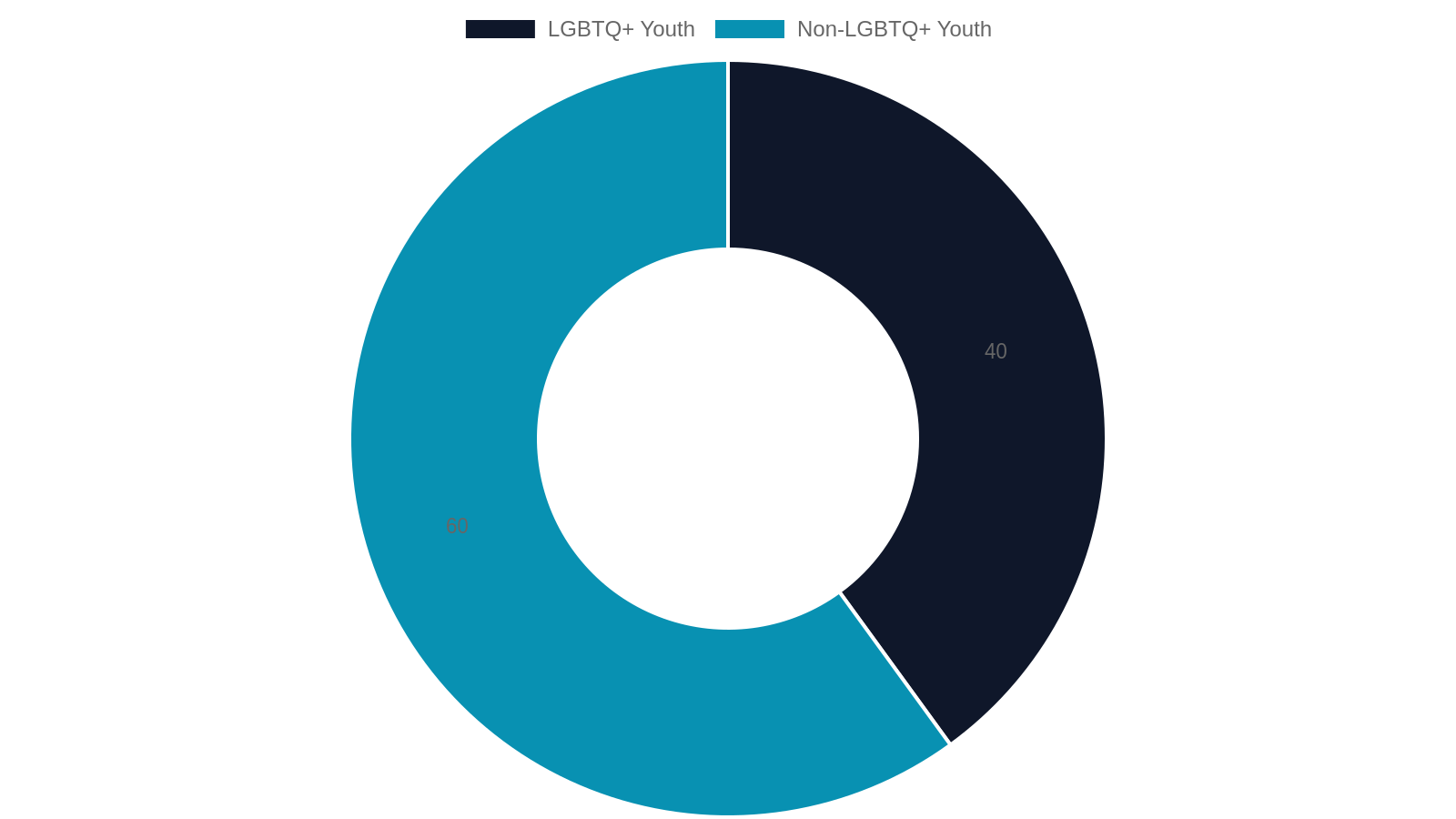
National research consistently finds that LGBTQ+ youth represent 40 percent or more of the youth experiencing homelessness population, despite being approximately 7 to 10 percent of the general youth population. Family rejection following coming out is the single most cited driver of this overrepresentation. In Tennessee, where LGBTQ+ youth face additional social and legal pressures, this disparity is a critical equity issue that YAAB addresses head-on.
YAAB has worked with CoC partners across the state to ensure that shelters and housing programs have explicit non-discrimination policies covering sexual orientation and gender identity, that staff are trained on affirming practices, and that LGBTQ+ youth are not placed in settings where they face harassment or violence.
Creating Affirming Spaces Across Tennessee's CoC Regions
Beyond policy, YAAB’s LGBTQ+ inclusion work is about culture. A shelter can have a non-discrimination policy on paper and still be an unsafe place for a transgender young adult if staff and other residents are not educated and held accountable. YAAB members have developed affirming space assessments — practical checklists that evaluate whether a program is genuinely welcoming to LGBTQ+ youth across dimensions like intake forms, bathroom access, room assignments, and staff language.
These assessments are being used as quality-improvement tools in multiple Tennessee CoC regions, with YAAB members leading the training sessions that help programs understand what affirming care actually looks like in practice.
9. Statewide Policy Advocacy and Legislative Engagement
All of YAAB’s on-the-ground work feeds into a larger goal: changing the policies that create and perpetuate youth homelessness in Tennessee. YAAB’s statewide policy advocacy projects operate at the local, state, and federal levels — ensuring that young adults with lived experience are not just consulted after decisions are made, but are shaping the decisions from the start. Learn more about YAAB’s advocacy priorities at yaabtn.org/advocacy.
Youth Voices at the Tennessee General Assembly
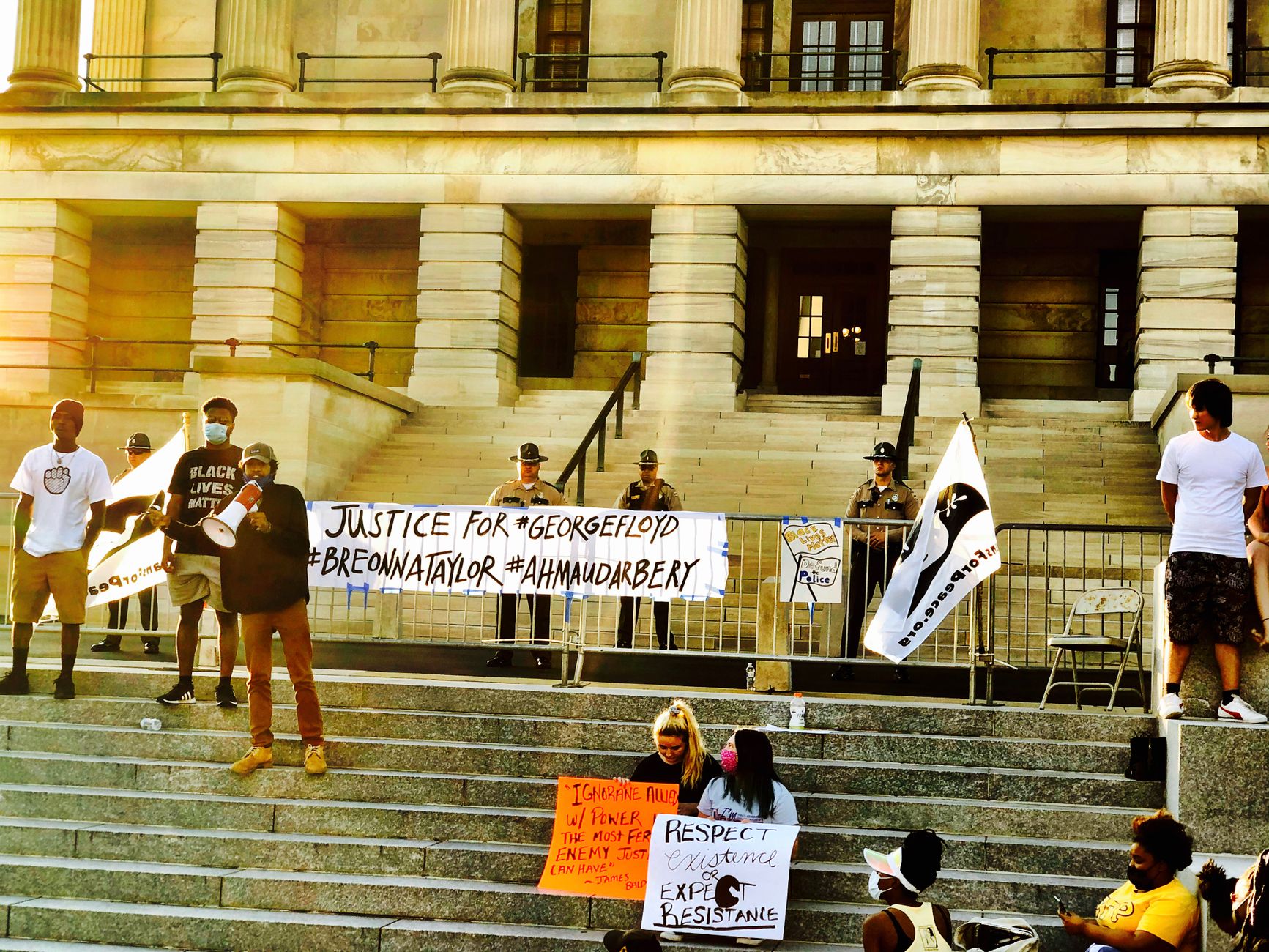
YAAB members don’t just advise CoC boards — they go to Nashville and speak directly to state legislators. YAAB has organized youth advocacy days at the Tennessee State Capitol, where members from across the state’s CoC regions meet with representatives and senators to share their stories and advocate for specific policy changes: increased funding for youth homelessness programs, stronger protections for youth aging out of foster care, and expanded access to TennCare for transition-age youth.
This kind of direct legislative engagement is powerful precisely because it is rare. Legislators are accustomed to hearing from nonprofit executives and policy analysts — they are not accustomed to hearing from a 20-year-old who slept in their car last year and is now asking for their vote on a housing bill. YAAB’s members change the conversation by showing up in person.
Connecting Local Advocacy to Federal Policy
YAAB’s policy work doesn’t stop at the state line. Through connections with national organizations like True Colors United, the National Alliance to End Homelessness, and the U.S. Interagency Council on Homelessness, Tennessee YAAB members have opportunities to weigh in on federal policy conversations — including HUD’s annual Notice of Funding Opportunity (NOFO) for youth homelessness programs and the development of the federal strategic plan to prevent and end youth homelessness.
When Tennessee youth have a seat at those national tables, it means the policies that shape funding and programs across the entire country are informed by what’s actually happening on the ground in Memphis, Knoxville, Chattanooga, and rural East Tennessee.
10. Regional YAAB Development and Youth Leadership Pipelines

All of the projects described above depend on one foundational project: building and sustaining a strong, representative network of young adult leaders across every corner of Tennessee. YAAB’s regional development work is the engine that powers everything else — because without young people at the table in every CoC region, the statewide network loses its grounding in local reality.
Building Local Boards Across All Eight CoC Regions
A statewide network is only as strong as its local chapters. One of YAAB Tennessee’s most important ongoing projects is the development and strengthening of local YAABs in each of the state’s eight CoC regions. This means recruiting new members, training facilitators, establishing relationships with local CoC leadership, and creating the infrastructure — meeting spaces, stipends, transportation support — that allows young adults experiencing housing instability to participate meaningfully.
Each regional YAAB has its own identity and focus areas shaped by local conditions. The challenges facing a young adult in rural Northeast Tennessee are different from those facing someone in Memphis or Nashville, and YAAB’s regional structure honors that diversity while connecting all members to a shared statewide mission. You can find your local YAAB at yaabtn.org/local-yaabs.
Stipends, Compensation, and Valuing Youth Time
YAAB is committed to the principle that youth time and expertise should be compensated. Members who participate in advisory meetings, training sessions, advocacy days, and community events receive stipends — because asking young adults who are struggling with housing instability to volunteer their time without compensation is both inequitable and counterproductive.
The fight to normalize stipends and compensation for youth advisors is itself an advocacy project: YAAB has worked with CoC partners and funders across Tennessee to build stipend line items into program budgets, making the case that compensating youth advisors is not a luxury but a prerequisite for genuine, sustained youth engagement. This model is increasingly recognized as a national best practice.
Ready to Get Involved? Here's Your Next Move

Everything you’ve read about in this article — the housing advocacy, the peer navigation programs, the legislative engagement, the data reform — is driven by young adults across Tennessee who decided to turn their lived experience into action. That work is ongoing, and there is always room for more voices. Explore the full range of YAAB Tennessee’s current projects and initiatives to see where you can plug in, and visit yaabtn.org/join to take the first step toward becoming a YAAB member in your region of Tennessee.
Who Can Join YAAB Tennessee
If you are between 17 and 25 years old and have personal experience with homelessness or housing instability — including couch-surfing, staying in a shelter, living in your car, or aging out of foster care — you are exactly who YAAB is built for. You don’t need a résumé. You don’t need a college degree. You don’t need to have it all figured out. Your experience is your qualification.
YAAB members across Tennessee come from every background and every region of the state. Some are still navigating housing instability while they participate; others have found stability and want to give back. Both are welcome. The only requirement is a willingness to show up, share your perspective, and help shape a better system for the young adults who come after you.
How Case Managers and Service Providers Can Partner with YAAB
If you work in homeless services, foster care, workforce development, education, or any field that touches the lives of transition-age youth in Tennessee, YAAB wants to work with you — not as a token advisory committee, but as genuine co-designers of better programs and policies. Reach out through yaabtn.org/contact-yaab to learn how your organization can support or partner with your regional YAAB.
The most impactful thing a service provider can do is create a real seat at the table for youth advisors — with compensation, genuine decision-making power, and a commitment to acting on what young people tell you. YAAB can help you build that structure.
Frequently Asked Questions
What does the Tennessee Youth Action Board actually do?
YAAB Tennessee is a statewide network of young adults ages 17 to 25 with lived experience of homelessness who advise CoC boards, advocate for policy changes, develop peer support programs, and work to improve housing, employment, education, and mental health services for transition-age youth across all eight of Tennessee's Continuum of Care regions.
How can I join a Youth Action Board in Tennessee?
If you are between 17 and 25 years old and have personal experience with homelessness or housing instability, you are eligible to join. Visit yaabtn.org/join to get started, or find your regional YAAB at yaabtn.org/local-yaabs to connect with the board nearest you.
Does YAAB pay members for their time?
Yes. YAAB is committed to compensating youth members for their participation through stipends. Paying young adults for their expertise and time is a core principle of YAAB's model and is recognized as a national best practice in youth engagement.
What Tennessee cities have a local Youth Action Board?
YAAB has regional boards across Tennessee's eight Continuum of Care regions, including Memphis/Shelby County, Nashville/Davidson County, Knoxville/Knox County, Chattanooga/Hamilton County, Jackson/West Tennessee, the Upper Cumberland, Northeast Tennessee, and the Balance of State region.
What is the Continuum of Care and why does YAAB work within it?
A Continuum of Care (CoC) is a regional planning body that coordinates housing and services for people experiencing homelessness and applies for federal HUD funding. YAAB embeds youth advisors inside CoC governance so that young adults have direct influence over the funding decisions and program designs that affect them.
Does YAAB help with more than just housing?
Yes. While housing is central, YAAB's statewide projects also address mental health access, employment and financial literacy, education and GED pathways, foster care transition support, LGBTQ+ inclusion, data reform, and state and federal legislative advocacy — because stable housing requires stable support across all of these areas.