Quick answer: If you're between 17 and 25 and living in the Nashville/Davidson County area — or anywhere in Tennessee's TN-502 Continuum of Care region — you can join the local Youth Action Board (YAAB) chapter and get paid to help shape housing and support programs for young people like you. No experience is required. YAAB members attend meetings, advise local leaders, connect peers to resources, and build real leadership skills. The fastest way to get started is to visit the TN-502 chapter page at yaabtn.org and fill out a membership interest form.
1. What Is YAAB and Why Does It Exist?

Before you fill out any form, it helps to understand exactly what you’re signing up for. YAAB is not a support group, a shelter program, or a class — it’s a leadership and advocacy organization run by and for young adults who know what housing instability feels like from the inside. Founded on the principle that lived experience is expertise, YAAB chapters across Tennessee give transition-age youth a formal seat at the table where housing decisions get made.
Youth-Led, Youth-Centered Advocacy
YAAB stands for Youth Action Board. It is a statewide network of young adults — ages 17 to 25 — who have lived experience with homelessness or housing instability. The whole point of YAAB is simple: the people most affected by a problem should have the loudest voice in fixing it. That means you. YAAB members don’t just receive services — they shape them. They sit at the table with Continuum of Care leaders, city officials, and nonprofit directors to make sure programs actually work for young people.
YAAB operates across all of Tennessee’s Continuum of Care (CoC) regions, from Memphis to Knoxville, and Nashville is one of its most active hubs.
The Continuum of Care Connection
Tennessee’s homeless response system is organized into regional Continuums of Care (CoCs) — federally recognized networks of agencies, shelters, and housing programs. Nashville and Davidson County fall under TN-502, one of the largest CoCs in the state. Each CoC has its own YAAB chapter that advises local decision-makers. When YAAB members in Nashville speak up about what’s missing — whether that’s more rapid rehousing slots, better mental health access, or fairer shelter rules — those voices carry real weight in funding and policy decisions.
Understanding this structure helps you see why joining isn’t just volunteering: it’s civic power.
2. Who Can Join the Nashville YAAB Chapter (TN-502)?

One of the most common questions young adults ask is: “Am I even eligible?” The answer is almost certainly yes. YAAB’s membership criteria are intentionally broad and welcoming because the goal is to include as many voices as possible — not to gatekeep leadership.
Age and Residency Requirements
To join the Nashville/Davidson County YAAB chapter, you must be between 17 and 25 years old and live in or have a connection to the TN-502 CoC region, which covers Nashville and Davidson County. You do not need to be currently homeless. If you have any past or present experience with housing instability — couch-surfing, staying in a shelter, doubling up with family, aging out of foster care, or losing stable housing for any reason — you qualify.
YAAB specifically welcomes young people who are often left out of other leadership spaces, including youth of color, LGBTQ+ youth, young parents, and those with justice involvement.
Experience Is the Only Credential You Need
There is no GPA requirement, no resume needed, and no interview process designed to screen people out. Your lived experience is your credential. YAAB believes that the young adults who have navigated Tennessee’s housing and social service systems firsthand understand those systems better than any outside expert. You bring knowledge that cannot be taught in a classroom or a policy briefing. That perspective is exactly what YAAB chapters need to do their work effectively.
If you’re nervous about speaking in meetings or don’t feel like a “leader” yet, that’s okay. YAAB provides training, mentorship, and peer support to help every member grow into their role at their own pace.
3. What YAAB Members Actually Do Day to Day

Joining YAAB is a commitment, and it’s worth knowing what that commitment looks like before you sign up. The good news is that YAAB is designed to fit into the real lives of young adults who may be juggling work, school, housing searches, and other responsibilities.
Attending Meetings and Giving Input
YAAB chapters typically meet once or twice a month, either in person or virtually, depending on the chapter’s current format. At meetings, members discuss local housing issues, review data about youth homelessness in Nashville, and develop recommendations for CoC partners and city agencies. You might be asked to review a shelter’s intake policy, give feedback on a new housing program, or help design a survey for other young people experiencing homelessness.
These aren’t passive sit-and-listen meetings. YAAB runs on the principle that every member’s voice matters, and facilitators are trained to make sure quieter members have space to contribute.
Advocacy, Training, and Community Outreach
Beyond regular meetings, YAAB members participate in advocacy events at the local and state level — including Tennessee’s legislative session in Nashville, where members have testified before committees and met with lawmakers. Members also receive training in public speaking, policy analysis, trauma-informed communication, and leadership skills that translate directly to jobs and higher education.
Outreach is another big part of the role. Members help connect peers to housing resources, spread the word about available services, and make sure other young adults know that YAAB exists. If you’ve ever wished someone had told you about a resource sooner, being that person for someone else is part of the job.
Getting Paid for Your Time
YAAB members are compensated for their participation — because your time and expertise have real value. Stipends and payment structures vary by chapter and funding cycle, but the principle is consistent: YAAB does not ask young adults with lived experience to donate their labor for free. This is one of the things that sets YAAB apart from many volunteer programs. Check with the TN-502 chapter directly for current compensation details, as rates can change with funding cycles.
4. Step-by-Step: How to Join the Nashville TN-502 YAAB Chapter

The process of joining YAAB is straightforward and designed to remove as many barriers as possible. Here’s exactly what to expect from the moment you decide you’re interested to the moment you’re sitting in your first meeting.
Step 1 — Visit the TN-502 Chapter Page
The first step is to go directly to the TN-502 YAAB chapter page on the YAAB Tennessee website. This page has the most up-to-date information about the Nashville chapter, including current meeting schedules, contact information for chapter coordinators, and a membership interest form. Because YAAB chapters are living organizations — their schedules, contacts, and processes evolve — the chapter page is always the most reliable source of current details.
Step 2 — Fill Out the Interest Form
Once you’re on the chapter page, look for the membership interest form or contact information. The form typically asks for basic information: your name, age, contact details, the region you’re in, and a brief description of your connection to housing instability. There are no wrong answers. You don’t need to write an essay or prove anything — just share enough so the chapter coordinator can reach out and connect with you.
If you have trouble with the online form, you can also reach out directly via the contact information listed on the page. No one will be turned away for needing a different way to connect.
Step 3 — Attend Your First Meeting
After submitting your interest, a chapter coordinator will typically follow up within a few days to a week. They’ll share meeting dates, location or video link, and any onboarding information. Your first meeting is low-pressure — you’re there to listen, meet other members, and get a feel for how things work. Most new members say they felt welcomed immediately because everyone in the room has been through something similar. From there, you can decide how involved you want to be and what kinds of projects interest you most.
5. What YAAB Membership Can Do for You

Joining YAAB isn’t just about giving back — it’s also a genuine investment in your own future. Members gain concrete skills, meaningful connections, and access to opportunities that can change the trajectory of their lives. Here’s what you can realistically expect to gain.
Leadership Skills That Open Doors
YAAB members consistently report that their time with the organization helped them land jobs, get accepted to college or trade programs, and build the confidence to navigate systems they once found overwhelming. Skills like public speaking, policy analysis, facilitation, and community organizing are highly valued by employers and educational institutions — and YAAB gives you real, documented experience in all of them. Many members have gone on to careers in social work, public health, housing advocacy, and government.
A Network of Peers and Mentors
One of the most powerful things YAAB offers is community. When you join, you’re not just joining a board — you’re joining a statewide network of young adults who understand what you’ve been through and are working toward the same goals. That network includes peers in Nashville and across Tennessee, as well as adult allies in the housing and social services world who genuinely respect and support YAAB members. Relationships built in YAAB often last long after members age out of the 17–25 eligibility window.
Access to Resources and Referrals
YAAB coordinators and fellow members are often some of the best-connected people in Nashville’s youth services ecosystem. Being part of the chapter means you’ll hear about housing opportunities, job openings, education programs, and emergency resources faster than most. Members also get priority information about YAAB-specific opportunities like paid fellowships, travel to conferences, and statewide advocacy events. Check out the YAAB resources page for a broader look at what’s available across Tennessee.
6. YAAB Chapters Across Tennessee: Finding Your Region

YAAB’s strength comes from its regional structure. Every chapter is rooted in its local community and connected to its specific Continuum of Care. That means the work in Nashville looks a little different from the work in Knoxville or Memphis — because the needs, resources, and systems in each region are different. Here’s a quick overview of how Tennessee’s YAAB chapters are organized.
Nashville/Davidson County — TN-502
If you’re in Nashville or Davidson County, TN-502 is your chapter. This is one of the most active YAAB chapters in the state, given Nashville’s size and the scale of its youth homelessness challenge. Davidson County reported over 1,800 individuals experiencing homelessness on a single night in recent Point-in-Time counts, with transition-age youth making up a significant portion of that number. The TN-502 chapter works directly with Metro Nashville’s CoC and city housing agencies.
Other Tennessee Regions
If you’re not in Nashville, YAAB has chapters across the state. Memphis/Shelby County is served by TN-500. Knoxville/Knox County falls under TN-501. Chattanooga/Hamilton County is TN-503. Upper Cumberland is TN-506, Northeast Tennessee is TN-507, and Jackson/West Tennessee is TN-509. You can find links to all regional chapters on the YAAB local chapters page. If you’re unsure which region you belong to, the main YAAB team can help you figure it out.
7. Youth Homelessness in Nashville: The Numbers Behind the Work

YAAB’s advocacy work is grounded in real data about what young adults in Nashville and across Tennessee are facing. Knowing these numbers can help you understand why your voice — and your membership — matters so much right now.
How Big Is the Problem?
Understanding the scale of youth homelessness in Nashville helps explain why YAAB’s work matters so much. Tennessee’s 2023 Point-in-Time (PIT) count identified approximately 8,500 people experiencing homelessness statewide on a single January night — and that number is widely understood to be an undercount, since many young adults avoid shelters and are missed by traditional counting methods. Nationally, studies estimate that 1 in 10 young adults ages 18–25 experiences some form of homelessness in a given year, with rates even higher among youth aging out of foster care and LGBTQ+ youth.
Why Transition-Age Youth Face Unique Barriers
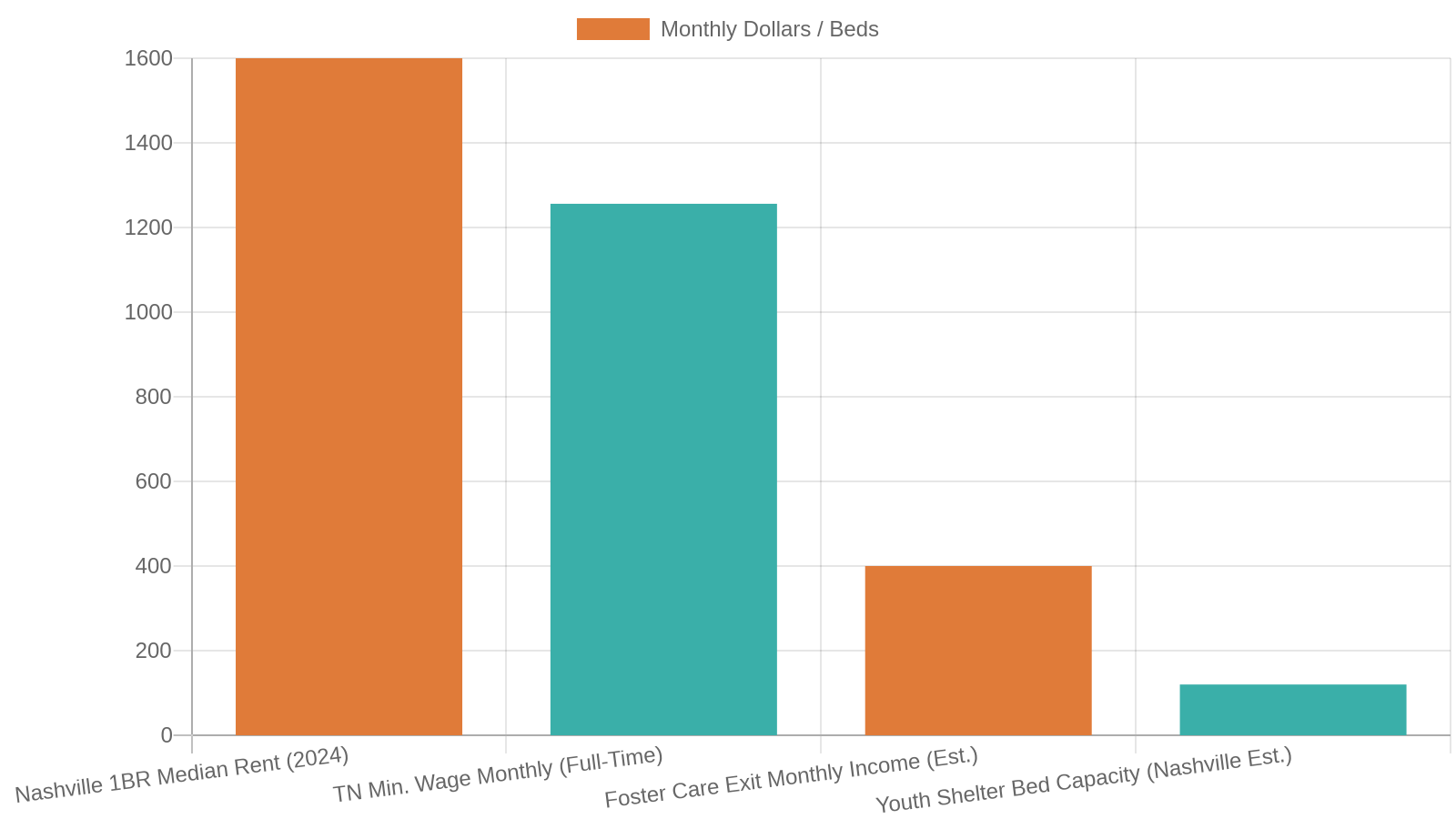
Young adults between 17 and 25 face a specific set of challenges that make housing instability especially common and especially hard to escape. Many are aging out of foster care with little savings and no family safety net. Others are fleeing unsafe home environments. Many face discrimination in rental markets due to their age, lack of rental history, or criminal records. Tennessee’s shortage of affordable housing — Nashville’s median rent topped $1,600/month for a one-bedroom in 2024 — makes the math nearly impossible for young adults earning minimum wage. YAAB exists to change these systemic realities, not just help individuals navigate them.
YAAB vs. Other Youth Programs: What Makes It Different
Wondering how YAAB compares to other programs available to young adults in Tennessee? Here's a side-by-side look at key features.
8. How YAAB Members Shape Real Policy in Tennessee

One of the most powerful things about YAAB is that it’s not just advisory in name — members have a documented track record of influencing real decisions. Here’s how that influence actually works in practice.
Advising the Continuum of Care
Every Continuum of Care in Tennessee is required by the U.S. Department of Housing and Urban Development (HUD) to include youth voices in its planning and governance. YAAB fulfills that role. Members attend CoC board meetings, review applications for federal housing funds, and provide formal input on how those funds should be allocated. In practical terms, that means YAAB members in Nashville have influenced decisions about which programs receive HUD funding, how shelters set their rules, and what data gets collected about youth homelessness in Davidson County.
State-Level Advocacy and Legislative Engagement
YAAB members have testified before Tennessee state legislative committees, met with the Governor’s office, and participated in statewide planning processes for youth homelessness. The organization’s advocacy work has contributed to policy conversations around Medicaid extension for youth aging out of foster care, increased funding for Rapid Rehousing programs, and improved data collection on transition-age youth. These are not symbolic gestures — they are real policy wins driven by young people with lived experience.
9. Common Concerns About Joining — Answered Honestly

It’s normal to have doubts before joining something new, especially if you’ve been let down by organizations or systems before. Here are honest answers to the concerns we hear most often from young adults considering YAAB membership.
"I'm Still in a Tough Situation — Can I Really Do This?"
Yes. YAAB is specifically designed for young adults who are currently navigating housing instability, not just those who have fully “made it out.” In fact, members who are still in the middle of their experience often bring the most relevant and urgent perspective to the table. YAAB coordinators understand that life is unpredictable — if you miss a meeting because of a housing crisis, a job shift, or a mental health day, that’s okay. The organization is built to accommodate real life, not an idealized version of it.
"I Don't Know Anything About Policy or Advocacy"
You don’t need to. YAAB provides training on everything — how the CoC works, how to read a policy brief, how to give public comment, how to talk to a legislator. Every member starts somewhere, and the learning curve is part of the experience. Many current YAAB leaders started with zero knowledge of housing policy and are now among the most informed youth advocates in Tennessee. Your job at the start is simply to show up and share what you know from your own life.
"Will My Personal Story Be Shared Without My Permission?"
YAAB takes member privacy seriously. You are never required to share your personal story publicly or with anyone you don’t choose. Members control their own narratives. If you want to share your experience as part of advocacy work, YAAB will support and prepare you to do that safely and powerfully. If you prefer to contribute in other ways — data review, logistics, peer outreach — that’s completely valid. Your boundaries are respected.
10. Tips for Getting the Most Out of Your YAAB Membership

Membership is what you make it. YAAB provides the structure, the training, and the platform — but the members who thrive are the ones who engage actively and intentionally. Here are practical tips for making the most of your time with the Nashville chapter.
Show Up Consistently — Even When It's Hard
The members who get the most out of YAAB are the ones who show up consistently, even when life is complicated. Consistent attendance builds trust with your peers and with CoC partners, and it means you’ll be considered for higher-visibility opportunities like conference travel, paid fellowships, and leadership roles within the chapter. If you know you’re going to miss a meeting, communicate with your coordinator — that kind of reliability is noticed and appreciated.
Use YAAB as a Launching Pad
Think of YAAB as a platform, not a destination. Use the skills, connections, and resume-building opportunities it offers to move toward your longer-term goals — whether that’s a career in social services, a college degree, a stable apartment, or something else entirely. Ask your coordinator about letters of recommendation, references, and how to document your YAAB experience for job applications and school admissions. Many employers and colleges in Tennessee are familiar with YAAB and view it positively.
Connect With Members in Other Regions
YAAB’s statewide structure means you have peers in Memphis, Knoxville, Chattanooga, and beyond who are doing similar work. Connecting with members in other regions — at statewide convenings or online — expands your network and gives you perspective on how different communities are tackling the same problems. The shared experience across Tennessee’s YAAB chapters is one of the organization’s greatest strengths, and tapping into it makes your own chapter work stronger.
11. Ready to Join? Your Next Move Starts Here

You’ve read this far — that tells us something. You’re ready to take action, or at least ready to learn more. Here’s exactly what to do next to connect with the Nashville YAAB chapter and start making your voice count in Tennessee’s housing system.
Take the First Step Today
If you’re between 17 and 25, live in or around Nashville, and have any experience with housing instability, you belong in YAAB. The Nashville/Davidson County chapter — part of Tennessee’s TN-502 Continuum of Care — is actively welcoming new members. Visit the TN-502 YAAB chapter page to find the current membership interest form, meeting schedule, and coordinator contact information. It takes less than five minutes to express your interest, and a coordinator will follow up with you directly.
If you want to learn more about YAAB’s mission and history before reaching out, the About YAAB page is a great place to start.
Spread the Word to Peers in Tennessee
Know another young adult in Nashville — or anywhere in Tennessee — who might benefit from YAAB? Share this article, share the chapter page link, or just have a conversation. One of the most powerful forms of outreach is peer-to-peer. You don’t have to be a member yet to tell someone else that this opportunity exists. The young adults who need YAAB the most are often the hardest to reach through traditional channels — and a trusted peer is often the only messenger that gets through.
YAAB Tennessee is building a movement of young people who refuse to let their experiences be invisible. Nashville is a key part of that movement. Your seat at the table is waiting.
Frequently Asked Questions
How old do you have to be to join YAAB in Nashville Tennessee?
You must be between 17 and 25 years old to join a YAAB chapter in Nashville or anywhere in Tennessee. There is no minimum education requirement, and you do not need to be currently homeless — any past or present experience with housing instability qualifies you.
Do you have to be homeless right now to join YAAB?
No. You qualify if you have any lived experience with housing instability — past or present. That includes couch-surfing, staying in a shelter, doubling up with family, aging out of foster care, or any period of unstable housing. You do not need to be currently unhoused.
Does YAAB pay members for their time?
Yes. YAAB members receive stipends or other compensation for their participation, because YAAB believes lived experience is expertise that deserves to be paid. Specific amounts vary by chapter and funding cycle, so check with the TN-502 Nashville chapter for current details.
What is the TN-502 Continuum of Care and how does it relate to YAAB Nashville?
TN-502 is the federally designated Continuum of Care region covering Nashville and Davidson County, Tennessee. It is the regional network of housing agencies, shelters, and service providers that coordinates the local homeless response. The Nashville YAAB chapter operates within TN-502 and advises its leadership on issues affecting transition-age youth.
What if I live near Nashville but not in Davidson County — can I still join?
It depends on your specific location. TN-502 covers Nashville and Davidson County. If you're in a neighboring county, you may fall under a different Tennessee CoC region. Contact the YAAB team through yaabtn.org and they can help you figure out which chapter is the right fit for where you live.
How long does it take to join YAAB after I submit my interest?
Most applicants hear back from a chapter coordinator within a few days to one week after submitting their interest form. From there, you'll be invited to an upcoming meeting. The whole process from first contact to attending your first meeting typically takes one to two weeks.