Quick answer: The Youth Action Board (YAAB) of Tennessee amplifies the voices of young adults ages 17 to 25 who have lived through homelessness and housing instability. Through its podcast and media presence, YAAB members across Tennessee's Continuum of Care regions are speaking directly to policymakers about what's broken and what works. This article breaks down eight of the most urgent themes those young people are raising — from shelter access and aging out of foster care to mental health, employment barriers, and the power of peer advocacy — so their words can drive real change statewide.
Why a Podcast? Putting Youth Voices Where Decisions Are Made

Before diving into what young adults are actually saying, it’s worth understanding why the podcast format itself is such a powerful advocacy tool for YAAB Tennessee. Across all seven Continuum of Care regions — from Memphis/Shelby County to Northeast Tennessee — YAAB members are using audio storytelling to close the distance between lived experience and legislative chambers.
The Gap Between Policy Rooms and Lived Reality
Housing policy in Tennessee is often shaped in rooms where the people most affected — young adults who have slept in cars, couch-surfed, or aged out of foster care with nowhere to go — are not at the table. A podcast changes that dynamic. Audio is immediate, personal, and hard to dismiss. When a 20-year-old from Memphis describes calling shelter after shelter and hearing ‘no beds tonight,’ that story lands differently than a statistic on a slide deck.
YAAB’s media work is built on a simple premise: the experts on youth homelessness are the young people who have lived it. Podcasting lets those experts speak in their own words, without translation or interpretation by someone who hasn’t been there.
Who Is Listening — and Why It Matters
The audience for YAAB’s podcast and media content spans three groups: peers who are currently experiencing housing instability and need to know they’re not alone; service providers and case managers who want to understand what young people actually need; and policymakers at the city, county, and state level who are making decisions about funding, shelter capacity, and program design.
Each group hears something different. A peer hears validation and information. A provider hears a challenge to do better. A legislator hears a constituent. That multiplier effect is why audio storytelling is one of the most powerful tools in the YAAB advocacy toolkit.
1. Shelter Access Is Still a Nightly Crisis for Young Adults

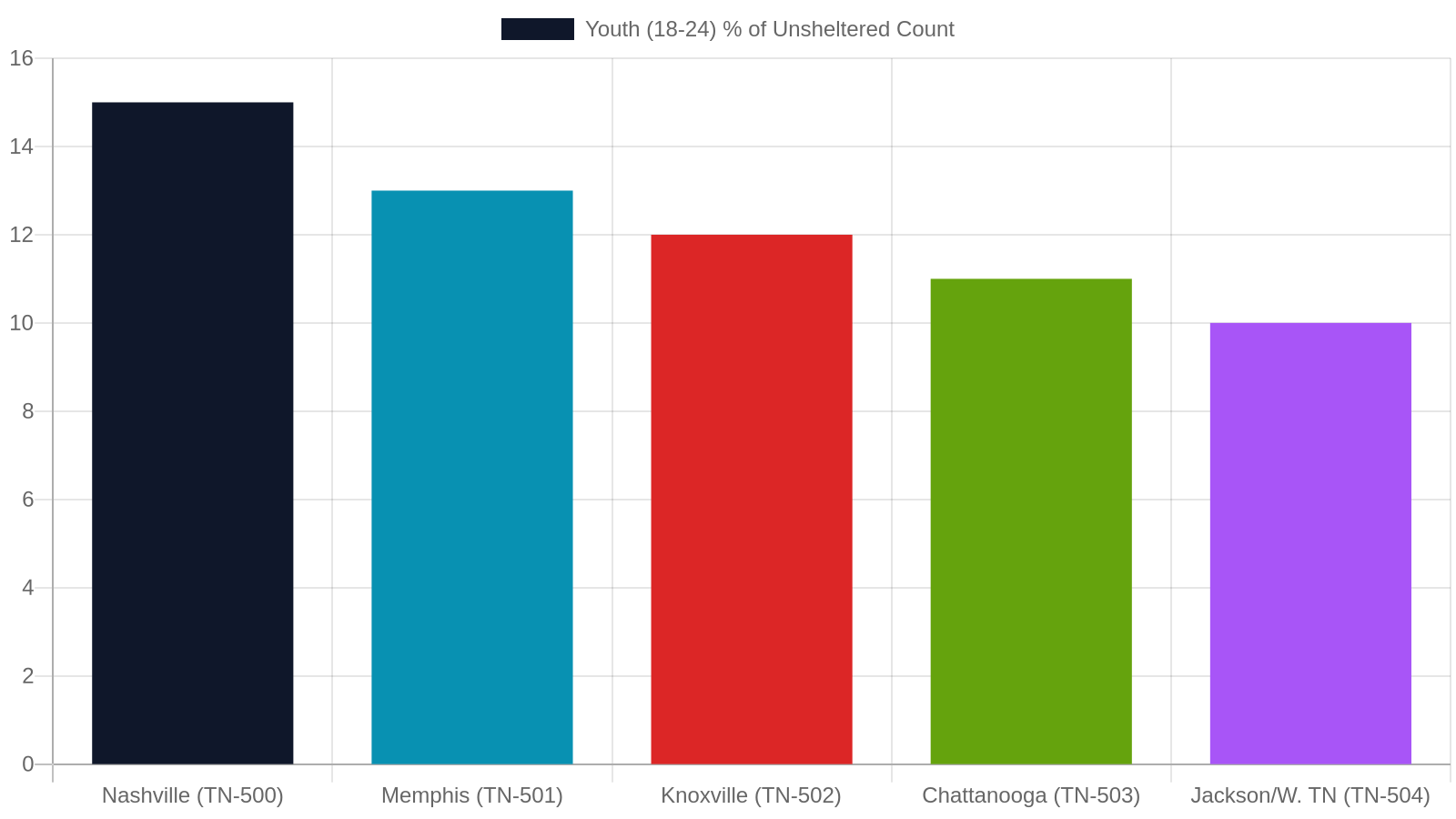
If there is one topic that comes up in nearly every YAAB conversation — podcast episode, advocacy meeting, or regional board session — it is the chronic shortage of safe, accessible shelter for young adults. The data backs up what members are saying: according to the 2023 Tennessee Point-in-Time Count, youth ages 18 to 24 accounted for roughly 12 to 15 percent of the unsheltered population across major urban CoC regions, yet dedicated youth shelter beds represent a fraction of total capacity.
The 'No Beds' Problem Across Tennessee Regions
One of the most consistent themes across YAAB podcast episodes is the brutal reality of shelter scarcity. In Tennessee, dedicated youth-specific shelter beds are severely limited. Nashville’s CoC (TN-500) has documented that transition-age youth — defined federally as ages 18 to 24 — represent a growing share of the unsheltered population, yet youth-only shelter capacity has not kept pace. Memphis/Shelby County (TN-501) faces similar pressure, with many young adults turned away from adult shelters because they’re deemed ‘too young’ and from youth shelters because they’ve aged out at 18 or 21.
YAAB members describe a gap that feels like falling through the floor: too old for child welfare, too young and vulnerable for adult systems.
What Young Adults Say Would Actually Help
On the podcast, YAAB members consistently name three shelter-related changes they want policymakers to act on: more low-barrier youth shelters that don’t require sobriety or ID on arrival; extended stays (beyond 30 or 60 days) so young people can stabilize; and 24-hour access rather than curfew-based models that punish people working late shifts. These aren’t abstract policy wishes — they’re drawn directly from nights spent outside because a curfew was missed by 20 minutes.
2. Aging Out of Foster Care Means Falling Off a Cliff

For young adults who grew up in Tennessee’s foster care system, turning 18 can feel less like a birthday and more like a deadline. YAAB’s podcast has featured episode after episode from former foster youth who describe the same experience: one day there was a case worker, a placement, and a plan — and the next day there wasn’t. Understanding this pipeline from foster care to homelessness is essential to understanding why YAAB exists.
What Happens at 18 — and Why Tennessee's Numbers Are Alarming
Nationally, studies show that 20 to 40 percent of youth who age out of foster care experience homelessness within 12 to 18 months of leaving the system. Tennessee is not an exception. YAAB members who have aged out describe a system that counts down to their 18th birthday and then essentially disappears. Extended foster care (available in Tennessee up to age 21 under certain conditions) exists on paper, but YAAB podcast guests have described inconsistent access, confusing eligibility requirements, and case workers who don’t always inform young people it’s an option.
The Policy Ask: Extend, Simplify, and Fund
YAAB members are clear about what they want: automatic opt-in to extended foster care through age 21, with a clear, jargon-free explanation of rights given to every young person at 16 and again at 17. They also want Transitional Living Programs (TLPs) funded at a level that matches demand — right now, waitlists for TLPs in Tennessee can stretch 3 to 6 months, which is an eternity when you have nowhere to sleep tonight. On the podcast, former foster youth have called for a statewide ‘aging out navigator’ role — a dedicated person whose only job is to make sure young people leaving care land somewhere safe.
3. Mental Health Support Can't Be an Afterthought

You cannot talk about youth homelessness in Tennessee without talking about mental health. YAAB podcast guests — young adults from Knoxville to Jackson — consistently name mental health as both a driver of housing instability and a barrier to getting out of it. The conversation on the podcast is nuanced in a way that policy documents rarely are: it centers systemic failures, not individual deficits.
Trauma Is the Context, Not the Excuse
YAAB members are careful to push back against narratives that frame mental health struggles as personal failings. On the podcast, young adults have been explicit: housing instability causes and worsens mental health crises, it doesn’t just accompany them. Chronic stress, hypervigilance, disrupted sleep, and the shame that comes with stigma are all documented consequences of homelessness — not pre-existing conditions that explain why someone ‘ended up’ unhoused.
Tennessee ranks among the bottom ten states for mental health care access, according to Mental Health America’s 2024 State Rankings. For young adults without insurance, stable addresses, or transportation, that access gap is even wider.
What Integrated Support Actually Looks Like
The YAAB podcast has highlighted models that work: co-located mental health services inside housing programs, peer support specialists with lived experience (not just clinical credentials), and trauma-informed training for all shelter and housing staff. Members have also called out what doesn’t work — mandatory mental health assessments as a condition of receiving shelter, which can deter young people who fear being labeled or losing autonomy. The ask is integration without coercion: mental health support available, accessible, and free, but never weaponized as a gatekeeping tool.
4. Employment Barriers Keep Young Adults Stuck

Getting a job is supposed to be the path out of homelessness. But for young adults in Tennessee who are currently unhoused or housing-unstable, the employment system is riddled with catch-22s that make that path nearly impossible to walk without support. YAAB’s podcast has dedicated significant airtime to this topic because members know firsthand how quickly the ‘just get a job’ advice breaks down in the real world.
The Catch-22 of Getting a Job Without an Address
Employers ask for a permanent address. Landlords ask for proof of income. Banks ask for a permanent address to open an account. Young adults without stable housing describe navigating a system that seems designed to keep them out. YAAB podcast guests have described being denied jobs because they listed a shelter address, or being unable to complete online applications because they lacked consistent internet access. In Tennessee, where public transit is limited outside of Nashville and Memphis, getting to a job interview without a car is its own obstacle course.
What Youth-Centered Workforce Development Looks Like
YAAB members advocate for workforce programs that meet young adults where they are — literally and figuratively. That means stipends for transportation and work clothes, flexible scheduling that accounts for shelter curfews, and employers who are educated about the realities of housing instability. Tennessee’s American Job Centers and programs like YouthBuild are resources YAAB points to, but members note that awareness of these programs is low among the young adults who need them most. The podcast has become a vehicle for spreading that awareness peer-to-peer, in language that actually resonates.
5. Education and GED Pathways Are Harder to Access Than They Should Be

Education is one of the most reliable long-term pathways out of poverty and housing instability — but accessing it when you’re unhoused or couch-surfing is genuinely hard. YAAB podcast conversations around education are full of both frustration and determination: young adults in Tennessee who want to learn and advance but keep running into systems that weren’t designed with their reality in mind.
Homelessness Disrupts School — and the System Doesn't Always Catch You
Under the McKinney-Vento Homeless Assistance Act, students experiencing homelessness have the right to remain enrolled in school and receive transportation support. But YAAB members who are 18 and older are no longer covered by McKinney-Vento’s K-12 protections — they fall into a gap between the K-12 system and adult education. Tennessee’s Adult Education program, which offers free GED preparation and testing, is available statewide, but YAAB podcast guests describe barriers including inconsistent class schedules, lack of childcare for young parents, and the emotional weight of returning to an educational setting after traumatic school experiences.
Community College, HOPE Scholarship, and What Youth Need to Know
Tennessee offers the Tennessee Promise and Tennessee Reconnect programs, which provide last-dollar scholarship funding for community college. YAAB members are strong advocates for making sure transition-age youth know these programs exist — and know that housing instability does not disqualify them. The podcast has featured episodes specifically about navigating FAFSA as a homeless or independent student, which can unlock additional grant funding. Members also push for on-campus housing priority for students who are homeless or formerly homeless — a policy that several Tennessee community colleges are beginning to explore.
6. LGBTQ+ Youth Face Compounded Risks — and Need Affirming Spaces

Any honest conversation about youth homelessness in Tennessee has to address the disproportionate impact on LGBTQ+ young adults. YAAB’s podcast has not shied away from this topic — and the young adults who have shared their stories on the show have made it impossible to ignore the connection between family rejection, hostile policy environments, and housing loss.
The Numbers Behind the Disparity
Research consistently shows that LGBTQ+ youth are 120 percent more likely to experience homelessness than their non-LGBTQ+ peers, often because family rejection is the primary driver of their housing loss. In Tennessee, where the policy environment has become increasingly hostile to LGBTQ+ young people in recent legislative sessions, YAAB members have spoken openly on the podcast about the compounded fear of being both unhoused and out — or of staying closeted to access services that feel unsafe.
Affirming Shelter and Services as a Policy Demand
YAAB members have been vocal advocates for non-discrimination policies in all publicly funded shelters and housing programs in Tennessee. That means shelters that house transgender youth according to their gender identity, staff who are trained in affirming language, and intake processes that don’t require young people to out themselves to receive help. The podcast has amplified these demands in a way that policy briefs rarely can — by letting LGBTQ+ youth speak directly about what it feels like to choose between safety and authenticity.
YAAB Podcast vs. Other Youth Advocacy Media Formats
Different media formats serve different advocacy purposes. Here's how the YAAB podcast compares to other common ways youth voices reach policymakers and the public.
7. Peer Advocacy Is a Policy Strategy — Not Just a Feel-Good Activity

One of the most important things YAAB’s podcast communicates — to peers, providers, and policymakers alike — is that youth advocacy is serious, strategic work. It is not about giving young people a microphone so adults can feel good about ‘listening.’ It is about building the power of transition-age youth to shape the systems that govern their lives. And it is working.
How YAAB Members Are Changing Policy in Real Time
YAAB is not a support group — it is a policy body. Members across Tennessee’s seven Continuum of Care regions sit on CoC governance boards, present at legislative hearings, review funding applications, and help design the programs that serve their peers. The podcast documents this work in real time, giving listeners a window into what youth advocacy actually looks like: preparing testimony, navigating bureaucratic language, building coalitions with adult allies, and refusing to be tokenized.
In 2023 and 2024, YAAB members contributed directly to advocacy efforts around Tennessee’s Housing Trust Fund, Rapid Rehousing program design, and state-level conversations about extending foster care. These are not small wins.
Why Lived Experience Is a Qualification, Not a Liability
One of the most powerful recurring themes on the YAAB podcast is the reframing of lived experience as expertise. Young adults who have navigated shelter systems, housing courts, and benefit bureaucracies know those systems in a way that no consultant or administrator can replicate. YAAB’s model — which pays members for their time and treats their input as essential rather than optional — is a direct challenge to the charity model that has long dominated youth services. The podcast makes that argument compellingly, episode after episode, in the voices of the young people living it.
8. Regional Differences Matter: Tennessee Is Not One Story

One of the most valuable things YAAB’s podcast does is resist the temptation to tell a single, unified story about youth homelessness in Tennessee. The reality is that a young adult couch-surfing in Cookeville faces a very different landscape than one sleeping in a Memphis shelter or living in their car outside Kingsport. Regional specificity is not a detail — it is the whole point.
Urban vs. Rural Realities Across the State
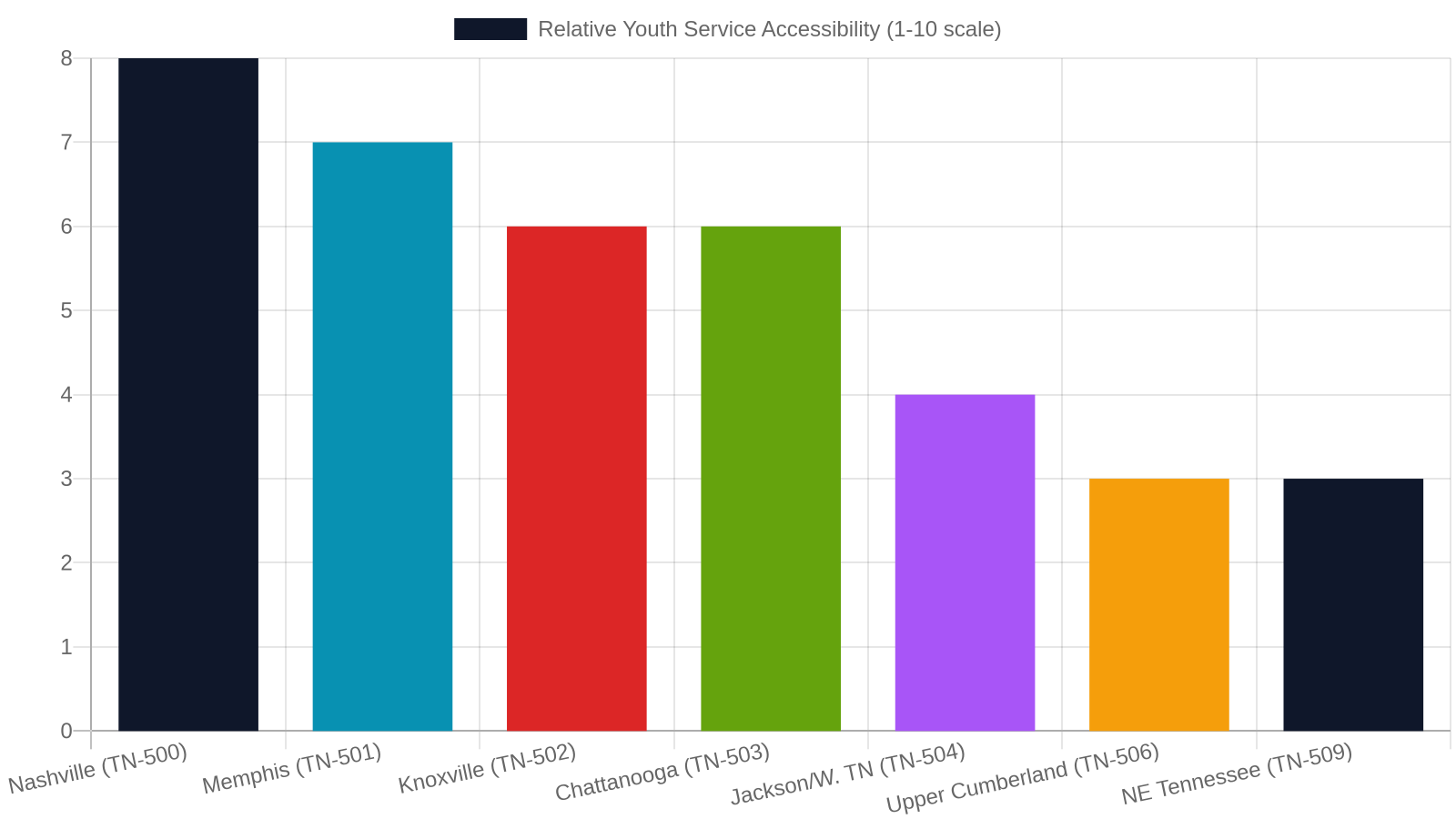
Memphis and Nashville have the largest shelter systems and the most established CoC infrastructure. But young adults in Jackson, the Upper Cumberland, or Northeast Tennessee face a different set of challenges: fewer shelter beds, longer distances to services, limited public transit, and smaller local budgets. YAAB’s regional structure — with local boards in TN-500 through TN-509 — is designed to honor these differences. The podcast reflects that geography, featuring voices from across the state rather than defaulting to the largest cities.
Rural youth homelessness is also more hidden: couch-surfing and doubling up are common survival strategies that don’t show up in Point-in-Time Counts, making it harder to document need and secure funding.
What Regional YAAB Boards Are Doing Locally
Each regional YAAB board adapts the statewide mission to local conditions. In Chattanooga (TN-503), members have focused on shelter-to-housing transition timelines. In Knoxville (TN-502), the board has engaged with university and community college partners on student homelessness. In West Tennessee (TN-504), members are working to raise awareness of rural youth homelessness in communities where the issue is often invisible. The podcast connects these regional stories, helping young adults across Tennessee see that their local experience is part of a statewide pattern — and a statewide movement. You can find your regional YAAB board and connect with peers who are already doing this work in your community.
How the YAAB Podcast Compares to Other Youth Advocacy Media

Not all youth advocacy media is created equal. The YAAB podcast stands apart from other formats in several important ways — but it also complements them. Understanding where the podcast fits in the broader media ecosystem helps explain why it matters as a policy tool, not just a storytelling one.
Ready to Listen, Share, or Get Involved?

The eight themes in this article are not a complete picture of everything YAAB members are saying about housing policy in Tennessee — they’re an invitation to keep listening. The podcast is a living document of what young adults across this state are experiencing, demanding, and building. And the conversation is open to anyone who wants to be part of it.
How to Find and Use YAAB's Media
YAAB’s podcast episodes, video content, and media resources are collected in one place. Whether you’re a young adult who wants to hear from peers who’ve been through it, a case manager looking for tools to share with clients, or a policymaker who wants to understand what transition-age youth in Tennessee are actually experiencing, the media library is your starting point. Explore YAAB Tennessee’s full media library to find podcast episodes, advocacy videos, and shareable resources organized by topic and region.
Sharing episodes is one of the simplest and most powerful things you can do. When a YAAB podcast episode lands in a legislator’s inbox, a provider’s staff meeting, or a young person’s earbuds at 2 a.m. in a shelter, it does real work. You don’t need a platform or a credential to be part of that.
Join YAAB and Add Your Voice
If you are a young adult ages 17 to 25 in Tennessee with lived experience of homelessness or housing instability, YAAB wants to hear from you — not just as a listener, but as a leader. Members are paid for their time, trained in advocacy and policy, and connected to a statewide network of peers who are changing systems from the inside. You can learn more about what YAAB does and how it’s structured, or go straight to the join page to start the process of becoming a member. Your experience is not a liability — it is exactly the expertise Tennessee’s housing system needs.
Frequently Asked Questions
What is the YAAB Tennessee podcast about?
The YAAB Tennessee podcast features young adults ages 17 to 25 with lived experience of homelessness and housing instability sharing their stories, policy insights, and advocacy work. Episodes cover topics like shelter access, aging out of foster care, mental health, employment, and how young people are shaping housing policy across Tennessee's Continuum of Care regions.
How can I listen to the YAAB Tennessee podcast?
YAAB's podcast episodes and other media content are available through the YAAB Tennessee media library at yaabtn.org/media/. Episodes are free and accessible on mobile devices, making them easy to find wherever you are.
Who can join the Youth Action Board in Tennessee?
Any young adult ages 17 to 25 in Tennessee who has lived experience of homelessness or housing instability is eligible to join YAAB. Members are paid for their time and participate in local and statewide advocacy, policy review, and leadership development. Visit yaabtn.org/join/ to get started.
What housing resources are available for young adults experiencing homelessness in Tennessee?
Tennessee has resources including Rapid Rehousing programs, Transitional Living Programs (TLPs), Continuum of Care shelters, Tennessee Promise and Tennessee Reconnect for education funding, and American Job Centers for employment support. YAAB's resources page at yaabtn.org/resources/ is a good starting point to find what's available in your region.
What does YAAB do differently from other youth organizations?
YAAB treats young adults with lived experience of homelessness as policy experts, not just service recipients. Members sit on CoC governance boards, advise state leaders, review program funding, and shape the design of services — and they are compensated for that work. It's a peer-led advocacy model, not a charity model.
Are LGBTQ+ young adults specifically supported through YAAB and Tennessee housing programs?
YAAB actively advocates for affirming, non-discriminatory policies in all publicly funded shelters and housing programs in Tennessee. LGBTQ+ youth are disproportionately represented in the unhoused population, and YAAB members have pushed for shelter policies that affirm gender identity and protect LGBTQ+ youth from discrimination in the housing system.