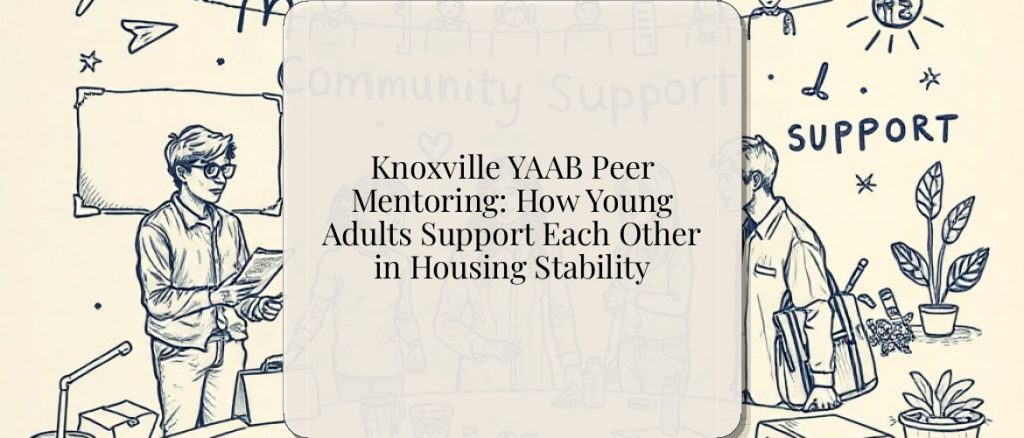
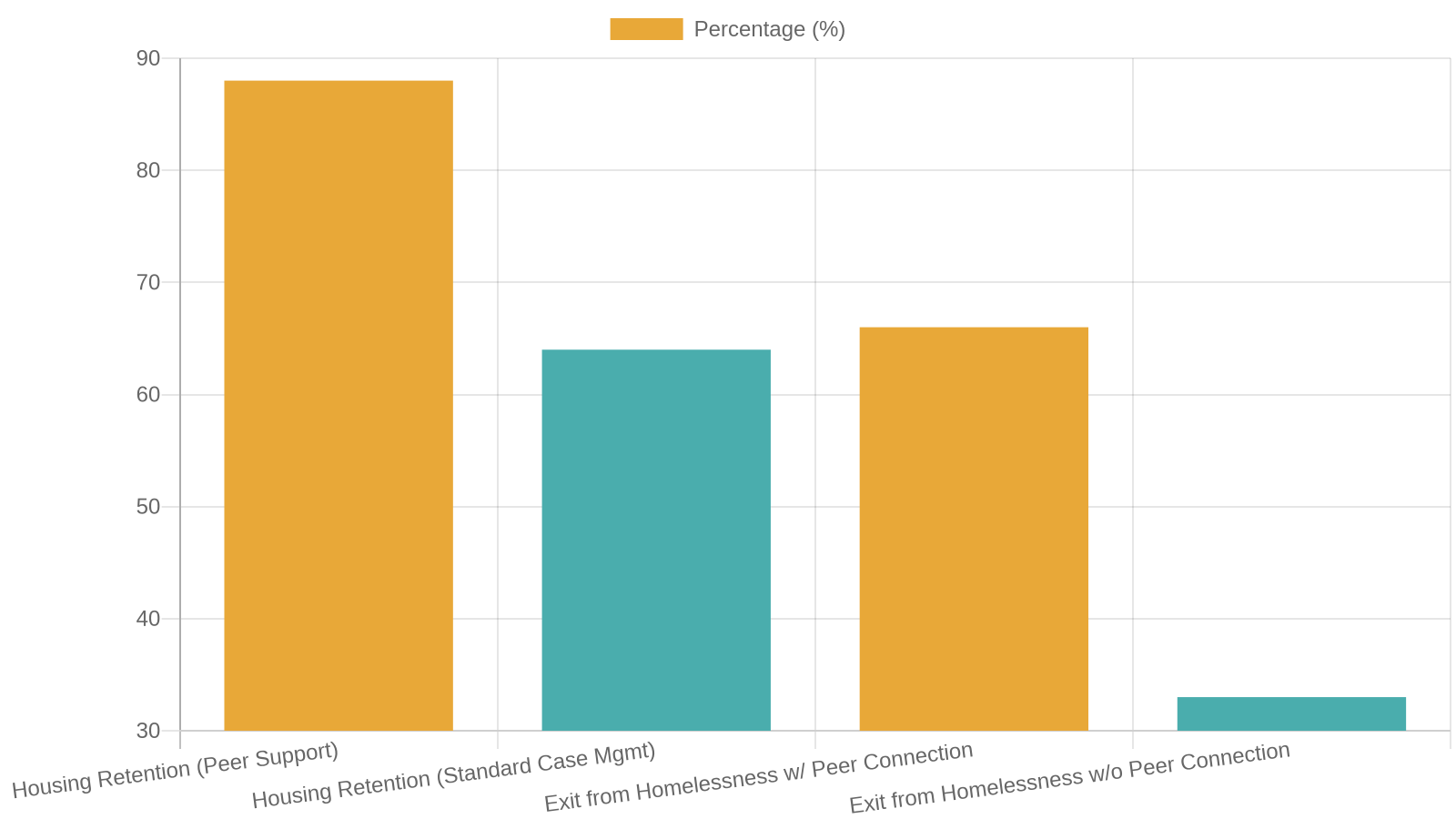
Quick answer: The Knoxville Youth Action Board (YAAB), operating within Tennessee's TN-501 Continuum of Care region, uses peer mentoring to help young adults ages 17 to 25 navigate housing instability. Peer mentors are young people with their own lived experience of homelessness who walk alongside peers to connect them with shelter, rental assistance, employment, and mental health resources in Knox County. Research shows peer support models improve housing retention rates by up to 40 percent compared to traditional case management alone. Whether you need support or want to become a mentor yourself, the Knoxville YAAB is a place where your story becomes your power.
What Is the Knoxville YAAB and Why Does It Matter?

Before you can understand why peer mentoring works in Knoxville, it helps to understand the organization behind it. The Youth Action Board of Tennessee is a statewide network of young adults with lived experience of homelessness who advise policymakers, advocate for better resources, and — critically — support each other directly through peer mentoring. The Knoxville chapter is one of the most active regional boards in the state.
A Network Built by and for Young Adults
The Knoxville Youth Action Board is part of Tennessee’s statewide YAAB network, anchored in the TN-501 Continuum of Care (CoC) region, which covers Knox County and surrounding areas. Unlike programs designed for young people by adults, the YAAB is designed with young people — members are ages 17 to 25 and bring firsthand knowledge of what it actually feels like to lose housing, couch-surf, or age out of foster care with nowhere to go.
This peer-led model isn’t just a feel-good idea. It’s grounded in evidence. Studies from the Chapin Hall research center at the University of Chicago found that young people who received peer support were significantly more likely to engage with services and maintain stable housing over a 12-month period than those who did not.
How the TN-501 Region Shapes Local Needs
Knoxville and Knox County sit within the TN-501 CoC region, one of Tennessee’s most active Continuums of Care. The region coordinates housing resources, emergency shelter, rapid rehousing, and permanent supportive housing for people experiencing homelessness — including a dedicated focus on transition-age youth (TAY), defined federally as ages 16 to 24.
According to the 2023 Point-in-Time Count for Tennessee, Knox County identified over 120 unsheltered young adults on a single night in January — and that number represents only those who could be counted. Many more were doubled up with friends, staying in motels, or in unstable situations that don’t appear in official tallies. The Knoxville YAAB exists to reach those young people, especially the ones who have been overlooked by traditional systems.
What Peer Mentoring Actually Looks Like Day to Day

Peer mentoring is one of those terms that can mean almost anything — or nothing — depending on who’s using it. In the context of the Knoxville YAAB, it has a specific, practical shape. Here’s what it actually looks like when a young adult reaches out for support or steps into a mentor role.
The Difference Between a Mentor and a Case Manager
A case manager is a professional assigned to your file. A peer mentor is someone who has been where you are. That distinction matters more than it might sound. When a peer mentor says, ‘I know how overwhelming it is to fill out a housing application when you haven’t slept in three days,’ they mean it literally — because they’ve done it.
Peer mentors in the Knoxville YAAB are not therapists or social workers. They are trained young adults who provide practical guidance, emotional support, and system navigation. They help peers understand what questions to ask at a shelter intake, how to appeal a housing denial, or how to find a same-day meal when money runs out. They meet people where they are — sometimes literally, in parks, libraries, or drop-in centers.
Core Activities Peer Mentors Provide
In Knoxville, YAAB peer mentors typically engage in a range of concrete activities:
- Housing navigation: Walking peers through applications for rapid rehousing, transitional housing, or permanent supportive housing programs available through the TN-501 CoC.
- Resource connection: Linking peers to Knox Area Rescue Ministries (KARM), Volunteer Ministry Center, Helen Ross McNabb Center, and other local providers.
- Document recovery: Helping peers obtain birth certificates, state IDs, and Social Security cards — documents that are often lost during housing instability and are required for almost every program.
- Employment and education referrals: Connecting peers to workforce development programs, GED pathways through Pellissippi State Community College, and job training opportunities in Knox County.
- Emotional check-ins: Regular, informal conversations that reduce isolation and build trust over time.
How Often and Where Mentoring Happens
Peer mentoring through the Knoxville YAAB is not a one-time appointment. It’s an ongoing relationship. Mentors and peers might connect weekly or biweekly, depending on need. Meetings happen in community spaces — libraries, coffee shops, drop-in centers — rather than clinical offices, which removes a major barrier for young people who feel uncomfortable or unsafe in institutional settings.
The Knoxville YAAB also participates in community events, resource fairs, and CoC planning meetings, meaning peer mentors are constantly expanding their knowledge of what’s available and feeding that information back to the people who need it most.
Why Lived Experience Is the Most Powerful Credential

There’s a reason the YAAB model specifically requires lived experience as a qualification for peer mentors — not just empathy, not just training, but actual personal experience with housing instability. That requirement isn’t a limitation. It’s the entire point. Here’s why it works.
Trust Is the Foundation of Every Successful Interaction
Research on youth homelessness consistently identifies distrust of systems as one of the top barriers to service engagement. Young people who have aged out of foster care, experienced family rejection, or had negative encounters with law enforcement or child welfare agencies often approach any new program with skepticism — and for good reason. They’ve been let down before.
Peer mentors break through that distrust in a way that credentialed professionals often cannot. When a mentor shares their own story — their own nights in a shelter, their own stack of rejection letters, their own moment of deciding to keep going — it signals something no training manual can teach: I am not here to judge you. I am here because I know this road.
What the Research Says About Peer Support Models
The evidence base for peer support in housing stability is growing rapidly. Key findings include:
- A 2021 study published in the American Journal of Public Health found that peer support specialists working with homeless youth improved housing retention by 38 percent over 12 months compared to standard case management alone.
- SAMHSA (Substance Abuse and Mental Health Services Administration) identifies peer support as an evidence-based practice for populations experiencing co-occurring mental health and housing challenges.
- The Chapin Hall Voices of Youth Count study found that young people who had a trusted peer connection were twice as likely to exit homelessness within six months as those without one.
These aren’t abstract statistics. They represent real young adults in real cities — including Knoxville — whose trajectories changed because someone who understood their experience showed up for them.
Housing Stability Resources Available Through the Knoxville CoC

One of the most practical things peer mentors do is help young adults understand the housing resource landscape in Knoxville — which is more varied and navigable than it might seem from the outside. Here’s a breakdown of the main program types available through the TN-501 Continuum of Care.
Emergency Shelter and Immediate Safety
When someone is in crisis — no place to sleep tonight — the first priority is safety. In Knox County, key emergency options for young adults include:
- Knox Area Rescue Ministries (KARM): Offers emergency shelter, meals, and case management. KARM has specific intake processes for young adults and can connect guests to longer-term housing programs.
- Volunteer Ministry Center (VMC): Provides day services, showers, laundry, and connections to housing resources. VMC’s street outreach team actively works to find unsheltered individuals.
- Helen Ross McNabb Center: Offers crisis stabilization and mental health services alongside housing support for young adults experiencing psychiatric crises alongside housing instability.
Peer mentors know the intake hours, eligibility rules, and what to bring to each of these locations — knowledge that takes months to acquire and that can make the difference between getting in or being turned away on a technicality.
Rapid Rehousing and Transitional Housing
Rapid Rehousing (RRH) is a program model that provides short-term rental assistance — typically 3 to 12 months — plus case management to help people move quickly from homelessness into their own apartment. In the TN-501 region, RRH funds are allocated through the CoC and administered by local agencies.
Transitional Housing (TH) programs offer a step between emergency shelter and independent living, often providing 6 to 24 months of subsidized housing with on-site support services. For young adults who need more time to build skills and stability, transitional housing can be a critical bridge.
Peer mentors help young adults understand the difference between these program types, identify which they may qualify for, and navigate the application process — which can be confusing and discouraging without guidance.
Permanent Supportive Housing for Young Adults with Complex Needs
For young adults with chronic patterns of homelessness or significant disabilities — including mental health conditions, substance use disorders, or physical disabilities — Permanent Supportive Housing (PSH) provides long-term subsidized housing with ongoing wraparound services. PSH is the most intensive housing intervention available through the CoC system.
Accessing PSH requires a formal assessment through the Coordinated Entry system, which is the standardized process Tennessee’s CoCs use to prioritize housing resources for those with the highest need. Peer mentors can walk alongside a young person through the Coordinated Entry process, helping them understand their assessment score, their rights, and what to expect while they wait for placement.
Education and Employment: Stability Beyond Four Walls

A roof over your head is the foundation — but it’s not the whole building. Peer mentors in the Knoxville YAAB know that lasting housing stability requires income, and income usually requires education or job training. That’s why YAAB support extends well beyond shelter referrals into education and employment pathways available right here in Knox County.
GED and High School Equivalency Pathways in Knox County
Housing stability and educational attainment are deeply connected. Young adults without a high school diploma or GED face significantly narrower employment options, which makes maintaining housing much harder. In Knoxville, key education pathways include:
- Pellissippi State Community College Adult Education: Offers free GED preparation and testing, including flexible scheduling for young adults who are working or in transitional housing.
- Knox County Schools Adult High School: Allows adults to earn a standard high school diploma at no cost.
- Tennessee Reconnect Grant: Covers tuition for eligible adults pursuing a certificate or associate degree at a Tennessee community or technical college — including Pellissippi State.
Peer mentors often have personal experience navigating these programs and can help peers understand eligibility, enrollment steps, and how to access childcare or transportation support that makes attendance possible.
Workforce Development and Job Training
Employment is the long-term engine of housing stability. In Knox County, young adults have access to several workforce development resources:
- Tennessee Career Centers (American Job Centers): Provide job search assistance, resume help, interview prep, and connections to employer partners. The Knoxville Career Center serves Knox and surrounding counties.
- Youth Employment Programs: Some CoC partner agencies offer transitional employment specifically for young adults with barriers to traditional hiring, including those with justice involvement or gaps in work history.
- Apprenticeship Tennessee: A state initiative connecting young adults to registered apprenticeships in skilled trades — construction, healthcare, IT, and more — that pay a wage while you learn.
YAAB peer mentors don’t just hand over a list of resources. They help peers figure out which option fits their situation, prepare for the first appointment, and follow up when things get complicated.
Mental Health and Wellness: Support That Doesn't Stigmatize

The Knoxville YAAB takes a whole-person approach to housing stability — and that means mental health is always part of the conversation. Peer mentors are trained to recognize when a peer might benefit from mental health support and to connect them with resources in a way that feels supportive, not clinical or judgmental.
Why Mental Health Is Inseparable from Housing Stability
Research consistently shows that over 50 percent of young adults experiencing homelessness have a diagnosable mental health condition — most commonly depression, anxiety, PTSD, or trauma responses to adverse childhood experiences. For many, the mental health challenge and the housing instability feed each other in a cycle that’s hard to break alone.
Peer mentors don’t diagnose or treat mental health conditions. But they do something equally important: they normalize talking about it. When a mentor says, ‘Yeah, I dealt with anxiety so bad I couldn’t make phone calls for weeks,’ they remove shame from the conversation. That openness often makes it easier for a peer to take the next step toward professional support.
Mental Health Resources in the Knoxville Area
For young adults in Knox County who are ready to access mental health support, key resources include:
- Helen Ross McNabb Center: Offers sliding-scale mental health services, crisis stabilization, and integrated care for people experiencing both mental health challenges and housing instability.
- Cherokee Health Systems: Provides integrated primary care and behavioral health services, with locations throughout East Tennessee and a strong track record serving uninsured and underinsured patients.
- TennCare and CoverKids: Tennessee’s Medicaid program covers mental health services for eligible young adults. Peer mentors can help peers apply for TennCare coverage if they don’t already have it.
- Crisis Text Line: Text HOME to 741741 for free, 24/7 crisis support — no phone call required.
Aging Out of Foster Care: What Knoxville YAAB Members Know

A significant portion of young adults experiencing homelessness in Knox County and across Tennessee have histories in the foster care system. Aging out of foster care without a stable support network is one of the most direct pathways to housing instability — and it’s one the Knoxville YAAB knows intimately.
The Foster Care Cliff and Why It Hits So Hard
In Tennessee, young people in foster care can receive extended services through Tennessee’s Extended Foster Care program up to age 21 — but many don’t know this option exists, and others face barriers to accessing it. For those who do age out without a stable landing place, the risks are severe: nationally, one in five young adults who age out of foster care will experience homelessness within two years of leaving care (Chapin Hall, 2017).
The transition is abrupt. One day you have a placement. The next, you’re expected to have an apartment, a job, and a support system — often without any of the family safety net that most young adults rely on well into their twenties. YAAB peer mentors who have lived this experience are uniquely positioned to help peers navigate it.
Tennessee-Specific Programs for Youth Aging Out
Tennessee has several programs specifically designed to support young adults transitioning out of foster care:
- Tennessee Fostering Success: A campus-based program at multiple Tennessee colleges — including the University of Tennessee Knoxville — that provides housing, financial support, and mentoring for current and former foster youth pursuing higher education.
- Chafee Independent Living Program: Federally funded, state-administered program offering life skills training, financial assistance, and housing support for youth ages 14 to 21 (and up to 23 in some categories) who are aging out of foster care.
- Tennessee DCFS Transitional Living Programs: Provide structured transitional housing and support services for young adults leaving state custody.
Peer mentors who have personally navigated these programs can tell you what the application actually requires, what the waiting lists look like, and how to advocate for yourself when the system moves slowly.
Knowing Your Rights as a Young Adult Experiencing Homelessness

One of the most empowering things peer mentors share with their peers is knowledge of their rights. When you know what you’re entitled to, you can advocate for yourself — and that changes everything. Here’s what every young adult in Knox County and across Tennessee should know.
Federal Protections You Should Know About
Young adults experiencing homelessness have legal rights that many people — including some service providers — don’t fully understand. Key federal protections include:
- McKinney-Vento Homeless Assistance Act: If you are 17 or under and still enrolled in K-12 school, McKinney-Vento guarantees your right to remain enrolled in your school of origin, receive transportation, and access services. For young adults 18 and over, McKinney-Vento protections shift but don’t disappear entirely.
- LGBTQ+ Non-Discrimination Protections: HUD rules prohibit discrimination based on sexual orientation and gender identity in federally funded housing programs. If you are turned away from a shelter or program for being LGBTQ+, that may be a violation of federal policy.
- Right to Privacy: You have the right to have your personal information protected under HMIS (Homeless Management Information System) privacy rules. Agencies collecting your data are required to explain how it will be used.
Tennessee-Specific Rights and Protections
At the state level, Tennessee young adults should know:
- Minor Consent Laws: In Tennessee, minors ages 16 and older can consent to certain medical and mental health services without parental permission — important for young adults who are estranged from family.
- Tenant Rights: Even if you’re in an informal housing arrangement (subletting, staying with a friend who pays rent), you may have tenant rights under Tennessee law. Knowing these rights can prevent illegal lockouts or evictions.
- Voting Rights: Tennessee residents who are 18 or older and not currently incarcerated for a felony conviction can register to vote — even if they don’t have a permanent address. Peer mentors can help you register using a shelter address or a P.O. box.
Peer mentors aren’t lawyers, but they are trained to know when a situation calls for legal help and how to connect peers with legal aid resources like Legal Aid of East Tennessee, which provides free civil legal services to low-income residents.
Peer Mentoring vs. Other Support Models: What's the Difference?
Understanding how peer mentoring compares to other forms of support helps young adults choose the right resource for their situation — and helps providers understand where peer mentors fit in the larger ecosystem.
How Peer Mentoring Compares to Other Support Models

Not all support models are created equal — and understanding the differences can help young adults and service providers make better decisions about what kind of support to seek or offer. The table below compares peer mentoring (as practiced by the Knoxville YAAB) with two other common support models: traditional case management and crisis hotlines.
How to Become a Peer Mentor with the Knoxville YAAB

Receiving support is powerful. Giving it is transformative. Many of the most impactful peer mentors in the Knoxville YAAB started out as the person who needed help — and discovered that their experience was exactly what someone else needed to hear. Here’s how you can step into that role.
Who Can Join and What the Process Looks Like
If you are between 17 and 25 years old and have personal experience with homelessness or housing instability, you are exactly who the Knoxville YAAB is looking for. You don’t need a degree, a perfect record, or years of volunteer experience. You need your story and your willingness to show up for someone else.
The process for joining typically involves:
- Reaching out to the Knoxville YAAB through the TN-501 regional page or the statewide YAAB contact form.
- An informal conversation with current YAAB members to learn more about the board and share your interest.
- Completing peer mentor training, which covers active listening, trauma-informed communication, boundary-setting, and resource navigation.
- Being matched with peers who are seeking support, based on your experience and availability.
YAAB membership also includes the opportunity to participate in advocacy work — attending CoC meetings, providing input on housing policies, and representing the voices of young adults at the local and state level.
What You Gain as a Mentor
Becoming a peer mentor isn’t just about giving — it’s also about growing. YAAB members consistently report that the experience builds skills that translate directly into employment and leadership:
- Public speaking and advocacy: YAAB members present at CoC meetings, community forums, and sometimes at the state legislature.
- Professional networking: You build relationships with housing providers, social workers, policymakers, and community leaders across Knox County and Tennessee.
- Resume and reference building: YAAB participation is recognized by employers and educational institutions as meaningful leadership experience.
- Community and belonging: Perhaps most importantly, you become part of a statewide network of young adults who understand your experience and are working to change the systems that created it.
Some YAAB members have gone on to careers in social work, public policy, community organizing, and nonprofit management — careers they discovered through their YAAB experience.
How Service Providers and CoC Partners Can Strengthen Peer Mentoring

Peer mentoring doesn’t happen in a vacuum. It works best when service providers, CoC partners, and community organizations actively support and integrate peer support into their work. If you’re a case manager, program director, or CoC partner in the TN-501 region, here’s how you can help peer mentoring thrive.
Integrating Peer Support into Your Programs
If you work for a CoC partner agency, a shelter, a workforce development program, or any organization serving transition-age youth in Knox County or across Tennessee, there are concrete ways to strengthen peer mentoring in your work:
- Hire peer specialists: Consider creating paid peer specialist positions within your organization. Peer specialists bring credibility with clients that credentialed staff alone cannot replicate — and they deserve to be compensated for that expertise.
- Refer to the YAAB: When a young adult in your program expresses interest in leadership, advocacy, or peer mentoring, connect them to the Knoxville YAAB. It’s a natural next step that benefits both the individual and the community.
- Include youth voice in planning: Invite YAAB members to participate in your agency’s program design, needs assessments, and CoC planning processes. Young adults with lived experience will identify gaps and solutions that professionals miss.
Training and Trauma-Informed Practice
Effective peer mentoring requires training — not just enthusiasm. The Knoxville YAAB provides peer mentors with foundational training in:
- Trauma-informed communication: Understanding how trauma affects behavior and communication, and responding in ways that don’t re-traumatize.
- Motivational interviewing basics: Techniques for having conversations that support a peer’s own goals rather than imposing an agenda.
- Boundary-setting: How to be genuinely supportive without taking on a peer’s crisis as your own — a critical skill for sustainable mentoring.
- Mandatory reporting awareness: Understanding what situations require reporting to authorities and how to handle those conversations with peers.
Service providers who want to deepen their own trauma-informed practice can explore resources through the Tennessee Department of Mental Health and Substance Abuse Services (TDMHSAS) and the National Center for Trauma-Informed Care.
Ready to Connect? Your Next Step with the Knoxville YAAB
Whether you’re looking for support, ready to give it, or working in a system that serves young adults across Tennessee — the Knoxville YAAB is a place to start. Here’s how to take the next step, wherever you’re coming from.
For Young Adults Seeking Support
If you’re a young adult in Knoxville or Knox County who is dealing with housing instability — or if you know someone who is — you don’t have to figure it out alone. The Knoxville YAAB connects young adults with peer mentors who get it, because they’ve lived it.
You can reach the Knoxville YAAB through the TN-501 regional YAAB page, where you’ll find contact information, upcoming events, and more about what the board is working on. There’s no judgment, no long intake form to start — just a conversation with someone who understands.
You can also explore the full statewide YAAB resources page for housing, employment, education, and mental health tools available across Tennessee.
For Young Adults Who Want to Get Involved
If you’re ready to turn your experience into leadership, the Knoxville YAAB wants to hear from you. Young adults ages 17 to 25 with lived experience of homelessness or housing instability are the backbone of this work — and your perspective is not just welcome, it’s essential.
Visit the YAAB join page to learn more about membership, peer mentor training, and how to get plugged into the statewide network. You can also explore what other regional YAABs across Tennessee are doing and find the board closest to you.
The Knoxville YAAB is proof that young people don’t just survive housing instability — they become the experts who help others through it. Your story has power. The YAAB is the place to use it.
Frequently Asked Questions
How do I connect with a peer mentor through the Knoxville YAAB?
You can reach the Knoxville YAAB through the TN-501 regional page at yaabtn.org/local-yaabs/tn-501/. From there you can find contact information and learn about upcoming events. There's no formal intake process to start — just reach out and someone will connect with you.
Do I have to be currently homeless to get support from the Knoxville YAAB?
No. The YAAB supports young adults who are currently experiencing homelessness, those who are housing-unstable (doubled up, at risk of eviction, in unsafe situations), and those who have experienced homelessness in the past and are working to maintain stability. If housing is a challenge for you, YAAB is here.
What age do you have to be to join the Knoxville YAAB as a peer mentor?
YAAB membership is open to young adults ages 17 to 25 who have lived experience of homelessness or housing instability. You don't need a degree or professional background — your personal experience is the qualification that matters most.
Is the Knoxville YAAB only for people who live in the city of Knoxville?
The Knoxville YAAB operates within the TN-501 Continuum of Care region, which covers Knox County and surrounding areas in East Tennessee. If you're in the broader Knoxville metro area, the TN-501 YAAB is your regional board. Tennessee also has YAAB chapters in Memphis, Nashville, Chattanooga, and other regions.
What is the Continuum of Care and how does it relate to YAAB?
A Continuum of Care (CoC) is a regional planning body that coordinates housing and services for people experiencing homelessness, funded in part by HUD. The Knoxville YAAB is embedded in the TN-501 CoC, meaning YAAB members advise the CoC on how programs and policies affect young adults — and help connect peers to CoC-funded resources like rapid rehousing and emergency shelter.
Can I join the YAAB if I have a criminal record or justice involvement?
Yes. The YAAB does not exclude young adults based on justice involvement. In fact, many YAAB members have navigated the intersection of housing instability and the justice system, and that experience is valuable to the work. Reach out through the TN-501 page to learn more about membership.