Quick answer: If you're a young adult ages 17 to 25 in Jackson or anywhere in West Tennessee and you're dealing with housing instability or homelessness, the Jackson/West TN Youth Action Board (YAAB) is a peer-led network that can help you find transitional housing, connect to local services, and even get involved in shaping the policies that affect your life. From emergency shelter referrals and rapid re-housing programs to education support and employment pathways, West Tennessee's Continuum of Care offers real options — and YAAB members who've been through it themselves can help you navigate every step.
1. What the Jackson/West TN YAAB Actually Is (and Why It Matters)

Before you can use a resource, you need to understand what it is. The Jackson/West Tennessee YAAB is not a shelter, not a case management agency, and not a government office. It’s a peer-led advisory and advocacy body made up of young adults who know what housing instability looks like from the inside — and who are working to make the system better for everyone coming behind them.
A Network Built by Young People, for Young People
The Jackson/West Tennessee Youth Action Board is part of the statewide YAAB Tennessee network — a group of young adults ages 17 to 25 who have lived experience of homelessness or housing instability. That’s not a credential you earn in a classroom; it’s something you know because you’ve been through it. YAAB members use that firsthand knowledge to advise local leaders, review programs, and push for changes that actually make sense for transition-age youth.
In West Tennessee, the YAAB operates within the TN-507 Continuum of Care region, which covers Jackson and the surrounding counties. The Continuum of Care (CoC) is the federally recognized system of organizations and agencies that coordinate housing and homeless services in a region. YAAB members sit at the table inside that system — not as guests, but as decision-makers with real input.
Why Lived Experience Changes Everything
When programs are designed without input from the people who use them, they often miss the mark. A shelter with a curfew that conflicts with a second-shift job, a housing application that requires documents a young person aging out of foster care doesn’t have — these are the kinds of barriers that YAAB members identify and fight to change. The Jackson/West TN YAAB brings that perspective directly to service providers and policymakers in the region, making the system more responsive to your actual life.
2. Understanding the TN-507 Continuum of Care Region

Tennessee is divided into multiple Continuum of Care regions, each with its own funding, providers, and youth board. The TN-507 CoC is the designated region for Jackson and West Tennessee — and knowing you’re in TN-507 is the first step to finding the right programs and the right people to help you.
Which Counties Does TN-507 Cover?
The TN-507 CoC covers Jackson and the broader West Tennessee area, including Madison County and surrounding rural and semi-rural communities. West Tennessee is distinct from the Memphis metro (TN-500) and the mid-state regions — it has its own service landscape, its own housing market pressures, and its own set of providers. Understanding which CoC you’re in matters because funding, shelter beds, and rapid re-housing slots are allocated at the CoC level.
- Madison County — anchored by Jackson, the largest city in the region
- Surrounding rural counties — often underserved, with fewer physical shelter options but some outreach programs
- Regional CoC Lead — the organization that coordinates HUD funding and data for the region
If you’re unsure whether you’re in TN-507 or a neighboring CoC, the YAAB Tennessee local board directory can help you find your region quickly.
How the CoC System Connects to Your Housing Options
The Continuum of Care isn’t just bureaucratic language — it’s the pipeline through which federal HUD dollars flow into local programs. In practical terms, the CoC is the reason there are emergency shelter beds, transitional housing units, and rapid re-housing vouchers available in Jackson. Every program that receives HUD funding through TN-507 is required to participate in the Homeless Management Information System (HMIS), which means your service history follows you and helps case managers connect you to the right resources faster.
For transition-age youth specifically, CoC-funded programs must meet certain youth-specific standards — including trauma-informed care practices and low-barrier entry policies where possible.
3. The 4 Main Types of Transitional Housing Available in West Tennessee

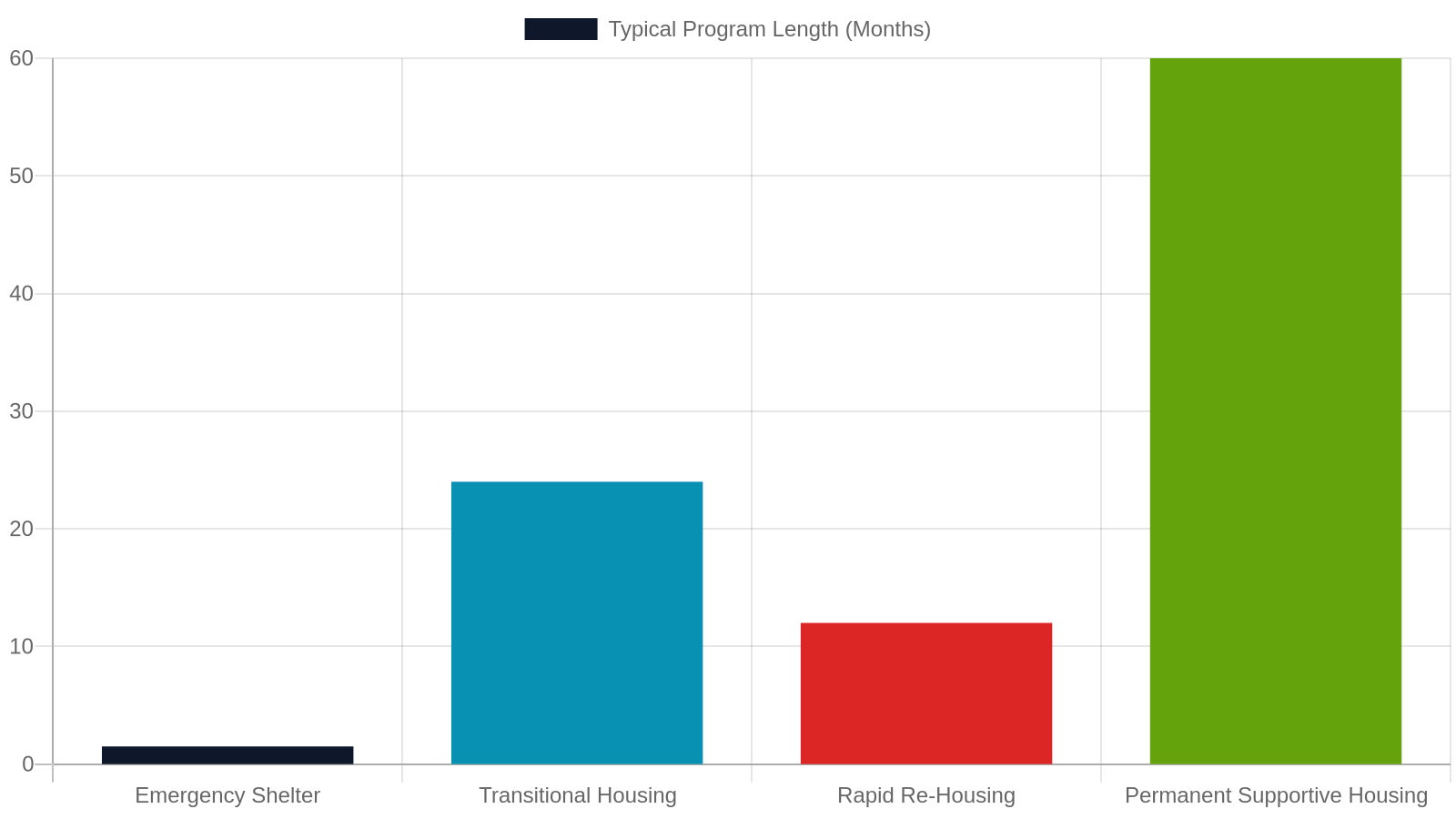
Not all housing programs are the same, and knowing the difference between your options can save you time and stress. In West Tennessee, transition-age youth can access four main categories of housing support — each designed for a different stage of your situation. Here’s what each one actually means in plain language.
Emergency Shelter: The First Door
Emergency shelter is short-term, usually 30 to 90 days, and designed to get you off the street or out of an unsafe situation immediately. In Jackson, emergency shelter options for young adults may include youth-specific beds at local nonprofits as well as general adult shelter programs that accept transition-age youth 18 and older. If you’re 17, your options may differ — YAAB members and local case managers can help you navigate age-specific eligibility rules.
Key things to know: many emergency shelters in West Tennessee operate on a first-come, first-served basis. Some have intake hours, meaning you need to arrive before a certain time to get a bed for the night. Always call ahead if you can.
Transitional Housing: The Bridge Program
Transitional housing is the middle step — longer than emergency shelter (typically up to 24 months) and designed to help you stabilize while you build toward permanent housing. Programs usually include case management, life skills support, and connections to employment and education. In West Tennessee, transitional housing programs funded through TN-507 are required to serve homeless individuals and families, and many prioritize youth.
Unlike emergency shelter, transitional housing often comes with more structure: regular check-ins with a case manager, participation in programming, and a housing plan with clear goals. That structure can feel like a lot — but YAAB members say it’s also what makes transitional housing genuinely life-changing when the program is a good fit.
Rapid Re-Housing and Permanent Supportive Housing
Rapid Re-Housing (RRH) moves you into your own apartment quickly, then provides short-term rental assistance and case management while you get on your feet. It’s one of the most effective interventions for transition-age youth because it skips the shelter step entirely and puts you in a stable, private space. Permanent Supportive Housing (PSH) pairs long-term housing with ongoing support services — it’s typically reserved for young adults with the highest barriers, including chronic homelessness or significant mental health needs. Both programs are funded through the TN-507 CoC and available to eligible youth in the Jackson area.
4. How to Get Referred Into a Transitional Housing Program

Knowing a program exists is only half the battle — knowing how to actually get into it is the other half. In West Tennessee, the pathway into most transitional housing programs runs through a system called Coordinated Entry. Here’s how it works and what you need to know before you start.
Coordinated Entry: The Front Door to the System
In Tennessee, most CoC-funded housing programs don’t take walk-in applications — you access them through a process called Coordinated Entry (CE). Coordinated Entry is a standardized system that assesses your needs and connects you to the most appropriate available program. Think of it as a triage system: you get assessed once, and that assessment follows you so you’re not re-telling your story at every door.
To access Coordinated Entry in West Tennessee, you typically start by calling 211 — Tennessee’s statewide information and referral line — or by visiting a local service provider that serves as a CE access point. YAAB members in the Jackson area can also help you find the right entry point if the system feels confusing.
What to Expect During the Assessment
The Coordinated Entry assessment uses a tool called the VI-SPDAT (or a youth-specific version) to evaluate your vulnerability and prioritize you for available programs. It asks questions about your housing history, health, safety, and support network. It can feel personal — because it is — but the goal is to match you with the right level of support, not to judge you.
- Be honest: the assessment works best when it reflects your real situation
- You can bring a friend, advocate, or YAAB peer supporter with you
- If you disagree with your score or feel the process wasn’t fair, you have the right to request a review
- Your information is protected under HMIS privacy rules
Documents That Help (and What to Do If You Don't Have Them)
Many housing programs ask for documents like a birth certificate, Social Security card, state ID, or proof of income. If you’re aging out of foster care or have been on the street, you may not have all of these — and that’s a barrier YAAB has specifically advocated to reduce. Low-barrier programs are designed to serve you even without full documentation. Ask any provider upfront: ‘Is this a low-barrier program?’ If they say no, ask what documents are required and whether they can help you obtain them. Many case managers can assist with vital records requests at little or no cost.
5. Education Pathways Paired With Housing Support in West Tennessee

Transitional housing isn’t just about having a roof over your head — the best programs treat housing as a foundation for everything else, including finishing your education. In West Tennessee, young adults in housing programs have real options for earning a diploma, getting into college, and accessing financial aid — even without parental support.
GED and HiSET Programs in the Jackson Area
Housing stability and education go hand in hand — it’s nearly impossible to focus on school when you don’t know where you’re sleeping. That’s why many transitional housing programs in West Tennessee actively connect residents to GED and HiSET preparation programs. The Tennessee College of Applied Technology (TCAT) Jackson campus and Jackson State Community College both offer adult education pathways, and some programs are free for income-eligible young adults.
Tennessee’s Adult Education program, administered through the Tennessee Department of Labor and Workforce Development, provides free GED/HiSET prep at sites across West Tennessee. You don’t need to be in a housing program to enroll — but if you are, your case manager can often help coordinate your schedule around your classes.
FAFSA, Financial Aid, and the McKinney-Vento Act
If you’ve experienced homelessness, you have specific rights under the McKinney-Vento Homeless Assistance Act when it comes to education. At the college level, this means you can self-certify as an independent student on the FAFSA without needing a parent’s tax information — which is a game-changer if you’ve been estranged from family or have aged out of foster care. This can unlock Pell Grants and other federal aid that might otherwise be out of reach.
Tennessee also has the Tennessee Promise and Tennessee Reconnect programs, which provide last-dollar scholarship funding for community and technical colleges. Many young adults in transitional housing in West Tennessee have used these programs to start or finish a degree while getting housed. Ask your case manager or a YAAB peer about how to apply.
6. Employment Resources for Young Adults in the Jackson Region

Stable housing makes it possible to hold a job. And a job makes it possible to keep stable housing. In West Tennessee, there are real employment programs designed specifically for young adults who are building from the ground up — no experience required to get started.
Tennessee Career Centers and Youth Employment Programs
The Tennessee Career Center in Jackson is a free resource for job seekers of all ages, but it has specific services for young adults, including resume help, interview prep, and connections to employers actively hiring in West Tennessee. The Career Center also administers WIOA Youth Program funding — the Workforce Innovation and Opportunity Act — which provides paid work experiences, occupational training, and support services for young adults ages 16 to 24 who face barriers to employment.
WIOA Youth services can include: tutoring and study skills, alternative secondary school options, summer employment opportunities, internships, financial literacy education, and guidance on postsecondary education. If you’re in a transitional housing program, your case manager may already have a relationship with the local Career Center and can make a warm referral.
Building Work History When You're Starting From Zero
One of the biggest challenges for young adults experiencing homelessness is building a work history when you’ve had gaps or have never held a formal job. Transitional jobs programs — sometimes offered through nonprofits or workforce boards — provide short-term, subsidized employment that gives you real experience and a paycheck while you stabilize. Some programs in West Tennessee partner directly with transitional housing providers so that work schedules and housing requirements don’t conflict.
- Look for programs that offer paid training in sectors like healthcare, construction, logistics, or food service
- Ask about Work Opportunity Tax Credit (WOTC) — employers who hire homeless youth can receive a tax credit, which makes them more willing to take a chance on someone without a long resume
- Keep records of every job, even informal or gig work — it all counts as experience
Transitional Housing Program Types at a Glance
Not sure which type of housing program fits your situation? Use this comparison to understand the key differences between the four main options available to transition-age youth in West Tennessee's TN-507 CoC.
7. Mental Health and Wellness Support Woven Into Housing Programs

Housing is a mental health issue — and mental health is a housing issue. The stress of homelessness and instability takes a real toll, and the best transitional housing programs in West Tennessee recognize that healing and stability have to happen together. Here’s what mental health support looks like inside and alongside housing programs in the Jackson region.
Trauma-Informed Care: What It Means for You
If you’ve experienced homelessness, housing instability, or foster care, there’s a good chance you’ve also dealt with trauma — and that trauma affects how you interact with systems, providers, and even housing programs. Trauma-informed care (TIC) is an approach that recognizes this reality and trains staff to respond in ways that don’t re-traumatize you. In West Tennessee, many CoC-funded programs for transition-age youth are required to use trauma-informed practices.
In practical terms, this means: staff who don’t ask you to justify your pain, intake processes that don’t feel like interrogations, and program rules that make sense rather than punish you for circumstances outside your control. If a program doesn’t feel safe or respectful, you have the right to ask questions, file a complaint, or seek a different program. YAAB members can help you advocate for yourself in those situations.
Mental Health Resources in the Jackson Area
West Tennessee Mental Health Institute and community mental health providers in the Jackson area offer services on a sliding-scale or no-cost basis for income-eligible young adults. Behavioral health services — including therapy, psychiatric evaluation, and substance use support — can often be co-located with or referred through transitional housing programs.
Tennessee also has a statewide crisis line: call or text 988 (the Suicide and Crisis Lifeline) at any time. This line connects you to trained counselors and can also help you access local mental health resources if you’re not in crisis but need support. You don’t have to be suicidal to call — any mental health struggle is a valid reason to reach out.
8. Aging Out of Foster Care in West Tennessee: What You Need to Know
Every year, hundreds of young people in Tennessee age out of the foster care system without a safe, stable place to go. In West Tennessee, the TN-507 CoC has specific programs and funding streams designed to catch young adults at this transition — but you have to know they exist to use them. Here’s what you need to know if you’re aging out of or have recently left foster care.
Extended Foster Care and the 21-Up Program
In Tennessee, young people in foster care can choose to remain in extended foster care until age 21 through the Tennessee Department of Children’s Services (DCS). This is a voluntary program — you opt in — and it provides continued placement support, a monthly stipend, Medicaid coverage, and connections to education and employment. If you’re approaching 18 and in foster care in West Tennessee, talk to your DCS worker now about extended care options before you age out without a plan.
If you’ve already aged out and are now experiencing housing instability, you may still qualify for certain transitional housing programs that prioritize former foster youth. The Chafee Foster Care Program funds independent living services for youth who have aged out, including housing assistance, education support, and mentoring. Ask any provider in the TN-507 CoC whether they receive Chafee funding and whether you qualify.
Building Your Support Network After Foster Care
One of the hardest parts of aging out of foster care is losing the built-in support structure — even an imperfect one — overnight. YAAB members who have aged out of foster care in West Tennessee often talk about the importance of intentionally building a support network of peers, mentors, and advocates to replace what the system provided.
- Connect with a local YAAB chapter — many members have aged out of foster care and understand exactly what you’re navigating
- Look into Transitional Living Programs (TLPs) — federally funded programs specifically for homeless youth ages 16 to 22 that provide up to 18 months of housing and support
- Tennessee’s Tennessee Voices for Children and similar advocacy organizations offer peer support and navigation help for former foster youth
- You are not behind — aging out of foster care is a systemic failure, not a personal one
9. How to Get Involved With the Jackson/West TN YAAB

The Jackson/West Tennessee YAAB isn’t just a resource you access — it’s a community you can join and help shape. If you have lived experience of homelessness or housing instability and you want to turn that experience into something that helps other young people in West Tennessee, the YAAB is where that happens.
Who Can Join and What Membership Looks Like
The Jackson/West Tennessee YAAB is open to young adults ages 17 to 25 who have lived experience of homelessness or housing instability — that includes couch surfing, staying in a shelter, doubling up with family or friends because you had nowhere else to go, or living in a car or other place not meant for habitation. You don’t have to be currently homeless to join. Your past experience is what qualifies you.
YAAB membership is not a second job — it’s a community. Members attend meetings, share their perspectives on local programs and policies, and connect with peers who get it. Some members go on to serve in formal advisory roles with CoC committees or statewide advocacy efforts. Others just want to be part of something and give back. Both are valid reasons to join.
What YAAB Members Actually Do Day to Day
YAAB members in West Tennessee do real work that has real impact. Recent examples of what YAAB members across Tennessee have done include: reviewing shelter policies and recommending changes to make them more youth-friendly, presenting at CoC planning meetings to represent youth perspectives, creating peer-to-peer resource guides, and advocating at the state legislature for funding that supports transition-age youth. In the Jackson region, the local YAAB is the voice of young people inside a system that has historically made decisions about youth without talking to youth.
- Attend local CoC meetings as a youth representative
- Help design and review programs before they launch
- Connect peers to resources and serve as a trusted navigator
- Participate in statewide YAAB convenings and advocacy days
- Build leadership skills that translate directly to employment and education
How to Connect With the TN-507 YAAB Today
Ready to get involved or just want to learn more? The Jackson/West Tennessee YAAB page on yaabtn.org is the best starting point — you can find contact information for the local board, learn about upcoming meetings, and reach out to connect with current members. If you’re not sure whether TN-507 is your region, the full list of Tennessee YAAB chapters covers every CoC region in the state. You can also visit the YAAB join page to express interest statewide and get connected to your local chapter.
There’s no application fee, no formal interview, and no requirement to have your life figured out before you show up. The YAAB is for young adults who are in the middle of figuring it out — just like everyone else in the room.
Frequently Asked Questions
How do I find transitional housing in Jackson Tennessee as a young adult?
Start by calling 211 — Tennessee's statewide referral line — to connect with the Coordinated Entry system in the TN-507 Continuum of Care region. A case manager will assess your needs and refer you to available programs. You can also reach out to the Jackson/West TN YAAB at yaabtn.org/local-yaabs/tn-507/ for peer navigation support.
What is the Youth Action Board (YAAB) and how does it help homeless youth in West Tennessee?
The YAAB is a statewide network of young adults ages 17 to 25 with lived experience of homelessness who advise local and state leaders on housing policy and programs. In West Tennessee, the Jackson/West TN YAAB operates within the TN-507 Continuum of Care and helps young adults navigate resources, advocates for system improvements, and connects peers to housing, education, and employment support.
Can I get housing help in West Tennessee if I aged out of foster care?
Yes. Former foster youth may qualify for Transitional Living Programs, Chafee Foster Care Program funding, and CoC-funded rapid re-housing or transitional housing. Tennessee also offers extended foster care until age 21 if you opt in before aging out. Contact 211 or the TN-507 CoC for a referral.
Do I need documents like an ID or birth certificate to get into a transitional housing program?
Not always. Low-barrier programs are designed to serve you even without full documentation. Ask any provider upfront whether they are a low-barrier program. Many case managers can also help you obtain vital records like birth certificates and Social Security cards at little or no cost.
What is the difference between transitional housing and rapid re-housing?
Transitional housing places you in a program-owned or -managed unit for up to 24 months with structured support services. Rapid re-housing moves you into your own private apartment quickly and provides short-term rental assistance and case management — typically 6 to 18 months — while you stabilize and build toward self-sufficiency.
How do I join the Jackson West Tennessee YAAB if I have lived experience of homelessness?
Visit yaabtn.org/local-yaabs/tn-507/ to find contact information for the local board and learn about upcoming meetings. You can also go to yaabtn.org/join/ to express interest. Membership is open to young adults ages 17 to 25 with lived experience of homelessness or housing instability — no formal application process or fee required.