Quick answer: Memphis YAAB members — young adults ages 17 to 25 with their own lived experience of homelessness or housing instability — act as peer navigators inside Shelby County's Continuum of Care (TN-502). They connect fellow young people to GED programs, workforce training, job placement services, and education support by drawing on personal knowledge of what actually works. Through one-on-one outreach, advocacy at the policy level, and partnerships with local employers and schools, Memphis YAAB is one of the most direct bridges between Shelby County's resources and the young adults who need them most.
1. What Memphis YAAB Actually Is — and Who It's For

Before diving into specific resources, it helps to understand exactly what the Memphis chapter of the Youth Action Board (YAAB) is — and why its peer-driven model produces results that traditional outreach often misses. Memphis YAAB is not a drop-in center, a shelter, or a case-management agency. It is a network of young adult leaders embedded inside Shelby County’s housing and services ecosystem, using their own stories and relationships to open doors for their peers.
Peer Power at the Core of TN-502
The Memphis Youth Action Board operates inside TN-502, the official Continuum of Care (CoC) region covering Shelby County. A Continuum of Care is the federally recognized network of housing and service providers that coordinates responses to homelessness in a given area. What makes YAAB different from a traditional social-service agency is simple: the people doing the connecting are peers — young adults who have themselves navigated homelessness, couch-surfing, aging out of foster care, or housing instability.
That lived experience is not a footnote. It is the credential. When a 19-year-old in Memphis hears about a job-training program from someone who actually completed it and landed a job, the information lands differently than a brochure on a waiting-room table.
Who Can Join or Be Served
Memphis YAAB is open to young adults ages 17 to 25 across Shelby County who are currently experiencing or have recently experienced homelessness or housing instability. You do not need to be housed right now to participate. You do not need a diploma or a clean record. You need to show up.
- Members: Young adults who want to advise, advocate, and lead.
- Peers seeking resources: Anyone in the age range who needs a warm referral to employment or education services.
- Case managers and CoC partners: Providers who want to collaborate and amplify peer-led outreach.
If you are a case manager or service provider in Shelby County, YAAB members can be your most credible bridge to young adults who distrust institutions.
2. The Scale of Youth Homelessness in Shelby County

Understanding why Memphis YAAB focuses so heavily on employment and education requires a clear-eyed look at what young people in Shelby County are actually up against. The numbers are sobering — but they also make the case for why peer-led navigation is so urgently needed.
What the Numbers Tell Us
Tennessee’s annual Point-in-Time (PIT) count — a federally mandated single-night census of people experiencing homelessness — consistently shows that transition-age youth (ages 18–24) make up roughly 10–15% of the unsheltered population statewide. In Shelby County specifically, the 2023 PIT count identified hundreds of youth experiencing homelessness on a single January night, and advocates widely acknowledge that youth homelessness is undercounted by 40–60% because many young people stay in cars, with friends, or in informal arrangements that census takers never reach.
Nationally, the U.S. Department of Housing and Urban Development (HUD) estimates that 4.2 million young adults ages 18–25 experience homelessness over the course of a year. Memphis’s share of that number is significant, and it is concentrated in communities already facing high rates of poverty and limited access to stable employment.
Why Employment and Education Are the Long-Term Fix
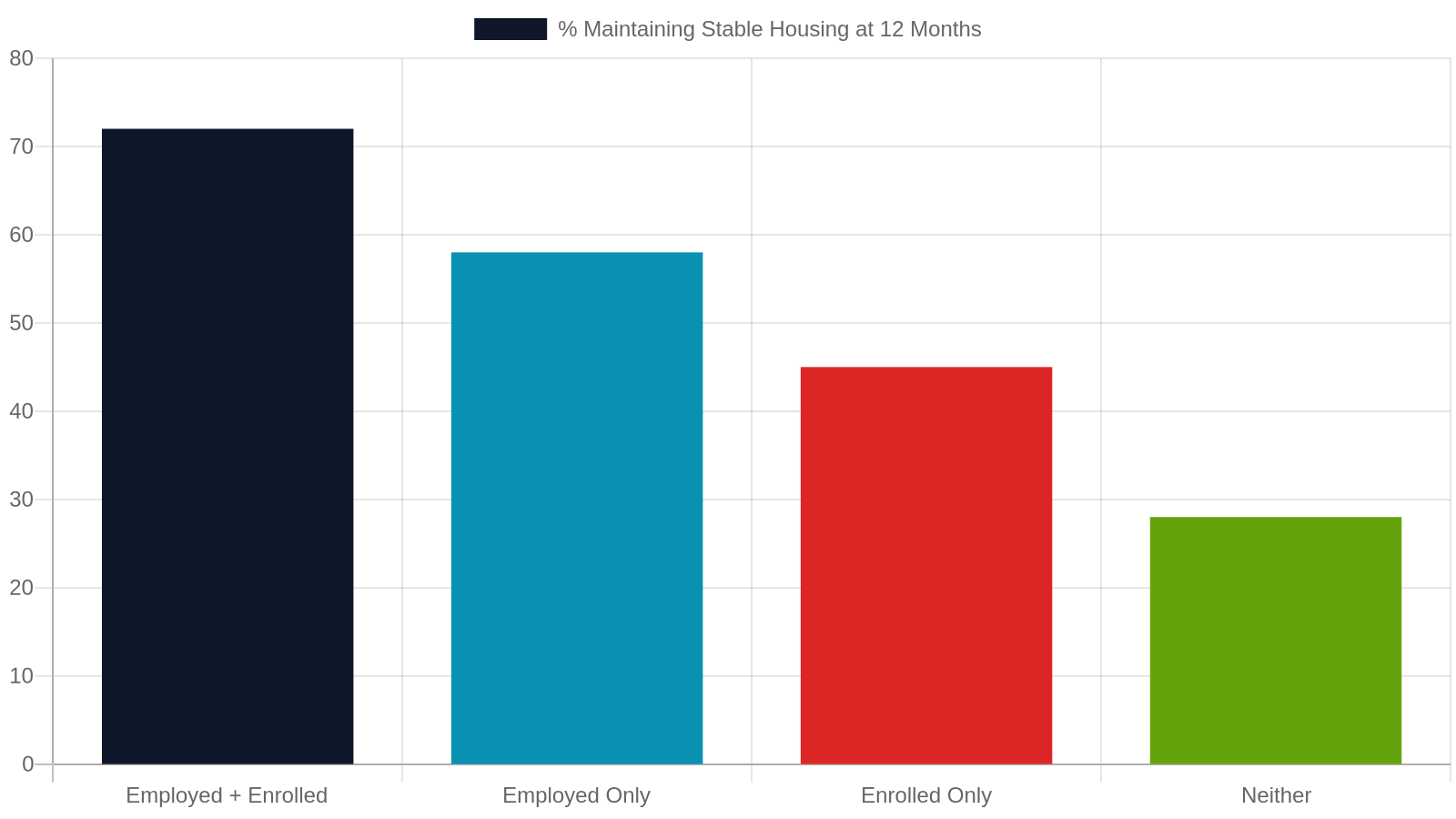
Housing stability and economic stability are inseparable for transition-age youth. Research from Chapin Hall at the University of Chicago’s Voices of Youth Count study found that young adults who are employed and enrolled in education are significantly less likely to return to homelessness after being housed. Specifically:
- Youth with a high school diploma or GED are twice as likely to maintain stable housing after 12 months compared to those without.
- Participation in workforce training programs reduces re-entry into homelessness by approximately 30%.
- Young adults with a checking account and basic financial literacy skills are 50% more likely to sustain independent housing after 18 months.
These are the outcomes Memphis YAAB is working toward every time a member helps a peer enroll in a GED class or land a first job.
3. How Peer Navigation Actually Works in Practice

The mechanics of peer navigation are deceptively simple: a person who has been through something shows another person the way through. But the execution requires trust, consistency, and deep knowledge of the local resource landscape. Here is how Memphis YAAB members actually do this work on the ground in Shelby County.
Warm Referrals vs. Cold Handoffs
A warm referral means a YAAB member personally introduces a peer to a program — sometimes walking in with them, sometimes making a phone call together, sometimes texting a contact at a workforce center to say, “My friend is coming in Thursday at 10 a.m.” A cold handoff is handing someone a flyer and hoping they show up. Research consistently shows that warm referrals dramatically increase program enrollment rates. One study by the National Alliance to End Homelessness found that peer-supported referrals increased service engagement by up to 45% compared to standard referrals.
Memphis YAAB members are trained to make warm referrals — not because they read a manual, but because they remember what it felt like to be handed a list of phone numbers and told to figure it out alone.
Street Outreach and Trusted Spaces
YAAB members do not only work inside offices. Peer outreach happens in the spaces where young people actually are: libraries, laundromats, parks, transitional housing programs, and drop-in centers across Memphis and Shelby County. Trust is built over time, not in a single intake meeting.
Common outreach touchpoints include:
- Connecting with youth at shelters like Door of Hope and other Shelby County emergency housing providers.
- Showing up at Memphis Public Libraries, which serve as de facto daytime resource hubs for many unhoused young adults.
- Partnering with Memphis Area Legal Services and other legal aid organizations for rights-based outreach.
- Attending CoC partner meetings to make sure youth voices are in the room when decisions are made.
4. Employment Resources Memphis YAAB Members Know Best

Memphis YAAB members have built informal but powerful maps of Shelby County’s employment landscape — knowing not just what programs exist, but which ones actually follow through, which ones are youth-friendly, and which ones have peer alumni who can vouch for the experience. Here are the employment resources that come up most often in peer conversations.
Tennessee Career Centers and Workforce Development
The Tennessee Career Center at Shelby County (operated through the Tennessee Department of Labor and Workforce Development) offers free job search assistance, résumé help, interview coaching, and connections to apprenticeships. YAAB members know which staff members are youth-friendly and how to navigate the intake process without getting lost in bureaucratic loops.
Key programs available through or alongside the Career Center include:
- WIOA Youth Program (Workforce Innovation and Opportunity Act): Funded training, paid work experiences, and mentorship for youth ages 16–24. Participants can receive up to $4,000–$6,000 in training support depending on eligibility.
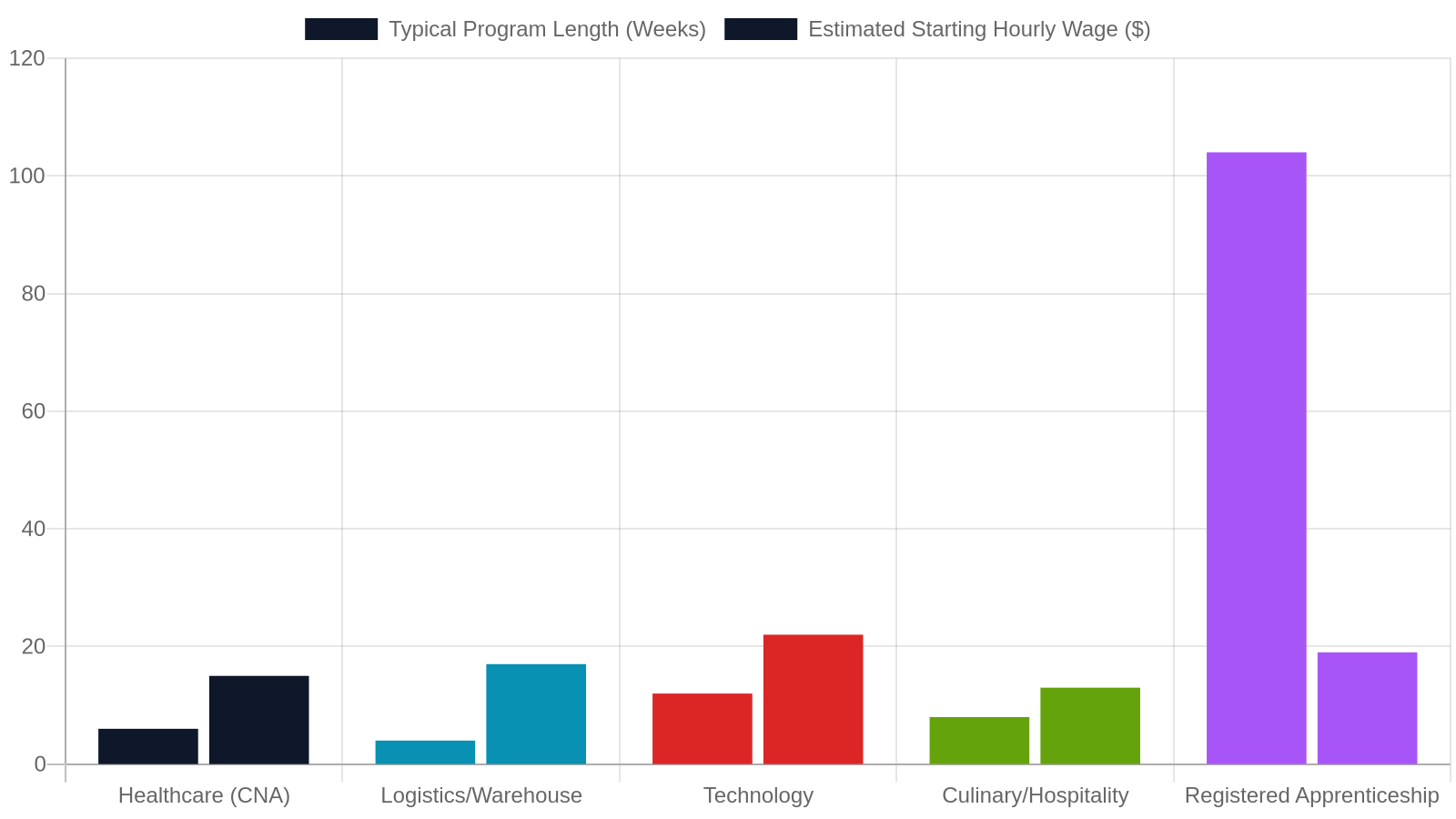
- Registered Apprenticeships: Earn-while-you-learn pathways in construction, healthcare, IT, and manufacturing — sectors with strong hiring demand in Shelby County.
- On-the-Job Training (OJT) subsidies: Employers receive reimbursement for up to 50% of a new hire’s wages during a training period, making them more willing to take a chance on a young adult with a gap in their work history.
Local Employers and Sector-Specific Pathways
Memphis has a strong logistics and supply-chain economy anchored by FedEx, AutoZone, and the Port of Memphis, plus a growing healthcare sector centered on the Memphis Medical District. YAAB members help peers understand which employers have youth-friendly hiring practices and which workforce programs feed directly into those industries.
Sector pathways YAAB members commonly navigate:
- Healthcare: Southwest Tennessee Community College’s Certified Nursing Assistant (CNA) program — as short as 6 weeks, with job placement rates above 80%.
- Logistics and warehousing: Forklift certification programs available through community partners, often at no cost for income-eligible youth.
- Technology: CodeCrew Memphis offers free coding and digital skills training specifically for youth of color in Shelby County.
- Culinary and hospitality: The Cossitt Library Culinary Program and other community kitchen initiatives provide hands-on training with industry connections.
5. Education Pathways: GED, College, and Everything Between

For many young adults in Shelby County, the path back to education is not a straight line. It involves figuring out childcare, work schedules, past school records, and sometimes a fear of institutions that have let them down before. Memphis YAAB members understand those barriers personally — and they know the programs that are actually designed to work around them.
Getting Your GED or High School Equivalency in Shelby County
A high school equivalency credential opens more doors than almost any other single step a young adult can take. In Tennessee, the primary pathway is the HiSET exam (Tennessee replaced the GED with HiSET in 2014, though many people still call it the GED). The exam covers five subjects: Language Arts Reading, Language Arts Writing, Mathematics, Science, and Social Studies. Passing all five earns a Tennessee High School Equivalency Diploma.
Free or low-cost preparation options in Shelby County include:
- Memphis Public Library Adult Education Program: Free classes and tutoring at multiple branches, no enrollment fee.
- Southwest Tennessee Community College Adult Education: Free HiSET prep classes at multiple campuses; also offers bridge programs into college credit courses.
- Literacy Mid-South: One-on-one tutoring matched to your schedule, including evening and weekend options.
The HiSET exam itself costs approximately $15 per subject in Tennessee, with fee waivers available for income-eligible youth through the Tennessee Department of Labor and Workforce Development.
Community College and Vocational Credentials
Southwest Tennessee Community College (Southwest) is one of the most accessible higher-education options for Shelby County youth. Tennessee Promise and Tennessee Reconnect — two state-funded scholarship programs — can cover tuition and fees for eligible students at no cost. Tennessee Promise is for recent high school graduates; Tennessee Reconnect is for adults 18 and older who do not yet have a college degree.
Key financial facts:
- Tennessee Promise covers up to 2 years of community college tuition after other aid is applied.
- Tennessee Reconnect covers tuition gaps for adults returning to school — no age cap for the adult version.
- FAFSA completion is required for both programs; YAAB members can connect peers to free FAFSA assistance through local partners.
- Southwest’s Dual Enrollment Gateway allows some youth still pursuing their HiSET to begin college coursework simultaneously.
Youth-Specific Education Support Programs
Several Shelby County programs specifically target transition-age youth who face barriers to traditional education pathways:
- Memphis City Schools Optional Programs and Alternative Schools: For youth ages 17–21 who need a flexible schedule to complete a diploma.
- YouthBuild Memphis: A federally funded program combining construction skills training with academic instruction toward a HiSET diploma. Participants receive a living stipend during the program.
- KIPP Memphis Alumni Support: Extended alumni services including college coaching for young adults who attended KIPP schools.
- Goodwill Excel Center: A tuition-free, accredited high school for adults in Memphis — open to anyone 18 and older without a diploma, with childcare and transportation support available.
YAAB members help peers figure out which program fits their actual life — not just which one sounds good on paper.
6. Financial Literacy and Benefits Navigation as a Foundation

A job and a diploma matter enormously — but they do not automatically translate into financial stability for a young adult who has never had a bank account, who owes back rent, or who does not know they qualify for benefits that could cover healthcare or food. Memphis YAAB members increasingly treat financial navigation as a core part of the peer-support toolkit.
Why Money Skills Come Before the Job Offer
Getting a job is step one. Keeping the money from that job — and making it work — is step two, and it is where many young adults who have never had stable financial footing run into trouble. Memphis YAAB members are increasingly connecting peers to financial literacy resources as a parallel track alongside employment and education, not an afterthought.
Core financial skills that peer navigators emphasize:
- Opening a second-chance checking account (available through several Memphis-area credit unions for people with ChexSystems flags).
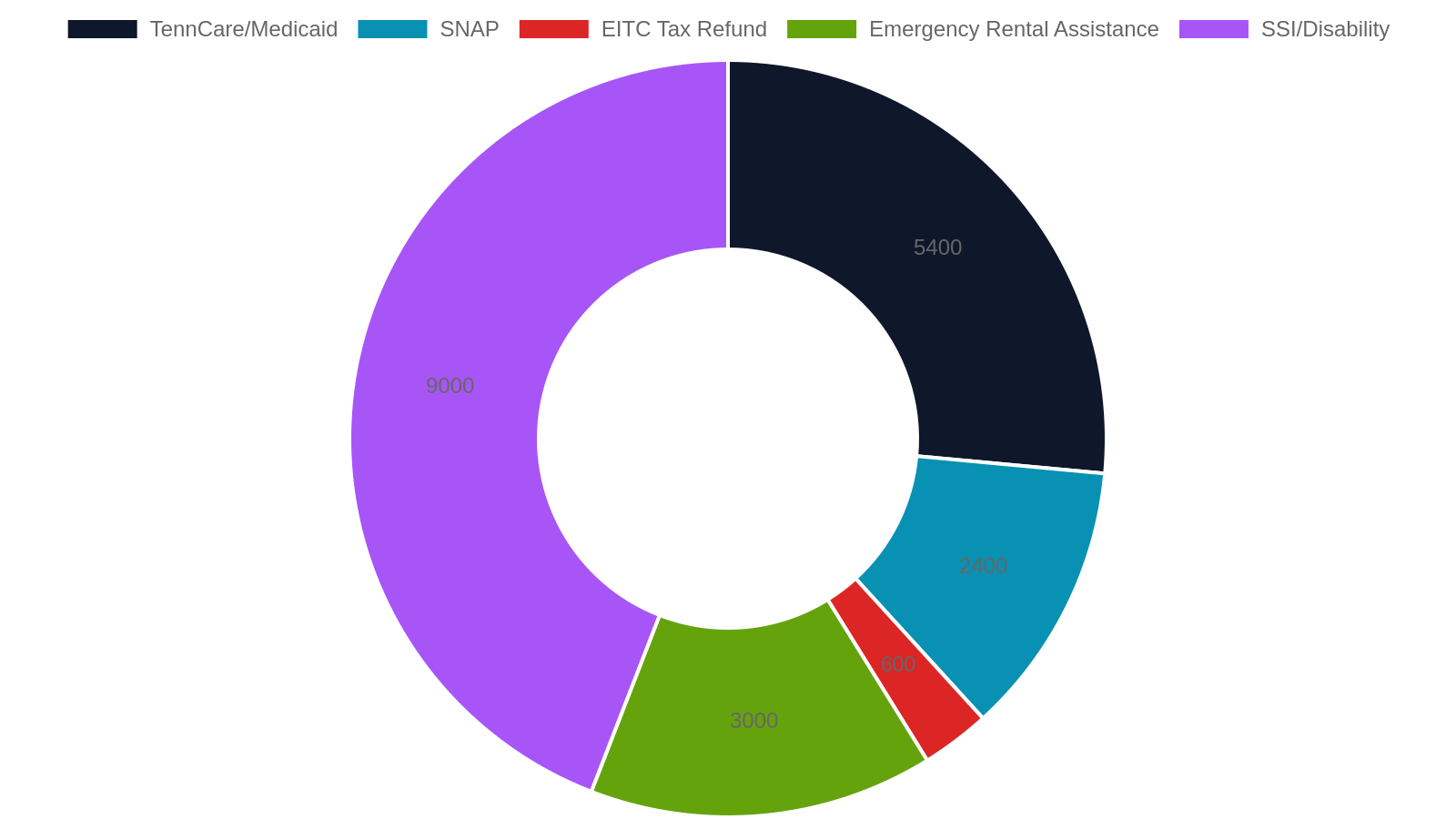
- Understanding pay stubs, tax withholding, and how to file a simple tax return — including accessing the Earned Income Tax Credit (EITC), which can return up to $600+ for a single young adult with no children.
- Avoiding predatory payday lenders concentrated in low-income Memphis neighborhoods — YAAB members know which alternative lenders and credit-building products are legitimate.
Public Benefits Young Adults Are Often Entitled To
Many transition-age youth in Shelby County do not know they qualify for public benefits that could significantly reduce their financial pressure while they build stability. YAAB members help peers navigate:
- TennCare (Medicaid): Available to low-income adults; former foster youth in Tennessee are eligible for TennCare until age 26 regardless of income.
- SNAP (Food Stamps): Single adults ages 18–49 must meet work requirements, but exemptions apply for those enrolled in education or training programs.
- Supplemental Security Income (SSI): For youth with qualifying disabilities — a YAAB member can connect peers to disability rights advocates who help with applications.
- Emergency Rental Assistance: Shelby County has administered multiple rounds of ERA funding; YAAB members stay current on what is available and how to apply quickly.
7. Mental Health Support as Part of the Employment Journey

You cannot separate mental health from the ability to hold a job or stay enrolled in school. Memphis YAAB members understand this from personal experience, and they approach mental health not as a separate issue but as a core part of the path toward stable employment and education. Here is how that shows up in peer navigation work.
The Connection Between Trauma and Employment Barriers
Research from the Substance Abuse and Mental Health Services Administration (SAMHSA) estimates that more than 50% of transition-age youth experiencing homelessness have a diagnosable mental health condition — yet fewer than 30% receive any treatment. Untreated anxiety, depression, PTSD, and trauma responses do not disappear when a young person starts a job. They show up in missed shifts, difficulty with supervisors, and cycles of getting hired and then losing a job within weeks.
Memphis YAAB members do not diagnose or treat mental health conditions. But they do normalize the conversation and connect peers to resources without stigma. That peer-level normalization — hearing from someone who has been through it — is often the first step toward a young adult seeking support.
Mental Health Resources in Shelby County
Key mental health access points that Memphis YAAB members frequently reference:
- Centerstone Tennessee (Memphis): Sliding-scale outpatient mental health services; accepts TennCare and uninsured clients.
- Methodist Le Bonheur Healthcare’s Behavioral Health services: Includes crisis stabilization and outpatient therapy for young adults.
- Crisis Text Line: Text HOME to 741741 — free, 24/7, confidential. YAAB members share this widely because it requires no insurance and no appointment.
- SAMHSA National Helpline: 1-800-662-4357 — free, confidential, 24/7 referrals to local treatment facilities.
- Peer Support Specialists: Several Shelby County providers employ certified peer support specialists — adults with lived experience of mental health challenges — as part of their care teams. YAAB members can help peers request a peer specialist specifically.
8. How YAAB Members Influence Policy — Not Just Programs

Peer navigation is powerful. But Memphis YAAB members also know that connecting one person at a time to existing resources is not enough if those resources are underfunded, poorly designed, or inaccessible. That is why advocacy — changing the systems, not just working around them — is built into YAAB’s DNA.
Youth Voice in the TN-502 Continuum of Care
Memphis YAAB is not just a referral network — it is a policy voice. Members participate in TN-502 CoC planning meetings, advise on how federal HUD funding is allocated, and provide testimony about what is working and what is not in Shelby County’s youth-serving system. This is meaningful power: CoC regions collectively manage hundreds of millions of dollars in federal homeless assistance funding annually, and the priorities they set determine which programs get funded and which do not.
When YAAB members say that a particular job-training program has a 3-month waitlist that causes young adults to give up, or that a shelter’s curfew conflicts with second-shift work hours, those observations can change policy. That is the point of having youth at the table.
Statewide Advocacy Connections
Memphis YAAB connects to a statewide network of regional YAABs across Tennessee — including chapters in Nashville (TN-500), Knoxville (TN-501), Chattanooga (TN-503), Jackson/West TN (TN-504), Upper Cumberland (TN-506), Northeast TN (TN-507), and the Balance of State (TN-509). This statewide infrastructure means that advocacy wins in Memphis can inform policy changes that benefit young adults across Tennessee.
YAAB members have contributed to:
- Recommendations on youth-specific housing program design submitted to the Tennessee Interagency Council on Homelessness.
- Input on state workforce development priorities affecting WIOA Youth funding allocations.
- Peer-informed data collection improvements to better count youth experiencing hidden homelessness in the annual PIT count.
To learn more about YAAB’s broader advocacy work, visit the YAAB advocacy page.
Shelby County Employment and Education Pathways at a Glance
Use this table to compare the most common pathways Memphis YAAB members connect peers to in Shelby County. Program details change — a YAAB peer navigator can help you confirm current availability and eligibility.
9. What Makes Memphis YAAB Different from Other Youth Services

Shelby County has dozens of organizations working on youth homelessness, employment, and education. So what specifically makes Memphis YAAB worth knowing about — for young adults seeking help and for service providers looking to collaborate? The answer comes down to a few core differences that show up in practice every day.
Lived Experience as the Core Qualification
Most youth-serving organizations are staffed by well-meaning adults who have studied homelessness, poverty, and workforce development. Memphis YAAB is led by young adults who have lived those experiences. That is not a small distinction. It affects the language used, the hours kept, the trust extended, and the practical knowledge shared.
A YAAB member knows that the bus route to the Career Center stops running at 6 p.m. They know which shelter staff members are genuinely helpful and which ones make young adults feel judged. They know that the GED prep class on Tuesday evenings is less crowded and easier to get into than the Monday morning one. This kind of hyper-local, experiential knowledge cannot be found in a program directory.
Non-Stigmatizing, Youth-Centered Approach
Many young adults who have experienced homelessness have also experienced service systems that felt punishing, condescending, or designed for someone else. YAAB’s peer model is explicitly designed to counter that. There is no intake form that asks you to relive your worst moments before you can get help. There is no waiting room that makes you feel like a problem to be managed.
YAAB members approach peers as whole people with strengths, goals, and the right to make their own decisions. The role of a peer navigator is to expand options, not to prescribe a path. If a young adult wants to pursue welding and not college, YAAB helps with welding. If they want to start with mental health support before tackling employment, YAAB supports that too.
10. Stories from the Ground: What Peer Navigation Looks Like

Numbers and program lists are useful. But the most honest way to understand what Memphis YAAB does is through the kinds of real-world situations that peer navigators encounter and work through every week. The following composite examples — drawn from the types of experiences YAAB members regularly describe — illustrate what this work looks like on the ground.
From Couch-Surfing to Certified Nursing Assistant
Consider a composite example drawn from the kinds of situations Memphis YAAB members navigate regularly: A 21-year-old who aged out of foster care at 18 and spent three years couch-surfing across Memphis connects with a YAAB member at a library outreach event. She has a 10th-grade education, no work history on paper (though she has been doing informal childcare for years), and no idea that Southwest Tennessee Community College has a 6-week CNA program that costs nothing with TennCare and WIOA funding stacked together.
A YAAB member walks her through the enrollment process, connects her to a peer who completed the same program, and helps her apply for a second-chance checking account so her first paycheck has somewhere to go. Six months later, she is employed full-time at a Memphis-area nursing facility and enrolled in Southwest’s LPN bridge program. That is what warm referral looks like in practice.
From Dropout to HiSET to Community College
Another common scenario: A 19-year-old who left high school during a period of housing instability wants to go back to school but assumes college is not for him. A YAAB member connects him to the Goodwill Excel Center, where he earns his high school diploma in 14 months while working part-time. A YAAB member then walks him through the Tennessee Reconnect application — covering his tuition at Southwest Tennessee Community College — and connects him to the college’s peer mentoring program so he has support once he is enrolled.
These are not exceptional outcomes. They are what happens when a young adult gets the right information from someone they trust, at the right moment, with follow-through that does not disappear after the first meeting.
11. For Case Managers and CoC Partners: How to Work with Memphis YAAB

Memphis YAAB’s peer navigation model works best when it is embedded in a broader network of professional services — not siloed from them. If you are a case manager, Continuum of Care partner, or service provider in Shelby County, here is how to make the most of what YAAB offers.
Collaborative Referral and Co-Navigation
If you are a case manager, social worker, or service provider working with transition-age youth in Shelby County, Memphis YAAB is a resource for your clients — and for you. YAAB members can serve as co-navigators alongside professional case managers, providing the peer-level trust and practical knowledge that complements clinical expertise.
Effective collaboration looks like:
- Referring clients to YAAB outreach events and letting them know a peer (not a case manager) will be there.
- Inviting YAAB members to participate in case conferences or transition planning meetings — with the young adult’s consent.
- Sharing program updates and resource changes with YAAB so peer navigators have current information.
- Treating YAAB members as equal partners in the service ecosystem, not as volunteers to be managed.
Understanding the Limits — and the Strengths
YAAB members are peer navigators, not licensed counselors, case managers, or legal advocates. They do not provide clinical services, manage benefits cases, or represent youth in legal proceedings. What they provide is something those services often cannot: credible, lived-experience guidance and trust-based relationship.
The most effective partnerships between YAAB and professional providers recognize this complementarity. A case manager handles the paperwork and the clinical assessment. A YAAB peer helps the young adult actually show up, stay engaged, and believe the process is worth it. Both roles are essential. Neither replaces the other.
To learn more about youth homelessness in Tennessee and how YAAB fits into the statewide response, the YAAB website has detailed context for providers and partners.
Ready to Connect with Memphis YAAB in Shelby County?

Everything described in this article — the job-training programs, the GED pathways, the financial navigation, the policy advocacy — is accessible to you. Memphis YAAB members are not gatekeepers. They are peers who have walked similar roads and who are ready to walk alongside you. Here is how to take the next step in Shelby County.
How to Get Involved as a Young Adult
If you are a young adult ages 17 to 25 in Shelby County — whether you are currently experiencing housing instability or you have been through it and want to help others — Memphis YAAB has a place for you. You do not need to have everything figured out. You do not need a résumé or a diploma to start. You need to be willing to show up and share what you know.
Getting involved can mean:
- Attending a Memphis YAAB meeting or outreach event to see what it is about before committing to anything.
- Connecting with a peer navigator who can help you access employment or education resources right now.
- Becoming a YAAB member yourself and using your experience to open doors for others.
The best first step is to visit the Memphis YAAB page for TN-502 to find current meeting information, contact details, and upcoming events in Shelby County. Your experience is not a liability — it is exactly what this work is built on.
Connect with YAAB Across Tennessee
Memphis YAAB is part of a statewide network. If you are in another part of Tennessee — or if you know someone who is — regional YAABs operate across the state. You can find your local chapter and explore how to get involved through the full list of Tennessee YAAB chapters.
Whether your goal is to find a job, finish your education, get connected to housing support, or become an advocate who changes the system for the next young person — YAAB is built by and for people like you. In Shelby County, in Memphis, and across Tennessee, young adults with lived experience are leading the way. You can be one of them.
Frequently Asked Questions
How do I contact Memphis YAAB in Shelby County?
You can find current contact information, meeting schedules, and upcoming events for the Memphis YAAB chapter (TN-502) at yaabtn.org/local-yaabs/tn-502/. The page is updated regularly with the latest ways to connect.
Do I have to be currently homeless to get help from Memphis YAAB?
No. Memphis YAAB serves young adults ages 17 to 25 who are currently experiencing or have recently experienced homelessness or housing instability — including couch-surfing, staying in motels, or living in unsafe situations. You do not have to be sleeping outside to qualify for peer navigation support.
What is the WIOA Youth Program and how do I apply in Shelby County?
The WIOA Youth Program (Workforce Innovation and Opportunity Act) provides free job training, paid work experiences, and mentorship for income-eligible youth ages 16–24. In Shelby County, you can apply through the Tennessee Career Center. Memphis YAAB members can walk you through the process and connect you with a youth-friendly contact at the Career Center.
Can I get my GED for free in Memphis?
Yes. Tennessee uses the HiSET exam (often still called the GED), and free preparation classes are available through Memphis Public Libraries and Southwest Tennessee Community College's Adult Education program. The exam itself costs about $15 per subject, with fee waivers available for income-eligible youth. YAAB members can help you access those waivers.
I aged out of foster care in Tennessee — what benefits am I entitled to?
Former foster youth in Tennessee are eligible for TennCare (Medicaid) until age 26, regardless of income. You may also qualify for SNAP, emergency rental assistance, and education support through programs like Tennessee Reconnect. A Memphis YAAB peer navigator can help you figure out exactly what you qualify for and how to apply.
How is YAAB different from a regular social service agency?
YAAB is led by young adults with their own lived experience of homelessness and housing instability — not by outside professionals. That peer-to-peer model means the people connecting you to resources have actually used them and can give you honest, practical guidance. YAAB members are navigators and advocates, not case managers or counselors.