Quick answer: If you're a young adult ages 17 to 25 in Tennessee who has experienced homelessness or housing instability, you can join the Youth Action Board (YAAB) of Tennessee and use your lived experience to shape the housing policies and programs that affect you and your peers. YAAB operates in eight Continuum of Care regions statewide — from Memphis to Knoxville — and offers leadership training, peer connection, stipends, and a real seat at the table where decisions get made. No prior experience or credentials required; your story is the qualification.
What Is YAAB and Why Does It Exist?

Before you can decide whether YAAB is right for you, it helps to understand what it actually is, where it came from, and what problem it was built to solve. YAAB isn’t a social service you receive — it’s a leadership structure you join. Here’s the foundation.
A Board Built by and for Young People
The Youth Action Board of Tennessee — known as YAAB — is a statewide network of young adults ages 17 to 25 who have lived experience of homelessness or housing instability. That phrase “lived experience” is key: YAAB was built on the belief that the people most affected by a problem are the most qualified to help solve it.
YAAB members don’t just receive services — they advise local and state leaders, review funding decisions, and help design the programs that serve transition-age youth across Tennessee. Think of it as a youth-led advisory board with actual power to influence policy inside the Continuum of Care (CoC) system — the federally recognized network of organizations that coordinate homeless services in each region.
The Problem YAAB Is Responding To
Youth homelessness in Tennessee is not a small problem. Nationally, an estimated 4.2 million young adults ages 18 to 25 experience homelessness in a given year, according to the True Colors United 2020 report. In Tennessee, transition-age youth — especially those aging out of foster care, LGBTQ+ youth, and young people of color — face disproportionately high rates of housing instability.
Young adults aging out of foster care are particularly vulnerable: research shows that one in five youth who age out of foster care will experience homelessness within two years. YAAB exists because these numbers don’t have to be permanent — and because young people themselves have the clearest vision of what needs to change. Learn more at YAAB’s youth homelessness resource page.
Who Can Join YAAB? Understanding the Eligibility

One of the most common questions young people ask is: “Am I even eligible?” The answer is probably yes — and the bar is lower than you think. Here’s a clear breakdown of who YAAB is looking for and what the membership criteria actually mean in plain language.
The Core Requirements
YAAB membership is open to young adults who meet a straightforward set of criteria. You must be:
- Between ages 17 and 25 at the time you join
- A current or former resident of Tennessee (or actively connected to a Tennessee CoC region)
- Someone with lived experience of homelessness or housing instability — this includes couch surfing, staying in a shelter, living in a car, doubling up with family or friends, or any situation where you lacked a safe, stable place to sleep
You do not need a high school diploma, a job, or any formal advocacy experience to join. Your experience is the credential.
What 'Lived Experience' Really Means
A lot of young people disqualify themselves before they even apply because they think their situation “wasn’t bad enough.” YAAB’s definition of lived experience is intentionally broad. If you’ve ever:
- Stayed somewhere temporarily because you had nowhere else to go
- Slept in a shelter, transitional housing, or a vehicle
- Aged out of foster care without stable housing
- Been kicked out or asked to leave your home
- Traded something for a place to stay
…then your experience counts. YAAB specifically centers the voices of young people who have been overlooked by systems — and that includes you.
The 8 YAAB Regions Across Tennessee

Tennessee is a big state with very different housing landscapes — what’s happening in Memphis looks different from what’s happening in the Upper Cumberland. That’s why YAAB is organized regionally. Here’s a map of where YAAB operates and what showing up locally actually looks like.
Finding Your Local YAAB Chapter
Tennessee’s Continuum of Care system is divided into eight regions, and YAAB has a chapter — or is actively building one — in each of them. Your local YAAB is where you’ll attend meetings, build relationships, and connect your advocacy to the specific housing challenges in your community. The eight regions are:
- TN-500 — Chattanooga / Hamilton County
- TN-501 — Memphis / Shelby County
- TN-502 — Knoxville / Knox County
- TN-503 — Nashville / Davidson County
- TN-504 — Morristown / Upper East Tennessee
- TN-506 — Upper Cumberland
- TN-507 — Jackson / West Tennessee
- TN-509 — Northeast Tennessee
Visit the local YAABs directory to find the chapter closest to you and learn about upcoming meetings in your area.
What Happens at a Local YAAB Meeting
Local YAAB chapters meet regularly — typically monthly or bi-monthly — and meetings are designed to be accessible and welcoming, not formal or intimidating. At a typical meeting you might:
- Hear updates on local housing policy and CoC funding decisions
- Share your own experiences and ideas in a peer-to-peer setting
- Work on advocacy projects like public comment letters or presentations to local CoC boards
- Connect with other young adults who get what you’ve been through
- Learn about resources for housing, employment, mental health, and education
Meetings are usually held in community spaces — libraries, nonprofit offices, or online — and many chapters offer transportation support or bus passes to help members attend.
What YAAB Members Actually Do: Real Roles and Responsibilities

Joining YAAB isn’t just about attending meetings — it’s about doing real work with real impact. Here’s a concrete look at what members actually spend their time on and how that work connects to change on the ground in Tennessee.
Advising the Continuum of Care
One of YAAB’s core functions is providing youth perspective inside the official CoC decision-making process. CoC boards make decisions about which programs get funded, which populations are prioritized, and how resources are allocated. YAAB members attend CoC meetings, serve on committees, and submit formal recommendations — meaning your voice directly influences how millions of dollars in housing funds are spent in your region.
This is not symbolic participation. HUD (the U.S. Department of Housing and Urban Development) increasingly requires CoCs to demonstrate meaningful youth engagement, and YAAB members fulfill that role with real authority.
Advocacy, Policy, and Public Voice
Beyond CoC meetings, YAAB members engage in broader advocacy work. This can include:
- Testifying at state legislative hearings on youth homelessness bills
- Meeting with city council members or county commissioners
- Participating in statewide advocacy days at the Tennessee State Capitol in Nashville
- Sharing your story (on your own terms) with media, researchers, or policymakers
- Reviewing and giving feedback on new housing programs before they launch
YAAB provides training and coaching so you’re never thrown into these situations unprepared. You’ll know what to say, who you’re talking to, and what outcome you’re working toward. Check out the YAAB advocacy page to see current campaigns and priorities.
Peer Support and Community Building
Advocacy isn’t only about policy — it’s also about showing up for each other. YAAB members often serve as informal peer navigators, helping other young adults find shelter, apply for benefits, or connect with mental health support. This peer-to-peer model is intentional: research consistently shows that young people are more likely to trust and engage with services when they’re connected by someone who has shared their experience. Being a YAAB member means you’re part of a community that has your back — and you have theirs.
Benefits of Joining YAAB: What You Get Out of It

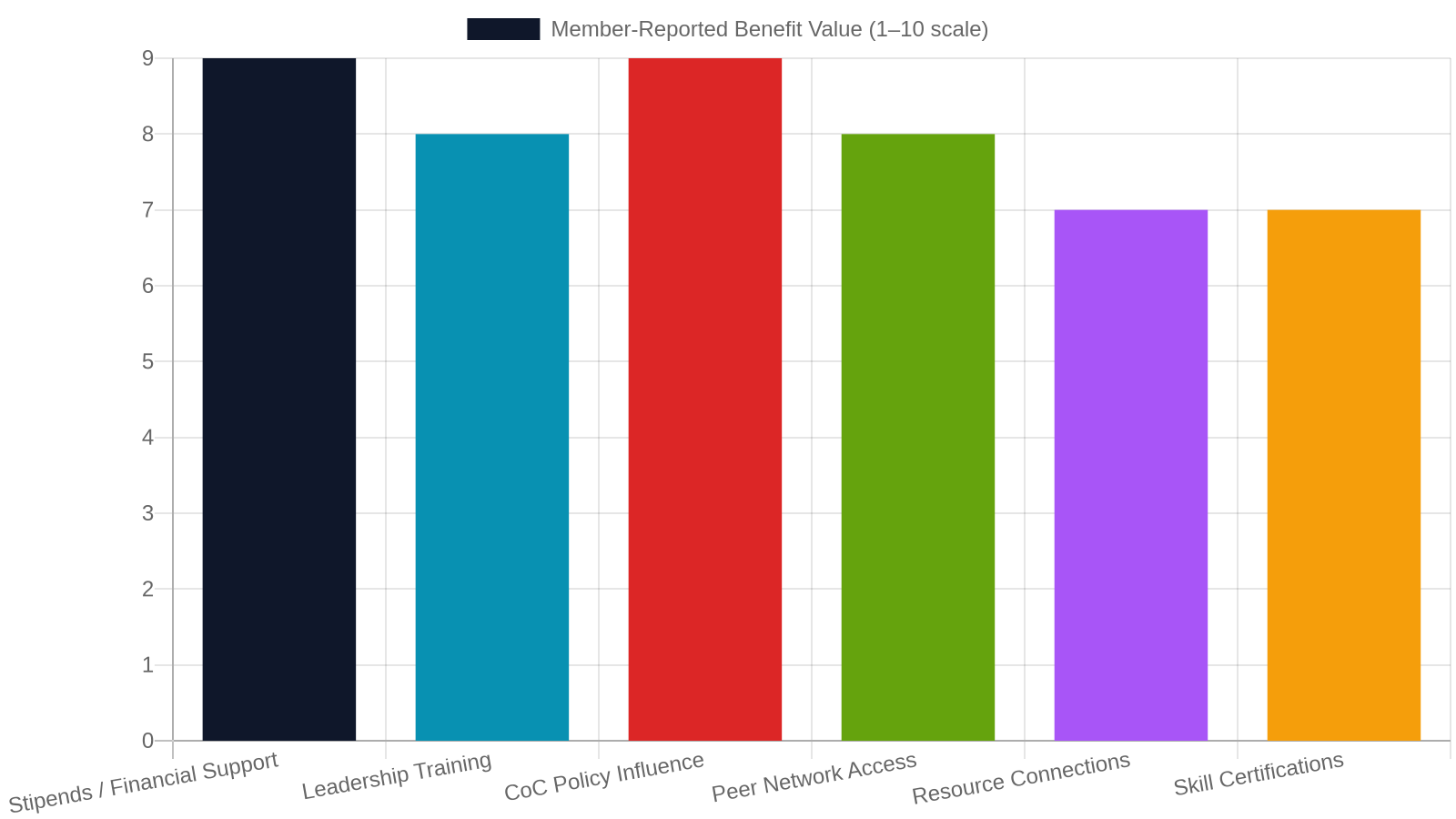
Let’s be real: joining any organization takes time and energy, and when you’re dealing with housing instability, those resources are precious. So what do you actually get in return for showing up? Quite a bit, as it turns out.
Stipends and Financial Support
YAAB recognizes that your time and expertise have value — and that young adults experiencing housing instability can’t afford to volunteer without compensation. Many YAAB chapters offer stipends for participation in meetings, trainings, and advocacy events. Stipend amounts vary by region and funding availability, but the principle is consistent: your labor is worth paying for. Some chapters also provide gift cards, bus passes, or meal support to reduce barriers to participation.
This matters because it sets YAAB apart from many “youth advisory” programs that ask young people to give their time and stories for free. YAAB is working to change that norm across Tennessee’s entire CoC system.
Leadership Training and Skill Building
YAAB invests in your development as a leader. Members receive training in areas including:
- Public speaking and testimony skills
- How the CoC and HUD funding systems work
- Trauma-informed communication
- Policy analysis and advocacy strategy
- Resume building and professional networking
These are transferable skills that open doors — in housing advocacy, social work, public policy, nonprofit management, and beyond. Many former YAAB members have gone on to work for the very organizations they once advocated in front of.
Connection to Resources and Opportunities
Being part of YAAB means being plugged into a network that knows where the resources are. Members often get early access to information about housing openings, employment programs, education pathways, and emergency support. YAAB’s relationships with CoC partners across Tennessee mean that when you need help, you’re connected to people who can actually move quickly. You’re not just a name on a waitlist — you’re a known member of a respected network.
How to Join YAAB: a Step-by-Step Walkthrough

Ready to actually do this? Here’s exactly how the process works — from your first Google search to your first YAAB meeting. It’s simpler than you might think, and there’s support at every stage.
Step 1 — Find Your Regional Chapter
Start by identifying which of Tennessee’s eight CoC regions you’re in. If you’re in Memphis, that’s TN-501. Nashville is TN-503. Knoxville is TN-502. Chattanooga is TN-500. If you’re in a more rural area, check the local YAABs page to find the region that covers your county. Don’t worry if you’re unsure — the statewide YAAB team can help you figure it out.
Step 2 — Submit Your Interest
The next step is to fill out the YAAB membership interest form on the YAAB Tennessee website. The form asks basic questions about your region, your background, and what you’re hoping to get involved with. It’s not an application in the competitive sense — it’s more like raising your hand and saying “I’m interested.” There’s no essay, no references required, and no judgment. Once you submit, a YAAB coordinator will reach out to connect you with your local chapter.
Step 3 — Attend Your First Meeting
After connecting with your regional chapter, you’ll be invited to your first meeting. Come as you are — you don’t need to have anything prepared or know anything in advance. Most chapters have a short onboarding process where you’ll learn about YAAB’s structure, meet other members, and find out what projects are currently active. From there, you decide how involved you want to be. Some members attend monthly meetings and nothing else; others become chapter leads or travel to statewide convenings. The level of commitment is yours to define.
Knowing Your Housing Rights as a Young Adult in Tennessee

Advocacy starts with knowing what you’re entitled to. Before you can fight for change, it helps to understand the rights that already exist — and how to use them. Here’s a plain-language overview of the housing rights that apply to young adults in Tennessee right now.
Rights That Apply to You Right Now
Whether or not you join YAAB, knowing your legal rights as a young adult in Tennessee is essential. Here are some key protections:
- Emancipated minors and youth 18+ can sign leases and enter contracts independently in Tennessee.
- Youth in shelter have the right to be treated with dignity, access their belongings, and know the rules of the shelter in writing.
- Youth aging out of foster care in Tennessee may be eligible for Extended Foster Care (EFC) up to age 21 under state law, providing continued support and housing assistance.
- LGBTQ+ youth are protected from discrimination in federally funded housing programs under HUD’s Equal Access Rule.
- Under the McKinney-Vento Act, youth who are homeless and enrolled in school have the right to remain enrolled, receive transportation, and access services — even without a permanent address.
What to Do If Your Rights Are Violated
If you believe your rights have been violated — by a shelter, a landlord, a school, or a service provider — you have options. You can:
- File a complaint with HUD’s Office of Fair Housing and Equal Opportunity (FHEO) online or by calling 1-800-669-9777
- Contact Tennessee Legal Aid (legal aid organizations serve low-income individuals at no cost)
- Reach out to your local YAAB chapter — members and coordinators can help connect you with the right advocates
- Document everything: dates, names, what was said or done
YAAB members are trained to understand these rights and can serve as informed peers when you need to navigate a difficult situation.
How YAAB Compares to Other Youth Programs in Tennessee

If you’ve interacted with youth-serving organizations before, you might be wondering how YAAB fits in — or whether it’s just another program with a different name. It’s not. Here’s how YAAB is structurally different from most programs you may have encountered.
Why YAAB Is Different From a Service Program
Most programs for young adults experiencing homelessness are service delivery programs — they provide shelter, case management, food, or job training. These are valuable and necessary. But YAAB operates on a different model: it’s a youth leadership and advocacy structure, not a service program. You’re not a client — you’re a decision-maker.
This distinction matters because it changes the power dynamic. In a service program, professionals decide what you need. In YAAB, you help decide what programs get funded, how services are designed, and what policies get recommended to state and local government. Both models have a role, but they’re fundamentally different in how they position young people.
YAAB's Relationship With Other Organizations
YAAB doesn’t compete with other youth-serving organizations — it works alongside them. Many YAAB members are simultaneously connected to housing programs, workforce development initiatives, or education support services. YAAB’s role is to make sure that those programs are accountable to the young people they serve. If a shelter has a policy that doesn’t work, YAAB members can bring that feedback to the CoC board. If a housing program has a gap, YAAB can advocate for a fix. It’s the connective tissue between lived experience and institutional power.
YAAB vs. Other Youth Support Options: What's the Difference?
Not all youth-serving programs work the same way. Here's how YAAB compares to other common options available to transition-age youth in Tennessee.
Stories From the Field: What YAAB Looks Like in Practice

It’s one thing to describe what YAAB does in the abstract. It’s another to see what it looks like when young people actually show up and do the work. Here are the kinds of real-world impacts that YAAB members drive across Tennessee.
Advocacy That Changed Real Policies
Across Tennessee, YAAB members have contributed to tangible policy outcomes. Examples of the kind of work YAAB members engage in include:
- Presenting youth-informed recommendations to CoC boards that led to changes in shelter intake policies
- Participating in statewide listening sessions that shaped Tennessee’s youth homelessness strategic plans
- Advocating for trauma-informed training requirements for shelter staff
- Providing public comment on HUD funding applications to ensure youth priorities were included
These aren’t hypothetical outcomes — they’re the result of young people showing up, speaking clearly, and being taken seriously because they had the backing of a structured, credible organization.
What Members Say About the Experience
Young adults who have participated in YAAB consistently describe the experience in terms of empowerment, community, and purpose. Common themes include:
- “I finally felt like my experience meant something beyond just surviving it.”
- “I learned skills I never would have gotten anywhere else — how to talk to a city council member, how to read a budget.”
- “Being around other young people who get it made me feel less alone.”
These reflections point to something important: YAAB isn’t just about external policy change — it’s also about internal transformation. Members often describe a shift from feeling like a problem to be solved to feeling like a person with expertise and agency.
For Case Managers and CoC Partners: How to Connect Youth to YAAB

This section is for the adults in the room — case managers, housing navigators, CoC staff, and service providers who work with transition-age youth across Tennessee. Here’s how you can actively support young people in accessing YAAB and how your organization can build a stronger relationship with your regional chapter.
Why Referrals From Trusted Adults Matter
Many young adults first hear about YAAB through a case manager, housing navigator, or service provider they already trust. If you work with transition-age youth in Tennessee, you have a direct role to play in connecting young people to this opportunity. A warm referral — a personal introduction rather than just handing someone a flyer — dramatically increases the likelihood that a young person will follow through.
When making a referral, be specific: tell the young person what YAAB actually does, what they’ll get out of it, and that their experience qualifies them. Avoid framing it as “a program for people like you” — frame it as an opportunity for a leader like them.
How to Partner With Your Regional YAAB
CoC partners, housing agencies, and nonprofits can also engage with YAAB at an organizational level. This might look like:
- Inviting YAAB members to present at your staff meetings or board meetings
- Partnering with YAAB to conduct youth surveys or focus groups about your services
- Funding YAAB stipends as part of your program budget
- Centering YAAB feedback in your CoC funding applications
HUD’s guidance increasingly emphasizes meaningful youth engagement as a component of CoC governance. Working with YAAB isn’t just the right thing to do — it strengthens your organization’s credibility and compliance posture. Visit the YAAB About page to learn more about partnership opportunities.
Barriers to Joining — and How YAAB Addresses Them

Let’s name the real reasons young people sometimes don’t join organizations like YAAB — not because they’re not interested, but because life gets in the way. Here are the most common barriers and how YAAB works to address each one.
"I Don't Have Transportation"
Transportation is one of the most common barriers for young adults experiencing housing instability. YAAB chapters are aware of this and many offer bus passes, rideshare credits, or virtual meeting options. When you contact your regional chapter, ask specifically about transportation support — it’s a normal question and chapters expect it. Don’t let distance be the reason you don’t show up.
"I'm Not a Good Speaker" or "I Don't Know Enough"
YAAB is not a debate club or a class where you need to come in knowing the answers. Every member starts somewhere, and the organization provides training specifically because it doesn’t expect you to arrive already knowing how the CoC works or how to testify at a hearing. Your lived experience is the expertise — everything else is learnable. Members consistently report that the learning curve is manageable and that the environment is supportive, not competitive.
"I'm Dealing With Too Much Right Now"
This is the most honest barrier, and it deserves an honest answer. If you’re in active crisis — unsafe housing, immediate food insecurity, a mental health emergency — your first priority should be getting stable. YAAB is not going anywhere, and you can join when you’re ready. That said, some members find that YAAB actually helps them stabilize by connecting them to resources and community. There’s no single right time. If you’re curious, reach out and have a conversation — there’s no commitment required just to ask questions.
Ready to Use Your Voice? Here's Your Next Move

You’ve made it to the end of this article, which means something about YAAB caught your attention. That matters. Here’s exactly what to do next — no complicated steps, no gatekeepers, just a clear path forward for young adults across Tennessee who are ready to turn their experience into action.
Start With One Step Today
You don’t have to have everything figured out to take the first step. If anything in this article resonated with you — if you’ve experienced housing instability, if you’re tired of systems that don’t listen, if you want to do something that matters — then YAAB is worth your time.
The most important thing you can do right now is submit your interest through the YAAB membership form. It takes less than five minutes, it’s not a binding commitment, and it puts you in contact with real people in your region who want to hear from you. Your story, your experience, and your ideas are exactly what Tennessee’s housing system needs more of.
Stay Connected and Keep Learning
Whether you’re ready to join today or just starting to explore, there are ways to stay connected with YAAB Tennessee. Follow the organization’s updates, check the events calendar for upcoming meetings and advocacy days, and explore the resources page for housing, employment, and education tools specific to Tennessee young adults.
Across Tennessee — from Memphis to Knoxville, from Chattanooga to the Upper Cumberland — young adults are already in rooms where decisions get made, speaking up for themselves and for you. There’s a seat at that table with your name on it. All you have to do is claim it.
Frequently Asked Questions
Do I have to be currently homeless to join YAAB in Tennessee?
No. YAAB is open to young adults ages 17 to 25 who have current or past lived experience of homelessness or housing instability — including couch surfing, shelter stays, or any period without stable housing. You don't have to be in crisis right now to qualify.
Does YAAB pay members for their time?
Many YAAB chapters offer stipends for participation in meetings, trainings, and advocacy events. Stipend amounts vary by region and available funding. Some chapters also provide transportation support like bus passes. Ask your regional chapter coordinator for specifics when you connect.
What if I'm in a rural part of Tennessee — is there a YAAB near me?
YAAB operates in all eight of Tennessee's Continuum of Care regions, including Upper Cumberland (TN-506), Northeast Tennessee (TN-509), and West Tennessee (TN-507), which serve rural areas. Many chapters also offer virtual meeting options for members who can't travel easily.
I aged out of foster care — does YAAB have a place for me?
Absolutely. Youth aging out of foster care are among the populations YAAB most actively centers. Your experience navigating the child welfare system and the transition to adulthood is exactly the kind of expertise that helps YAAB shape better policies for young people in similar situations.
How much time does being a YAAB member require?
The minimum commitment is typically attending your regional chapter's monthly or bi-monthly meetings. Beyond that, your level of involvement is flexible — some members take on leadership roles or travel to statewide events, while others participate at a lighter level. You define your commitment.
Can service providers or case managers refer youth to YAAB?
Yes, and warm referrals from trusted adults are one of the most effective ways young people connect with YAAB. If you work with transition-age youth in Tennessee, you can refer them directly to the YAAB membership form at yaabtn.org/join or reach out to the statewide YAAB team to learn more about your regional chapter.