Quick answer: If you're a young adult ages 17 to 25 in Memphis or Shelby County who has experienced homelessness or housing instability, the Shelby County Youth Action Board (YAAB TN-502) is your seat at the table. YAAB members advise Continuum of Care leaders, shape local housing policy, and connect peers to real resources — all while building résumé-worthy leadership skills. You don't need a degree or a perfect background to join. You need lived experience and a willingness to show up. This guide breaks down exactly how to get involved, what to expect, and why your voice matters right now in Tennessee.
1. Understand What the Shelby County YAAB Actually Does

Before you can get involved, it helps to know exactly what you’re stepping into. The Shelby County Youth Action Board is one of Tennessee’s most active regional YAAB chapters, and understanding its structure will help you figure out where you fit best.
A Peer-Led Advisory Body, Not a Support Group
The Shelby County Youth Action Board operates under the TN-502 Continuum of Care, which is the official regional network of agencies, shelters, and service providers working to end homelessness in Memphis and Shelby County. YAAB is not a case management program — it’s a formal advisory body made up of young adults who have lived through housing instability and are now shaping the systems that affect their peers.
That means YAAB members sit in real meetings with housing directors, city officials, and nonprofit leaders. Their feedback influences how federal funding is spent, which programs get prioritized, and how services are designed. This is policy work — and it starts with people like you.
What 'Lived Experience' Means and Why It Qualifies You
You don’t need a college degree, a clean record, or a stable address to join YAAB. The one core qualification is lived experience of homelessness or housing instability as a young adult ages 17 to 25. That includes couch-surfing, staying in a shelter, aging out of foster care, or doubling up with family because you had nowhere else to go.
Your experience is not a liability — it is your expertise. Federal housing policy, including HUD’s guidelines for Continuums of Care, explicitly calls for youth with lived experience to be included in planning and decision-making. YAAB is the structure that makes that happen in Tennessee.
The Difference Between Local and Statewide YAAB
Tennessee has multiple regional YAABs tied to specific Continuum of Care regions. The Shelby County YAAB (TN-502) focuses on Memphis and the surrounding county. There is also a statewide YAAB network that connects all regional boards and engages with Tennessee state government. Joining your local Shelby County board is the entry point — from there, members can step into statewide advocacy roles, attend state-level convenings, and connect with peers across all nine Tennessee CoC regions.
2. Know the Eligibility Requirements — They're Simpler Than You Think

A lot of young people assume there are complicated hoops to jump through before they can get involved in advocacy. The truth is that YAAB’s eligibility requirements are intentionally low-barrier, because the whole point is to center the people most affected by housing instability.
Age and Experience: The Two Core Criteria
To join the Shelby County YAAB, you need to be between 17 and 25 years old and have personal experience with homelessness or housing instability. That’s it. There is no income threshold, no minimum GPA, no background check requirement, and no requirement that you currently be housed or enrolled in a program.
YAAB actively recruits young adults who are still navigating instability, because their real-time perspective is the most valuable input a policy body can have. If you’re currently in a shelter, transitional housing, or staying with a friend because you have no other option, you are exactly who YAAB is designed to include.
What About Foster Care and System-Involved Youth?
Young adults aging out of Tennessee’s foster care system are a priority population for YAAB. Research from Chapin Hall’s Voices of Youth Count study found that youth who age out of foster care are twice as likely to experience homelessness within two years of exiting care compared to their peers. If you’ve been in the Tennessee foster care system and are now between 17 and 25, YAAB is a space built with your experience in mind.
System-involved youth — including those who have had contact with the juvenile justice system — are also welcome. YAAB’s peer-to-peer model means you won’t be judged by your history; you’ll be valued for what you know.
Geographic Reach of TN-502
The TN-502 Continuum of Care covers Memphis and Shelby County, Tennessee’s most populous county with approximately 929,000 residents as of 2023 U.S. Census estimates. If you live, work, or access services anywhere in Shelby County, you are in the TN-502 service area and eligible to engage with the local YAAB. Young adults in neighboring counties who travel to Memphis for services may also connect with the board — reach out and ask.
3. Attend a YAAB Meeting as Your First Step

The single easiest action you can take today is showing up to a meeting. No application, no interview, no preparation required. Here’s what to expect when you walk through the door for the first time.
What Happens at a Typical YAAB Meeting
YAAB meetings are peer-led spaces where members discuss current issues affecting transition-age youth in Memphis, review updates from the Continuum of Care, and plan advocacy actions. A typical meeting might include a policy briefing from a CoC staff member, a discussion of a new shelter policy that affects young adults, or planning for a public comment period on federal housing funding.
Meetings are designed to be accessible — not full of jargon or formal parliamentary procedure. Facilitators are often fellow young adults who have been trained in meeting leadership. You are encouraged to speak, ask questions, and push back on ideas that don’t reflect your experience.
How to Find Out When Meetings Are Scheduled
Meeting schedules for the Shelby County YAAB are posted through the statewide YAAB network. The best ways to find current meeting dates are: checking the YAAB Tennessee events calendar, connecting with a local CoC partner organization in Memphis, or reaching out directly through the YAAB contact page. Some meetings are held in person at community spaces in Memphis; others are available virtually, which removes transportation as a barrier.
If you’re currently connected to a shelter, transitional housing program, or case manager in Shelby County, ask them directly about YAAB meeting dates — many CoC partner staff can make a warm introduction.
What to Bring (and What Not to Worry About)
You don’t need to bring anything to your first meeting except yourself. No resume, no ID, no paperwork. Some members bring a notebook; others just listen the first time. There is no expectation that you speak at your first meeting — observing is a completely valid way to start. Many current YAAB leaders say they attended two or three meetings before they felt comfortable contributing. That’s normal, and it’s respected.
4. Take On a Leadership Role Within the Board

YAAB is not just a place to share your experience — it’s a place to build real leadership skills that translate directly to careers in social work, policy, nonprofit management, and community organizing. Here’s what the leadership ladder looks like.
Formal Roles: Officers, Committees, and Workgroups
Once you’ve attended a few meetings and feel connected to the group, you can step into a formal leadership role. Most YAAB chapters have elected or appointed officer positions — such as Chair, Vice Chair, Secretary, and Community Liaison — that carry real responsibilities and real recognition. These roles are held by young adults, not staff, which means you are genuinely in charge of how the board operates.
Committee and workgroup roles are another entry point. YAAB members often serve on subcommittees focused on specific issues like housing policy, mental health services, or employment pathways. These smaller groups do deep-dive work and report back to the full board.
Representing YAAB on the Continuum of Care
One of the most impactful leadership roles a YAAB member can hold is serving as a youth representative on the Shelby County Continuum of Care governing board or committees. HUD’s guidelines for CoC programs require that youth with lived experience be included in planning processes, and YAAB members fill that requirement. This means you could be sitting in the same room as shelter directors, city housing officials, and nonprofit executives — as an equal voice, not a guest.
Members who take on CoC representation roles often describe it as a turning point: the moment they realized their perspective was not just welcome but necessary for the system to function properly.
Statewide Leadership Opportunities
Strong local leaders are often invited to participate in statewide YAAB convenings, Tennessee Interagency Council on Homelessness meetings, and advocacy days at the Tennessee State Capitol in Nashville. These opportunities come with travel support in many cases, and they connect Memphis young adults with peers from Knoxville, Chattanooga, Nashville, Jackson, and other Tennessee regions. Building that statewide network is one of the most lasting benefits of YAAB leadership.
5. Participate in Advocacy Actions That Create Real Change

Advocacy is not just a buzzword — it’s a specific set of actions that YAAB members take to change policies, shift funding, and make Memphis a safer place for young adults experiencing housing instability. Here’s what that looks like in practice.
Public Comment: Your Voice in Federal and State Processes
One of the most direct advocacy tools YAAB members use is public comment. Federal agencies like HUD and state bodies like the Tennessee Housing Development Agency (THDA) regularly open public comment periods when they are revising housing policies, funding formulas, or program rules. YAAB members are trained to write and submit comments that reflect the real experiences of young adults in Memphis and across Tennessee.
A single well-written public comment from a person with lived experience carries significant weight in these processes — far more than a form letter. YAAB provides training and support so you don’t have to figure out how to do this alone.
Advocacy Days and Lobby Visits
YAAB organizes advocacy days at the Tennessee State Capitol where members meet directly with state legislators and their staff to discuss bills and budget priorities affecting transition-age youth. These visits are structured, supported, and — for most members — genuinely surprising in how accessible elected officials can be when young people show up with specific asks.
In recent Tennessee legislative sessions, youth advocates have engaged on issues including Medicaid extension for former foster youth, funding for rapid rehousing programs, and employment support for young adults experiencing homelessness. Your presence at these meetings matters because legislators hear from lobbyists every day but rarely from the people most affected by their decisions.
Community Outreach and Peer Education
Not all advocacy happens in government buildings. YAAB members also do outreach in Memphis communities — at shelters, drop-in centers, schools, and community events — to connect peers with resources and to gather input on what young adults actually need. This peer-to-peer outreach is advocacy in its most immediate form: one person helping another navigate a system that wasn’t designed with them in mind.
Members who do community outreach often develop skills in motivational interviewing, resource navigation, and public speaking — all of which are valued in healthcare, social services, and education careers.
6. Build Skills and Credentials Through YAAB Participation

Getting involved in YAAB is not just about giving back — it’s also about building a foundation for your own future. The skills, credentials, and connections you gain through YAAB participation are real and transferable.
Training and Professional Development
YAAB is not just advocacy — it’s a structured opportunity to build skills that employers and educational institutions value. Members receive training in areas including public speaking, policy analysis, meeting facilitation, data literacy, and trauma-informed communication. Some of these trainings are offered through YAAB directly; others come through partnerships with Tennessee’s Continuum of Care network and national organizations like the National Alliance to End Homelessness.
For young adults who are working toward a GED, enrolled in community college, or exploring careers in social services, public health, or nonprofit management, YAAB participation is a meaningful credential that demonstrates real-world experience.
Stipends, Compensation, and Incentives
YAAB recognizes that asking young adults — many of whom are managing housing instability, jobs, and school simultaneously — to volunteer their time without compensation is not equitable. Many YAAB chapters, including the Shelby County board, work to provide stipends, gift cards, transportation support, and meal coverage for members who participate in meetings and advocacy activities.
Compensation structures vary and depend on available funding, so it’s worth asking directly when you connect with the board. The principle is clear: your time and expertise have value, and YAAB works to honor that.
Letters of Recommendation and References
YAAB leadership and staff can serve as professional references and write letters of recommendation for members who are applying to jobs, colleges, or housing programs. For young adults who have limited professional networks — which is common when you’ve been navigating instability — this is a genuinely significant benefit.
Having a YAAB coordinator or CoC partner staff member vouch for your leadership, reliability, and advocacy work can open doors that might otherwise feel closed. Several former YAAB members have gone on to careers in social work, public policy, and nonprofit leadership, and they credit YAAB as a key part of their professional foundation.
7. Connect Your Peers to Housing and Support Resources

YAAB members don’t just shape policy at the top — they also show up for their peers on the ground. Connecting people to resources is one of the most direct and immediate ways your involvement makes a difference in Memphis right now.
The Resource Navigation Role
One of the most immediate ways YAAB members create impact is by helping their peers navigate the patchwork of housing and support services available in Memphis and Shelby County. This includes emergency shelter, rapid rehousing programs, transitional housing, mental health services, employment programs, and educational support.
YAAB members are often the first point of contact for a peer who doesn’t know where to turn — and because they’ve navigated these systems themselves, they can offer guidance that a case manager or intake worker simply can’t replicate. This peer navigation role is increasingly recognized by CoC partners as a critical component of effective outreach.
Understanding the Memphis/Shelby County Housing Landscape
Memphis has a range of resources for transition-age youth, including programs specifically designed for young adults ages 18 to 24 experiencing homelessness. The Shelby County CoC (TN-502) coordinates these resources through a centralized system called Coordinated Entry, which is the official pathway to accessing most publicly funded housing programs in the region.
YAAB members learn how Coordinated Entry works, what the eligibility criteria are for different programs, and how to help a peer get connected — including how to advocate if a peer is being turned away unfairly. This knowledge is power, and YAAB makes sure its members have it.
Mental Health and Whole-Person Support
Housing instability rarely exists in isolation. Young adults navigating homelessness in Memphis often face co-occurring challenges including mental health conditions, substance use, trauma, and disconnection from family. YAAB members are trained in trauma-informed peer support — how to listen without judgment, how to validate someone’s experience, and how to connect them to professional services when needed without pushing them away.
This is not clinical work — YAAB members are not therapists. But peer support is its own evidence-based practice, and the training YAAB provides prepares members to show up for their community in a meaningful and safe way.
How YAAB Compares to Other Youth Engagement Opportunities in Tennessee

It’s worth understanding how YAAB fits into the broader landscape of youth engagement opportunities — and why it offers something that other programs simply don’t.
Why YAAB Is Uniquely Positioned for System-Impacted Youth
There are other ways for young adults in Memphis to get involved in community leadership — student government, nonprofit volunteering, AmeriCorps programs, and more. Each has value. But YAAB occupies a specific and irreplaceable role: it is the only formally recognized advisory body in Tennessee’s Continuum of Care system that is led by and for young adults with lived experience of homelessness.
That means YAAB members have actual decision-making influence over housing policy — not just symbolic participation. They are not consulted after decisions are made; they are in the room when decisions are being shaped. That level of structural power is rare and worth seeking out.
Connecting Across Tennessee's Regional YAABs
The Shelby County YAAB is one of nine regional boards across Tennessee. Each board is tied to a specific CoC region: TN-500 (Nashville/Davidson), TN-501 (Knoxville/Knox), TN-503 (Chattanooga/Hamilton), TN-504 (Jackson/West TN), TN-506, TN-507, and TN-509 (Upper Cumberland and Northeast TN regions). Members of the Shelby County board can connect with peers across all of these regions through the statewide YAAB network, creating a community of young advocates that spans the entire state.
This statewide connection is one of YAAB’s greatest strengths — it means that what you learn and build in Memphis can influence housing systems in Knoxville, Nashville, and beyond.
YAAB vs. Other Youth Engagement Opportunities: How They Compare
Not all youth engagement programs are the same. Here's how YAAB stacks up against other common options for young adults in Tennessee on the dimensions that matter most.
What Memphis Young Adults Say About YAAB: Real Outcomes

Numbers and policy language can make advocacy feel abstract. Here’s what YAAB participation actually looks like in practice — and what the data says about why it works.
From Participant to Policy Influencer
Across Tennessee’s YAAB network, members consistently describe a similar arc: they joined because they wanted to help their peers, and they ended up discovering that they had the skills and credibility to influence real policy. Former members have gone on to work for CoC partner organizations, serve on nonprofit boards, pursue degrees in social work and public policy, and testify before state legislative committees.
The transformation is not accidental — it’s built into YAAB’s model. The structure is designed to take someone who has been failed by systems and give them the tools to change those systems from the inside.
Data on Youth Homelessness in Shelby County
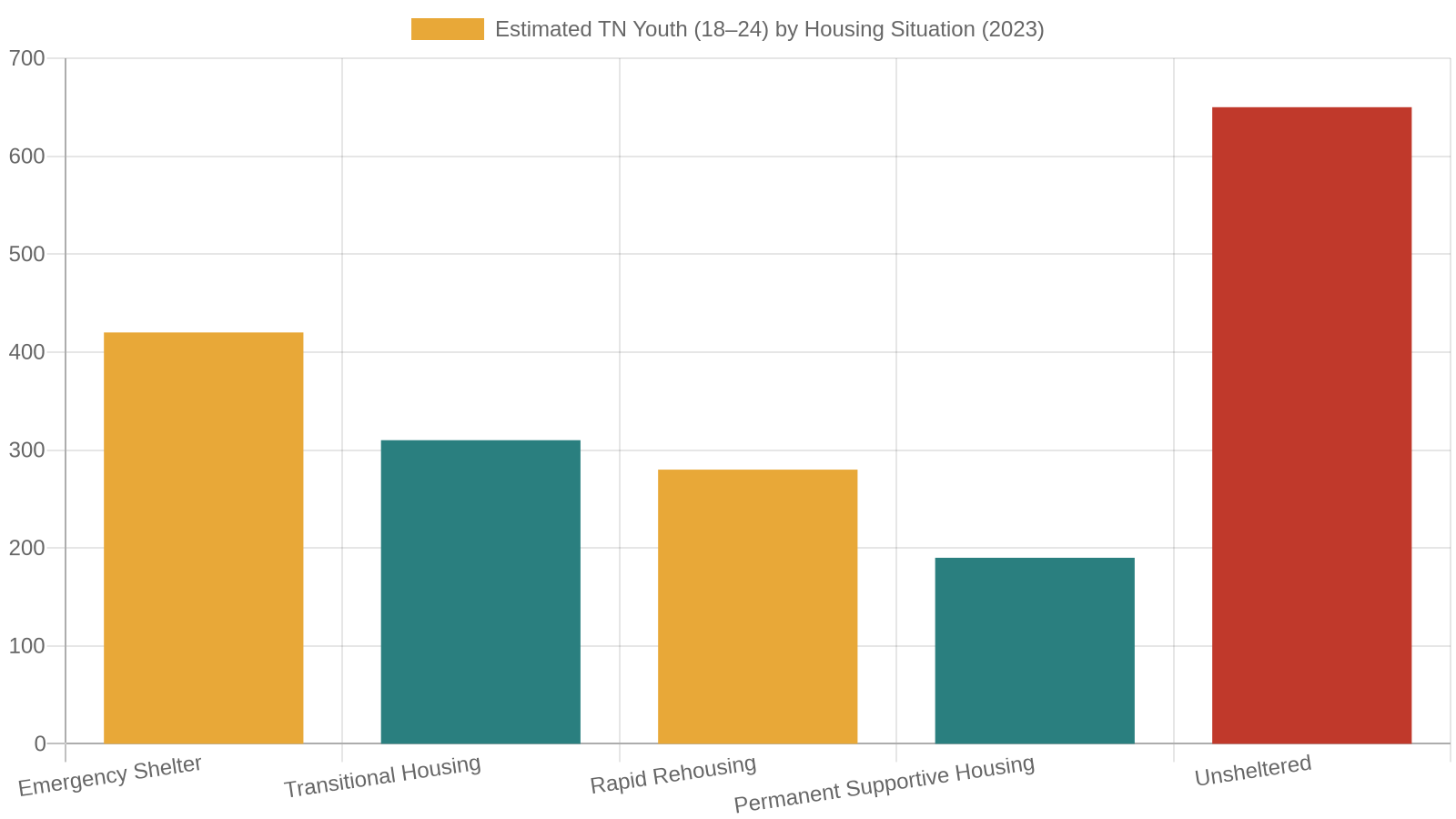
Understanding the scale of the issue helps contextualize why YAAB’s work matters so much. According to HUD’s 2023 Annual Homeless Assessment Report, Tennessee counted approximately 8,500 people experiencing homelessness on a single night in January 2023, with transition-age youth (ages 18–24) making up a significant and often undercounted portion of that total. Shelby County, as Tennessee’s most populous county, accounts for a substantial share of the state’s homeless population.
Point-in-Time counts consistently undercount youth homelessness because young people are more likely to be in hidden situations — couch-surfing, staying with strangers, or doubling up — rather than in visible shelter settings. YAAB members understand this gap firsthand and advocate for better counting methods and more targeted resources.
The Ripple Effect of Peer Leadership
Research from the National Alliance to End Homelessness and other organizations consistently shows that peer-led programs achieve better engagement and outcomes with transition-age youth than staff-only models. Young adults are more likely to trust, engage with, and follow through on recommendations from peers who have shared their experiences. YAAB members are not just advocates — they are a proven intervention in their own right.
When you join YAAB in Memphis, you become part of that evidence base. Your participation strengthens the case for peer-led approaches and helps secure the funding and policy support that makes those approaches sustainable.
Barriers to Getting Involved — and How YAAB Addresses Them

It’s honest to acknowledge that getting involved in anything new can feel hard — especially when you’re already managing a lot. Here’s how YAAB specifically works to lower those barriers for Memphis young adults.
Transportation and Scheduling
One of the most common reasons young adults don’t participate in community programs is logistics: no car, no bus pass, no flexibility in a work or school schedule. YAAB takes these barriers seriously. Many meetings are available virtually, and when in-person attendance is needed, boards work to provide bus passes, ride coordination, or stipends that cover transportation costs.
Scheduling is also designed with working young adults in mind — meetings are typically held in the evenings or on weekends to avoid conflicts with jobs and school. If a specific meeting time doesn’t work for you, reach out and say so. YAAB wants to hear that feedback, because it’s exactly the kind of input that shapes how the board operates.
Fear of Judgment or Disclosure
Some young adults worry that sharing their experience of homelessness will lead to judgment, stigma, or unwanted attention. YAAB operates under clear confidentiality norms — what members share in the room stays in the room. You are never required to disclose personal details you’re not comfortable sharing, and your participation is not contingent on telling your story publicly.
Over time, many members choose to share their stories in advocacy contexts because they find it empowering and effective. But that is always your choice, on your timeline. YAAB’s role is to create the conditions where that choice feels safe, not to pressure anyone into disclosure.
Not Feeling 'Qualified Enough'
Imposter syndrome is real, and it’s especially common among young adults who have been told — explicitly or implicitly — that their voices don’t matter in institutional settings. YAAB’s entire model is a direct challenge to that message. The board is structured so that lived experience is the credential, and every member’s perspective is treated as expert knowledge.
If you’ve ever sat in a meeting where decisions were made about people like you, without people like you in the room, you already understand why YAAB exists. The solution to that problem is your presence — not your resume.
How Case Managers and CoC Partners Can Support YAAB Involvement

This section is for the adults in the room — case managers, shelter staff, and CoC partners — who want to actively support young people in getting connected to YAAB leadership in Memphis and Shelby County.
Making Warm Referrals to YAAB
If you’re a case manager, shelter staff member, or CoC partner in Shelby County, one of the most impactful things you can do for a young adult client is introduce them to YAAB. A warm referral — meaning you personally connect them to a YAAB contact rather than just handing them a flyer — dramatically increases the likelihood that they’ll follow through.
When making a referral, emphasize the leadership and skill-building aspects of YAAB alongside the advocacy mission. Many young adults are more motivated by the opportunity to build their resume and professional network than by the abstract idea of policy change — and that’s completely valid. Both are real outcomes of YAAB participation.
Integrating YAAB Into Service Plans
For young adults who are working toward employment or educational goals, YAAB participation can be meaningfully integrated into individual service plans. Hours spent in YAAB meetings, trainings, and advocacy activities demonstrate reliability, communication skills, and civic engagement — all of which are valued by employers and educational institutions.
Some CoC partners have formalized this by including YAAB participation as a goal or milestone in service plans for transition-age youth clients. This approach recognizes that civic engagement is part of whole-person wellbeing, not separate from it.
Advocating for Institutional Support
CoC partners and service providers can also support YAAB at an institutional level by advocating for youth stipends, providing meeting space, and ensuring that YAAB representatives have meaningful seats on CoC committees — not just token presence. If your organization is part of the TN-502 CoC, ask how you can formally support youth leadership structures and ensure that YAAB members’ input is reflected in your program design and funding applications.
HUD increasingly evaluates CoC applications on the quality of youth engagement and lived experience inclusion. Supporting YAAB is not just the right thing to do — it’s also good for your organization’s competitive position in federal funding processes.
Ready to Join the Shelby County YAAB? Here's Your Next Move

You’ve got the information. Now here’s how to turn it into action — this week, not someday. Memphis needs your voice in the room, and YAAB is the structure that makes that possible.
Start With the TN-502 YAAB Page
The most direct path to getting involved is through the official Shelby County YAAB page. You can connect with the Shelby County TN-502 YAAB to find current meeting information, learn about upcoming events, and reach out to board contacts. This is your home base for everything related to YAAB in Memphis.
If you’re not sure whether YAAB is right for you, start by reading about the broader mission at the YAAB Tennessee about page — it lays out the values, structure, and goals of the statewide network in plain language. And if you want to understand more about the issue YAAB is working to address, the youth homelessness resource page is a solid starting point.
Three Actions You Can Take This Week
You don’t have to wait for a perfect moment to get started. Here are three concrete actions you can take in the next seven days:
- Visit the TN-502 YAAB page and note the next meeting date or contact information.
- Talk to your case manager or a trusted adult in your support network about YAAB and ask if they can make a warm introduction.
- Show up to one meeting — just to observe. You don’t have to say anything. You just have to be there.
That’s it. Those three steps are enough to start. Everything else — the leadership roles, the advocacy training, the statewide connections — comes after you walk through the door the first time.
You Belong in This Room
If you’ve read this far, you already care about what happens to young people in Memphis and Shelby County. That care is the foundation of everything YAAB does. The board exists because people like you — people who have navigated housing instability and come out the other side with hard-won knowledge — are exactly who needs to be shaping the policies and programs that affect your peers.
Tennessee’s housing systems are not perfect. But they are changeable. And the young adults who are most affected by those systems are the ones best positioned to change them. YAAB is how that happens in Memphis. Your seat at the table is waiting.
Frequently Asked Questions
How do I join the Shelby County YAAB if I'm currently experiencing homelessness?
You can join YAAB even if you are currently unhoused or in a shelter. There is no stable address requirement. The best first step is to visit the TN-502 YAAB page on the YAAB Tennessee website or ask your case manager or shelter staff to connect you with the board. Virtual meeting options are available to remove transportation barriers.
Does the Shelby County YAAB pay members for their time?
Many YAAB chapters, including the Shelby County board, work to provide stipends, gift cards, transportation support, and meal coverage for members who participate in meetings and advocacy activities. Compensation structures depend on available funding, so it's worth asking directly when you make contact with the board.
What is the age range for joining YAAB in Memphis?
YAAB is open to young adults ages 17 to 25 who have lived experience of homelessness or housing instability. If you are 17, you are eligible. If you are approaching 25, it is still worth connecting — YAAB can help you transition to other leadership and advocacy opportunities as you age out of the program's target range.
I aged out of Tennessee foster care. Is YAAB relevant for me?
Yes — youth aging out of foster care are a priority population for YAAB. Research shows that young adults who exit foster care face significantly elevated risks of homelessness, and YAAB specifically works to address the policy gaps that create those risks. Your experience navigating the foster care system is exactly the kind of expertise the board needs.
What is the TN-502 Continuum of Care and why does it matter?
TN-502 is the official HUD-designated Continuum of Care for Memphis and Shelby County. It is the regional network of agencies, shelters, and service providers that coordinates homeless services and receives federal funding to address homelessness. The Shelby County YAAB operates within TN-502, which means YAAB members have a formal advisory role in how that federal funding is used and how services are designed.
Can I be involved in YAAB if I'm not ready to share my personal story publicly?
Absolutely. You are never required to share personal details publicly to participate in YAAB. Confidentiality norms protect what members share within the group. Many members contribute to advocacy and policy work without ever speaking publicly about their own experience. Your participation matters regardless of how much or how little you choose to disclose.