Quick answer: If you are a young adult ages 17 to 25 in Cookeville or anywhere in the Upper Cumberland region of Tennessee and you need emergency housing right now, you have real options. The Upper Cumberland Continuum of Care (TN-506) connects transition-age youth to emergency shelter, rapid re-housing funds, diversion programs, and peer advocates through the local Youth Action Board. This guide walks you through nine concrete pathways — from calling 211 to joining the YAAB itself — so you can move from crisis to stability faster and with people who actually get it.
What Is the Upper Cumberland Region and Why It Matters for Youth Housing

Before you can use a resource, you have to know it exists. The Upper Cumberland region is a large, mostly rural swath of Tennessee centered on Cookeville, and its housing safety net for young adults is more robust than many people realize — but it takes some navigation to access. Understanding the geography and the system behind it is the foundation for everything else in this guide.
The TN-506 Continuum of Care Explained
The Upper Cumberland Continuum of Care (CoC), officially designated as TN-506, is the federally recognized planning body that coordinates homeless services across a 14-county area in north-central Tennessee. Those counties include Putnam, White, Overton, Fentress, Cumberland, Pickett, Jackson, Clay, Smith, Macon, DeKalb, Van Buren, Warren, and Cannon. Cookeville, the seat of Putnam County, serves as the regional hub.
The CoC receives funding from the U.S. Department of Housing and Urban Development (HUD) and uses it to support emergency shelters, transitional housing, rapid re-housing programs, and permanent supportive housing. For young adults ages 17 to 25, this network is the backbone of the help that is available in the region.
Why Transition-Age Youth Face Unique Barriers Here
Rural and semi-rural areas like the Upper Cumberland present specific challenges that urban regions do not. Public transportation is limited, distances between services can stretch 30 to 60 miles, and many programs were historically designed for older adults or families — not for young people navigating homelessness on their own for the first time.
According to HUD’s 2023 Annual Homeless Assessment Report, approximately 30% of people experiencing homelessness on any given night are under age 25. In rural CoCs, youth homelessness is frequently undercounted because young people are more likely to be couch-surfing, sleeping in cars, or staying in unsafe situations rather than in visible shelter settings. Knowing the system exists — and how to access it — is the first step to changing your situation.
1. Call 211 Tennessee — Your First Move in Any Housing Crisis

In a housing crisis, the single most important thing you can do in the first five minutes is pick up the phone and dial 211. This statewide resource is specifically designed to be the front door to Tennessee’s entire social services network, and it works in rural areas just as well as in cities. Here is exactly how to use it.
What 211 Can Do for You Right Now
211 is a free, confidential helpline available 24 hours a day, 7 days a week across Tennessee. When you call or text ‘898-211’, trained specialists can connect you to emergency shelter, food, utility assistance, mental health crisis lines, and more — all filtered by your zip code. For young adults in Cookeville, Crossville, Sparta, or anywhere else in the Upper Cumberland, 211 is the fastest single point of entry into the local service network.
You do not need an ID, a phone plan, or a permanent address to call 211. You can also visit 211Tennessee.org and search by county if you prefer to look up options online. Specialists are trained to handle youth-specific situations, including if you are fleeing an unsafe home, aging out of foster care, or unsure whether you qualify for help.
What to Say When You Call
Being prepared makes the call faster and more productive. Here is what to have ready or be willing to share:
- Your location — city, county, or zip code
- Your age — being under 25 may qualify you for youth-specific programs
- Your immediate need — shelter tonight, food, utility shutoff, etc.
- Any barriers — no ID, pets, a vehicle, or safety concerns
You do not have to have everything figured out before you call. The specialist’s job is to help you figure it out. If the first call does not get you what you need, call again or ask to be transferred to a supervisor. Persistence matters.
2. Emergency Shelter Options in the Cookeville Area

Emergency shelter is the most immediate safety net when you have nowhere safe to sleep tonight. In the Upper Cumberland, options are more limited than in Memphis or Nashville — but they exist, and knowing the specific names and entry points can save you hours of searching during a crisis. Here is what is available in and around Cookeville.
Hospitality House of Putnam County
Hospitality House is the primary emergency shelter serving the Cookeville area. It provides short-term shelter, case management, and connections to longer-term housing options. The shelter serves adults and can accommodate transition-age youth ages 18 and older. Staff can help you complete a Coordinated Entry assessment, which is the formal process used across TN-506 to match people to the right housing resources based on their needs and vulnerability.
If you are under 18, staff at Hospitality House can connect you to the Tennessee Department of Children’s Services (DCS) or to youth-specific resources. Being honest about your age ensures you get connected to the right program — programs for minors have different legal protections and funding streams that may actually benefit you more.
Faith-Based and Community Emergency Options
Several faith communities in the Upper Cumberland operate warming centers, meal programs, and short-term emergency lodging — especially during winter months. These are not formal shelter programs, but they can bridge a gap of one to three nights while you connect to a longer-term option through 211 or Coordinated Entry.
Examples include church-run warming centers that activate when temperatures drop below 32°F, community meal programs that double as informal resource hubs, and motel voucher programs operated by local nonprofits. Ask a 211 specialist about current availability — these resources change seasonally and by funding cycle. Never assume a resource is unavailable without asking directly.
3. Coordinated Entry — How the TN-506 System Matches You to Housing

Coordinated Entry is the engine behind how housing resources get distributed across TN-506. It sounds bureaucratic, but understanding how it works puts you in a much stronger position to advocate for yourself and move through the system faster. Here is a plain-language breakdown of what to expect.
What Coordinated Entry Actually Is
Coordinated Entry (CE) is the standardized process used by every HUD-funded CoC in the country, including TN-506, to assess people experiencing homelessness and match them to the most appropriate available housing resource. Think of it as a triage system that puts the people with the highest need first, rather than whoever showed up earliest or knew the right person.
In the Upper Cumberland, you access Coordinated Entry by calling 211, visiting a participating shelter, or connecting with a case manager at a community organization. The assessment tool used is called the VI-SPDAT (Vulnerability Index – Service Prioritization Decision Assistance Tool) or a youth-specific version called the TAY-VI-SPDAT for transition-age youth. Your score helps determine which programs you are matched to.
What Happens After Your Assessment
After your assessment, your information is added to the CoC’s By-Name List — a real-time list of everyone experiencing homelessness in the region who has been assessed. Housing providers review this list to match open slots to the people who need them most. This process can feel slow, but it is designed to be fair and needs-based.
You have rights in this process. You can ask for a copy of your assessment score, ask what programs you have been referred to, and follow up with the CoC if you have not heard anything within two weeks. Advocating for yourself in this system is not rude — it is necessary. A YAAB peer advocate or case manager can help you navigate the process if it feels overwhelming.
4. Rapid Re-Housing Programs for Young Adults in Upper Cumberland

Rapid Re-Housing is often the fastest path from homelessness to having your own place, and it is specifically well-suited to young adults who have income potential but just need a bridge to get stable. Here is how it works in the Upper Cumberland region and what you can realistically expect from the program.
How Rapid Re-Housing Works
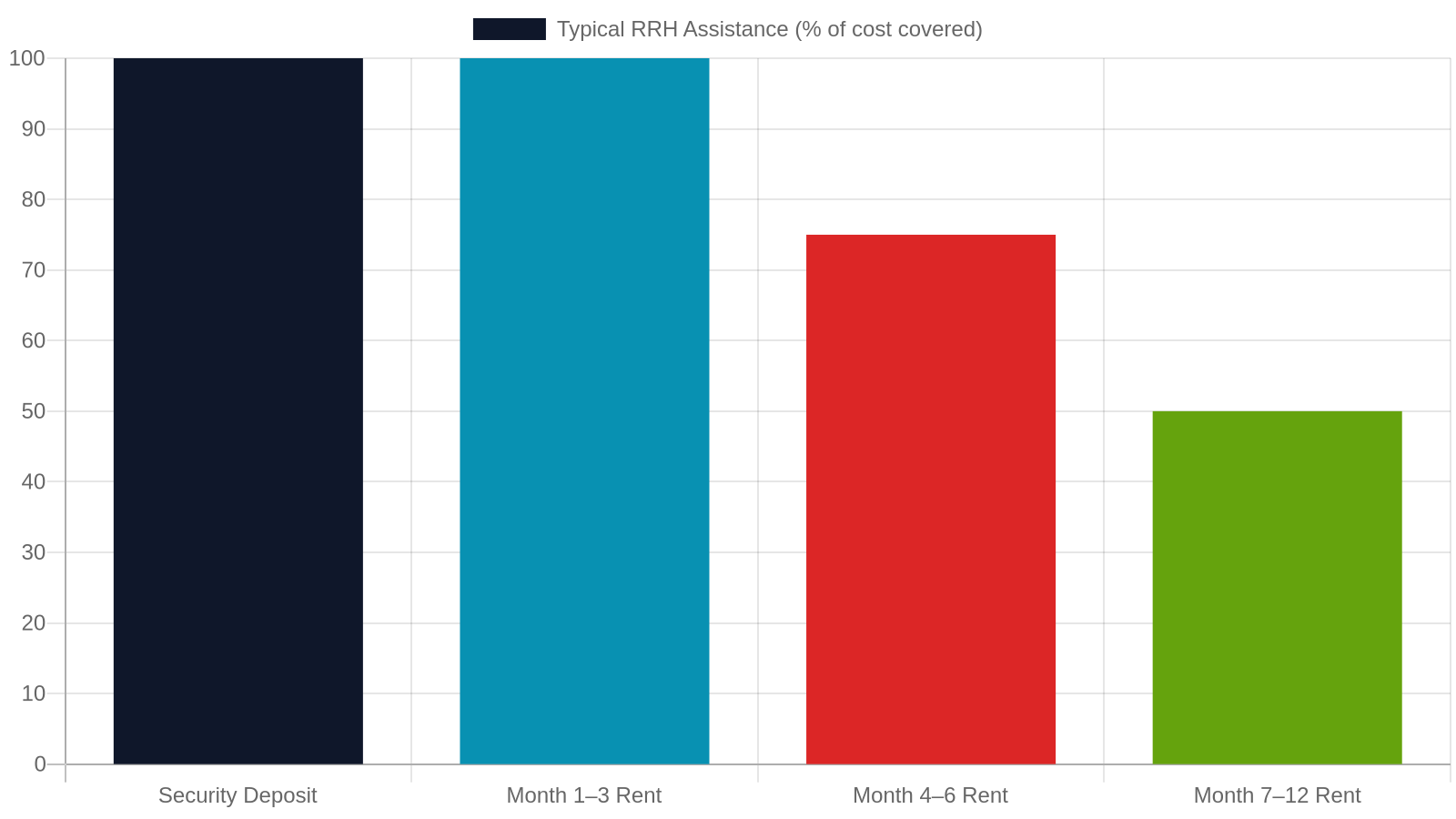
Rapid Re-Housing (RRH) is one of the most effective tools in the homelessness response system for transition-age youth. The model works by getting you into your own apartment or rental unit as quickly as possible — often within 30 to 60 days — and then providing short-term rental assistance and case management support while you stabilize. HUD data consistently shows that more than 80% of people who exit to housing through RRH do not return to homelessness within two years.
In TN-506, Rapid Re-Housing slots are funded through HUD’s Emergency Solutions Grant (ESG) and CoC Program grants. Availability fluctuates based on funding cycles, but there are almost always some slots open. You access RRH through Coordinated Entry — it is one of the programs you may be matched to after your assessment.
What RRH Covers and What It Does Not
Rapid Re-Housing typically covers:
- Security deposit — usually one to two months’ rent
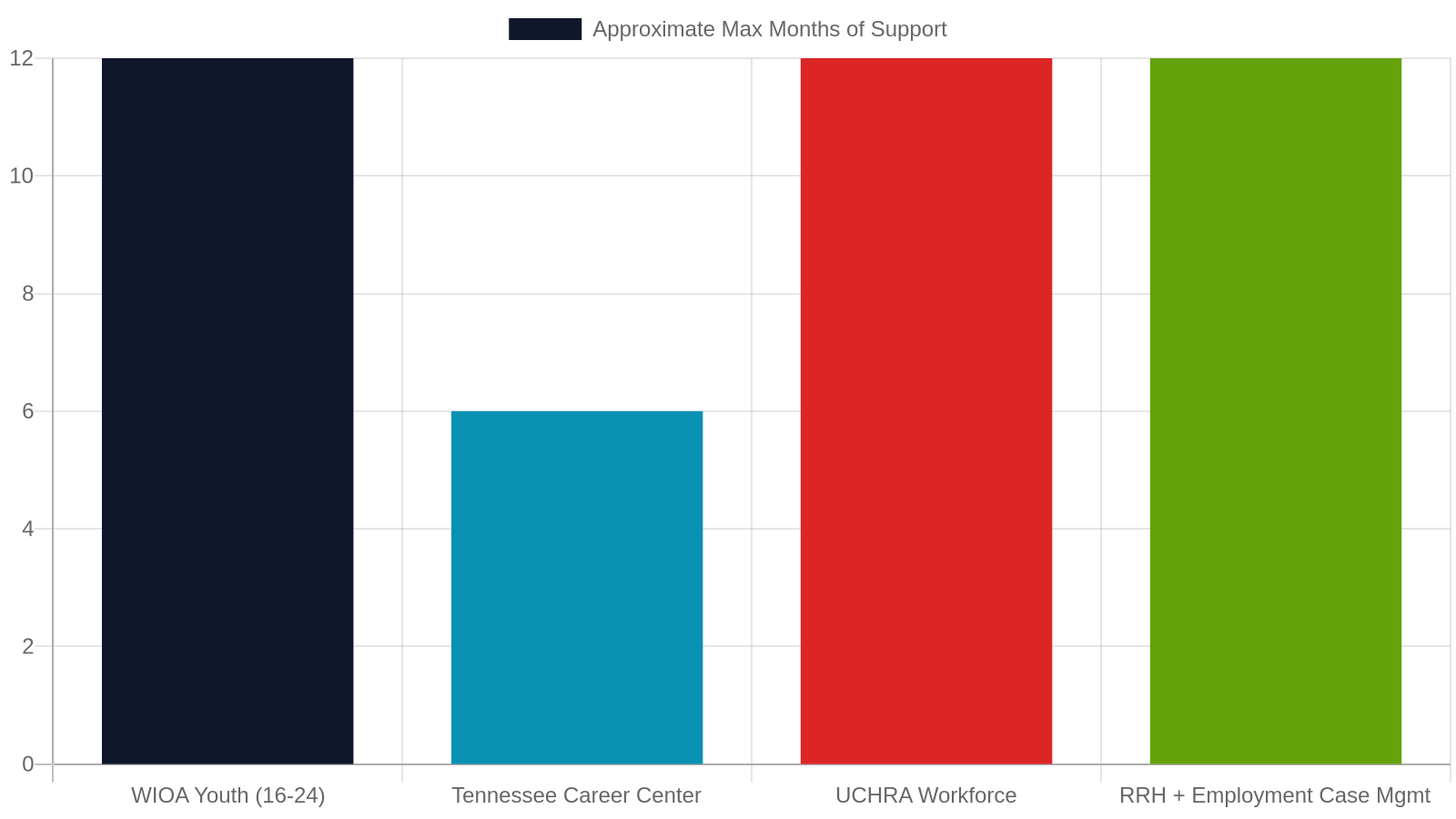
- Short-term rental assistance — typically 3 to 12 months, tapering over time
- Utility deposits — in some programs
- Case management — help with budgeting, employment, and connecting to other services
RRH does not cover furniture, food, or ongoing rent indefinitely. The goal is to bridge the gap while you build income and stability. Your case manager will work with you on a housing stability plan that outlines your goals and the support you will receive. Being honest with your case manager about your income, barriers, and timeline is the fastest way to make the program work for you.
5. Diversion and Prevention — Stopping Homelessness Before It Starts

Not every housing crisis requires emergency shelter. Sometimes the most powerful intervention is a conversation and a small amount of money that keeps you in your current situation long enough to find a real solution. Diversion and prevention programs are underused by young adults — often because people do not know they exist until it is too late. Here is what they are and how to access them.
What Homelessness Diversion Is
Homelessness diversion is a problem-solving conversation that happens at the point of entry into the shelter system — before you are formally enrolled as homeless. A trained diversion specialist talks with you about your specific situation and asks: what would it take to safely stay where you are, or to stay with someone you know, for the next 30 to 90 days while you connect to longer-term resources?
Diversion is not about turning people away from shelter. It is about finding creative, immediate solutions that might work better than shelter — and that keep shelter beds available for people who truly have no other option. For young adults, diversion conversations often surface options like a mediated conversation with a family member, a small financial assistance payment to a host, or a short-term motel stay funded by a community resource.
Homelessness Prevention Funds
If you are currently housed but at immediate risk of losing your housing — for example, you have received an eviction notice, your utilities are being shut off, or you cannot make this month’s rent — you may qualify for homelessness prevention assistance. This is different from RRH because you are still housed; the goal is to keep you that way.
Prevention funds in TN-506 are typically distributed through local community action agencies and nonprofits using ESG and CDBG funding. Eligibility usually requires documentation of the housing crisis (like an eviction notice), proof of income or a plan to obtain income, and a lease in your name or a letter from your landlord. Call 211 to find out which organizations are currently accepting prevention applications in your county.
6. Youth-Specific Rights and Protections You Should Know in Tennessee

Knowing your rights is not just for lawyers. As a young adult experiencing housing instability in Tennessee, you have specific legal protections that can open doors — literally. Here are the most important ones to know in the Upper Cumberland region.
McKinney-Vento Act Protections for Youth
The McKinney-Vento Homeless Assistance Act gives you specific rights if you are a student experiencing homelessness — including the right to remain enrolled in your school of origin even if you move, the right to immediate enrollment without records or proof of residence, and the right to transportation assistance. Every Tennessee school district is required to have a McKinney-Vento liaison. If you are enrolled in a GED program, community college, or vocational school, ask your institution about its McKinney-Vento policies — protections extend beyond K-12 in some programs.
At Tennessee Tech University in Cookeville, students experiencing housing instability can connect with the Dean of Students office for emergency housing assistance, food pantry access, and referrals to community resources. Do not wait until you are fully homeless to ask — early intervention works better.
Emancipated Minors and Youth Ages 17 to 18
If you are 17 or have been legally emancipated, your rights in the housing system are more complex. Tennessee law allows minors to consent to certain services — including mental health treatment and substance use services — without parental consent. However, signing a lease typically requires you to be 18 or legally emancipated.
Some RRH and transitional housing programs in TN-506 can work around this by having the program hold the lease on your behalf while you are a minor, then transferring it to you at 18. Ask specifically about programs that serve 17-year-olds — do not assume you are too young. YAAB peer advocates have navigated these exact situations and can help you understand your options without judgment.
7. Employment and Income Pathways That Support Housing Stability

Housing stability and income are deeply connected — you almost always need one to sustain the other. The good news is that the Upper Cumberland has workforce resources specifically designed for young adults facing barriers, and many of them can be accessed even while you are in shelter or transitional housing. Here is what is available and how to connect.
Tennessee Career Centers in the Upper Cumberland
The Tennessee Career Center in Cookeville (located at 1225 South Willow Avenue) offers free job search assistance, resume help, interview coaching, and connections to workforce training programs. For young adults experiencing homelessness, Career Center staff can also connect you to the WIOA Youth Program (Workforce Innovation and Opportunity Act), which provides paid work experience, occupational skills training, and supportive services — including transportation and work clothing — specifically for youth ages 16 to 24 who face barriers to employment.
WIOA Youth funding can cover up to 12 months of subsidized employment and training. In the Upper Cumberland, the program is administered through the Upper Cumberland Human Resource Agency (UCHRA). You do not need a permanent address to apply — a case manager or shelter address can be used.
Connecting Income to Housing Applications
One of the most common barriers young adults face in securing housing is the income verification requirement. Most landlords want to see income equal to 2.5 to 3 times the monthly rent. If you are just starting a job or have inconsistent income, this can feel like a catch-22: you need housing to work, but you need work to get housing.
Rapid Re-Housing programs are specifically designed to break this cycle — they can often place you in housing before you have a full income, and your case manager will help you build toward meeting the income threshold over time. Additionally, some landlords in the Cookeville area have established relationships with CoC programs and are more flexible on income verification for program participants. Ask your case manager about landlord partnership lists.
Upper Cumberland Housing Options Compared
Use this table to quickly compare the main housing pathways available to young adults in the TN-506 region by timeline, eligibility, and what they cover.
8. Mental Health and Substance Use Support Alongside Housing

Housing and mental health are not separate issues — they are deeply intertwined. Young adults experiencing homelessness are significantly more likely to experience depression, anxiety, and trauma-related conditions, and those experiences can make navigating the housing system even harder. Here is how to access mental health support in the Upper Cumberland without it costing you anything you do not have.
Volunteer Behavioral Health Care System
Volunteer Behavioral Health Care System (VBHCS) serves the Upper Cumberland region and provides outpatient mental health services, crisis intervention, and substance use treatment. For young adults experiencing homelessness, VBHCS offers services on a sliding-fee scale — meaning you pay based on what you can afford, and many people pay nothing. You do not need insurance to access services.
VBHCS has offices in Cookeville and several surrounding counties. If you are in a mental health crisis right now, you can call the Tennessee statewide crisis line at 855-CRISIS-1 (855-274-7471), which is available 24/7. Crisis mobile teams can come to you — you do not have to go to an emergency room.
Why Addressing Mental Health Is Part of Housing Stability
Research consistently shows that untreated mental health conditions and substance use disorders are among the leading factors that make it harder to maintain housing once you have it. This is not a judgment — it is a practical reality that the best housing programs take seriously. Many Rapid Re-Housing and transitional housing programs in TN-506 include mental health case management as a built-in component, not an add-on.
If you have been told that you need to be ‘housing ready’ before you can access help, that framing is outdated. The current best practice in homelessness response is Housing First — getting you housed first and then addressing other needs with the stability of a home as your foundation. If a program tells you otherwise, ask to speak with a supervisor or connect with a YAAB peer advocate who can help you navigate your options.
9. The Upper Cumberland YAAB — Peer Power in the TN-506 Region

Every resource in this guide is more accessible when you have a peer in your corner who knows the system from the inside. The Upper Cumberland Youth Action Board is that peer — and it is one of the most underused resources available to young adults in the Cookeville area. Here is what the YAAB does locally and how you can connect with it, whether you need support or want to help others.
What the YAAB Does Locally
The Youth Action Board of Tennessee (YAAB) has a regional presence in the Upper Cumberland through the TN-506 CoC. YAAB members are young adults ages 17 to 25 with their own lived experience of homelessness and housing instability — they are not staff, not volunteers from outside the community, and not people who have never been through what you are going through. They are peers who sit at the table where decisions get made about youth housing policy and programs in this region.
Locally, YAAB members advise the TN-506 CoC leadership, participate in point-in-time counts, review how youth-specific funding is being used, and connect their peers to resources. If you have ideas about what is missing or broken in the system — a shelter that does not feel safe, a program with confusing rules, a gap in services for young people — the YAAB is the place to bring that voice.
How to Get Involved or Get Support
You do not have to be fully stable or have your housing figured out to connect with the YAAB. Many members joined during or shortly after their own housing crisis. The YAAB offers peer support, advocacy training, leadership development, and connections to resources — and being part of it can itself be a stabilizing force in your life.
To connect with the Upper Cumberland YAAB and learn what is currently happening in the TN-506 region, visit the TN-506 YAAB page for current contact information, meeting schedules, and how to get involved. You can also explore YAAB’s statewide resource directory for additional housing, employment, and support service listings across Tennessee.
Comparing Your Housing Options in the Upper Cumberland at a Glance

Every housing option has a different entry point, timeline, and eligibility requirement. Use this comparison to quickly identify which pathway fits your situation right now — and remember that you can pursue more than one at the same time. A case manager or YAAB peer advocate can help you apply to multiple programs simultaneously.
Ready to Take Your Next Step in the Upper Cumberland?

You have made it through a lot of information — and that itself takes energy when you are dealing with a housing crisis. Here is the short version: help exists in the Upper Cumberland, it is more accessible than most people think, and you deserve to use it. Here is how to move from reading to acting.
Start Today — Even If You Are Not Sure Where to Begin
You do not need to have everything figured out before you reach out. The resources in this guide exist precisely because housing instability is complicated and no one should have to navigate it alone. The most important thing you can do right now is make one call, send one message, or show up at one place. Everything else can build from there.
If you are in the Cookeville area or anywhere in the Upper Cumberland and you are experiencing a housing crisis tonight, call 211. If you want to understand the broader system, connect with peers who have been through it, or get involved in shaping how youth housing works in TN-506, connect with the Upper Cumberland YAAB — it is free, it is peer-led, and it is specifically for young adults like you.
You Belong in This Conversation
The Youth Action Board of Tennessee was built on one core belief: that young people with lived experience of homelessness are not just the people the system serves — they are the people who should be shaping it. Your experience is not a liability. It is expertise. And the Upper Cumberland CoC needs that expertise at the table.
Whether you are looking for a safe place to sleep tonight, trying to understand your rights, building toward your first apartment, or ready to advocate for better policies for other young adults in Tennessee — there is a place for you in this work. Learn how to join the YAAB statewide and add your voice to the movement. The Upper Cumberland is better when you are part of it.
Frequently Asked Questions
Where can I get emergency housing help tonight in Cookeville Tennessee?
Call 211 immediately — it is free, confidential, and available 24/7. Specialists can connect you to Hospitality House of Putnam County and other emergency options in the Upper Cumberland region based on your specific situation and location.
Can I get housing help in the Upper Cumberland if I am 17 years old?
Yes. Some programs in TN-506 specifically serve young adults ages 17 to 25. Call 211 and be upfront about your age — being 17 may actually qualify you for youth-specific programs with stronger protections. YAAB peer advocates can also help you navigate options for your age group.
What is the Upper Cumberland Continuum of Care and how does it help me?
The Upper Cumberland Continuum of Care (TN-506) is the federally funded network of shelters, housing programs, and support services across 14 counties in north-central Tennessee, centered on Cookeville. It coordinates emergency shelter, Rapid Re-Housing, and prevention funding specifically for people experiencing homelessness, including transition-age youth.
Do I need an ID or proof of address to access housing services in Cookeville?
No. You can call 211 and access most emergency services without an ID or permanent address. Some programs will help you obtain an ID as part of your case management. Do not let a missing document stop you from reaching out.
What is the Youth Action Board and how is it different from a regular social service?
The Youth Action Board (YAAB) is a peer-led network of young adults ages 17 to 25 who have their own lived experience of homelessness. Unlike traditional social services, YAAB members are your peers — not staff or outside volunteers. They advise CoC leadership, connect peers to resources, and advocate for better youth housing policy across Tennessee.
How do I join the Upper Cumberland YAAB in the TN-506 region?
Visit yaabtn.org/local-yaabs/tn-506/ to find current contact information, meeting schedules, and joining instructions for the Upper Cumberland YAAB. You do not need to be fully housed or have your situation resolved to get involved — many members joined during or right after their own housing crisis.