Quick answer: The Youth Action Board (YAAB) of Tennessee is a statewide network of young adults ages 17 to 25 who have experienced homelessness or housing instability. YAAB members advise policymakers, shape programs, and connect peers to real resources — in eight regions from Memphis to Northeast Tennessee. Getting involved means joining your local YAAB chapter, attending meetings, building leadership skills, and using your lived experience to drive change in the systems that affect transition-age youth across Tennessee.
1. What YAAB Is and Why It Exists

Before you can get involved, it helps to understand exactly what YAAB is and the gap it was designed to fill. The Youth Action Board of Tennessee is not a support group, a shelter, or a case management program — it is a youth-led advocacy and advisory body that operates across all eight Continuum of Care regions in Tennessee. Understanding its structure helps you figure out where you fit and what kind of impact you can have.
A Network Built on Lived Experience
Most policy decisions that affect young people experiencing homelessness are made by adults who have never lived through it. YAAB flips that script. The Youth Action Board of Tennessee was created specifically so that young adults with firsthand experience of housing instability have a real seat at the table — not as a token voice, but as genuine co-designers of the systems meant to serve them.
YAAB operates within Tennessee’s Continuum of Care (CoC) framework, which is the federally recognized structure for coordinating homeless services across the state. Each CoC region has its own local YAAB chapter, and those chapters feed into a statewide network that communicates with state agencies, service providers, and legislators.
Who YAAB Is For
YAAB is for young adults ages 17 to 25 who are currently experiencing or have previously experienced homelessness, housing instability, or housing insecurity — including those who have aged out of foster care, couch-surfed, stayed in shelters, or lived in unstable situations. You do not need a stable address to join. You do not need a GED or a job. You need your story, your perspective, and a willingness to show up.
- Current or former foster youth are especially encouraged to get involved.
- Peer advocates who want to help others navigate the system are welcome.
- Young adults already connected to case managers or CoC programs can join through those connections.
2. Tennessee's 8 YAAB Regions — Find Yours

One of the first steps to getting involved is knowing which of Tennessee’s eight Continuum of Care regions you live in — or which one is closest to you. Each region has its own local YAAB chapter with its own leadership, meetings, and advocacy priorities. Finding your regional chapter is how you plug into the network at the local level before connecting to the statewide conversation.
The Eight Continuum of Care Regions
Tennessee is divided into eight CoC regions, each with its own local YAAB chapter. Here is a quick breakdown of which region covers which area:
- TN-500: Memphis / Shelby County
- TN-501: Nashville / Davidson County
- TN-502: Knoxville / Knox County
- TN-503: Chattanooga / Hamilton County
- TN-504: Jackson / West Tennessee
- TN-506: Upper Cumberland region
- TN-507: Northeast Tennessee
- TN-509: Balance of State (rural and smaller communities statewide)
If you are unsure which region you fall under, your city or county is the easiest guide. Rural youth often fall under TN-509, the Balance of State CoC.
Why Your Region Matters
Each regional YAAB chapter operates somewhat independently — they hold their own meetings, build relationships with their local CoC lead agency, and tackle issues specific to their community. A young adult in Memphis is navigating a very different housing landscape than someone in the Upper Cumberland or Northeast Tennessee. Local chapters make sure advocacy is grounded in local reality.
That said, all regional chapters connect to the statewide YAAB network, so your voice in Jackson or Knoxville can still influence state-level policy. The two levels reinforce each other: local chapters provide the on-the-ground data, and the statewide network amplifies it to legislators and state agencies.
3. The Real Work YAAB Members Do

Getting involved in YAAB is not just about attending meetings. Members take on real responsibilities that have real impact on the systems serving transition-age youth across Tennessee. Here is a concrete look at what YAAB members actually do — so you can picture yourself in the role before you ever walk through the door.
Advising Policymakers and CoC Leaders
One of YAAB’s core functions is advising the people who make decisions about homeless services. That includes CoC lead agencies, local government officials, and state-level administrators. YAAB members attend CoC board meetings, provide public comment, review program data, and give feedback on whether services are actually working for young people. This is not symbolic participation — CoC programs that receive federal HUD funding are required to include youth voice in their planning processes, which means YAAB members have real leverage.
Peer-to-Peer Outreach and Resource Connection
YAAB members also do direct peer outreach — connecting young adults in their communities to housing programs, employment services, education pathways, and mental health support. Because YAAB members have lived experience, they often reach peers that traditional outreach workers cannot. There is a big difference between a stranger handing you a flyer and a peer who has been through the same thing telling you about a program that actually helped them.
- Peer navigators help youth understand how to apply for housing assistance.
- Members share information about local shelters, rapid rehousing programs, and transitional housing.
- YAAB members can help peers prepare for CoC intake assessments.
Driving Policy and Advocacy Campaigns
Beyond local advising, YAAB members participate in statewide and even national advocacy. That can mean testifying at the Tennessee General Assembly, contributing to reports on youth homelessness, or joining coalitions pushing for policy changes like extended foster care support, increased transitional housing funding, or improved access to mental health services. Young adults who have lived through the system are the most credible voices for changing it.
4. Leadership Roles and Skill-Building Opportunities

YAAB is a place to grow, not just a place to serve. Whether you want to step into a formal leadership role or simply build skills while contributing to something meaningful, there are structured pathways for both. Here is what leadership development looks like inside the YAAB network — and why it matters for your future.
Formal Leadership Positions Within YAAB
Each local YAAB chapter and the statewide network have formal leadership roles that members can grow into. These typically include positions like chapter chair, vice chair, secretary, and at-large representatives who attend statewide convenings. Holding a leadership role means facilitating meetings, representing your chapter at CoC board meetings, and helping recruit and orient new members. These are real resume-building positions that demonstrate leadership, public speaking, and organizational skills to future employers and educators.
Training and Professional Development
YAAB is not just about what you give — it is also about what you gain. Members regularly access training opportunities that build concrete skills:
- Public speaking and testimony training — how to deliver compelling, concise statements to decision-makers
- Data literacy — understanding Point-in-Time Count data, CoC performance metrics, and housing system reports
- Policy analysis — reading legislation and understanding how bills affect youth services
- Trauma-informed facilitation — leading peer conversations in a safe, supportive way
Many of these skills translate directly into careers in social work, public policy, nonprofit management, and community organizing.
Stipends and Compensation
YAAB recognizes that asking young adults — especially those navigating housing instability — to volunteer their time without compensation is not equitable. Many YAAB chapters and statewide activities offer stipends for participation, particularly for attending trainings, convenings, and advisory meetings. Stipend amounts vary by chapter and funding cycle, but the principle is consistent: your time and expertise have value, and YAAB works to honor that. Ask your local chapter coordinator about current compensation structures when you connect.
5. How YAAB Connects to the Continuum of Care System

To understand why YAAB membership carries real weight, it helps to understand the Continuum of Care system that YAAB operates within. The CoC is not just a local nonprofit — it is a federally structured planning body with real funding authority. YAAB’s integration into that structure is what gives youth voice genuine power, not just symbolic presence.
What the Continuum of Care Actually Is
The Continuum of Care (CoC) is a federally mandated planning body in each community that coordinates homeless services — from street outreach and emergency shelter to transitional housing and permanent supportive housing. CoCs receive funding from the U.S. Department of Housing and Urban Development (HUD) and are required to submit annual applications demonstrating that they are effectively serving their communities, including transition-age youth ages 18 to 24. Tennessee has eight CoC regions, each with its own lead agency and governance board.
Where YAAB Fits in the CoC Structure
YAAB chapters are formally embedded in the CoC structure. Members attend CoC governance board meetings, participate in the annual Point-in-Time (PIT) Count (a one-night census of people experiencing homelessness conducted every January), and provide input on the CoC’s Coordinated Entry system — the process by which people are assessed for and connected to housing resources. HUD’s CoC Program regulations explicitly require meaningful participation of people with lived experience, which gives YAAB a formal mandate, not just an invitation.
Understanding this structure helps you see that YAAB is not peripheral — it is woven into the funding and accountability mechanisms of the entire homeless services system in Tennessee.
6. What to Expect at Your First YAAB Meeting

Walking into something new — especially when you have been through hard things — takes courage. Knowing what to expect before you arrive can make that first step a lot easier. Here is an honest look at what your first YAAB meeting will likely feel like, how they are structured, and what kind of culture you will find when you get there.
Meeting Format and Frequency
Local YAAB chapters typically meet monthly or bi-monthly, either in person, virtually via Zoom, or in a hybrid format depending on the region. Statewide convenings happen several times per year and bring together members from all eight regions. Your first local meeting will usually include introductions, a review of current advocacy priorities, updates from the CoC, and open discussion. Meetings are designed to be accessible — not formal hearings where you need to know all the right terminology before you can speak.
The Culture Inside YAAB
YAAB chapters work hard to create a culture that is trauma-informed, peer-centered, and non-judgmental. That means meetings start with community agreements (ground rules set by the group), members are encouraged to share only what they are comfortable sharing, and no one is pressured to perform their trauma to prove they belong. You do not need to tell your whole story on day one. You just need to show up.
- Food and transportation support are often available — ask your coordinator.
- Childcare may be available at some in-person meetings.
- Virtual attendance options reduce barriers for members in rural areas or without reliable transportation.
How to Find Meeting Times and Locations
The best way to find your regional chapter’s meeting schedule is to visit the YAAB local chapters page and click on your region. You can also check the YAAB events calendar for upcoming statewide and regional events. If you are already connected to a case manager, transitional housing program, or CoC service provider, they may also be able to connect you directly to your local chapter coordinator.
7. Advocacy Skills You Will Build as a YAAB Member

One of the most tangible benefits of YAAB membership is the advocacy skill set you build over time. These are not soft skills — they are concrete, transferable competencies that make you more effective as an advocate and more competitive as a job applicant, student, or community leader. Here is a breakdown of the key skills YAAB develops in its members.
Storytelling as a Policy Tool
One of the most powerful things YAAB members learn is how to turn their personal experience into a strategic policy narrative. There is a difference between sharing your story in a support group and sharing it in front of a city council or legislative committee. YAAB provides training on how to structure a testimony: what to include, what to leave out, how to connect your experience to a specific policy ask, and how to stay composed under pressure. Members who have done this describe it as one of the most empowering experiences of their lives.
Understanding Data and Using It
Advocacy is stronger when it combines personal story with data. YAAB members learn to read and use key data sources including:
- Annual Homeless Assessment Report (AHAR) — national data submitted to HUD each year
- Point-in-Time Count results — Tennessee-specific counts of people experiencing homelessness on a single night in January
- CoC performance metrics — how well local programs are moving people into stable housing
When you can say ‘my experience reflects what the data shows — X% of youth in our region are unsheltered and here is why the current system is not working,’ you become a much harder voice to ignore.
Coalition Building and Peer Organizing
YAAB members also learn how to build coalitions — connecting with other youth-led organizations, advocacy groups, and community partners to amplify a shared message. This includes skills like identifying allies, coordinating messaging across groups, and organizing peer outreach campaigns. These are the same skills used by professional community organizers, and they are genuinely transferable to careers in nonprofit leadership, social work, public health, and politics.
8. How YAAB Supports Housing, Education, and Employment Goals

YAAB membership is not separate from your personal goals around housing, education, and employment — it actively supports them. Being part of the network puts you closer to resources, information, and people who can help you move forward in all three areas. Here is how YAAB connects advocacy work to real-life stability goals for young adults across Tennessee.
Connecting Members to Housing Resources
YAAB is not a housing provider, but being part of the network gives you direct access to people who know the housing system inside and out. Members often learn about rapid rehousing programs, transitional housing, and permanent supportive housing opportunities before they are widely advertised. They also learn how to navigate Coordinated Entry — the system used across Tennessee’s CoCs to assess and prioritize people for housing assistance — which can be confusing and intimidating without a guide. YAAB peers who have been through it can walk you through the process.
Education and GED Pathways
Many YAAB members are also working toward educational goals — finishing a GED, enrolling in community college, or accessing vocational training. YAAB’s network of CoC partners includes organizations that offer education support specifically for transition-age youth, including McKinney-Vento liaisons in local school districts who are required by federal law to help youth experiencing homelessness access education. YAAB members can help peers navigate these connections and advocate for better educational support within the CoC system.
Employment and Economic Stability
Stable housing and stable income are deeply connected. YAAB members often connect peers to workforce development programs, job training, and employment services specifically designed for transition-age youth. In Tennessee, programs like Tennessee Reconnect (free community college for adults without a degree) and local American Job Centers offer resources that YAAB members help peers access. The advocacy side of YAAB also pushes for systemic changes — like removing barriers to employment for youth with records or gaps in work history — that make the system more equitable for everyone.
YAAB Regional Chapters at a Glance
Each of Tennessee's eight YAAB chapters operates within its Continuum of Care region. Use this table to find your chapter, understand its geographic focus, and know how to connect.
9. How Service Providers and Case Managers Can Support YAAB

YAAB’s success depends not just on young adults showing up — it also depends on the adults in the system creating conditions where youth voice is genuinely welcomed and acted upon. If you are a service provider, case manager, or CoC partner, here is how you can actively support YAAB and the young people who might benefit from it.
Referring Youth to Their Local YAAB Chapter
If you are a case manager, outreach worker, or CoC partner reading this — one of the most impactful things you can do for a young adult on your caseload is introduce them to their local YAAB chapter. A referral to YAAB is not just a referral to a meeting — it is a referral to a peer community, a leadership pathway, and a set of skills that can change the trajectory of someone’s life. Keep the contact information for your regional YAAB coordinator on hand and mention it early in your relationship with transition-age youth clients.
Creating Space for Youth Voice in Your Organization
Service providers and CoC partners can also support YAAB by creating genuine space for youth voice within their own organizations. That means more than inviting a young person to sit on a committee — it means compensating them for their time, adapting meeting formats so they are accessible, and actually acting on the feedback youth provide. YAAB can help organizations develop youth advisory structures that are meaningful rather than performative. Reach out through the YAAB contact page to start that conversation.
10. YAAB by the Numbers — Impact Across Tennessee

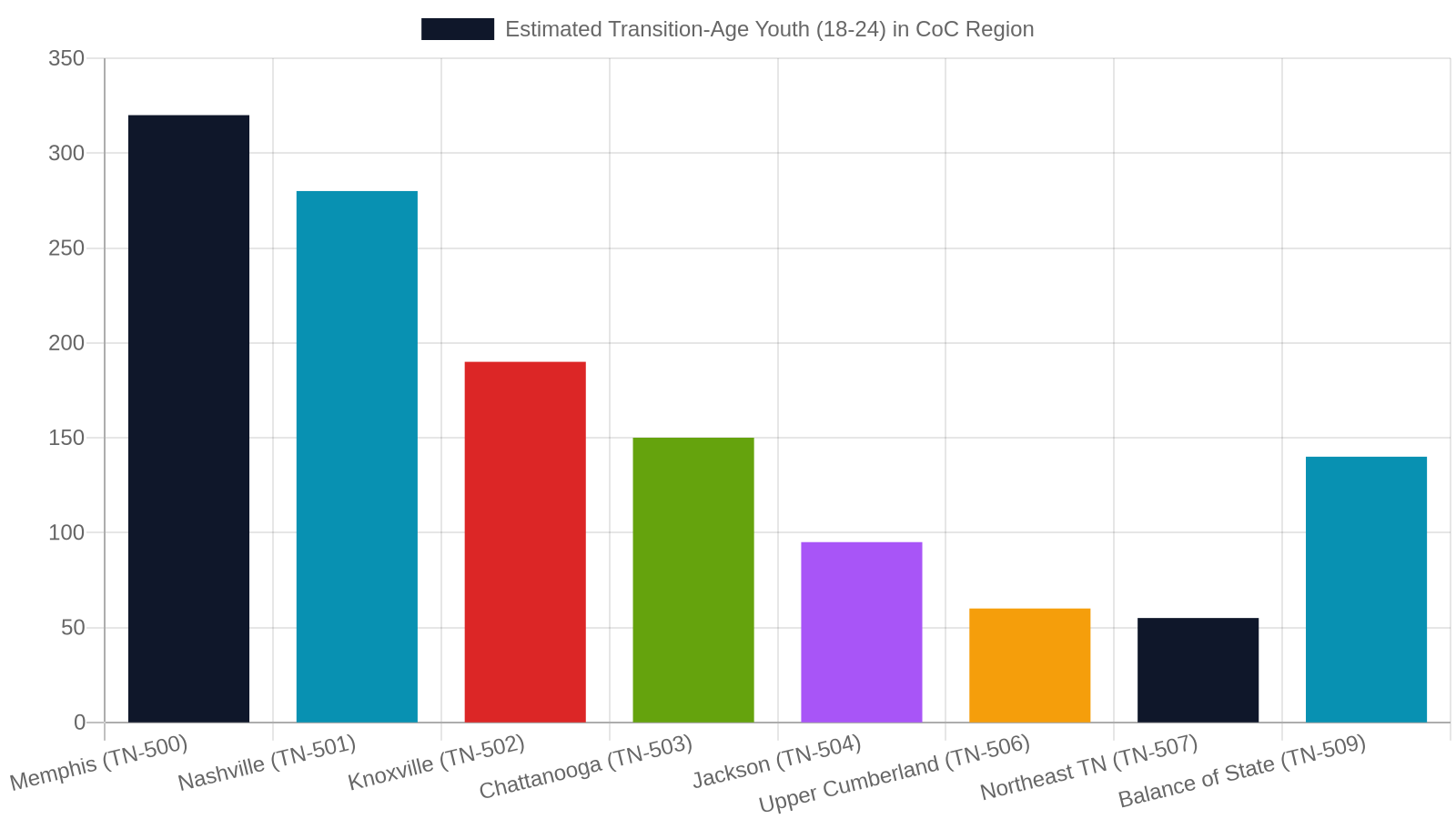
Numbers give context to lived experience. Here is a look at the scale of youth homelessness in Tennessee and the evidence base for why youth-led advocacy — the kind YAAB does every day — actually moves the needle on outcomes for transition-age youth.
Youth Homelessness in Tennessee: The Scale of the Problem
To understand why YAAB matters, it helps to understand the scale of youth homelessness in Tennessee. According to HUD’s most recent Annual Homeless Assessment Report, approximately 4,200 young adults ages 18 to 24 experience homelessness on any given night in the South Atlantic and Southeast regions. Tennessee’s Point-in-Time Counts consistently identify hundreds of transition-age youth across the state’s eight CoC regions, with significant undercounting in rural areas where youth are more likely to be couch-surfing or staying in hidden locations. Youth of color, LGBTQ+ youth, and youth aging out of foster care are disproportionately represented.
Why Youth-Specific Advocacy Produces Results
Research consistently shows that youth-led advocacy produces better policy outcomes for transition-age youth than adult-designed programs alone. A 2021 report by the National Alliance to End Homelessness found that CoC communities with active youth advisory boards were more likely to have dedicated youth-specific housing programs, lower rates of youth returning to homelessness after housing placement, and higher rates of youth engagement in Coordinated Entry. YAAB’s work in Tennessee is part of this national movement toward centering lived experience in systems design.
11. Step-by-Step: How to Join Your Local YAAB Chapter

Ready to make a move? Here is a simple, concrete three-step process for getting connected to your local YAAB chapter — no matter where you are in Tennessee or where you are in your own journey right now. You do not need to have everything figured out. You just need to take the first step.
Step 1 — Identify Your Region
Use the list in Section 2 of this article to identify which of Tennessee’s eight CoC regions covers your city or county. If you are unsure, the YAAB local chapters page has region-by-region information that can help you figure out where you belong. Rural youth who do not fall clearly into one of the named metro regions likely fall under TN-509, the Balance of State CoC.
Step 2 — Make Contact
Once you know your region, reach out to the local chapter coordinator. Contact information is available on each regional page of the YAAB website. You can also ask your case manager, transitional housing program staff, or any CoC service provider to connect you. Do not worry about having the perfect introduction — a simple ‘I am interested in getting involved’ is enough to start the conversation.
Step 3 — Show Up and Stay Connected
Attend your first meeting — virtually or in person — and introduce yourself. You do not need to commit to anything on day one. Most chapters have a low-pressure onboarding process: you come, you listen, you share if you want to, and you decide over time how involved you want to get. The more you show up, the more opportunities open up — from peer outreach roles to leadership positions to statewide advocacy opportunities. Consistency is the only real requirement.
Ready to Use Your Voice? Here Is How to Start

You have made it to the end of this guide — which means you are already thinking seriously about getting involved. That matters. YAAB across Tennessee is built by young adults who decided their experience was worth something, who showed up even when it was hard, and who used their voice to push for change in a system that too often forgets young people exist. Here is your invitation to be one of them.
Your Experience Is Your Qualification
There is no application essay, no interview, no requirement to prove you have suffered enough. YAAB’s entire premise is that your lived experience of housing instability is exactly the qualification needed to help shape better systems for young people across Tennessee. You have already done the hard part. YAAB is the place where that experience becomes power — the power to change policies, shift resources, and make the system work better for the next young person who walks through the door.
Whether you are in Memphis, Nashville, Knoxville, Chattanooga, Jackson, the Upper Cumberland, Northeast Tennessee, or anywhere in between, there is a YAAB chapter waiting for you. The statewide network is stronger every time one more young adult decides their story matters enough to share it with the people making decisions.
Take the Next Step Today
The single most important thing you can do right now is join YAAB and connect with your regional chapter — it takes just a few minutes to express interest, and it could open doors to leadership, community, skills, and resources that change the direction of your life. You can also explore the full about YAAB page to learn more about the organization’s history, structure, and values before you reach out.
If you are a service provider or CoC partner looking to deepen your organization’s relationship with youth voice, YAAB wants to hear from you too. The movement to end youth homelessness in Tennessee is built one young leader at a time — and that next leader could be you.
Frequently Asked Questions
How old do you have to be to join YAAB in Tennessee?
YAAB membership is open to young adults ages 17 to 25 who have lived experience of homelessness or housing instability. You do not need to be currently homeless — past experience qualifies you. Some chapters may work with youth as young as 16 in limited capacities; check with your regional coordinator.
Do I need a stable address or ID to join YAAB?
No. YAAB does not require a stable address, government-issued ID, or any documentation to participate. The only requirement is that you are a young adult ages 17 to 25 with lived experience of housing instability and a desire to get involved.
Does YAAB pay members for their time?
Many YAAB chapters and statewide activities offer stipends for participation, particularly for attending trainings, advisory meetings, and convenings. Stipend amounts vary by chapter and funding cycle. Ask your regional coordinator about current compensation when you first connect.
What is the difference between a local YAAB chapter and the statewide YAAB network?
Local YAAB chapters operate within each of Tennessee's eight Continuum of Care regions and focus on local advocacy, peer outreach, and advising their regional CoC. The statewide YAAB network connects all eight chapters and engages with state-level policy, state agencies, and national advocacy efforts. Members can participate at both levels.
I am a case manager. How do I refer a young person to YAAB?
Visit the YAAB local chapters page at yaabtn.org/local-yaabs/ to find the contact information for the chapter in your CoC region. You can also reach out through the YAAB contact page at yaabtn.org/contact-yaab/ to connect with a statewide coordinator who can help facilitate the referral.
Can I join YAAB if I live in a rural part of Tennessee?
Yes. Rural youth across Tennessee are served by TN-509, the Balance of State CoC, which has its own YAAB chapter. Many chapters also offer virtual meeting options specifically to reduce barriers for members in rural areas or those without reliable transportation.