Quick answer: When young adults age out of Tennessee's foster care system — typically at 18, with an extension to 21 under certain programs — many face an immediate housing crisis with little savings, no co-signer, and no family safety net. The Youth Action Board (YAAB) of Tennessee is a statewide peer-led network of young adults ages 17–25 with lived experience of homelessness who work alongside Continuum of Care (CoC) partners in Memphis, Nashville, Knoxville, Chattanooga, Jackson, and beyond to connect peers to emergency shelter, rapid re-housing, transitional housing, rental assistance, and the advocacy tools to change the systems that created the crisis in the first place.
1. Why Aging Out of Foster Care Creates an Immediate Housing Crisis

Aging out of foster care is one of the most abrupt transitions any young person can face. Unlike peers who can return home after a hard semester or lean on family during a job search, youth who age out of Tennessee’s foster care system often have no safety net at all. Understanding exactly why this moment creates a housing crisis — and how big that crisis is — is the foundation for everything YAAB does.
The 'Aging Out' Cliff — What Happens at 18 (and 21)
In Tennessee, most young people in state custody are discharged from foster care at age 18. The Extended Foster Care program (EFC), available under the federal Fostering Connections Act, allows eligible youth to remain in care until age 21 — but participation rates remain uneven across counties, and many youth don’t know the option exists until it’s too late to enroll.
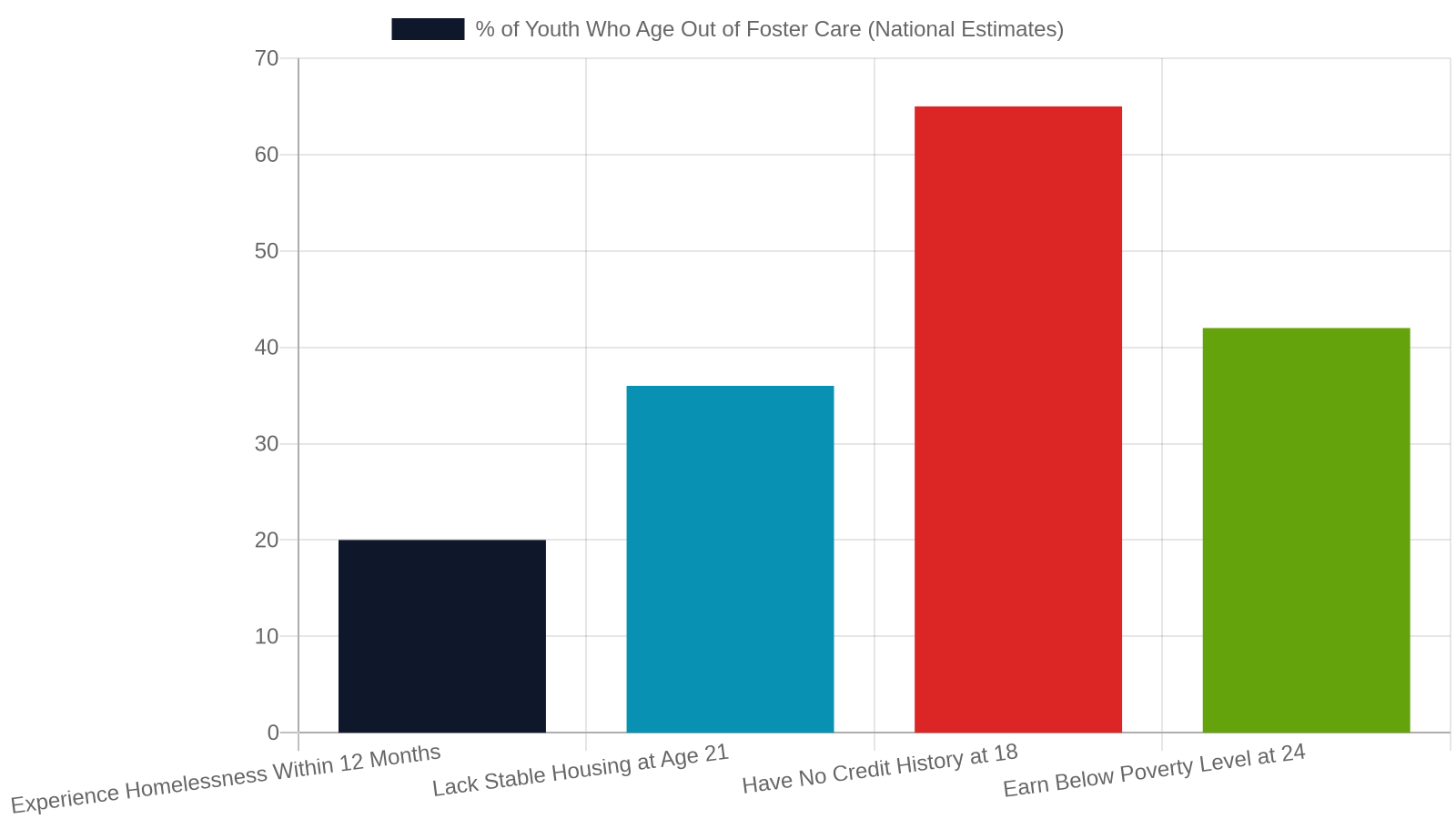
On the day of discharge, a young adult may receive a small personal belongings bag, a bus pass, and a list of phone numbers. There is no lease in their name, no credit history, and often no family member willing or able to co-sign an apartment. According to the National Foster Youth Institute, within 12 months of aging out, roughly 1 in 5 former foster youth experience homelessness.
Tennessee-Specific Numbers You Should Know
Tennessee’s Department of Children’s Services (DCS) reported that approximately 7,500 youth were in foster care statewide in recent years, with several hundred aging out annually. Research from Vanderbilt University’s Center for Research on Child Wellbeing found that Tennessee youth who age out without a permanent connection are significantly more likely to experience housing instability, unemployment, and justice system involvement within two years.
Across Tennessee’s eight Continuum of Care regions — from Shelby County (TN-500) in the west to the Upper Cumberland (TN-509) in the northeast — local Point-in-Time counts consistently show that transition-age youth (TAY) ages 18–24 represent a disproportionately high share of the unsheltered population relative to their share of the general public.
The Compounding Barriers
Housing instability for former foster youth isn’t just about money. It’s a stack of compounding barriers:
- No rental history — landlords routinely reject first-time renters without a co-signer
- No or thin credit — credit scores below 580 disqualify applicants from most market-rate units
- Gaps in identification — missing birth certificates, Social Security cards, or state IDs block access to housing programs
- Trauma responses — chronic stress and PTSD can make navigating bureaucratic systems feel impossible
- Limited income — entry-level wages in Tennessee rarely cover the 30% rent-to-income standard without assistance
Understanding these barriers is the first step toward dismantling them — and it’s exactly the kind of lived-experience knowledge that YAAB members bring to the table.
2. What YAAB Is — and Why Peer Leadership Changes Everything

Before diving into the specific housing resources YAAB connects youth to, it’s important to understand what makes YAAB different from a typical nonprofit or government agency. The answer is simple: YAAB is run by and for young people with lived experience. That peer-to-peer foundation isn’t just a feel-good detail — it’s the reason YAAB’s advocacy actually moves the needle.
YAAB's Mission in Plain Language
The Youth Action Board (YAAB) of Tennessee is a statewide network of young adults ages 17–25 who have personally experienced homelessness or housing instability. YAAB members are not clients of a program — they are advisors, advocates, and decision-makers who sit at the table with Continuum of Care (CoC) leadership, state agencies, and service providers to shape the policies and resources that affect transition-age youth.
YAAB operates across all of Tennessee’s CoC regions, with local chapters (called Local YAABs) in Memphis/Shelby County, Nashville/Davidson County, Knoxville/Knox County, Chattanooga/Hamilton County, Jackson/West Tennessee, the Upper Cumberland, Northeast Tennessee, and more. Each local YAAB is connected to the statewide network, so advocacy wins in one region can spread across the state.
Why Lived Experience Is a Credential, Not a Liability
Traditional service systems often treat young people as passive recipients of help. YAAB flips that script. When a young adult who has personally navigated shelter waitlists, housing applications, and DCS paperwork sits on a CoC committee, they bring knowledge that no consultant or administrator can replicate.
Research consistently shows that programs co-designed with the people they serve are more effective and more trusted. YAAB members have helped identify gaps in shelter hours, confusing intake processes, and missing transportation links — changes that make real differences for peers trying to access housing right now.
If you want to learn more about how YAAB is structured and who leads it, visit the About YAAB page for a full overview of the organization’s history, values, and regional reach.
3. Tennessee's Continuum of Care — a Map of the System You're Navigating

To understand how YAAB helps young adults find housing, you need a basic map of the system they’re working within. Tennessee’s housing and homeless services landscape is organized through the federal Continuum of Care (CoC) framework — and knowing which CoC covers your county is the first practical step toward accessing resources.
What a Continuum of Care (CoC) Actually Is
A Continuum of Care (CoC) is a regional planning body funded by the U.S. Department of Housing and Urban Development (HUD) that coordinates homeless services — from street outreach and emergency shelter all the way to permanent supportive housing. Tennessee has eight CoC regions, each with its own local governing board, funding pool, and network of service providers.
When you hear terms like ‘CoC-funded housing’ or ‘HMIS’ (Homeless Management Information System), these are all part of the CoC infrastructure. Understanding the CoC in your region is key to knowing which doors to knock on — and YAAB members help peers navigate exactly that.
Tennessee's Eight CoC Regions at a Glance
Here’s how Tennessee’s CoC regions break down, along with the counties and major cities they serve:
- TN-500 — Memphis/Shelby County
- TN-501 — Nashville/Davidson County
- TN-502 — Knoxville/Knox County
- TN-503 — Chattanooga/Hamilton County
- TN-504 — Jackson/West Tennessee (multi-county rural region)
- TN-506 — Northeast Tennessee (Johnson City, Kingsport, Bristol area)
- TN-507 — Upper Cumberland region
- TN-509 — Balance of State (remaining Tennessee counties)
Each region has a local YAAB chapter or is in the process of building one. You can find your local chapter and its contact information on the Local YAABs page.
How YAAB Plugs Into the CoC Structure
YAAB members participate directly in CoC governance — attending meetings, reviewing funding applications, and advocating for youth-specific priorities like lower-barrier shelter policies, youth-only housing programs, and trauma-informed intake processes. This isn’t symbolic participation; in several Tennessee CoC regions, YAAB members hold formal seats on CoC boards and committees.
For young adults navigating the system, this means there are real people — peers who have been where you are — inside the institutions making decisions. That’s a fundamentally different relationship than showing up alone to a government office.
4. The Housing Pathway — From Emergency Shelter to a Lease in Your Name

The housing system isn’t one thing — it’s a layered pathway with different programs designed for different moments in a young adult’s journey. Knowing what each level offers (and what it requires) helps you make faster, smarter decisions. YAAB members who have walked this path themselves are often the best guides through it.
Step 1 — Emergency Shelter and Safe Immediate Options
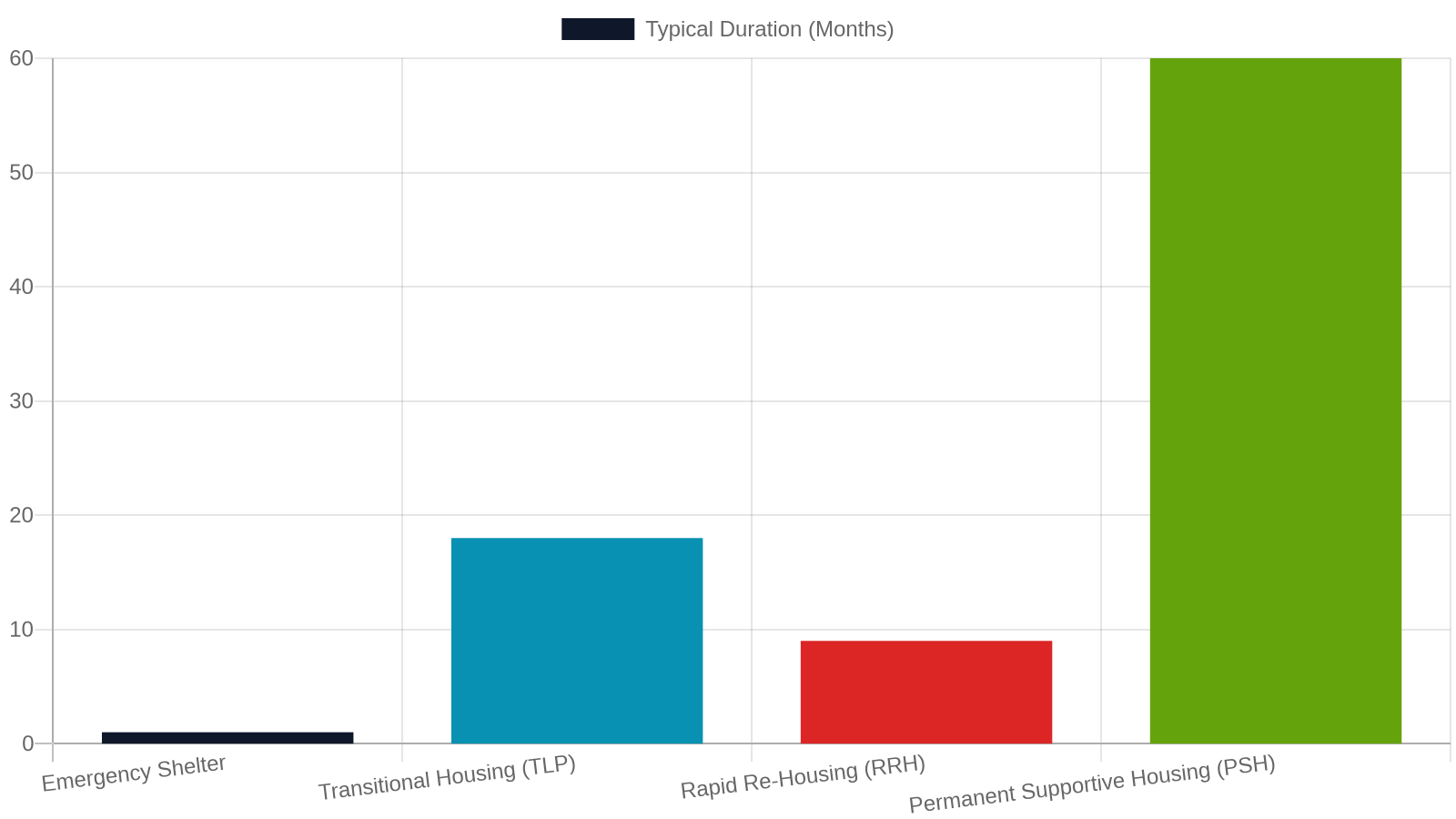
The first stop on the housing pathway for many young adults leaving foster care is emergency shelter. Tennessee has youth-specific emergency shelters in several cities, including Oasis Center in Nashville, Memphis’s Door of Hope, and Knoxville’s KARM youth services. These shelters provide a safe place to sleep, meals, and on-site case management.
Important: many shelters have age restrictions or require referrals through Coordinated Entry. YAAB members and peer navigators can help you understand which shelter will accept you and how to get a referral quickly — often the same day.
Step 2 — Transitional Housing Programs for TAY
Transitional housing programs typically offer 12–24 months of subsidized housing combined with life-skills support, case management, and financial coaching. For former foster youth, programs like Tennessee’s Transitional Living Programs (TLPs) — funded through HUD and the Family and Youth Services Bureau (FYSB) — are specifically designed for ages 16–21 (sometimes extended to 24).
In these programs, young adults pay a small portion of their income toward rent while building savings, credit history, and the skills needed to hold a lease independently. YAAB advocates have pushed for longer program lengths and less punitive rules in TLPs across multiple Tennessee CoC regions.
Step 3 — Rapid Re-Housing and Permanent Supportive Housing
Rapid Re-Housing (RRH) provides short-term rental assistance — typically 3–12 months — plus housing search support to help young adults move quickly into market-rate apartments. It’s designed for people who can sustain housing independently once they get a foot in the door. Permanent Supportive Housing (PSH), by contrast, pairs long-term rental subsidies with ongoing support services for young adults with significant disabilities or chronic homelessness histories.
Both RRH and PSH are accessed through Coordinated Entry — the standardized intake process each CoC uses to match people to the right resources. YAAB members help peers understand how to complete the VI-SPDAT or youth-specific assessment tools used in Coordinated Entry without feeling like they’re being interrogated.
5. Key Tennessee Programs and Benefits Former Foster Youth Can Access

Knowing the programs available to you is power. Tennessee has several state and federally funded resources specifically for young adults who have been in foster care — but they are notoriously hard to find and even harder to navigate alone. Here’s a plain-language breakdown of the most important ones.
Tennessee's Extended Foster Care (EFC) and Chafee Funds
If you are between 18 and 21 and were in Tennessee DCS custody, you may be eligible to re-enroll in Extended Foster Care even if you were already discharged — Tennessee allows re-entry under certain conditions. EFC can provide a housing placement, a monthly stipend, and continued case management.
The John H. Chafee Foster Care Program provides federal funding that Tennessee uses for independent living services, including housing assistance, educational support, and financial literacy training for current and former foster youth up to age 23 (and in some cases 26 for education-related support). Ask your DCS caseworker or a YAAB peer navigator about your specific eligibility.
HUD Youth Homelessness Demonstration Program (YHDP) in Tennessee
HUD’s Youth Homelessness Demonstration Program (YHDP) has funded coordinated community plans in multiple Tennessee CoC regions specifically targeting youth homelessness. YHDP funding has supported youth-dedicated Rapid Re-Housing slots, transitional housing expansions, and peer support positions — many of which are filled by YAAB members themselves.
YHDP communities are required to include youth with lived experience in their planning processes, which is one reason YAAB’s role has grown significantly in participating Tennessee CoCs.
Tennessee Housing Development Agency (THDA) Resources
The Tennessee Housing Development Agency (THDA) administers several programs relevant to transition-age youth, including Emergency Solutions Grants (ESG) that fund shelter operations and rapid re-housing, and the HOME Investment Partnerships Program that supports affordable rental development. While THDA programs are typically accessed through local nonprofits rather than directly, knowing THDA exists helps you ask the right questions of your case manager.
THDA also maintains a statewide housing resource locator at thda.org where you can search for affordable rental units by county — a practical tool when you’re ready to start apartment hunting.
6. Education and Employment — the Two Pillars That Make Housing Stick

Getting into housing is one challenge. Staying in housing requires income, and income requires education or job skills. YAAB’s approach to housing stability is holistic — members advocate for youth to have access to education and employment supports at the same time as housing, not as an afterthought.
Education Pathways: GED, Community College, and Beyond
Stable housing is nearly impossible to maintain without income, and income is nearly impossible to grow without credentials. Tennessee offers several education pathways for young adults who left school early or need to catch up:
- Tennessee Reconnect — tuition-free community college for adults without a degree (no age cap, includes former foster youth)
- GED programs — free through Tennessee’s Adult Education offices in every county
- Education and Training Vouchers (ETVs) — up to $5,000/year for current and former foster youth up to age 26 to use toward tuition, books, and housing near campus
YAAB members have successfully advocated for campus housing priority and emergency fund access for former foster youth at several Tennessee colleges and universities.
Employment Programs for Transition-Age Youth in Tennessee
Tennessee’s American Job Centers (AJCs) — located in every major city — offer free job search assistance, résumé help, skills training, and connections to apprenticeships. Youth-specific workforce programs include:
- WIOA Youth Program — Workforce Innovation and Opportunity Act funding for ages 16–24, including paid work experiences and occupational skills training
- YouthBuild Tennessee — combines construction skills training with GED attainment and leadership development
- Tennessee Promise and Reconnect — free community college pathways that can lead directly to in-demand certifications in healthcare, IT, and skilled trades
YAAB members often serve as peer connectors at these programs, helping peers feel less intimidated walking in the door for the first time.
Why Income Stability Is the Foundation of Housing Stability
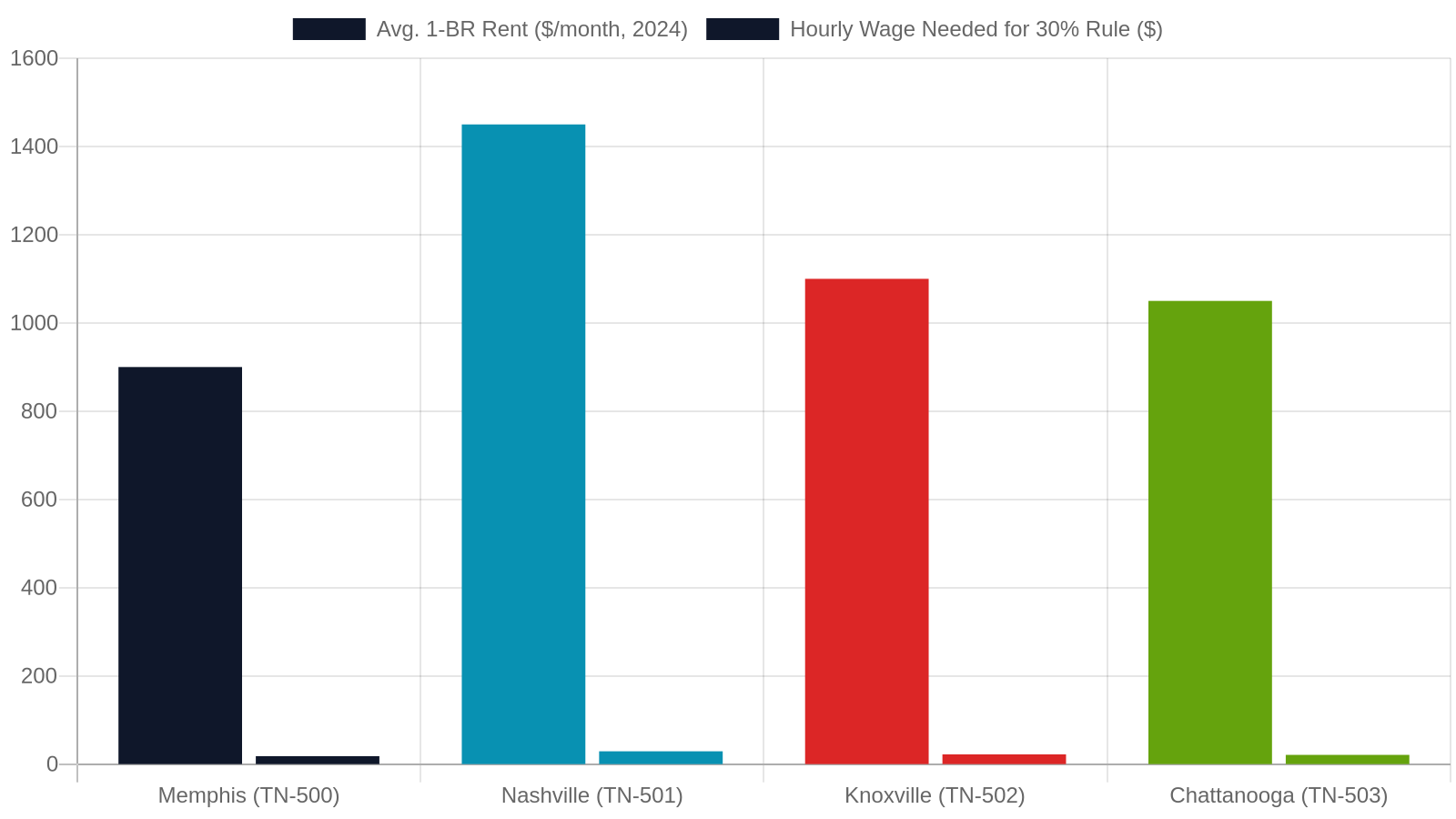
HUD defines housing affordability as spending no more than 30% of gross income on rent and utilities. In Nashville, the average one-bedroom apartment rents for approximately $1,450/month as of 2024 — meaning a young adult would need to earn at least $29/hour to afford it without assistance. In Memphis, that figure is closer to $900/month, requiring roughly $18/hour.
This math makes clear why rental assistance programs are critical bridges — and why YAAB’s advocacy for living wages, longer rental assistance periods, and workforce training investments is inseparable from housing advocacy.
7. Mental Health and Trauma-Informed Support — Because Housing Is More Than Four Walls

You can hand someone a key to an apartment and still watch them lose it within 90 days if the underlying trauma, mental health needs, and support gaps aren’t addressed at the same time. YAAB members know this firsthand — which is why mental health and trauma-informed care are central to YAAB’s housing advocacy, not a separate issue.
The Mental Health Reality for Former Foster Youth
Studies consistently show that young adults who have experienced foster care have significantly higher rates of PTSD, depression, anxiety, and substance use disorders than their peers — not because of who they are, but because of what they’ve been through. The Adverse Childhood Experiences (ACEs) research framework documents how chronic stress in childhood reshapes the nervous system in ways that affect decision-making, relationships, and the ability to navigate bureaucratic systems.
This is not a character flaw. It is a predictable human response to unpredictable, unsafe environments. YAAB’s peer support model is built on this understanding — members don’t pathologize peers, they walk alongside them.
Tennessee Mental Health Resources for TAY
Tennessee has several mental health access points relevant to transition-age youth:
- TennCare/Medicaid — most young adults aging out of foster care retain TennCare eligibility until age 26; this covers outpatient therapy, psychiatric medication, and crisis services
- Tennessee Crisis Services — 24/7 mobile crisis teams available in most counties; call or text 988 for the Suicide and Crisis Lifeline
- Community Mental Health Centers — each Tennessee county is served by a regional center offering sliding-scale outpatient care
- Peer Support Specialists — many CoC-funded programs now employ certified peer support specialists, some of whom are YAAB alumni
Trauma-Informed Housing — What It Looks Like in Practice
YAAB members have advocated for trauma-informed practices in Tennessee shelters and housing programs, including:
- Flexible curfew policies that don’t penalize young adults with irregular work schedules
- Private or semi-private sleeping arrangements rather than large open dorms
- Staff trained in de-escalation rather than punitive rule enforcement
- Opt-in rather than mandatory group programming
- Clear, written explanations of all program rules at intake
These aren’t luxuries — they’re the difference between a young adult staying in a program long enough to get housed and leaving after the first night.
8. Knowing Your Rights as a Young Adult Navigating the Housing System

One of the most empowering things YAAB does is make sure young adults know their rights — because the housing system has a lot of rules, and not all of them are enforced fairly. Knowing what you’re entitled to can be the difference between being pushed out of a program and standing your ground.
Your Rights in Shelters and Housing Programs
Many young adults don’t realize they have enforceable rights even inside emergency shelters and transitional housing programs. Key rights include:
- The right to a written copy of all program rules at intake
- The right to a grievance process if you are asked to leave a program
- Protection from discrimination based on race, gender, sexual orientation, gender identity, disability, or family status under the Fair Housing Act
- The right to keep your belongings and not have them discarded without notice
- Privacy rights regarding your personal information in HMIS (you can ask what data is collected and who sees it)
LGBTQ+ Youth Rights in Tennessee Housing
LGBTQ+ youth are disproportionately represented in Tennessee’s homeless youth population — national research estimates that LGBTQ+ youth make up 20–40% of homeless youth despite being approximately 7–10% of the general youth population. Family rejection is the leading driver.
Under HUD’s Equal Access Rule, all HUD-funded shelters and housing programs must provide equal access regardless of sexual orientation or gender identity. This means a shelter cannot turn you away or place you in an unsafe situation based on your gender identity. If you experience discrimination in a HUD-funded program, you can file a complaint at hud.gov/fairhousing.
Your Right to Participate in the Systems That Affect You
Perhaps the most underutilized right young adults have is the right to participate in the CoC planning process. HUD requires that CoC governance include people with lived experience of homelessness. YAAB exists, in part, to make that right real and accessible — not just a line in a federal regulation.
If you’ve been told that advocacy and policy work are ‘not for people like you,’ that is simply wrong. YAAB members across Tennessee are proof that young adults with lived experience are the most credible and effective voices for change in this system. Explore the YAAB Advocacy page to see current campaigns and how you can plug in.
Tennessee Housing Program Options at a Glance
Not every housing program is the right fit for every situation. Use this comparison to quickly understand which options may apply to you based on your age, needs, and current situation.
9. How YAAB Advocacy Has Changed Tennessee's Housing Landscape

YAAB isn’t just a support network — it’s a change-making body with a track record of moving the needle on real policy. Understanding what YAAB has already accomplished helps you see what’s possible when young adults with lived experience are given a genuine seat at the table.
Policy Wins Driven by Youth Lived Experience
YAAB members across Tennessee have contributed to tangible policy and program changes, including:
- Advocating for youth-specific Coordinated Entry pathways that use age-appropriate assessment tools instead of adult instruments designed for a different population
- Pushing CoC boards to adopt lower-barrier shelter policies — removing rules that excluded young adults with minor criminal records or substance use histories
- Participating in HUD Continuum of Care funding applications, ensuring that youth-dedicated housing beds are included in annual funding requests
- Providing testimony to the Tennessee General Assembly on legislation affecting foster care, housing, and youth services
The YAAB Model — Peer Support as a Profession
One of YAAB’s most innovative contributions is demonstrating that peer support is a legitimate, paid profession — not just volunteering. Several Tennessee CoC regions now fund paid Peer Navigator or Peer Support Specialist positions, many filled by YAAB alumni. These positions pay living wages, offer career advancement, and keep lived-experience expertise inside the system permanently.
This model is gaining national attention. YAAB Tennessee has been cited in HUD guidance documents and national youth homelessness convenings as an example of authentic youth engagement that produces measurable outcomes.
10. Financial Literacy and Building Credit — the Skills No One Taught You

The foster care system rarely teaches young adults how to open a bank account, build credit, or read a lease — yet all three are prerequisites for independent housing. YAAB members and partner organizations across Tennessee offer peer-led financial literacy workshops because these skills are learnable at any age, and knowing them changes everything.
Why Credit Matters for Housing — and How to Start Building It
Most landlords run a credit check before approving a rental application. A credit score below 580 is considered ‘poor’ and will result in rejection from most market-rate apartments. Many young adults aging out of foster care have no credit score at all — which is almost as bad as a low score in the eyes of a landlord.
Here’s how to start building credit from zero:
- Secured credit card — deposit $200–$500 as collateral; use it for small purchases and pay it off monthly
- Credit-builder loan — offered by many credit unions; you make monthly payments that are reported to credit bureaus, building history without debt risk
- Become an authorized user — if a trusted adult adds you to their card, their history can boost your score
- Pay utility bills on time — some services now report utility payments to credit bureaus (Experian Boost, for example)
Budgeting Basics for Your First Apartment
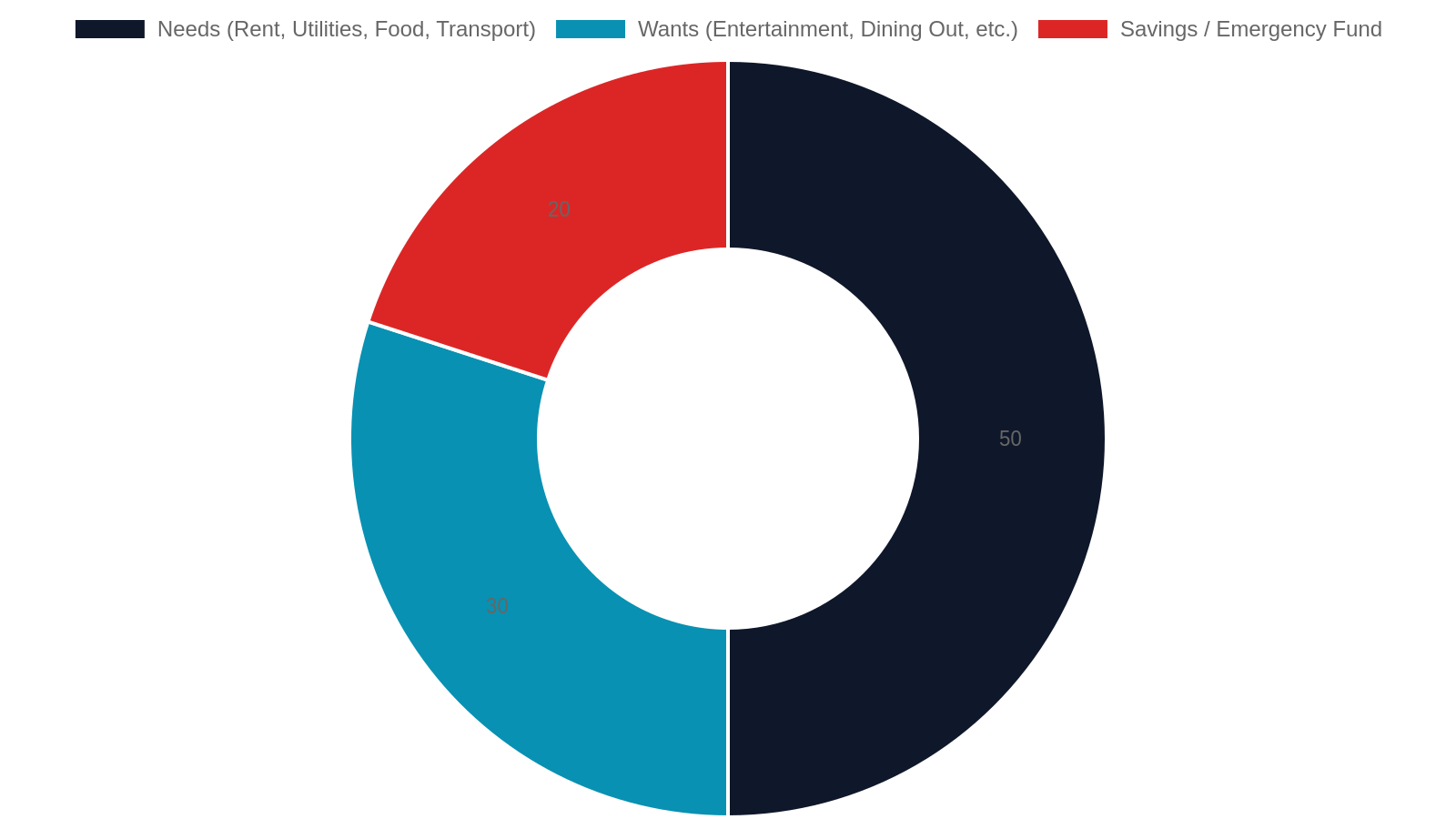
The 50/30/20 rule is a simple starting framework: spend no more than 50% of take-home pay on needs (rent, utilities, food, transportation), 30% on wants, and save 20%. In practice, for young adults in transitional housing or earning minimum wage, the 20% savings goal may be aspirational at first — but even saving $25–$50 per month builds an emergency fund that prevents a single bad week from becoming a housing crisis.
Tennessee’s minimum wage is $7.25/hour (federal floor), but many entry-level positions in healthcare, logistics, and skilled trades in Tennessee’s major cities now start at $15–$18/hour. Targeting these industries early — through WIOA training or community college certificates — dramatically changes the math.
11. How to Find Your Local YAAB and Get Connected Across Tennessee
All the information in this article is most useful when you have a real community behind you. YAAB’s local chapters across Tennessee are that community — peer-led spaces where young adults share resources, build skills, and drive change together. Here’s how to find yours.
Local YAAB Chapters by CoC Region
YAAB has local chapters embedded in Tennessee’s CoC regions. Each local YAAB holds regular meetings, connects members to resources, and feeds into statewide advocacy. Here’s where to start based on where you live:
- Memphis/Shelby County (TN-500) — TN-500 Local YAAB
- Nashville/Davidson County (TN-501) — TN-501 Local YAAB
- Knoxville/Knox County (TN-502) — TN-502 Local YAAB
- Chattanooga/Hamilton County (TN-503) — TN-503 Local YAAB
- Jackson/West TN (TN-504) — TN-504 Local YAAB
- Northeast TN (TN-506) — TN-506 Local YAAB
- Upper Cumberland (TN-507) — TN-507 Local YAAB
Not sure which region covers your county? The Local YAABs directory has a full breakdown.
What to Expect When You Show Up
Joining a YAAB meeting doesn’t require an application, a résumé, or any prior advocacy experience. You just have to be between 17 and 25 and have some experience with housing instability — which is your credential, not your shame.
At a typical local YAAB meeting, you might find peer discussions about current housing resources, updates on CoC policy decisions, skill-building workshops (public speaking, advocacy training, financial literacy), and connections to employment and education programs. Meetings are designed to be welcoming, not intimidating — because YAAB members remember exactly what it felt like to walk in for the first time.
Ready to Take Your Next Step? Here's How to Get Started Today

You’ve made it to the end of this guide — which means you’re already doing the work of figuring out what’s possible. The path from foster care to stable, independent housing in Tennessee is real, and thousands of young adults across Memphis, Nashville, Knoxville, Chattanooga, Jackson, and every corner of this state are walking it right now. You don’t have to walk it alone.
Start With One Action This Week
If you’re a young adult in Tennessee between 17 and 25 who is experiencing housing instability or has in the past, the most important thing you can do right now is connect with a peer who has been where you are. YAAB members across the state are ready to help you navigate shelter options, housing applications, education programs, and more — without judgment, without jargon, and without making you feel like a case file.
Visit yaabtn.org to find your local YAAB, explore resources, and learn how to get involved. Whether you want to find housing, build skills, or help change the system for the next young adult who comes behind you — there’s a place for you here.
For Case Managers and CoC Partners
If you’re a case manager, service provider, or CoC partner reading this article, YAAB needs your support too. The most effective thing you can do is actively refer transition-age youth to their local YAAB, create paid peer support positions within your organization, and advocate for youth seats on your CoC governing board.
YAAB is not a referral destination for ‘hard-to-serve’ youth — it is a leadership development body for the next generation of housing advocates. Treat it accordingly, and you’ll see the difference in outcomes.
To learn more about partnering with YAAB or to explore current projects and initiatives, visit the YAAB Projects page or reach out through the Contact YAAB page.
Frequently Asked Questions
What age do you age out of foster care in Tennessee?
In Tennessee, most young people age out of foster care at 18. However, the Extended Foster Care (EFC) program allows eligible youth to remain in care — or re-enroll — until age 21. If you were in DCS custody and are between 18 and 21, contact Tennessee DCS to ask about EFC eligibility.
What housing help is available for young adults aging out of foster care in Tennessee?
Tennessee offers several options including Extended Foster Care (to age 21), Chafee/Education and Training Vouchers (up to $5,000/year for education and housing), Transitional Living Programs (12–24 months of subsidized housing), and Rapid Re-Housing through local Continuum of Care programs. YAAB peer navigators can help you figure out which programs you qualify for.
How do I join a YAAB chapter in Tennessee?
You can join a local YAAB chapter if you are between 17 and 25 and have lived experience of homelessness or housing instability. No application or prior experience is required. Visit yaabtn.org/local-yaabs to find the chapter in your CoC region and get contact information for their next meeting.
What is a Continuum of Care and why does it matter for housing?
A Continuum of Care (CoC) is a HUD-funded regional body that coordinates homeless services — from emergency shelter to permanent housing — in a specific geographic area. Tennessee has eight CoC regions. Most housing assistance programs for young adults are funded through and accessed via the local CoC's Coordinated Entry system.
Can LGBTQ+ youth access shelter and housing programs in Tennessee without discrimination?
Yes. Under HUD's Equal Access Rule, all HUD-funded shelters and housing programs must provide equal access regardless of sexual orientation or gender identity. If you experience discrimination in a HUD-funded program, you can file a complaint at hud.gov/fairhousing. YAAB advocates for LGBTQ+-affirming practices in Tennessee shelters.
How can I build credit if I'm starting from zero after aging out of foster care?
Start with a secured credit card (deposit $200–$500, use it for small purchases, pay it off monthly), a credit-builder loan from a credit union, or by becoming an authorized user on a trusted adult's account. Even paying utility bills on time can now be reported to credit bureaus through services like Experian Boost. Consistent on-time payments for 6–12 months can build a credit score from nothing to the 600s.