Quick answer: Enrolling in college while experiencing housing instability is hard — but thousands of Tennessee young adults ages 17 to 25 do it every year with the right mix of resources, rights, and peer support. Key moves include declaring homeless status on the FAFSA for independent student aid, connecting with a campus homeless liaison, applying for Tennessee Promise or HOPE Scholarship, accessing emergency housing funds through your college, and linking up with a local YAAB region for peer navigation help. This article breaks down 10 concrete strategies, the programs that back them up, and how to take the first step today.
1. Understand Your Rights Under the McKinney-Vento Act

Before you fill out a single application, knowing your legal rights is the foundation everything else is built on. Federal law provides specific protections for young adults experiencing homelessness who want to pursue higher education — and most colleges in Tennessee are required to honor them. Understanding these rights puts you in a position of power, not vulnerability.
What McKinney-Vento Actually Covers for College-Age Youth
Most people associate the McKinney-Vento Homeless Assistance Act with K-12 schools, but its protections extend further than many realize. If you are a student ages 17 to 24 enrolled in a Title IV-eligible postsecondary program, McKinney-Vento definitions directly shape how the federal government classifies you for financial aid purposes.
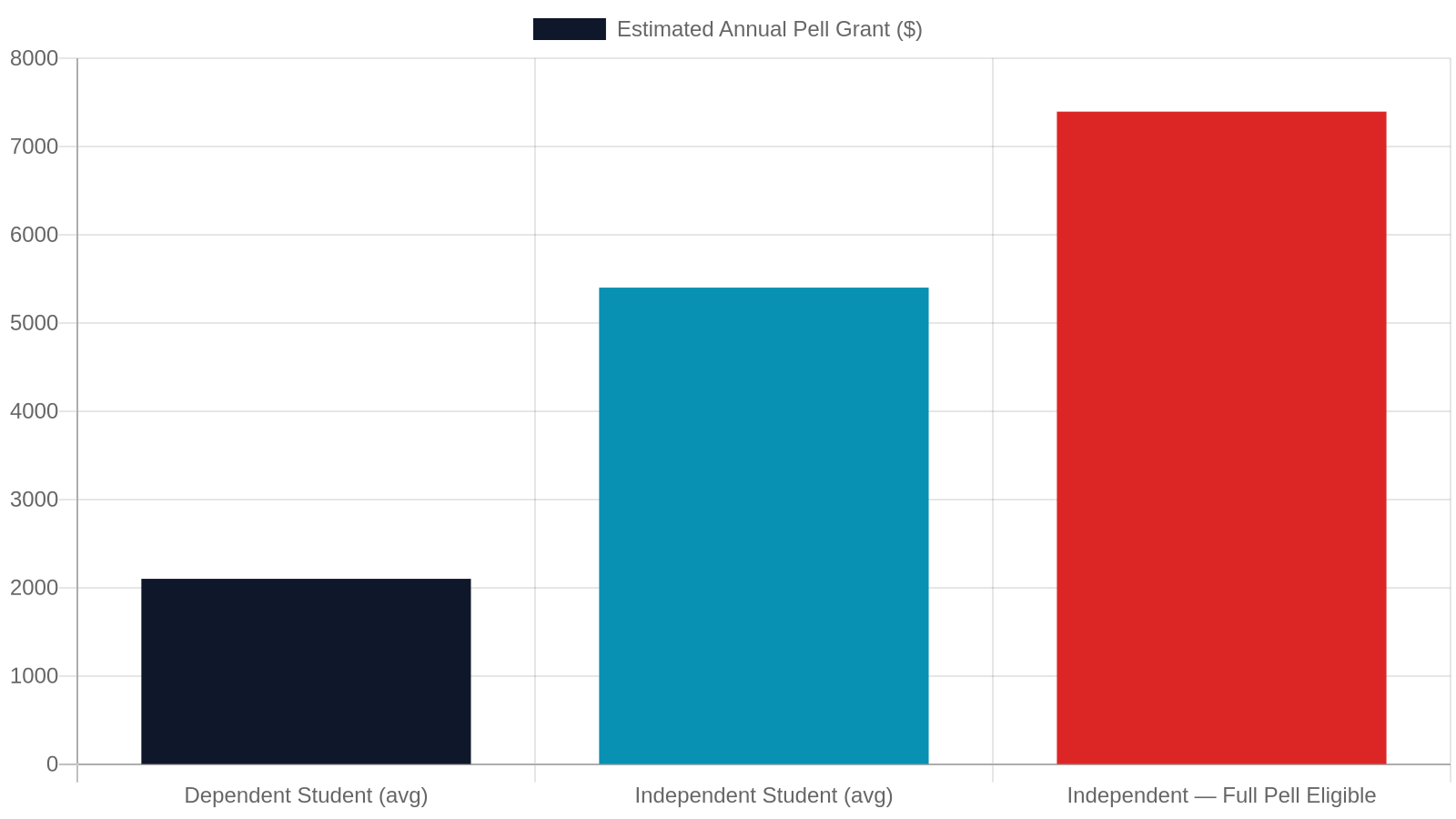
Specifically, if you are unaccompanied and homeless — meaning you lack a fixed, regular, and adequate nighttime residence and you are not in the physical custody of a parent or guardian — you can be classified as an independent student on the FAFSA without needing parental income information. This single change can unlock thousands of additional dollars in Pell Grant funding.
How to Document Your Housing Situation
Documentation does not have to be a stack of official papers. A letter from a shelter case manager, a CoC outreach worker, a school counselor, or a YAAB navigator confirming your housing situation is typically sufficient. Tennessee’s Continuum of Care regions — including Memphis/Shelby, Nashville/Davidson, Knoxville/Knox, and Chattanooga/Hamilton — all have designated liaisons who can write these letters.
- Accepted documentation sources: homeless shelter staff, transitional housing programs, CoC case managers, high school homeless liaisons, and financial aid administrators at your college
- Keep copies: store digital photos of every letter in a free cloud account (Google Drive, iCloud) so you never lose access
- Timeline: documentation is typically valid for one academic year and must be renewed each FAFSA cycle
2. Use the FAFSA Independent Student Status to Maximize Aid

The Free Application for Federal Student Aid (FAFSA) is the gateway to nearly every grant, loan, and work-study dollar available for college. For young adults experiencing housing instability, one specific status designation — independent student — can be the difference between receiving enough aid to actually attend and being priced out before classes even start.
The Difference Between Dependent and Independent Status
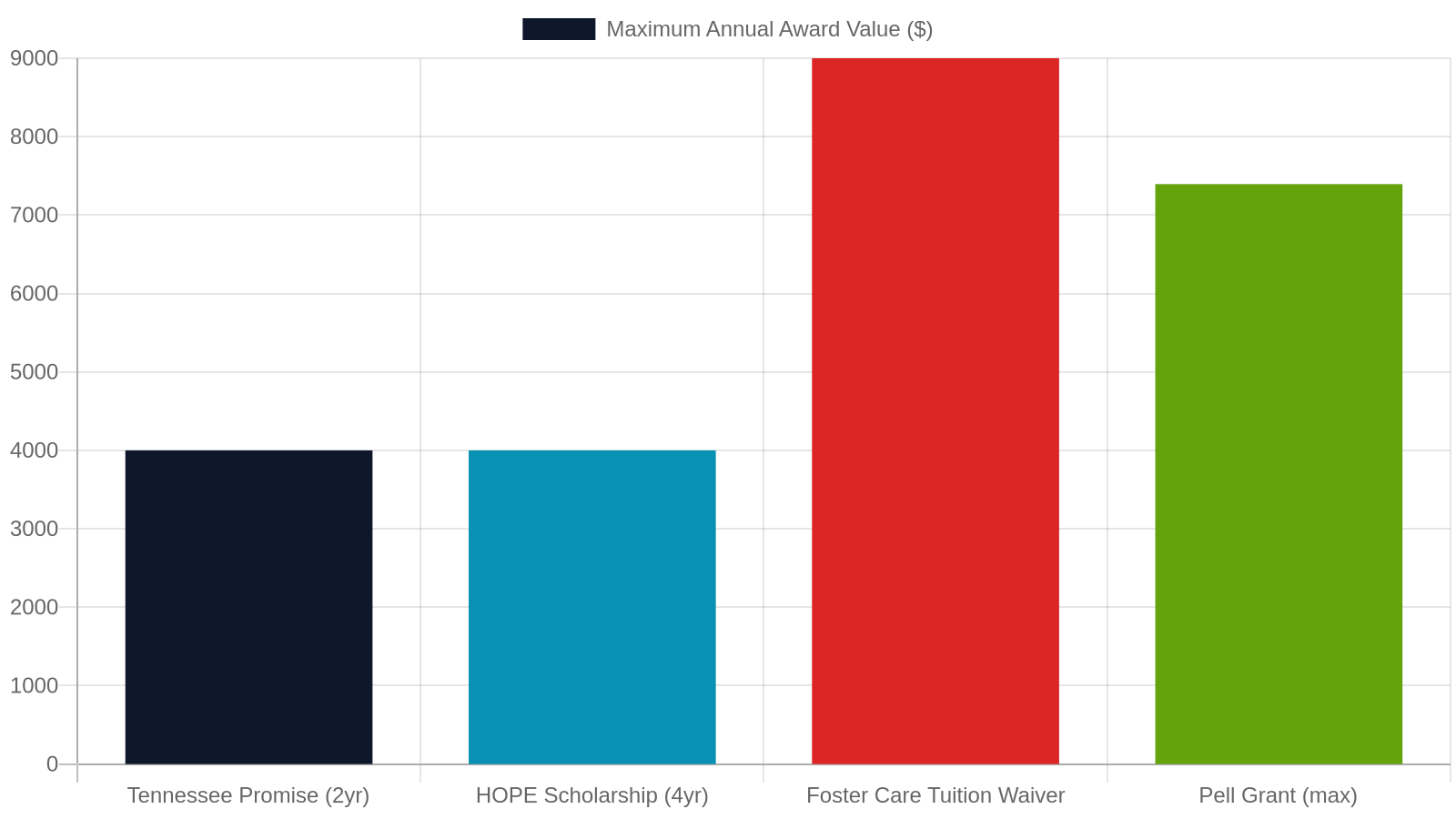
On the standard FAFSA, a dependent student must report parental income — which can dramatically reduce aid eligibility even when parents are absent, abusive, or simply unwilling to cooperate. Independent student status removes that requirement entirely. For the 2024–2025 award year, the maximum federal Pell Grant was $7,395. Many housing-unstable youth who qualify as independent receive the full amount or close to it.
You automatically qualify as independent if you answer yes to any of the following on the FAFSA: you are or were in foster care after age 13, you are an emancipated minor, you are homeless or at risk of homelessness and unaccompanied, or you are a veteran. You do not need all of these — one is enough.
Navigating the FAFSA Homeless Youth Question
Question 58 on the current FAFSA asks directly whether you are an unaccompanied youth who is homeless or self-supporting and at risk of homelessness. Answering yes triggers a referral to your college’s financial aid office for a formal determination. That determination — made by a financial aid administrator — is what officially unlocks independent status.
- Tip: contact your college’s financial aid office before submitting the FAFSA so they know to expect your file
- Tip: if you are unsure how to answer, a YAAB peer navigator or CoC case manager can walk through the form with you at no cost
- Tip: the FAFSA opens October 1 each year — filing early gives you access to the most aid before funds run out
3. Connect With Your Campus Homeless Liaison or Basic Needs Center

You do not have to figure out campus life alone. Most Tennessee colleges have at least one staff member whose job — formally or informally — is to help students who are dealing with housing instability. Finding that person early can unlock resources that are never advertised in a brochure.
What a Campus Homeless Liaison Does
Since 2020, a growing number of Tennessee colleges and universities — including Tennessee State University, University of Memphis, East Tennessee State University, and several Tennessee College of Applied Technology (TCAT) campuses — have designated staff members who specialize in supporting students experiencing homelessness or housing instability. These liaisons can fast-track emergency housing referrals, connect you to food pantries, waive certain fees, and advocate on your behalf with financial aid or housing offices.
If your campus does not have a formal liaison, ask the Dean of Students office — they are typically the closest equivalent and are required to know about community resources.
Basic Needs Centers: Food, Housing, and More
Basic Needs Centers (sometimes called Student Success Centers or Resource Hubs) are physical or virtual offices on campus that coordinate wraparound support. Services commonly available include:
- Emergency housing vouchers — short-term motel or shelter placements while longer-term options are secured
- Campus meal swipe programs — donated meal swipes from other students, often enough to cover 7–14 meals per week
- Laptop and Wi-Fi lending — critical for completing coursework without a stable address
- Hygiene kits and clothing closets — so basic needs don’t derail academic focus
In a 2023 survey by the Hope Center for College, Community, and Justice, 47% of Tennessee community college students reported experiencing housing insecurity in the prior year — meaning these services exist because the need is real and widespread, not rare.
4. Apply for Tennessee-Specific Scholarships and Aid Programs

Tennessee has built a layered system of state-level financial aid that — when stacked correctly — can dramatically reduce or even eliminate the cost of college for transition-age youth. The key is knowing which programs you qualify for and applying to all of them simultaneously.
Tennessee Promise and HOPE Scholarship Basics
Tennessee Promise provides last-dollar scholarship coverage for two years at a Tennessee community college or TCAT — meaning it pays whatever tuition and fees remain after other grants are applied. It is open to high school graduates and GED completers. For housing-unstable youth, the combination of full Pell Grant plus Tennessee Promise can result in zero tuition cost for two years, leaving grant money available for living expenses.
The Tennessee HOPE Scholarship covers up to $3,000–$4,000 per year at four-year public universities for students meeting GPA and ACT/SAT benchmarks. If you are a foster care alumnus, the Tennessee Foster Care Tuition Waiver goes further — eliminating tuition entirely at public colleges and universities until age 26.
Foster Care Tuition Waiver: A Critical Resource
If you aged out of Tennessee foster care — or were adopted or placed in guardianship after age 14 — the Tennessee Foster Care Tuition Waiver is one of the most powerful financial tools available to you. It waives tuition and mandatory fees at all Tennessee Board of Regents institutions (community colleges, TCATs, and several universities) for eligible students up to age 26.
- Apply through your college’s financial aid office with documentation from the Tennessee Department of Children’s Services (DCS)
- The waiver stacks with Pell Grant, meaning you may receive refund checks for living expenses
- Deadline varies by institution — apply as early as possible each academic year
- Questions? YAAB members across Tennessee have navigated this process and can connect you with peers who have done the same
5. Secure Emergency Housing Through CoC and Campus Partnerships

Having a stable place to sleep is not a luxury — it is the prerequisite for everything else. Tennessee’s CoC network exists specifically to bridge the gap between crisis and stability, and college enrollment is not a barrier to accessing it. In fact, it can be a strength in your application.
How the Continuum of Care Can Help College Students
Tennessee’s eight Continuum of Care (CoC) regions — including TN-500 (Memphis/Shelby), TN-501 (Nashville/Davidson), TN-502 (Knoxville/Knox), TN-503 (Chattanooga/Hamilton), TN-504 (Jackson/West TN), TN-506 (Upper Cumberland), TN-507 (Northeast TN), and TN-509 (Balance of State) — each coordinate a network of emergency shelters, transitional housing programs, and rapid rehousing services specifically for transition-age youth.
Being enrolled in college does not disqualify you from CoC housing programs. In fact, many Rapid Rehousing programs prioritize youth who are actively pursuing education or employment, because it signals housing stability is achievable with short-term support.
Rapid Rehousing and Transitional Housing for Students
Rapid Rehousing (RRH) programs provide short-term rental assistance — typically 3 to 12 months — plus case management to help you move into your own apartment quickly. For a college student, this can mean having a stable address while you complete your first year. Transitional housing programs offer longer-term placements (up to 24 months) with built-in support services like budgeting help, employment coaching, and academic check-ins.
- How to access: call 211 (available statewide, 24/7) to be connected to your local CoC intake process
- What to say: tell the operator you are a young adult ages 17–25 experiencing homelessness and currently enrolled or planning to enroll in school
- Timeline: emergency shelter placement can happen within 24–72 hours; RRH placement typically takes 2–6 weeks depending on availability
6. Choose the Right Type of College Program for Your Situation

Not every college path looks the same — and for young adults managing housing instability, choosing the right type of program can be the difference between staying enrolled and dropping out. Flexibility, location, cost, and time-to-credential all matter when your life circumstances are unpredictable.
Community Colleges and TCATs: Flexibility First
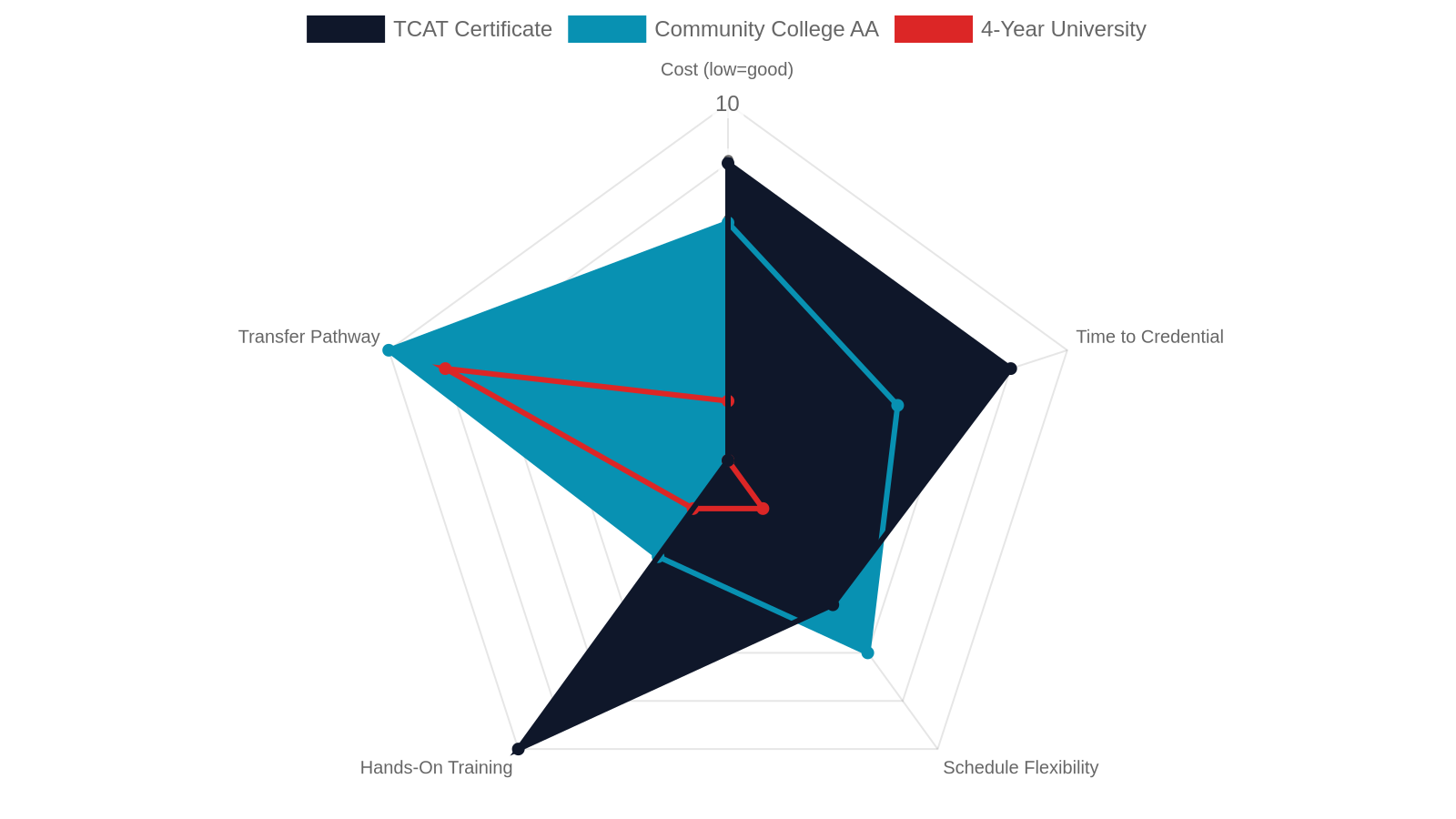
Tennessee’s 13 community colleges and 27 Tennessee College of Applied Technology (TCAT) campuses are strategically located across the state — including in smaller cities like Jackson, Cookeville, Morristown, and Cleveland — making them accessible without a car in many cases. Community colleges offer associate degrees (typically 60 credit hours, 2 years full-time) and certificate programs (as short as 9 months). TCATs specialize in hands-on trades like HVAC, welding, cosmetology, medical assisting, and CDL training — fields where starting salaries range from $35,000 to $65,000 per year.
Both accept Tennessee Promise, and both offer part-time enrollment options that let you work while you study — critical when housing stability requires income.
Online and Hybrid Options for Housing-Unstable Students
If your living situation is in flux — couch-surfing, rotating between shelters, or staying in a motel — fully online or hybrid programs remove the commute barrier entirely. Tennessee’s community colleges offer hundreds of online courses, and some programs (like business administration, early childhood education, and IT certifications) can be completed 100% online.
- Free Wi-Fi access points: most public libraries in Tennessee offer free Wi-Fi and computer access during open hours — a reliable study location when home internet is unavailable
- Laptop lending: many campuses lend laptops for an entire semester at no cost through the library or basic needs center
- Asynchronous coursework: look for classes labeled ‘asynchronous online’ — these have no set meeting times, giving you maximum schedule flexibility
7. Build Your Support Network Before Classes Start

College is not meant to be navigated alone — and for young adults managing housing instability, having the right people in your corner before the first day of class can make all the difference. Your support network does not have to be large; it just has to be real.
Peer Mentors and YAAB Navigators
One of the most underrated resources available to Tennessee transition-age youth is peer support — connecting with someone who has already walked the path you are on. YAAB members across Tennessee’s CoC regions have direct experience navigating college enrollment, financial aid, and housing instability simultaneously. They are not case managers or social workers — they are peers who get it because they have lived it.
YAAB peer navigators can help you figure out which forms to fill out, which offices to walk into, and which questions to ask. That kind of real-talk guidance is often more useful than any brochure. You can find your local YAAB region to connect with members near you in Memphis, Nashville, Knoxville, Chattanooga, Jackson, and beyond.
Case Managers, Advisors, and Allies on Campus
Beyond peer support, building a small team of campus allies early makes a measurable difference in retention. Research from the National Center for Homeless Education shows that housing-unstable college students who have at least one identified campus advocate are 2.4 times more likely to complete their first semester than those without one.
- Academic advisor: meet within the first two weeks — they can flag early warning signs and connect you to tutoring
- Financial aid counselor: establish a relationship so they know your situation and can act fast if an emergency arises
- Campus counselor or therapist: most Tennessee colleges offer free or low-cost counseling — housing instability takes a mental toll, and support is available
- CoC case manager: if you are already connected to a CoC program, keep that relationship active even after you enroll — they can help with housing crises mid-semester
Tennessee College Aid Programs at a Glance
Use this table to quickly compare the major financial aid and support programs available to housing-unstable transition-age youth in Tennessee. Stack programs where eligible to maximize your total support.
8. Manage Money Strategically When Income Is Unpredictable

Money management when you are housing-unstable is not about cutting lattes — it is about knowing exactly when money arrives, where it can come from in an emergency, and how to stretch every dollar across rent, food, transportation, and school supplies simultaneously. These strategies are practical, not preachy.
Understanding Financial Aid Refund Checks
When your total financial aid exceeds your tuition and fees, your college issues a refund check (or direct deposit) for the difference. For housing-unstable students with full Pell Grant plus Tennessee Promise, this refund can range from $1,500 to $4,000 per semester — money that is legally yours to use for living expenses including rent, food, transportation, and childcare.
The catch: refund checks typically arrive 2–3 weeks after the semester starts, and they come in one or two lump sums per semester rather than monthly. That timing mismatch can create a crisis if you are waiting on the check to pay for housing. Plan ahead by asking your financial aid office for the exact disbursement date and arranging bridge support (shelter, food bank, CoC emergency funds) to cover the gap.
Emergency Funds, Food Banks, and Free Campus Resources
Most Tennessee colleges maintain an emergency fund — sometimes called a student emergency fund or basic needs fund — that can provide $100 to $1,000 in one-time grants for students facing sudden crises. These funds are not loans; you do not pay them back. They are typically administered through the Dean of Students or financial aid office and can be accessed within 24–72 hours of application.
- Campus food pantries: available at University of Memphis, TSU, ETSU, UT Knoxville, and many community colleges — no income verification required, just a student ID
- SNAP benefits: if you work at least 20 hours per week or meet certain exemptions, you may qualify for SNAP (food stamps) even as a college student — apply at your local DHS office or online at tennesseeanytime.tn.gov
- Tennessee Reconnect: adult learners (25+) returning to college can access additional state grant funding — worth knowing as you approach that age milestone
9. Protect Your Mental Health While Juggling School and Instability

Talking about mental health is not a detour from the college enrollment conversation — it is central to it. Young adults managing housing instability carry a real cognitive and emotional load, and recognizing that load is the first step toward managing it without letting it derail your goals.
Why Mental Health Is an Academic Issue
Housing instability is a chronic stressor. Research published in the Journal of Adolescent Health found that young adults experiencing homelessness are 3 to 5 times more likely to experience depression and anxiety than their stably housed peers. When you are spending mental energy on survival — where will I sleep tonight, how will I eat, is my stuff safe — there is less cognitive bandwidth available for studying, retaining information, and showing up to class.
Acknowledging this is not weakness. It is accurate. And it means that taking care of your mental health is not separate from your academic success — it is the foundation of it. Tennessee colleges are required to provide some level of mental health support to enrolled students, and many offer it at no cost.
Free and Low-Cost Mental Health Resources in Tennessee
You do not have to be in crisis to access mental health support. Here are resources available to Tennessee transition-age youth right now:
- Campus counseling centers: free for enrolled students at most Tennessee public colleges — typically 6–12 free sessions per year with a licensed counselor
- Tennessee Statewide Crisis Line: call or text 988 (Suicide and Crisis Lifeline) — available 24/7, confidential, and staffed by trained counselors
- Open Arms Care: provides mental health services specifically for youth experiencing homelessness in several Tennessee CoC regions
- Peer support specialists: YAAB members trained in peer support can provide non-clinical emotional support and connect you to professional resources without judgment
- Headspace and Calm apps: both offer free subscriptions to students through many Tennessee college libraries — ask your campus librarian
10. Turn Your Experience Into Advocacy — and a Career

Here is a truth that does not get said enough: the experience of navigating housing instability while pursuing education is not something to hide or overcome — it is something that has given you skills, perspective, and resilience that most people never develop. Channeling that into advocacy and a career is one of the most powerful moves you can make.
How YAAB Membership Builds Résumé-Ready Skills
Being a YAAB member is not just about giving back — it is about building skills that employers and graduate schools recognize: public speaking, policy analysis, community organizing, data collection, and cross-sector collaboration. YAAB members across Tennessee have presented at state legislative hearings, contributed to Continuum of Care planning documents, and helped shape how millions of dollars in federal housing funds are allocated.
These are not small things. They are exactly the kind of leadership experiences that differentiate a college application, a job application, or a graduate school personal statement. And they are available to you right now, regardless of where you are in your education journey. Learn more about YAAB’s advocacy work and how members drive real policy change across Tennessee.
Careers in Housing, Social Work, and Policy — Starting From Lived Experience
Many YAAB members discover through their advocacy work that they want to build careers in housing policy, social work, public health, or community organizing. Tennessee’s colleges offer direct pathways into these fields:
- Associate of Applied Science in Human Services — available at multiple Tennessee community colleges, 2 years, leads directly to case management roles
- Bachelor of Social Work (BSW) — offered at TSU, UT Knoxville, ETSU, and others; licensure-eligible upon graduation
- Public Administration and Policy — available at Vanderbilt, TSU, and UT — strong fit for youth who want to work at the systems level
- AmeriCorps and VISTA positions — paid service years that provide education awards ($7,395 for a full-time year) and direct experience in housing and community development
Your lived experience is not a liability in these fields — it is an asset that no classroom can replicate.
Your Next Move: Connect, Enroll, and Lead

Every section of this article has pointed toward the same truth: college enrollment during housing instability is hard, but it is absolutely possible — and Tennessee has more resources, programs, and peer support networks in place to help you than most young adults realize. The final step is yours to take.
Start With One Step Today
You do not have to have everything figured out before you begin. The young adults who successfully navigate college enrollment while experiencing housing instability rarely had a perfect plan — they had one next step and the courage to take it. Maybe that step is calling 211 to ask about housing. Maybe it is downloading the FAFSA app. Maybe it is reaching out to a YAAB member in your region who has been exactly where you are.
Whatever your next step is, you do not have to take it alone. Visit the YAAB Tennessee homepage to find resources, connect with your local YAAB, and learn how other young adults across Memphis, Nashville, Knoxville, Chattanooga, Jackson, and every corner of Tennessee are building their futures — one semester at a time. You can also explore YAAB’s full resource library for housing, education, employment, and mental health tools built specifically for transition-age youth.
Join YAAB and Help Shape What Comes Next
If you are a young adult ages 17 to 25 in Tennessee with lived experience of homelessness or housing instability, YAAB wants to hear from you — not just as a service recipient, but as a leader, advisor, and changemaker. YAAB members help decide how housing programs are designed, which policies get prioritized, and how resources reach the young people who need them most.
- No experience required — your lived experience is the qualification
- Stipends available — YAAB members are compensated for their time and expertise
- Flexible participation — meetings are designed to work around school and work schedules
- Regional chapters across Tennessee mean there is likely a YAAB near you, whether you are in Memphis, Cookeville, Johnson City, or anywhere in between
Ready to get involved? Apply to join YAAB today and add your voice to the movement.
Frequently Asked Questions
Can I get financial aid for college if I don't have a permanent address in Tennessee?
Yes. You can use a shelter address, a P.O. box, a case manager's address, or a trusted contact's address on your FAFSA and college application. Lacking a permanent address does not disqualify you from federal or state financial aid — and declaring homeless status on the FAFSA can actually increase your aid by qualifying you as an independent student.
What is the Tennessee Foster Care Tuition Waiver and how do I apply?
The Tennessee Foster Care Tuition Waiver eliminates tuition and mandatory fees at Tennessee Board of Regents institutions for eligible foster care alumni up to age 26. To apply, contact your college's financial aid office and provide documentation from the Tennessee Department of Children's Services (DCS) confirming your foster care history. Apply as early as possible each academic year since processing takes time.
How do I find emergency housing in Tennessee while I'm enrolled in college?
Call 211 from anywhere in Tennessee — it's free, available 24/7, and will connect you to your local Continuum of Care intake process. Tell the operator you are a young adult ages 17–25 experiencing homelessness and currently enrolled or planning to enroll in school. Many CoC Rapid Rehousing programs prioritize youth who are actively pursuing education.
Do I have to tell my college that I'm experiencing homelessness?
You are not legally required to disclose your housing situation to your college, but doing so voluntarily — specifically to the financial aid office or Dean of Students — can unlock emergency funds, housing referrals, and fee waivers that are not publicly advertised. Disclosing to the right person is almost always in your favor.
What is YAAB and how can it help me navigate college enrollment?
YAAB (Youth Action Board of Tennessee) is a statewide network of young adults ages 17 to 25 with lived experience of homelessness and housing instability. YAAB members can provide peer navigation support — helping you figure out which forms to file, which campus offices to contact, and which community resources to access. It's peer-to-peer guidance from people who have been in your exact situation.
Can I go to college part-time while experiencing housing instability?
Yes, and for many housing-unstable students, part-time enrollment is the most sustainable option. You still qualify for partial Pell Grant funding as a half-time student (at least 6 credit hours per semester). Tennessee Promise, however, requires full-time enrollment, so weigh the tradeoffs based on your specific financial aid package and work situation.