Quick answer: Building job skills while you're dealing with housing instability is genuinely hard — but it's possible, and thousands of young adults across Tennessee are doing it every day. From free workforce training programs and online certifications to peer mentorship through the Youth Action Board, there are real pathways available in Memphis, Nashville, Knoxville, Chattanooga, Jackson, and beyond. This guide breaks down 10 concrete strategies — with specific Tennessee resources — so you can start building your resume, your confidence, and your future, no matter where you're sleeping tonight.
Why Employment and Housing Are Deeply Connected for Transition-Age Youth

Before diving into the 10 strategies, it helps to understand why employment and housing instability are so tightly linked for young adults in Tennessee — and why addressing one without the other rarely works long-term. This section lays the groundwork so the rest of the guide makes sense in your real life, not just on paper.
The Catch-22 That Too Many Young Tennesseans Know
You need a job to afford housing. You need a stable address to get a job. If you’ve lived this loop, you already know it’s not a personal failure — it’s a structural gap that falls hardest on young adults ages 17 to 25 who are navigating homelessness or housing instability without the safety net many of their peers take for granted.
According to the National Alliance to End Homelessness, transition-age youth (TAY) make up roughly 10% of the total homeless population in the United States, and employment instability is one of the top three drivers of youth homelessness alongside family conflict and aging out of foster care. In Tennessee alone, Continuums of Care across the state report that a significant share of youth experiencing homelessness cite unemployment or underemployment as a primary barrier to stable housing.
What the Research Says About Skills-First Approaches
Studies from the Urban Institute and Chapin Hall show that young adults who gain even one industry-recognized credential while experiencing homelessness are significantly more likely to achieve housing stability within 12 months than those who don’t. The key insight: you don’t need to wait until you’re housed to start building skills. In fact, skill-building can be the bridge that gets you there.
Tennessee’s statewide workforce system — including Tennessee Works, the Tennessee College of Applied Technology (TCAT) network, and American Job Centers — is specifically designed to serve people facing barriers to employment, including housing instability. Knowing these systems exist and how to access them is itself a critical skill.
1. Start with Tennessee's American Job Centers — They're Free and Built for You

The single most underused resource for young adults experiencing housing instability in Tennessee is the American Job Center network. These centers exist specifically to help people facing barriers — and housing instability is explicitly recognized as one of those barriers under federal workforce law. Here’s what you need to know before you walk in the door.
What an American Job Center Actually Does
American Job Centers (AJCs), sometimes called Tennessee Career Centers, are federally funded one-stop shops for employment services. They are completely free to use, and you do not need a permanent address to walk in. Services include resume writing help, interview coaching, job search assistance, access to computers and printers, and referrals to training programs.
Tennessee has AJC locations in every major region: Memphis, Nashville, Knoxville, Chattanooga, Jackson, Cookeville (Upper Cumberland), and Johnson City (Northeast TN). You can find your nearest center at Tennessee.gov/humanservices or by calling 1-888-301-0230.
How to Make the Most of Your First Visit
When you walk into an AJC, ask specifically for a youth workforce specialist — not every front-desk staff member will know about all the youth-specific programs. Under the Workforce Innovation and Opportunity Act (WIOA), young adults ages 16 to 24 who face barriers to employment (including housing instability) are eligible for a dedicated package of 14 services, including paid work experiences, occupational skills training, and financial literacy education.
- Bring any ID you have — a state ID, school ID, or even a birth certificate. If you don’t have ID, ask about their ID assistance referrals.
- Ask about Individual Training Accounts (ITAs) — these are vouchers that can pay for approved training programs.
- Request a copy of your Individual Service Strategy (ISS) — it’s your personalized plan and you’re entitled to it.
2. Earn Free Certifications Online — No Address Required

You don’t need a permanent address, a car, or tuition money to earn credentials that employers actually recognize. Free online certification programs have exploded in quality over the last five years, and several are specifically designed for people who are building skills in nontraditional circumstances. Here’s a practical breakdown of what’s available and how to access it in Tennessee.
Platforms That Are Genuinely Free (Not Just Free Trials)
Online certifications are one of the most powerful tools available to young adults experiencing housing instability because they require only internet access and time — both of which can be accessed at public libraries, shelters, and AJCs across Tennessee. Here are platforms that offer real, employer-recognized credentials at no cost:
- Google Career Certificates (via Coursera) — IT Support, Data Analytics, Project Management, UX Design. Each takes 3–6 months at 10 hours/week. Google partners with employers like Walmart, Verizon, and Infosys who actively recruit certificate holders.
- LinkedIn Learning — Free for Tennessee residents through many public library systems. Check your local library card eligibility.
- Coursera for Government — Tennessee’s workforce system has purchased access for eligible residents. Ask your AJC about access codes.
- HubSpot Academy — Free marketing and sales certifications that are recognized by thousands of employers.
How to Access the Internet for Free in Tennessee
If you don’t have a device or reliable internet, you have more options than you might think:
- Public libraries — Every county in Tennessee has at least one public library with free computer access and Wi-Fi. Memphis Public Library, Nashville Public Library, Knox County Public Library, and Chattanooga Public Library all have extended hours and youth-friendly staff.
- Lifeline Program — A federal program that provides up to $9.25/month off your phone or internet bill if you qualify based on income or program participation (like SNAP or Medicaid). Apply at LifelineSupport.org.
- Emergency Broadband Benefit / ACP — Ask your shelter or case manager about current federal connectivity programs for low-income households.
- Youth shelters and drop-in centers — Most have Wi-Fi and computer stations specifically for residents and drop-in guests.
3. Explore Tennessee's TCAT Network for Hands-On Trade Training

If you learn best by doing rather than reading, Tennessee’s TCAT network is one of the best-kept secrets in the state. These colleges offer real, employer-connected training in trades that pay living wages — and multiple funding sources exist specifically for young adults facing housing instability. Here’s what you need to know.
What TCATs Offer and How Much They Cost
Tennessee’s 27 Tennessee Colleges of Applied Technology (TCATs) offer short-term, hands-on training in high-demand trades: HVAC, welding, automotive technology, cosmetology, medical coding, electrical technology, and more. Most programs run 9 to 24 months, and tuition is among the lowest in the country — averaging $3,500 to $6,000 total for a full program, compared to $15,000+ at for-profit trade schools.
Better yet, if you qualify for the Tennessee Reconnect Grant or HOPE Scholarship, your tuition may be fully covered. Students experiencing homelessness also have priority access to WIOA Title I funding through their local AJC, which can cover tuition, tools, and even transportation costs.
TCAT Locations Across Tennessee's Regions
No matter which part of Tennessee you’re in, there’s likely a TCAT within reach:
- Memphis/Shelby County: TCAT Memphis
- Nashville/Davidson: TCAT Murfreesboro, TCAT Nashville
- Knoxville/Knox: TCAT Knoxville
- Chattanooga/Hamilton: TCAT Chattanooga
- Jackson/West TN: TCAT Jackson, TCAT Crump, TCAT Covington
- Upper Cumberland: TCAT Livingston, TCAT Crossville
- Northeast TN: TCAT Elizabethton, TCAT Morristown, TCAT Oneida
Visit tcat.edu to find your nearest campus, explore programs, and apply online. Admissions staff are required to connect students with financial aid resources — don’t be afraid to ask directly about homelessness-related support.
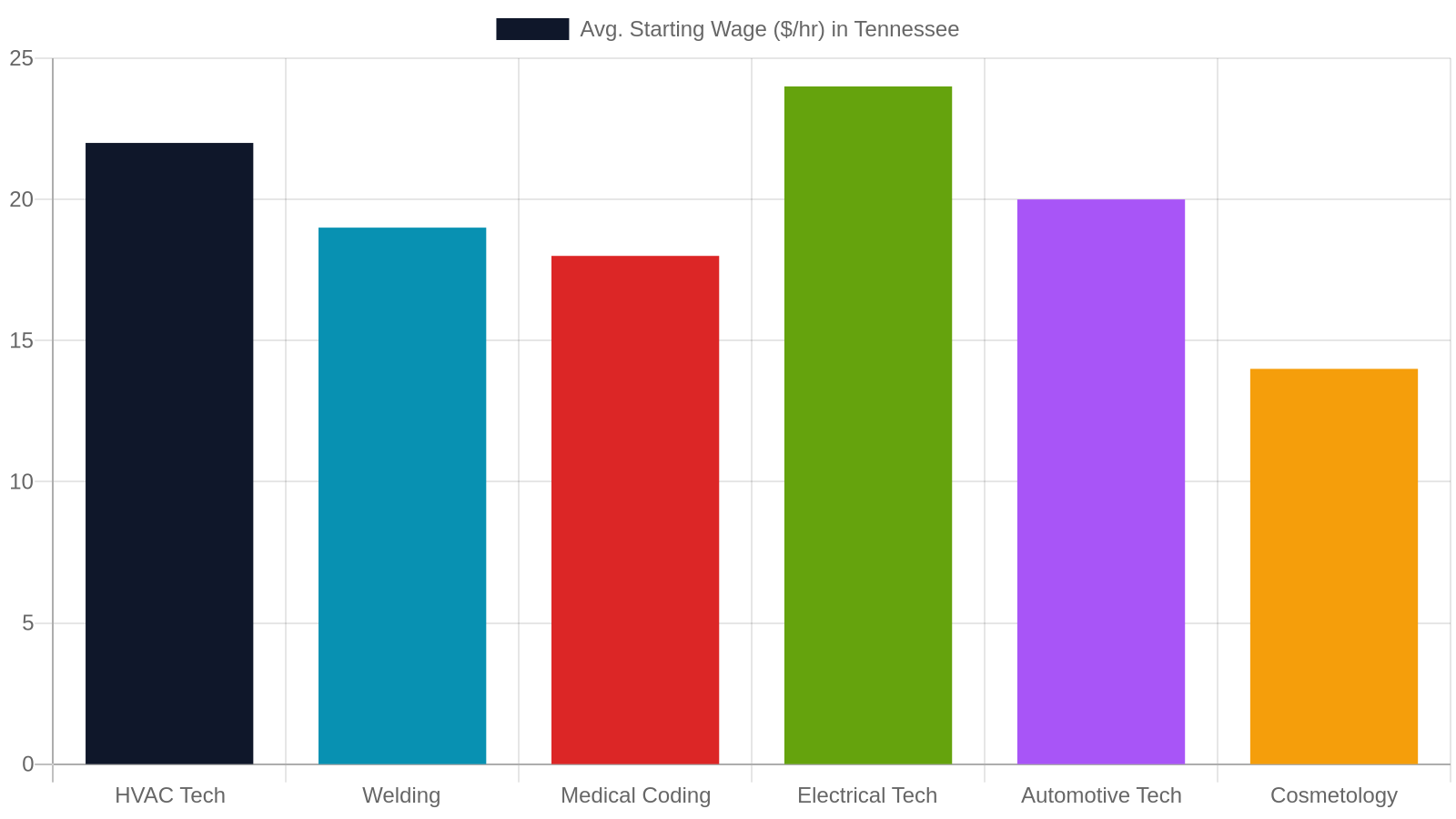
4. Use Paid Internships and Work Experience Programs to Earn While You Learn

One of the most effective ways to build employment skills is to get paid to practice them. Earn-and-learn programs are specifically designed for young adults who can’t afford to work for free — and several are available right now in Tennessee for people experiencing housing instability. Here’s a breakdown of your best options.
WIOA-Funded Paid Work Experiences
Under the Workforce Innovation and Opportunity Act, young adults ages 16 to 24 who are enrolled in a WIOA youth program can access paid work experiences — meaning you get a real paycheck while building your resume. These are not unpaid internships. Wages are typically at or above Tennessee’s minimum wage ($7.25/hr, though many programs pay $12–$15/hr), and the employer’s wage costs are often subsidized by the program, making it easier for small businesses to say yes.
Work experience placements have included roles in healthcare, construction, IT, retail management, childcare, and nonprofit administration. Ask your AJC youth specialist about current openings in your region.
AmeriCorps and YouthBuild — Two Powerful Earn-and-Learn Options
AmeriCorps programs place young adults in community service roles — education, disaster relief, environmental conservation — in exchange for a living stipend and an education award of up to $7,395 that can be used for college or to pay off student loans. Several AmeriCorps programs in Tennessee specifically recruit young adults experiencing housing instability.
YouthBuild Tennessee is an even more targeted option: participants aged 16 to 24 split their time between earning a high school diploma or GED and learning construction trades by actually building affordable housing in their communities. Participants receive a stipend, job training, and case management support. YouthBuild programs currently operate in Memphis, Nashville, and several rural Tennessee counties. Visit youthbuild.org to find your nearest program.
5. Get Your High School Equivalency — It Opens More Doors Than You Think

If you haven’t finished high school, getting your equivalency diploma is one of the highest-return investments of time you can make — and Tennessee makes it more accessible than most states. Here’s what you need to know about the HiSET exam and how to prepare without spending money you don’t have.
Tennessee's HiSET Exam and How to Prepare for Free
Tennessee uses the HiSET exam (not the GED) as its high school equivalency test. Passing all five subject tests earns you a Tennessee High School Equivalency Diploma, which is legally equivalent to a traditional diploma for employment, college admission, and military service purposes. The exam costs $10.75 per subject test ($53.75 total) — and fee waivers are available for people experiencing financial hardship.
Free HiSET preparation is available through:
- Tennessee Adult Education — Free classes at community colleges, libraries, and community centers statewide. Find your nearest site at tn.gov/adulteducation.
- Khan Academy — Free online prep for all five HiSET subjects, accessible from any device with internet.
- Literacy councils — Many counties have volunteer-based literacy programs that offer one-on-one tutoring at no cost.
Why Your Diploma Matters for Employment — The Numbers
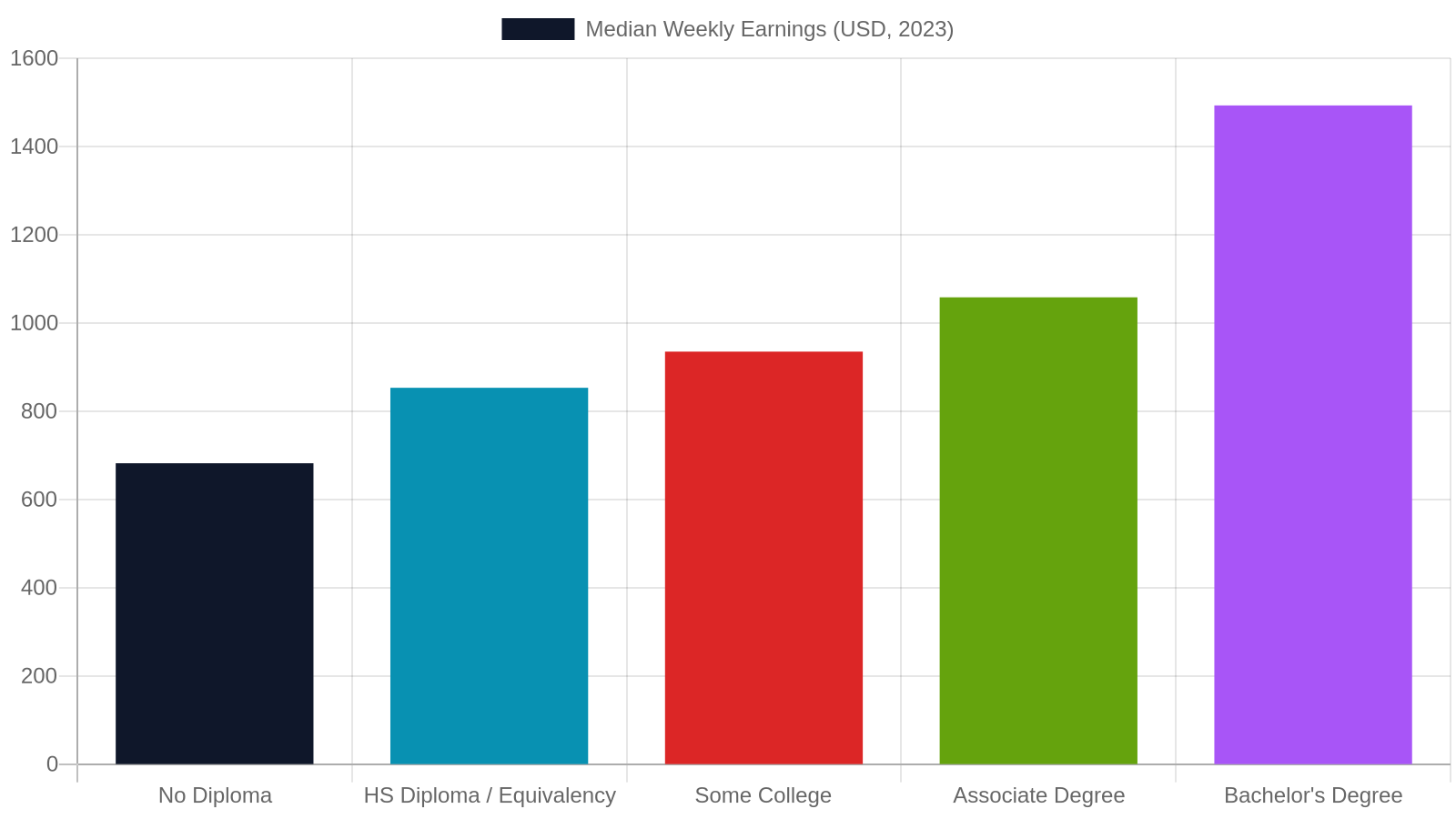
The data is clear: a high school diploma or equivalency significantly changes your employment options and earnings potential. According to the U.S. Bureau of Labor Statistics (2023):
- Workers without a high school diploma earn a median of $682/week
- Workers with a high school diploma or equivalency earn a median of $853/week — a 25% increase
- The unemployment rate for diploma holders is consistently 2–3 percentage points lower than for those without
For young adults in Tennessee who are working toward housing stability, that earnings difference can be the gap between affording rent and not. Many employers — including Tennessee’s largest healthcare systems and logistics companies — list a diploma or equivalency as a minimum requirement, even for entry-level positions.
6. Build Soft Skills That Every Employer Values — Starting Today

Technical skills get you in the door. Soft skills keep you employed and help you advance. And the good news is that many of the experiences young adults go through while navigating housing instability are actually powerful soft-skill builders — they just need to be reframed and articulated. Here’s how to do that.
What Soft Skills Are and Why They Matter as Much as Credentials
Employers consistently rank soft skills — communication, reliability, problem-solving, teamwork, and adaptability — as equal to or more important than technical credentials when hiring entry-level workers. A LinkedIn Workforce Report found that 57% of hiring managers say soft skills are more important than hard skills, and that soft-skill gaps are the primary reason new hires fail in their first 90 days.
Here’s the powerful truth for young adults who’ve navigated housing instability: you’ve already been building soft skills. Navigating shelter systems, advocating for yourself with caseworkers, managing uncertainty, problem-solving under pressure — these are real, transferable skills. The challenge is learning how to name them, frame them, and present them to employers in language they recognize.
Practical Ways to Develop and Document Soft Skills
You don’t need a classroom to build soft skills — but you do need intentional practice and documentation:
- Volunteer roles — Even a few hours a week at a food bank, community garden, or youth organization builds teamwork and reliability, and gives you a reference. Many Tennessee nonprofits actively recruit young adults experiencing homelessness as volunteers.
- Peer leadership through YAAB — Joining your local Youth Action Board places you in real advocacy and leadership roles where you practice public speaking, meeting facilitation, and policy communication. These are resume-worthy experiences.
- Journaling your wins — Keep a simple notes app log of challenges you solved, difficult conversations you navigated, and times you showed up when it was hard. These become the raw material for interview stories using the STAR method (Situation, Task, Action, Result).
- Mock interviews — Most AJCs and many shelters offer free mock interview sessions. Practice is the only way to get comfortable.
7. Know Your Rights as a Worker — Especially If You're Under 18

Knowing your rights as a worker is a form of power — and it’s knowledge that no one can take away from you. Whether you’re 17 or 25, employed or job-seeking, understanding Tennessee labor law protects you from exploitation and helps you navigate the workforce with confidence. Here’s what every young adult in Tennessee should know.
Tennessee Labor Laws Every Young Worker Should Know
Understanding your rights isn’t just legal knowledge — it’s a job skill that protects you and makes you a more confident employee. Here are the basics:
- Minimum wage: Tennessee follows the federal minimum of $7.25/hour. Many employers pay more, and you have the right to ask what a position pays before accepting it.
- Youth employment rules (under 18): Workers under 18 cannot work more than 8 hours on a school day or more than 40 hours per week when school is in session. Hazardous occupations (roofing, mining, certain machinery) are restricted for workers under 18.
- Wage theft: If an employer doesn’t pay you for hours worked, that’s wage theft — and it’s illegal. You can file a complaint with the Tennessee Department of Labor & Workforce Development at tn.gov/labor-wfd at no cost.
- Discrimination: It is illegal for employers to discriminate based on race, sex, religion, national origin, age (for workers 40+), or disability. If you experience discrimination, contact the Equal Employment Opportunity Commission (EEOC) at 1-800-669-4000.
Navigating Work Without a Permanent Address
One of the most practical barriers young adults face is the question of address on job applications. Here’s what you need to know:
- You can use a shelter address, a P.O. box, or a trusted friend’s address on a job application. Employers are not legally entitled to know your housing situation.
- You do not have to disclose homelessness to an employer at any stage of the hiring process.
- For payroll and tax purposes, you’ll need a mailing address where you can reliably receive documents. Many post offices offer P.O. boxes for as little as $10–$20 per month, and some nonprofits provide free mail forwarding services for people experiencing homelessness.
- If you don’t have a bank account for direct deposit, ask your employer about pay card options, or visit a credit union — many Tennessee credit unions offer second-chance checking accounts with no minimum balance requirements.
Tennessee Employment Skill-Building Options at a Glance
Not every pathway works for every situation. Use this comparison to find the options that fit where you are right now.
8. Tap Into Mentorship and Peer Networks — You Don't Have to Figure This Out Alone

One of the most underrated employment skills is knowing how to ask for help and build a network. For young adults navigating housing instability, that network often needs to be intentionally built — because the informal networks that many people rely on (family connections, college alumni groups) may not be available. Here’s how to build yours in Tennessee.
Why Peer Mentorship Works Better Than Traditional Advising for TAY
Research from Chapin Hall’s Voices of Youth Count study found that young adults experiencing homelessness are significantly more likely to access services and follow through on plans when they are connected to a peer mentor — someone who has lived similar experiences and can speak to what actually works, not just what’s supposed to work on paper.
Peer mentors can help you navigate job applications, prep for interviews, identify which employers are genuinely youth-friendly, and troubleshoot the unexpected barriers that come up — like what to do when you miss a shift because your shelter had a mandatory lockdown, or how to explain a gap in your work history honestly without oversharing.
Finding Mentorship Through YAAB and Tennessee's CoC Network
The Youth Action Board of Tennessee connects young adults with peer leaders across all of the state’s Continuum of Care regions. YAAB members are young adults with lived experience who are actively involved in shaping housing and employment policy — and many are available as informal mentors and connectors.
Beyond YAAB, Tennessee’s CoC regions each have youth-specific service providers that offer peer support:
- Memphis/Shelby: Memphis Shelby Crime Commission Youth Programs, Door of Hope
- Nashville/Davidson: Oasis Center, Campus for Human Development, Safe Haven Family Shelter
- Knoxville/Knox: KARM (Knox Area Rescue Ministries) Youth Services, Emerald Youth Foundation
- Chattanooga/Hamilton: Chambliss Center for Children, Signal Centers
- Jackson/West TN: RIFA (Relief, Instruction, Fellowship, Advocacy)
Ask any of these organizations about peer mentorship programs specifically for transition-age youth.
9. Address Mental Health and Trauma — Because They Directly Affect Your Work Life

Building employment skills isn’t only about resumes and certifications — it’s also about making sure you have the mental and emotional foundation to sustain employment once you get it. This section isn’t about stigma or diagnosis. It’s about being real: surviving housing instability takes a toll, and getting support is a practical career strategy, not a weakness.
The Real Connection Between Trauma, Housing Instability, and Employment
This isn’t about labeling anyone or making excuses — it’s about being honest. Housing instability is traumatic. Chronic stress, sleep deprivation, food insecurity, and the constant cognitive load of managing survival all affect concentration, memory, emotional regulation, and the ability to show up consistently — all of which are skills employers need from you.
A 2022 study published in the American Journal of Public Health found that young adults experiencing homelessness are 3 to 5 times more likely to report significant mental health challenges than housed peers, and that untreated mental health conditions are among the top predictors of employment instability for transition-age youth. Getting support isn’t a detour from your career path — it’s part of it.
Free and Low-Cost Mental Health Resources in Tennessee
You deserve support, and it’s available. Here are real options across Tennessee:
- Tennessee’s Crisis Line: Call or text 988 (Suicide & Crisis Lifeline) — available 24/7, free, and confidential.
- Community Mental Health Centers: Every Tennessee county is served by a community mental health center that provides sliding-scale or free services. Find yours at tn.gov/behavioral-health.
- Open Path Collective: Connects young adults to licensed therapists for $30–$80 per session — significantly below standard rates.
- Federally Qualified Health Centers (FQHCs): These clinics offer mental health services on a sliding scale based on income. Use the finder at findahealthcenter.hrsa.gov.
- Youth-specific programs: Many Tennessee shelters and drop-in centers have on-site counselors or can connect you to trauma-informed therapists who specialize in working with transition-age youth.
10. Get Involved with YAAB — Turn Your Experience Into Leadership

The tenth strategy is the one that brings everything else together: turning your lived experience into leadership. The Youth Action Board of Tennessee exists because young people who’ve navigated housing instability have insights, perspectives, and solutions that no outside expert can replicate. YAAB membership is a paid, skill-building, resume-building, community-changing opportunity — and it’s open to you right now, wherever you are in Tennessee.
How YAAB Membership Builds Real, Resume-Worthy Skills
Joining your local Youth Action Board isn’t just about giving back — it’s one of the most powerful employment skill-building opportunities available to young adults in Tennessee. YAAB members regularly:
- Present to city councils, Continuum of Care boards, and state legislators — building public speaking and advocacy skills
- Participate in policy research and program evaluation — building analytical and critical thinking skills
- Collaborate with nonprofit and government partners — building professional networking and cross-sector communication skills
- Lead peer outreach and education campaigns — building project management and community organizing skills
These are the kinds of experiences that stand out on a resume and in an interview — and they’re experiences that only young adults with lived experience of housing instability are positioned to bring.
How to Find Your Local YAAB in Tennessee
Tennessee’s Youth Action Board network spans all major Continuum of Care regions. Here’s how to connect:
- Memphis/Shelby County (TN-500): yaabtn.org/local-yaabs/tn-500/
- Nashville/Davidson (TN-504): yaabtn.org/local-yaabs/tn-504/
- Knoxville/Knox (TN-501): yaabtn.org/local-yaabs/tn-501/
- Chattanooga/Hamilton (TN-503): yaabtn.org/local-yaabs/tn-503/
- Jackson/West TN (TN-506): yaabtn.org/local-yaabs/tn-506/
- Upper Cumberland (TN-507): yaabtn.org/local-yaabs/tn-507/
- Northeast TN (TN-509): yaabtn.org/local-yaabs/tn-509/
You can also visit yaabtn.org/join/ to express interest and get connected to the YAAB in your region.
Your Next Move: Resources, Support, and Community Are Waiting

You’ve made it through 10 strategies — and if even one of them opened a door you didn’t know was there, this guide did its job. Building employment skills while experiencing housing instability is one of the hardest things a young person can do. It requires resilience, resourcefulness, and a willingness to ask for help in systems that aren’t always easy to navigate. But across Tennessee, young adults are doing exactly that — every single day. Here’s how to take your next step.
A Quick-Reference List of Tennessee Employment Resources
Here’s a consolidated list of the key resources covered in this guide:
- American Job Centers: 1-888-301-0230 | Tennessee.gov/humanservices
- TCAT Network: tcat.edu
- Tennessee Adult Education (HiSET prep): tn.gov/adulteducation
- YouthBuild Tennessee: youthbuild.org
- Google Career Certificates: grow.google/certificates
- Lifeline Program (free/reduced phone/internet): LifelineSupport.org
- Tennessee Crisis Line: Call or text 988
- Community Mental Health Centers: tn.gov/behavioral-health
- EEOC (workplace discrimination): 1-800-669-4000
- Tennessee Dept. of Labor (wage theft complaints): tn.gov/labor-wfd
Stay Connected with YAAB Tennessee
The Youth Action Board of Tennessee is built by and for young adults like you — people who’ve been through it and are using that experience to make things better for everyone who comes after. Whether you’re ready to join a local YAAB, looking for peer support, or just trying to figure out your next step, you don’t have to navigate this alone.
Explore stories, updates, and resources from young adults across Tennessee on the YAAB Tennessee blog — it’s written by and for transition-age youth who are building their futures right now. You can also visit our full resources page for a curated list of housing, employment, education, and mental health supports organized by region.
Tennessee is a big state, but the YAAB network spans every corner of it — from Memphis to Mountain City, from Jackson to Johnson City. Your experience matters. Your voice matters. And your future is worth building.
Frequently Asked Questions
Can I apply for jobs in Tennessee if I don't have a permanent address?
Yes. You can use a shelter address, a P.O. box, or a trusted person's address on a job application. Employers are not legally entitled to know your housing situation, and you are not required to disclose homelessness at any point in the hiring process.
What free job training programs are available for young adults in Tennessee?
Tennessee offers several free or low-cost options: American Job Centers provide WIOA-funded training and paid work experiences; TCATs offer trade programs with financial aid; Google Career Certificates are free through many public libraries; and YouthBuild provides earn-and-learn construction training with a stipend. All are available to young adults experiencing housing instability.
How do I get my GED or high school equivalency in Tennessee?
Tennessee uses the HiSET exam instead of the GED. Free preparation classes are available through Tennessee Adult Education at community colleges, libraries, and community centers statewide. The exam costs $53.75 total, and fee waivers are available for people experiencing financial hardship. Visit tn.gov/adulteducation to find your nearest class.
What is the Youth Action Board of Tennessee and how do I join?
The Youth Action Board (YAAB) of Tennessee is a statewide network of young adults ages 17 to 25 with lived experience of homelessness who advise local and state leaders on housing and youth policy. YAAB membership builds real leadership, advocacy, and professional skills. Visit yaabtn.org/join/ to connect with the YAAB in your region.
Are there mental health resources for young adults experiencing homelessness in Tennessee?
Yes. You can call or text 988 for free 24/7 crisis support. Community mental health centers in every Tennessee county offer sliding-scale or free services — find yours at tn.gov/behavioral-health. Many youth shelters and drop-in centers also have on-site counselors or can refer you to trauma-informed therapists who specialize in working with transition-age youth.
What should I do if my employer isn't paying me correctly in Tennessee?
If an employer fails to pay you for hours worked, that is wage theft and it is illegal. You can file a free complaint with the Tennessee Department of Labor & Workforce Development at tn.gov/labor-wfd. If you experience workplace discrimination, contact the EEOC at 1-800-669-4000. You do not need a lawyer to file either type of complaint.