Quick answer: The Central Tennessee Youth Action Board (YAAB) — operating under CoC region TN-503, which covers Davidson County and surrounding Middle Tennessee communities — is a peer-led advisory body made up of young adults ages 17 to 25 who have lived experience of homelessness or housing instability. Members advise local Continuum of Care leaders, shape housing and service policies, and connect their peers to real resources. If you're a young adult in the Nashville or Middle Tennessee area who's been through housing instability and wants a seat at the table, this guide explains exactly what YAAB TN-503 does and how to get involved.
1. What Is the Central Tennessee Youth Action Board (TN-503)?

If you’re a young adult in the Nashville area who’s experienced homelessness or housing instability, you may have heard the term Youth Action Board — but what does it actually mean, and why does it matter to you? This section breaks down the basics of YAAB TN-503, the Central Tennessee chapter of the statewide Youth Action Board network.
The CoC Region Behind the Board
Tennessee’s Continuum of Care (CoC) system divides the state into geographic regions, each responsible for coordinating homeless services and housing resources. TN-503 covers the Nashville/Davidson County area and is one of the most active CoC regions in the state. The Continuum includes dozens of service providers, government agencies, and nonprofit partners all working toward the goal of ending homelessness — but historically, the voices of young people themselves were missing from those conversations.
That’s exactly the gap the Youth Action Board was created to fill. YAAB TN-503 is the youth-led advisory body embedded within this CoC region, ensuring that transition-age youth — people ages 17 to 25 — have a real, recognized role in shaping the programs and policies that directly affect their lives.
Peer-Led, Not Program-Run
One of the most important things to understand about YAAB TN-503 is that it is peer-led. That means the young adults who sit on the board aren’t clients being served by a program — they are the decision-makers, the advisors, and the advocates. Members bring their own lived experience of homelessness, housing instability, aging out of foster care, or navigating complex service systems, and they use that knowledge as a professional asset.
This peer model is intentional. Research consistently shows that programs designed with input from the people they serve are more effective, more trusted, and more likely to be accessed by those who need them most. YAAB TN-503 puts that principle into practice every day.
2. Who Can Join — and Who YAAB TN-503 Is Built For

YAAB TN-503 isn’t a program you apply to receive services from — it’s a leadership body you join to shape services. Understanding who it’s built for helps you figure out whether it’s the right fit for you right now.
The Core Eligibility: Ages 17 to 25 with Lived Experience
YAAB TN-503 is specifically designed for transition-age youth (TAY) between the ages of 17 and 25 who have personal, lived experience with homelessness or housing instability. That experience doesn’t have to look a specific way. It could mean you’ve slept outside, stayed in a shelter, couch-surfed between friends’ homes, aged out of foster care without stable housing, or faced eviction. All of those experiences count — and all of them are valuable to the work of the board.
You do not need a college degree, a clean record, or a perfect housing situation right now to participate. YAAB meets people where they are and values the knowledge that comes from navigating hard situations firsthand.
Youth Aging Out of Foster Care
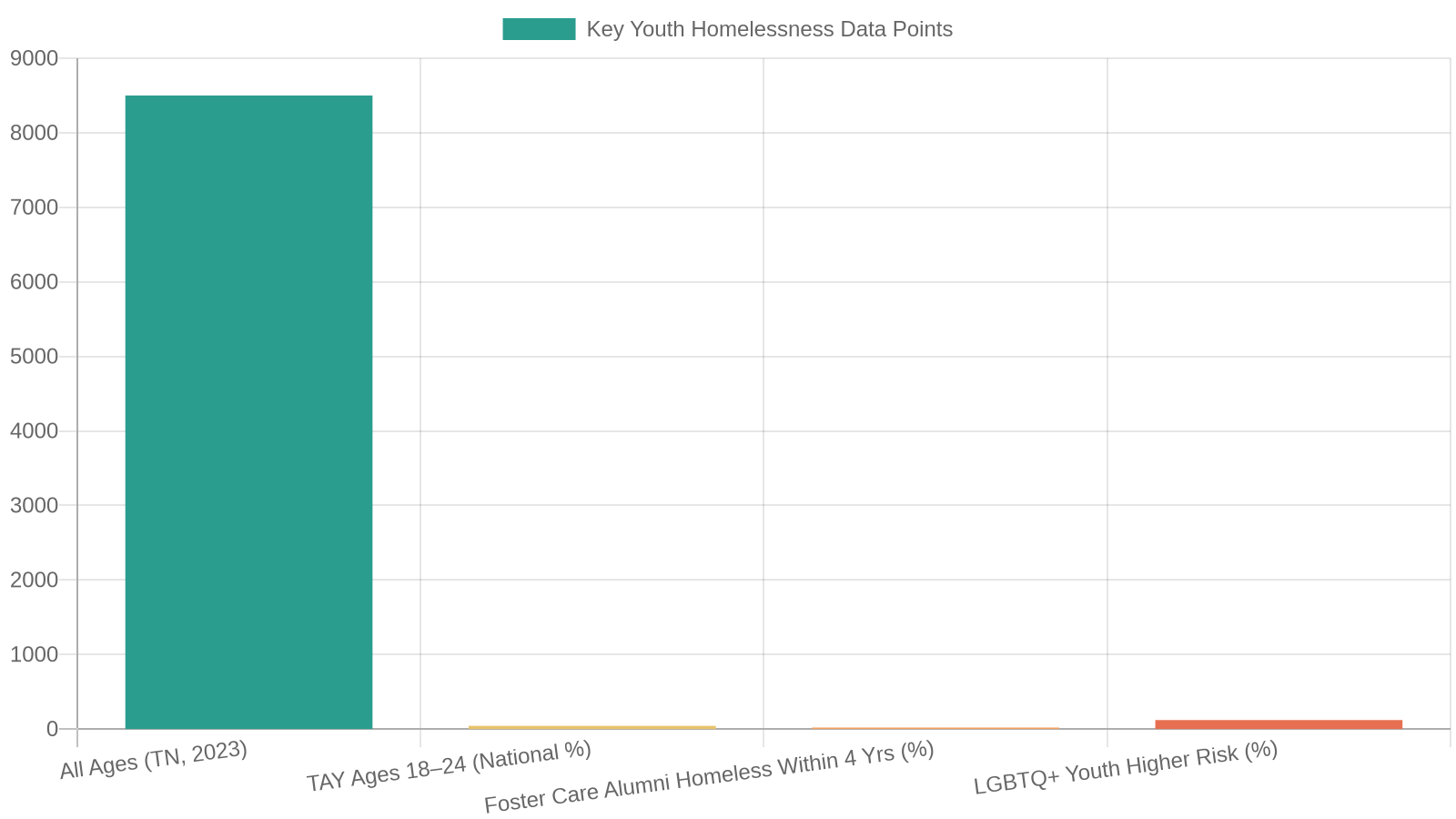
A significant portion of young adults experiencing homelessness in Tennessee have aged out of the foster care system. In fact, nationally, approximately 20% of youth who age out of foster care experience homelessness within 2 to 4 years of leaving care. In Tennessee, thousands of young people reach age 18 or 21 each year and transition out of state custody, often with limited support networks and housing options.
YAAB TN-503 actively welcomes and prioritizes youth with foster care backgrounds. If you’ve been through the system and want to use that experience to change it for the better, the board is a powerful place to do that.
Case Managers and Service Providers as Allies
While YAAB membership is for young adults themselves, the board also works closely with case managers, CoC partners, and service providers across Middle Tennessee. If you’re a professional who works with transition-age youth and you want to connect your clients to peer leadership opportunities, YAAB TN-503 is an excellent referral pathway. Youth who participate in advisory roles often report improved self-efficacy, stronger social networks, and better long-term outcomes — making YAAB referrals a meaningful part of any case plan.
3. What YAAB TN-503 Members Actually Do Day to Day

Joining YAAB TN-503 isn’t just about showing up to meetings. Members take on real roles with real responsibilities — and real rewards. Here’s a concrete look at what that work looks like week to week.
Advising the Continuum of Care
One of the primary functions of YAAB TN-503 is to serve as a formal advisory body to the TN-503 Continuum of Care. This means members attend CoC meetings, review proposed policies and program changes, and provide feedback from a youth perspective. When a CoC committee is deciding how to allocate funding for youth shelter beds or designing a new rapid rehousing program, YAAB members have a seat at that table.
This isn’t symbolic participation. CoC regions that receive federal funding through the U.S. Department of Housing and Urban Development (HUD) are increasingly expected to demonstrate meaningful youth engagement, and YAAB TN-503 provides exactly that — with the added benefit of making the resulting programs actually work better.
Peer Outreach and Resource Connection
YAAB members also do on-the-ground peer outreach — connecting young adults in their communities to housing resources, emergency shelter, employment programs, mental health services, and educational opportunities. Because YAAB members have walked similar paths, they can communicate in ways that professional outreach workers sometimes can’t. Trust is built faster peer-to-peer, and young adults are more likely to engage with services when they’re introduced by someone who’s been through the same system.
In Middle Tennessee, this outreach connects young people to resources like rapid rehousing programs, transitional living programs, and the Nashville CoC’s coordinated entry system — the front door to most housing assistance in the region.
Advocacy, Training, and Leadership Development
Beyond the CoC, YAAB TN-503 members engage in statewide advocacy — testifying before legislative committees, participating in statewide YAAB convenings, and contributing to policy reports and recommendations. Members receive training in public speaking, policy analysis, trauma-informed communication, and advocacy strategy. These are real, transferable professional skills that strengthen any resume or college application.
YAAB also connects members to stipends and compensation for their time in many cases, recognizing that young adults — especially those navigating housing instability — should not be asked to volunteer their expertise for free.
4. The Scale of Youth Homelessness in Central Tennessee

Before diving into how YAAB works, it helps to understand the landscape it’s working against. Youth homelessness in Central Tennessee is not a small or distant problem — it’s happening right now, in Nashville and surrounding Middle Tennessee communities.
What the Numbers Tell Us
Understanding the scale of the problem helps explain why YAAB TN-503 exists and why its work is urgent. According to HUD’s Annual Homeless Assessment Report (AHAR), Tennessee counted over 8,500 individuals experiencing homelessness on a single night in 2023, with transition-age youth (ages 18–24) making up a disproportionate share of the unsheltered population. In the TN-503 CoC region alone, youth homelessness represents one of the fastest-growing segments of the homeless population.
Nationally, an estimated 4.2 million young adults ages 18–25 experience homelessness over the course of a year, according to research by Chapin Hall at the University of Chicago. For youth ages 13–17, that number rises to 700,000 additional individuals. These aren’t abstract statistics — they represent peers, neighbors, and community members across Middle Tennessee.
Why Transition-Age Youth Face Unique Risks
Young adults ages 17 to 25 face a specific set of risk factors that make homelessness both more likely and harder to escape without targeted support. These include: aging out of foster care without a permanent connection to a caring adult, lack of rental history that makes it nearly impossible to pass a background check, limited income from entry-level or gig work that doesn’t cover Nashville’s rapidly rising rents, and LGBTQ+ identity (studies show LGBTQ+ youth are 120% more likely to experience homelessness than their non-LGBTQ+ peers, often due to family rejection).
YAAB TN-503 exists because the solutions to these specific risks need to be designed by people who understand them from the inside — not just from a policy document.
5. How YAAB TN-503 Fits Into the Statewide YAAB Network

YAAB TN-503 doesn’t operate in isolation. It’s part of a powerful statewide network that amplifies the voices of young adults from Memphis to Mountain City. Understanding that network helps you see the full scope of what membership means.
Tennessee's Eight CoC Regions and Their YAABs
Tennessee has eight Continuum of Care regions, and the statewide Youth Action Board network has chapters embedded in each one. TN-503 (Nashville/Davidson) is one of the most prominent, but it operates as part of a coordinated statewide system that includes regions like TN-500 (Memphis/Shelby), TN-501 (Knoxville/Knox), TN-502 (Chattanooga/Hamilton), TN-504 (Jackson/West TN), TN-506, TN-507, and TN-509 covering Upper Cumberland and Northeast Tennessee communities.
Each local YAAB operates with regional autonomy — responding to the specific needs and resources of its community — while also participating in statewide convenings, shared advocacy campaigns, and collective policy recommendations. This structure gives young adults both local relevance and statewide power.
Shared Advocacy Across Regions
When YAAB members from Nashville, Memphis, Knoxville, and Chattanooga come together at the state level, they carry a unified message that’s harder for policymakers to ignore. Statewide YAAB advocacy has contributed to conversations around Tennessee’s youth homelessness plan, state budget priorities for transitional housing, and the expansion of coordinated entry systems to better serve young adults.
Members of YAAB TN-503 regularly participate in these statewide gatherings, bringing Middle Tennessee’s specific challenges — including Nashville’s housing affordability crisis and the rapid growth of the region’s unhoused youth population — to the broader policy conversation.
6. Housing Resources YAAB TN-503 Connects Young Adults To

One of the most practical things YAAB TN-503 does is connect young adults to concrete resources. Here’s a look at the types of housing and support services the board helps navigate in the Middle Tennessee region.
Coordinated Entry and Emergency Shelter
In the TN-503 region, the primary front door to housing assistance is Nashville’s Coordinated Entry System (CES). This is a standardized process that assesses a person’s housing needs and connects them to the most appropriate available resource — whether that’s emergency shelter, transitional housing, or rapid rehousing. YAAB members are often trained to help peers navigate this system, which can feel confusing or intimidating from the outside.
Emergency shelter options in the Nashville area include facilities operated by organizations like Conexión Américas, Campus for Human Development, and others within the CoC network. YAAB TN-503 can help connect young adults to these resources and advocate for youth-specific shelter beds when they’re needed.
Rapid Rehousing and Transitional Living Programs
Rapid Rehousing (RRH) programs provide short-term rental assistance and supportive services to help young adults move quickly from homelessness into stable housing. In Middle Tennessee, several CoC-funded RRH programs specifically target transition-age youth. These programs typically cover first month’s rent, security deposit, and a few months of rental subsidy while a case manager helps the young adult build income and stability.
Transitional Living Programs (TLPs) offer longer-term housing — typically 18 to 24 months — in a structured setting with on-site support services. For young adults who need more time to build skills and stability before living independently, TLPs can be a critical bridge. YAAB members can point peers toward both types of programs and help them understand what to expect from each.
Education, Employment, and Financial Literacy Connections
Stable housing is rarely enough on its own. YAAB TN-503 also connects young adults to resources that build long-term stability, including GED and high school equivalency programs, workforce development and job training, financial literacy workshops, and benefits navigation (like SNAP, Medicaid, and SSI). In Nashville, organizations like Oasis Center, Thistle Farms, and the Tennessee Department of Labor’s American Job Centers are key partners in this ecosystem.
YAAB members often serve as trusted bridges to these resources — helping peers understand what’s available, how to access it, and what to do when systems don’t work the way they should.
7. Knowing Your Rights as a Young Adult Experiencing Homelessness

Part of what YAAB TN-503 does is make sure young adults know what they’re entitled to — legally and practically. Here are some of the most important rights every young adult in Middle Tennessee should know.
The McKinney-Vento Act and Your Education Rights
If you’re a young adult experiencing homelessness and you’re still in high school or pursuing a GED, you have federally protected rights under the McKinney-Vento Homeless Assistance Act. These rights include immediate enrollment in school without needing proof of residency, the right to remain enrolled in your school of origin even if you move, and access to free transportation. Every school district in Tennessee is required to have a McKinney-Vento liaison who can help you access these protections.
YAAB TN-503 members are trained to share this information with peers who may not know their rights — because knowing what you’re entitled to is the first step to claiming it.
Tenant Rights and Eviction Protections
If you’re renting — even informally — you have rights in Tennessee. Landlords must follow a legal eviction process, which includes providing written notice (typically 14 days for non-payment of rent) and filing with the court before removing a tenant. Self-help evictions — like changing your locks, removing your belongings, or shutting off utilities — are illegal in Tennessee, regardless of whether you have a formal lease.
Young adults are often unaware of these protections, especially when renting informally or staying in someone else’s name. YAAB members can help connect peers to legal aid organizations like Tennessee Justice Center or Legal Aid Society of Middle Tennessee and the Cumberlands, which offer free assistance to low-income renters.
LGBTQ+ Youth and Shelter Access Rights
LGBTQ+ young adults have the right to access emergency shelters in a manner consistent with their gender identity under HUD’s Equal Access Rule. This means shelters that receive federal funding cannot discriminate based on sexual orientation or gender identity. If you’ve been turned away from or harassed in a shelter because of your identity, that may be a violation of your rights, and YAAB TN-503 can help connect you to advocacy and legal resources.
Tennessee’s LGBTQ+ youth homelessness rate is significantly higher than the national average in some communities, making this rights education a critical part of YAAB’s peer outreach work.
8. Mental Health and Wellness: What YAAB Recognizes and Addresses

You can’t build a stable life without also taking care of your mental health. YAAB TN-503 recognizes this — and it’s woven into how the board operates and what resources it helps connect young adults to.
The Mental Health Reality for Transition-Age Youth
Housing instability and homelessness take a serious toll on mental health. Research shows that young adults experiencing homelessness are 3 to 6 times more likely to report symptoms of depression, anxiety, or PTSD compared to their stably housed peers. Trauma — from family conflict, abuse, system involvement, or the experience of homelessness itself — is nearly universal among transition-age youth who’ve been unhoused.
YAAB TN-503 takes a trauma-informed approach to all of its work, meaning members and staff recognize that behavior that might look like disengagement or conflict is often a response to trauma, not a character flaw. This approach shapes how meetings are run, how peer outreach is conducted, and how resources are communicated.
Connecting to Mental Health Resources in Middle Tennessee
In the Nashville area, several organizations offer mental health services specifically designed for young adults experiencing homelessness or housing instability. These include the Oasis Center’s mental health counseling program, Centerstone’s community mental health services, and the Tennessee Department of Mental Health and Substance Abuse Services (TDMHSAS), which funds a network of crisis services across the state.
YAAB members are not therapists, but they are trained to recognize when a peer might benefit from mental health support and to make warm referrals — meaning they personally help connect someone to a service rather than just handing them a phone number. That human connection makes a real difference in whether someone actually follows through.
YAAB TN-503 vs. Other Youth Support Structures: How They Compare
Not all youth advisory and support programs are the same. This table shows how YAAB TN-503 compares to other common structures young adults in Tennessee might encounter.
9. How YAAB TN-503 Compares to Other Youth Advisory Structures

If you’ve heard of other youth advisory programs and wondered how YAAB TN-503 stacks up, this section gives you a clear-eyed comparison. Understanding the differences helps you make an informed choice about where to invest your time and energy.
What Makes YAAB Different from a Traditional Youth Council
Many cities and counties have youth councils or student advisory boards — but YAAB TN-503 is fundamentally different in several important ways. Traditional youth councils are typically composed of high-achieving students selected by schools or government offices. They may advise on parks, libraries, or civic programs, but they rarely have direct influence over housing policy or service funding decisions.
YAAB TN-503, by contrast, is embedded within the formal CoC governance structure, which means its recommendations carry institutional weight. Members advise on HUD-funded programs, participate in funding decisions, and contribute to official planning documents. This is not symbolic participation — it’s structural power.
Compensation and Professional Development
Another key difference: YAAB TN-503 recognizes that asking young adults — especially those navigating housing instability — to contribute their time and expertise without compensation is inequitable. Many YAAB programs offer stipends, gift cards, transportation reimbursement, or other forms of compensation for member participation. This commitment to compensating lived experience is a core value of the statewide YAAB network and distinguishes it from volunteer-only advisory structures.
Members also gain access to professional development opportunities — resume building, public speaking training, policy literacy workshops — that have tangible value in the job market and in higher education applications.
10. Step-by-Step: How to Get Involved with YAAB TN-503

Ready to get involved? Here’s a simple, honest roadmap for going from curious to connected with YAAB TN-503 in Central Tennessee. There’s no perfect moment to start — the best time is whenever you’re ready.
Step 1 — Connect with the TN-503 Local YAAB
The first step is simply making contact. You can visit the YAAB TN-503 local board page to find current contact information, upcoming meeting dates, and details about how the Nashville/Davidson County chapter operates. Don’t overthink it — reaching out is the hardest part, and the board is designed to be welcoming to people at all stages of their journey.
If you’re not sure whether TN-503 is your region, you can also check the full list of Tennessee local YAABs to find the chapter closest to where you live or spend most of your time.
Step 2 — Attend a Meeting or Orientation
Most YAAB chapters hold regular meetings — some in person, some virtual, and some hybrid — and many offer an orientation session for new or prospective members. Attending a meeting before committing is completely okay. You’ll get a sense of the group’s culture, the kinds of issues being discussed, and whether it feels like a good fit for you right now.
Check the YAAB statewide calendar for upcoming events, including regional meetings and statewide convenings that you might want to attend as a first introduction to the network.
Step 3 — Share Your Story and Start Contributing
Once you’re connected, the most valuable thing you bring to YAAB TN-503 is your own experience. You don’t need to have it all figured out. You don’t need to be in a perfect place in your life. What you need is a willingness to share what you’ve been through and to use that knowledge to help shape something better — for yourself and for the peers who come after you.
YAAB provides the training, the structure, and the platform. You provide the lived expertise that makes it all real. That exchange is the foundation of everything the board does.
11. What Young Adults Say YAAB Has Meant for Them

Numbers and policy matter — but so do real human experiences. Here’s what participation in YAAB TN-503 and the broader statewide network has meant for young adults who’ve been part of it.
From Surviving to Shaping
One of the most consistent things YAAB members across Tennessee describe is a shift in how they see themselves — from someone who was acted upon by systems to someone who helps shape them. That shift matters enormously for young adults who have spent years feeling invisible to the institutions that were supposed to help them.
Participation in peer advisory roles has been linked in research to improved self-efficacy, stronger civic engagement, and better long-term housing stability. When young adults are treated as experts rather than problems to be solved, the outcomes — for them and for the systems they advise — improve measurably.
Skills That Last Beyond the Board
YAAB TN-503 members consistently report gaining skills that serve them well beyond their time on the board: how to speak in public, how to read a policy document, how to advocate for themselves in a professional setting, how to facilitate a meeting, how to write a public comment. These are skills that employers value, that colleges recognize, and that — most importantly — give young adults more power in every room they walk into for the rest of their lives.
The statewide YAAB network has helped members go on to careers in social work, public policy, nonprofit management, and community organizing. For many, YAAB was the first place anyone told them their experience was an asset rather than a liability.
Ready to Take Your Seat at the Table in Central Tennessee?

You’ve learned what YAAB TN-503 is, who it’s for, what members do, and what it can mean for your future. Now the only question is: what’s your next move? Here’s how to make it.
You Belong Here — Exactly as You Are
If you’ve read this far, you already know more about the Central Tennessee Youth Action Board than most people in the room. And if you’ve experienced homelessness or housing instability as a young adult in the Nashville or Middle Tennessee area, you have something that no policy expert, no government official, and no service provider can replicate: you know what it’s actually like.
YAAB TN-503 exists because that knowledge matters. It belongs in the rooms where decisions get made. And so do you.
Your First Move: Connect with YAAB TN-503 Today
The Central Tennessee YAAB is actively welcoming young adults ages 17 to 25 who want to get involved. Whether you’re in Nashville, a surrounding Davidson County community, or elsewhere in Middle Tennessee, there’s a place for you at the table. Connect with the YAAB TN-503 local board to find out about upcoming meetings, how to become a member, and what participation looks like in practice.
You can also explore YAAB’s statewide resource hub for housing, employment, education, and mental health connections across Tennessee. And if you want to understand more about the broader mission behind this work, the About YAAB page tells the full story of how this network came to be and where it’s headed.
Your experience is not a setback. It’s a credential. YAAB TN-503 is ready when you are.
Frequently Asked Questions
How do I join the Youth Action Board in Nashville or Central Tennessee?
Visit the YAAB TN-503 local board page at yaabtn.org/local-yaabs/tn-503/ to find current contact information and upcoming meeting dates. You can also reach out through the YAAB statewide contact page. The board welcomes young adults ages 17 to 25 with lived experience of homelessness or housing instability — no formal application process is required to attend a first meeting.
Do I have to currently be homeless to join YAAB TN-503?
No. YAAB TN-503 is open to young adults ages 17 to 25 who have lived experience of homelessness or housing instability at any point — past or present. You do not need to be currently unhoused to participate. Your past experience is what qualifies you, not your current situation.
What is a Continuum of Care and why does it matter for young adults?
A Continuum of Care (CoC) is a regional planning body that coordinates homeless services and housing resources in a defined geographic area. CoCs receive federal funding from HUD and make decisions about which programs get funded and how services are structured. TN-503 is the CoC for the Nashville/Davidson County area. YAAB TN-503 gives young adults a formal advisory role within this governance structure, meaning youth voices directly influence how those resources are allocated.
Are YAAB members paid or compensated for their time?
Many YAAB chapters, including those in the TN-503 region, provide stipends, gift cards, or other forms of compensation for member participation. The statewide YAAB network is committed to compensating young adults for their lived expertise, recognizing that asking people navigating housing instability to volunteer their time for free is inequitable. Specific compensation details vary by region and funding availability.
What housing resources are available to young adults in the Nashville area?
Nashville's TN-503 CoC region offers several housing pathways for young adults, including emergency shelter, Rapid Rehousing programs (short-term rental assistance), and Transitional Living Programs (18–24 months of supported housing). Access typically begins through Nashville's Coordinated Entry System. YAAB TN-503 members can help peers navigate this process and connect to the right resources.
Can case managers or service providers refer youth to YAAB TN-503?
Yes. Case managers, CoC partners, and service providers across Middle Tennessee are encouraged to refer eligible young adults to YAAB TN-503. Participation in peer advisory roles is associated with improved self-efficacy and long-term stability, making YAAB a meaningful addition to a case plan for youth who are ready to engage in leadership and advocacy.