Quick answer: Advocating for transition-age youth housing laws in Tennessee means showing up — at city councils, at the State Capitol, in Continuum of Care meetings, and online. Young adults ages 17 to 25 with lived experience of homelessness are the most powerful voices in this fight. This guide walks you through nine concrete steps: understanding the policy landscape, knowing your rights, building your story, connecting with your regional YAAB, engaging lawmakers, and turning personal experience into lasting change for youth across Tennessee.
1. Understand the Tennessee Policy Landscape for Youth Housing

Before you can change a law, you need to understand which law you’re trying to change — and which system created the problem in the first place. Tennessee’s housing policy for transition-age youth sits at the intersection of federal funding rules, state agency decisions, and local Continuum of Care priorities. The good news: every one of those levels is a place where your voice can make a difference.
What Laws and Systems Actually Govern Youth Housing in Tennessee?
Tennessee’s housing system for transition-age youth (TAY) — people ages 17 to 25 — is shaped by a patchwork of federal, state, and local rules. At the federal level, the McKinney-Vento Homeless Assistance Act funds most of the shelter and rapid rehousing programs you may have used. The HEARTH Act of 2009 created the Continuum of Care (CoC) structure that organizes those funds into regional networks across Tennessee.
At the state level, the Tennessee Department of Children’s Services (DCS) oversees foster care and extended foster care up to age 21 under the Fostering Connections Act. The Tennessee Housing Development Agency (THDA) administers rental assistance programs including Emergency Housing Vouchers (EHVs) and the HOME Investment Partnerships Program. Knowing which agency controls which dollars is step one in knowing who to pressure.
Tennessee's Eight Continuum of Care Regions
Tennessee is divided into eight CoC regions, each with its own Homeless Management Information System (HMIS) data, funding priorities, and local leadership. The regions include:
- TN-500 — Memphis/Shelby County
- TN-501 — Nashville/Davidson County
- TN-502 — Knoxville/Knox County
- TN-503 — Chattanooga/Hamilton County
- TN-504 — Murfreesboro/Rutherford County
- TN-506 — Upper Cumberland
- TN-507 — Northeast Tennessee
- TN-509 — Balance of State (covers Jackson and most of West TN)
Each region sets its own local written standards — the rules that decide who gets prioritized for housing resources. Youth advocates can push to change those standards at the local CoC level without waiting for state legislation.
2. Know the Data — Because Numbers Open Doors

Lawmakers and CoC leaders respond to two things: stories and numbers. You need both. Data gives your lived experience a framework that decision-makers can’t dismiss. It also helps you identify where the gaps are — so you’re advocating for the right fix, not just the loudest one.
What the Point-in-Time Count Tells Us About Youth in Tennessee
Every January, communities across the country conduct a Point-in-Time (PIT) Count — a one-night snapshot of people experiencing homelessness. In Tennessee’s 2023 PIT Count, approximately 1,800 unaccompanied youth and young adults were counted statewide, but researchers consistently estimate that official counts capture only 20–30% of actual youth homelessness because many young people are couch-surfing, staying in cars, or avoiding shelters.
That gap between the counted number and the real number is itself an advocacy argument: the system is undercounting us, which means it’s underfunding us. Citing the PIT Count — and its known limitations — in front of a city council or a state committee is a concrete, credible way to make the case for more resources.
Key Statistics Every Tennessee Youth Advocate Should Know
Having a few sharp statistics ready makes every conversation more powerful. Here are figures drawn from federal and state sources:
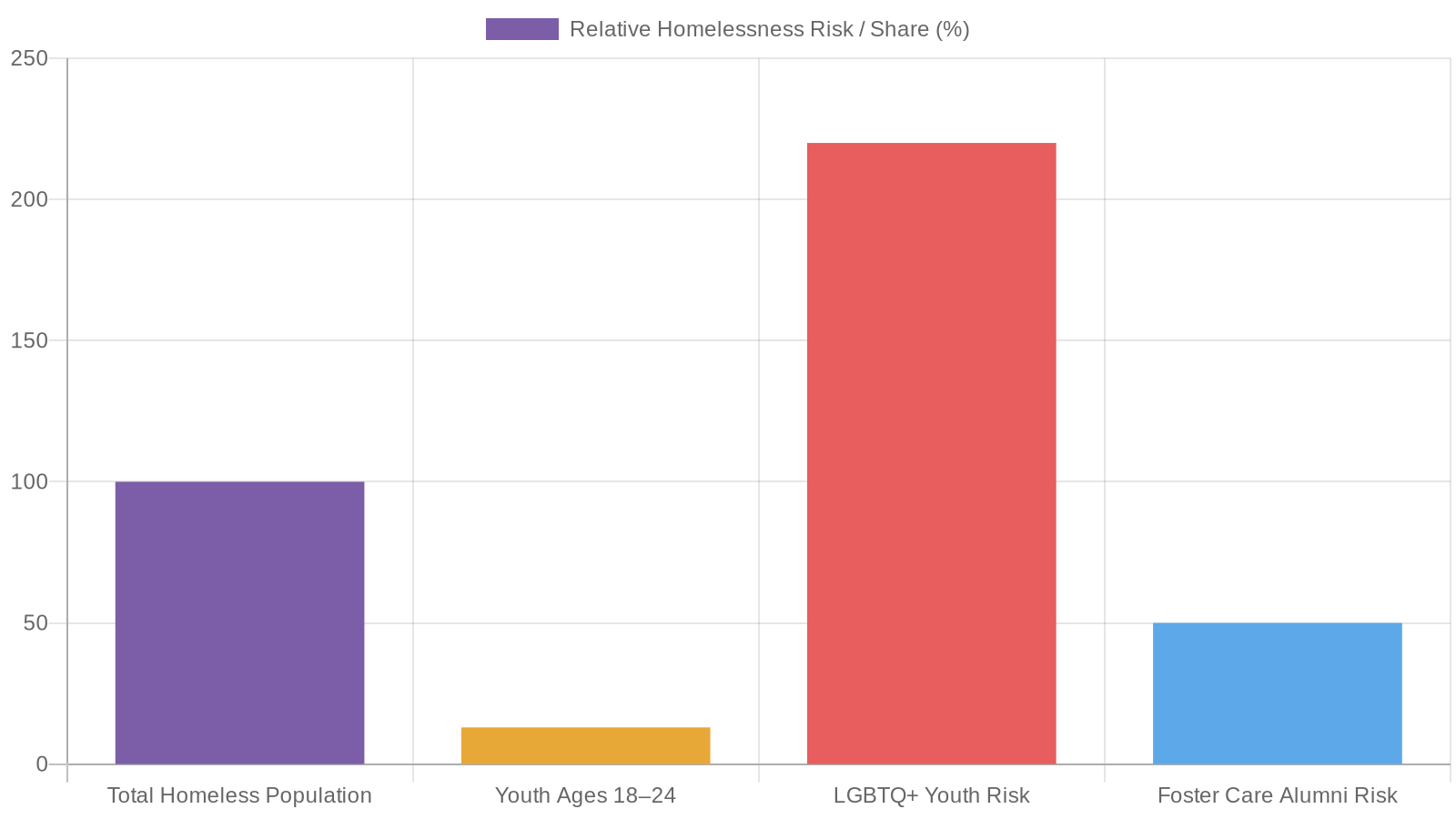
- Youth ages 18–24 make up roughly 13% of the total homeless population nationally but receive a disproportionately small share of dedicated funding (HUD, 2023).
- LGBTQ+ youth are 120% more likely to experience homelessness than non-LGBTQ+ peers (True Colors United, 2023).
- Youth who age out of foster care in Tennessee without stable housing face a 50% probability of experiencing homelessness within two years of leaving care (Annie E. Casey Foundation).
- The average age a young person first experiences homelessness in Tennessee is 16 years old (Tennessee Coalition to End Homelessness data).
Memorize two or three of these. They turn personal stories into policy arguments.
3. Build and Share Your Story the Right Way

Your story is not a sob story — it’s evidence. The experiences of young adults who have navigated Tennessee’s housing system firsthand reveal design flaws that no consultant can see from the outside. Learning to share that story in the right format, at the right moment, is one of the most valuable advocacy skills you can build.
Why Lived Experience Is the Most Powerful Policy Tool
No policy brief, no matter how well-researched, hits as hard as a young person looking a lawmaker in the eye and saying, “This happened to me, and here’s what you could have done differently.” Lived experience testimony is credible, humanizing, and — when done strategically — nearly impossible to argue against.
The key word is strategically. Your story belongs to you, and you get to decide how much to share, with whom, and in what format. You don’t owe anyone trauma details. What you’re offering is insight — what the system looked like from the inside, what worked, what failed, and what you needed that wasn’t there.
How to Structure Your Testimony in 3 Minutes or Less
Most public comment periods give speakers 2–3 minutes. Here’s a structure that works:
- Who you are (15 seconds): Your name, your city or region, your age. You don’t have to disclose your housing status unless you want to.
- What happened (60 seconds): One specific moment or barrier you experienced. Keep it concrete — a date, a place, a door that was closed.
- What the system did or didn’t do (45 seconds): Name the program, policy, or gap. This is where your data knowledge helps.
- Your ask (30 seconds): One clear, specific request. “I’m asking this committee to allocate $X for youth-specific rapid rehousing” is stronger than “I want things to be better.”
- Thank you (15 seconds): Brief, confident, done.
Practice it out loud at least three times before you deliver it. YAAB members can help you rehearse.
4. Connect with Your Regional YAAB

You don’t have to advocate alone. In fact, the most effective advocacy in Tennessee’s housing system happens through organized, sustained networks — not one-off moments. YAAB gives you community, training, and a seat at tables that used to be closed to young people.
What Is YAAB and How Does It Work?
The Youth Action Board (YAAB) of Tennessee is a statewide network of young adults ages 17 to 25 with lived experience of homelessness and housing instability. YAAB members sit at the table in Continuum of Care meetings, advise local and state leaders, and drive advocacy campaigns — not as token voices, but as genuine decision-makers.
Each of Tennessee’s eight CoC regions has its own local YAAB chapter. Members get training in policy, public speaking, and community organizing. They also connect their peers to housing, employment, education, and mental health resources. If you want to turn your experience into change, YAAB is the structure that makes it possible.
How to Find and Join Your Local YAAB Chapter
Finding your chapter is straightforward. Tennessee’s eight regional YAABs correspond to the CoC regions listed in Section 1. You can explore all local YAAB chapters on the YAAB Tennessee website to find the one serving your area — whether you’re in Memphis, Nashville, Knoxville, Chattanooga, the Upper Cumberland, Northeast Tennessee, or the Balance of State region.
Joining doesn’t require you to have all the answers or to be in a stable place right now. YAAB meets you where you are. Members participate in monthly meetings, statewide convenings, and advocacy events at their own pace. The only requirement is that you’re between 17 and 25 and have some experience with housing instability — and that you’re ready to use that experience to help shape something better.
5. Engage Your Local Continuum of Care

The Continuum of Care is the engine of homeless services funding in every Tennessee region. Most young people have never heard of it — even those who’ve used the services it funds. Understanding how it works, and showing up to its meetings, is one of the highest-leverage moves a youth advocate can make.
What Happens in a CoC Meeting and Why You Should Be There
Continuum of Care meetings are where the real decisions get made about who gets funded, who gets prioritized, and what the local rules look like. These meetings are open to the public in most regions, and young people with lived experience have every right to attend, speak during public comment, and eventually serve on committees.
What gets decided in CoC meetings includes: which organizations receive federal homeless assistance grants, how local written standards are written (the rules that determine who gets a housing voucher first), and how HMIS data is collected and used. Each of those decisions directly affects whether a 19-year-old in Memphis or a 22-year-old in Knoxville gets housed — or stays on a waitlist.
How to Push for Youth-Specific Policies Inside the CoC
HUD’s CoC regulations require that youth-specific needs be considered in local planning, but enforcement is uneven. Here are concrete asks you can bring to your local CoC:
- Youth-specific prioritization: Request that local written standards include explicit priority for unaccompanied youth ages 18–24 for rapid rehousing and permanent supportive housing.
- Lower barrier shelter standards: Advocate for removing curfews, ID requirements, and sobriety requirements that prevent young people from accessing shelter.
- Youth seats on the CoC board: Push for formal youth representation — not just public comment, but voting seats.
- HMIS subpopulation tracking: Ask that youth data be disaggregated by age, LGBTQ+ status, and foster care history so gaps become visible.
6. Know Your Rights as a Young Person in Tennessee

Advocacy isn’t only about changing laws for the future — it’s also about enforcing the protections that already exist right now. Too many young people in Tennessee are denied rights they already have, simply because no one told them. Knowing the law is power.
Legal Protections You May Not Know You Have
Knowing your rights is advocacy, too — for yourself and for your peers. Here are protections that apply to transition-age youth in Tennessee:
- McKinney-Vento Act: If you’re a student experiencing homelessness (including couch-surfing), you have the right to remain enrolled in your school of origin, receive transportation, and access free meals — even without a permanent address.
- Emancipated minor status: In Tennessee, minors who are legally emancipated (T.C.A. § 29-31-101) can sign leases and access adult services. This matters for youth under 18 who are not in foster care.
- Extended Foster Care (EFC): Under Tennessee’s Fostering Connections implementation, youth can remain in foster care and receive DCS support up to age 21 if they are in school, working, or have a disability. Many eligible youth don’t know this option exists.
- Fair Housing Act: Landlords cannot discriminate based on source of income in jurisdictions that have added that protection. Nashville and Memphis have both passed source-of-income protections that help voucher holders.
What to Do When Your Rights Are Violated
If you believe a shelter, landlord, or service provider has violated your rights, you have options:
- Contact the Tennessee Fair Housing Council for housing discrimination complaints.
- File a complaint with HUD’s Office of Fair Housing and Equal Opportunity (FHEO) online — free, no lawyer required.
- Reach out to Tennessee Legal Aid or Memphis Area Legal Services for free legal help.
- Document everything: dates, names, what was said. Screenshots and written records are your best protection.
And share what happened with your YAAB chapter. Individual rights violations are often systemic — your experience could be the evidence that changes a policy for everyone.
Advocacy Levels at a Glance: Where to Plug In
Youth housing advocacy in Tennessee happens at multiple levels simultaneously. Use this table to identify which level matches where you are right now — and where you want to grow.
7. Take Your Advocacy to the Tennessee State Capitol

Local advocacy matters enormously — but state law sets the ceiling for what’s possible at the local level. Rent assistance programs, foster care timelines, shelter funding formulas — all of these flow from decisions made in Nashville every year. Showing up at the Capitol, even once, changes how legislators think about who is watching.
How State Legislation Affects Youth Housing
The Tennessee General Assembly meets in Nashville from January through April each year. During that window, bills that affect youth housing, foster care, rental assistance, and homelessness funding move through committees and floor votes. Key committees to watch include the Senate Commerce and Labor Committee, the House Health Committee, and the Appropriations Committees in both chambers — because housing funding is a budget question as much as a policy one.
State-level wins that advocates have pushed for in recent years include increased funding for the Tennessee Homeless Programs line item in the state budget, expansion of extended foster care eligibility, and legislation to protect youth from criminalization for status offenses related to homelessness.
How to Contact and Meet with Your State Legislators
Every Tennessee resident has a state senator and a state representative. Finding yours takes 60 seconds at tn.gov/legislature using your zip code. Once you know who represents you, here’s how to engage:
- Email or call their office: Constituent calls and emails are logged. A short, specific message about a bill or budget item gets noticed.
- Request a meeting: Legislative offices schedule constituent meetings during session. Bring two or three YAAB members and one clear ask.
- Attend a committee hearing: Committee hearings are open to the public. You can sign up to testify in favor of or against specific bills. YAAB can help you prepare.
- Lobby Day: YAAB and partner organizations organize annual advocacy days at the Capitol where youth advocates meet with legislators in groups. Watch the YAAB calendar for dates.
8. Use Digital Advocacy and Social Media Strategically

In 2024, digital organizing is a core advocacy skill — not an optional add-on. Young people in Tennessee are already online; the question is whether that presence is being used to move housing policy forward. Strategic digital advocacy means being intentional about what you post, when, and why.
How Online Campaigns Move Offline Policy
Digital advocacy isn’t separate from “real” advocacy — it’s an amplifier. A well-timed social media campaign can put pressure on a legislator before a committee vote, shift public narrative around youth homelessness, and recruit new advocates who didn’t know YAAB existed. The key is connecting online energy to offline action.
Effective digital advocacy for youth housing in Tennessee looks like: sharing data and personal stories with clear calls to action (not just awareness), tagging legislators and CoC leaders in posts about specific bills or funding decisions, using consistent hashtags to build a visible movement, and directing followers to sign petitions, attend hearings, or contact their representatives.
Protecting Yourself While Advocating Online
Public advocacy online comes with real risks, especially for young people who are still in unstable housing situations. Before you post publicly about your experience:
- Decide what you’re comfortable sharing. You can be a powerful advocate without disclosing your address, your shelter, or details that could affect your housing situation.
- Use privacy settings intentionally. Consider whether you want your advocacy posts visible to employers, landlords, or family members who might react negatively.
- Know that screenshots are permanent. Anything you post publicly can be shared without your control.
- Talk to your YAAB chapter about organizational social media channels if you’d rather amplify a message without it being tied to your personal account.
Protecting yourself is not the same as staying silent. It’s sustainable advocacy.
9. Turn Your Advocacy into Lasting Leadership

The most powerful thing about youth advocacy is that it compounds. Every young person who learns to speak at a CoC meeting teaches the next one. Every bill that gets amended because a YAAB member testified makes the next testimony easier. You’re not just solving your own housing crisis — you’re building the infrastructure that catches the next person who falls. That’s leadership, and it starts now.
From Advocate to Decision-Maker: Pathways for Youth Leaders
Advocacy doesn’t have to be a one-time act. For many YAAB members, it becomes a career pathway — into nonprofit leadership, social work, public policy, community organizing, or elected office. Tennessee has young adults who started as YAAB members and now sit on CoC boards, advise state agencies, and lead organizations that serve their communities.
Formal pathways include: serving as a YAAB chapter leader or statewide representative, applying for fellowship programs like the True Colors United Youth Homelessness Policy Fellowship, pursuing education in social work, public administration, or law with YAAB’s support connecting you to resources, and running for local office — city councils, school boards, and county commissions are accessible starting points.
Ready to Make Your Move? Start with YAAB Tennessee's Advocacy Hub
Everything covered in this guide — understanding the CoC, building your testimony, engaging legislators, knowing your rights — comes together in organized, sustained advocacy. YAAB Tennessee is the infrastructure that makes that possible for young adults across the state.
Whether you’re in Memphis, Knoxville, Chattanooga, Nashville, or anywhere in between, there’s a place for you at the table. Explore YAAB Tennessee’s advocacy work and resources to see current campaigns, find out how to get involved, and connect with the young leaders who are already changing housing policy in Tennessee. You don’t have to wait until things are perfect in your own life to start making things better for the next person — that’s exactly what advocacy is.
You can also join YAAB Tennessee directly and find your regional chapter to start building relationships with peers who are doing this work right now.
Frequently Asked Questions
How do I find out who my Tennessee state legislators are?
Go to tn.gov/legislature and enter your zip code. You'll see your state senator and state representative, along with their contact information and committee assignments. Knowing who represents you is the first step to contacting them about youth housing bills.
Do I have to be housed or in a stable situation to join YAAB?
No. YAAB is designed for young adults ages 17 to 25 who have lived experience of homelessness or housing instability — including people who are currently in that situation. You don't need to have everything figured out to get involved. YAAB meets you where you are.
What is a Continuum of Care and how does it affect me?
A Continuum of Care (CoC) is a regional network of organizations that coordinates homeless services and distributes federal funding in a specific area. In Tennessee, there are eight CoC regions. The CoC in your area decides which programs get funded, who gets prioritized for housing, and what the local rules look like — which directly affects your access to shelter, rapid rehousing, and rental assistance.
Can I testify at the Tennessee State Capitol even if I've never done it before?
Yes. Committee hearings at the Tennessee General Assembly are open to the public, and any Tennessee resident can sign up to testify. YAAB and partner organizations offer training and support to help you prepare your testimony, practice your delivery, and know what to expect before you walk into the hearing room.
What is extended foster care in Tennessee and who qualifies?
Extended Foster Care (EFC) in Tennessee allows youth to remain in foster care and receive DCS support up to age 21, as long as they are enrolled in school, working, or have a qualifying disability. Many eligible youth don't know this option exists. If you aged out of or are approaching the age limit of foster care, contact DCS or a legal aid organization to find out if you qualify.
How is youth homelessness different from adult homelessness in terms of policy?
Youth homelessness has distinct causes — family conflict, aging out of foster care, LGBTQ+ rejection, and lack of rental history — and requires different solutions like lower-barrier shelters, host home programs, and youth-specific rapid rehousing. Federal and local policies don't always reflect those differences, which is why youth-specific advocacy and youth seats at the CoC table are so important.