Quick answer: Young adults in Knoxville and Knox County have real power to shape affordable housing policy — even without a vote or a degree. You can speak at Knox County Commission meetings, submit public comments on zoning changes, join the local Youth Action Board (YAAB TN-501), connect with tenant advocacy groups, and build relationships with elected officials. Tennessee's Continuum of Care system depends on community input, and your lived experience of housing instability is exactly the kind of expertise decision-makers need to hear. This guide breaks down every practical step.
Why Your Voice Matters in Knox County Housing Policy

It can feel like housing decisions in Knox County are made by people in suits behind closed doors — and sometimes they are. But every zoning vote, every budget line for affordable housing, and every policy that affects where you can live is technically open to public input. Understanding how that system works is the first step to changing it. Young adults ages 17 to 25 who have experienced housing instability are not just affected by these decisions — they are the most important voices in the room when those decisions get made.
The Affordable Housing Gap in Knoxville Is Real
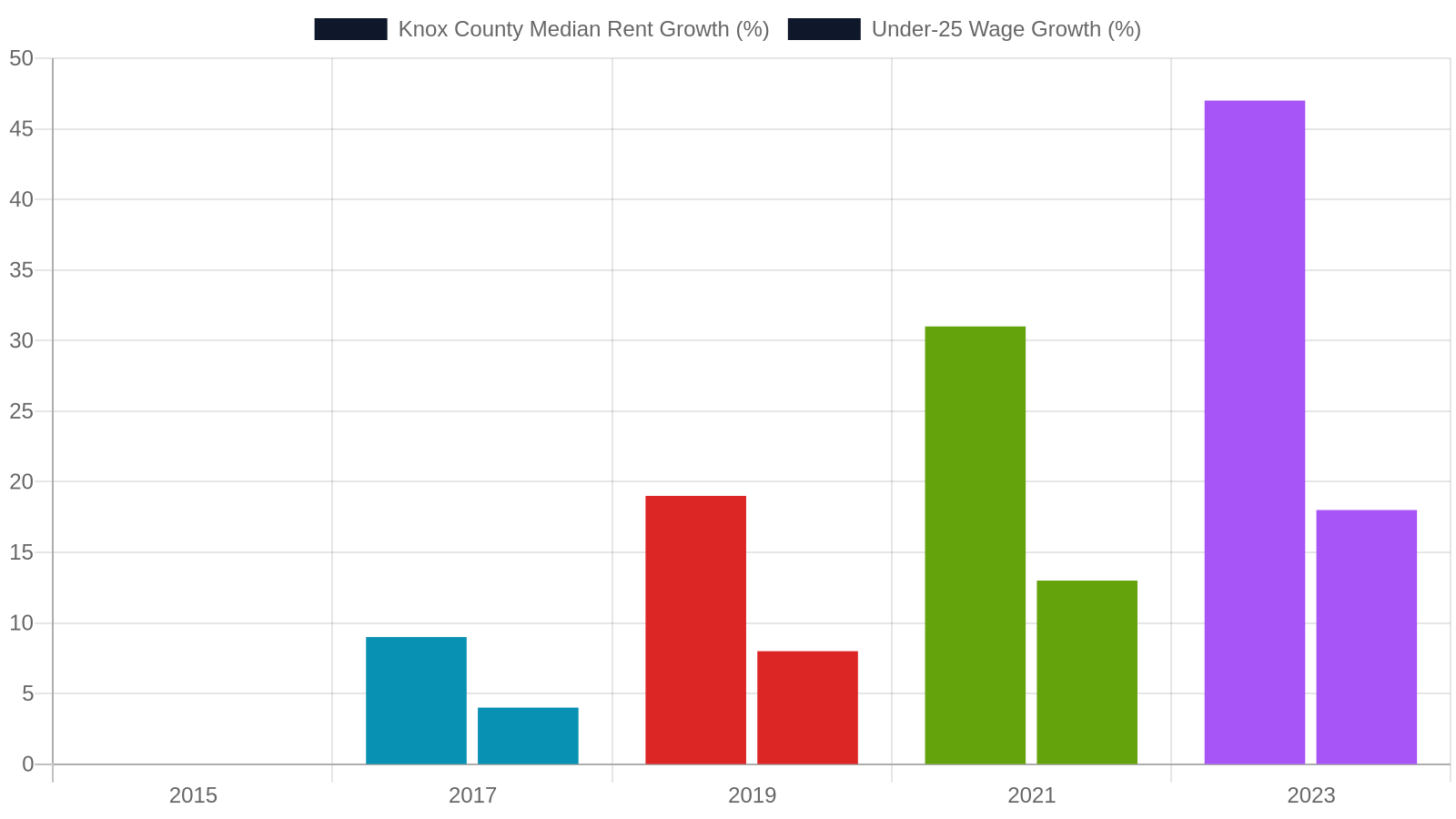
Knoxville has grown fast. Between 2015 and 2023, median rent in Knox County climbed more than 47%, while wages for workers under 25 rose only about 18% over the same period. The National Low Income Housing Coalition’s 2023 Out of Reach report found that a Tennessee renter needs to earn at least $18.82 per hour to afford a modest one-bedroom apartment — nearly double the state minimum wage of $7.25. For young adults aging out of foster care or leaving a shelter, that gap is the difference between stability and another night without a safe place to sleep.
Lived Experience Is a Credential
Policy makers, city planners, and nonprofit directors spend a lot of time talking about young people experiencing homelessness. They rarely get to hear from those people directly. When you show up to a county commission meeting or a public hearing and describe what it actually feels like to search for a $600-a-month room in Knoxville — what neighborhoods you were shut out of, what barriers you hit — you are providing information that no consultant’s report can replicate. That is not a small thing. That is advocacy.
Know the Players: Who Actually Decides Housing Policy in Knox County

Before you can advocate effectively, you need to know who has the power to say yes or no. In Knox County, housing decisions are split across several bodies — and understanding which one controls what will save you a lot of wasted effort. Here is a quick breakdown of the key decision-makers and how they connect to your daily life.
Knox County Commission
The Knox County Commission is the primary legislative body for unincorporated Knox County. Its 11 members vote on the county budget, zoning changes, and resolutions that affect housing. Meetings are held on the fourth Monday of each month at the City-County Building, 400 Main Street, Knoxville, TN 37902. Agendas are posted online at least 72 hours in advance, and every meeting includes a public comment period where any resident can speak for up to three minutes. You do not need to register in advance — you just sign up the night of the meeting.
Knoxville City Council and the Metropolitan Planning Commission
For housing within Knoxville city limits, Knoxville City Council (nine members, meetings every other Tuesday) controls zoning and city-funded housing programs. The Knoxville-Knox County Metropolitan Planning Commission (MPC) is the joint body that reviews rezoning applications and long-range land-use plans. When a developer wants to build apartments or a city wants to change what a neighborhood allows, it goes through the MPC first. Public hearings on those applications are where community members — including young adults — can testify in support of or against specific projects.
The Continuum of Care (CoC) — TN-501
The Knox County Continuum of Care (CoC TN-501) is the regional planning body that coordinates homeless services and applies for federal HUD funding. It includes service providers, government agencies, and — critically — people with lived experience of homelessness. The CoC’s decisions about which programs get funded directly affect what resources are available to young adults in Knoxville. Attending CoC meetings, joining committees, or connecting with the local YAAB chapter are all ways to influence those funding priorities.
Step 1 — Find Your Issue and Frame It Clearly

Good advocacy is not about being the loudest person in the room. It is about being the clearest. Before you walk into a commission meeting or send an email to a council member, spend some time getting specific about what you want, why it matters, and what you are asking someone to do about it. This section walks you through how to build that foundation.
Pick One Specific Problem to Start
Affordable housing is a huge topic. ‘We need more affordable housing’ is true, but it is hard for a commissioner to act on. Stronger advocacy starts with a specific, concrete ask. Examples: ‘Knox County should require that 15% of units in any development receiving a tax incentive be rented at or below 60% of Area Median Income.’ Or: ‘The City of Knoxville should fund 50 additional rapid rehousing slots for youth ages 18–24 in the FY2026 budget.’ Specific asks give decision-makers something to vote on — and give you something to track.
Connect Your Story to the Data
The most powerful testimony combines personal experience with facts. You might say: ‘I aged out of foster care at 18 and spent four months couch-surfing because I couldn’t find a unit under $700 a month in Knoxville. I’m not alone — HUD data shows that Knox County had 312 unaccompanied youth experiencing homelessness on a single night in January 2023. That number goes down when we fund rapid rehousing. I’m asking this commission to allocate $200,000 to expand that program.’ That is a three-part structure: your story, the data, the specific ask. It works.
Step 2 — Show Up to Public Meetings and Speak on the Record

Showing up in person is still one of the most effective forms of advocacy. Elected officials pay attention to who fills the seats and who steps to the microphone. Here is exactly how to navigate the public comment process at Knox County’s key decision-making bodies — no experience necessary.
How to Sign Up for Public Comment
At Knox County Commission meetings, public comment sign-up sheets are available at the door before the meeting starts — usually by 6:00 PM for a 6:30 PM meeting. At Knoxville City Council, you can sign up in person or sometimes online via the city’s website. At MPC hearings, each agenda item has its own public comment period, so you sign up when that item is called. You will be called by name, you walk to the podium, you state your name and address for the record, and you have your three minutes. That’s it. No credentials required.
What to Say in Three Minutes
Three minutes goes fast — roughly 400–450 spoken words. A simple structure: (1) Who you are — your name, your neighborhood, your connection to the issue. (2) What the problem is — one or two specific facts. (3) What you want — your specific ask, stated plainly. (4) Thank you. Practice it out loud at least twice before you go. If you are nervous, bring a printed copy and read from it. Reading from notes is completely normal and accepted. The goal is to get your words into the official public record — that record matters when decisions are appealed or reviewed.
Going Beyond One Meeting
One comment at one meeting plants a seed. Consistent presence grows it. Commissioners and council members notice when the same young adult shows up month after month. They start to recognize you as a stakeholder, not just a one-time speaker. Consider attending at least three consecutive meetings on your issue before deciding whether it is gaining traction. Bring friends. A room with five young adults speaking on the same topic sends a much stronger signal than one person speaking alone.
Step 3 — Submit Written Comments and Contact Your Representatives

You don’t have to be in the room to make your voice heard. Written comments, emails, and phone calls all go on the record and all influence how elected officials understand what their constituents care about. Here is how to use those tools strategically in Knox County.
Written Comments on Zoning and Budget Proposals
Every major zoning application reviewed by the Metropolitan Planning Commission has a public comment period — usually 10 to 14 days before the hearing date. You can submit written comments by email to the MPC staff planner listed on the application. Those comments become part of the official case file. Similarly, Knox County’s annual budget process includes a public comment window, typically in April and May, when you can submit written testimony to the commission. A one-page letter with your name, your story, and your specific ask is enough.
Emailing and Calling Your District Commissioner
Knox County has 11 commission districts. You can find your district and your commissioner’s contact information at knoxcounty.org. A short, direct email works well: introduce yourself, describe your experience with housing instability in one or two sentences, and ask for a specific action or a meeting. Follow up once if you don’t hear back within two weeks. Phone calls to district offices are also effective — staff track constituent contacts, and a spike in calls on a specific issue gets noticed. You do not need to be a registered voter to contact your representative; you just need to live in the county.
Step 4 — Get Involved with the Knox County CoC and Local Nonprofits

Individual advocacy is powerful. Coalition advocacy is more powerful. The Knox County CoC and the nonprofits that work within it are already organized around housing issues — and they need young adults with lived experience at the table. Here is how to connect with that existing infrastructure.
How the CoC TN-501 Works and How to Plug In
The Knox County Continuum of Care (CoC TN-501) holds regular community meetings that are open to the public, including people with lived experience of homelessness. The CoC’s annual Point-in-Time Count (held every January) is one of the most important data-gathering events of the year — volunteers are needed, and participating gives you a direct look at how homelessness is measured and how that data shapes federal funding decisions. Ask your case manager or a local shelter about how to volunteer for the count or attend CoC planning meetings.
Key Knoxville Organizations to Know
Several organizations in Knoxville work specifically on housing advocacy and can amplify your voice:
- Volunteer Ministry Center (VMC) — provides housing navigation and advocacy services in Knoxville.
- Knoxville’s Community Development Corporation (KCDC) — manages public housing and Section 8 vouchers; attends their public board meetings to comment on policy.
- Knox Area Rescue Ministries (KARM) — operates shelters and transitional housing programs.
- Tennessee Housing Development Agency (THDA) — the state body that funds affordable housing programs; holds public hearings on its Qualified Allocation Plan annually.
Building relationships with staff at these organizations can open doors to coalition advocacy — where multiple groups speak with one coordinated voice.
Step 5 — Use Social Media and Media Attention Strategically

Government meetings are important, but most people — including most voters — never attend them. Social media and local news coverage let you take your advocacy beyond the City-County Building and into the conversations that Knox County residents are already having. Here is how to use those channels without burning yourself out.
Tagging Officials and Creating Pressure Online
Knox County commissioners and Knoxville City Council members all have public social media accounts. When you attend a meeting, post about it — tag the relevant officials, share what you said, and explain what you are asking for. A post that gets shared 50 times in Knoxville is noticed by local political staff. Use specific hashtags like #KnoxCountyHousing, #AffordableKnoxville, or #YAABTN to build a searchable thread over time. Screenshots of your public comment testimony, shared on Instagram or TikTok with a short explanation, can reach thousands of peers who never attend a government meeting.
Talking to Local Journalists
Knoxville has active local news outlets — Knox News Sentinel, WBIR, WVLT, and Compass — that cover housing issues. Reporters are always looking for real people whose stories illustrate a broader trend. If you are comfortable sharing your experience, you can reach out directly to a reporter who covers housing or city government and offer to talk. You control what you share. You can ask to be quoted by first name only. A single news story about a young adult advocating for affordable housing in Knox County can generate more political pressure than a dozen public comments — because it reaches voters who do not attend meetings.
What Knoxville's Affordable Housing Landscape Actually Looks Like Right Now
Knowing what you are advocating into — the actual numbers, the existing programs, the recent wins and gaps — makes your advocacy sharper and more credible. Here is a snapshot of where Knox County stands on affordable housing right now, and why the moment for youth advocacy is particularly important.
Current Inventory and the Youth Gap
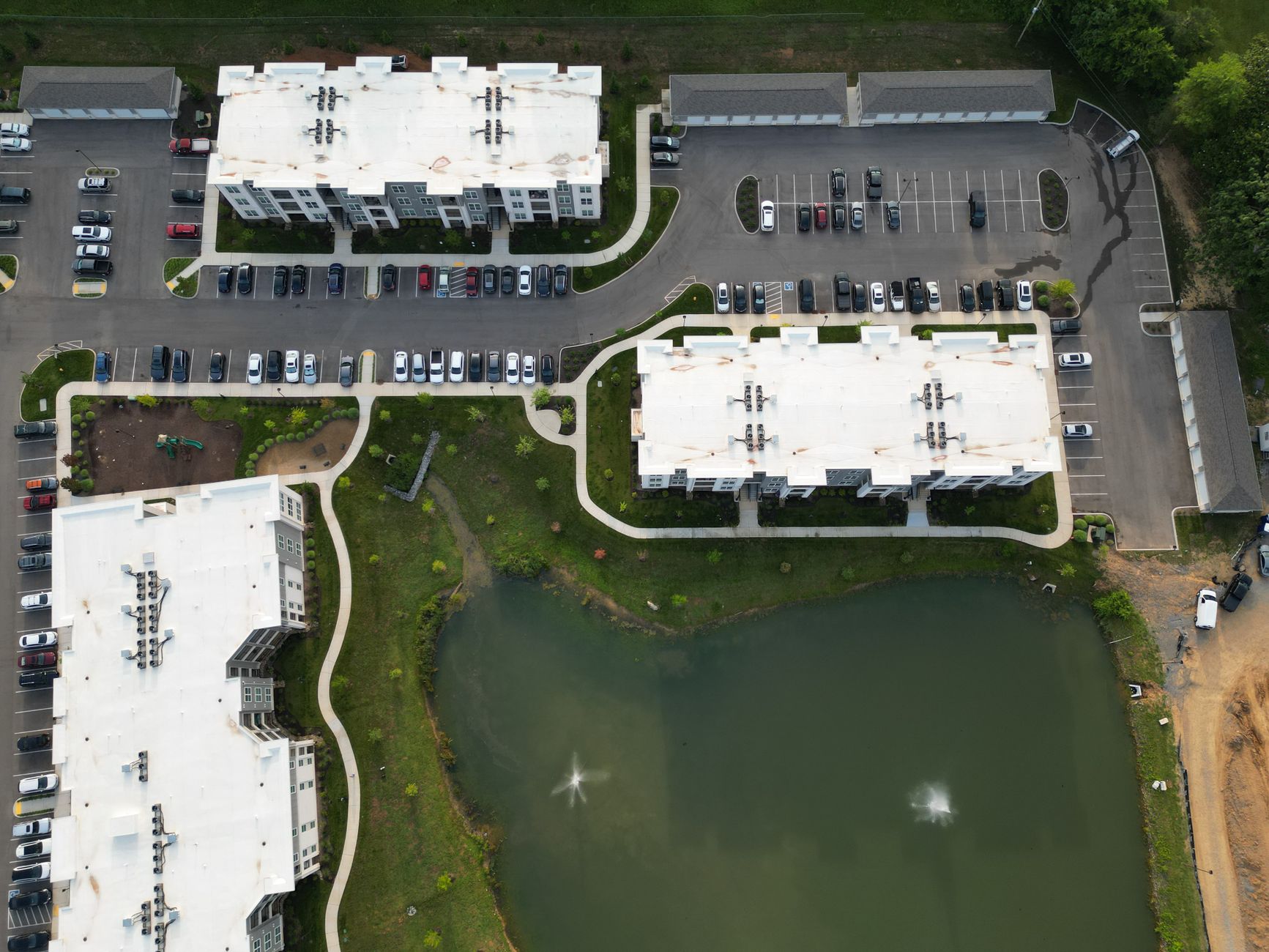
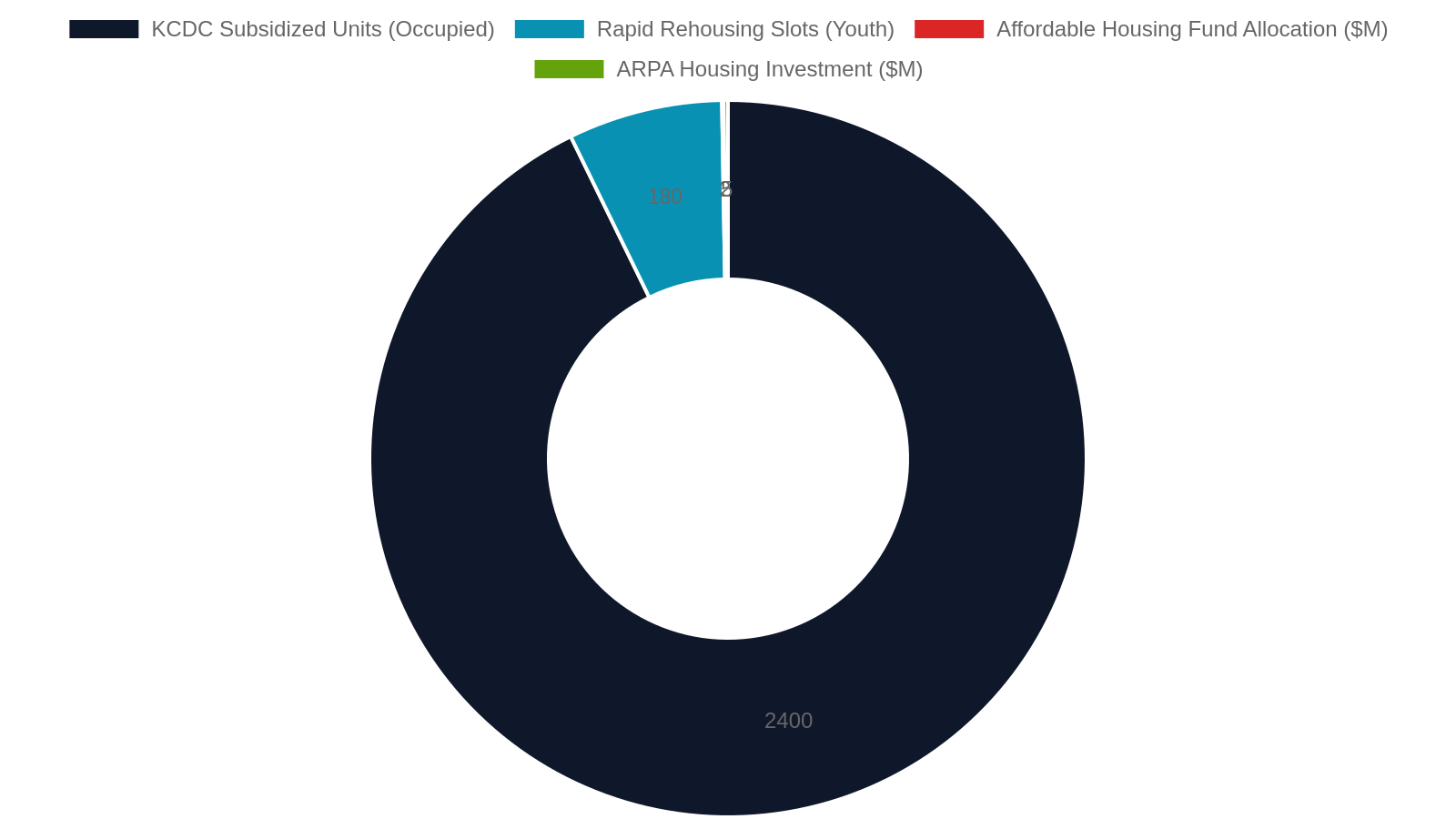
As of 2023, Knox County has approximately 2,400 units of federally subsidized affordable housing managed by KCDC, with a waitlist that can stretch 18 to 36 months. Rapid rehousing programs funded through the CoC TN-501 served roughly 180 individuals in the most recent program year, but demand consistently outpaces capacity. For transition-age youth (18–24), the challenge is compounded: most rental markets require proof of income equal to 2.5 to 3 times monthly rent, a standard that excludes most young adults working entry-level or part-time jobs. Only a handful of Knoxville’s affordable housing programs are specifically designed for youth under 25.
Recent Policy Wins and What They Show Is Possible
In 2022, Knox County allocated $5 million in American Rescue Plan Act (ARPA) funds toward affordable housing — a direct result of sustained community advocacy. In 2023, Knoxville City Council approved a Affordable Housing Fund with an initial $2 million commitment. These wins happened because advocates showed up, spoke on the record, and built coalitions. They are not permanent — funding must be renewed and expanded — but they prove that local government in Knox County does respond to organized community pressure. Your advocacy today shapes what the next round of funding looks like.
Advocacy Tactics for Knoxville Young Adults: Impact vs. Effort
Use this table to choose the tactics that fit your schedule and comfort level. Every tactic listed here has been used effectively by young adults in Knox County.
How YAAB TN-501 Amplifies Youth Advocacy in Knoxville

Advocating alone is hard. Advocating as part of an organized, statewide network of young adults with lived experience is something else entirely. The Youth Action Board (YAAB) TN-501 is the Knox County chapter of a statewide network built specifically for young adults like you. Here is what it does and why joining it is one of the highest-leverage moves you can make as a housing advocate in Knoxville.
What the Local YAAB Does in Knox County
The Youth Action Board chapter for the Knox County CoC region (TN-501) is a group of young adults ages 17 to 25 with lived experience of homelessness who work directly with CoC leadership, service providers, and local government to shape housing policy. YAAB members have testified at county commission meetings, participated in HUD-required CoC planning processes, and helped design programs that are more responsive to what young people actually need. Being part of YAAB means your individual voice becomes part of a coordinated, credible, ongoing presence — not just a single public comment.
What You Get Out of Joining
YAAB membership is not just about giving — it is about growing. Members gain:
- Leadership skills — public speaking, policy analysis, coalition building
- Professional connections — relationships with housing directors, nonprofit leaders, and elected officials
- Peer support — a community of young adults who understand your experience without judgment
- A platform — YAAB’s statewide network connects Knoxville members to advocacy happening in Nashville, Memphis, Chattanooga, and across Tennessee
Many YAAB members have gone on to jobs in social services, policy, and nonprofit management — directly because of the skills and connections they built through the board.
Advocacy Tactics Compared: What Works Best for Knoxville Youth

Not every advocacy tactic takes the same amount of time or produces the same results. If you are new to advocacy or have limited bandwidth, it helps to know which moves give you the most impact for the effort. The comparison table below rates common tactics by time investment, skill level needed, and typical impact on Knox County housing decisions — so you can build a strategy that fits your life.
Know Your Rights: Housing Protections for Young Adults in Tennessee

Effective advocacy is grounded in knowing what protections already exist — and where the gaps are. When you understand your legal rights as a renter or as a young adult aging out of foster care in Tennessee, you can speak with authority about what needs to change. Here is a plain-language overview of the protections that apply to you right now in Knox County.
Tenant Rights in Knox County
Tennessee is a landlord-friendly state, but tenants still have legal protections. Under the Tennessee Uniform Residential Landlord and Tenant Act (URLTA) — which applies in Knox County — landlords must provide habitable housing, give 14 days’ written notice before filing for eviction for nonpayment of rent, and cannot lock you out or shut off utilities as a way to force you to leave. If you receive an eviction notice, you have the right to appear in court. Legal Aid of East Tennessee (legalaideasttn.org) provides free legal help to low-income tenants, including young adults.
Rights for Youth Aging Out of Foster Care
If you aged out of Tennessee’s foster care system, you may be eligible for Extended Foster Care through age 21 under Tennessee’s Tennessee Fostering Connections program. You also have the right to request your personal records, including your case history, medical records, and any housing assistance you received as a minor. The Tennessee Department of Children’s Services (DCS) is required to provide a 90-day notice before transitioning you out of care and must connect you with an Independent Living coordinator. Knowing these rights is the first step to enforcing them — and advocating to strengthen them.
Ready to Advocate? Your Next Steps in Knoxville

Everything in this guide points to the same truth: young adults in Knoxville and Knox County have more power in the affordable housing conversation than most people realize. The system is not designed to make it easy — but it is designed to be open. Your lived experience, your specific story, and your consistent presence in the rooms where decisions get made are the most powerful advocacy tools available. Here is how to take the first concrete step right now.
Start This Week
You don’t need to wait for the perfect moment. Here is what you can do in the next seven days:
- Look up the next Knox County Commission meeting at knoxcounty.org and put it on your calendar.
- Find your district commissioner and send a one-paragraph email introducing yourself and naming one housing issue you care about.
- Follow @YAABTN on social media and share one post about youth housing in Knoxville.
- Talk to a friend or peer who has experienced housing instability and ask if they would come to a meeting with you.
Small, consistent actions compound. The young adults who have the most impact in Knox County housing policy are not the ones who did one big thing — they are the ones who kept showing up.
Connect with YAAB and the Statewide Network
The Youth Action Board is active across Tennessee — in Memphis, Nashville, Chattanooga, Jackson, and the Upper Cumberland region, as well as right here in Knoxville. When you join the local chapter, you plug into a statewide network of young advocates who are pushing for the same changes at the state level that you are pushing for locally. You can learn more about the Knox County YAAB chapter (TN-501) and find out how to get involved. If you want to explore what is happening in other regions of Tennessee, check out the full list of local YAAB chapters across the state. And if you are ready to take the next step, you can join YAAB today — no experience required, just a willingness to show up for yourself and your peers.
Frequently Asked Questions
Do I have to be a registered voter to speak at a Knox County Commission meeting?
No. Any resident of Knox County can sign up for public comment and speak at a commission meeting, regardless of voter registration status or age. You just need to show up and put your name on the sign-up sheet before the meeting starts.
What is the Knox County Continuum of Care and how does it affect young adults?
The Knox County Continuum of Care (CoC TN-501) is the regional planning body that coordinates homeless services and applies for federal HUD funding. Its decisions about which programs get funded directly determine what housing and support resources are available to young adults in Knoxville and Knox County.
How do I find out if I qualify for affordable housing programs in Knoxville?
Contact the Knoxville's Community Development Corporation (KCDC) to ask about public housing and Section 8 voucher eligibility. You can also reach out to the Volunteer Ministry Center or Knox Area Rescue Ministries for housing navigation help. Eligibility is generally based on income, not age.
What is YAAB and how do I join the Knoxville chapter?
YAAB stands for Youth Action Board — a statewide network of young adults ages 17 to 25 in Tennessee with lived experience of homelessness who advise on housing policy and connect peers to resources. The Knoxville chapter serves the TN-501 CoC region. You can learn more and get involved at yaabtn.org/local-yaabs/tn-501/.
Can I advocate for affordable housing even if I am currently experiencing homelessness?
Yes, absolutely. Your lived experience right now is exactly what makes your voice valuable in policy conversations. Many advocacy activities — like emailing a commissioner, submitting a written comment, or posting on social media — can be done without a permanent address.
What legal protections do I have as a renter in Knox County, Tennessee?
Under the Tennessee Uniform Residential Landlord and Tenant Act, your landlord must maintain habitable conditions and give you 14 days' written notice before filing for eviction for nonpayment. They cannot lock you out or cut off utilities. If you need free legal help, contact Legal Aid of East Tennessee at legalaideasttn.org.