Quick answer: Lived experience youth advisory boards — like the Youth Action Board (YAAB) of Tennessee — are groups of young adults ages 17 to 25 who have personally faced homelessness or housing instability and use that experience to improve housing programs, policies, and services. In Central Tennessee (Nashville/Davidson County, TN-503), YAAB members work directly with the Continuum of Care to make sure housing programs actually meet young people's needs. If you're between 17 and 25 and need housing support, or you want your voice to shape the system, this guide breaks down exactly how these boards work and what resources are available to you right now.
1. What Is a Lived Experience Youth Advisory Board?

A lived experience youth advisory board is exactly what it sounds like: a group of young people who have personally experienced homelessness or housing instability, organized to advise the agencies, programs, and policymakers that are supposed to help them. These boards exist at the intersection of advocacy and service design — they are both a voice and a tool for change.
In Tennessee, the most prominent example is the Youth Action Board (YAAB), a statewide network operating across every major Continuum of Care (CoC) region. Understanding how these boards work — and why they matter — is the first step to knowing how you can benefit from them or contribute to them.
Defining 'Lived Experience' in Housing Policy
Lived experience means you’ve personally navigated something — in this context, homelessness, housing instability, couch-surfing, aging out of foster care, or any situation where you didn’t have a safe, stable place to call home. When housing programs say they want ‘lived experience voices,’ they mean they want you at the table — not just researchers or administrators talking about your situation.
Advisory boards that center lived experience are different from traditional advisory committees. Instead of inviting young people as token guests, these boards give transition-age youth (TAY) real decision-making power: reviewing funding proposals, shaping outreach language, recommending policy changes, and holding service providers accountable to the people they serve.
Why Youth-Led Boards Produce Better Outcomes
Research consistently shows that programs co-designed with the people they serve perform better. A 2021 report from the National Alliance to End Homelessness found that youth-informed programs see higher shelter enrollment rates and lower rates of return to homelessness compared to programs designed without youth input. When a young adult who has actually slept in a car reviews a shelter intake form, they catch barriers that a policy analyst sitting in an office simply won’t see — things like intake hours that conflict with work shifts, or language that feels shaming rather than welcoming.
- Peer credibility: Young people trust information from peers who’ve been through it.
- Systems knowledge: Members understand gaps from the inside out.
- Policy leverage: Boards create formal channels for youth voices to reach decision-makers.
2. How Tennessee's Continuum of Care System Works for Young Adults

Before you can navigate Tennessee’s housing resources, it helps to understand the structure behind them. The Continuum of Care (CoC) system is the backbone of federally funded homeless services in every state — and knowing how it works gives you real power to access it and, if you choose, to help reshape it.
What Is a Continuum of Care (CoC)?
A Continuum of Care (CoC) is a regional planning body funded by the U.S. Department of Housing and Urban Development (HUD) that coordinates homeless services in a defined geographic area. Tennessee has multiple CoC regions, each identified by a number. Central Tennessee — primarily Nashville and Davidson County — falls under TN-503. Other regions include TN-500 (Memphis/Shelby), TN-501 (Knoxville/Knox), TN-502 (Chattanooga/Hamilton), TN-504 (Jackson/West TN), TN-506, TN-507, and TN-509 covering rural and upper regions.
Each CoC receives federal funding and distributes it to local nonprofits and government agencies that provide shelter, rapid rehousing, permanent supportive housing, and prevention services. The CoC board sets priorities — and that’s exactly where youth advisory boards like YAAB plug in.
Transition-Age Youth (TAY): Who the System Is Supposed to Serve
Transition-age youth (TAY) refers to young people roughly ages 16 to 25 who are moving from adolescence into adulthood — often without the family safety net that most people take for granted. HUD specifically recognizes youth homelessness as distinct from adult homelessness because the causes, experiences, and solutions are different.
In Tennessee, young adults ages 17 to 25 experiencing homelessness may be eligible for youth-specific programs that include:
- Youth Rapid Rehousing (RRH): Short-term rental assistance plus case management to move you into stable housing quickly.
- Transitional Housing Programs: Time-limited housing (typically 18–24 months) with wraparound support services.
- Host Home Programs: Volunteer-based safe housing with a screened community member.
- Street Outreach: Teams that meet youth where they are — not requiring you to come to an office first.
The Gap Between Policy and Reality
Here’s the hard truth: the CoC system was built largely by and for adults, and many of its rules create real barriers for young people. Strict ID requirements, curfews that conflict with jobs, rules against partners or pets, and intake processes that feel more like interrogations than help — these are all things that drive young adults away from services they’re entitled to use. That’s precisely why having a YAAB embedded in the CoC process matters. Members can flag these barriers in real time and push for concrete policy fixes.
3. Central Tennessee (TN-503): The Nashville/Davidson Housing Landscape

Central Tennessee — anchored by Nashville and Davidson County within the TN-503 CoC region — is one of the state’s most active areas for youth housing programs. Nashville’s rapid growth over the past decade has driven up rents dramatically, making housing instability an even more urgent challenge for young adults without family financial support. The median one-bedroom rent in Nashville crossed $1,400/month in 2023, while the minimum wage remains $7.25/hour statewide — a gap that makes independent housing nearly impossible without assistance.
Key Organizations Serving TAY in Nashville
Nashville’s TN-503 CoC region includes a network of organizations specifically focused on transition-age youth. Some of the most prominent include:
- Oasis Center: One of Nashville’s longest-running youth-serving nonprofits, offering emergency shelter, transitional housing, and outreach for ages 14–24.
- Campus for Human Development: Coordinates multiple housing programs and operates the Metro Nashville Homeless Impact Division’s youth initiatives.
- Safe Haven Family Shelter: Serves young families experiencing homelessness, including young parents ages 18–25.
- Conexión Américas: Provides housing navigation and support for Latino/a/x youth and families.
- The Next Door: Offers housing and recovery support for young women.
This list is not exhaustive — the CoC includes dozens of funded providers. Your best starting point is always a call to 211 (Tennessee’s statewide social services helpline), which can connect you to current openings in real time.
Nashville Youth Homelessness by the Numbers
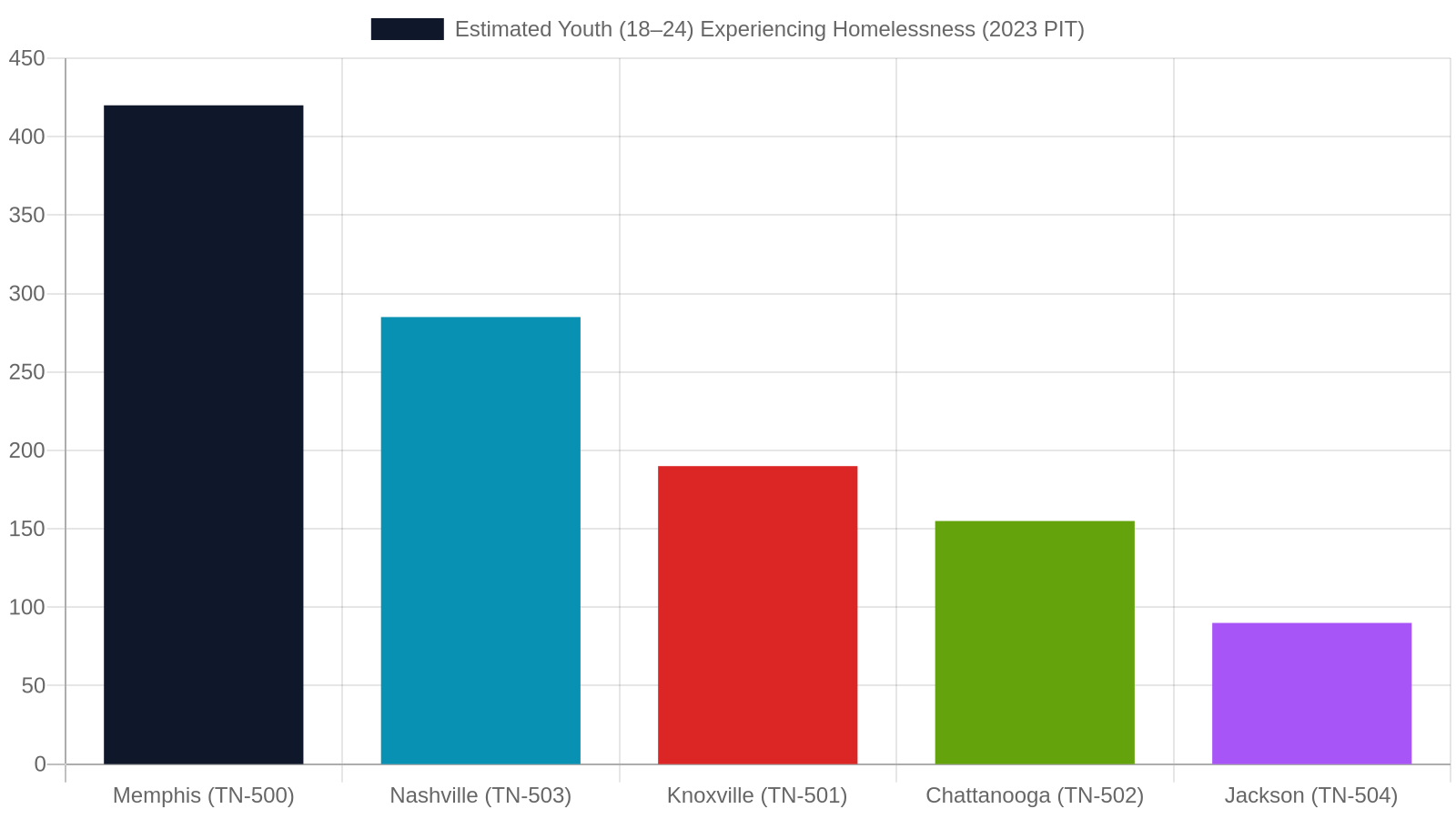
According to the 2023 Point-in-Time (PIT) Count conducted by the Metro Nashville Homeless Impact Division, approximately 1,900 individuals were counted as homeless in Davidson County on a single January night — and young adults ages 18–24 represented one of the fastest-growing segments of that count. Critically, PIT counts are widely understood to be significant undercounts of actual youth homelessness because many young people are couch-surfing, staying in cars, or otherwise hidden from street outreach teams on the night of the count.
Tennessee’s statewide data shows that youth ages 18–24 account for roughly 15–18% of all individuals experiencing homelessness in urban CoC regions, while making up a disproportionately high share of those who are unsheltered rather than in emergency shelter.
4. What YAAB Does Inside the TN-503 CoC

The Youth Action Board of Tennessee operates a regional chapter embedded within the TN-503 Continuum of Care. This means YAAB members in Central Tennessee are not just a separate advocacy group — they are formally integrated into the decision-making structure that controls how housing resources are planned, funded, and delivered in Nashville and Davidson County.
Understanding what YAAB actually does inside the CoC helps you see both the impact of the board and the concrete ways your own participation would matter.
Formal Roles: Where YAAB Members Sit at the Table
YAAB members in the TN-503 region don’t just attend meetings — they hold formal seats on CoC committees. This includes participation in:
- CoC Governance Board: Reviewing and voting on funding priorities for the entire region.
- Youth Homelessness Demonstration Program (YHDP) Planning: Shaping how federal YHDP dollars are spent on youth-specific housing solutions.
- Coordinated Entry System (CES) Review: Evaluating whether the process for assessing and prioritizing young people for housing is fair, accessible, and youth-friendly.
- Program Quality Reviews: Visiting funded programs and providing feedback from a youth perspective.
These aren’t symbolic roles. YAAB members have directly influenced changes to intake processes, shelter rules, and funding allocations in Tennessee CoC regions.
Advocacy Beyond the CoC: State and Local Policy
YAAB’s work in Central Tennessee extends beyond the CoC into state-level advocacy. Members have testified before the Tennessee General Assembly on issues including youth aging out of foster care, barriers to obtaining identification documents, and the need for dedicated youth housing funding in the state budget. In 2022 and 2023, YAAB members participated in advocacy days at the State Capitol in Nashville, meeting directly with legislators and staff.
Local advocacy includes working with Metro Nashville government on the city’s strategic plan to address homelessness and pushing for youth-specific targets within Nashville’s broader housing goals. This kind of multi-level engagement — from a shelter’s intake form all the way to state legislation — is what makes lived experience boards genuinely powerful rather than performative.
5. Types of Housing Programs Available to You in Central Tennessee

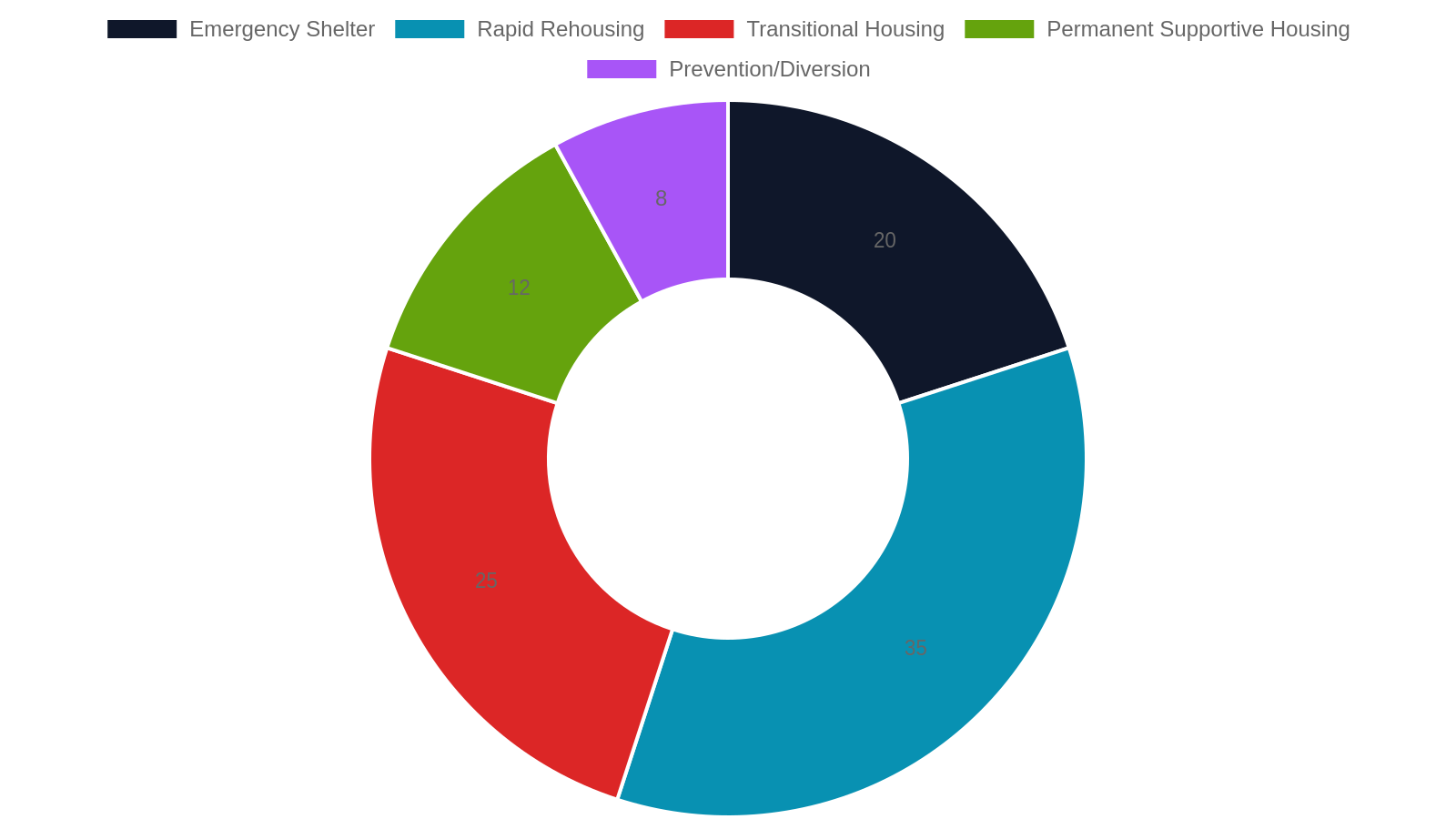
Knowing what types of housing programs exist — and what each one is actually for — is one of the most practical things you can take away from this guide. Tennessee’s CoC-funded housing programs fall into several distinct categories, and the right fit depends on your current situation, your goals, and what’s available in your area right now.
Emergency Shelter: Your First Safety Net
If you need a safe place tonight, emergency shelter is the immediate option. In Nashville, youth-specific emergency shelter options include programs operated through the Oasis Center and referrals through the Coordinated Entry System. To access emergency shelter through the CoC, you typically start by calling 211 or connecting with a street outreach worker who can make a warm referral.
Important to know: you do not need a photo ID to access most emergency shelters in Tennessee, though having one speeds up the process. If you don’t have ID, many shelters and case managers can help you obtain a Tennessee ID card — a critical first step toward housing, employment, and benefits.
Rapid Rehousing: Getting Into Your Own Place Fast
Rapid Rehousing (RRH) is a HUD-funded program designed to move people from homelessness into permanent housing as quickly as possible, with short-term rental assistance and case management support. For young adults, youth-specific RRH programs typically provide:
- Security deposit and first/last month’s rent assistance
- Monthly rental subsidies for 3–12 months (sometimes longer)
- A case manager who helps you build skills and stability
- Connections to employment, education, and benefits
RRH is not a permanent subsidy — the goal is to help you get stable and build toward independence. But it can be a powerful bridge when you need it most.
Transitional Housing and Permanent Supportive Housing
Transitional housing programs offer a place to live for up to 24 months, with intensive support services, while you work toward long-term stability. These programs are especially useful if you’re working on education, employment, or recovering from a significant crisis. Permanent Supportive Housing (PSH) is reserved for young adults with significant disabilities or barriers who need long-term support — it combines affordable housing with ongoing services and has no time limit. Access to both programs runs through the CoC’s Coordinated Entry System, so connecting with a case manager or calling 211 is your entry point.
6. Aging Out of Foster Care in Tennessee: What You Need to Know

For young adults aging out of Tennessee’s foster care system, the risk of housing instability is especially high — and the window to access support is narrow if you don’t know where to look. Tennessee has specific programs designed for this transition, but they’re only useful if you know they exist and how to access them.
Extended Foster Care and the Tennessee 21 Program
Tennessee law allows young people to remain in foster care — and receive support — until age 21 through the Tennessee 21 program (also called Extended Foster Care). If you aged out or are about to age out, you may be eligible for continued case management, housing assistance, education support, and Medicaid coverage through age 26. Many young people don’t know this option exists or don’t opt in because no one clearly explained it to them. If you’re approaching 18 in the foster care system, ask your caseworker specifically about Tennessee 21 before your birthday.
Chafee Foster Care Independence Program Funding
The federal John H. Chafee Foster Care Program for Successful Transition to Adulthood provides funding to states specifically to help young people aging out of foster care. In Tennessee, Chafee funds support:
- Independent living skills training
- Educational and vocational support
- Room and board assistance for youth ages 18–21
- Mentoring and connection to community resources
Tennessee’s Department of Children’s Services (DCS) administers Chafee funds, but local nonprofits and CoC partners often deliver the actual services. Ask your case manager or a YAAB member in your region to help you find out what’s available locally.
Foster Care and Housing Instability: The Data
The connection between aging out of foster care and homelessness is stark and well-documented. National research shows that approximately 36% of young adults who age out of foster care experience homelessness within 2–4 years of leaving the system. In Tennessee, youth who were formerly in foster care represent a significant portion of young adults accessing CoC-funded housing programs. YAAB members with foster care experience are uniquely positioned to identify the specific policy gaps — like the lack of a housing plan at discharge — that drive these outcomes, and to push for concrete fixes.
7. Your Rights as a Young Adult Experiencing Homelessness in Tennessee
Knowing your rights is not just useful information — it’s power. When you understand what programs are legally required to offer you and what protections exist, you’re in a much stronger position to advocate for yourself and to help your peers do the same. Tennessee and federal law provide several important protections specifically for young adults experiencing homelessness.
The McKinney-Vento Act: Education Rights
If you are experiencing homelessness and are still in high school or pursuing a GED, the McKinney-Vento Homeless Assistance Act gives you specific rights. You have the right to:
- Enroll in school immediately, even without records, ID, or a permanent address
- Stay in your current school even if you move to a different district
- Receive transportation to your school of origin
- Access free meals, tutoring, and other support services
Every Tennessee school district is required to have a McKinney-Vento liaison — a staff person whose job is to help students experiencing homelessness navigate enrollment and support. If a school tries to turn you away, you can contact Tennessee’s State McKinney-Vento Coordinator through the Tennessee Department of Education.
Privacy, Consent, and Housing Programs
You have the right to privacy in housing programs. Under HUD’s data standards, your information in the Homeless Management Information System (HMIS) is protected — agencies cannot share your data without your consent except in specific legal circumstances. You also have the right to informed consent before enrolling in any program, meaning staff must explain what the program involves, what’s expected of you, and what happens if you leave.
If you are between 17 and 18, Tennessee law in some circumstances allows minors to consent to their own shelter and services without parental permission — particularly if returning home is unsafe. Ask a case manager or YAAB member about your specific situation.
8. Employment, Education, and Financial Stability Resources

Stable housing is the foundation — but employment, education, and financial literacy are what make that stability last. Tennessee has a range of programs specifically designed to help young adults ages 17 to 25 build toward economic independence, and many of them are free or low-cost for people experiencing housing instability.
Tennessee's American Job Centers and Youth Workforce Programs
Tennessee’s American Job Centers (AJCs) — also called Tennessee Career Centers — offer free employment services including resume help, job search assistance, skills training, and connections to apprenticeships. Under the Workforce Innovation and Opportunity Act (WIOA), young adults ages 16–24 who face barriers to employment (including homelessness) are a priority population for youth workforce programs. WIOA youth programs can fund:
- Paid work experience and internships
- Occupational skills training (including certifications)
- GED and high school diploma support
- Financial literacy education
- Mentoring and supportive services
Find your nearest Tennessee Career Center at tn.gov/workforce or ask your case manager to make a referral.
GED and Education Pathways in Central Tennessee
If you left school before graduating, a GED (General Educational Development) credential opens doors to employment, higher education, and many housing programs that require proof of education. In Nashville, free GED preparation is available through:
- Nashville Adult Literacy Council
- Tennessee College of Applied Technology (TCAT) Nashville
- Metro Nashville Public Schools Adult Education
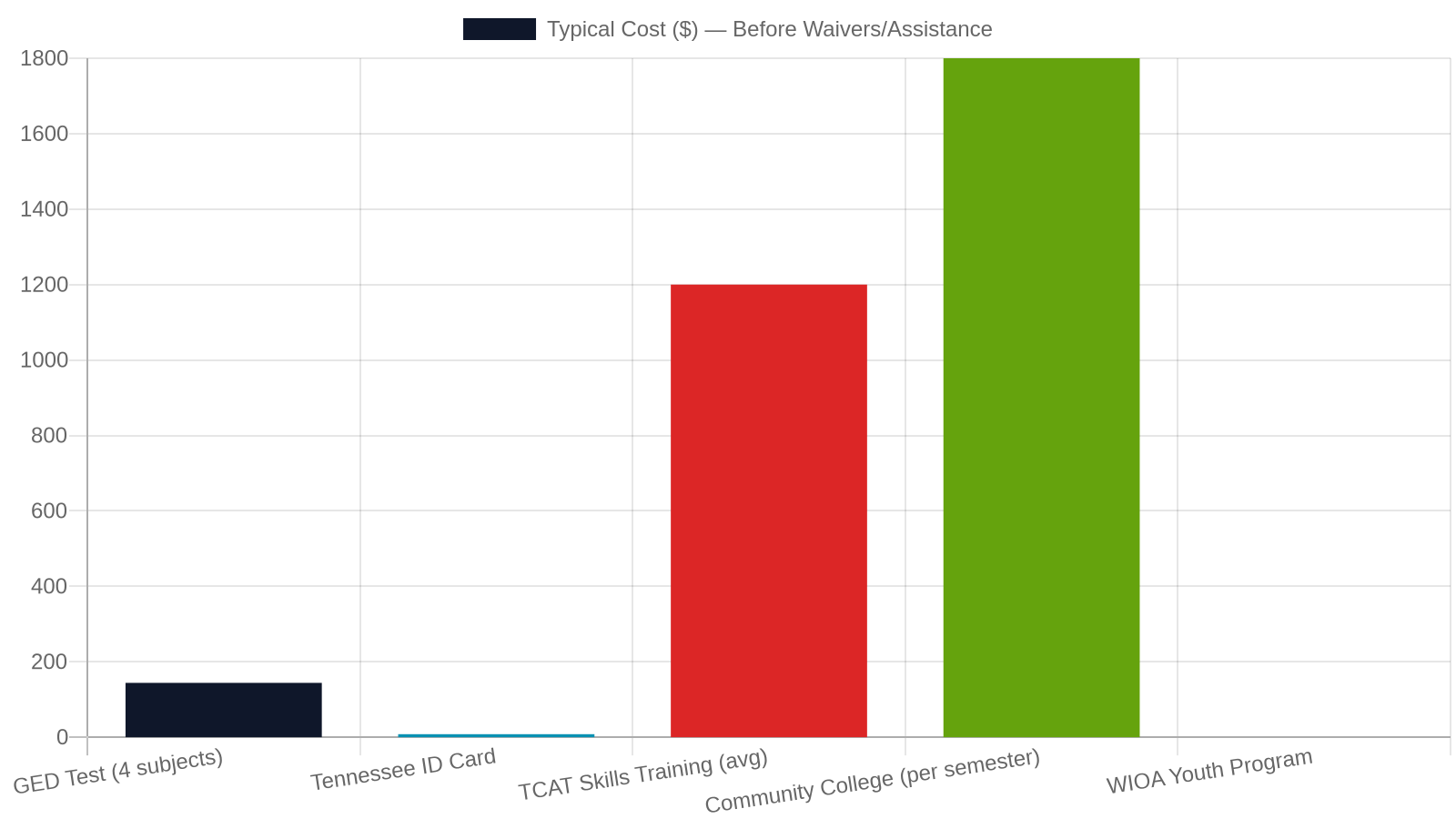
The GED test costs approximately $36 per subject in Tennessee (four subjects total, $144 total), but fee waivers are often available for young adults experiencing homelessness. Ask your case manager or a YAAB member to help you find a waiver.
Banking, Benefits, and Building Credit
Financial stability starts with the basics: a bank account, access to public benefits you’re entitled to, and a plan to build credit. Many young adults experiencing homelessness don’t realize they may qualify for TennCare (Medicaid), SNAP (food assistance), and SSI/SSDI if they have a qualifying disability. Getting a Tennessee ID card (available at any DMV for $8, with fee waivers available) is the first step to accessing almost all of these. Second-chance bank accounts — offered by many credit unions and some banks — allow you to open an account even with a negative banking history.
Tennessee CoC Youth Housing Programs at a Glance
Use this table to quickly compare the main CoC-funded housing program types available to young adults ages 17–25 in Tennessee, including Central Tennessee's TN-503 region.
9. Mental Health and Wellness: Support That Meets You Where You Are

Housing instability takes a real toll on mental health — and mental health challenges can make it harder to maintain housing. These two things feed each other, which is why the best youth housing programs treat mental wellness as part of housing stability, not a separate issue. You don’t have to be in crisis to deserve support, and you don’t have to choose between addressing your mental health and addressing your housing situation.
Trauma-Informed Care: What It Means for You
Trauma-informed care (TIC) is an approach where service providers understand that most young people experiencing homelessness have experienced significant trauma — and they design their services to avoid re-traumatizing you. A trauma-informed shelter, for example, won’t use punitive rules that mimic abusive home environments. A trauma-informed case manager won’t demand you explain every detail of your past before helping you.
When you’re looking for mental health support, asking whether a provider uses trauma-informed or Trauma-Focused Cognitive Behavioral Therapy (TF-CBT) approaches is a good way to screen for quality. You deserve care that respects your experience without requiring you to relive it as the price of admission.
Free and Low-Cost Mental Health Resources in Tennessee
Mental health support is available at little or no cost for young adults in Tennessee, especially those enrolled in TennCare (Medicaid). Key resources include:
- Tennessee’s 988 Suicide & Crisis Lifeline: Call or text 988 — available 24/7, free, confidential.
- Crisis Text Line: Text HOME to 741741.
- Centerstone (statewide): Community mental health centers with sliding-scale fees and TennCare-accepted services.
- Vanderbilt Psychiatric Hospital (Nashville): Crisis services and outpatient care.
- Oasis Center (Nashville): Mental health services integrated into youth housing and outreach programs.
You do not need to be in a housing program to access mental health services. Many providers accept walk-ins or same-day crisis appointments.
10. How Lived Experience Boards Shape Housing Policy: A Closer Look

It’s one thing to say that lived experience matters — it’s another to show how it actually changes things. Understanding the specific mechanisms through which youth advisory boards influence housing policy helps you see both the impact of this work and the concrete ways your participation would contribute to real outcomes for young people across Tennessee.
From Feedback to Policy Change: Real Examples
Lived experience advisory boards produce tangible results when they’re given real power. Across Tennessee’s CoC regions, YAAB members have contributed to changes including:
- Revising shelter intake forms to remove questions that felt invasive or shaming
- Advocating for extended shelter hours so young adults working evening shifts can access services
- Pushing for pet-friendly shelter options, recognizing that many youth experiencing homelessness have animals that provide emotional support
- Recommending that CoC-funded programs adopt explicit non-discrimination policies for LGBTQ+ youth, who are disproportionately represented among young people experiencing homelessness (estimated at 20–40% of youth experiencing homelessness nationally)
These aren’t small tweaks — they’re the difference between a program that works and one that young people avoid.
The Youth Homelessness Demonstration Program (YHDP)
HUD’s Youth Homelessness Demonstration Program (YHDP) is a competitive federal grant that funds communities to develop comprehensive plans to end youth homelessness. A key requirement of YHDP is meaningful youth engagement — communities must demonstrate that young people with lived experience are involved in planning and governance. Tennessee communities that have participated in YHDP rounds have used YAAB as their primary mechanism for meeting this requirement, giving YAAB members direct influence over multi-million-dollar planning processes.
YHDP communities are required to develop a Community Plan to End Youth Homelessness — a roadmap with specific goals, timelines, and accountability measures. YAAB members help write these plans, review draft language, and hold communities accountable to their commitments.
11. Comparing Housing Program Options for Young Adults in Tennessee

Not every housing program is the right fit for every situation. Use this comparison to understand the key differences between the main program types available to young adults in Tennessee’s CoC-funded system, so you can have a more informed conversation with a case manager or YAAB member about what might work for you.
12. Get Involved: Join the YAAB in Central Tennessee

If anything in this guide resonated with you — whether you’re looking for housing support, want to help your peers, or are ready to take a seat at the policy table — the Youth Action Board of Tennessee is the place to start. YAAB is a peer-to-peer network, which means the people you’ll meet there have been where you are. And they built something worth joining.
What YAAB Membership Looks Like Day to Day
Being a YAAB member isn’t a full-time job — it’s a flexible commitment that fits around your life. Members typically attend monthly meetings (in-person or virtual depending on the region), participate in CoC committee meetings when relevant, and engage in advocacy activities like Advocacy Day at the State Capitol or community feedback sessions. Many members also participate in peer-to-peer outreach, helping connect other young adults to resources.
YAAB provides members with training, stipends for participation, and connections to leadership development opportunities. You don’t need a resume or a college degree — you need lived experience and a willingness to show up for your community.
Who Can Join and How to Start
YAAB membership is open to young adults ages 17 to 25 who have lived experience of homelessness or housing instability in Tennessee. You don’t have to currently be experiencing homelessness — many members are in stable housing now and bring their past experience to the table. If you’re a case manager or service provider reading this, the best thing you can do is share this information with the young adults you work with and support them in connecting with their local YAAB chapter.
To connect with the Central Tennessee (TN-503) YAAB chapter, visit the TN-503 Local YAAB page to find meeting information, contact details, and upcoming events. You can also explore all Tennessee YAAB regional chapters if you’re in a different part of the state, or start the process of joining YAAB directly through the statewide site.
You Already Have What It Takes
Here’s something worth saying plainly: your experience of navigating housing instability is not a deficit — it’s expertise. You know things about how the system works (and doesn’t work) that no amount of professional training can replicate. YAAB exists because that expertise is genuinely valuable and because the people who’ve been through it deserve to be in the room where decisions are made — not just talked about in that room.
Whether you’re looking for housing support right now, want to help shape programs for the next generation of young people in Tennessee, or both — YAAB is a place where your experience matters and your voice carries real weight. Tennessee’s housing system is better because young people with lived experience are at the table. It gets better still every time someone new joins.
Frequently Asked Questions
What is a lived experience youth advisory board and how is it different from a regular advisory committee?
A lived experience youth advisory board is made up of young people who have personally experienced homelessness or housing instability — not researchers or administrators. Unlike traditional advisory committees where youth might be token guests, lived experience boards give young adults formal decision-making roles, such as voting on funding priorities or reviewing program policies, so the system is shaped by the people it's supposed to serve.
How do I access housing programs in Nashville or Central Tennessee if I'm between 17 and 25?
The fastest starting point is calling 211, Tennessee's statewide social services helpline, which can connect you to current shelter openings and housing programs in real time. You can also connect with a street outreach worker or a YAAB member in the TN-503 region who can help you navigate the Coordinated Entry System (CES), which is the gateway to most CoC-funded housing programs in Nashville and Davidson County.
Can I join YAAB if I'm not currently experiencing homelessness?
Yes. YAAB membership is open to young adults ages 17 to 25 who have lived experience of homelessness or housing instability — that includes people who are now stably housed. Many YAAB members are in stable housing and bring their past experience to help improve the system for others who are still going through it.
What happens to young people when they age out of foster care in Tennessee?
Tennessee's Extended Foster Care program (Tennessee 21) allows young people to remain in the system and receive support until age 21 if they opt in before their 18th birthday. Without this support, young adults aging out of foster care face a high risk of homelessness — national data shows about 36% experience homelessness within 2–4 years of leaving the system. Federal Chafee funds also provide independent living skills, education support, and housing assistance for eligible youth ages 18–21.
Do I need an ID to access homeless services or housing programs in Tennessee?
Most emergency shelters in Tennessee do not require a photo ID for entry, though having one speeds up the process. For longer-term housing programs, an ID is typically required. If you don't have one, a Tennessee state ID card costs $8 (with fee waivers available), and many case managers and YAAB members can help you obtain one as a first step toward accessing housing, employment, and benefits.
What is the TN-503 Continuum of Care and why does it matter for young adults in Nashville?
TN-503 is the HUD-designated Continuum of Care region covering Nashville and Davidson County in Central Tennessee. It is the regional planning body that coordinates how federal homeless services funding is distributed to local nonprofits and programs. For young adults, TN-503 is important because it controls access to emergency shelter, rapid rehousing, transitional housing, and other CoC-funded resources — and because YAAB members sit on its governance board to ensure youth needs are prioritized.