Money Basics for Young Adults: 10 Steps to Budgeting for Your First Apartment in Tennessee
Quick answer: Budgeting for your first apartment in Tennessee means knowing your real monthly costs before you sign anything. A safe rule is to spend no more than 30% of your monthly income on rent — so on a $1,500/month income, aim for $450 in rent. You’ll also need to save for a security deposit (usually one to two months’ rent), utilities, groceries, and transportation. This guide walks you through 10 concrete steps — from calculating your income to building an emergency fund — so you can move in with confidence and stay housed.
1. Know Your Real Monthly Income First
Before you look at a single apartment listing, you need one number locked in: how much money actually lands in your bank account every month. This is the foundation every other step in this guide builds on. Getting it wrong — even by $100 — can mean the difference between a stable first year and a scary eviction notice.
Gross Pay vs. Take-Home Pay: The Number That Actually Matters
When your employer says you earn $15 an hour, that sounds like $2,400 a month at 40 hours a week — but that’s your gross pay. After federal income tax, Tennessee’s 0% state income tax (Tennessee eliminated its income tax on wages), Social Security (6.2%), and Medicare (1.45%) are withheld, your take-home pay is closer to $2,050–$2,100. That’s the number you budget with, not the bigger one.
If you work part-time, have irregular hours, or receive income from multiple gig jobs, average your last three months of deposits to get a realistic baseline. Overestimating income is one of the most common reasons first-time renters fall behind in month two or three.
Other Income Sources to Count (and Some to Be Careful With)
Some young adults in Tennessee receive additional income that can count toward rent affordability:
SNAP benefits — while not cash, they free up grocery money you can redirect to rent
SSI or SSDI — in 2024, the maximum federal SSI payment is $943/month for an individual
Rapid Rehousing or rental assistance — time-limited, so never budget as if it’s permanent income
Child support or stipends from programs like Tennessee’s Independent Living stipend for youth aging out of foster care
Do not count one-time payments, tax refunds, or informal cash as regular monthly income when building your budget. Treat those as bonuses that go straight to your emergency fund.
2. Understand the 30% Rule — and When to Break It
The 30% rule is the most widely cited housing affordability benchmark in the United States — and it’s a useful starting point, but it’s not a law. Understanding both the rule and its limits will help you make smarter decisions when you’re scanning listings across Tennessee’s very different rental markets.
What the 30% Rule Actually Means
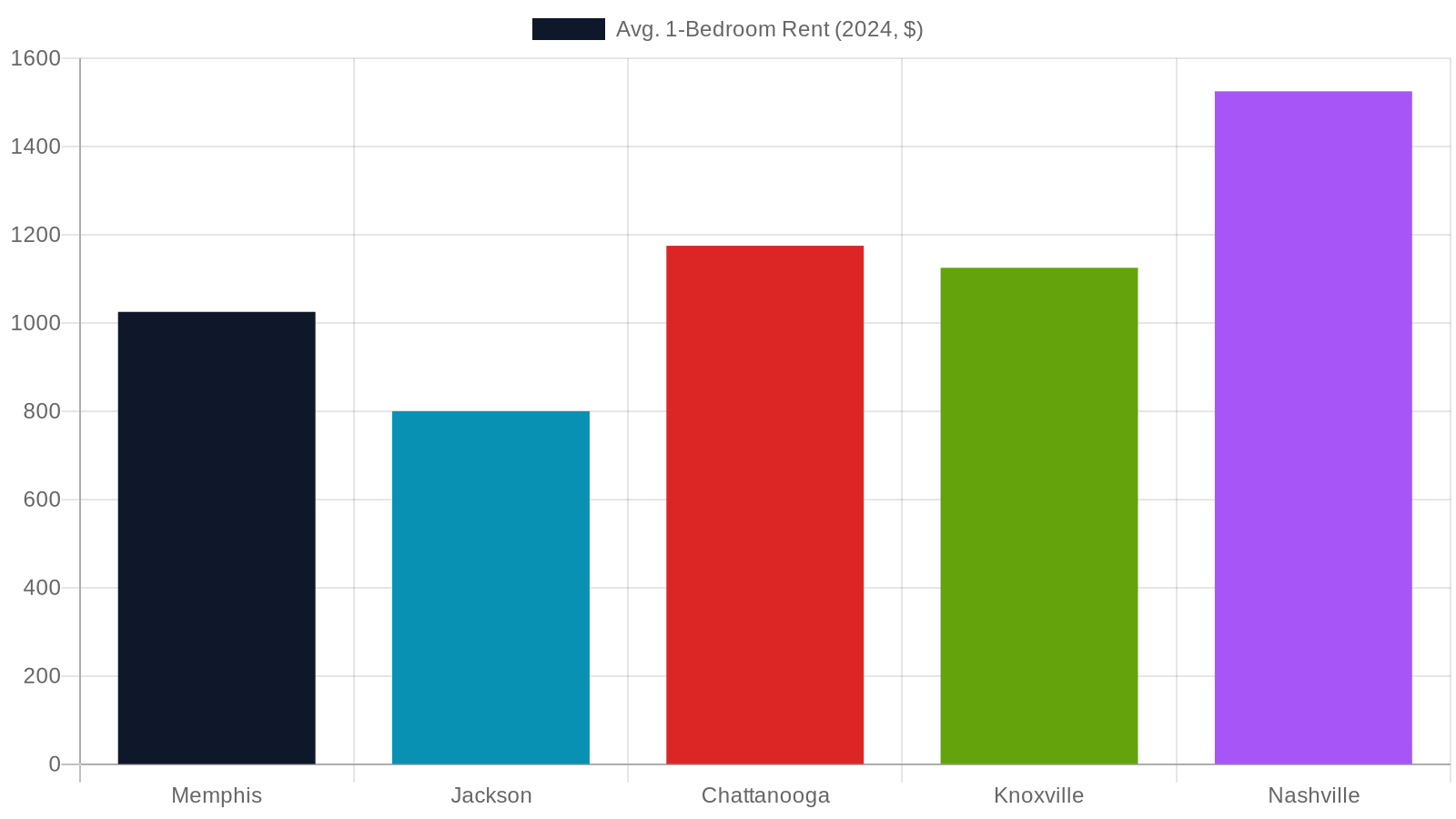
The 30% rule says you should spend no more than 30% of your gross monthly income on housing. At a $15/hour full-time wage (roughly $2,400 gross), that’s $720/month for rent. In many Tennessee markets, that’s tight but possible — especially outside of Nashville’s urban core, where average one-bedroom rents hit $1,450–$1,600 in 2024.
In Memphis, average one-bedroom rents run closer to $950–$1,100. In Knoxville, expect $1,000–$1,250. In Chattanooga, $1,050–$1,300. Jackson and smaller West Tennessee cities often have options in the $700–$900 range — making the 30% rule more achievable on entry-level wages.
When 30% Isn't Realistic — and What to Do Instead
For many transition-age young adults in Tennessee, spending only 30% on rent simply isn’t possible right away. If you’re spending 40–50%, that’s not a moral failure — it’s a math problem with solutions:
Roommates: Splitting a two-bedroom can cut your rent share by 40–50%
Subsidized housing: Apply to your local Public Housing Authority (PHA) — Memphis Housing Authority, Metropolitan Development and Housing Agency (MDHA) in Nashville, Knoxville’s Community Development Corporation, and others all have programs for young adults
Rapid Rehousing programs: These provide short-term rental assistance while you stabilize income
Increase income first: Even a part-time second job for 90 days can build the savings cushion that makes a lease possible
Average one-bedroom rent estimates by Tennessee city, 2024. Source: Apartment List, Zillow regional data.
3. Calculate Every Move-In Cost Before You Apply
One of the biggest mistakes first-time renters make is budgeting only for monthly rent and forgetting the lump-sum costs required just to get the keys. In Tennessee, move-in costs can easily total two to four times your monthly rent. Here’s how to calculate yours so you’re not caught short on signing day.
The Security Deposit: Your Biggest Upfront Expense
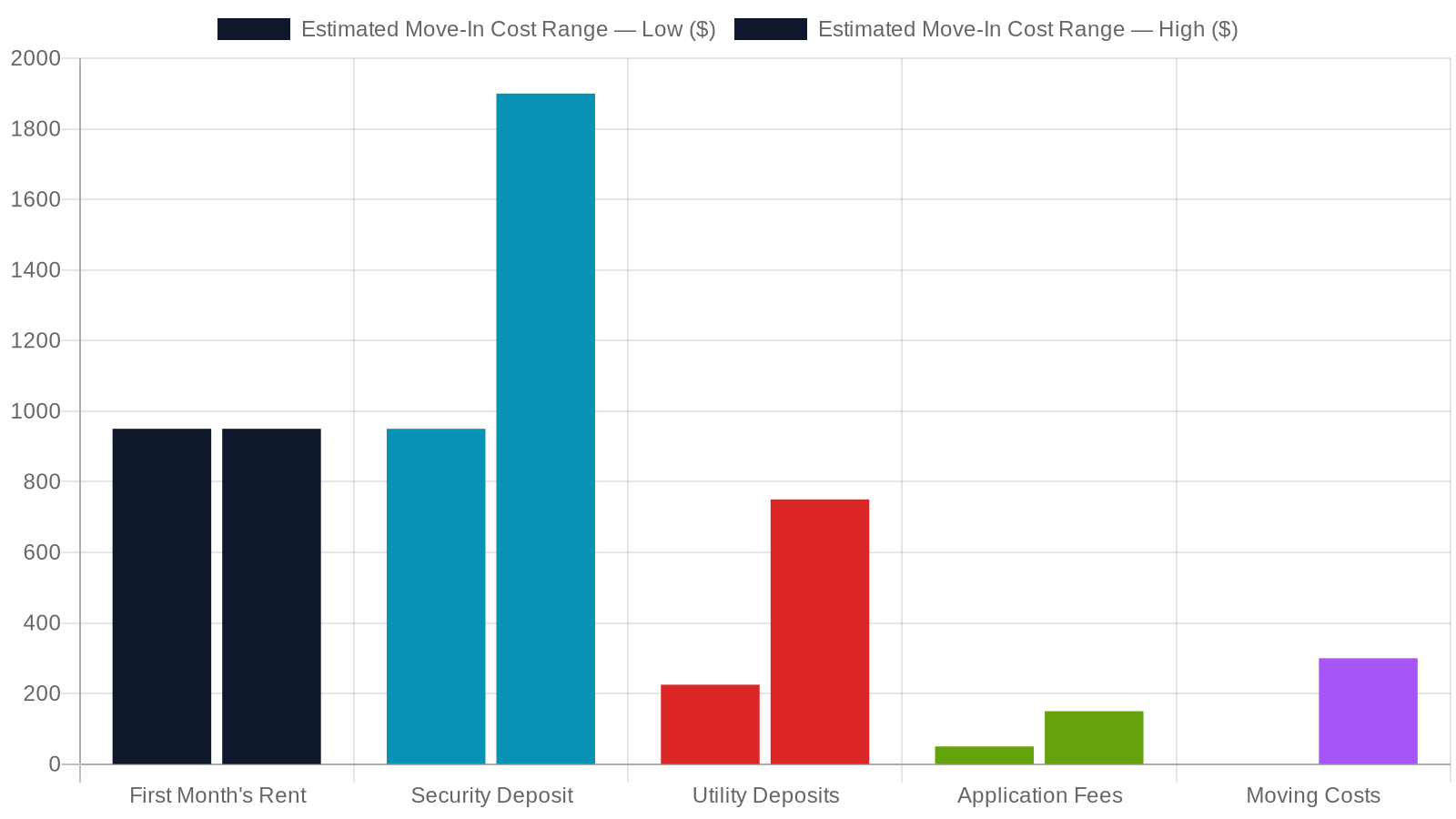
Tennessee law (T.C.A. § 66-28-301) allows landlords to charge a security deposit, and while there’s no state cap on the amount, most landlords charge one to two months’ rent. On a $950/month apartment, that’s $950–$1,900 due before you get the keys — on top of your first month’s rent. That means your true move-in cost could be $1,900–$2,850 before you’ve bought a single piece of furniture.
Some landlords also charge a non-refundable application fee ($25–$75) and a pet deposit ($200–$500) if you have an animal. Ask about every fee in writing before you apply so there are no surprises.
Utility Deposits and Connection Fees
If you have no rental history or credit history, utility companies may require a deposit before turning on service. Common deposits in Tennessee:
Electric (TVA-area utilities): $100–$300 depending on your credit score
Gas (Piedmont Natural Gas, Atmos Energy): $75–$200
Water/sewer: Often included in rent, but if separate, expect $50–$150 setup
Internet: Usually no deposit, but installation fees of $50–$100 are common
Total utility setup costs can add $225–$750 to your move-in expenses. Call each utility before signing a lease so you know exactly what you’re walking into.
Illustrative move-in cost breakdown for a $950/month apartment in Tennessee. Actual costs vary by landlord and utility provider.
4. Build Your Full Monthly Budget — Not Just Rent
Rent is just the anchor of your monthly budget — not the whole thing. Young adults who only think about rent and forget utilities, food, and transportation often find themselves in a financial crunch by month two. Let’s build the complete picture so you can see exactly where every dollar needs to go.
The Essential Monthly Expenses to Track
Your monthly budget needs to account for every recurring expense, not just rent. Here’s a realistic breakdown for a young adult living alone in Tennessee on approximately $2,000/month take-home:
Rent: $700–$1,100 (aim for the lower end)
Utilities (electric, gas, water): $100–$180/month average
Renter’s insurance: $10–$20/month — always get this
Groceries: $200–$300/month
Transportation (car payment + insurance OR bus pass): $80–$350/month
Phone: $30–$80/month
Internet: $40–$70/month
Add those up and you’re looking at $1,160–$2,100/month in essential expenses before any personal spending, clothing, or medical costs.
The Expenses Most Young Adults Forget to Budget For
These costs are real and they will show up — budget for them now:
Medical co-pays: Even with TennCare, some visits have small co-pays
Work expenses: Uniforms, tools, or transportation to a new job
Annual costs divided by 12: Car registration, renter’s insurance renewal, school fees — divide by 12 and save monthly so they don’t blindside you
A good rule: add a 10% buffer to whatever monthly total you calculate. Life is unpredictable, and that buffer is what keeps a flat tire from becoming a missed rent payment.
5. Start an Emergency Fund Before You Sign a Lease
Here’s a hard truth: moving into an apartment without any savings is like walking a tightrope without a net. One unexpected expense — a medical bill, a car breakdown, a week of reduced hours — can start a chain reaction that ends in eviction. Building even a small emergency fund before you sign a lease is one of the most powerful things you can do for your housing stability.
Why $500 Can Change Everything
Financial experts recommend three to six months of expenses in an emergency fund — but for someone just starting out, that goal can feel paralyzing. A more achievable first target is $500. Research from the Urban Institute shows that households with even $250–$750 in liquid savings are significantly less likely to experience eviction or utility shutoff after an unexpected expense.
In practical terms: a $500 emergency fund means a broken phone, a sick day without pay, or a car repair doesn’t automatically become a missed rent payment. It buys you time to problem-solve instead of panic.
How to Build Savings on a Tight Income
You don’t need a high income to build savings — you need a system. Try these approaches:
Automate a small transfer: Set up an automatic $25–$50 transfer to savings on every payday. You won’t miss what you never see.
Save your first paycheck from any new job: Before lifestyle inflation sets in, bank that first check entirely.
Use a second account: Keep your emergency fund in a separate account — ideally one without a debit card — so it’s not tempting to spend.
Bank windfalls: Tax refunds, birthday money, overtime pay — direct these straight to savings before spending any of it.
Many Tennessee credit unions, including Tennessee Valley Federal Credit Union and ORNL Federal Credit Union, offer free savings accounts with no minimum balance — ideal for young adults building from zero.
6. Understand Your Lease Before You Sign It
Signing a lease is one of the most significant legal commitments you’ll make as a young adult. It’s not just paperwork — it defines your rights and obligations for the next 12 months. Taking 30 minutes to read and understand your lease before signing can save you hundreds of dollars and enormous stress down the road.
Key Lease Terms Every Tennessee Renter Should Know
A lease is a legal contract, and in Tennessee, it’s governed by the Uniform Residential Landlord and Tenant Act (URLTA) — which applies in counties with populations over 75,000 (Shelby, Davidson, Knox, Hamilton, and others). In smaller counties, different rules may apply. Either way, know these terms before you sign:
Lease term: How long you’re committed — typically 12 months. Breaking it early usually costs one to two months’ rent.
Late fee: Tennessee law caps late fees at 10% of the monthly rent (T.C.A. § 66-28-201). If a lease lists a higher fee, that clause is unenforceable.
Notice to vacate: You typically must give 30 days’ written notice before moving out at the end of a lease.
Maintenance responsibilities: Know what you’re responsible for vs. what the landlord must fix.
Red Flags in a Lease You Should Never Ignore
Not every landlord operates in good faith. Watch for these warning signs:
A landlord who won’t give you a written lease — never rent without one
Clauses that waive your right to a habitable unit (these are void under Tennessee law)
Automatic rent increases mid-lease without your written consent
No clear process for requesting repairs in writing
Landlords who ask for cash-only payments with no receipts
If you’re unsure about a clause, reach out to Legal Aid Society of Middle Tennessee, Memphis Area Legal Services, or Legal Aid of East Tennessee — all offer free consultations for low-income renters, including young adults. You can also find tenant rights resources at yaabtn.org/resources.
7. Use the 50/30/20 Budget Framework as Your Starting Point
Having a framework for how to divide your income takes the guesswork out of budgeting. The 50/30/20 rule is one of the most widely used personal finance frameworks in the United States — and it translates well to the real-world numbers young adults in Tennessee are working with.
Breaking Down 50/30/20 for a Real Tennessee Budget
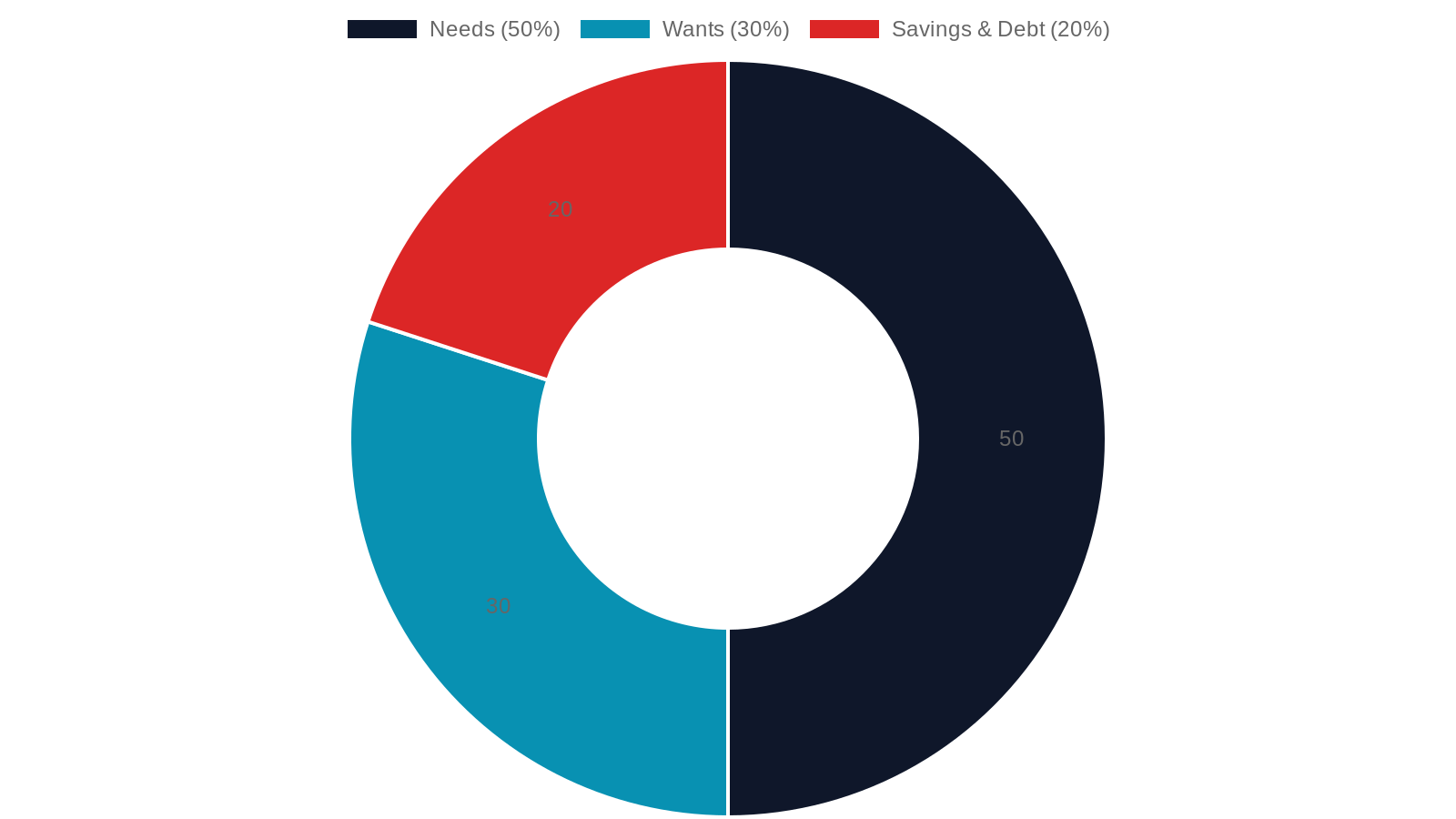
The 50/30/20 rule divides your take-home pay into three buckets:
20% — Savings and debt payoff: Emergency fund, savings goals, paying down any debt faster than the minimum
On a $2,000/month take-home: $1,000 for needs, $600 for wants, $400 for savings. If your rent alone is $900, you only have $100 left for all other needs — which means you either need a roommate, a cheaper unit, or a higher income before you can make this framework work.
Adapting the Framework When 50% Isn't Enough for Needs
For many transition-age young adults, especially those just leaving shelter or foster care, the 50% needs bucket isn’t big enough at first. That’s okay — the framework is a target, not a requirement. Here’s how to adapt:
Start with a 70/20/10 split while you stabilize: 70% needs, 20% wants, 10% savings
As income grows or expenses drop (rental assistance ends, debt is paid off), shift toward 50/30/20
Track every dollar for at least 60 days before deciding your budget is working — most people underestimate spending in the first month
Free budgeting tools like YNAB (You Need A Budget), Mint, or even a simple Google Sheets template can make tracking painless. Many public libraries in Tennessee offer free computer access if you don’t have a device.
The 50/30/20 rule divides take-home pay into needs, wants, and savings. Adjust ratios as your income and expenses change.
Tennessee City Rental Snapshot: What Your Budget Gets You
Rental markets vary significantly across Tennessee. Use this table to compare affordability across the state’s major regions and see what income level makes each market workable under the 30% rule.
City / Region
Avg. 1-BR Rent (2024)
Income Needed (30% Rule)
Approx. Hourly Wage Needed (FT)
Typical Move-In Cost (1.5x Deposit)
Jackson / West TN
$800/mo
$2,667/mo gross
$15.40/hr
$2,000
Memphis / Shelby
$1,025/mo
$3,417/mo gross
$19.71/hr
$2,563
Chattanooga / Hamilton
$1,175/mo
$3,917/mo gross
$22.60/hr
$2,938
Knoxville / Knox
$1,125/mo
$3,750/mo gross
$21.63/hr
$2,813
Nashville / Davidson
$1,525/mo
$5,083/mo gross
$29.33/hr
$3,813
Upper Cumberland / NE TN
$750–$900/mo
$2,500–$3,000/mo gross
$14.42–$17.31/hr
$1,875–$2,250
8. Know What Rental Assistance Programs Exist in Tennessee
Budgeting is easier when you’re not paying full market rent on your own. Tennessee has a network of rental assistance programs specifically for young adults experiencing housing instability — and knowing what’s available can dramatically change your financial picture. These aren’t handouts; they’re tools designed to help you stabilize and build independence.
Statewide and Federal Programs for Young Adults
You don’t have to do this alone. Tennessee has several programs specifically designed to help transition-age youth access and maintain housing:
Rapid Rehousing (RRH): Short-term rental assistance plus case management, available through Continuum of Care providers in every major Tennessee region. Ask your local CoC lead agency.
Transitional Housing programs: Provide a structured living environment with support services for youth 17–24, typically for 6–24 months.
Tennessee Housing Development Agency (THDA): Administers federal HOME and ESG funds that flow to local nonprofits serving homeless youth.
Section 8 / Housing Choice Voucher: Long waitlists (often 1–3 years), but worth applying now. Each local Public Housing Authority manages its own waitlist.
Local Resources by Region
Tennessee’s Continuum of Care system is organized regionally, and resources vary by where you are:
Memphis/Shelby County: MIFA, Memphis Union Mission, Hospitality Hub
Nashville/Davidson: Conexion Americas, Oasis Center, Nashville MDHA
Knoxville/Knox: KARM, Volunteer Ministry Center, Emerald Youth
Chattanooga/Hamilton: Chattanooga Room in the Inn, Family Promise
Upper Cumberland / Northeast TN / Jackson / West TN: Contact your regional CoC lead agency or 2-1-1 Tennessee for local referrals
Dialing 2-1-1 connects you to Tennessee’s statewide resource hotline, available 24/7, with staff who can identify housing and financial assistance programs in your specific county.
9. Build or Repair Your Credit Score — It Affects Your Rent
Your credit score is a number between 300 and 850 that tells landlords how reliably you pay your bills. If you’ve never had credit, your score might be nonexistent — and that can make renting harder than it needs to be. The good news: you can start building credit right now, even on a low income, and see real improvement within 6–12 months.
Why Landlords Check Credit and What They're Looking For
Most landlords in Tennessee will run a credit check as part of your application. They’re typically looking for:
A credit score of 620 or higher (some accept lower with a larger deposit or co-signer)
No recent evictions on your rental history (checked separately via services like TransUnion SmartMove)
No large unpaid collections, especially from utility companies or previous landlords
If you have no credit history — which is common for young adults who’ve never had a credit card or loan — you’re not necessarily disqualified. Many landlords will accept a co-signer, a larger security deposit, or proof of steady income in lieu of credit history.
Five Concrete Ways to Start Building Credit at 17–25
Building credit takes time, but the steps are straightforward:
Secured credit card: You deposit $200–$500 as collateral and get a card with that limit. Use it for small purchases and pay it off in full every month. Many Tennessee credit unions offer these.
Become an authorized user: Ask a trusted family member to add you to their credit card. Their positive history can boost your score.
Credit-builder loan: Offered by many credit unions — you make monthly payments into a locked savings account, and the payments are reported to credit bureaus. You get the money at the end.
Report rent payments: Services like Experian RentBureau or Rental Kharma can report your on-time rent payments to credit bureaus, building your score as you pay.
Pay every bill on time: Payment history is 35% of your FICO score — the single biggest factor. Even one missed payment can drop your score 50–100 points.
10. Protect Yourself with Renter's Insurance
You’ve done the hard work — saved for the deposit, signed the lease, set up your budget. Now protect everything you’ve built. Renter’s insurance is the single cheapest financial safety net available to renters, and skipping it to save $15 a month is a risk that almost never pays off.
What Renter's Insurance Actually Covers
Renter’s insurance is one of the most overlooked — and most valuable — financial tools for first-time renters. For as little as $10–$20 per month (roughly $120–$240 per year), a standard policy in Tennessee covers:
Personal property: Your laptop, phone, clothing, and furniture if stolen or damaged by fire, water, or vandalism
Liability: If someone is injured in your apartment and sues you, your policy covers legal costs up to the policy limit (typically $100,000)
Additional living expenses: If your apartment becomes uninhabitable due to a covered event, your policy pays for a hotel or temporary housing
Your landlord’s insurance covers the building — not your stuff. Without renter’s insurance, a single break-in or kitchen fire could wipe out everything you own.
How to Get Renter's Insurance Even Without a Bank Account
You don’t need a credit card or even a checking account to get renter’s insurance. Options include:
Lemonade: A digital-first insurer that offers policies starting at $5/month, payable via debit card or bank transfer
State Farm, Allstate, or local independent agents: Can often set up monthly payment plans with minimal upfront cost
Your landlord’s preferred provider: Some property management companies have group rates for tenants
When comparing policies, look at the deductible (what you pay out of pocket before insurance kicks in — aim for $500 or less) and the coverage limit (make sure it’s at least $15,000–$20,000 to replace your belongings).
Get Connected: Your Next Move Toward Stable Housing in Tennessee
You’ve made it through 10 steps — that’s not nothing. Understanding your income, calculating move-in costs, building an emergency fund, knowing your lease rights, and protecting yourself with renter’s insurance puts you ahead of most first-time renters. The path to your first stable apartment in Tennessee is real, and it starts with the knowledge you now have.
You Don't Have to Figure This Out Alone
Budgeting for your first apartment is a skill — and like any skill, it gets easier with practice and support. Across Tennessee, from Memphis to Kingsport, there are people and programs specifically designed to help transition-age young adults like you navigate housing, finances, and everything in between.
The Youth Action Board of Tennessee (YAAB) is a statewide network of young adults ages 17–25 with lived experience of housing instability who are shaping the policies and programs that affect you. They’re not just advocates — they’re peers who’ve been where you are. Get involved with your local YAAB to connect with resources, build leadership skills, and help make Tennessee’s housing system work better for everyone who comes after you.
Resources to Bookmark Right Now
Here are concrete next steps you can take today:
Find local housing resources: Visit yaabtn.org/resources for a curated list of Tennessee housing, employment, and financial assistance programs
Dial 2-1-1: Tennessee’s 24/7 resource hotline connects you to local emergency assistance, rental help, and food programs
Apply for a secured credit card or credit-builder loan: Start building your credit score today so it’s working for you by the time you’re ready to sign a lease
Download a free budgeting app: YNAB, Mint, or a simple spreadsheet — start tracking your income and expenses this week, not someday
Connect with your regional YAAB: Whether you’re in Nashville, Memphis, Knoxville, Chattanooga, Jackson, the Upper Cumberland, or Northeast Tennessee, there’s a local board ready to welcome you
Stable housing is not a privilege — it’s a foundation. And you have every right to build yours.
Frequently Asked Questions
How much money do I need to save before renting my first apartment in Tennessee?
Plan to save at least two to three times your monthly rent before signing a lease. For a $950/month apartment, that means having $1,900–$2,850 ready for the security deposit and first month’s rent, plus another $225–$750 for utility deposits. An additional $500 emergency fund on top of that will help you handle unexpected expenses without falling behind on rent.
Can I rent an apartment in Tennessee with no credit history?
Yes — many landlords will work with first-time renters who have no credit history. Common alternatives include a larger security deposit, a co-signer with established credit, or strong proof of steady income. Some landlords, especially smaller private owners, care more about income stability than credit scores.
What rental assistance is available for young adults in Tennessee?
Tennessee’s Continuum of Care network offers Rapid Rehousing programs, transitional housing, and emergency rental assistance for young adults experiencing homelessness or housing instability. You can find local programs by calling 2-1-1, contacting your regional CoC lead agency, or visiting yaabtn.org/resources for a statewide list of housing resources.
What is the 30% rule for rent and does it apply in Tennessee?
The 30% rule says you should spend no more than 30% of your gross monthly income on rent. In Tennessee, this is more achievable in cities like Jackson or Memphis than in Nashville, where average one-bedroom rents hit $1,525/month in 2024. If 30% isn’t realistic right now, focus on roommates, subsidized housing, or rental assistance programs while you build income.
Do I really need renter's insurance for my first apartment?
Yes — renter’s insurance is one of the best financial decisions you can make as a first-time renter. For $10–$20 per month, it covers your belongings if they’re stolen or damaged, protects you from liability if someone is injured in your home, and pays for temporary housing if your apartment becomes uninhabitable. Your landlord’s insurance does not cover your personal property.
What is the Youth Action Board of Tennessee and how can it help me with housing?
The Youth Action Board (YAAB) of Tennessee is a statewide network of young adults ages 17–25 with lived experience of homelessness who advise policymakers and connect peers to housing, employment, and support services. YAAB has regional boards across Tennessee — in Memphis, Nashville, Knoxville, Chattanooga, Jackson, the Upper Cumberland, and Northeast Tennessee. You can learn more and get involved at yaabtn.org/get-involved.