Mental Health and Wellbeing: 9 Supports for Young Adults Facing Housing Instability in Tennessee
Quick answer: If you’re a young adult between 17 and 25 in Tennessee dealing with housing instability, your mental health matters just as much as finding a roof. The stress of not knowing where you’ll sleep tonight is real and it takes a serious toll — but you don’t have to carry it alone. Tennessee has free and low-cost mental health services, crisis lines, peer support networks, and community programs designed specifically for transition-age youth. This article walks you through nine concrete supports, where to find them across the state, and how to access them even without insurance or a permanent address.
Why Housing Instability Hits Mental Health So Hard
Housing instability and mental health are deeply connected — not as a coincidence, but as a cause-and-effect relationship backed by decades of research. Understanding that connection is the first step toward getting the right kind of support. This section breaks down what’s actually happening in your mind and body when stable housing is out of reach.
The Science Behind Stress and Survival Mode
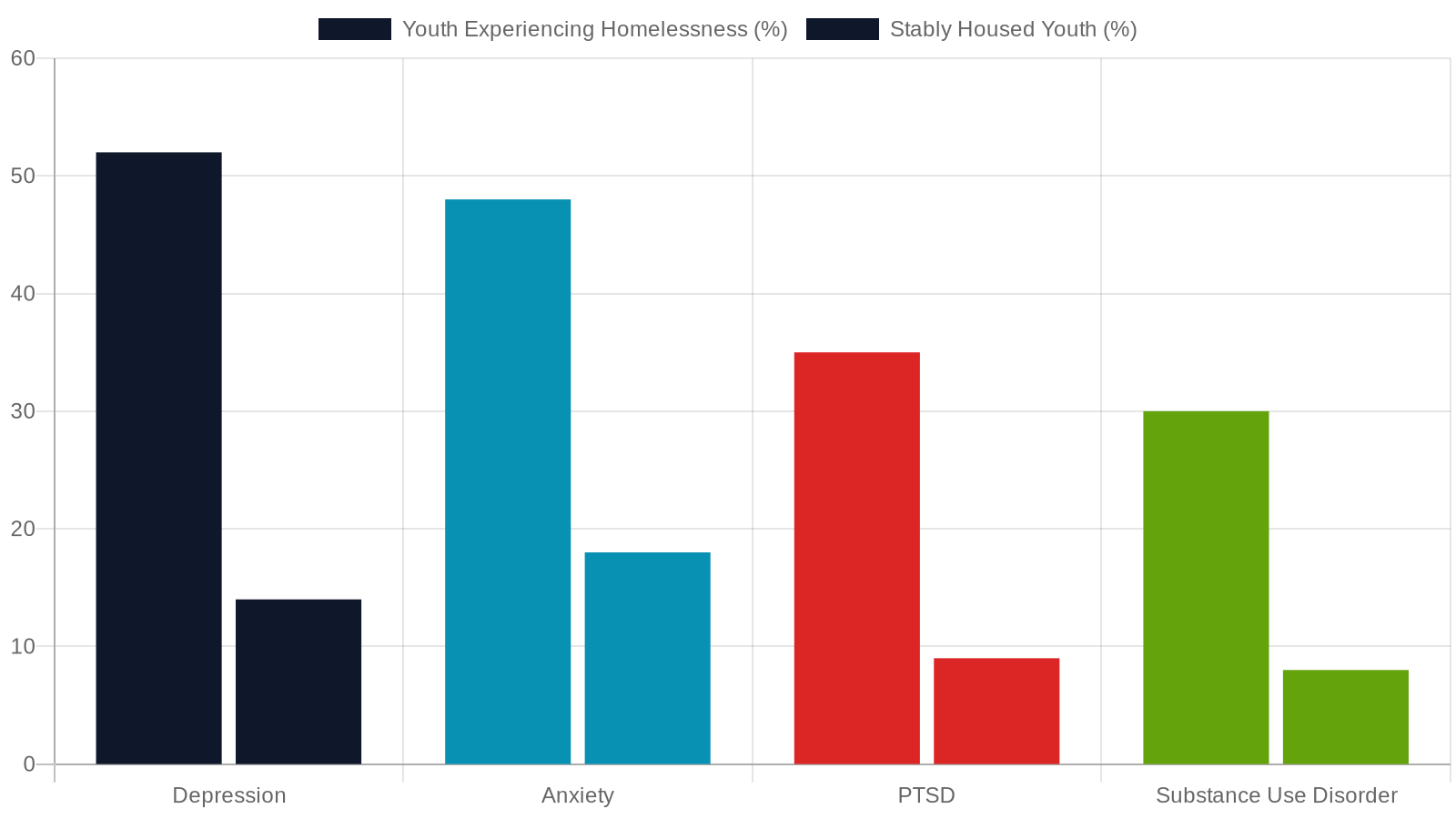
When you don’t know where you’re sleeping tonight, your brain doesn’t just feel stressed — it literally shifts into survival mode. The body floods with cortisol, the stress hormone, which over time disrupts sleep, memory, and decision-making. Research published by the National Alliance to End Homelessness found that young adults experiencing homelessness are three to four times more likely to develop depression, anxiety, or PTSD compared to stably housed peers.
This isn’t weakness. It’s biology. Your nervous system is doing exactly what it was designed to do under threat — the problem is that chronic housing instability keeps that threat alarm ringing 24/7, and that wears anyone down.
How Instability Compounds Over Time
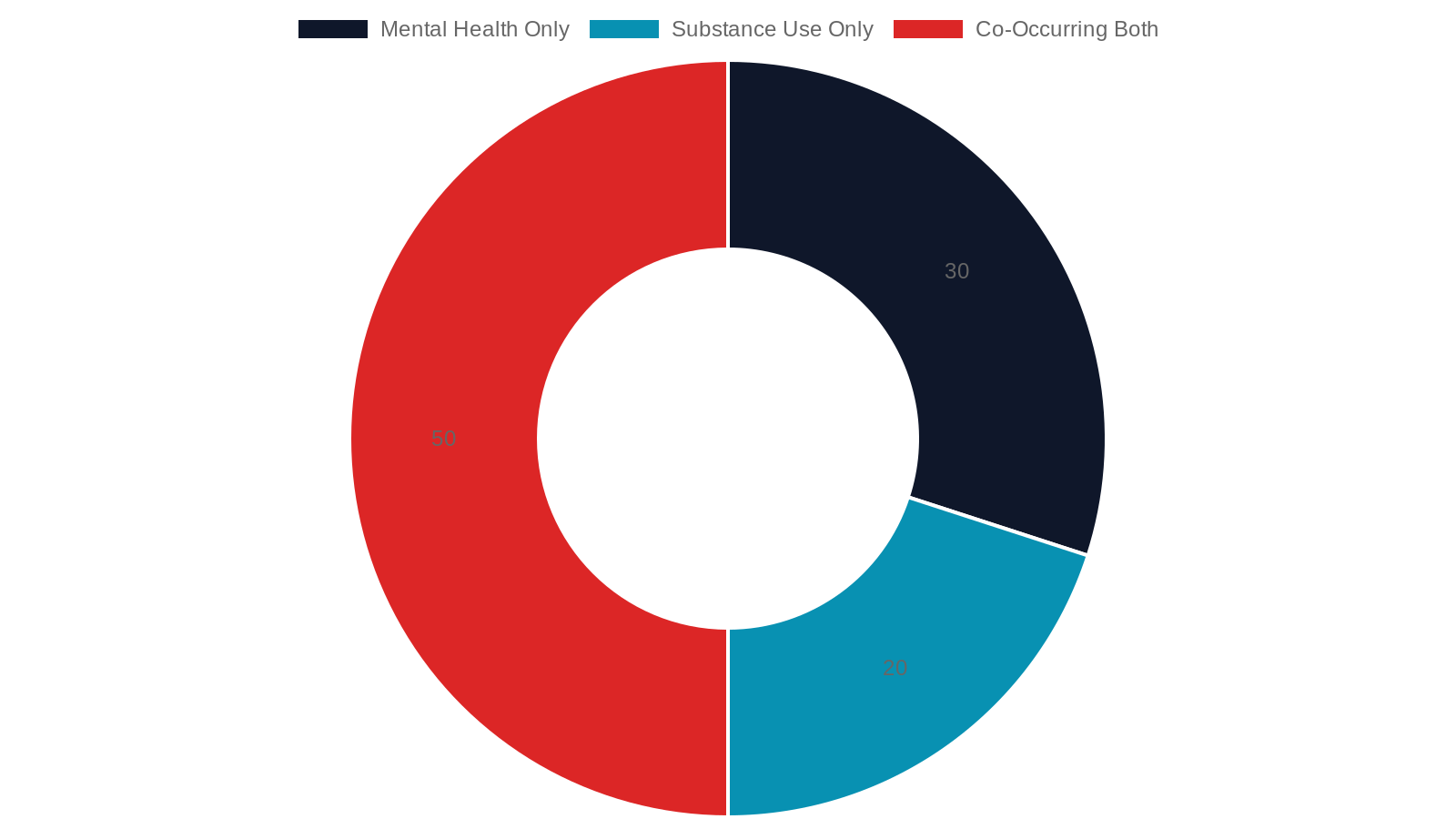
For many transition-age youth in Tennessee, housing instability doesn’t arrive alone. It often stacks on top of aging out of foster care, family conflict, job loss, or prior trauma. Each layer adds weight. The Substance Abuse and Mental Health Services Administration (SAMHSA) estimates that up to 50% of youth experiencing homelessness have a co-occurring mental health condition, yet fewer than 40% receive any treatment.
That gap between need and care is exactly why understanding what’s available — and how to access it without jumping through impossible hoops — is so important.
Estimated prevalence rates of mental health conditions among youth experiencing homelessness vs. stably housed peers. Sources: SAMHSA, National Alliance to End Homelessness.
1. Tennessee Crisis Lines You Can Call or Text Right Now
When you’re in crisis — or even just really struggling — knowing exactly who to call or text is critical. Tennessee has several free, confidential options available right now, no matter where in the state you are. You don’t need insurance, a permanent address, or a referral. Here are the most important numbers to save in your phone today.
988 Suicide and Crisis Lifeline — Free, 24/7, No Insurance Needed
The 988 Suicide and Crisis Lifeline launched nationally in July 2022 and is available to anyone in Tennessee at any hour. Call or text 988 to reach a trained counselor. You don’t need insurance, an address, or even a name. In 2023, Tennessee’s 988 centers answered over 120,000 contacts — a 28% increase from the previous year, showing how much this resource is being used and trusted.
If you prefer to chat, go to 988lifeline.org for a live text chat option. Spanish-language support is also available by pressing 2 when you call.
Tennessee REDLINE and Local Crisis Lines
The Tennessee REDLINE (1-800-889-9789) is a free, 24/7 substance use and mental health crisis line specifically for Tennessee residents. Counselors can connect you to local treatment and support services across all regions of the state, from Memphis to Northeast Tennessee.
For youth in the Memphis/Shelby County area, Memphis Crisis Center (901-274-7477) offers around-the-clock support. In Nashville, Centerstone’s Crisis Line (800-681-7444) serves Davidson County. Knoxville’s Helen Ross McNabb Center (865-539-2409) covers Knox and surrounding counties. Having the right local number can mean faster, more regionally informed help.
2. Free and Low-Cost Therapy Options Across Tennessee
Therapy shouldn’t be a luxury, and in Tennessee it doesn’t have to be. Whether you have TennCare, no insurance at all, or something in between, there are real pathways to professional mental health support. Here are three concrete options that transition-age youth across the state have used successfully.
Federally Qualified Health Centers (FQHCs)
Federally Qualified Health Centers are community health clinics that charge on a sliding-fee scale based on your income — meaning if you have little or no income, your visit can cost as little as $0 to $20. Tennessee has over 60 FQHC locations statewide. You can find the nearest one at findahealthcenter.hrsa.gov by entering your zip code.
FQHCs provide both physical and behavioral health services, and many have staff who specialize in working with young adults and people experiencing housing instability. You do not need insurance or a permanent address to be seen.
TennCare and Medicaid Enrollment
TennCare, Tennessee’s Medicaid program, covers mental health services including therapy, psychiatric medication management, and crisis stabilization at no or very low cost. If you’re between 17 and 25 and your income is below roughly $20,120 per year (2024 federal poverty guideline for a single person), you likely qualify.
You can apply online at tenncareconnect.tn.gov, by phone at 1-855-259-0701, or in person at your local Department of Human Services office. A case manager at a shelter or Continuum of Care partner can also help you apply. Even if you’ve been denied before, it’s worth reapplying — eligibility rules change.
University Training Clinics
Tennessee’s public universities — including University of Tennessee Knoxville, Middle Tennessee State University, and University of Memphis — operate training clinics where graduate students provide supervised therapy at reduced or no cost. Sessions are led by counseling or psychology students under licensed supervision, so the quality is real. Waitlists can be 2–6 weeks, but the cost is often $0–$15 per session.
Search for your nearest university’s counseling training clinic or community mental health center to get on a waitlist while pursuing other supports in the meantime.
3. Peer Support — Why Talking to Someone Who Gets It Matters
Professional therapy is valuable, but it’s not the only form of mental health support that works. Peer support — connecting with someone who has walked a similar path — has strong evidence behind it and is widely available in Tennessee. Here’s what it looks like in practice and how to access it.
What a Peer Support Specialist Actually Does
A Peer Support Specialist is someone with their own lived experience of mental health challenges or housing instability who is trained and certified to support others going through similar situations. In Tennessee, Peer Support Specialists are certified through the Tennessee Department of Mental Health and Substance Abuse Services (TDMHSAS) and can be found at community mental health centers, shelters, and Continuum of Care programs statewide.
Unlike a therapist, a peer supporter isn’t diagnosing you or writing treatment plans. They’re sitting with you, sharing what worked for them, helping you navigate systems, and reminding you that recovery and stability are possible — because they’ve lived it.
YAAB as a Peer Network
The Youth Action Board of Tennessee is itself a form of peer support at scale. YAAB members are young adults ages 17–25 with lived experience of homelessness and housing instability — people who understand what you’re going through because they’ve been there. Connecting with a local YAAB chapter means finding community with peers who won’t judge you, who know the local systems, and who are actively working to make those systems better.
Being around people who have navigated what you’re navigating — and who are now leading and advocating — is genuinely protective for mental health. Community belonging is one of the strongest buffers against depression and isolation. Find your local YAAB chapter to connect with peers in your region of Tennessee.
4. Trauma-Informed Care — What It Is and Why You Deserve It
Not all mental health care is created equal. For young adults who’ve experienced housing instability, family separation, foster care, or other forms of trauma, the way care is delivered matters as much as the care itself. Trauma-informed care is a specific, evidence-based approach — and it’s what you deserve.
Recognizing Trauma-Informed Providers
Trauma-informed care (TIC) is an approach where providers understand that many of the people they serve have experienced significant trauma — and they adjust how they communicate, what they ask, and how they structure services accordingly. A trauma-informed provider will never demand you explain your trauma as a condition of receiving help. They’ll give you choices, explain what’s happening, and treat you as an expert on your own life.
When you’re looking for mental health support, it’s okay to ask a provider directly: “Do you use a trauma-informed approach?” If they don’t know what that means, that’s useful information too.
ACEs and What They Mean for Young Adults
Adverse Childhood Experiences (ACEs) — including abuse, neglect, household dysfunction, or witnessing violence — are common among transition-age youth experiencing homelessness. A 2022 study found that over 70% of youth experiencing homelessness reported four or more ACEs, compared to about 12% of the general population.
High ACE scores are linked to increased risk for depression, anxiety, and substance use — but they are not destiny. Trauma-informed therapy, stable relationships, and community connection are all proven to reduce the long-term impact of ACEs. Tennessee’s Continuum of Care programs are increasingly trained in trauma-informed approaches, and you can ask any provider whether their staff have received TIC training.
5. Mental Health and Substance Use — Understanding the Connection
Mental health and substance use are often talked about separately, but for many young adults they’re deeply intertwined. Understanding that connection — without shame — is key to finding care that actually works. Here’s what you need to know and where to turn in Tennessee.
Why Co-Occurring Conditions Are Common
It’s very common for mental health challenges and substance use to show up together — this is called a co-occurring disorder or dual diagnosis. For many young people, substance use starts as a way to cope with untreated anxiety, depression, or trauma. SAMHSA estimates that about 9.2 million adults in the U.S. have co-occurring mental health and substance use disorders, and transition-age youth are disproportionately represented in that number.
This is not a moral failure. It’s a predictable response to pain without adequate support. The good news is that integrated treatment — addressing both conditions at the same time — is significantly more effective than treating them separately.
Tennessee Resources for Co-Occurring Support
The Tennessee Department of Mental Health and Substance Abuse Services (TDMHSAS) funds a network of community mental health centers across all regions of the state that provide integrated treatment for co-occurring disorders. Many of these centers offer services on a sliding-fee scale or accept TennCare.
The Tennessee REDLINE (1-800-889-9789) can connect you to local integrated treatment programs. Additionally, Oxford Houses — peer-run sober living homes — operate in Memphis, Nashville, Knoxville, and Chattanooga and provide affordable, substance-free housing with built-in peer community. You can search available Oxford Houses at oxfordvacancies.com.
Estimated distribution of mental health and substance use conditions among youth experiencing homelessness. Source: SAMHSA National Survey on Drug Use and Health.
6. Building Everyday Wellbeing Without Spending Money
Professional support is important, but mental wellbeing is also built in the small, daily choices you make — and many of the most effective tools cost nothing. Here’s a realistic look at what’s within reach even when resources are tight.
Sleep, Movement, and Nutrition as Mental Health Tools
This isn’t about toxic positivity or pretending that a walk in the park fixes housing instability. But the research is clear: sleep deprivation, poor nutrition, and physical inactivity each independently worsen depression and anxiety. When you’re unstably housed, all three are harder to maintain — which is exactly why they’re worth fighting for when you can.
Tennessee’s public libraries (free to enter), YMCA programs (which offer income-based memberships as low as $0 in many Tennessee locations), and community meal programs at organizations like Room in the Inn (Nashville), Memphis Union Mission, and Volunteer Ministry Center (Knoxville) can help address basic needs that directly support mental health.
Digital Mental Health Tools That Are Actually Free
Several evidence-based digital tools are genuinely free and accessible from a phone:
Wysa — an AI-powered mental health app with free CBT-based exercises for anxiety and low mood
Smiling Mind — free mindfulness and meditation app with no paywalls
MoodTools — free app based on cognitive behavioral therapy for depression
Crisis Text Line — text HOME to 741741 for free, 24/7 crisis support via text
These tools don’t replace therapy, but they’re available at 2 a.m. when nothing else is open and you need something to hold onto.
The Power of Routine When Everything Feels Unstable
One of the most underrated mental health tools is routine. When your housing situation is unpredictable, creating small daily anchors — a consistent wake time, a regular place you go, a weekly check-in with someone you trust — activates the brain’s sense of safety and control. Even a 10-minute morning routine has been shown in clinical studies to reduce anxiety scores by measurable amounts over four weeks.
This doesn’t require money or a permanent address. It requires intention. YAAB members and peer supporters can help you identify what anchors are realistic given your current situation.
Tennessee Mental Health Resources at a Glance
Use this table to quickly compare the main types of mental health support available to transition-age youth in Tennessee — including cost, access method, and who it’s best for.
Resource Type
Cost
How to Access
Available Statewide?
Best For
988 Crisis Lifeline
Free
Call or text 988
Yes
Immediate crisis support, any time
Tennessee REDLINE
Free
Call 1-800-889-9789
Yes
Substance use + mental health crisis
Federally Qualified Health Centers (FQHCs)
$0–$20 sliding scale
findahealthcenter.hrsa.gov
Yes (60+ locations)
Ongoing therapy, no insurance needed
TennCare/Medicaid
Free or very low cost
tenncareconnect.tn.gov or 1-855-259-0701
Yes
Comprehensive mental health coverage
Peer Support Specialists
Free (through programs)
CoC programs, shelters, community MH centers
Yes (regional)
Lived-experience support, system navigation
University Training Clinics
$0–$15/session
Contact nearest TN university counseling dept.
Major cities
Low-cost ongoing therapy
Telehealth (via FQHC or CoC provider)
Sliding scale or TennCare
Ask any provider: ‘Do you offer telehealth?’
Yes
No transportation, no fixed address needed
YAAB Tennessee Peer Network
Free
yaabtn.org/local-yaabs/
Yes (regional chapters)
Community, belonging, advocacy, leadership
Crisis Text Line
Free
Text HOME to 741741
Yes
Text-based crisis support, 24/7
Oxford Houses (Sober Living)
Low cost (shared rent)
oxfordvacancies.com
Memphis, Nashville, Knoxville, Chattanooga
Substance use recovery + peer community
7. Navigating Mental Health Support Without a Permanent Address
Not having a permanent address creates real logistical barriers to healthcare — but those barriers are more workable than most systems will tell you. Here are two practical strategies that Tennessee transition-age youth have used to access mental health support without a fixed home.
Using a Shelter or Program Address for Appointments
One of the biggest practical barriers to mental health care when you’re unstably housed is the address field on intake forms. Here’s what most providers won’t tell you upfront: you can use a shelter address, a Continuum of Care program address, or even a P.O. box as your address of record for most health and social service purposes in Tennessee.
Ask a case manager at your current shelter or program to provide a letter confirming your residence there — many providers will accept this for TennCare enrollment, appointment scheduling, and medication pickup.
Telehealth as a Game-Changer
Telehealth — therapy and psychiatric appointments by phone or video — expanded dramatically after 2020 and has remained widely available in Tennessee. For young adults without stable housing, telehealth removes the barrier of getting to an office. You can attend a telehealth appointment from a library, a shelter common area, or anywhere with Wi-Fi.
Many FQHCs and community mental health centers in Tennessee now offer telehealth as a standard option. When calling to schedule, simply ask: “Do you offer telehealth appointments?” Most will say yes. Tennessee’s TennCare program covers telehealth mental health visits at the same rate as in-person visits.
8. Regional Mental Health Resources Across Tennessee
Tennessee is a geographically and demographically diverse state, and mental health resources vary by region. Here’s a region-by-region breakdown of key providers so you can find what’s closest to where you are right now. For a full statewide resource directory, visit the YAAB Tennessee resources page.
Memphis/Shelby, Nashville/Davidson, and Knoxville/Knox
Memphis: Memphis Mental Health Institute (state-operated inpatient), Lakeside Behavioral Health System, and Mid-South Health Systems offer outpatient services. Youth Villages’ Transitional Living program in Memphis integrates mental health support with housing for youth ages 17–22.
Nashville: Centerstone Tennessee (multiple locations, sliding-fee scale), Matthew Walker Comprehensive Health Center (FQHC), and Oasis Center’s mental health services for youth up to age 25 are key resources. Oasis Center also runs a drop-in center at 1221 16th Ave S.
Knoxville: Helen Ross McNabb Center is the primary community mental health provider for Knox and surrounding counties, with a specific Young Adult Services track. Cherokee Health Systems (FQHC) integrates primary care and behavioral health at multiple Knox County sites.
Chattanooga/Hamilton, Jackson/West TN, Upper Cumberland, and Northeast TN
Chattanooga: Erlanger Behavioral Health, Helen Ross McNabb Center’s Chattanooga office, and the Chambliss Center for Children provide mental health services. Signal Centers also offers counseling for young adults.
Jackson/West TN: Pathways of Tennessee is the primary community mental health center for the Jackson area, serving a 16-county region with outpatient, crisis, and residential services.
Upper Cumberland: Volunteer Behavioral Health Care System serves the Upper Cumberland region with offices in Cookeville and surrounding counties, offering outpatient therapy and crisis services.
Northeast TN: Frontier Health is the primary mental health and substance use provider for Northeast Tennessee, with offices in Johnson City, Kingsport, and Bristol. Their Young Adult Services program is specifically designed for transition-age youth.
9. Advocacy, Community, and Why Your Voice Matters for Mental Health
Mental health isn’t just about individual coping strategies — it’s also about community, purpose, and power. For young adults who’ve experienced housing instability, advocacy isn’t separate from healing. For many YAAB members across Tennessee, it is part of healing. Here’s why, and how to take that step.
How Advocacy Itself Supports Mental Health
There’s a growing body of research showing that civic engagement and advocacy are genuinely protective for mental health — especially for people who have experienced marginalization or trauma. When you move from being someone things happen to, to someone who helps shape what happens, it changes your relationship with your own story. Purpose, agency, and community belonging are three of the strongest predictors of mental wellbeing.
YAAB members across Tennessee consistently report that joining their local board was a turning point — not just professionally, but emotionally. Having a space where your experience is valued rather than pitied, where your knowledge of the system is an asset rather than a stigma, is genuinely healing.
Getting Involved with YAAB Tennessee
If you’re between 17 and 25 and have lived experience of homelessness or housing instability in Tennessee, you are exactly who YAAB is built for — and who YAAB is built by. Getting involved means joining a regional board, participating in advocacy at the local and state level, connecting with peers, and helping shape the programs and policies that affect young adults like you.
You don’t need to have everything figured out. You don’t need to be in a stable situation right now. You just need to show up. Learn how to get involved with YAAB Tennessee and take the first step toward turning your experience into leadership.
Your Next Move: Take One Step Today
You’ve made it through a lot of information — and if any of it resonated, that’s worth paying attention to. Mental health support for young adults facing housing instability in Tennessee is real, accessible, and available right now. Here’s how to take the next step, wherever you are in the state.
Start With What Feels Most Manageable
You don’t have to do everything at once. Pick one thing from this article that feels most relevant to where you are right now — save 988 in your phone, look up the nearest FQHC on findahealthcenter.hrsa.gov, text HOME to 741741 if tonight is hard, or reach out to your regional YAAB. One step is enough to start.
If you’re a case manager, CoC partner, or service provider reading this, the most powerful thing you can do is share these resources directly with the young adults you work with — and make sure your own practice is trauma-informed, youth-centered, and connected to peer support networks like YAAB.
You Belong Here
Housing instability is something that happened to you — or is happening to you right now. It is not who you are. Your mental health matters. Your story matters. And across Tennessee, from Memphis to Mountain City, there are people and programs ready to support you — not because they pity you, but because they know what’s possible when young adults get real support and real opportunity.
YAAB Tennessee exists because young adults with lived experience are the most powerful force for change in the systems that shape their lives. Whether you need support right now or you’re ready to help shape what support looks like for the next generation of Tennessee youth, there’s a place for you. Join YAAB Tennessee today and be part of something bigger than any one struggle.
Frequently Asked Questions
Can I get mental health support in Tennessee if I don't have insurance or an address?
Yes. Federally Qualified Health Centers (FQHCs) across Tennessee charge on a sliding-fee scale — as low as $0 — and do not require insurance or a permanent address. You can also use a shelter or program address for intake forms. Telehealth appointments are widely available and can be attended from a library or shelter.
What is the fastest way to get mental health help in Tennessee right now?
Call or text 988 — the Suicide and Crisis Lifeline — which is free, confidential, and available 24/7 anywhere in Tennessee. You can also text HOME to 741741 for the Crisis Text Line. No insurance, address, or appointment is needed for either service.
Does housing instability cause mental health problems?
Yes, there is a strong evidence-based link. Young adults experiencing homelessness are three to four times more likely to develop depression, anxiety, or PTSD compared to stably housed peers, according to research from the National Alliance to End Homelessness. Chronic stress from housing uncertainty keeps the brain’s threat response activated, which over time damages sleep, memory, and emotional regulation.
What is the Youth Action Board (YAAB) of Tennessee and how does it relate to mental health?
YAAB Tennessee is a statewide network of young adults ages 17–25 with lived experience of homelessness who advise policymakers and connect peers to resources. Research shows that civic engagement and community belonging are protective for mental health, and many YAAB members report that joining their regional board was a significant part of their own healing and stability.
How do I apply for TennCare to cover mental health services?
Apply online at tenncareconnect.tn.gov, by phone at 1-855-259-0701, or in person at a Tennessee Department of Human Services office. If your income is below roughly $20,120 per year as a single person (2024 guideline), you likely qualify. A case manager at a shelter or CoC program can also help you apply.
Are there mental health resources specifically for young adults aging out of foster care in Tennessee?
Yes. Tennessee’s Continuum of Care programs, Youth Villages’ Transitional Living program, and Oasis Center (Nashville) all offer services specifically designed for transition-age youth, including those aging out of foster care. TennCare also covers former foster youth up to age 26 under a special eligibility category — ask a case manager to help you apply under that pathway.