Quick answer: The Youth Action Board (YAAB) chapter serving Jackson and West Tennessee — operating within Tennessee's Continuum of Care region TN-507 — is a peer-led network of young adults ages 17 to 25 who have lived experience with homelessness or housing instability. Members advise local service providers, shape housing policy, and connect peers to real resources across Madison County and the surrounding region. Whether you want to get involved in advocacy, find housing support, or simply connect with others who get it, the West Tennessee YAAB is a place where your voice and experience actually matter.
What Is the Youth Action Board and Why Does It Exist?

Before diving into what the Jackson and West Tennessee chapter does day-to-day, it helps to understand what the Youth Action Board actually is — and why it was created in the first place. YAAB is not a social service agency. It is not a shelter or a case management program. It is a peer advocacy and leadership network that puts young adults with lived experience at the center of policy and program decisions.
Born from Lived Experience, Not a Boardroom
Most organizations that make decisions about youth homelessness don’t include young people in those conversations. The Youth Action Board of Tennessee was built to change that. YAAB is a statewide network of young adults — ages 17 to 25 — who have personally navigated homelessness, housing instability, foster care, or related challenges. Instead of being talked about, YAAB members get to talk for themselves and shape the systems that affect their lives.
Every YAAB chapter is embedded in a regional Continuum of Care (CoC) — the federally recognized network of homeless service providers, housing programs, and government agencies that coordinate responses to homelessness in a given area. YAAB members sit at those tables, review funding decisions, and push for youth-centered policies.
A National Movement with Tennessee Roots
The YAAB model draws on a national movement to center transition-age youth (TAY) — roughly ages 16 to 25 — in homeless services planning. Research consistently shows that young people who have lived experience offer insights that data alone cannot capture. Tennessee’s YAAB network, active across eight Continuum of Care regions, is one of the most geographically expansive state-level youth advisory networks in the country.
For young adults in Jackson and West Tennessee, this means there is a local chapter — rooted in your community, familiar with your region’s specific challenges — ready to welcome you. Learn more about how YAAB works statewide to understand the bigger picture behind your local chapter.
Understanding Tennessee's Continuum of Care Regions

Tennessee is divided into multiple Continuum of Care regions, each responsible for coordinating homeless services in its geographic area. Knowing which region you’re in — and what that means for available resources — is one of the most practical pieces of information a young adult navigating housing instability can have.
What Is a Continuum of Care?
A Continuum of Care (CoC) is a regional planning body funded by the U.S. Department of Housing and Urban Development (HUD). Each CoC coordinates housing and homeless services across a defined geographic area — managing everything from emergency shelter beds to rapid rehousing programs to permanent supportive housing. Tennessee has multiple CoC regions, each with its own funding, governance, and service landscape.
CoCs are required by HUD to engage people with lived experience of homelessness in their planning processes. That’s where YAAB chapters come in: they are the structured, youth-specific mechanism for making sure young people’s voices count in CoC decisions.
Where Does West Tennessee Fit?
West Tennessee is served by CoC region TN-507, which covers Jackson, Madison County, and much of the surrounding rural and semi-rural West Tennessee area. This is a region that includes both urban challenges — concentrated poverty, limited affordable housing stock — and rural ones, like long distances to services and fewer public transportation options.
Understanding which CoC you’re in matters because funding, shelter availability, and program eligibility can differ significantly from one region to the next. If you’re in Memphis or Shelby County, that’s a different CoC (TN-500). If you’re in Nashville, that’s TN-502. West Tennessee’s TN-507 has its own funding streams, its own service providers, and its own YAAB chapter working inside it.
Who the Jackson/West Tennessee YAAB Serves

The West Tennessee YAAB chapter is not a one-size-fits-all program. It is designed to meet young adults where they are — whether they are currently experiencing homelessness, recently housed, aging out of foster care, or simply looking for a community of peers who understand what they’ve been through.
Transition-Age Youth: Ages 17 to 25
The West Tennessee YAAB chapter is specifically for young adults ages 17 to 25 — a group that researchers and policymakers call transition-age youth (TAY). This age range is significant because it sits at the intersection of adolescence and adulthood, a time when many systems of support — foster care, juvenile services, school-based resources — either end or become harder to access.
Studies by the National Alliance to End Homelessness estimate that young people ages 18 to 24 make up roughly 20% of the single adult homeless population on any given night in the United States. In rural and semi-rural regions like West Tennessee, young people experiencing homelessness are often less visible — couch-surfing, staying in cars, or doubling up — which means the real numbers are almost certainly higher than official counts suggest.
Youth Aging Out of Foster Care
One of the most vulnerable groups the West Tennessee YAAB works to support is young people aging out of Tennessee’s foster care system. In Tennessee, youth typically age out of foster care at 18, though extended foster care support can continue to age 21 under certain conditions. Research from Chapin Hall at the University of Chicago found that within 2 to 4 years of aging out, approximately 36% of former foster youth experience homelessness.
For young adults in West Tennessee who aged out of DCFS custody in Madison County or surrounding counties, the YAAB chapter offers both peer connection and a pathway into advocacy — turning a painful experience into a platform for change.
Peers Who Want to Lead and Advocate
YAAB is not only for people currently in crisis. It also welcomes young adults who have been through housing instability and want to use that experience to help others and influence policy. If you’ve ever thought, “someone should fix this” — YAAB is the place where you can actually work on fixing it. Members attend CoC meetings, provide input on program design, and sometimes testify before local and state decision-makers. No prior advocacy experience is required. Your story is your credential.
What YAAB Members Actually Do in West Tennessee

Joining a YAAB chapter isn’t just about attending meetings. It’s about taking on a real role in shaping the systems that affect young people’s lives. Here’s a closer look at what members of the West Tennessee chapter actually do on a regular basis.
Advising Service Providers and CoC Decision-Makers
One of the core functions of the West Tennessee YAAB chapter is showing up at the tables where decisions get made. Members attend Continuum of Care meetings, review program proposals, and give direct feedback on whether services are actually working for young people. This is called participatory governance — and it’s a meaningful shift from the traditional model where young adults are the subject of policy rather than co-authors of it.
When a shelter in Jackson considers changing its intake process, or when a rapid rehousing program is being evaluated for renewal, YAAB members can speak to what those programs feel like from the inside. That perspective is something no consultant or administrator can replicate.
Peer-to-Peer Resource Navigation
YAAB members also serve an informal but powerful function: connecting peers to resources. Because members have navigated the system themselves, they often know which programs actually deliver, which shelters are youth-friendly, and how to get through bureaucratic barriers that can feel impossible from the outside. This peer navigation isn’t a formal case management service — it’s the kind of real talk that happens between people who’ve been through similar things.
In West Tennessee, where services are more spread out than in urban centers like Memphis or Nashville, knowing who to call and where to go can make an enormous difference. YAAB members help bridge that gap.
Advocacy, Storytelling, and Policy Change
Beyond the local level, West Tennessee YAAB members are part of a statewide advocacy network. Members have opportunities to share their stories with state legislators, contribute to reports on youth homelessness in Tennessee, and participate in statewide YAAB convenings where chapters from across the state compare notes and coordinate strategy. This is how local experience becomes statewide policy change — one voice at a time, amplified by a network.
Key Housing and Support Resources in Jackson and West Tennessee

One of the most practical things the West Tennessee YAAB chapter does is help young adults understand what resources actually exist in the region — and how to access them. Here’s an overview of the key categories of support available to transition-age youth in Jackson and West Tennessee.
Emergency Shelter and Transitional Housing
For young adults in immediate need of shelter in the Jackson area, the regional CoC coordinates a network of emergency and transitional housing options. Salvation Army of Jackson and West Tennessee Legal Services are among the organizations that interface with the CoC to serve individuals experiencing homelessness. Transitional housing programs — which typically offer stays of 6 to 24 months with wraparound support — are especially important for young adults who need time to stabilize before moving into permanent housing.
Availability changes frequently, so the most current information is always best obtained through a local CoC contact or a YAAB member who knows the current landscape on the ground.
Rapid Rehousing and Rental Assistance
Rapid Rehousing (RRH) is a HUD-funded model that helps people move quickly from homelessness into permanent housing with short-to-medium-term rental assistance and case management. In Tennessee, RRH programs are administered through CoC-funded providers in each region. For young adults in West Tennessee, RRH can be a faster path to stable housing than waitlists for public housing, which in Jackson can stretch 12 to 24 months or longer.
Eligibility for RRH typically requires a housing assessment through the CoC’s coordinated entry system — a standardized process for prioritizing who gets housing resources first. YAAB members can help peers understand how coordinated entry works and what to expect.
Education, Employment, and Financial Empowerment
Stable housing is the foundation, but it’s not the whole picture. The West Tennessee YAAB connects members to resources for GED completion, workforce training, and financial literacy. Jackson State Community College offers affordable pathways to credentials and degrees. Tennessee’s Reconnect program provides free community college tuition for adults 21 and older who don’t already have a degree. For younger members, the Tennessee Promise program covers community college costs for recent high school graduates.
Financial literacy — understanding banking, credit, budgeting, and how to avoid predatory lending — is another area where YAAB peer knowledge can be genuinely life-changing for young adults who never had a stable adult to model these skills.
How West Tennessee Compares to Other Tennessee CoC Regions

Context matters. Understanding how West Tennessee fits into the broader Tennessee landscape of youth homelessness and services helps YAAB members make the case for resources and policy changes that reflect the region’s specific reality.
Urban vs. Rural Challenges for Transition-Age Youth
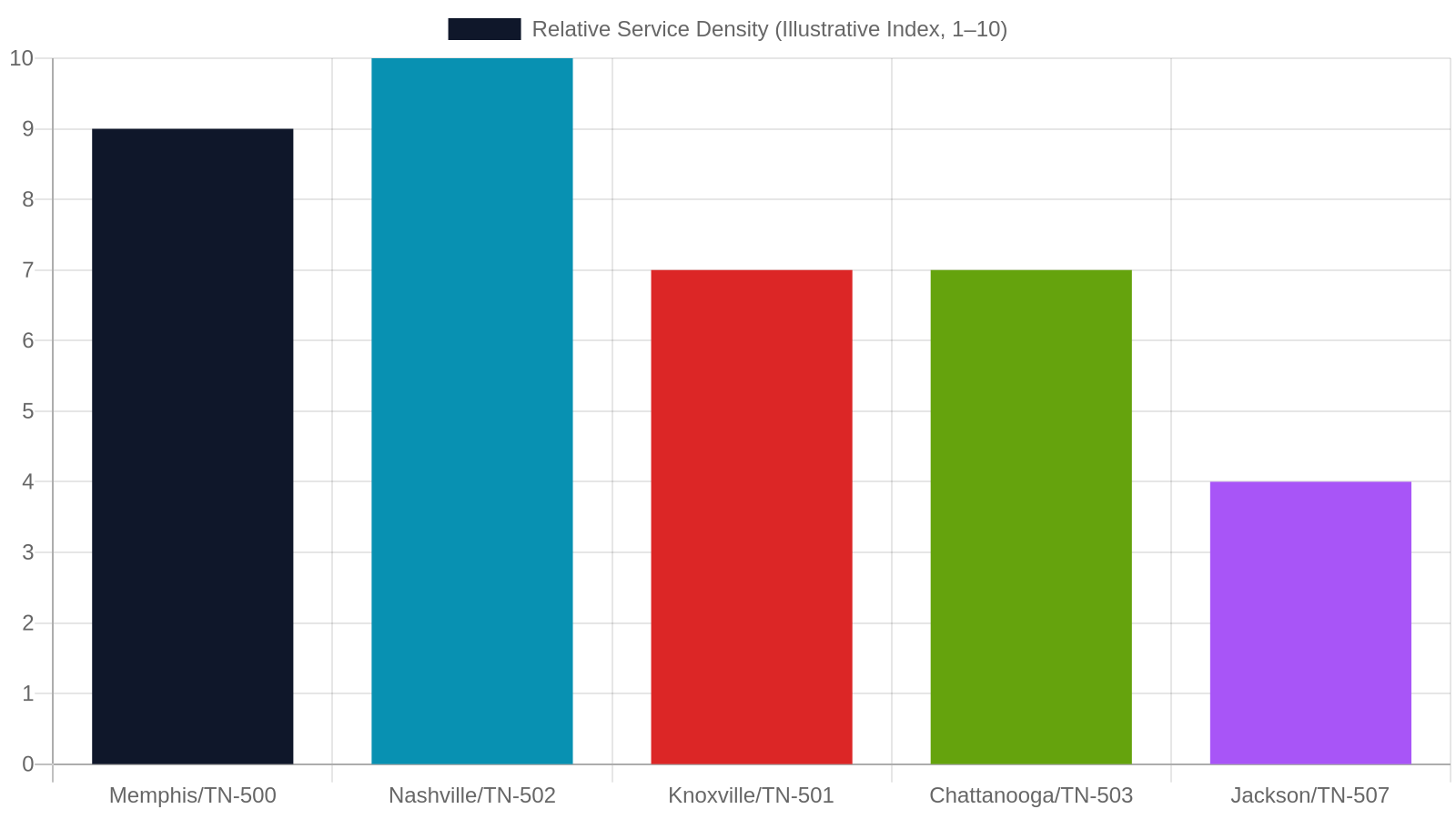
Young adults experiencing homelessness in West Tennessee face a distinct set of challenges compared to peers in Memphis (TN-500) or Nashville (TN-502). Urban CoCs tend to have more shelter beds, more service providers, and more public transportation — but also higher rents and more competition for resources. Rural and semi-rural CoCs like TN-507 often have fewer visible homeless individuals (because homelessness looks different — more couch-surfing, more doubling up) but also fewer resources to respond.
According to HUD’s 2023 Annual Homeless Assessment Report, rural areas are significantly undercounted in Point-in-Time counts, meaning the true scale of homelessness in regions like West Tennessee is likely larger than official figures suggest. This undercounting can affect funding allocations, making advocacy — exactly what YAAB does — even more critical in rural regions.
What West Tennessee Has That Others Don't
Every region has its own strengths. West Tennessee has a strong tradition of community and faith-based organizations that often fill gaps left by formal systems. Jackson’s position as the largest city in West Tennessee means it serves as a regional hub for services that smaller surrounding counties lack. For YAAB members, this regional hub role creates opportunities to build relationships with a wide range of service providers across multiple counties — not just Madison County.
The West Tennessee YAAB chapter also benefits from being part of the statewide YAAB network, which means members can tap into resources, training, and advocacy support from chapters in Memphis, Nashville, Knoxville, Chattanooga, and beyond. Explore all Tennessee YAAB chapters to see how the network spans the state.
Mental Health and Trauma-Informed Support for Young Adults

No conversation about youth homelessness is complete without talking about mental health. For young adults in West Tennessee navigating housing instability, understanding the connection between trauma, mental health, and housing — and knowing where to find support — is essential.
Why Mental Health Is Part of the Housing Conversation
Housing instability and mental health are deeply connected. Research from the Substance Abuse and Mental Health Services Administration (SAMHSA) consistently shows that young adults experiencing homelessness have significantly higher rates of depression, anxiety, PTSD, and substance use challenges than their housed peers — not because of personal failing, but because trauma is a predictable response to unsafe and unstable conditions.
For young adults in West Tennessee, accessing mental health support can be harder than in urban areas due to provider shortages. According to Mental Health America’s 2023 State of Mental Health report, Tennessee ranks among the bottom 10 states for mental health care access. In rural West Tennessee, that access gap is even more pronounced.
Trauma-Informed Care: What It Means and Why It Matters
Trauma-informed care (TIC) is an approach to services that recognizes the widespread impact of trauma, integrates knowledge about trauma into policies and practices, and actively avoids re-traumatization. For transition-age youth, this means being treated with dignity, not having to repeat your story to every new provider, and having services that feel safe rather than punitive.
YAAB members in West Tennessee are trained to understand trauma-informed principles and often advocate for service providers in the region to adopt these practices. When a shelter intake process feels dehumanizing, or when a program rule seems designed for adults rather than young people, YAAB members can name that and push for change.
Peer Support as a Mental Health Resource
One of the most underrated mental health resources available to young adults is peer support — connection with others who have shared similar experiences. YAAB itself functions as a peer support community. Members report that being part of a group where their experience is understood and valued — rather than stigmatized — has a measurable positive impact on their sense of self-worth and hope for the future. This is not a replacement for clinical mental health care, but it is a real and meaningful complement to it.
Know Your Rights: What Every Young Adult in Tennessee Should Know

Knowledge is power — and for young adults navigating housing instability in West Tennessee, knowing your legal rights can protect you from being taken advantage of and open doors that might otherwise seem closed. Here are some of the most important rights every transition-age youth in Tennessee should know.
Rights Around Shelter Access and Identification
Many young adults don’t know that they have specific legal rights when accessing homeless services. In Tennessee, you cannot be denied emergency shelter solely because you lack a government-issued ID — though having one speeds up access to many programs. Organizations like West Tennessee Legal Services can help young adults obtain identification documents, including birth certificates and Social Security cards, which are often required for housing applications, employment, and benefits enrollment.
If you are 18 or older, you have the right to make your own housing and service decisions without parental consent. If you are 17, the rules are more complex, but there are still protections in place — and a YAAB member or case manager can help you understand them.
McKinney-Vento and Education Rights
If you are under 21 and experiencing homelessness, the McKinney-Vento Homeless Assistance Act gives you the right to enroll in and attend school immediately, even without documentation, proof of residency, or previous school records. Tennessee’s McKinney-Vento liaisons in each school district are required to help connect homeless students to services. Even if you’ve been out of school for a while, this law may still apply to you — and it’s worth knowing about.
Tenant Rights and Eviction Protections
Once you are housed, Tennessee law provides basic tenant protections — including the right to proper notice before eviction (typically 30 days for month-to-month leases), the right to a habitable living space, and protections against illegal lockouts. Tennessee does not have strong rent control laws, but knowing the eviction process — and that you have the right to appear in court and contest an eviction — can make a real difference. West Tennessee Legal Services offers free legal aid to low-income residents, including young adults facing eviction.
Tennessee YAAB Chapters at a Glance: Regional Comparison
Tennessee's YAAB network spans eight Continuum of Care regions. Here's how the West Tennessee chapter (TN-507) compares to other regional chapters across key dimensions.
How to Join the West Tennessee YAAB Chapter

Ready to get involved? Joining the West Tennessee YAAB chapter is more straightforward than you might think — and it doesn’t require anything except your willingness to show up and your lived experience of housing instability.
Who Is Eligible to Join?
To join the West Tennessee YAAB chapter, you need to be between 17 and 25 years old and have lived experience of homelessness or housing instability — including couch-surfing, staying in a shelter, living in a car, doubling up with others, or aging out of foster care. You do not need to be currently homeless to join. Many YAAB members are now stably housed and want to use their experience to help others and change the systems they once had to navigate.
You don’t need a resume, references, or any formal credentials. Your experience is your qualification. YAAB is explicitly designed to be accessible to young adults who may not have had opportunities to build traditional professional credentials.
What to Expect When You Get Involved
New members typically start by attending chapter meetings, which are held regularly and are designed to be welcoming and low-pressure. Over time, members can take on more active roles — representing the chapter at CoC meetings, participating in statewide YAAB convenings, or leading specific projects. There is no single path; YAAB meets you where you are and supports you in growing at your own pace.
Some YAAB chapters offer stipends or other forms of compensation for member participation, recognizing that asking young adults to give their time and expertise without any compensation is itself a form of inequity. Check with the West Tennessee chapter for current details on how member contributions are recognized.
How YAAB Supports Your Own Development
Beyond the advocacy work, being part of YAAB builds real skills: public speaking, policy analysis, facilitation, data literacy, and coalition-building. Many YAAB alumni have gone on to careers in social work, public policy, nonprofit management, and community organizing. YAAB is a leadership development program as much as it is an advocacy network — and for young adults in West Tennessee, it can be a meaningful step toward a future you design for yourself.
YAAB's Role in Tennessee's Broader Advocacy Landscape

The West Tennessee YAAB chapter doesn’t operate in isolation. It’s part of a statewide and national movement to center young people’s voices in the decisions that affect their lives. Understanding that bigger picture makes the local work more meaningful — and more powerful.
Connecting Local Experience to State Policy
What makes YAAB uniquely powerful is the way it connects ground-level experience in places like Jackson to statewide and even national policy conversations. Tennessee’s YAAB chapters coordinate through a statewide network that shares data, strategies, and advocacy priorities across all eight CoC regions. When West Tennessee YAAB members document patterns — like a shortage of youth-specific shelter beds in the region, or barriers in the coordinated entry process — that information can be aggregated with data from other regions and brought to state legislators or HUD officials.
This is how individual stories become systemic change. Explore YAAB’s statewide advocacy work to see the kinds of policy issues the network is actively working on.
Youth Homelessness Data and Why It Matters
Advocacy without data is harder to sustain. Tennessee’s CoCs conduct an annual Point-in-Time (PIT) count — a single-night census of people experiencing homelessness — that provides the primary data used to allocate federal housing resources. YAAB members can participate in PIT counts and help ensure that young people, who are often undercounted, are accurately represented.
Understanding the scope of youth homelessness in Tennessee — including how it’s measured, where the data gaps are, and how funding flows from HUD to local providers — is part of the education YAAB provides to its members. This knowledge makes members more effective advocates at every level.
Stories of Change: What YAAB Membership Can Look Like

Data and policy matter — but so do stories. Here’s a sense of what YAAB membership can actually look like for young adults in West Tennessee, and why the human dimension of this work is just as important as the policy dimension.
From Navigating the System to Changing It
Across Tennessee’s YAAB chapters, there are young adults who came in needing support and stayed to become leaders. A young adult who aged out of foster care in West Tennessee and spent months couch-surfing before finding stable housing might join YAAB and, within a year, be presenting at a CoC meeting about gaps in transitional housing for youth. That transformation — from person navigating a broken system to person working to fix it — is at the heart of what YAAB is designed to enable.
These aren’t exceptional stories. They are what happens when young adults are given real support, real respect, and a real seat at the table. YAAB’s model is built on the belief that every young person who has survived housing instability has knowledge and leadership potential that the system needs.
Building Community in West Tennessee
For many young adults in Jackson and West Tennessee, one of the most valuable things YAAB offers is simply community. Housing instability is isolating. It can make you feel like you’re the only one going through it, or like something is fundamentally wrong with you. Being part of a group of peers who have been through similar experiences — and who are thriving, advocating, and building futures — changes that narrative.
Community is not a soft benefit. Research on resilience consistently shows that social connection is one of the strongest protective factors against the long-term effects of trauma and adversity. YAAB builds that connection intentionally, in a region where young adults experiencing homelessness can be especially isolated.
Take Your Next Step with the West Tennessee YAAB

You’ve read this far — which means you’re already thinking about what’s next. Whether that’s finding housing support, connecting with peers, or stepping into advocacy, the West Tennessee YAAB chapter is a real, accessible place to start. Here’s how to make that connection.
Connect with the TN-507 Chapter Directly
If you’re a young adult in Jackson or anywhere in West Tennessee — ages 17 to 25, with lived experience of homelessness or housing instability — the West Tennessee YAAB chapter is ready to connect with you. You don’t need to have everything figured out. You don’t need to know exactly what role you want to play. You just need to show up.
Visit the West Tennessee YAAB chapter page to find current contact information, meeting schedules, and details on how to get involved. This is your chapter, built for your region, by people who understand what you’ve been through.
Resources Are Here — You Don't Have to Navigate Alone
Whether you’re looking for housing support, trying to understand your options, or ready to step into a leadership role, YAAB and its network of partners across West Tennessee are here. You’ve already done the hardest part — surviving and showing up. The next step is connecting with people who get it and who are working to make things better.
For a full list of resources available to young adults across Tennessee, visit the YAAB resources page. And if you want to learn more about joining the broader YAAB network, find out how to join YAAB and take the first step toward turning your experience into leadership.
Frequently Asked Questions
How do I join the Youth Action Board in Jackson or West Tennessee?
To join the West Tennessee YAAB chapter (TN-507), you need to be between 17 and 25 years old and have lived experience of homelessness or housing instability. No formal credentials are required. Visit the TN-507 chapter page at yaabtn.org/local-yaabs/tn-507/ to find current contact information and meeting details.
What is a Continuum of Care and how does it affect me as a young adult in West Tennessee?
A Continuum of Care (CoC) is a regional network of homeless service providers funded by HUD. In West Tennessee, the CoC is TN-507 and covers Jackson and surrounding counties. It coordinates shelter, housing assistance, and support services — and YAAB members help shape how those resources are allocated and delivered.
Do I have to be currently homeless to join YAAB in Tennessee?
No. YAAB welcomes young adults who have any lived experience of homelessness or housing instability, even if they are now stably housed. Many members joined after getting housed and wanted to use their experience to help others and change the systems they navigated.
What housing resources are available to young adults in Jackson, Tennessee?
Young adults in Jackson can access emergency shelter, transitional housing, and rapid rehousing programs through the TN-507 Continuum of Care. West Tennessee Legal Services offers free legal aid including help obtaining ID documents. YAAB members can help navigate which programs are currently available and how to access coordinated entry.
What rights do I have as a young adult experiencing homelessness in Tennessee?
If you are 18 or older, you have the right to make your own housing and service decisions. Under the McKinney-Vento Act, you have the right to enroll in school immediately without documentation. You also have tenant rights including proper eviction notice and the right to a habitable living space. West Tennessee Legal Services can provide free legal help.
How is youth homelessness different in rural West Tennessee compared to Memphis or Nashville?
In rural and semi-rural areas like West Tennessee, youth homelessness is often less visible — more couch-surfing and doubling up than street homelessness — which leads to undercounting in official data. There are also fewer service providers, less public transportation, and greater distances between resources compared to urban CoCs like Memphis (TN-500) or Nashville (TN-502).