Quick answer: The Tri-Cities region of Northeast Tennessee — anchored by Johnson City, Kingsport, and Bristol — has a growing network of resources and advocates working to end youth homelessness for people ages 17 to 25. The Youth Action Board (YAAB) of Tennessee operates in this region through the TN-509 Continuum of Care, connecting young adults with lived experience of homelessness to housing programs, peer support, employment pathways, and policy advocacy. Whether you need help right now or want to shape the systems that affect your community, this guide explains exactly how the local landscape works and how you can plug in.
1. What Youth Homelessness Actually Looks Like in the Tri-Cities

Youth homelessness in Northeast Tennessee doesn’t always look the way it does in national news coverage. The Tri-Cities area — Johnson City, Kingsport, and Bristol — is a mid-sized metro surrounded by deeply rural communities, and that shapes how housing instability shows up and how hard it can be to get help. Before diving into resources and advocacy, it helps to understand what the problem actually looks like on the ground.
More Than Sleeping Outside
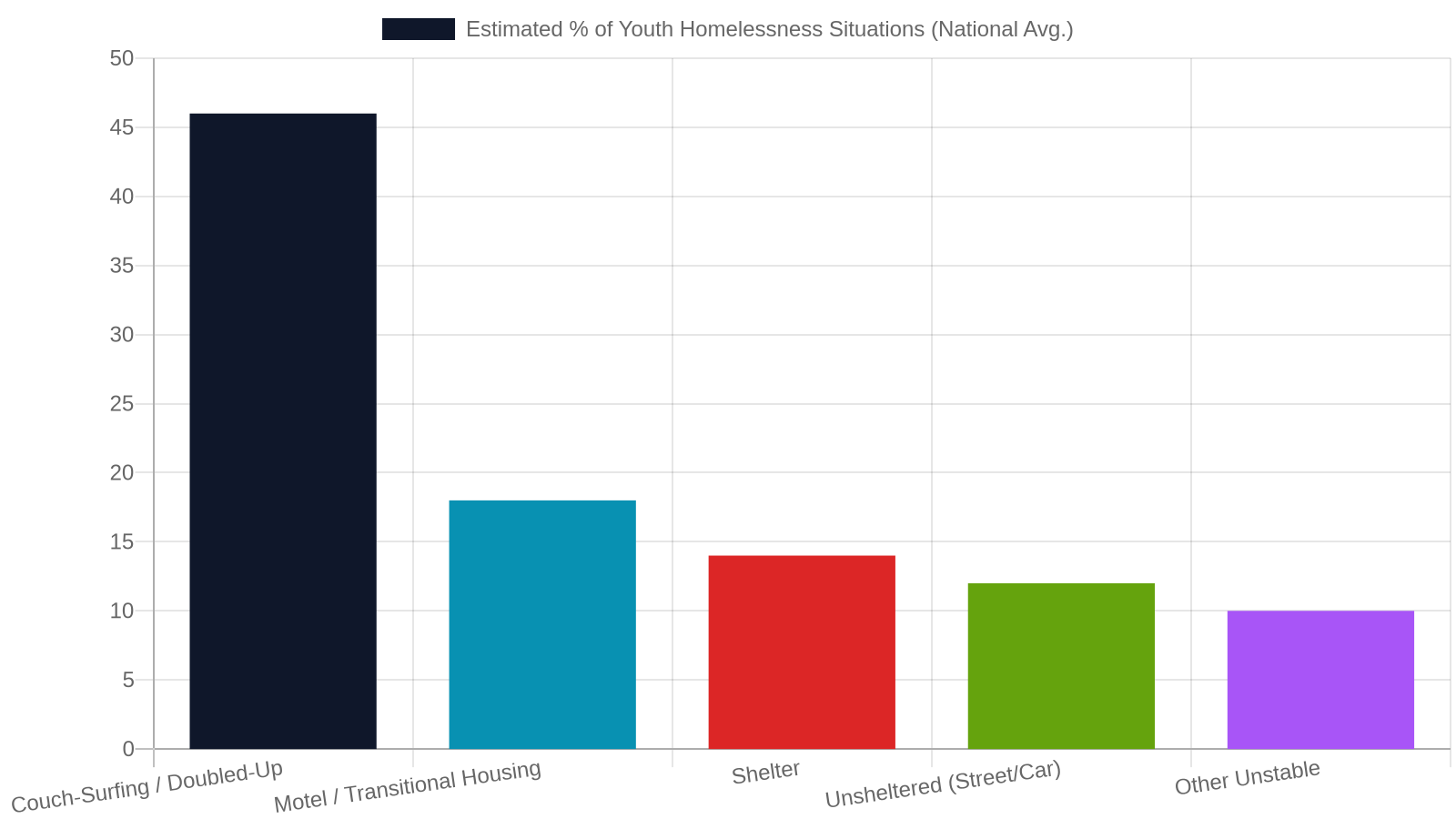
When most people picture homelessness, they imagine someone sleeping on a sidewalk. But for young adults ages 17 to 25 in Northeast Tennessee, the reality is usually less visible — and just as serious. Couch-surfing (staying with friends, relatives, or acquaintances because you have nowhere else to go) is the most common form of youth homelessness in rural and small-city regions like the Tri-Cities. You might also be staying in a car, a motel, an abandoned building, or cycling through short-term arrangements that never feel stable.
The U.S. Department of Housing and Urban Development (HUD) defines this as experiencing homelessness even if you are not literally on the street. That definition matters because it determines what programs you can access and what rights you have.
Why the Tri-Cities Region Faces Unique Challenges
Johnson City, Kingsport, and Bristol sit at the intersection of three counties — Washington, Sullivan, and Carter — and straddle the Tennessee–Virginia state line. That geography creates real complications for young people seeking help:
- Service gaps across county lines: A program funded in Washington County may not serve someone whose ID shows a Sullivan County address.
- Limited public transit: Without a car, traveling between service providers can be nearly impossible.
- Rural isolation: Surrounding communities in Unicoi, Carter, and Johnson counties have even fewer shelter options, pushing youth toward the urban core.
- Stigma: Smaller, tighter-knit communities can make it harder to ask for help without fear of judgment.
Understanding these barriers is the first step toward dismantling them — and it’s exactly the kind of knowledge that YAAB members bring to decision-makers.
The Numbers Behind the Need
National research from Chapin Hall at the University of Chicago estimates that 1 in 10 young adults ages 18 to 25 experience some form of homelessness in a given year. In rural and Appalachian regions, undercounting is common because youth homelessness is hidden. Tennessee’s statewide Point-in-Time (PIT) count — conducted each January — consistently undercounts youth because couch-surfers and doubled-up households are hard to find on a single night. Local advocates in Northeast Tennessee have pushed for improved counting methods, and YAAB members have been part of that push.
2. The TN-509 Continuum of Care: What It Is and Why It Matters to You

If you’ve tried to navigate homeless services in the Tri-Cities, you’ve probably encountered a web of agencies, programs, and eligibility rules that can feel overwhelming. Most of that system is organized through something called a Continuum of Care — and the one that covers Northeast Tennessee is TN-509. Knowing how it works gives you real leverage.
What a Continuum of Care Actually Does
A Continuum of Care (CoC) is a regional planning body funded and overseen by HUD. Its job is to coordinate homeless services — shelters, rapid rehousing, permanent supportive housing, outreach teams — across a defined geographic area. Every CoC receives federal funding through HUD’s CoC Program, and that money flows to local nonprofits, government agencies, and service providers who run the actual programs.
The CoC sets priorities, decides which programs get funded, and is supposed to ensure that the people most affected by homelessness have a voice in those decisions. That last part is where YAAB comes in.
TN-509: Northeast Tennessee's CoC Region
Tennessee is divided into multiple CoC regions. TN-509 covers Northeast Tennessee, including the Tri-Cities metro and surrounding counties. The lead agency for TN-509 coordinates with local governments, nonprofits, and housing providers to manage the region’s Homeless Management Information System (HMIS), conduct the annual Point-in-Time count, and submit funding applications to HUD.
For young adults experiencing homelessness in the Tri-Cities area, TN-509 is the administrative backbone behind most of the housing and shelter programs you’ll encounter. Understanding that it exists — and that it can be influenced — is powerful knowledge.
How YAAB Plugs Into TN-509
YAAB members in Northeast Tennessee participate directly in TN-509 planning processes. That means young adults with lived experience of homelessness sit at the table when decisions about funding, program design, and policy priorities are made. This is not symbolic — HUD’s guidelines increasingly require CoCs to demonstrate meaningful youth engagement. YAAB members have contributed to:
- Reviewing and commenting on CoC funding applications
- Participating in Point-in-Time count planning
- Advocating for youth-specific housing programs
- Connecting peers to services they didn’t know existed
3. Housing Resources Available to Young Adults in Northeast Tennessee

Getting housed is the foundation for everything else — education, employment, health, and stability. The Tri-Cities region has a patchwork of resources, and knowing what exists (and what your rights are) can make a real difference when you’re trying to find a safe place to land.
Emergency Shelter Options in the Tri-Cities
Emergency shelter is the immediate safety net when you have nowhere to sleep tonight. In the Tri-Cities area, options include:
- Frontier Health’s crisis services — Frontier Health operates across Northeast Tennessee and provides crisis stabilization that can connect youth to emergency housing referrals.
- Johnson City Community Shelter — Provides emergency beds for adults; youth-specific availability varies by season and capacity.
- HOPE Sullivan County — Serves Sullivan County residents with emergency assistance including short-term lodging support.
- 211 Tennessee — Dialing or texting 211 connects you to a live operator 24/7 who can identify the closest available shelter bed or emergency resource.
Shelter availability in rural Northeast Tennessee is limited. If a shelter is full, 211 operators can help identify motel voucher programs or diversion resources.
Rapid Rehousing and Transitional Programs
Rapid rehousing is a short-term program that helps you move into your own apartment quickly by covering move-in costs, a few months of rent, and case management support. It’s designed to get you housed fast, then help you build the stability to stay housed on your own. In TN-509, rapid rehousing funds flow through CoC-funded providers — ask any case manager or call 211 to find out which agencies currently have openings.
Transitional housing programs offer a step between shelter and independent living — typically 12 to 24 months of subsidized housing with intensive support services. Youth-specific transitional programs in Northeast Tennessee are limited, which is one reason YAAB advocates for expanding them.
Youth-Specific Federal Protections You Should Know
Several federal laws protect young adults experiencing homelessness:
- McKinney-Vento Act: Guarantees your right to enroll in school even without a permanent address, immunization records, or a parent/guardian present — critical if you’re 17 to 21 and still pursuing a diploma or GED.
- HEARTH Act: Established the CoC program and set youth homelessness as a federal priority.
- Runaway and Homeless Youth Act (RHYA): Funds basic center shelters and transitional living programs specifically for youth up to age 21.
Knowing these laws means you can advocate for yourself when a program tries to turn you away.
4. Aging Out of Foster Care in Northeast Tennessee: What Comes Next

Aging out of foster care is one of the most common pathways into youth homelessness — and it’s one of the most preventable. If you’re approaching 18 in the foster care system, or if you’ve already aged out, there are specific programs and protections designed for you in Tennessee. Here’s what you need to know.
The Cliff at 18 — and Tennessee's Extended Support
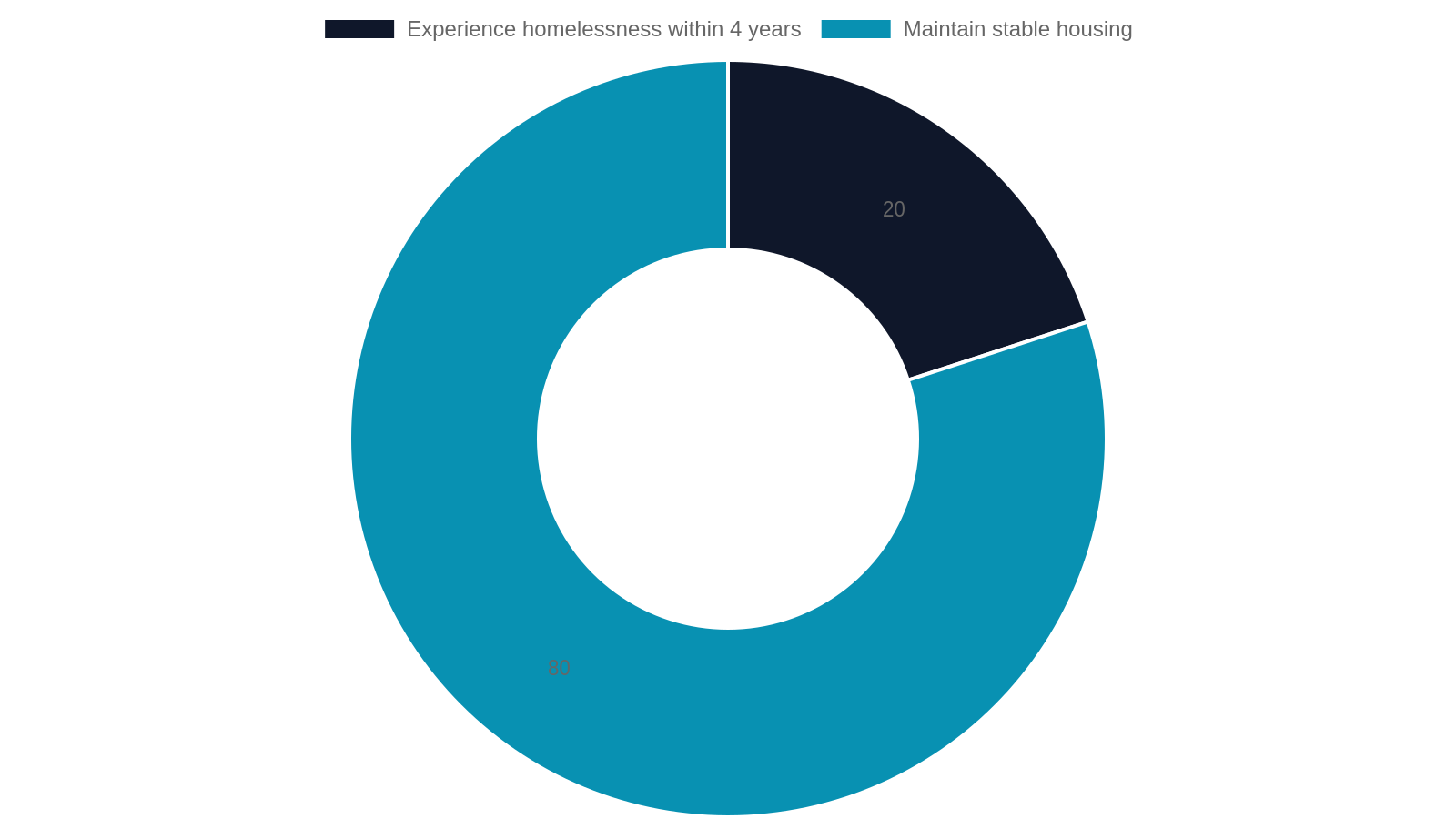
In Tennessee, young people in foster care traditionally faced a hard cutoff at age 18 — sometimes called ‘aging out.’ Research consistently shows that youth who age out of foster care without a stable support network face dramatically higher rates of homelessness: approximately 1 in 5 former foster youth experience homelessness within 2 to 4 years of leaving care, according to the National Foster Youth Institute.
Tennessee has expanded support through the Tennessee Fostering Connections program, which allows eligible youth to remain in extended foster care services up to age 21. This can include housing support, educational assistance, and case management. If you aged out and didn’t know this existed, it’s worth asking a case manager whether you can re-engage.
Chafee Funds and What They Cover
The John H. Chafee Foster Care Program for Successful Transition to Adulthood provides federal funding that Tennessee distributes to help current and former foster youth (up to age 23 in some cases) with:
- Housing deposits and first month’s rent
- Utility setup costs
- Life skills training (budgeting, cooking, job readiness)
- Educational and vocational support
In Northeast Tennessee, Chafee funds are administered through the Tennessee Department of Children’s Services (DCS). Contact your local DCS office in Washington or Sullivan County to ask about current availability — funds are limited and often have waitlists.
Peer Support Makes the Difference
Many YAAB members in Northeast Tennessee have personal experience with the foster care system. That peer knowledge is invaluable — someone who has navigated the same systems can help you understand your options, avoid common pitfalls, and feel less alone in the process. YAAB is not a case management agency, but members can connect you to the right people and advocate alongside you when systems aren’t working the way they should.
5. Education and Employment Pathways in the Tri-Cities for Unstably Housed Youth

Housing instability makes it harder to focus on school or hold down a job — and lack of education or income makes it harder to stay housed. Breaking that cycle requires access to both at the same time. The good news: Northeast Tennessee has real resources for young adults who want to move forward on both fronts simultaneously.
Getting Your High School Diploma or GED
Not having a diploma or GED is one of the biggest barriers to employment and stable housing — but it’s a barrier you can remove. Options in Northeast Tennessee include:
- Northeast Tennessee Adult Education — Free GED preparation classes offered through the Tennessee Board of Regents at multiple locations in Washington and Sullivan counties.
- Tennessee Reconnect Grant — Covers tuition at Tennessee community colleges (including Northeast State Community College in Blountville) for adults without a degree. You do not need to be a recent high school graduate.
- McKinney-Vento liaisons — Every school district must have one. If you’re 17 to 21 and experiencing homelessness, the liaison can help you re-enroll, get records transferred, and access transportation.
Job Training and Employment Support
Employment is the bridge to long-term housing stability. In the Tri-Cities area, young adults can access:
- American Job Centers (Tennessee Career Centers) — Located in Johnson City and Kingsport, these centers offer free job search help, resume writing, and connections to apprenticeships and training programs.
- WIOA Youth Program — The Workforce Innovation and Opportunity Act funds youth employment programs for people ages 16 to 24 who face barriers to employment, including homelessness. Local workforce boards administer these funds.
- Goodwill Industries of the Valleys — Serves the Tri-Cities area with job training, placement, and career coaching, with specific programs for people facing barriers.
Why Stability and Education Go Together
Research from the Urban Institute shows that young adults who achieve housing stability are significantly more likely to complete educational programs — and vice versa. Programs that combine housing support with education and employment coaching (sometimes called ‘two-generation’ or ‘wraparound’ approaches) have the best outcomes. YAAB advocates for exactly this kind of integrated approach when working with CoC planners and state policymakers.
6. Mental Health and Wellness Support for Young Adults in Northeast Tennessee

Your mental health matters — full stop. Navigating homelessness, the foster care system, or housing instability is genuinely hard, and it’s okay to need support. Northeast Tennessee has resources specifically for young adults, and peer connection through networks like YAAB is itself a form of wellness support.
The Connection Between Housing Instability and Mental Health
Experiencing homelessness is stressful in ways that are hard to overstate. Chronic stress, trauma, and uncertainty take a real toll on mental health — and mental health challenges can, in turn, make it harder to navigate systems, maintain relationships, and stay housed. This is a cycle, not a character flaw. Approximately 30 to 40% of youth experiencing homelessness report significant mental health challenges, according to the Substance Abuse and Mental Health Services Administration (SAMHSA).
The good news is that Northeast Tennessee has several access points for mental health support, many of which are free or low-cost for young adults.
Mental Health Resources in the Tri-Cities
Key providers in the region include:
- Frontier Health — The primary community mental health center for Northeast Tennessee, offering counseling, crisis services, substance use treatment, and psychiatric care on a sliding-fee scale.
- Ballad Health Behavioral Health Services — Provides inpatient and outpatient psychiatric care across the region.
- SAMHSA National Helpline: 1-800-662-4357 — Free, confidential, 24/7 referral service for mental health and substance use treatment.
- Crisis Text Line: Text HOME to 741741 — Free crisis counseling via text, any time.
Peer Support Is Mental Health Support
One of the most evidence-backed forms of mental health support for young adults is peer connection — being around people who have been through similar experiences and come out the other side. YAAB is built on this model. Members don’t just advocate for policy change; they create community. Showing up to a YAAB meeting, sharing your story, and hearing others’ can be genuinely healing — not as a replacement for professional care, but as a powerful complement to it.
7. Know Your Rights: Legal Protections for Homeless Youth in Tennessee

You have rights — even when systems don’t always act like it. Knowing your legal protections as a young adult experiencing homelessness in Tennessee is one of the most powerful tools you have. Here are the key ones that apply directly to your situation in the Tri-Cities and across Northeast Tennessee.
Your Right to School Access
Under the McKinney-Vento Homeless Assistance Act, if you are experiencing homelessness and are still in high school or pursuing a diploma, you have the right to:
- Enroll in school immediately, even without records, proof of address, or a parent/guardian
- Remain in your school of origin even if you move outside the district
- Receive free transportation to your school of origin
- Access the same programs as other students (tutoring, extracurriculars, meals)
Every school district in Tennessee must have a McKinney-Vento liaison. If a school is giving you trouble, ask for the liaison by name — it’s a federally required position.
Your Right to Healthcare Without a Guardian
In Tennessee, young adults ages 18 and older can consent to their own medical care. For those ages 17, Tennessee law allows minors to consent to certain services including mental health counseling and substance use treatment without parental consent. TennCare (Tennessee’s Medicaid program) covers eligible young adults up to age 26 if they aged out of foster care — this is a significant benefit that many youth don’t know they qualify for. Apply through the Tennessee Department of Human Services or Healthcare.gov.
Your Right to Be Free from Criminalization
Some cities use ordinances that effectively criminalize homelessness — banning sitting, sleeping, or camping in public spaces. YAAB and its partners actively monitor and push back against policies that punish young people for being homeless rather than helping them. If you’ve been cited, ticketed, or arrested related to your housing situation, legal aid organizations in Northeast Tennessee — including Legal Aid of East Tennessee — may be able to help at no cost.
8. How YAAB's Northeast Tennessee Chapter Drives Real Change

YAAB’s Northeast Tennessee chapter is part of a statewide network that has been growing its influence in housing policy, CoC governance, and youth-centered program design. Here’s a closer look at what that work actually looks like — and why it matters that young adults with lived experience are the ones doing it.
What YAAB Members Actually Do
YAAB is not a social service agency — it’s a youth-led advocacy body. Members ages 17 to 25 with lived experience of homelessness or housing instability participate in:
- CoC governance: Attending and influencing TN-509 planning meetings where funding and program decisions are made.
- Policy advocacy: Testifying before the Tennessee General Assembly, providing input on state housing plans, and participating in national advocacy efforts.
- Peer outreach: Connecting other young adults to resources they didn’t know existed.
- Research and data: Contributing to Point-in-Time counts, needs assessments, and program evaluations.
- Community education: Sharing their stories to shift public understanding of youth homelessness.
Wins That YAAB Has Contributed To
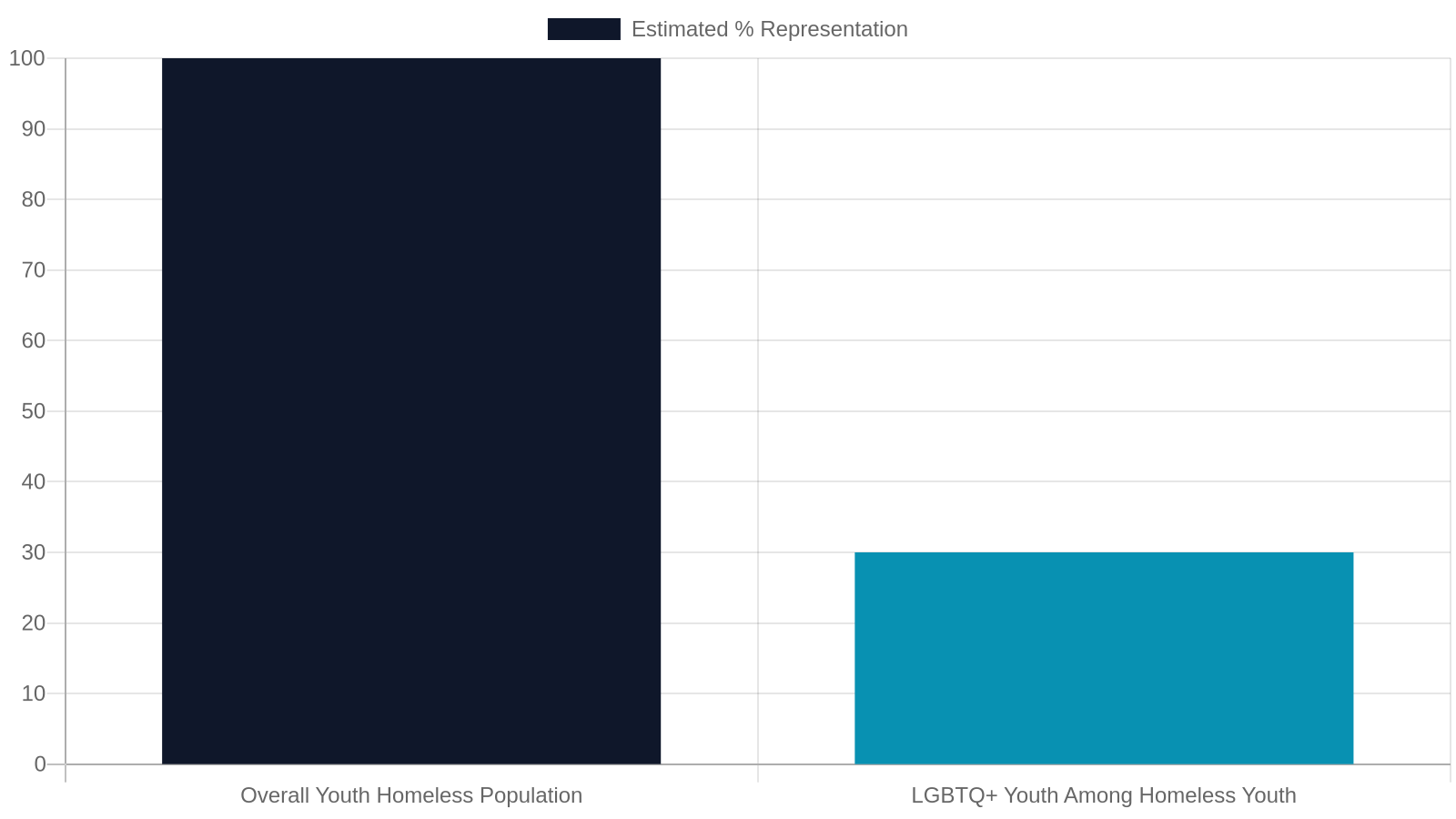
Across Tennessee, YAAB members have contributed to tangible policy and program improvements, including pushing for youth-specific funding set-asides in CoC applications, advocating for trauma-informed service standards, and elevating the voices of LGBTQ+ youth — who are disproportionately represented among homeless youth at rates of 20 to 40% nationally — in program design conversations. In Northeast Tennessee specifically, YAAB members have worked to improve how the TN-509 CoC engages young people in its planning processes.
The Power of Lived Experience in Policy Rooms
There’s a reason HUD and state housing agencies increasingly require youth representation in CoC governance: people who have lived through a problem understand it in ways that researchers and administrators simply don’t. When a YAAB member explains to a CoC board why a shelter’s curfew policy pushes youth back onto the streets, or why a rapid rehousing program’s income requirement excludes the people who need it most, that testimony carries weight that no report can replicate. Your experience is expertise.
Housing Program Types at a Glance: Which One Fits Your Situation?
Different housing programs serve different needs and timelines. Use this table to quickly identify which type of program to ask about based on where you are right now.
9. Comparing Housing Program Types Available in the TN-509 Region

The housing support landscape in Northeast Tennessee includes several distinct program types, each designed for a different stage of need. Knowing the difference between emergency shelter, rapid rehousing, transitional housing, and permanent supportive housing can save you time and frustration when you’re trying to get help fast.
Choosing the Right Program for Where You Are
Not every housing program is right for every situation. Emergency shelter is for tonight; rapid rehousing is for the next few months; transitional housing is for building a longer runway; permanent supportive housing is for people with ongoing disabilities or complex needs. Understanding the differences helps you ask for the right thing when you talk to a case manager or call 211.
The comparison table below breaks down the key features of each program type so you can quickly see which one fits your current situation. If you’re not sure, a 211 call or a conversation with a YAAB peer navigator is the best starting point.
What to Ask When You Contact a Program
When you reach out to any housing program, come prepared with these questions:
- What is the age range you serve? (Some programs are 18+; others serve 17 to 24.)
- Do I need an ID or documentation to apply?
- Is there a waitlist, and how long is it?
- Do you serve LGBTQ+ youth in an affirming way?
- What happens if I don’t have income yet?
- Can I bring a pet?
You have every right to ask these questions before committing to a program. A good program will welcome them.
10. How to Get Involved with YAAB in the Tri-Cities and Northeast Tennessee

Getting involved with YAAB is one of the most direct ways to turn your experience into impact — for yourself and for the young adults who come after you. The Northeast Tennessee chapter is part of a statewide network, and there’s a real seat at the table waiting for you. Here’s everything you need to know about joining.
Who Can Join YAAB
YAAB membership is open to young adults ages 17 to 25 who have lived experience of homelessness or housing instability — that includes couch-surfing, staying in a shelter, living in a car, aging out of foster care, or any other form of housing insecurity. You don’t have to currently be homeless to join. If you’ve been through it, your experience is exactly what YAAB needs.
You also don’t need to have any prior advocacy or policy experience. YAAB provides training, mentorship, and support. Many members started with zero knowledge of how CoCs or state government work and became confident, effective advocates within months.
What Membership Looks Like
YAAB membership in Northeast Tennessee is flexible and designed to work around the real constraints of young adults’ lives — work schedules, transportation, childcare, and mental health. Participation can include:
- Attending monthly or bi-monthly meetings (in-person and/or virtual)
- Joining working groups focused on specific issues (housing, education, employment)
- Participating in advocacy events and legislative visits
- Sharing your story when you’re ready and comfortable doing so
- Connecting peers to resources and information
There is no minimum commitment required to start. Show up when you can, and grow from there.
Stipends and Support for Members
YAAB recognizes that asking young adults to volunteer their time and expertise without compensation is inequitable. Where funding allows, YAAB provides stipends for member participation — because your time and your knowledge have real value. Members also gain access to leadership development, professional references, and a statewide network of peers and allies. These are real resume-builders and life skills, not just feel-good extras.
11. YAAB Across Tennessee: How the Statewide Network Connects

The Youth Action Board isn’t just a local chapter — it’s a statewide network with chapters in every major Tennessee CoC region. Understanding how the pieces connect helps you see the full scope of what’s possible when young adults with lived experience organize together across the state.
Regional Chapters Across the State
YAAB operates across multiple Tennessee CoC regions, meaning that if you move — or if you want to connect with peers in other parts of the state — there’s likely a chapter near you. Statewide regions include Memphis/Shelby County, Nashville/Davidson County, Knoxville/Knox County, Chattanooga/Hamilton County, Jackson/West Tennessee, and the Upper Cumberland, in addition to Northeast Tennessee. Each chapter is locally rooted but connected to a statewide advocacy infrastructure.
This network matters because housing policy is made at both the state and local level. When YAAB chapters across Tennessee speak with a unified voice, it carries far more weight in Nashville than any single region could on its own.
Statewide Advocacy and Legislative Work
YAAB members from across Tennessee participate in statewide advocacy — including visits to the Tennessee General Assembly in Nashville, written testimony on housing and youth-related legislation, and collaboration with state agencies like the Tennessee Housing Development Agency (THDA) and the Department of Children’s Services (DCS). Being part of YAAB in the Tri-Cities means you’re connected to that larger movement, not just working in isolation.
Shared Resources and Peer Learning
One of the practical benefits of a statewide network is shared knowledge. A rapid rehousing program that works well in Nashville can be adapted for Northeast Tennessee. A policy win in Knoxville can be replicated in the Tri-Cities. YAAB members across regions share what’s working, what isn’t, and how to push for better. You don’t have to reinvent the wheel — you can build on what your peers across the state have already learned.
Ready to Connect? Your Next Step in Northeast Tennessee

You’ve made it through a lot of information — and if any of it resonated, that’s a signal worth following. Northeast Tennessee’s YAAB chapter is active, growing, and looking for young adults who want to turn their experience into advocacy. Here’s how to take the next step, whether that’s finding immediate help or joining the movement.
Start Where You Are
You don’t need to have everything figured out to take a next step. Whether you’re currently experiencing housing instability and need resources right now, or you’re in a more stable place and want to get involved in advocacy, there’s a path forward from exactly where you are. The most important thing is to reach out — to 211, to a local provider, or to YAAB directly.
If you’re in Northeast Tennessee and want to connect with the TN-509 regional YAAB chapter, visit the TN-509 YAAB page to learn about the local chapter, upcoming meetings, and how to get involved. This is your community, and there are people in it who have been where you are and want to help.
Resources to Bookmark Right Now
Keep these contacts handy:
- 211 Tennessee — Dial or text 211, 24/7, for shelter, food, and emergency resource referrals.
- Crisis Text Line — Text HOME to 741741 for free crisis support anytime.
- SAMHSA Helpline — 1-800-662-4357 for mental health and substance use referrals.
- Legal Aid of East Tennessee — Free legal help for low-income residents, including housing issues.
- Northeast State Community College — Tennessee Reconnect Grant covers tuition for adults without a degree.
You can also explore the full range of YAAB’s statewide resources and learn more about youth homelessness in Tennessee on the YAAB website.
Your Voice Belongs in This Work
The systems that shape your life — housing programs, shelter policies, funding decisions — are made by people in rooms. YAAB exists to make sure that young adults with lived experience are in those rooms. Your story is not a liability. It’s expertise. It’s the thing that makes advocacy real instead of theoretical.
Northeast Tennessee needs advocates who know what it’s actually like to navigate these systems. If that’s you, YAAB wants to hear from you. Show up as you are. The work is already yours to do.
Frequently Asked Questions
What is YAAB and how does it help young people experiencing homelessness in Northeast Tennessee?
YAAB (Youth Action Board) of Tennessee is a statewide network of young adults ages 17 to 25 with lived experience of homelessness who advise local and state leaders, drive policy advocacy, and connect peers to housing, education, and employment resources. In Northeast Tennessee, YAAB participates in the TN-509 Continuum of Care, which coordinates homeless services across the Tri-Cities region and surrounding counties.
What housing resources are available for homeless youth in the Tri-Cities Tennessee area?
Young adults in the Tri-Cities (Johnson City, Kingsport, Bristol) can access emergency shelter, rapid rehousing, and transitional housing programs coordinated through the TN-509 Continuum of Care. Calling or texting 211 connects you to a live operator 24/7 who can identify the closest available resource. Frontier Health also provides crisis services and referrals across Northeast Tennessee.
Can I join YAAB if I'm not currently homeless but have experienced housing instability in the past?
Yes. YAAB membership is open to anyone ages 17 to 25 who has lived experience of homelessness or housing instability — including past experiences. You do not need to be currently homeless to join. Your past experience is exactly the kind of expertise YAAB is built on.
What rights do homeless youth have when it comes to enrolling in school in Tennessee?
Under the McKinney-Vento Homeless Assistance Act, young people experiencing homelessness have the right to enroll in school immediately without proof of address, immunization records, or a parent or guardian. Every Tennessee school district must have a McKinney-Vento liaison who can help with enrollment, records, and transportation.
Does YAAB pay members for their time and participation?
Where funding allows, YAAB provides stipends to members for their participation in meetings, advocacy events, and other activities, recognizing that young adults' time and expertise have real value. Members also gain leadership development, professional references, and access to a statewide peer network.
What is the TN-509 Continuum of Care and what area does it cover?
TN-509 is the HUD-designated Continuum of Care for Northeast Tennessee, covering the Tri-Cities metro area (Johnson City, Kingsport, Bristol) and surrounding counties including Washington, Sullivan, Carter, Unicoi, and Johnson counties. It coordinates funding and planning for homeless services in the region, and YAAB members participate in its governance to ensure youth voices are represented.