Aging Out of Foster Care in Tennessee: Your 10-Step Next-Steps Guide
Quick answer: When you age out of foster care in Tennessee — typically at 18, or up to 21 if you stay in extended care — you don’t have to figure everything out alone. Tennessee offers extended foster care through age 21, tuition waivers, Medicaid until 26, transitional housing programs, and workforce support. Knowing which benefits you qualify for, which deadlines matter, and where to find peer support (like the Youth Action Board of Tennessee) can make the difference between stability and crisis. This guide walks you through every major step.
1. Understand What 'Aging Out' Actually Means in Tennessee
Before you can take any next step, it helps to understand exactly what the state means when it says you’re ‘aging out’ — and what options are still on the table. Tennessee’s rules have changed significantly over the past decade, and many young adults don’t realize they have more time and more choices than they think.
The Basic Timeline: 18, 21, and the Gap in Between
In Tennessee, the default age for leaving foster care is 18. However, under the state’s Extended Foster Care (EFC) program — authorized by the federal Fostering Connections Act — you can choose to remain in care until your 21st birthday if you meet at least one qualifying condition: enrolled in school, employed at least 80 hours per month, participating in a program designed to remove barriers to employment, or unable to do any of the above due to a medical condition.
Roughly 700–900 young people age out of Tennessee’s foster care system each year.
Nationally, about 20,000 youth age out annually without a permanent family connection.
Studies show youth who stay in extended care are twice as likely to be employed and significantly less likely to experience homelessness.
Why the Transition Is So Hard — and Why It Doesn't Have to Be
Aging out is not a failure — it’s a structural challenge. Most 18-year-olds still rely on family for housing, money, and advice. Youth leaving foster care often don’t have that safety net. Research from Chapin Hall’s Voices of Youth Count study found that youth who had been in foster care were 2.5 times more likely to experience homelessness than their peers. Knowing this isn’t meant to scare you — it’s meant to help you prepare. The resources exist. The key is knowing about them before your exit date, not after.
2. Opt Into Extended Foster Care Before You Turn 18
One of the single most impactful decisions you can make is choosing to stay in Extended Foster Care rather than exiting at 18. It buys you time — and time, when you’re building a life from scratch, is everything. Here’s how to make it happen.
How to Apply for Extended Foster Care in Tennessee
Extended Foster Care in Tennessee is managed by the Department of Children’s Services (DCS). The most important thing to know: you must opt in before your 18th birthday. If you exit care at 18 without enrolling, re-entry is possible but much harder. Talk to your caseworker at least 90 days before your 18th birthday to start the paperwork. You’ll sign a Voluntary Placement Agreement (VPA) that outlines your living arrangement and your responsibilities.
You can live in a licensed foster home, supervised independent living, or a transitional housing program while in EFC.
You continue to receive a monthly stipend, Medicaid, and case management support.
You can leave EFC voluntarily at any time — and re-enter up to age 21 if you meet eligibility criteria.
What EFC Pays For
While enrolled in Extended Foster Care, Tennessee DCS covers or contributes to:
Housing: foster home, group home, or supervised apartment
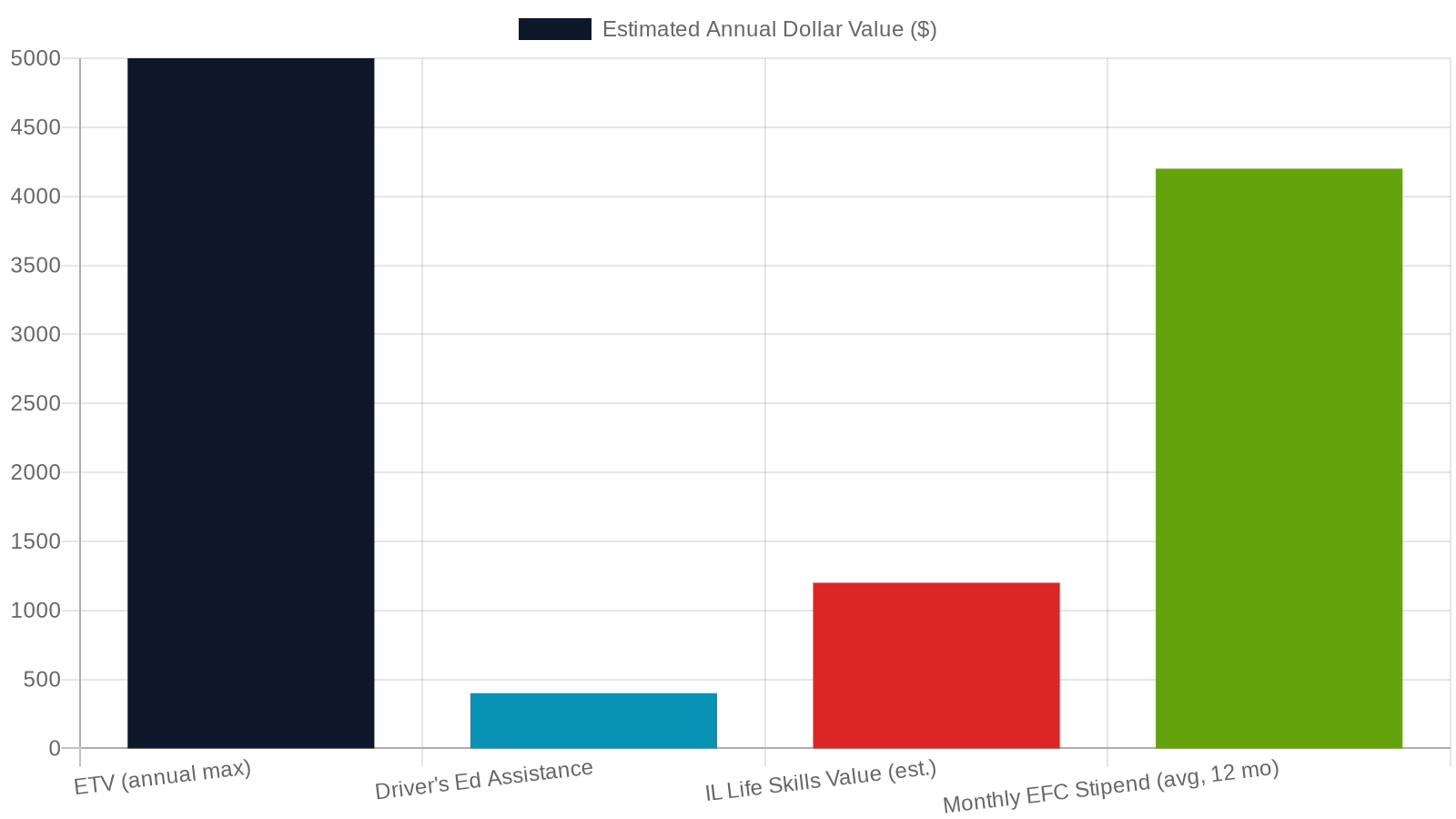
Monthly stipend: typically $250–$500/month depending on placement type
Medicaid: full coverage through age 21 (and beyond — see Step 5)
Case management: a DCS worker or contracted agency checks in regularly
Independent Living services: budgeting classes, job readiness, driver’s education assistance
These benefits are worth thousands of dollars per year. Even if your living situation feels stable, staying enrolled keeps your safety net intact while you build skills and savings.
3. Know Your Housing Options Across Tennessee
Housing is the foundation everything else is built on. Tennessee has more options than most young adults realize — but they’re spread across different programs, agencies, and regions. Here’s a map of what’s available and how to access it.
Transitional Housing Programs for Youth in Tennessee
Transitional housing is short-to-medium-term housing (typically 6 to 24 months) paired with support services. Several programs operate specifically for transition-age youth across Tennessee’s regions:
Memphis/Shelby County: Door of Hope, Youth Villages’ Transitional Living Center
Knoxville/Knox: Volunteer Ministry Center, KARM (Knox Area Rescue Ministries) young adult services
Chattanooga/Hamilton: Chattanooga Room in the Inn, Signal Centers
Jackson/West TN and rural regions: Contact your local Continuum of Care (CoC) coordinator for available beds
Beds are limited — apply early and apply to multiple programs simultaneously.
Rapid Rehousing and Emergency Shelter
If you need housing right now, Tennessee’s Continuum of Care network operates emergency shelters and Rapid Rehousing (RRH) programs. RRH provides short-term rental assistance (usually 3–12 months) plus a case manager who helps you find and keep stable housing. To access these, call 211 (Tennessee’s statewide helpline, available 24/7) and ask specifically for youth-focused housing resources. You can also visit YAAB Tennessee’s resources page for a curated list of housing supports by region.
You do not need to be currently unsheltered to qualify — housing instability (couch surfing, unsafe living situations) counts.
Permanent Supportive Housing and HUD Programs
If you have a disabling condition (mental health, substance use disorder, physical disability), you may qualify for Permanent Supportive Housing (PSH) — long-term subsidized housing with ongoing support services. HUD’s Youth Homelessness Demonstration Program (YHDP) has funded youth-specific PSH beds in several Tennessee CoC regions. Ask your case manager or 211 operator specifically about youth PSH openings. Wait lists can be long, so get on them early even if you’re currently housed.
4. Access the Independent Living (IL) Benefits You've Earned
Tennessee’s Independent Living program exists specifically because the state recognizes that aging out of foster care is a unique challenge. These benefits are yours by right — not charity. Here’s what’s available and how to claim it.
What Tennessee's Independent Living Program Covers
Tennessee DCS runs an Independent Living (IL) program for current and former foster youth. If you were in foster care at age 14 or older, you are eligible for IL services — even after you exit care. Services include:
Life skills training (budgeting, cooking, renting an apartment)
Driver’s education and license assistance (Tennessee will pay for your driver’s ed course)
Employment readiness workshops
Educational support and tutoring referrals
Mentorship connections
Contact your DCS caseworker or the IL coordinator in your region. If you’ve already exited care, you can still request IL services by calling DCS directly at 1-877-DCS-KIDS (1-877-327-5437).
The Chafee Education and Training Voucher (ETV)
The Education and Training Voucher (ETV) is one of the most valuable — and most underused — benefits available to former foster youth. In Tennessee, ETVs provide up to $5,000 per year toward post-secondary education or vocational training for eligible youth up to age 23 (or 26 if you were adopted from foster care after age 16). You can use ETVs for:
College tuition and fees
Vocational or trade school
Books, supplies, and housing costs related to school
Transportation to and from school
Apply through your DCS Independent Living coordinator. Funds are limited and awarded on a first-come, first-served basis — apply as early as possible each year.
Approximate annual dollar value of key Independent Living benefits available to Tennessee foster youth. ETV figures reflect the 2024 federal maximum.
5. Keep Your Medicaid Coverage — It Lasts Until 26
Healthcare is often the first thing young adults lose when they leave foster care — and it doesn’t have to be. Tennessee has extended Medicaid coverage specifically for former foster youth, and it’s one of the most valuable protections you have. Here’s what you need to know.
Former Foster Youth Medicaid in Tennessee
Thanks to the Affordable Care Act, young adults who were in foster care on or after their 18th birthday are entitled to free Medicaid coverage until age 26 — regardless of income, employment status, or whether you’re enrolled in school. In Tennessee, this is administered through TennCare. This is one of the most significant financial protections available to you. Without it, a single emergency room visit could cost thousands of dollars.
You do not need to reapply each year if you stay continuously enrolled.
If you lost coverage, you can re-enroll at any time — there is no open enrollment window restriction for former foster youth.
Call TennCare Connect at 1-855-259-0701 or visit tenncareconnect.tn.gov to check your status or re-enroll.
Mental Health and Substance Use Services Under TennCare
TennCare covers mental health and substance use disorder treatment through Behavioral Health Organizations (BHOs) — currently Magellan of Tennessee manages behavioral health benefits for most TennCare members. This includes:
Outpatient therapy and counseling
Psychiatric medication management
Intensive outpatient programs (IOP)
Crisis stabilization services
You don’t need a referral to start mental health care under TennCare. Call the member services number on your TennCare card or call Tennessee’s crisis line at 988 (Suicide and Crisis Lifeline) if you need immediate support. Your mental health matters just as much as your housing — don’t put it off.
6. Pursue Education With Tennessee's Tuition Waiver
Education is one of the most powerful tools for long-term stability — and Tennessee has made it more accessible for former foster youth than almost any other state. Here’s how to take full advantage of the tuition waiver and other educational supports.
The Tennessee Promise and Foster Youth Tuition Waiver
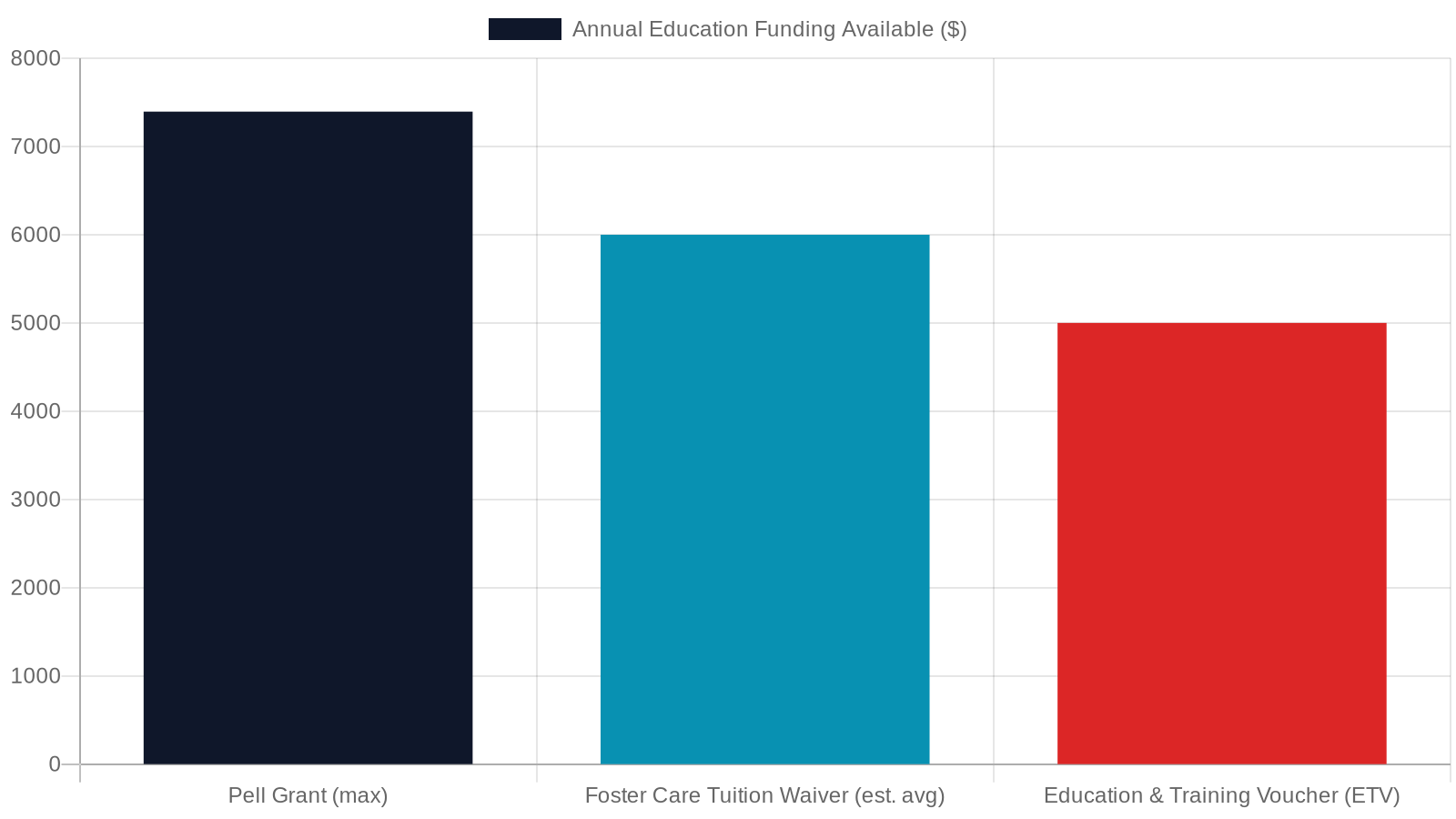
Tennessee offers a tuition and fee waiver at all public colleges and universities — including community colleges and Tennessee Colleges of Applied Technology (TCATs) — for youth who were in foster care, were adopted from state custody, or were placed in a guardianship arrangement after age 14. The waiver covers tuition and mandatory fees at any Tennessee Board of Regents or University of Tennessee system school. Combined with the federal Pell Grant (up to $7,395/year for 2024–25) and the ETV ($5,000/year), many former foster youth can attend college with zero out-of-pocket tuition costs.
Apply for the waiver through your school’s financial aid office — ask specifically for the Foster Care Tuition Waiver.
The waiver is available until age 26.
It applies to part-time and full-time enrollment.
GED Pathways and Vocational Training
College isn’t the only path — and it’s not the right path for everyone right now. Tennessee’s Adult Education program offers free GED preparation classes at locations across all seven regions. Once you have your GED, you can apply to TCATs for trade certifications in fields like HVAC, welding, electrical work, automotive technology, and healthcare support — programs that typically take less than one year to complete and lead to jobs paying $18–$30+/hour in Tennessee. The ETV can cover TCAT costs, making this pathway essentially free for eligible former foster youth.
Estimated annual education funding available to eligible Tennessee former foster youth. Tuition waiver value varies by school; figure reflects average community college tuition and fees.
7. Build Income and Employment Skills
Stable income and basic financial tools are the backbone of independence. Tennessee has workforce programs specifically designed for young adults facing barriers — and you don’t need experience or connections to access them.
Tennessee's Workforce Development Resources for Youth
Tennessee’s American Job Centers (AJCs) — also called Tennessee Career Centers — offer free employment services including résumé writing, interview coaching, job placement assistance, and occupational skills training. There are over 70 locations statewide. Youth ages 16–24 who face barriers to employment (including homelessness or foster care history) may qualify for the WIOA Youth Program, which provides:
Paid work experience and internships
Occupational skills training (paid for by the program)
Mentorship and tutoring
Support with transportation and work supplies
Follow-up services for up to 12 months after placement
Find your nearest Career Center at tn.gov/workforce or call 1-800-255-5872.
Banking, Credit, and Building a Financial Foundation
Many young adults leaving foster care have never had a bank account or built any credit history. Start here:
Open a free checking account: Look for accounts with no monthly fees and no minimum balance — many credit unions and online banks (Chime, Varo) are designed for people just starting out.
Get a secured credit card: A secured card (you deposit $200–$500 as collateral) lets you build credit history safely. Pay the full balance every month.
Check your credit report: Visit annualcreditreport.com for free reports from all three bureaus. Identity theft is common among foster youth — check for accounts you didn’t open.
SNAP benefits: If your income is low, apply for SNAP (food assistance) through Tennessee’s Department of Human Services at tn.gov/humanservices.
Tennessee Foster Youth Benefits at a Glance: What You Get and When
Use this table to quickly see which benefits are available to you, what they cover, and the key age or deadline to keep in mind.
Benefit
What It Covers
Age Limit / Deadline
How to Access
Extended Foster Care (EFC)
Housing, monthly stipend ($250–$500/mo), Medicaid, case management
Must enroll before 18th birthday; available until age 21
Contact DCS caseworker 90+ days before 18th birthday
Independent Living (IL) Services
Life skills, driver’s ed, employment readiness, mentorship
Available to youth in care at age 14+; services continue after exit
Request through DCS IL coordinator or call 1-877-327-5437
Education & Training Voucher (ETV)
Tuition, books, housing, transportation for school — up to $5,000/year
Up to age 23 (26 if adopted after age 16)
Apply through DCS IL coordinator; first-come, first-served
Foster Care Tuition Waiver
Tuition and mandatory fees at TN public colleges and TCATs
Up to age 26
Apply at college financial aid office; ask for Foster Care Tuition Waiver
Former Foster Youth Medicaid (TennCare)
Full health coverage including mental health and substance use treatment
Up to age 26, no income requirement
Check status at tenncareconnect.tn.gov or call 1-855-259-0701
WIOA Youth Program
Paid work experience, skills training, job placement, follow-up support
Ages 16–24; no fixed deadline
Visit any Tennessee Career Center (tn.gov/workforce)
Rapid Rehousing (RRH)
Short-term rental assistance (3–12 months) + case management
Priority for ages 18–24; ongoing program
Call 211 or contact local Continuum of Care coordinator
Permanent Supportive Housing (PSH)
Long-term subsidized housing + support services for those with disabilities
Ages 18+; waitlist-based
Ask case manager or 211 operator about youth PSH openings
8. Know Your Legal Rights as a Young Adult
You have rights — legal, documented rights — that many young adults leaving foster care don’t know about. Understanding them protects you from being taken advantage of and gives you the tools to advocate for yourself.
Your Rights When Exiting Foster Care
Tennessee law requires DCS to provide you with specific documents and information before you exit care. You are legally entitled to receive:
Your birth certificate and Social Security card
Your health and education records
A copy of your credit report
Information about the Medicaid coverage you’re entitled to
A transition plan developed with your input at least 90 days before exit
If you did not receive these documents, you can request them from DCS at any time after exit. These documents are yours — not the agency’s. Without them, you cannot rent an apartment, get a job, open a bank account, or enroll in school.
Tenant Rights and Avoiding Housing Discrimination
Once you’re renting on your own, Tennessee law gives you important protections. Landlords cannot discriminate against you based on your source of income (including housing vouchers) in jurisdictions with such protections, and federal Fair Housing law prohibits discrimination based on race, color, national origin, religion, sex, disability, and familial status. If you believe you’ve been discriminated against, contact the Tennessee Human Rights Commission at tn.gov/humanrights or call 1-800-251-3589. For free legal help with housing issues, contact Legal Aid Society of Middle Tennessee and the Cumberlands (Nashville area) or Memphis Area Legal Services — both serve low-income young adults at no cost.
9. Find Peer Support and Community Across Tennessee
Research consistently shows that social connection is one of the strongest protective factors against homelessness and instability. Tennessee has peer networks and community organizations built specifically for young adults like you — here’s where to find them.
What the Youth Action Board of Tennessee Does
You don’t have to navigate this alone — and you shouldn’t have to. The Youth Action Board (YAAB) of Tennessee is a statewide network of young adults ages 17–25 with lived experience of homelessness and housing instability. YAAB members advise local and state leaders, drive policy change, and connect peers to real resources. There are local YAABs operating across Tennessee’s Continuum of Care regions, including Memphis/Shelby, Nashville/Davidson, Knoxville/Knox, Chattanooga/Hamilton, Jackson/West TN, Upper Cumberland, and Northeast TN. Find your local YAAB chapter to connect with peers who’ve been through what you’re going through and come out the other side.
Other Peer and Community Support Programs
Beyond YAAB, several organizations across Tennessee offer peer support specifically for transition-age youth:
Youth Villages LifeSet: An intensive case management program for young adults 17–22 who’ve been in foster care or juvenile justice. Available statewide.
Oasis Center (Nashville): Offers drop-in services, mental health support, and community for LGBTQ+ youth and youth experiencing homelessness.
Big Brothers Big Sisters of Tennessee: Mentorship matching for young adults who want a consistent adult relationship.
Tennessee Voices for Children: Advocacy and navigation support for youth with mental health needs.
Community isn’t a luxury — it’s a protective factor. Young adults with even one stable, supportive relationship are significantly less likely to experience chronic homelessness.
10. Get Involved in Advocacy — Your Voice Changes Policy
Aging out of foster care gives you something most policymakers don’t have: direct, lived knowledge of what works and what doesn’t. That knowledge is powerful — and Tennessee needs it. Here’s how to turn your experience into change.
Why Lived Experience Is the Most Powerful Advocacy Tool
Policymakers in Tennessee — at the county, CoC, and state level — are required to include youth voice in decisions about housing and homelessness programs. But that only works if young adults with lived experience are in the room. YAAB members have directly influenced how Tennessee allocates federal housing dollars, how DCS designs its transition planning process, and how local CoC programs serve youth. Your story isn’t just personal — it’s data. It’s evidence. It’s the thing that moves decision-makers when statistics don’t.
YAAB members receive training, stipends for their time, and support to participate in advocacy.
You don’t need to be a perfect public speaker or have all the answers — you just need to be willing to share your perspective.
How to Join or Start Getting Involved
Getting involved with YAAB is straightforward. You can apply to join YAAB Tennessee online — the application asks about your background and what you’d like to contribute. You can also attend a local CoC meeting as a community member (these are generally open to the public), connect with a local service provider who partners with YAAB, or simply start by sharing your story in a safe space. Advocacy looks different for everyone — some members testify at the state capitol, others help design program materials, others just show up and support their peers. All of it matters.
Your Next Move: Start With One Step Today
You’ve made it through a lot already. Aging out of foster care in Tennessee is hard — but it’s not the end of the story. It’s the beginning of one you get to write. Here’s how to take that first step, wherever you are in the state right now.
A Quick-Reference Action List
It can feel overwhelming to look at everything at once. So don’t. Pick one item from this list and do it today:
✅ Call DCS at 1-877-327-5437 to ask about Extended Foster Care or Independent Living services
✅ Dial 211 to find housing resources in your region right now
✅ Check your TennCare status at tenncareconnect.tn.gov or call 1-855-259-0701
✅ Visit your school’s financial aid office and ask about the Foster Care Tuition Waiver
✅ Find your nearest Tennessee Career Center at tn.gov/workforce
Across Memphis, Nashville, Knoxville, Chattanooga, Jackson, the Upper Cumberland, and Northeast Tennessee, there are young adults who’ve been exactly where you are — and who found their footing. The systems aren’t perfect, and the path isn’t always straight. But the resources are real, the community is real, and your potential is real. YAAB Tennessee exists because young adults with lived experience deserve to be heard, supported, and empowered — not just survived. Whenever you’re ready to connect, learn more, or get involved, visit yaabtn.org — your peers are there.
Frequently Asked Questions
What happens when you age out of foster care in Tennessee at 18?
At 18, you can exit foster care or choose to stay in Tennessee’s Extended Foster Care (EFC) program until age 21 if you meet at least one qualifying condition (enrolled in school, working, or in a job-readiness program). Exiting at 18 without enrolling in EFC means losing your housing, monthly stipend, and case management support — so it’s worth opting into EFC if you can.
Can I get free college tuition if I aged out of foster care in Tennessee?
Yes. Tennessee offers a tuition and fee waiver at all public colleges and Tennessee Colleges of Applied Technology (TCATs) for former foster youth up to age 26. Combined with the federal Pell Grant and the Education and Training Voucher (up to $5,000/year), many former foster youth can attend college at little or no cost. Apply through your school’s financial aid office.
How long does Medicaid last after aging out of foster care in Tennessee?
Former foster youth who were in care on or after their 18th birthday are entitled to free TennCare (Medicaid) coverage until age 26, regardless of income or employment status. If you’ve lost coverage, you can re-enroll at any time — call TennCare Connect at 1-855-259-0701 or visit tenncareconnect.tn.gov.
What is the Youth Action Board of Tennessee and how do I join?
The Youth Action Board (YAAB) of Tennessee is a statewide network of young adults ages 17–25 with lived experience of homelessness and housing instability who advise policymakers and connect peers to resources. Local YAABs operate across all major Tennessee regions. You can apply to join online at yaabtn.org/join — no prior experience or perfect circumstances required.
Where can I find emergency housing if I'm aging out of foster care in Tennessee?
Call 211 (available 24/7 statewide) and ask specifically for youth-focused housing resources in your area. You can also contact your local Continuum of Care coordinator or visit yaabtn.org/resources for a regional list of transitional housing, emergency shelter, and Rapid Rehousing programs across Tennessee.
What documents should I receive when I leave foster care in Tennessee?
Tennessee law requires DCS to give you your birth certificate, Social Security card, health and education records, a copy of your credit report, and a written transition plan before you exit care. If you didn’t receive these, contact DCS at 1-877-327-5437 to request them — you are legally entitled to these documents at any point after exit.