Quick answer: If you're a young adult ages 17 to 25 in Nashville or anywhere in Tennessee dealing with housing instability, the Continuum of Care (CoC) is the local network of shelters, housing programs, and services designed to help you. The Youth Action Board (YAAB) of Tennessee is a statewide peer-led group within that system where young people with lived experience of homelessness shape the policies and programs that affect them. In Nashville's Davidson County CoC (TN-504), YAAB members advocate for better housing, employment, and support services — and you can join them.
1. What Is the Continuum of Care — and Why Does It Matter to You?

Before you can navigate the system, you need to understand what the system actually is. The Continuum of Care is the framework the federal government uses to organize homelessness response at the local level — and knowing how it works gives you real power to access resources and push for change.
The CoC Is a Network, Not a Single Building
A lot of young people hear the phrase Continuum of Care and picture one office or one shelter. In reality, a CoC is a regional system — a coordinated network of nonprofits, government agencies, faith communities, and housing providers that work together to prevent and end homelessness in a specific geographic area.
In Tennessee, there are ten CoC regions, each covering one or more counties. Nashville and Davidson County fall under CoC TN-504, administered by the Metropolitan Homelessness Commission. Every CoC receives federal funding through the U.S. Department of Housing and Urban Development (HUD) and must follow HUD rules about who gets served, how, and in what order.
- CoCs coordinate Coordinated Entry — the process you use to get assessed and connected to housing resources
- They manage a Homeless Management Information System (HMIS) to track services and outcomes
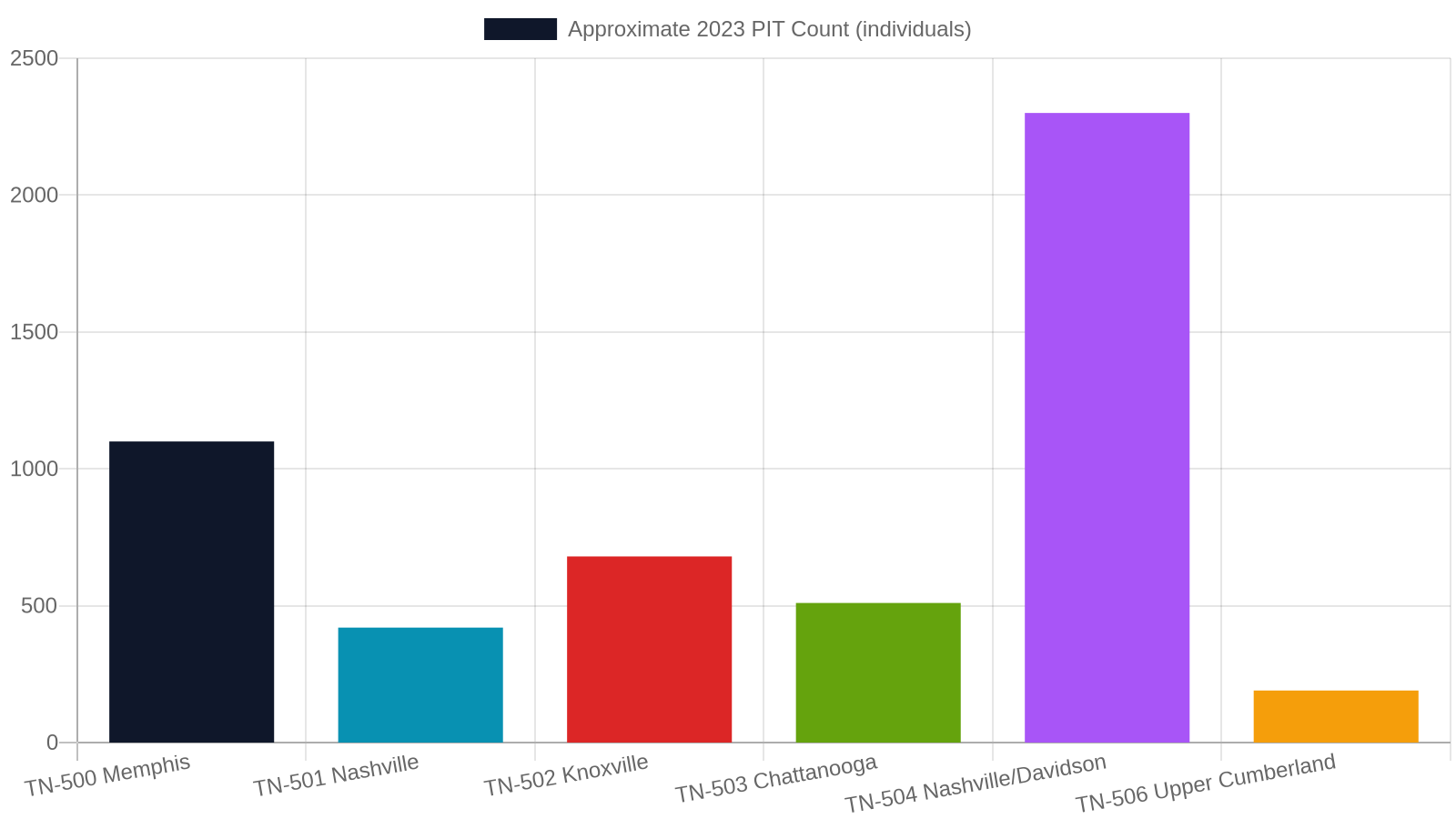
- They submit annual Point-in-Time (PIT) counts — a one-night snapshot of homelessness in their region
What the 2023 Point-in-Time Count Showed for Nashville
Every January, CoC regions conduct a Point-in-Time count of people experiencing homelessness. In the 2023 PIT count for TN-504 (Nashville/Davidson County), roughly 2,300 individuals were counted as homeless on a single night — a figure that advocates note significantly undercounts the true number because it misses people couch-surfing, staying in motels, or doubling up with family.
Among those counted, transition-age youth (TAY) ages 18–24 represented a meaningful share of the unsheltered population. Nationally, HUD estimates that unaccompanied youth make up approximately 4–7% of the total homeless population on any given night, but they are disproportionately represented among those who go uncounted. That gap is exactly why youth-specific advocacy inside the CoC matters so much.
2. Who Are Transition-Age Youth (TAY) in the CoC System?

Not everyone who uses the CoC system is the same, and the system itself recognizes that. Understanding exactly how transition-age youth are defined — and why that definition matters — is the first step toward getting the right help and advocating for better services.
The Definition That Unlocks Resources
In HUD’s framework, transition-age youth (TAY) are unaccompanied young people ages 18 to 24. Some Tennessee programs and state agencies extend that window to 17 to 25. Being classified as TAY — rather than an adult or a child — matters enormously because it determines which programs you’re eligible for, whether you can enter a youth-specific shelter, and how you’re prioritized in Coordinated Entry.
Key things that define TAY status in the CoC context:
- Unaccompanied: you are not with a parent or legal guardian
- Age range: typically 18–24 for HUD programs, 17–25 for many Tennessee-specific programs
- Homeless or at risk: you are experiencing literal homelessness, couch-surfing, or are at imminent risk of losing housing
If you’re 17 and unaccompanied, Tennessee has additional protections — a caseworker or CoC navigator can help you understand your options without automatically involving child welfare if that’s a concern for you.
Why TAY Face Unique Barriers
Transition-age youth are not just younger adults — they face a distinct set of barriers that adult-focused homeless services often aren’t designed to address:
- No rental history or credit score — landlords routinely reject applicants who can’t show 2+ years of rental history
- Aging out of foster care — in Tennessee, youth exit foster care at 18 (with some extended support to 21 under the Tennessee Fostering Connections Act), often with no housing lined up
- Trauma and trust — past experiences with systems (foster care, juvenile justice, family instability) can make it hard to trust service providers
- Employment gaps — without a stable address, getting and keeping a job is exponentially harder
- Safety concerns — LGBTQ+ youth are 40% more likely to experience homelessness than their peers, and adult shelters can be unsafe environments for young people
These realities are why youth-specific beds, youth-specific case management, and youth-led advocacy all exist as separate tracks within the CoC.
3. How Nashville's CoC TN-504 Is Structured

Nashville’s Continuum of Care isn’t one organization — it’s a whole ecosystem. Knowing who runs it, how funding flows, and how the intake process works puts you in a much stronger position, whether you’re seeking services for yourself or advocating for system change.
The Metropolitan Homelessness Commission
Nashville’s CoC is overseen by the Metropolitan Homelessness Commission (MHC), a city agency that coordinates funding, policy, and planning for homeless services across Davidson County. The MHC convenes the CoC’s governing board, manages the HMIS database, and submits Nashville’s annual HUD CoC grant application — which in recent years has totaled more than $15 million per year in federal funding for local programs.
Within that structure, dozens of nonprofit partners operate the actual programs: emergency shelters, rapid rehousing, permanent supportive housing, outreach teams, and transitional living programs. For transition-age youth specifically, key Nashville providers have historically included organizations focused on youth shelter, street outreach, and housing navigation.
Coordinated Entry: Your On-Ramp to Services
Coordinated Entry (CE) is the standardized process every CoC uses to assess people’s needs and connect them to the right housing resources. Think of it as a triage system — it’s designed to make sure the most vulnerable people get housed first, and that no single shelter or program is overwhelmed while others sit empty.
In Nashville’s TN-504, here’s roughly how Coordinated Entry works for a young adult:
- Access point: You connect with an outreach worker, a shelter, or a community organization that is an approved CE access point
- Assessment: A trained staff member uses a standardized tool (often the VI-SPDAT or a youth-specific version) to assess your vulnerability and housing needs
- Referral: Based on your score and available resources, you’re referred to the most appropriate program — emergency shelter, rapid rehousing, transitional housing, or permanent supportive housing
- Follow-up: A case manager stays in contact to help you move through the system
You have the right to ask questions about your assessment score and why you were referred to a particular program. Advocacy groups like YAAB have pushed for more transparent, youth-friendly CE processes across Tennessee.
Youth-Specific Programs Inside TN-504
Within Nashville’s CoC, there are programs specifically designed for TAY, including:
- Youth emergency shelters — short-term, safer alternatives to adult shelters for young people ages 18–24
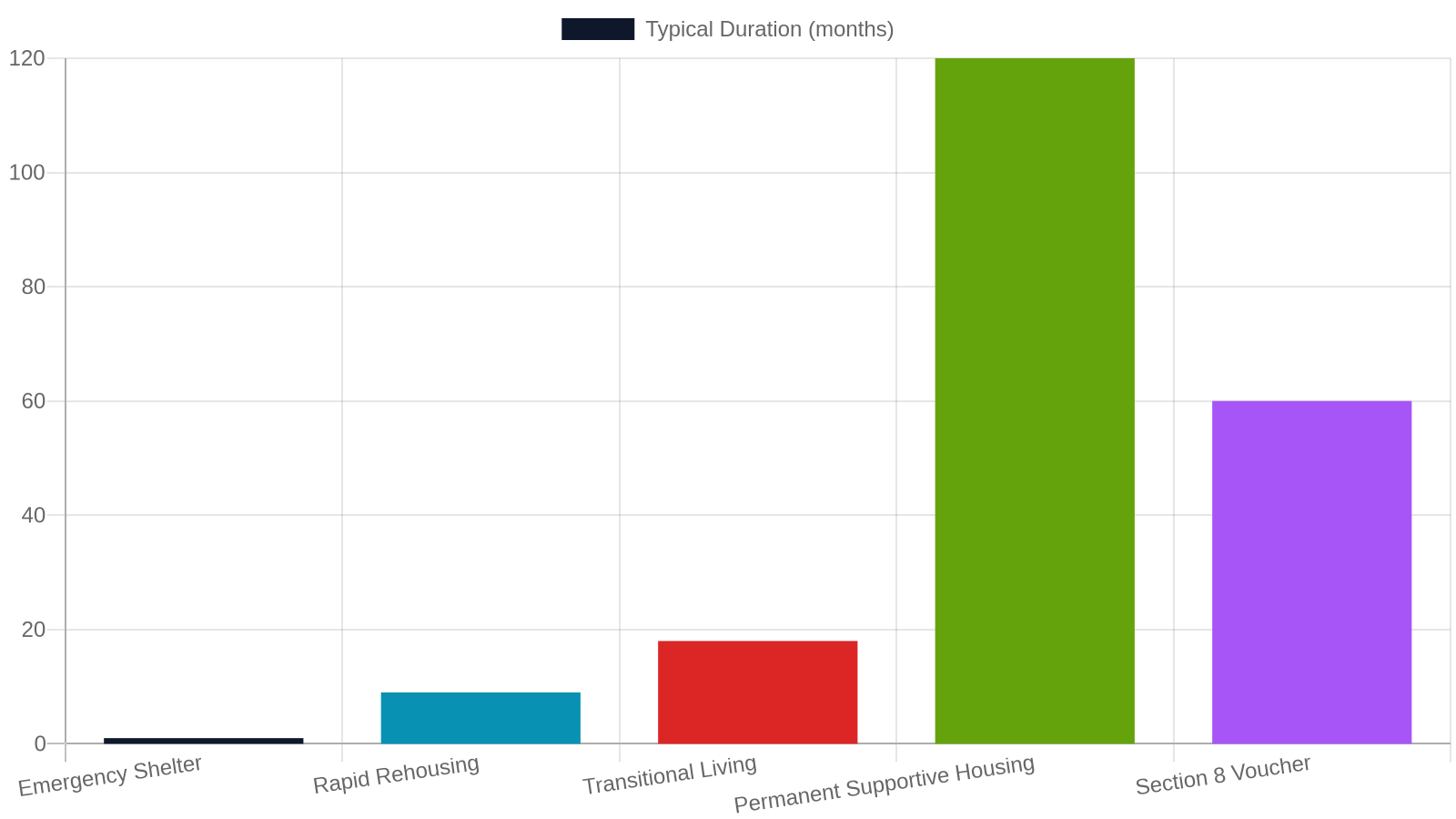
- Transitional living programs (TLPs) — typically 18–24 months of subsidized housing with case management, life skills, and employment support
- Rapid Rehousing (RRH) for youth — short-term rental assistance plus case management to help you get into your own apartment quickly
- Street outreach teams — workers who go to where young people are (parks, encampments, fast food restaurants) to build trust and connect youth to services without requiring them to come to an office
Availability of these programs changes based on funding cycles and capacity. The best way to find out what’s open right now is through a CE access point or a YAAB peer navigator.
4. What Is the Youth Action Board (YAAB) of Tennessee?

YAAB isn’t a support group or a program you graduate from — it’s a leadership platform. If you have lived experience of housing instability and you want to turn that experience into real change, YAAB is built for you. Here’s what it actually is and how it works.
Peer-Led, Policy-Focused, Statewide
The Youth Action Board (YAAB) of Tennessee is a statewide network of young adults ages 17 to 25 who have lived experience of homelessness or housing instability. YAAB members don’t just receive services — they shape the policies, programs, and funding decisions that affect transition-age youth across every CoC region in Tennessee.
YAAB operates at both the local and state level. Each CoC region has (or is building) its own local YAAB chapter, and those chapters connect to a statewide network that can bring youth voices to state-level policy conversations, including Tennessee’s Interagency Council on Homelessness and HUD’s national youth homelessness initiatives.
Core YAAB activities include:
- Advising CoC governing boards on youth-specific policies and program design
- Conducting peer outreach to connect young people to resources
- Participating in Point-in-Time counts and HMIS data review
- Testifying at local and state government hearings
- Developing peer-to-peer resource guides and toolkits
Why Lived Experience Is the Point
YAAB is built on a simple but powerful idea: the people most affected by a problem are the most qualified to help solve it. Young people who have navigated homelessness, the foster care system, or housing instability know things that no policy document or academic study can fully capture — which shelters feel safe, which intake processes are humiliating, which rules make it harder to get housed, and what kinds of support actually work.
When YAAB members sit at the table where CoC decisions get made, they bring that knowledge directly into the room. This is sometimes called participatory decision-making or youth engagement in systems change, but at its core it’s just common sense: ask the people who use the system how to make it better.
Research from organizations like True Colors United and the National Network for Youth consistently shows that youth-informed programs have better outcomes — higher housing retention rates, lower returns to homelessness, and greater trust between young people and service providers.
5. YAAB TN-504: Nashville's Local Youth Action Board

Of all the YAAB chapters across Tennessee, the Nashville chapter is uniquely positioned — it operates in the state’s largest CoC, with access to the most funding, the most service providers, and the most direct pathways to state-level policy influence. Here’s what you need to know about YAAB TN-504 specifically.
What the Nashville YAAB Does
The Nashville chapter of YAAB — operating within CoC TN-504 (Nashville/Davidson County) — is the local hub where young adults in Middle Tennessee can plug into advocacy, peer support, and systems-change work. Members of YAAB TN-504 participate directly in the CoC’s planning and governance processes, ensuring that youth voices are present when decisions about funding, program design, and policy are made.
Specific activities YAAB TN-504 members have engaged in include reviewing CoC grant applications for youth-responsiveness, participating in Coordinated Entry workgroups, and connecting peers to housing resources through trusted relationships rather than formal referrals. The Nashville YAAB also collaborates with the statewide YAAB network to amplify local issues at the state level.
Who Can Join and What to Expect
YAAB TN-504 is open to young adults ages 17 to 25 who are currently or have previously experienced homelessness or housing instability in the Nashville/Davidson County area. You don’t need to be currently homeless to join — lived experience from any point in your life qualifies you.
What membership looks like in practice:
- Regular meetings — typically monthly, with both in-person and virtual options
- Training and skill-building — public speaking, policy analysis, advocacy strategy, leadership development
- Stipends and compensation — YAAB values members’ time and expertise; many chapters offer stipends for participation
- A peer community — you’ll be surrounded by other young people who get it, without judgment
To learn more about joining or to connect with the Nashville chapter, visit the YAAB TN-504 page and reach out directly — it’s the fastest way to find out about upcoming meetings and how to get involved.
6. The Other Tennessee CoC Regions and Their YAABs

YAAB’s power comes partly from its statewide reach. When young people from Memphis, Nashville, Knoxville, Chattanooga, and rural Tennessee all speak with one coordinated voice, policymakers have to listen. Here’s how the regional structure works and why it matters.
A Statewide Network of Local Chapters
YAAB isn’t only for Nashville. Tennessee has ten CoC regions, and YAAB is building or has established local chapters in each of them. If you’re in Memphis, Knoxville, Chattanooga, Jackson, the Upper Cumberland, or Northeast Tennessee, there’s a local YAAB chapter working in your area — or one being built right now.
- TN-500 (Memphis/Shelby County): The state’s second-largest CoC, with a long-established youth advocacy presence
- TN-501 (Nashville/Balance of State): Covers suburban and rural Middle Tennessee counties outside Davidson
- TN-502 (Knoxville/Knox County): Strong university-community partnership ecosystem
- TN-503 (Chattanooga/Hamilton County): Growing youth homelessness response with regional momentum
- TN-506 (Upper Cumberland): Rural region with unique access challenges for TAY
- TN-507, TN-509: Additional regions covering West Tennessee and Northeast Tennessee
You can find your local YAAB chapter and contact information through the YAAB Tennessee local chapters directory.
Why Regional Context Matters for Advocacy
Homelessness and housing instability look different in Memphis than they do in a rural Upper Cumberland county. In urban CoCs like Nashville and Memphis, the challenge is often housing affordability and shelter capacity. In rural regions, it’s more likely to be transportation, service deserts, and lack of any youth-specific beds within a reasonable distance.
YAAB chapters tailor their advocacy to local conditions. A Memphis YAAB member might be pushing for more permanent supportive housing units downtown. A Northeast Tennessee YAAB member might be advocating for mobile outreach services that can reach young people in holler communities without reliable transportation. The statewide network lets these chapters learn from each other and coordinate on issues that cross regional lines — like state budget priorities, foster care policy, or statewide HMIS data standards.
7. Key Housing and Service Resources for TAY in Nashville

Knowing that resources exist is only useful if you know how to access them. Here’s a practical breakdown of the housing and wraparound services available to transition-age youth in Nashville’s CoC — and how to get connected.
Emergency and Short-Term Housing Options
If you need a safe place to stay tonight or this week, Nashville’s CoC has several entry points for transition-age youth. The fastest way to access them is through the Coordinated Entry system — call 211 (Tennessee’s statewide information and referral line, available 24/7) or connect with a street outreach worker.
Types of emergency options you may be referred to:
- Youth-specific emergency shelters — safer, age-appropriate environments with staff trained to work with TAY
- Crisis stabilization — short-term (usually 3–14 days) placements while a longer-term plan is developed
- Safe messaging motels/hotels — sometimes used when shelter beds are full; coordinated through CE
- Host home programs — volunteer community members who provide short-term housing for young people; available in some Nashville-area programs
You always have the right to ask what your options are and to decline a placement that doesn’t feel safe. A good case manager will work with you, not just assign you somewhere.
Longer-Term Pathways: Rapid Rehousing and Beyond
Emergency shelter is a bridge, not a destination. Nashville’s CoC funds several longer-term housing pathways for TAY:
- Rapid Rehousing (RRH): Typically 3–12 months of rental assistance plus a case manager who helps you find an apartment, negotiate with landlords, and build toward self-sufficiency. Most effective for youth who are ready to live independently with some support.
- Transitional Living Programs (TLPs): Up to 24 months in a structured housing setting with life skills training, employment support, and case management. Good fit for young people who need more time and support before living fully independently.
- Permanent Supportive Housing (PSH): Long-term subsidized housing with ongoing services, typically reserved for youth with the highest vulnerability scores and most complex needs.
- Mainstream housing vouchers: Programs like Section 8 / Housing Choice Vouchers can be accessed by TAY, though waitlists in Nashville are often 2–5+ years long — another reason YAAB advocates for more youth-specific housing funding.
Education, Employment, and Wraparound Supports
Stable housing is the foundation, but YAAB knows that young people need more than four walls. Nashville’s CoC ecosystem includes wraparound supports that address the full picture:
- GED and HiSET programs — multiple Nashville nonprofits offer free or low-cost pathways to a high school equivalency credential, often with flexible scheduling for young people working or in unstable housing
- Workforce development — programs like Tennessee’s Reconnect initiative offer free community college for adults without a degree; some Nashville organizations provide paid internships and job training specifically for TAY
- Mental health and substance use services — trauma-informed counseling, peer support specialists, and crisis lines are available through Nashville’s CoC network; many are free or sliding-scale
- Benefits navigation — help applying for TennCare (Medicaid), SNAP, Social Security, and other public benefits you may be entitled to
For a broader list of resources available to TAY across Tennessee, explore the YAAB Tennessee resources page.
8. How to Get Involved in Youth Advocacy Through the CoC

Getting involved in CoC advocacy as a young person isn’t just possible — it’s actively needed. The system works better when the people it’s supposed to serve have a real seat at the table. Here’s how to start, even if you’ve never done anything like this before.
Advocacy Isn't Just for Policy Wonks
When people hear the word advocacy, they sometimes picture suits in a capitol building. But most CoC-level advocacy happens in meeting rooms, community centers, and Zoom calls — and it’s open to anyone with lived experience and something to say. You don’t need a degree, a title, or years of experience to be an effective advocate. You need your story, your knowledge of what works and what doesn’t, and the willingness to show up.
Ways young people get involved in CoC advocacy without any prior experience:
- Attend a CoC community meeting — most CoC governing board meetings are open to the public; showing up as a young person with lived experience is itself a form of advocacy
- Join a workgroup — CoCs have subcommittees on topics like Coordinated Entry, youth services, and data; these are where real policy decisions get shaped
- Share your story — written testimonials, public comment periods, and media interviews are all ways your experience can influence decision-makers
- Join YAAB — the most direct pathway to structured, supported advocacy with peers who have your back
What YAAB Training and Support Looks Like
One of the things that makes YAAB different from just showing up to a meeting is the training and support infrastructure behind it. YAAB members don’t get thrown into policy rooms without preparation. The statewide YAAB network provides:
- Advocacy skills training — how to give public comment, how to read a budget, how to talk to a legislator
- Leadership development — facilitation skills, conflict resolution, team-building
- Peer mentorship — newer members are connected with more experienced YAAB advocates
- Compensation for your time — many YAAB chapters offer stipends, gift cards, or other compensation because your expertise has real value
- Connections to statewide and national networks — YAAB Tennessee connects to national organizations like True Colors United and the National Network for Youth, opening doors to conferences, fellowships, and opportunities beyond Tennessee
Learn more about YAAB’s advocacy work and how members are shaping Tennessee’s homelessness response on the YAAB advocacy page.
Tennessee CoC Regions at a Glance: Key Facts for TAY
Each of Tennessee's ten Continuum of Care regions has its own structure, geography, and YAAB chapter. Here's a quick comparison of the major regions most relevant to transition-age youth.
9. Understanding Your Rights as a Young Person in the CoC

Navigating the CoC system is much easier — and safer — when you know what you’re entitled to. Too many young people accept poor treatment or get turned away from programs they actually qualify for because they don’t know their rights. Here’s what you should know before you walk into any CoC-funded program.
HUD's Core Rights for People Experiencing Homelessness
HUD requires all CoC-funded programs to uphold specific rights for the people they serve. As a young adult accessing CoC services in Nashville or anywhere in Tennessee, you have the right to:
- Be treated with dignity and respect — no program funded by HUD can discriminate based on race, color, national origin, religion, sex, disability, or familial status
- Know what programs you’re eligible for — CoC staff must tell you what resources exist and why you were or weren’t referred to them
- File a grievance — every CoC-funded program must have a written grievance process; you can use it if you feel you were treated unfairly
- Privacy of your information — your data in HMIS is protected; you have the right to know what’s being collected and how it’s used
- Consent before sharing your story — organizations cannot use your photo, story, or personal information in fundraising or media without your explicit consent
Tennessee-Specific Protections for TAY
Beyond federal HUD rules, Tennessee has several state-level protections relevant to transition-age youth:
- Extended foster care: Under Tennessee’s Fostering Connections Act, youth who were in foster care can receive extended support services through age 21 — including housing assistance, case management, and educational support. If you aged out of foster care in Tennessee, ask your former caseworker or a CoC navigator about your eligibility.
- Minor consent laws: Tennessee allows minors in certain circumstances to consent to their own medical care, including mental health treatment — important for 17-year-olds navigating the system without parental support.
- McKinney-Vento Act: If you are a student experiencing homelessness (including couch-surfing or staying in motels), your school district is required to immediately enroll you, provide transportation, and connect you to a homeless liaison — even if you lack typical enrollment documents.
Knowing your rights doesn’t make the system perfect, but it gives you tools to push back when it falls short. YAAB members are trained to help peers understand and exercise these rights.
10. Barriers YAAB Is Working to Break Down in Tennessee

Understanding the system is one thing. Changing it is another. YAAB members across Tennessee are actively working to dismantle the barriers that keep young people locked out of stable housing and opportunity. Here’s what they’re fighting — and what they’ve already won.
Systemic Gaps That Hurt TAY
YAAB members across Tennessee have identified recurring systemic barriers that make it harder for young people to get and stay housed. These aren’t individual failures — they’re design flaws in the system that advocacy can change:
- Not enough youth-specific beds: In most Tennessee CoC regions, the number of youth shelter beds and transitional housing units falls far short of demand. Nashville has made progress, but gaps remain.
- Age restrictions that exclude 17-year-olds: Many programs serve ages 18–24, leaving 17-year-olds in a gray zone between child welfare and adult services.
- ID and documentation barriers: Many housing programs require a government-issued ID, Social Security card, and birth certificate — documents that young people who’ve experienced instability often don’t have. Getting them requires time, money, and sometimes navigating multiple state agencies.
- Criminal record exclusions: Many landlords and some housing programs exclude people with criminal records, disproportionately affecting young people of color who had contact with the juvenile or criminal justice system.
- Lack of LGBTQ+-affirming spaces: LGBTQ+ youth, who are overrepresented in the homeless population, often face hostility or unsafety in mainstream shelters.
Policy Wins YAAB Has Helped Achieve
Advocacy works — and YAAB members have been part of real wins in Tennessee’s homelessness response system. While specific outcomes vary by region and year, youth-led advocacy in Tennessee has contributed to:
- Inclusion of youth-specific performance measures in CoC grant applications, ensuring that programs serving TAY are evaluated on outcomes that matter to young people
- Adoption of lower-barrier intake processes at some Nashville-area programs, reducing the documentation requirements that previously screened out eligible youth
- Increased attention to LGBTQ+ youth safety in CoC planning, including training for shelter staff and development of affirming housing options
- Youth representation on CoC governing boards in multiple Tennessee regions — a structural change that ensures young people have a vote, not just a voice
These wins didn’t happen because someone handed them over. They happened because young people showed up, told the truth, and refused to be ignored. That’s what YAAB is about.
11. How Service Providers and CoC Partners Can Support TAY Advocacy

YAAB works best when service providers and CoC partners are genuine allies — not gatekeepers who tolerate youth input, but organizations that actively create space for young people to lead. Here’s what that looks like in practice, and how your organization can be part of the solution.
What Meaningful Youth Engagement Actually Looks Like
For case managers, CoC coordinators, and service providers reading this: youth engagement isn’t a checkbox. Inviting one young person to sit in a meeting and then ignoring what they say is not meaningful participation — and young people can tell the difference immediately.
Meaningful youth engagement in the CoC context includes:
- Compensating youth for their time and expertise — stipends, gift cards, or paid positions signal that you value their contribution as much as any other consultant’s
- Scheduling meetings accessibly — evening or weekend options, virtual participation, childcare, and transportation support remove practical barriers to participation
- Sharing information in advance — sending agendas, background documents, and plain-language summaries before meetings gives youth members time to prepare and contribute meaningfully
- Acting on what you hear — document youth input, report back on what was done with it, and explain clearly when something can’t be changed and why
- Building long-term relationships — trust takes time; invest in it
Partnering with YAAB as an Organization
If your organization works with transition-age youth in Tennessee, partnering with YAAB is one of the most effective ways to improve your programs and your credibility with the young people you serve. YAAB chapters can:
- Review your intake forms, program rules, and policies for youth-friendliness
- Provide peer outreach to connect hard-to-reach youth to your services
- Co-facilitate trainings for your staff on trauma-informed, youth-centered practice
- Participate in your program’s advisory board or quality improvement process
To explore a partnership or learn more about how YAAB works with CoC partners across Tennessee, visit the About YAAB page for background on the organization’s structure and approach, or reach out through the contact page.
Ready to Join YAAB TN-504 or Find Your Local Chapter?

Everything in this guide points toward one thing: action. Whether that means accessing services, knowing your rights, or stepping into advocacy, the path forward is real and it’s open to you. Here’s exactly how to take the next step in Nashville or anywhere across Tennessee.
Your Next Step Starts Here
If you’re a young adult ages 17 to 25 in Nashville or anywhere in Tennessee with lived experience of housing instability, YAAB has a seat at the table with your name on it. You don’t need to have it all figured out. You don’t need to be the best public speaker or know anything about policy. You just need to show up — and YAAB will meet you where you are.
Here’s how to take the next step:
- Nashville/Davidson County: Connect with YAAB TN-504 to find out about upcoming meetings, how to join, and what membership looks like day-to-day
- Other Tennessee regions: Find your local chapter through the YAAB Tennessee local chapters directory
- Not sure where to start? The YAAB join page has information for young people across the state who want to get connected
The young people shaping Tennessee’s homelessness response right now were once in the same position you might be in today — looking for a way in. YAAB is that way in. Your experience is not a liability. It’s your greatest qualification.
You Don't Have to Navigate This Alone
Whether you’re looking for housing resources right now, trying to understand your rights, or ready to step into a leadership role, the YAAB network across Tennessee is here to help you figure out your next move. From Memphis to Nashville to Knoxville to the rural corners of the Upper Cumberland and Northeast Tennessee, young people with lived experience are building something real — a statewide movement for housing justice that centers the voices of the people most affected.
That movement needs you. Not someday. Now.
Reach out to YAAB TN-504 in Nashville, explore the resources on this site, and know that whatever you’re navigating, you’re not navigating it alone. Tennessee’s transition-age youth deserve better — and the young people of YAAB are making sure that message gets heard, from community meetings to the state capitol.
Frequently Asked Questions
What is the Continuum of Care for youth in Nashville Tennessee?
Nashville's Continuum of Care (CoC TN-504) is a coordinated network of nonprofits, government agencies, and housing providers in Davidson County that work together to prevent and end homelessness. For transition-age youth ages 18–24, the CoC offers emergency shelter, rapid rehousing, transitional living programs, and case management. You access these through Coordinated Entry — call 211 to get started.
How do I join the Youth Action Board (YAAB) in Nashville?
If you're ages 17–25 with lived experience of homelessness or housing instability in Nashville or Davidson County, you can join YAAB TN-504 by visiting yaabtn.org/local-yaabs/tn-504/ and reaching out directly. No prior experience or credentials are required — your lived experience is your qualification.
What does transition-age youth mean in the context of homelessness?
Transition-age youth (TAY) refers to unaccompanied young people ages 18–24 (sometimes 17–25 in Tennessee programs) who are experiencing or at risk of homelessness. This age group faces unique barriers — no rental history, aging out of foster care, limited income — that adult-focused homeless services often aren't designed to address, which is why youth-specific programs and advocacy groups like YAAB exist.
What rights do I have as a young person in a CoC-funded shelter or program?
You have the right to be treated with dignity, to know what programs you're eligible for, to file a grievance if you're treated unfairly, to privacy of your HMIS data, and to consent before your story or image is used by an organization. HUD requires all CoC-funded programs to uphold these rights. YAAB members can help you understand and exercise them.
What help is available in Tennessee for youth aging out of foster care?
Tennessee's Fostering Connections Act allows youth who were in foster care to receive extended support services through age 21, including housing assistance and case management. You may also be eligible for CoC housing programs, TennCare, SNAP, and workforce development programs. Ask a CoC navigator or YAAB peer advocate to help you identify everything you qualify for.
Is YAAB only for Nashville, or does it cover all of Tennessee?
YAAB operates statewide across all ten of Tennessee's CoC regions, including Memphis, Knoxville, Chattanooga, Jackson, the Upper Cumberland, and Northeast Tennessee. Each region has a local YAAB chapter or one in development. You can find your local chapter at yaabtn.org/local-yaabs/.