Quick answer: The Youth Action Board (YAAB) of Tennessee is a statewide peer-led network of young adults ages 17 to 25 with lived experience of homelessness who help shape housing policy and services across Tennessee. Within the Central Tennessee Continuum of Care (CoC TN-503), which covers Nashville and Davidson County, YAAB members advise local leaders, connect peers to resources, and drive real policy change. If you're a young adult in Middle Tennessee who has experienced housing instability, you can join your local YAAB, make your voice count, and help build better systems for everyone.
1. What Is a Continuum of Care — and Why Does It Matter to You?

Before you can understand what YAAB does inside the Central Tennessee Continuum of Care, it helps to know what a CoC actually is and why the system was built the way it was. This section breaks it down in language that actually makes sense — no government jargon required.
The CoC System Explained in Plain Terms
A Continuum of Care (CoC) is a regional planning body funded by the U.S. Department of Housing and Urban Development (HUD) that coordinates homeless services — from street outreach and emergency shelter all the way through permanent supportive housing. Think of it as the backbone network that connects every shelter, housing program, and support service in a given area so they work together instead of in silos.
Tennessee has nine CoC regions, each covering different counties. The Central Tennessee CoC, designated TN-503, covers Nashville and Davidson County. Every year, CoC regions compete for federal funding through HUD’s annual CoC Program Competition, which awarded over $3.16 billion nationally in 2023. How those dollars get spent — and who gets served — is shaped by the people sitting at the planning table.
Why Transition-Age Youth Are a Distinct Population
HUD and CoC planners use the term transition-age youth (TAY) to describe people ages 16 to 24 who are experiencing homelessness. This group faces barriers that are completely different from those facing adults or families with children: lack of rental history, no credit, limited work experience, aging out of foster care, and a higher risk of trafficking or exploitation.
According to HUD’s 2023 Annual Homeless Assessment Report, approximately 35,574 unaccompanied youth were counted as homeless on a single night across the U.S. — and that number is widely considered an undercount because many young people couch-surf or stay in hidden locations. In Tennessee, youth make up a significant share of the homeless population in every major metro area, including Nashville.
Because TAY needs are so specific, CoC regions are encouraged — and increasingly required — to include youth voices in their governance. That’s exactly where YAAB comes in.
2. Central Tennessee CoC (TN-503): What It Covers and Who It Serves

Understanding the specific region helps you see exactly where YAAB’s work lands — and what’s at stake for young people in Middle Tennessee right now.
Geography and Governance of TN-503
The Central Tennessee CoC, TN-503, is one of the largest and most active CoC regions in the state. It is centered on Nashville and Davidson County and is governed by a CoC Board that includes representatives from homeless service providers, government agencies, people with lived experience, and community organizations.
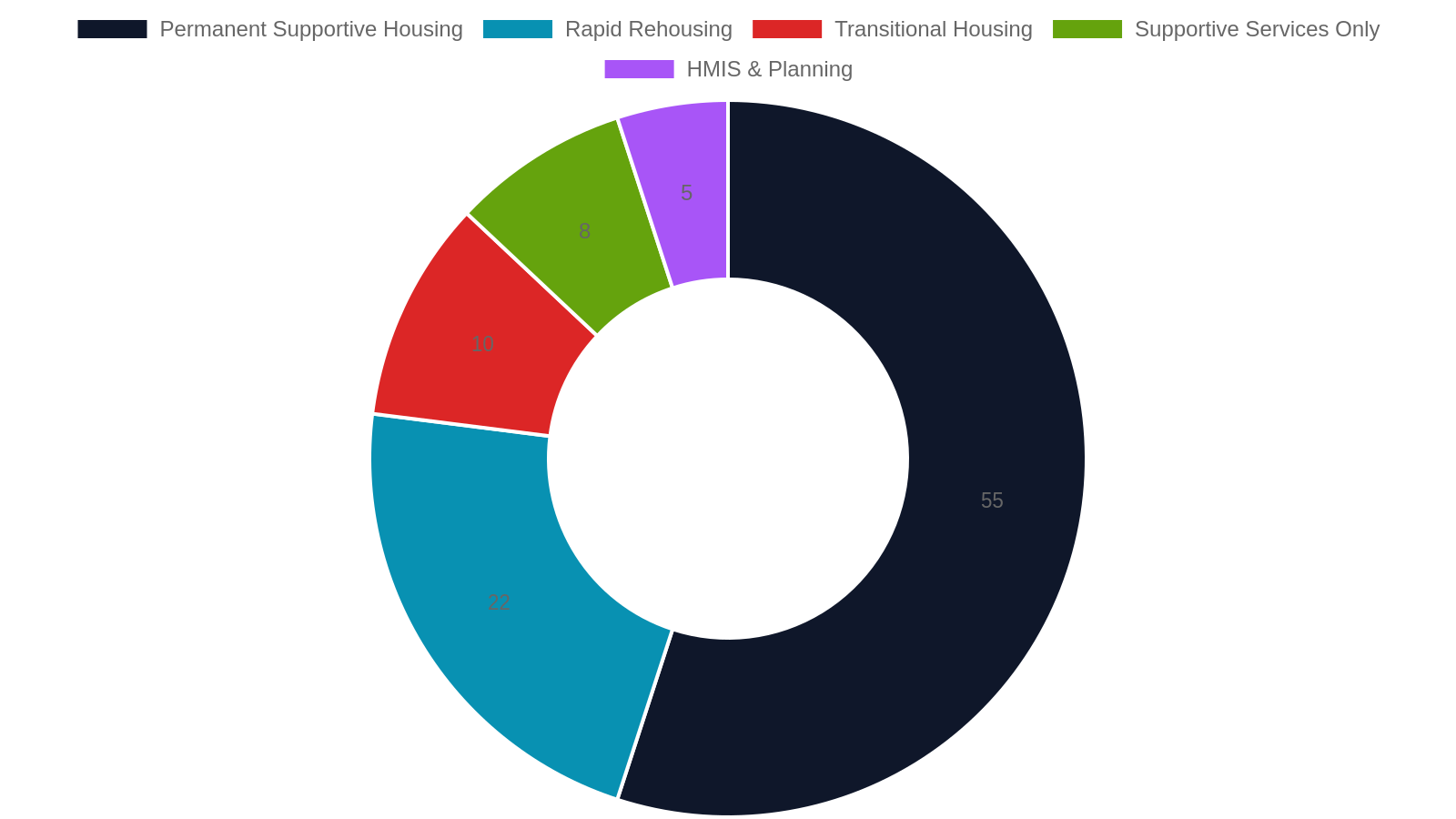
The CoC’s lead agency coordinates the Homeless Management Information System (HMIS), runs the annual Point-in-Time (PIT) count every January, and submits the annual funding application to HUD. In recent years, Nashville’s CoC has focused heavily on rapid rehousing, permanent supportive housing, and diversion strategies — all areas where youth-specific programming is critically underfunded relative to need.
Youth Homelessness Data in Middle Tennessee
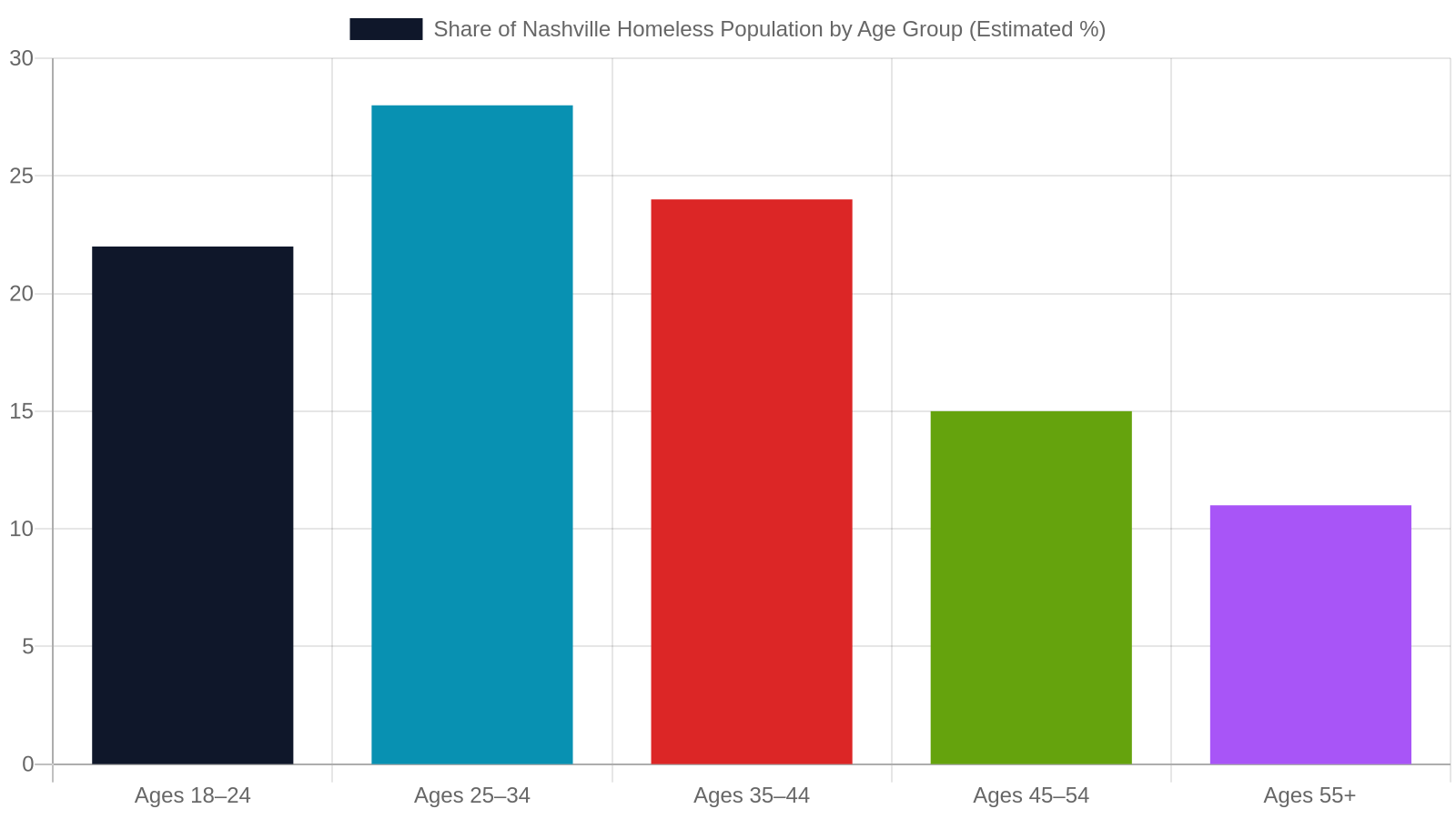
Nashville’s 2023 PIT count identified hundreds of unaccompanied youth experiencing homelessness on a single night in Davidson County — but service providers and outreach workers consistently report that the real number is much higher because many young people avoid official shelters out of fear or distrust.
Key data points for Middle Tennessee youth:
- Ages 18–24 represent the fastest-growing segment of Nashville’s homeless population over the past five years.
- Approximately 40–50% of youth experiencing homelessness in Tennessee have a history in the foster care system.
- LGBTQ+ youth are estimated to make up 20–40% of homeless youth nationally, often fleeing family rejection.
- The average age a young person first experiences homelessness in Tennessee is between 17 and 19.
These numbers aren’t just statistics — they represent real people whose futures depend on whether the systems around them are designed with their actual needs in mind.
3. What Is the Youth Action Board (YAAB) of Tennessee?

YAAB is the organization behind the advocacy work happening inside Tennessee’s CoC regions — and it was built by and for young people like you. Here’s what makes it different from most youth-serving organizations.
Peer-Led, Not Program-Run
YAAB is not a case management program. It’s not a shelter. It’s a peer-led advocacy network made up of young adults ages 17 to 25 who have personally experienced homelessness or housing instability — and who use that experience to make systems better for everyone who comes after them.
Members of YAAB sit on CoC committees, review funding applications, give public testimony, consult on program design, and connect their peers to resources. The whole model is built on the idea that the people closest to a problem are the most qualified to help solve it — a principle sometimes called “lived experience leadership.”
YAAB's Statewide Structure
YAAB operates across multiple CoC regions in Tennessee, with local chapters embedded in each region’s Continuum of Care governance structure. Each local YAAB is connected to the statewide network, which means members can share strategies, amplify each other’s advocacy, and push for policy changes that affect all of Tennessee — not just their home region.
The statewide YAAB network focuses on:
- Policy advocacy at the state and federal level
- Program consultation — reviewing how services are designed and delivered
- Peer support and connection — linking young people to housing, employment, and education resources
- Leadership development — building skills in public speaking, data literacy, and systems navigation
You can learn more about the overall mission and structure at the YAAB About page.
4. How YAAB Operates Inside the TN-503 CoC

Inside the TN-503 CoC, YAAB isn’t just a presence — it’s an active force shaping how money gets spent and how programs get designed. Here’s what that looks like in practice.
Seats at the Decision-Making Table
One of YAAB’s most important functions in the Central Tennessee CoC is ensuring that young adults with lived experience hold real seats on CoC governance bodies — not just token advisory roles. This includes participation in the CoC Board, subcommittees focused on youth homelessness, and the annual project ranking process that determines which programs receive HUD funding.
HUD’s CoC Program regulations require that CoC governance include people with lived experience of homelessness. YAAB members fulfill that requirement in a meaningful way — showing up prepared, with data, personal testimony, and policy recommendations that reflect what young people in Middle Tennessee actually need.
Advising on Youth-Specific Programs and Funding
Every year, the TN-503 CoC submits a funding application to HUD that includes projects serving youth. YAAB members in Central Tennessee review those applications and provide feedback on whether proposed programs are actually designed to work for transition-age youth — things like:
- Are intake processes trauma-informed and youth-friendly?
- Do programs accept youth without a co-signer or rental history?
- Are LGBTQ+ youth explicitly welcomed and protected?
- Do programs connect young people to education and employment, not just housing?
This kind of detailed, experience-based feedback is something that no amount of professional training can fully replicate. It makes the programs that get funded genuinely better.
Connecting Peers to Resources Across Nashville
Beyond formal governance, YAAB members in Middle Tennessee serve as informal navigators — people who can help a peer figure out which shelter accepts youth, which rapid rehousing program has openings, or how to access mental health services without insurance. This peer navigation role is especially powerful because it’s built on trust: a young person who has been through the system themselves knows exactly what questions to ask and what pitfalls to avoid.
YAAB also maintains connections to education pathways (GED programs, community college enrollment), workforce development programs, and financial literacy resources — all of which are critical for young people trying to achieve long-term housing stability, not just a temporary roof.
5. The 8 Core Issues YAAB Advocates for in Central Tennessee

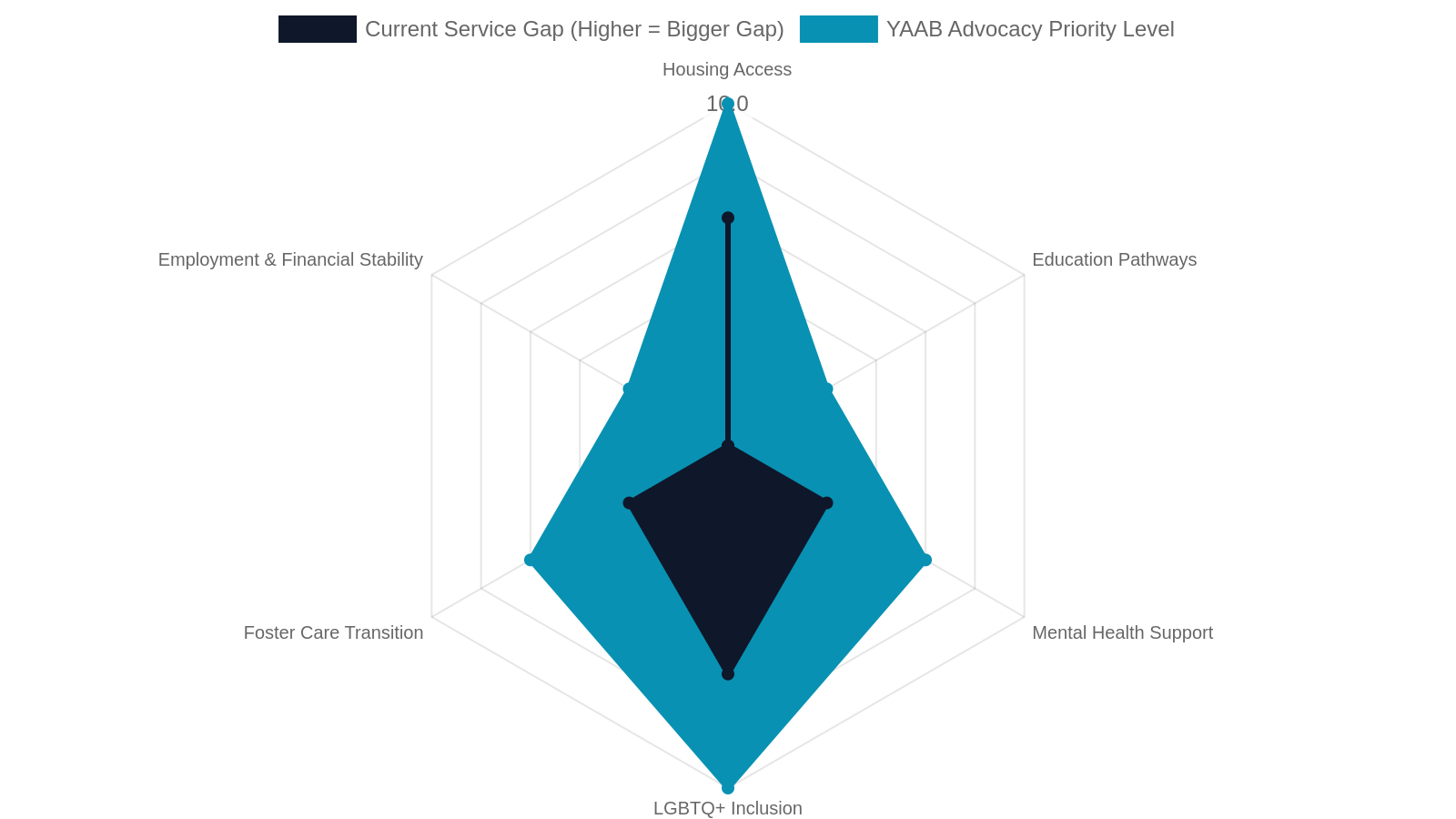
YAAB’s advocacy agenda in Central Tennessee is driven by what members have actually lived through. These six issue areas represent the most urgent priorities for transition-age youth in the Nashville/Davidson County region — and they’re all interconnected.
Housing Access and Rapid Rehousing
The number-one issue for transition-age youth in Nashville is simply getting housed — and staying housed. YAAB advocates for youth-specific rapid rehousing programs that don’t require a co-signer, don’t penalize young people for lack of rental history, and provide case management support for at least 12–24 months after move-in. Nashville’s rental market has seen average rents rise over 30% since 2019, making rapid rehousing subsidies more critical than ever for young adults earning entry-level wages.
Education and Credential Pathways
Housing instability is one of the biggest barriers to completing school. YAAB pushes for CoC-funded programs to actively connect young people to GED preparation, high school equivalency testing, community college enrollment, and vocational training. Tennessee’s Tennessee Promise and Tennessee Reconnect programs offer tuition-free community college — but navigating those systems while experiencing homelessness is nearly impossible without support. YAAB advocates for programs that bridge that gap.
Mental Health and Substance Use Support
Research consistently shows that young people experiencing homelessness have significantly higher rates of depression, anxiety, PTSD, and substance use than their housed peers. YAAB advocates for trauma-informed, youth-affirming mental health services that are integrated into housing programs — not siloed in separate systems that require multiple appointments and referrals. In Middle Tennessee, access to mental health services without insurance or with TennCare remains a significant barrier, and YAAB members speak to that reality directly in CoC planning conversations.
LGBTQ+ Youth Safety and Inclusion
LGBTQ+ youth are dramatically overrepresented in the homeless youth population — estimates range from 20 to 40% of homeless youth nationally, compared to roughly 7–10% of the general youth population. YAAB advocates for all CoC-funded programs to have explicit non-discrimination policies, staff training on LGBTQ+ inclusion, and gender-affirming shelter options. In Nashville, this is an especially urgent issue given ongoing legislative debates about LGBTQ+ rights in Tennessee.
Foster Care Transition and Aging Out
Young people who age out of Tennessee’s foster care system at 18 — or at 21 if they remain in extended foster care — face an abrupt cliff. YAAB advocates for stronger connections between the Tennessee Department of Children’s Services (DCS) and CoC-funded housing programs, so that youth don’t fall through the gap between systems. Tennessee’s Fostering Futures program extends support to age 21, but awareness and enrollment remain inconsistent across the state’s 95 counties.
Employment and Financial Stability
A paycheck alone doesn’t solve housing instability — young people also need help with credit building, banking access, and understanding leases. YAAB supports programs that combine workforce development with financial literacy coaching, and advocates for employers in the Nashville area to adopt youth-friendly hiring practices that don’t automatically disqualify applicants based on background checks or gaps in employment history.
6. How YAAB Compares to Other Youth-Serving Organizations in Nashville

It’s worth understanding where YAAB fits in Nashville’s broader youth services landscape — not because you have to choose, but because knowing the difference helps you see exactly what YAAB can do that no other organization in the city does.
What Makes YAAB Different
Nashville has a strong ecosystem of youth-serving nonprofits — organizations like Oasis Center, Campus for Human Development, and Open Table Nashville provide critical direct services including shelter, meals, case management, and mental health support. These organizations are essential partners in the CoC system.
But YAAB occupies a fundamentally different role. Rather than delivering services directly to young people, YAAB works at the systems level — influencing how services are designed, funded, and evaluated. YAAB members are not clients; they are co-designers and decision-makers. That distinction matters enormously for how change actually happens in a CoC region.
Complementary, Not Competing
The most effective CoC regions are ones where direct service providers and lived-experience advocates work together — where a shelter director listens to YAAB feedback and actually changes intake procedures, or where a rapid rehousing program adjusts its eligibility criteria based on what YAAB members report as barriers. In Central Tennessee, YAAB’s goal is to be the connective tissue between young people’s real experiences and the institutional decisions that shape their lives.
If you’re currently receiving services from a Nashville youth organization, getting involved with YAAB doesn’t mean leaving that support behind — it means adding your voice to the conversation about how those services could be even better.
7. What YAAB Membership Actually Looks Like Day to Day

Curious what it’s actually like to be part of YAAB? Here’s a realistic picture of what membership involves — the commitments, the benefits, and what you’ll walk away with.
Meetings, Trainings, and Advocacy Actions
Being a YAAB member isn’t a full-time job — it’s a commitment that fits around your life. Members typically participate in regular chapter meetings (often monthly or bi-monthly), attend CoC subcommittee meetings relevant to youth, and take part in advocacy actions like public comment periods, legislative testimony, or community forums.
YAAB also provides leadership development training — things like how to read a HUD funding application, how to give effective public testimony, how to use data to support an argument, and how to facilitate a meeting. These are real, transferable skills that look great on a resume and help you in every area of life.
Stipends, Support, and Recognition
YAAB recognizes that asking young people — especially those navigating housing instability — to give their time and expertise without compensation is exploitative. Many YAAB chapters provide stipends or honoraria for members’ participation in formal advocacy activities, CoC meetings, and training events. The specifics vary by region and available funding, but the principle is consistent: lived experience is expertise, and expertise deserves compensation.
Members also gain access to a statewide peer network, mentorship opportunities, and connections to employment and education resources through YAAB’s partner organizations across Tennessee.
No Experience Required — Just Your Story
You don’t need a college degree, a perfect housing record, or any prior advocacy experience to join YAAB. The only qualification is that you are between 17 and 25 years old and have personal experience with homelessness or housing instability in Tennessee. Your story is the credential. Everything else — the policy knowledge, the public speaking skills, the systems navigation — YAAB will help you build.
Many current YAAB members say that joining was the first time they felt like their experience was treated as an asset rather than a liability. That shift in perspective is powerful — and it tends to ripple outward into every other part of a young person’s life.
Tennessee CoC Regions at a Glance: Key Characteristics
All nine Tennessee CoC regions have active or developing YAAB chapters. Use this table to quickly find your region and understand its scope.
8. Navigating Tennessee's CoC Regions: Where Does Your City Fit?

Tennessee is a big, diverse state — and the CoC system reflects that. Here’s a quick orientation to all nine regions so you can find exactly where you and your community fit into the statewide picture.
Tennessee's Nine CoC Regions at a Glance
Tennessee is divided into nine HUD-designated CoC regions, each with its own governance structure, lead agency, and YAAB chapter (or developing chapter). Knowing which CoC covers your area is the first step to connecting with the right local YAAB and the right local services.
- TN-500 — Memphis/Shelby County
- TN-501 — Nashville/Davidson County (note: TN-503 is the broader Middle TN CoC)
- TN-502 — Knoxville/Knox County
- TN-503 — Central Tennessee (Nashville/Davidson focus)
- TN-504 — Northeast Tennessee
- TN-506 — Upper Cumberland
- TN-507 — Jackson/West Tennessee
- TN-509 — Chattanooga/Hamilton County
Each region has its own housing landscape, service providers, and advocacy priorities — but all are connected through the statewide YAAB network.
Finding Your Local YAAB
If you’re not sure which CoC covers your county, the easiest way to find out is to visit the YAAB local chapters page, which lists all active regional chapters with contact information and meeting details. Whether you’re in Memphis, Knoxville, Chattanooga, or a rural county in between, there is a YAAB community working on the issues that affect you.
If you’re specifically in the Nashville area or Davidson County, the TN-503 chapter is your home base. You can find full details, meeting schedules, and contact information for the Central Tennessee YAAB at the TN-503 local YAAB page — that’s the best starting point for getting connected.
9. How CoC Funding Flows — and Why Youth Voices Change the Outcome

Understanding how federal dollars actually move through the CoC system helps you see exactly why having young people at the table isn’t just symbolic — it has real financial consequences for how much funding reaches youth-specific programs.
The Annual HUD Funding Cycle
Every year, HUD releases a Notice of Funding Opportunity (NOFO) for the CoC Program. Local CoCs then compile applications from their member organizations, rank those projects, and submit a consolidated application to HUD. The ranking process — who gets funded and who doesn’t — is one of the most consequential decisions a CoC makes all year.
In fiscal year 2023, HUD awarded over $3.16 billion through the CoC Program nationally. Tennessee CoCs collectively receive millions of dollars annually through this process. How that money is allocated — how much goes to youth-specific programs versus adult programs, how much goes to rapid rehousing versus permanent supportive housing — is directly influenced by who is in the room during the ranking process.
Point-in-Time Counts and Youth Undercounting
The Point-in-Time (PIT) count happens every January and is used by HUD to measure the scale of homelessness in each CoC region. The problem? Young people are systematically undercounted because many avoid shelters and stay in places that PIT count volunteers don’t reach — cars, abandoned buildings, with friends or family in overcrowded conditions.
YAAB advocates for youth-specific PIT count methodologies that include outreach to non-shelter locations, peer-led counting teams, and follow-up surveys. Better data means more accurate funding allocations — which ultimately means more resources for young people in Middle Tennessee.
HMIS and Data Privacy for Youth
The Homeless Management Information System (HMIS) is the database that CoCs use to track who is receiving services. For young people — especially those fleeing family rejection, domestic violence, or trafficking — data privacy is a serious concern. YAAB advocates for strong HMIS privacy protections for youth, including restrictions on who can access a young person’s record and clear policies about what happens to data after a young person exits the system.
10. Real Ways to Get Involved With YAAB in Central Tennessee Right Now

Getting involved doesn’t have to be complicated or overwhelming. Here are three concrete entry points — choose the one that fits where you are right now.
Join as a Member
The most direct way to get involved is to join your local YAAB chapter. If you’re in the Nashville/Davidson County area, that means connecting with the TN-503 chapter. You’ll need to be between 17 and 25, have lived experience of homelessness or housing instability, and be willing to commit to participating in meetings and advocacy activities.
The application process is designed to be accessible — it’s not a job interview, and there’s no GPA requirement or background check. YAAB wants to hear your story and your ideas. You can start the process by visiting the YAAB join page to learn about membership and next steps.
Attend a CoC Meeting as an Observer
CoC meetings are generally open to the public, and attending as an observer is a great way to understand how the system works before committing to a formal role. You’ll see how decisions get made, who the key players are, and where the gaps in youth representation actually show up. YAAB members can tell you when and where the next TN-503 CoC meeting is happening — just reach out through the chapter page.
Share Your Story and Advocate
Even if you’re not ready to commit to formal membership, you can still contribute to YAAB’s advocacy work by sharing your story — through written testimony, social media, community forums, or conversations with your case manager or service provider. Every story that reaches a decision-maker has the potential to shift how they see a policy or a program.
YAAB’s advocacy page has current campaigns and action alerts where you can add your voice without needing to attend meetings or navigate complex systems. Start there if you want to make an impact right now.
Your Next Move: Connect With the TN-503 YAAB Today

You’ve read the whole guide — now here’s what to do with it. Whether you’re ready to join YAAB today or just want to learn more, these are your clearest next steps for getting connected in Central Tennessee.
You Belong at the Table
If you’ve made it this far, you already know more about how the Central Tennessee Continuum of Care works than most adults in Nashville. That knowledge — combined with your lived experience — is exactly what YAAB needs at the table.
The systems that affect young people experiencing homelessness in Middle Tennessee were not designed by young people. They were designed by well-meaning adults who, no matter how skilled, cannot fully understand what it’s like to be 19 years old, couch-surfing in Nashville, trying to figure out how to get a lease without a co-signer or a rental history. You understand that. And that understanding is power.
Resources to Explore Right Now
Here are the most useful next steps depending on where you are:
- Learn about youth homelessness in Tennessee: Understanding Youth Homelessness — a plain-language overview of the issue and the systems involved.
- Connect with the Central Tennessee YAAB: Visit the TN-503 local YAAB page for meeting schedules, contact info, and how to get involved in Nashville and Davidson County.
- Find resources for housing, employment, and education: The YAAB resources page has curated links to services across Tennessee’s CoC regions.
The Central Tennessee CoC is one of the most active regions in the state — and with your voice added to it, it can be even better. The table has a seat with your name on it. Come pull it up.
Frequently Asked Questions
What is the Central Tennessee Continuum of Care (TN-503)?
The Central Tennessee Continuum of Care, designated TN-503 by HUD, is the regional planning and coordinating body for homeless services in Nashville and Davidson County. It brings together shelters, housing programs, government agencies, and advocates to coordinate services and apply for federal funding through HUD's annual CoC Program competition.
Who can join the Youth Action Board (YAAB) in Tennessee?
Any young adult between the ages of 17 and 25 who has personal lived experience of homelessness or housing instability in Tennessee is eligible to join YAAB. No prior advocacy experience, college degree, or perfect housing record is required. Your lived experience is the qualification.
Does YAAB provide housing or shelter directly?
No — YAAB is not a direct service provider. YAAB is a peer-led advocacy organization that works at the systems level, influencing how housing programs are designed and funded. However, YAAB members can connect you to housing resources and services through their peer navigation role and the YAAB resources page.
Do YAAB members get paid for their time?
Many YAAB chapters provide stipends or honoraria for members' participation in formal advocacy activities, CoC meetings, and training events. YAAB operates on the principle that lived experience is expertise and expertise deserves compensation. Specific stipend amounts vary by chapter and available funding.
How does YAAB help young people aging out of foster care in Tennessee?
YAAB advocates for stronger connections between Tennessee's Department of Children's Services and CoC-funded housing programs so youth don't fall through the gap when they age out at 18 or 21. YAAB members also help peers navigate programs like Tennessee's Fostering Futures initiative, which extends support to age 21.
How do I find out which Tennessee CoC region covers my county?
The easiest way is to visit the YAAB local chapters page at yaabtn.org/local-yaabs/, which lists all regional chapters with contact information. You can also contact your local homeless services provider or 211 Tennessee, which can direct you to CoC resources in your area.