Quick answer: Tennessee's Youth Action Board (YAAB) is a statewide network of young adults ages 17 to 25 who have lived through homelessness or housing instability. Across all seven Continuum of Care regions — Memphis/Shelby, Nashville/Davidson, Knoxville/Knox, Chattanooga/Hamilton, Jackson/West TN, Upper Cumberland, and Northeast TN — YAAB members advise policymakers, shape local programs, and connect peers to real housing, employment, education, and mental health resources. If you're a young adult in Tennessee looking for support or a way to lead, YAAB is built by people like you, for people like you.
What Is Tennessee YAAB and Why Does It Exist?

Before diving into what YAAB does across Tennessee’s seven regions, it helps to understand why this organization exists and what makes it different from a traditional social service agency. YAAB isn’t a program that serves youth — it’s a movement led by youth. Every initiative, every policy recommendation, and every resource connection flows from the lived experience of young adults who’ve been there.
Built by Young Adults, for Young Adults
YAAB — the Youth Action Board of Tennessee — was created on a simple but powerful idea: the people most affected by a problem should have the loudest voice in solving it. Young adults ages 17 to 25 who have experienced homelessness or housing instability bring knowledge that no policy paper or academic study can replicate. They know which shelter rules feel dehumanizing, which job programs actually lead to paychecks, and which systems leave transition-age youth behind.
YAAB members don’t just share their stories — they sit at the table with Continuum of Care leaders, state agencies, and service providers to push for changes that work in the real world. That’s not charity. That’s leadership.
The Transition-Age Youth Gap in Tennessee
Transition-age youth (TAY) — those between 17 and 25 — face a uniquely dangerous window. They’re often too old for child-focused services and too young or under-resourced to access adult systems smoothly. In Tennessee, an estimated 1 in 30 young adults experience homelessness in a given year, with youth aging out of foster care, LGBTQ+ youth, and young people of color disproportionately affected. YAAB exists specifically to close that gap — not with pity, but with peer power and policy change.
The 7 Continuum of Care Regions YAAB Covers

YAAB’s statewide reach is organized around Tennessee’s Continuum of Care (CoC) structure — the federal framework that coordinates homeless services region by region. Understanding which region you live in matters, because local YAAB chapters tailor their work to the specific needs, resources, and gaps in their community. Here’s how the seven regions break down.
What Is a Continuum of Care?
A Continuum of Care (CoC) is a regional planning body — funded and overseen by the U.S. Department of Housing and Urban Development (HUD) — that coordinates homeless services in a geographic area. Tennessee has eight CoC regions, seven of which have an active or developing YAAB chapter. Each CoC controls significant federal funding (including Emergency Solutions Grants and CoC Program grants), meaning YAAB’s seat at that table directly influences where millions of dollars flow.
A Region-by-Region Snapshot
Here’s a quick look at the seven regions where YAAB operates:
- TN-500 — Memphis/Shelby County: Tennessee’s largest CoC by population, serving one of the state’s highest concentrations of youth experiencing homelessness.
- TN-501 — Nashville/Davidson County: A rapidly growing metro where housing costs have surged, pushing more young adults into instability.
- TN-502 — Knoxville/Knox County: Home to a strong university presence and a growing network of youth-specific services.
- TN-503 — Chattanooga/Hamilton County: A mid-size city with active CoC partnerships and emerging youth advocacy infrastructure.
- TN-504 — Jackson/West Tennessee: A rural-leaning region where transportation barriers compound housing challenges.
- TN-506 — Upper Cumberland: A largely rural region where youth homelessness is often hidden — couch-surfing and doubling up rather than street homelessness.
- TN-507 / TN-509 — Northeast Tennessee: Mountainous communities where economic isolation and limited shelter options create unique challenges for TAY.
Housing Navigation: From Crisis to Stability

Housing is the foundation. Without a stable place to sleep, everything else — school, work, mental health — becomes exponentially harder. YAAB’s statewide housing initiatives focus on three things: connecting young adults to the right housing program, making sure those programs are designed with youth needs in mind, and educating peers about their rights so they can hold landlords and systems accountable.
Rapid Rehousing and Transitional Housing Programs
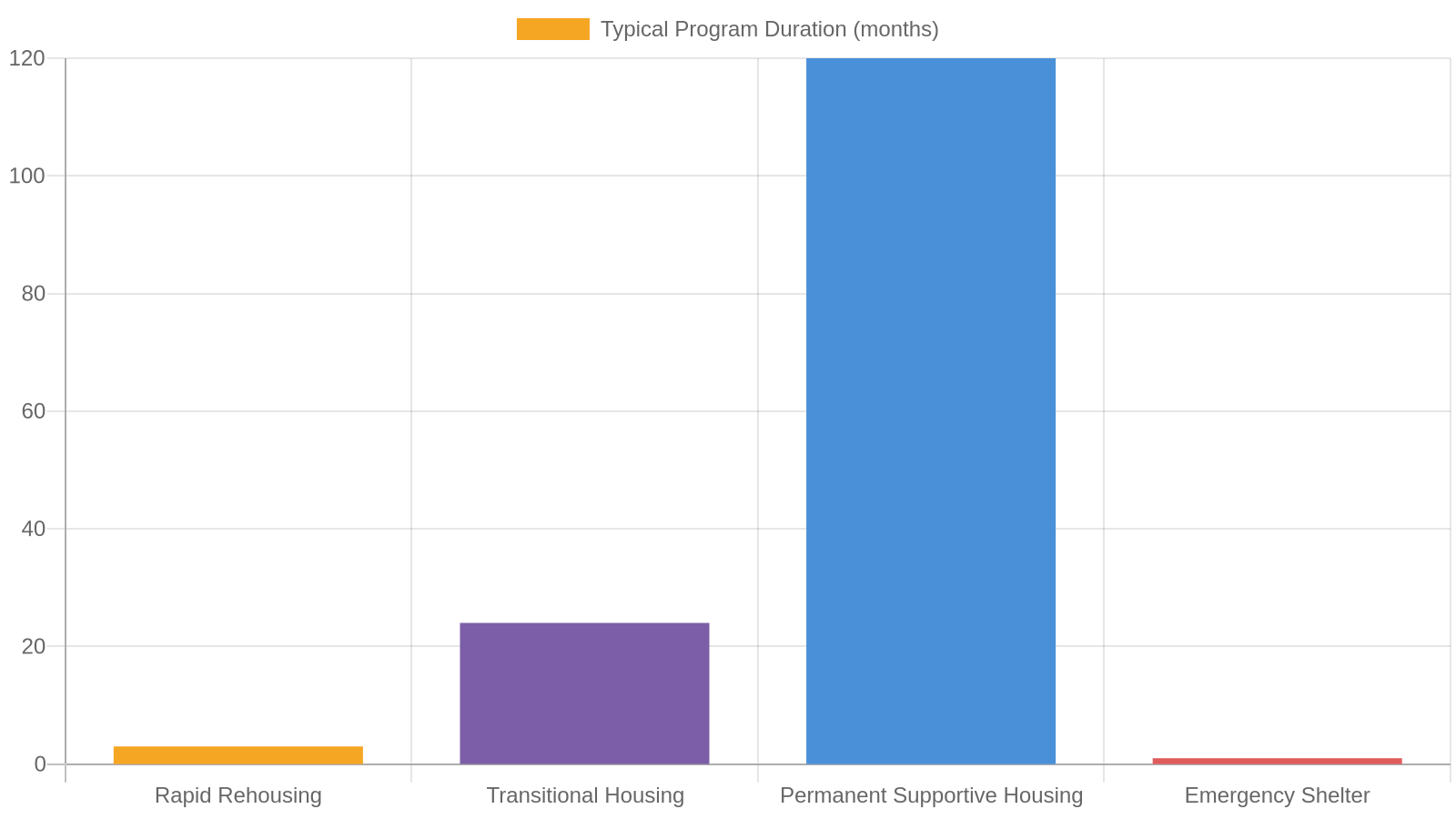
Across Tennessee’s CoC regions, YAAB members advocate for — and help connect peers to — two key housing models. Rapid Rehousing (RRH) provides short-term rental assistance and services to help young adults move into their own place quickly, typically within 30 to 90 days. Transitional Housing (TH) offers a structured, time-limited setting (usually up to 24 months) with wraparound support like life skills coaching and employment help. YAAB’s role is to make sure these programs are designed with youth input so they don’t feel like punishment — because rules that feel punitive drive young people away from the very help they need.
Permanent Supportive Housing for High-Need Youth
For young adults with the highest barriers — chronic homelessness, serious mental health conditions, or substance use challenges — Permanent Supportive Housing (PSH) combines long-term affordable housing with ongoing support services. HUD’s 2023 Annual Homeless Assessment Report found that youth ages 18 to 24 made up approximately 10% of all sheltered homeless adults nationally, with many cycling in and out of temporary arrangements. YAAB advocates for PSH slots to be reserved for TAY and for intake processes to be youth-friendly — no strict ID requirements at the door, flexible curfews, and LGBTQ+-affirming environments.
Know Your Rights as a Young Renter in Tennessee
One of YAAB’s most practical contributions is peer education about tenant rights. In Tennessee, landlords must provide at least 14 days’ notice before filing for eviction for nonpayment of rent. Security deposits cannot exceed two months’ rent for unfurnished units. Young adults — especially those renting for the first time — often don’t know these protections exist. YAAB members share this information peer-to-peer, in plain language, so young adults can advocate for themselves before a crisis escalates.
Employment Pathways: Getting Paid and Building a Future

A stable paycheck changes everything — but for young adults navigating homelessness, the path to employment is rarely straightforward. YAAB’s employment-focused initiatives work on two levels: connecting individuals to existing workforce programs and pushing those programs to remove the structural barriers that keep young adults from accessing them in the first place.
Workforce Development Programs Across Tennessee Regions
Tennessee’s American Job Centers (AJCs) — available in every major region — offer free job search assistance, résumé help, interview coaching, and access to training funds through the Workforce Innovation and Opportunity Act (WIOA). Young adults ages 16 to 24 who face barriers to employment (including homelessness) qualify for WIOA Youth Program services, which can cover vocational training, certifications, and even paid work experiences. YAAB members help peers navigate these systems and advocate for AJC staff to be trained in trauma-informed, youth-centered approaches.
Paid Internships and Youth Employment Initiatives
Several Tennessee CoC regions have developed social enterprise and paid internship models specifically for TAY. These programs recognize that a young adult who is also managing housing instability can’t always commit to a rigid 40-hour-a-week schedule. Flexible, paid opportunities — even at 10 to 20 hours per week — build work history, references, and income simultaneously. YAAB advocates for employers and nonprofits to create these kinds of on-ramps rather than expecting young adults experiencing homelessness to compete on a level playing field with housed peers.
Removing Barriers: IDs, Bank Accounts, and Background Checks
You can’t get a job without a government-issued ID. You can’t cash a paycheck without a bank account. And a criminal record — even a minor one — can disqualify a young adult from dozens of job listings. YAAB members across Tennessee have identified these three barriers as among the most common reasons young adults fall out of employment pipelines. Local YAAB chapters connect peers to free ID recovery programs, Bank On Tennessee-certified accounts (which have no minimum balance requirements), and legal aid organizations that can help with record expungement where eligible.
Education and GED Pathways: Learning on Your Own Terms

Education is one of the most powerful tools for long-term stability — and one of the most common casualties of housing instability. When you’re focused on finding a safe place to sleep, finishing a degree or earning a GED can feel impossible. YAAB’s education initiatives work to make sure that housing instability never has to mean educational interruption.
Tennessee Reconnect and Adult Education Programs
Tennessee offers some of the strongest free higher education pathways in the country. Tennessee Reconnect covers tuition at community and technical colleges for adults 21 and older who don’t already have a degree — and it can be stacked on top of Pell Grants. For young adults who need a high school equivalency first, Tennessee’s Adult Education program provides free GED and HiSET preparation classes at locations across all seven CoC regions. YAAB members help peers understand that these pathways exist and that housing instability does not disqualify anyone from enrolling.
McKinney-Vento Rights for Students Experiencing Homelessness
The McKinney-Vento Homeless Assistance Act guarantees that students experiencing homelessness — including those in college — have the right to immediate enrollment, free school meals, and transportation assistance. At the K-12 level, this means a young adult cannot be turned away from school due to lack of a permanent address. At the postsecondary level, students who self-identify as homeless or at risk of homelessness on the FAFSA can receive independent student status, which typically increases financial aid eligibility significantly. YAAB members share this information widely because many peers don’t know these rights exist.
Peer Tutoring and Study Support Networks
Formal programs are only part of the picture. YAAB chapters across Tennessee have built informal peer support networks where members help each other study for the GED, navigate college applications, and stay enrolled when life gets hard. These peer relationships — grounded in shared experience — often provide the accountability and encouragement that a formal advisor can’t. When a YAAB member who earned their GED while couch-surfing helps a peer do the same, that’s a different kind of mentorship.
Mental Health and Wellness: Support That Doesn't Stigmatize

Housing instability doesn’t happen in a vacuum. For most young adults experiencing homelessness, mental health challenges — whether pre-existing or caused by the trauma of instability — are part of the picture. YAAB’s approach to mental health is grounded in one principle: support should feel like support, not surveillance. That means peer-led, non-stigmatizing, and accessible without a permanent address or insurance card.
Trauma-Informed Care and What It Actually Means
Trauma-informed care is a phrase that gets used a lot — but YAAB members are clear about what it should mean in practice. It means a service provider doesn’t ask “What’s wrong with you?” but instead asks “What happened to you?” It means intake forms don’t require a fixed address to access mental health services. It means counselors understand that a young adult who misses an appointment might be dealing with a housing crisis, not apathy. Across Tennessee, YAAB advocates for CoC-funded mental health services to adopt these standards — and calls out programs that don’t.
Tennessee Crisis Line and Immediate Mental Health Resources
If you’re in crisis right now, you don’t have to wait for an appointment. Tennessee’s statewide crisis line is 855-CRISIS-1 (855-274-7471), available 24 hours a day, 7 days a week. The national 988 Suicide and Crisis Lifeline (call or text 988) is also available and connects to local crisis centers. YAAB members are trained to share these resources peer-to-peer — not in a clinical way, but in the way a friend would: “Hey, I’ve used this. It helped.”
Peer Support Specialists: Lived Experience as a Credential
Tennessee’s behavioral health system certifies Peer Support Specialists (PSS) — individuals with lived experience of mental health or substance use challenges who are trained to support others in recovery. For young adults, a PSS who has also navigated homelessness is uniquely credible. YAAB actively supports members who want to pursue PSS certification as both a career pathway and a way to strengthen the peer support ecosystem across all seven regions. The training is state-approved and can open doors to employment in community mental health centers, hospitals, and CoC-funded programs.
Aging Out of Foster Care: Navigating the Cliff at 18

Of all the populations YAAB serves, youth aging out of foster care face some of the steepest cliffs. The transition from a system that (however imperfectly) provided structure to complete independence — often overnight — is one of the leading drivers of youth homelessness in Tennessee. YAAB’s work in this space is both practical (connecting peers to Chafee funds and extended care options) and deeply human (being the community that fills the gap).
What 'Aging Out' Really Looks Like in Tennessee
In Tennessee, youth in foster care can remain in care until age 21 under the state’s Extended Foster Care program — but not everyone knows this option exists, and not everyone takes it. Those who do age out at 18 without extended care face an abrupt transition: one day the system is responsible for them, the next they’re on their own. Nationally, one in five youth who age out of foster care will experience homelessness within two years (National Foster Youth Institute). In Tennessee, that statistic plays out in shelter intake data across Memphis, Nashville, and Knoxville every single month.
Chafee Funds and Independent Living Programs
The John H. Chafee Foster Care Program for Successful Transition to Adulthood provides federal funding to states for independent living services for current and former foster youth up to age 23 (and up to 26 for education and training vouchers). Tennessee uses these funds for programs like Tennessee’s Independent Living Initiative (TILI), which offers life skills training, mentoring, and financial assistance. YAAB members help peers understand they may be entitled to these resources even after they’ve left care — and advocate for the state to expand eligibility and outreach so fewer young adults fall through the cracks.
YAAB as a Community for Former Foster Youth
Beyond resources, YAAB offers something that former foster youth often describe as the hardest thing to find: community. When you’ve moved through multiple placements, you may not have a strong network of people who know your story and have your back. YAAB chapters across Tennessee’s seven regions create that community — a group of peers who get it, who won’t judge, and who are actively working to make the system better for the next person. For many members, YAAB is the first place they’ve felt like they belonged.
Policy Advocacy: How YAAB Members Shape Real Decisions

YAAB is not just a support network — it’s a policy-shaping force. Across all seven Tennessee CoC regions, YAAB members participate in the decision-making processes that determine how resources flow, which programs get funded, and what standards service providers must meet. This is advocacy in the truest sense: young adults with lived experience changing the systems that affect their lives.
Advising Continuum of Care Boards
Every CoC region in Tennessee has a governing board that makes decisions about how federal homeless assistance dollars are allocated — which programs get funded, which get cut, and what priorities guide the system. YAAB members hold formal seats on these boards in multiple regions, meaning their voice isn’t advisory in a token sense — it’s structural. When a CoC board votes on whether to prioritize rapid rehousing or transitional housing for youth, a YAAB member who has lived in both types of programs brings irreplaceable insight to that decision.
State-Level Advocacy and Legislative Engagement
YAAB’s advocacy doesn’t stop at the regional level. Members have testified before Tennessee state legislative committees, participated in statewide homeless coalitions, and contributed to the development of Tennessee’s Consolidated Plan — the document that guides how the state spends federal housing and community development dollars. This kind of engagement requires preparation, and YAAB invests in advocacy training so members can speak confidently about policy without needing a law degree. The goal is to make sure that when decisions about youth homelessness are made in Nashville, young adults from Memphis, Knoxville, Chattanooga, and every other region have already had their say.
Data, Storytelling, and the Power of Both
Effective advocacy uses both numbers and narratives. YAAB members are trained to pair personal stories with data — because a policymaker who hears that “10,000 Tennessee youth experience homelessness annually” and then hears one of those young adults describe what that number felt like on a cold January night in Memphis is far more likely to act than one who only sees a spreadsheet. YAAB’s advocacy resources include talking points, fact sheets, and storytelling guides developed by and for young adults.
YAAB's Core Initiative Areas at a Glance: What's Available Across Tennessee's 7 Regions
This table summarizes the key initiative areas YAAB supports across Tennessee, what each area provides, who it's for, and how to access it.
How Each Regional YAAB Chapter Tailors Its Work
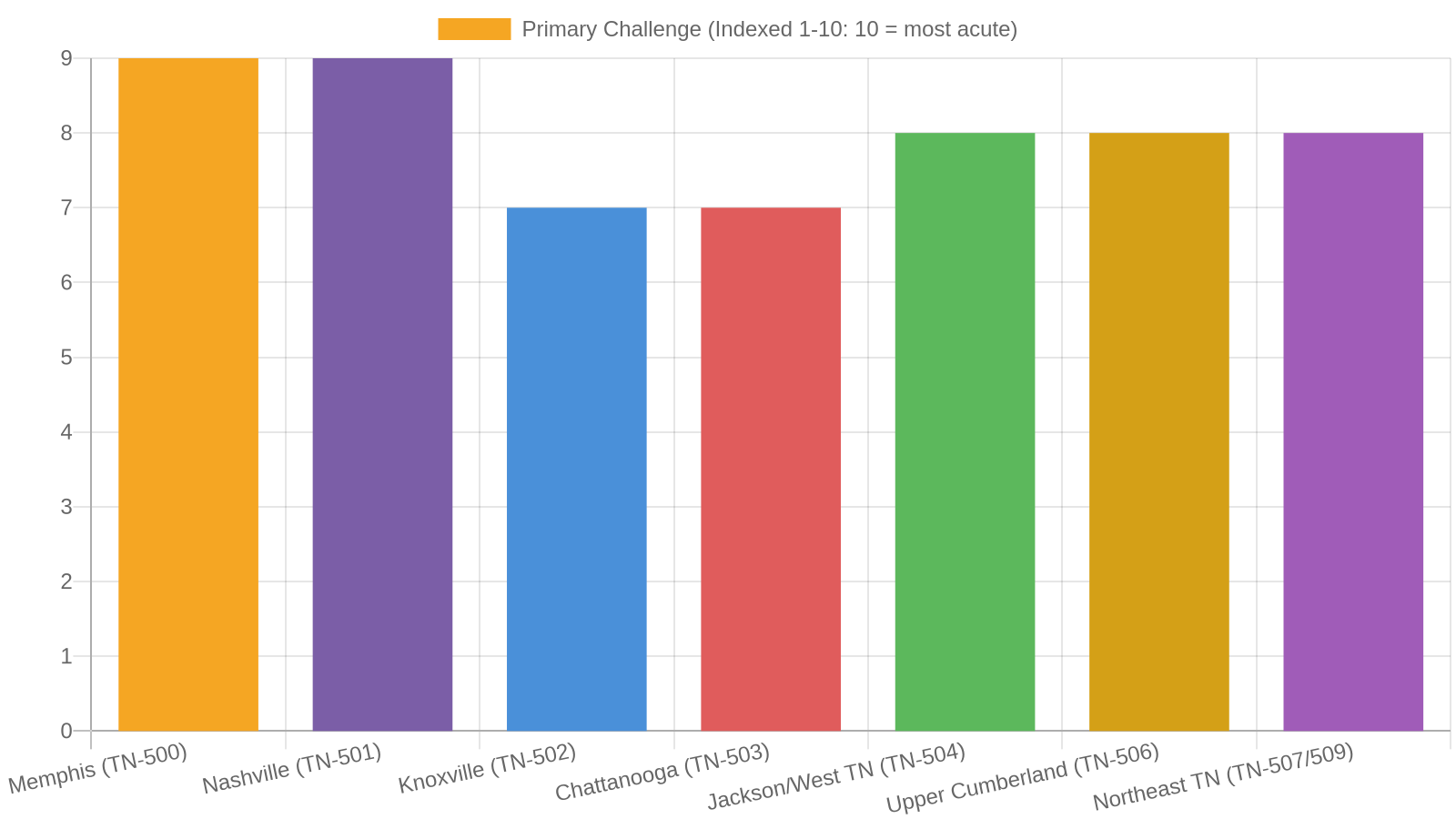
One of YAAB’s greatest strengths is that it doesn’t apply a one-size-fits-all approach. Each regional chapter understands its local landscape — the specific housing market, the available services, the cultural context, and the gaps — and shapes its work accordingly. Here’s a look at how YAAB’s approach differs across Tennessee’s urban, mid-size, and rural regions.
Urban Regions: Memphis and Nashville
In Memphis (TN-500) and Nashville (TN-501) — Tennessee’s two largest metro areas — YAAB chapters deal with high shelter demand, rapidly rising rents, and large populations of young adults who are technically housed but severely cost-burdened (spending more than 30% of income on housing). Nashville’s median rent for a one-bedroom apartment exceeded $1,400/month in 2024, while the minimum wage in Tennessee remains $7.25/hour — the federal floor. Memphis YAAB members have focused heavily on connecting peers to emergency rental assistance and advocating for youth-specific shelter beds within the city’s CoC system.
Mid-Size Cities: Knoxville and Chattanooga
Knoxville (TN-502) benefits from the presence of the University of Tennessee and a relatively robust network of nonprofit service providers, but university-town dynamics also drive up housing costs and create a two-tier market where students and low-income young adults compete for the same affordable units. Chattanooga (TN-503) has seen significant economic investment in recent years, but that growth hasn’t reached all young adults equally. Both chapters focus on building relationships with local employers and educational institutions to create more on-ramps for TAY.
Rural and Small-Town Regions: Jackson, Upper Cumberland, and Northeast TN
In Jackson/West TN (TN-504), Upper Cumberland (TN-506), and Northeast Tennessee (TN-507/TN-509), the challenges look different. Youth homelessness is often invisible — young adults couch-surfing, doubling up with relatives, or living in cars rather than accessing formal shelter systems. Transportation is a major barrier: a young adult in a rural county may be 30 miles from the nearest shelter or service provider with no reliable way to get there. Regional YAAB chapters in these areas prioritize outreach, mobile services, and peer-to-peer connection to reach young adults who would never walk into a traditional shelter.
Financial Literacy: Building a Foundation That Lasts

Stable housing requires stable income, and stable income requires financial tools that most young adults experiencing homelessness have never had access to. YAAB’s financial literacy initiatives go beyond budgeting worksheets — they address the structural barriers that keep young adults locked out of the financial mainstream and the predatory systems that profit from that exclusion.
Budgeting, Banking, and Building Credit
Financial literacy isn’t about being lectured on saving money — it’s about having the tools to survive and eventually thrive in a system that wasn’t designed with you in mind. YAAB’s peer-led financial education covers the basics that many young adults never learned: how to open a Bank On Tennessee-certified account with no minimum balance, how to read a pay stub, how to dispute an error on a credit report, and how to build credit with a secured card when you have no credit history. These aren’t abstract skills — they’re the difference between being able to rent an apartment and being turned away.
Benefits Cliffs and the Working Poor Trap
One of the most counterintuitive challenges young adults face is the benefits cliff — the point at which earning slightly more income causes a loss of public benefits (like Medicaid, SNAP, or housing vouchers) that exceeds the income gained. This creates a trap where getting a raise or working more hours can actually leave a young adult worse off financially. YAAB members are trained to recognize and explain this dynamic, and YAAB advocates at the state level for policy changes that smooth this cliff so that working more always pays off.
Emergency Funds and Avoiding Predatory Lending
When a crisis hits — a car repair, a medical bill, a gap between paychecks — young adults without savings are vulnerable to predatory lenders. Tennessee has one of the highest concentrations of payday lenders per capita in the country, and interest rates on payday loans can exceed 400% APR. YAAB connects peers to Community Development Financial Institutions (CDFIs) and credit unions that offer small emergency loans at fair rates, and advocates for CoC-funded emergency assistance programs to have flexible, fast disbursement processes so young adults don’t have to choose between a payday loan and a crisis.
How to Get Involved with Your Local YAAB Chapter

Everything described in this article — the housing navigation, the employment pathways, the advocacy, the peer support — is powered by young adults who decided to get involved. If you’re between 17 and 25 and you’ve experienced housing instability in Tennessee, YAAB wants to hear from you. Not because your story is a resource to be mined, but because your experience makes you exactly the kind of leader Tennessee’s systems need.
Who Can Join and What Membership Looks Like
YAAB is open to young adults ages 17 to 25 across Tennessee who have lived experience of homelessness or housing instability — including couch-surfing, doubling up, staying in a shelter, or living in a car. You don’t need to be currently homeless to join. You don’t need a polished résumé or a certain level of education. What YAAB values is your experience and your willingness to show up for your peers. Membership looks different in each region — some chapters meet weekly, others monthly — but every chapter offers a community, a voice, and real opportunities to lead.
What YAAB Members Actually Do
Depending on your region and your interests, YAAB membership might involve attending CoC board meetings and providing youth perspective, helping design outreach materials for peers, testifying at a state legislative hearing, co-facilitating a peer support group, connecting a friend to housing resources, or simply showing up and sharing what you know. There’s no single path — YAAB meets members where they are and grows with them. Many members who joined looking for support have become the strongest advocates in their region.
Find Your Regional Chapter and Take the First Step
Ready to connect? Each of Tennessee’s seven CoC regions has its own YAAB chapter with local leadership and contact information. You can find your regional YAAB chapter and reach out directly. If you’re not sure which region you’re in, the statewide YAAB team can help you figure it out and make the connection. The first step is always the hardest — but you won’t be walking into a room full of strangers. You’ll be walking into a room full of people who’ve been where you are.
Your Next Move: Connect, Lead, and Change the System

You’ve read about what YAAB does across Tennessee’s seven regions. Now the question is: what’s your next move? Whether you’re looking for immediate support, wanting to get involved in advocacy, or just trying to understand what resources exist in your corner of Tennessee, YAAB is here — and it’s built by people who have been exactly where you are right now.
Start with Resources, Stay for the Community
If you came to this article looking for help — housing, employment, education, or mental health support — start with YAAB’s statewide resource directory, which is organized by region and updated regularly by YAAB members who know what’s actually available and what actually works. You’ll find shelter listings, employment programs, GED pathways, mental health services, and more — all vetted through the lens of lived experience.
See What YAAB Is Building Across Tennessee
YAAB’s work is ongoing and always evolving. From new advocacy campaigns to regional chapter launches to peer support initiatives, there’s always something happening. To see the full picture of what YAAB is working on right now — and to find ways to plug in — explore YAAB’s current projects and initiatives. Whether you want to lead, learn, or just stay connected, this is where you’ll find the most up-to-date information on what’s happening across all seven Tennessee regions.
You Belong Here — Across All of Tennessee
From Memphis to Mountain City, from Nashville to the Upper Cumberland, YAAB is proof that young adults with lived experience of homelessness are not problems to be solved — they are leaders, advocates, and experts. Tennessee’s systems are better when young people shape them. If you’re ready to take that next step — whether it’s finding a resource, joining a chapter, or raising your voice on a policy issue — join YAAB today and become part of the movement that’s changing what’s possible for transition-age youth across Tennessee.
Frequently Asked Questions
What is the Youth Action Board of Tennessee and who can join?
The Youth Action Board (YAAB) of Tennessee is a statewide network of young adults ages 17 to 25 who have lived experience of homelessness or housing instability. Any young adult in that age range who has experienced housing instability in Tennessee — including couch-surfing, doubling up, or staying in a shelter — can join their regional YAAB chapter. No formal qualifications are required.
How many regions does Tennessee YAAB cover and which one is mine?
YAAB operates across seven of Tennessee's Continuum of Care regions: Memphis/Shelby County (TN-500), Nashville/Davidson County (TN-501), Knoxville/Knox County (TN-502), Chattanooga/Hamilton County (TN-503), Jackson/West Tennessee (TN-504), Upper Cumberland (TN-506), and Northeast Tennessee (TN-507/TN-509). You can find your regional chapter at yaabtn.org/local-yaabs/ or contact the statewide YAAB team for help.
What housing help can YAAB connect me to in Tennessee?
YAAB connects young adults to Rapid Rehousing programs (short-term rental assistance, typically 30–90 days), Transitional Housing (up to 24 months with wraparound support), and Permanent Supportive Housing for those with the highest barriers. YAAB members also educate peers on Tennessee tenant rights, including the 14-day notice requirement before eviction filings.
Can I get help with a GED or college if I'm experiencing homelessness in Tennessee?
Yes. Tennessee's Adult Education program offers free GED and HiSET prep statewide. Tennessee Reconnect covers community college tuition for adults 21 and older. Under the McKinney-Vento Act, students experiencing homelessness cannot be denied enrollment due to lack of a permanent address, and FAFSA independent student status can significantly increase financial aid eligibility.
What is a Continuum of Care and why does it matter for young adults in Tennessee?
A Continuum of Care (CoC) is a HUD-funded regional body that coordinates homeless services and allocates federal funding in a geographic area. Tennessee has seven active CoC regions. Because CoC boards control significant funding decisions — including which youth programs get supported — YAAB's formal seats on these boards directly influence how resources reach young adults across the state.
I aged out of foster care in Tennessee. What resources am I entitled to?
If you aged out of Tennessee foster care, you may be eligible for Extended Foster Care services up to age 21, Chafee Fund independent living services up to age 23, and Education and Training Vouchers (ETVs) up to age 26. Tennessee's Independent Living Initiative (TILI) provides life skills training, mentoring, and financial assistance. YAAB members can help you understand and access these entitlements.