Quick answer: Across Tennessee, an estimated 3,000 to 5,000 young adults ages 17 to 25 experience homelessness or severe housing instability on any given night, with tens of thousands more cycling through unstable situations over the course of a year. The official Point-in-Time count undercounts the true number because many youth avoid shelters. Regions like Memphis/Shelby County, Nashville/Davidson County, and Knoxville/Knox County report the highest concentrations, but rural areas across West Tennessee, the Upper Cumberland, and Northeast Tennessee face serious gaps in services. Youth with foster care histories, LGBTQ+ youth, and young people of color are disproportionately affected.
1. Why Counting Homeless Youth Is So Hard

Before we can talk about how many young adults experience homelessness in Tennessee, we need to talk about how that number gets measured — and why official figures almost always fall short of reality. Understanding the gap between what gets counted and what’s actually happening is the first step to understanding the true scale of the issue.
The Point-in-Time Count: What It Measures
Every January, communities across the country conduct a Point-in-Time (PIT) Count — a single-night census of people experiencing homelessness. In Tennessee, each of the eight Continuum of Care (CoC) regions participates. The count captures people in emergency shelters, transitional housing, and unsheltered locations like parks, vehicles, and abandoned buildings.
For the 2023 PIT Count, Tennessee’s CoC regions collectively identified approximately 8,500 people experiencing homelessness on that single night, with young adults ages 18 to 24 making up roughly 10 to 13 percent of that total — or around 850 to 1,100 individuals in official counts alone.
Why the Real Number Is Much Higher
Here’s the thing: the PIT Count is widely acknowledged to be a significant undercount for young adults specifically. Research from the Chapin Hall Center for Research at the University of Chicago found that for every young person counted in a shelter, up to 10 more are “couch surfing,” staying temporarily with friends or family, or living in cars and motels — situations that often go uncounted.
- Many youth avoid shelters due to safety concerns, strict rules, or fear of being separated from partners or pets.
- LGBTQ+ youth are especially likely to avoid congregate shelters where they may face harassment.
- Rural youth in areas like the Upper Cumberland or Northeast Tennessee often have no shelter to go to at all.
Applying Chapin Hall’s multiplier to Tennessee’s official counts suggests the true number of young adults experiencing homelessness on any given night could be 3,000 to 5,000 or more.
2. Tennessee's Official Numbers at a Glance

Let’s look at what the official data actually says. Tennessee’s CoC regions report their PIT Count data to HUD each year, and those numbers — while incomplete — give us a baseline for understanding the scale of youth homelessness across the state.
Statewide PIT Count Trends (2018–2023)
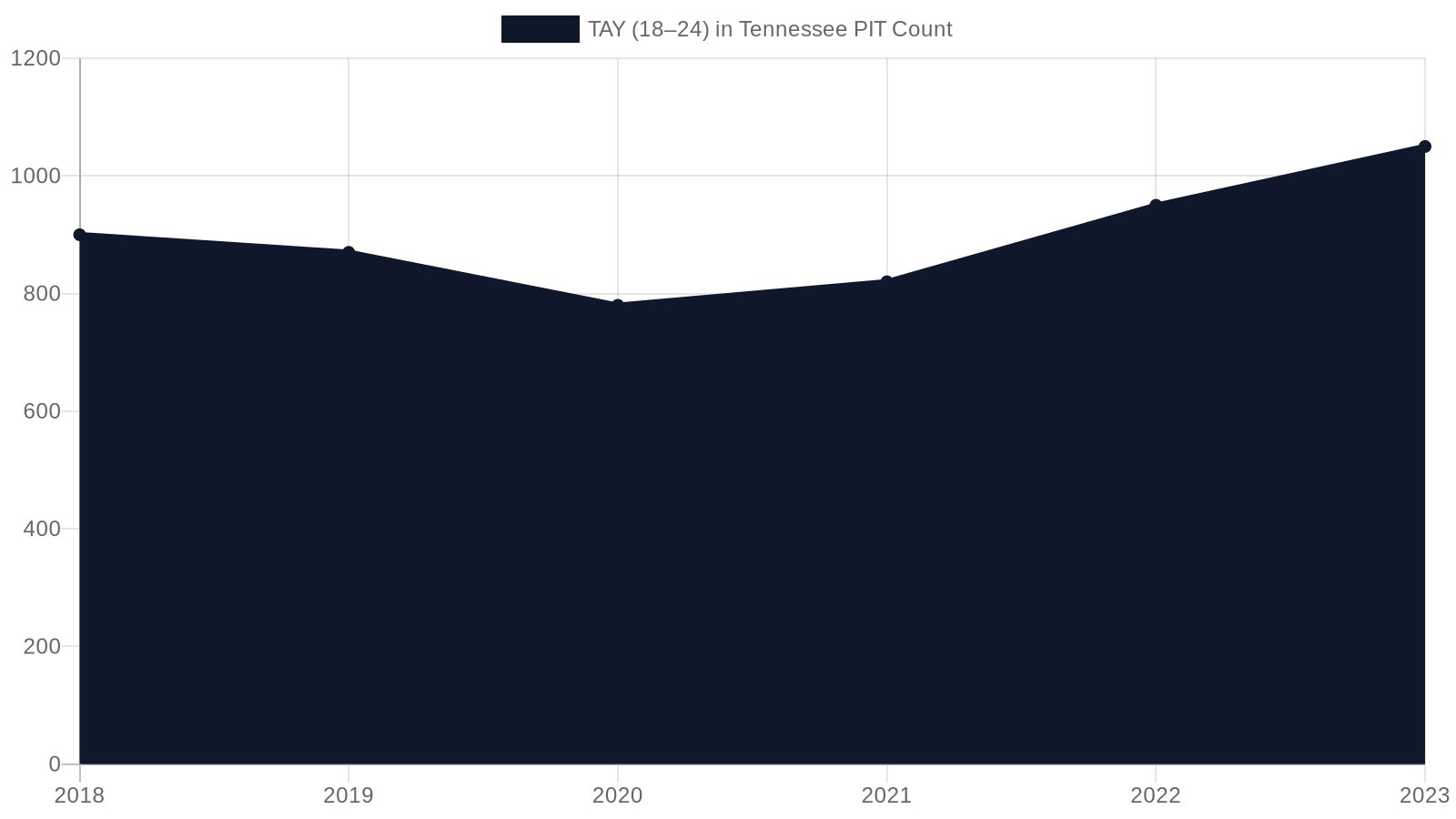
Tennessee’s overall homelessness numbers have fluctuated over the past five years, shaped by the COVID-19 pandemic, housing cost increases, and shifts in shelter capacity. For transition-age youth (TAY), ages 18 to 24, the statewide PIT Count has shown the following approximate trends:
- 2018: ~900 TAY identified in PIT counts statewide
- 2019: ~870 TAY
- 2020: ~780 TAY (pandemic-era moratoria and hotel vouchers temporarily reduced visible homelessness)
- 2021: ~820 TAY
- 2022: ~950 TAY
- 2023: ~1,050 TAY
The upward trend from 2020 onward reflects rising rents across Tennessee, the end of eviction moratoriums, and a growing shortage of affordable units for young adults earning entry-level wages.
The Annual Estimate: A Bigger Picture
Single-night counts don’t capture the full churn of housing instability. The U.S. Department of Housing and Urban Development (HUD) estimates that the number of people who experience homelessness over the course of a full year is roughly three to four times the single-night count. Applied to Tennessee’s TAY population, that suggests somewhere between 25,000 and 40,000 young adults ages 17 to 25 experience at least one episode of homelessness or severe housing instability in Tennessee each year.
That number includes young people who stay in shelters, sleep outside, couch surf for extended periods, or live in motels paid for by the week — all situations that qualify as homelessness under the McKinney-Vento Homeless Assistance Act.
3. Region by Region: Where Youth Homelessness Is Highest

Youth homelessness in Tennessee is not evenly distributed. Urban centers carry the highest visible counts, but rural and mid-size regions face their own serious challenges — often with far fewer resources. Here’s a breakdown by Tennessee’s eight Continuum of Care regions.
Memphis/Shelby County (TN-500) and Nashville/Davidson County (TN-501)
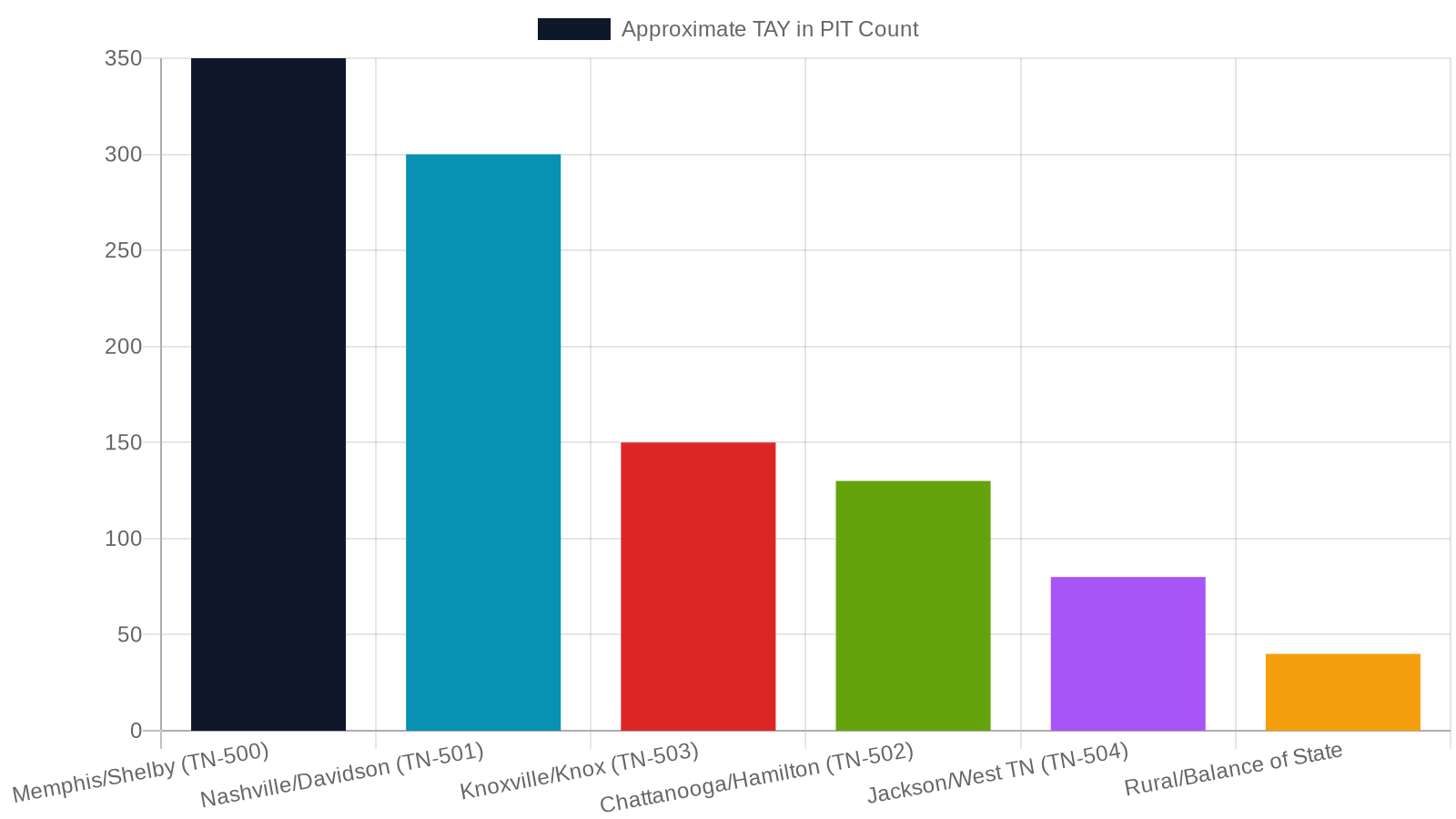
Tennessee’s two largest metro areas account for the majority of officially counted youth experiencing homelessness. Memphis/Shelby County (TN-500) consistently reports the highest raw numbers, with approximately 300 to 400 transition-age youth identified in recent PIT counts. Memphis also has some of the state’s highest rates of unsheltered youth — young people sleeping outside rather than in shelters.
Nashville/Davidson County (TN-501) follows closely, with 250 to 350 TAY in recent counts. Nashville’s rapid population growth and skyrocketing rents have pushed housing costs far beyond what entry-level jobs can support. The median one-bedroom apartment in Nashville now exceeds $1,400/month, while a full-time minimum-wage worker in Tennessee earns roughly $1,200/month before taxes — a gap that makes independent housing nearly impossible without assistance.
Knoxville, Chattanooga, Jackson, and Rural Regions
Knoxville/Knox County (TN-503) and Chattanooga/Hamilton County (TN-502) each report 100 to 200 TAY in annual PIT counts, with Knoxville showing notable growth in recent years tied to the city’s rapid development and displacement of lower-income residents.
In West Tennessee / Jackson (TN-504), the Upper Cumberland (TN-506), Northeast Tennessee (TN-507), and the Balance of State (TN-509) regions, raw numbers appear lower — but this largely reflects a lack of shelter infrastructure rather than a lower rate of need. Rural youth experiencing homelessness have fewer visible options, often doubling up with relatives or living in structurally unsafe housing rather than accessing shelters that may be 30 to 60 miles away.
4. Who Is Most Affected: Disproportionate Impacts

Homelessness doesn’t affect all young adults equally. Certain groups face dramatically higher risk due to structural inequities, family rejection, and gaps in the systems that are supposed to protect them. Understanding who is most affected is essential for building solutions that actually work.
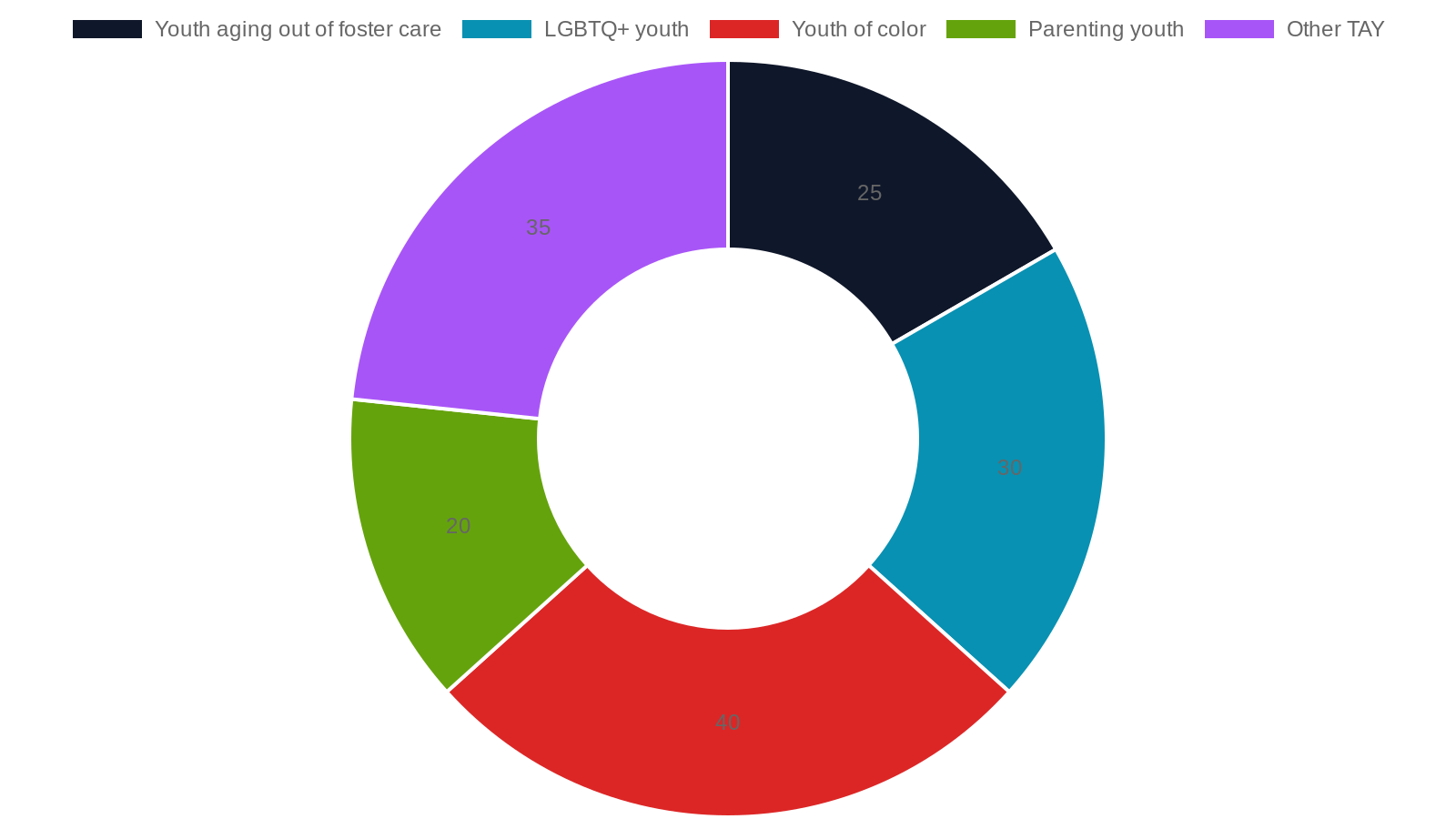
Youth Aging Out of Foster Care
One of the most well-documented pathways into youth homelessness is aging out of the foster care system. In Tennessee, approximately 800 to 900 young people age out of foster care each year. Research consistently shows that 20 to 30 percent of youth who age out of foster care will experience homelessness within two to four years of leaving the system.
Tennessee’s Extended Foster Care program allows youth to remain in care voluntarily until age 21, and participation has grown — but many young people don’t know it’s an option or face barriers to accessing it. For those who do age out without stable housing, the risk is acute: they often have no family safety net, limited rental history, and no credit score, making it nearly impossible to secure a lease independently.
LGBTQ+ Youth and Youth of Color
LGBTQ+ young adults are dramatically overrepresented in the homeless youth population. National studies estimate that LGBTQ+ youth make up 20 to 40 percent of homeless youth despite representing roughly 7 to 10 percent of the overall youth population. Family rejection related to sexual orientation or gender identity is the leading driver. In Tennessee, where LGBTQ+ youth face additional legal and social stressors, this population is especially vulnerable.
Black and Indigenous youth are also disproportionately represented. In Memphis and Nashville, where Black youth make up a large share of the TAY population, structural inequities in housing, employment, and the child welfare system compound risk. Nationally, Black youth represent about 40 percent of homeless youth while making up about 14 percent of the general youth population.
Young Women and Parenting Youth
Young women — particularly young mothers — face unique barriers. Parenting youth experiencing homelessness often struggle to find shelters that accept children, and many family shelter systems are not designed for a 19-year-old parent who needs both housing stability and support for their own development as a young adult. In Tennessee, the number of parenting youth in the TAY homeless population is estimated at 15 to 25 percent of all TAY experiencing homelessness, though this varies significantly by region.
5. The Hidden Homelessness Problem: Couch Surfing and Doubling Up

The most common form of youth homelessness in Tennessee is also the least visible. Thousands of young adults are technically homeless right now — they just aren’t sleeping on the street. Understanding hidden homelessness is key to understanding the true scale of the problem.
What 'Hidden Homelessness' Looks Like
When most people picture homelessness, they imagine someone sleeping on a sidewalk. But for young adults in Tennessee, homelessness is far more likely to look like sleeping on a friend’s couch for a few weeks, staying with a relative in an already-overcrowded apartment, or bouncing between different people’s floors month to month. This is called “doubled up” or “couch surfing” homelessness, and it is the most common form of homelessness among young adults.
A landmark Chapin Hall study (Voices of Youth Count, 2017) found that 1 in 10 young adults ages 18 to 25 in the United States experienced some form of homelessness over a 12-month period, and 1 in 30 experienced outright unsheltered homelessness. Applied to Tennessee’s estimated 700,000 residents ages 18 to 25, that suggests roughly 70,000 Tennessee young adults may experience some form of homelessness in a given year.
Why Doubling Up Is Still Homelessness
Doubled-up situations are often unstable and unsafe. Young people staying with others may face:
- Exploitation — being asked to perform labor, sexual acts, or other exchanges for a place to stay (sometimes called “survival sex” or “trading”)
- Overcrowding that creates health and safety risks
- Lack of control over their living situation, which can end without notice
- Ineligibility for some services because they don’t meet the narrow definition of “literally homeless” used by some programs
Under the McKinney-Vento Act, young people in doubled-up situations do qualify as homeless for purposes of school enrollment and some federal programs — but many service providers still use stricter definitions that exclude them.
6. How Tennessee Compares to the Rest of the South

Context matters. How does Tennessee stack up against neighboring states when it comes to youth homelessness rates, shelter capacity, and policy responses? The comparison reveals both shared challenges and specific gaps that advocates in Tennessee are working to close.
Southern States and the Shelter Gap
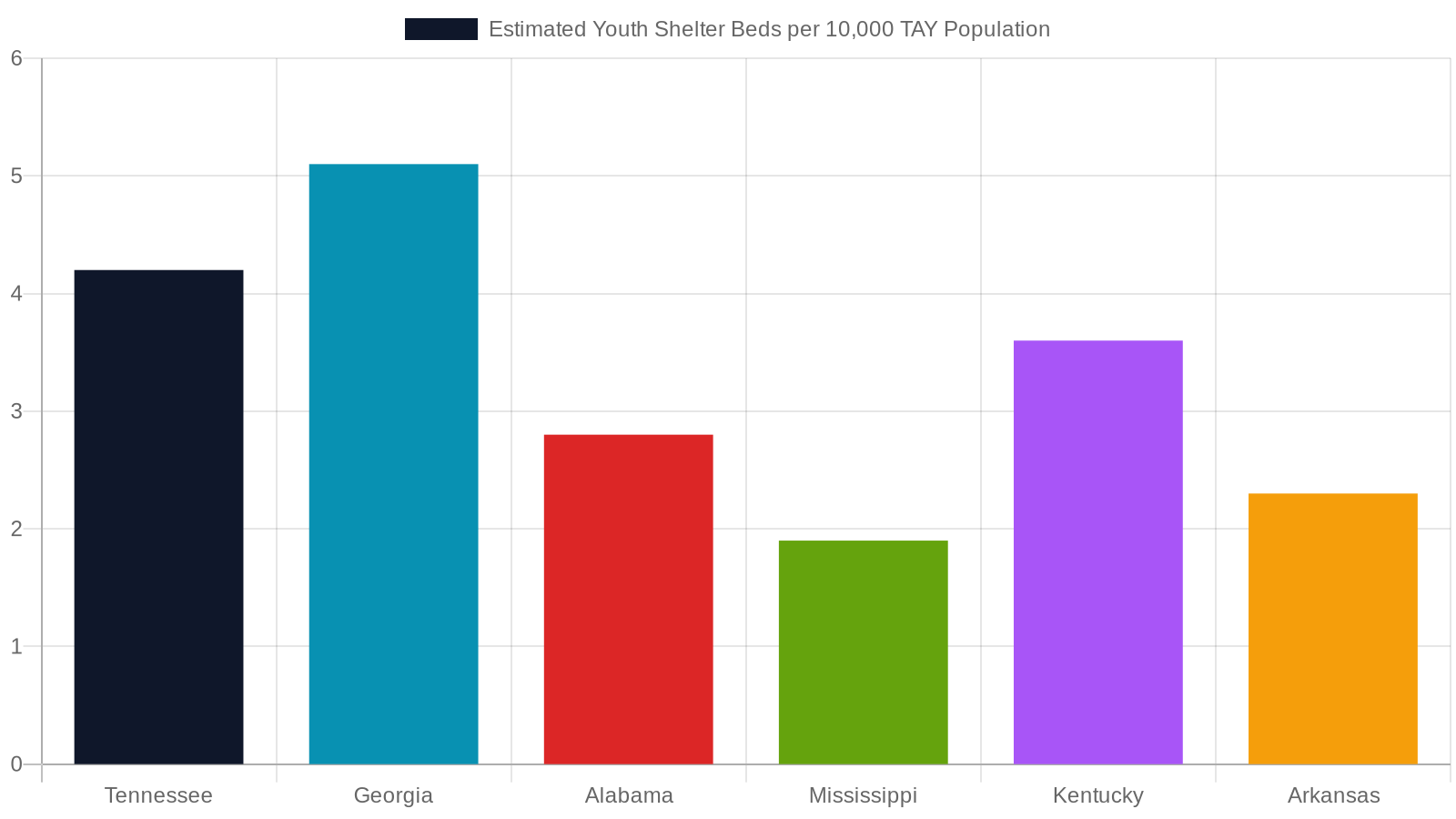
Compared to other Southern states, Tennessee has a moderate level of shelter infrastructure for youth — better than many rural states, but well below what’s needed. States like Georgia and Texas have larger absolute numbers due to population size, but Tennessee’s per-capita rate of unsheltered youth is comparable to the regional average.
A key challenge across the South is the “shelter gap” — the difference between the number of youth experiencing homelessness and the number of available youth-specific shelter beds. In Tennessee, estimates suggest there are roughly 500 to 700 dedicated youth shelter beds statewide, against a need that is at minimum three to five times higher on any given night.
Funding and Policy Gaps
Tennessee does not have a state-level dedicated youth homelessness funding stream comparable to what some states have created. Most youth homelessness services are funded through a patchwork of:
- HUD CoC Program grants (competitive, limited)
- RHYA (Runaway and Homeless Youth Act) federal funding through the Family and Youth Services Bureau
- State general funds allocated through the Tennessee Department of Children’s Services and the Department of Human Services
- Private philanthropy and local government contributions
Advocates — including members of the Youth Action Board of Tennessee — have consistently called for a dedicated state investment in transition-age youth housing, arguing that the cost of prevention and rapid rehousing is far lower than the long-term costs of chronic homelessness, incarceration, and emergency services.
7. What Causes Youth Homelessness in Tennessee
To solve a problem, you have to understand what’s causing it. Youth homelessness in Tennessee has both structural roots — the economics of housing — and systemic roots — the ways that foster care, criminal justice, and family rejection push young adults out of stable situations. Both matter.
Structural Causes: Housing Costs, Wages, and the Affordable Housing Shortage
Youth homelessness is not primarily caused by individual failures — it is caused by structural gaps between what young adults can afford and what the housing market offers. In Tennessee:
- The fair market rent for a one-bedroom apartment in Nashville is approximately $1,350/month; in Memphis, approximately $900/month; in Knoxville, approximately $1,050/month.
- Tennessee’s minimum wage is $7.25/hour (the federal minimum), which generates roughly $1,160/month at full-time hours before taxes.
- Housing experts recommend spending no more than 30 percent of income on rent — meaning a minimum-wage worker can “afford” about $348/month in rent. The gap between $348 and $900–$1,350 is unbridgeable without assistance.
Systemic Causes: Foster Care, Criminal Justice, and Family Rejection
Beyond economics, several systems create direct pipelines into youth homelessness:
- Foster care aging out: Young people leaving state custody without a housing plan or family support network face immediate risk.
- Juvenile and adult criminal justice involvement: A record — even a minor one — can disqualify young adults from public housing and many private rentals.
- Family rejection: For LGBTQ+ youth, family conflict over identity is the most common trigger for homelessness.
- Domestic violence and abuse: Many young women and gender-diverse youth leave unsafe home situations with nowhere to go.
- Mental health and substance use challenges: Untreated mental health conditions and substance use can destabilize housing, though these are better understood as consequences of housing instability as often as they are causes.
Youth Homelessness at a Glance: Tennessee's 8 CoC Regions Compared
Each of Tennessee's eight Continuum of Care regions faces a different combination of scale, shelter capacity, and service gaps. This table summarizes key characteristics across regions.
8. How Tennessee's Continuum of Care System Responds

Tennessee’s response to youth homelessness runs through the Continuum of Care system — a federally structured framework that coordinates housing and services at the regional level. Understanding how this system works (and where it falls short) helps young adults know what to expect and helps advocates push for improvements.
What the CoC Does for Young Adults
Each of Tennessee’s eight Continuum of Care (CoC) regions coordinates the local response to homelessness — bringing together nonprofits, government agencies, housing authorities, healthcare providers, and people with lived experience to plan, fund, and deliver services. For young adults, the CoC system funds:
- Emergency shelter — immediate, short-term safe places to stay
- Transitional housing — medium-term housing with support services (typically 6 to 24 months)
- Rapid Rehousing (RRH) — short-term rental assistance and case management to quickly move youth into their own apartment
- Permanent Supportive Housing (PSH) — long-term subsidized housing with ongoing services for youth with the highest needs
Youth-Specific Programs and Gaps
Not all CoC programs are designed with young adults in mind. Many shelter and housing programs were built for adults 25 and older, and young adults report feeling unsafe, unwelcome, or unsupported in adult-focused settings. Across Tennessee, there are a growing number of youth-specific programs — including drop-in centers, host home programs, and transitional living programs designed specifically for TAY — but demand far exceeds capacity.
Key gaps identified by youth advocates include:
- Lack of low-barrier shelter that doesn’t require sobriety, ID, or a referral
- Insufficient housing for LGBTQ+ youth who need affirming environments
- Limited options for parenting youth who need housing that accommodates their children
- Near-total absence of youth housing in rural Tennessee regions
9. How Young Adults Are Shaping the Solutions

Numbers tell part of the story. But behind every data point is a real person who navigated an impossible situation — and many of those people are now using their experience to make Tennessee better for the next young adult who faces what they faced. This is what peer-led advocacy looks like.
The Role of Lived Experience in Policy
Data and policy reports can describe the problem, but the people who have lived youth homelessness understand it in ways that no study can fully capture. That’s the core principle behind the Youth Action Board of Tennessee (YAAB): young adults with lived experience of homelessness and housing instability are the most credible, most informed voices when it comes to designing solutions that actually work.
YAAB members across Tennessee’s CoC regions advise local Continuums, testify before state legislators, participate in federal planning processes, and connect their peers to resources. When a shelter policy is making things harder for young people, it’s YAAB members who raise that issue in the rooms where decisions get made. Learn more about how YAAB works and who we are.
What Peer Advocacy Looks Like in Practice
Peer advocacy means young adults showing up — at CoC meetings, at the state capitol, at community forums — and saying: “Here’s what’s actually happening, and here’s what needs to change.” Across Tennessee’s regions, YAAB members have:
- Pushed for low-barrier shelter policies that don’t turn away youth for minor rule violations
- Advocated for youth-specific Rapid Rehousing funding in CoC applications
- Helped design peer navigation programs that connect newly homeless youth to services through trusted peers
- Contributed to statewide policy conversations about extended foster care, housing-first approaches, and youth-specific data collection
If you want to get involved, find your local YAAB chapter and see how you can add your voice.
Ready to Learn More and Take Action in Tennessee

You’ve seen the numbers. Now here’s what you can do with them. Whether you’re a young adult navigating housing instability right now, a peer who wants to get involved in advocacy, or a professional supporting Tennessee’s transition-age youth — there are concrete next steps available to you across every region of the state.
Resources for Young Adults Experiencing Housing Instability
If you or someone you know is experiencing homelessness or housing instability in Tennessee, here are immediate steps to take:
- Call 211 — Tennessee’s statewide helpline connects you to local shelter, food, and housing resources 24/7.
- Contact your local CoC — Each region has a coordinated entry system that assesses your needs and connects you to the right programs.
- Reach out to a local YAAB chapter — YAAB members can help you navigate the system and connect you to peer support.
- Know your rights — Under McKinney-Vento, you have the right to enroll in school immediately, even without a permanent address.
For a deeper understanding of the issue and links to Tennessee-specific data and resources, explore our full guide to understanding youth homelessness in Tennessee — it’s built specifically for young adults and the people who support them.
For Case Managers and Service Providers
If you’re a case manager, CoC partner, or service provider working with transition-age youth in Tennessee, the most impactful thing you can do — beyond connecting young people to housing — is center their voices in your work. That means:
- Referring youth to their local YAAB chapter as a leadership and community opportunity, not just a service
- Using trauma-informed, non-stigmatizing language in all client interactions
- Advocating within your organization for youth-specific programming that meets young adults where they are
- Checking out YAAB Tennessee’s resources page for tools, data, and advocacy materials designed for CoC partners
The data is clear: youth homelessness in Tennessee is a solvable problem. It requires political will, adequate funding, and — most importantly — the leadership of young people who know exactly what’s needed because they’ve lived it.
Frequently Asked Questions
How many young adults experience homelessness in Tennessee each year?
Official Point-in-Time counts identify roughly 1,000 to 1,100 transition-age youth (ages 18–24) on a single night statewide, but the true annual number is far higher. Applying HUD's annual multiplier and Chapin Hall's research on hidden homelessness suggests that between 25,000 and 40,000 young adults ages 17 to 25 may experience at least one episode of homelessness or severe housing instability in Tennessee over the course of a year.
What counts as homelessness for a young adult in Tennessee?
Under the McKinney-Vento Homeless Assistance Act, homelessness includes sleeping in shelters, cars, parks, or abandoned buildings — but also 'doubling up,' meaning temporarily staying with others due to loss of housing or economic hardship. Couch surfing and staying in motels paid by the week also qualify. Many young adults who are technically homeless don't identify that way because they have a roof over their head, even if it's not stable or safe.
Which Tennessee city has the most homeless youth?
Memphis/Shelby County (CoC TN-500) consistently reports the highest raw number of homeless transition-age youth in official counts, followed closely by Nashville/Davidson County (TN-501). However, because rural areas have far less shelter infrastructure, the true rate of youth homelessness in rural Tennessee may be comparable to urban areas — it's just less visible and less counted.
Why are LGBTQ+ youth at higher risk of homelessness in Tennessee?
Family rejection related to sexual orientation or gender identity is the leading cause of homelessness for LGBTQ+ youth nationwide. LGBTQ+ young adults make up an estimated 20 to 40 percent of the homeless youth population despite being roughly 7 to 10 percent of all youth. In Tennessee, limited access to LGBTQ+-affirming shelters and services compounds the risk for this population.
What is the Youth Action Board of Tennessee and how can I get involved?
The Youth Action Board of Tennessee (YAAB) is a statewide network of young adults ages 17 to 25 with lived experience of homelessness who advise policymakers, advocate for change, and connect peers to resources. YAAB has chapters in each of Tennessee's Continuum of Care regions. If you're between 17 and 25 and have experienced housing instability, you can reach out through your local YAAB chapter to get involved in advocacy and leadership.
Does Tennessee have enough shelter beds for homeless youth?
No. Tennessee has an estimated 500 to 700 dedicated youth shelter beds statewide, against a demonstrated need that is three to five times higher on any given night. Gaps are especially severe in rural regions like the Upper Cumberland and Northeast Tennessee, where youth-specific shelter beds are nearly nonexistent and young people may need to travel 30 to 60 miles to access any services.