Quick answer: Hidden homelessness — also called 'couch surfing,' doubling up, or unstable housing — affects tens of thousands of young adults ages 17 to 25 across Tennessee every year, and most of them are never counted in official shelter numbers. The signs are easy to miss: carrying all belongings in a bag, frequently changing where they sleep, missing school or work without explanation, or avoiding questions about home. Recognizing these signs early — whether you're a peer, a case manager, or a young person reading this yourself — is the first step to connecting someone (or yourself) to real housing support across Tennessee's Continuum of Care regions.
What 'Hidden Homelessness' Actually Means for Young Adults
Before you can spot the signs, it helps to understand what hidden homelessness actually looks like — because it rarely looks like what’s shown in the news. For transition-age youth in Tennessee, housing instability is often invisible by design: young people learn quickly that admitting they have nowhere to go can feel dangerous or shameful, so they hide it well.
Why It's Called 'Hidden'
When most people picture homelessness, they picture someone sleeping outside or in a shelter. But for young adults ages 17 to 25, the reality is usually far less visible. Hidden homelessness — sometimes called couch surfing, doubling up, or unstable housing — means a young person has no safe, stable place of their own but is technically sleeping somewhere indoors on any given night.
They might be crashing with a friend for a week, staying with a distant relative they barely know, sleeping in a car, or rotating through different people’s floors. Because they’re not in a shelter, they don’t show up in most counts. The National Alliance to End Homelessness estimates that for every young person in a shelter, at least 10 more are experiencing hidden homelessness.
How Tennessee Defines It Across the Continuum of Care
Tennessee’s eight Continuum of Care (CoC) regions — covering Memphis/Shelby County, Nashville/Davidson County, Knoxville/Knox County, Chattanooga/Hamilton County, Jackson/West Tennessee, Upper Cumberland, Northeast Tennessee, and the Balance of State — each track youth homelessness differently. HUD’s official definition requires that a young person lack a fixed, regular, and adequate nighttime residence. Doubling up and couch surfing technically qualify, but only when the situation is not chosen and not sustainable.
Understanding this definition matters because it determines who can access federally funded youth programs, rapid rehousing, and transitional housing beds across Tennessee. Many young adults don’t know they qualify — and neither do the people around them.
1. They're Always Carrying Everything They Own

This is one of the most universal and overlooked signs — and once you know to look for it, you’ll start seeing it. Young adults experiencing hidden homelessness often can’t leave their belongings anywhere safe, so everything they own travels with them at all times.
The Overstuffed Bag as a Survival Tool
One of the most consistent signs of hidden homelessness is a young person who carries an unusually large or heavy bag — everywhere, every day. When you don’t have a stable place to leave your things, you take them with you. A backpack stuffed with clothes, hygiene products, chargers, important documents, and sometimes a blanket is not a fashion choice; it’s a mobile home.
If you notice a peer, classmate, or client showing up to school, work, or a drop-in center with a bag that looks like it contains their entire life — and they seem protective or anxious about it — that’s worth a gentle, non-judgmental conversation.
What to Look For Specifically
- Multiple layers of clothing even in warm weather (no place to store or wash clothes)
- Hygiene products like toothbrush, deodorant, or soap tucked into a backpack
- Copies of ID, Social Security card, or birth certificate carried on their person
- A sleeping bag or blanket rolled and strapped to the outside of a bag
- Visible exhaustion from carrying heavy weight all day
None of these alone is proof of homelessness, but together they paint a clear picture. The key is to notice the pattern, not a single item.
2. Their Address or 'Home' Changes Constantly

Stable housing means the same address, night after night. When a young person’s ‘home’ is a rotating series of temporary arrangements — a cousin’s couch this week, a friend’s floor next week — they are experiencing housing instability even if they never use that word for it.
The Rotating Door of Temporary Stays
A young adult who gives a different address every few weeks — or who says things like ‘I’m staying with my cousin right now’ or ‘I’m just crashing somewhere for a bit’ — is likely couch surfing. These stays are almost never stable: hosts get frustrated, situations become unsafe, or the young person feels like a burden and leaves before they’re asked to.
Research from Chapin Hall at the University of Chicago found that 1 in 10 young adults ages 18 to 25 in the U.S. experienced some form of homelessness in a single year — and the majority of those were in doubled-up or couch-surfing situations, not shelters.
Red Flags in Conversations About 'Home'
- Vague or evasive answers when asked where they live (‘around,’ ‘with some people,’ ‘it’s complicated’)
- Reluctance to give a mailing address or using a P.O. box or a friend’s address for official mail
- Mentioning they ‘can’t go back there’ without explaining why
- Frequently asking to use someone else’s address for paperwork
- Arriving at school, work, or a program very early — before it opens — because they have nowhere else to be
3. They're Skipping School or Missing Work Without Explanation

Chronic absenteeism is one of the most visible downstream effects of hidden homelessness — and one of the most commonly misread. Teachers, coaches, and supervisors often interpret irregular attendance as disengagement or irresponsibility when the real cause is a housing crisis happening entirely out of sight.
How Instability Disrupts Attendance
When you don’t know where you’re sleeping tonight, showing up for class or a shift tomorrow becomes incredibly hard. Young adults experiencing hidden homelessness often miss school or work not because they don’t care, but because survival takes priority. Finding a safe place to sleep, figuring out food, or dealing with a crisis at a temporary host’s home can make attendance feel impossible.
Tennessee’s McKinney-Vento Homeless Assistance Act protections apply to students through age 21 in K-12 settings, but transition-age youth in community college, GED programs, or workforce training often fall through the cracks with no formal protections or supports.
Patterns That Suggest More Than Laziness
- Absences that cluster around the beginning or end of the month (when informal housing arrangements often fall apart)
- Arriving late but staying late — using the building for warmth, Wi-Fi, or a safe space
- Falling asleep in class or at work due to poor sleep conditions
- Sudden drops in grades or job performance after a period of doing well
- Withdrawing from extracurriculars, friends, or activities they previously enjoyed
Educators and employers who notice these patterns can be the first line of connection to housing resources — but only if they know what they’re looking at.
4. They Avoid Talking About Their Living Situation

Avoidance and deflection around the topic of ‘home’ is one of the clearest emotional signals of hidden homelessness — and one of the hardest to respond to well. The instinct to push for answers can backfire. What works better is building trust over time.
Shame and Stigma Drive Silence
Young adults experiencing homelessness are often acutely aware of the stigma attached to it. Many have been told — directly or indirectly — that their situation is their fault, or that asking for help is weakness. As a result, they become skilled at deflecting questions about home, family, and where they sleep.
This silence is a survival strategy, not dishonesty. In many cases, a young person is protecting themselves from judgment, from having a host find out they told someone, or from triggering a system response (like child protective services) they don’t trust. Recognizing this helps you approach the conversation with patience rather than pressure.
How to Open the Door Without Forcing It
If you’re a peer, case manager, or service provider, the goal is to create safety — not to extract information. Try open-ended, low-stakes questions:
- ‘Hey, are you doing okay? You seem like you’ve got a lot going on.’
- ‘Is there anything you need right now — like a place to charge your phone or grab some food?’
- ‘Do you know about the drop-in center on [street]? No pressure, just wanted to mention it.’
Offering a resource without demanding a disclosure is often more effective than a direct question. Let the young person lead.
5. They Rely Heavily on Public Spaces for Basic Needs
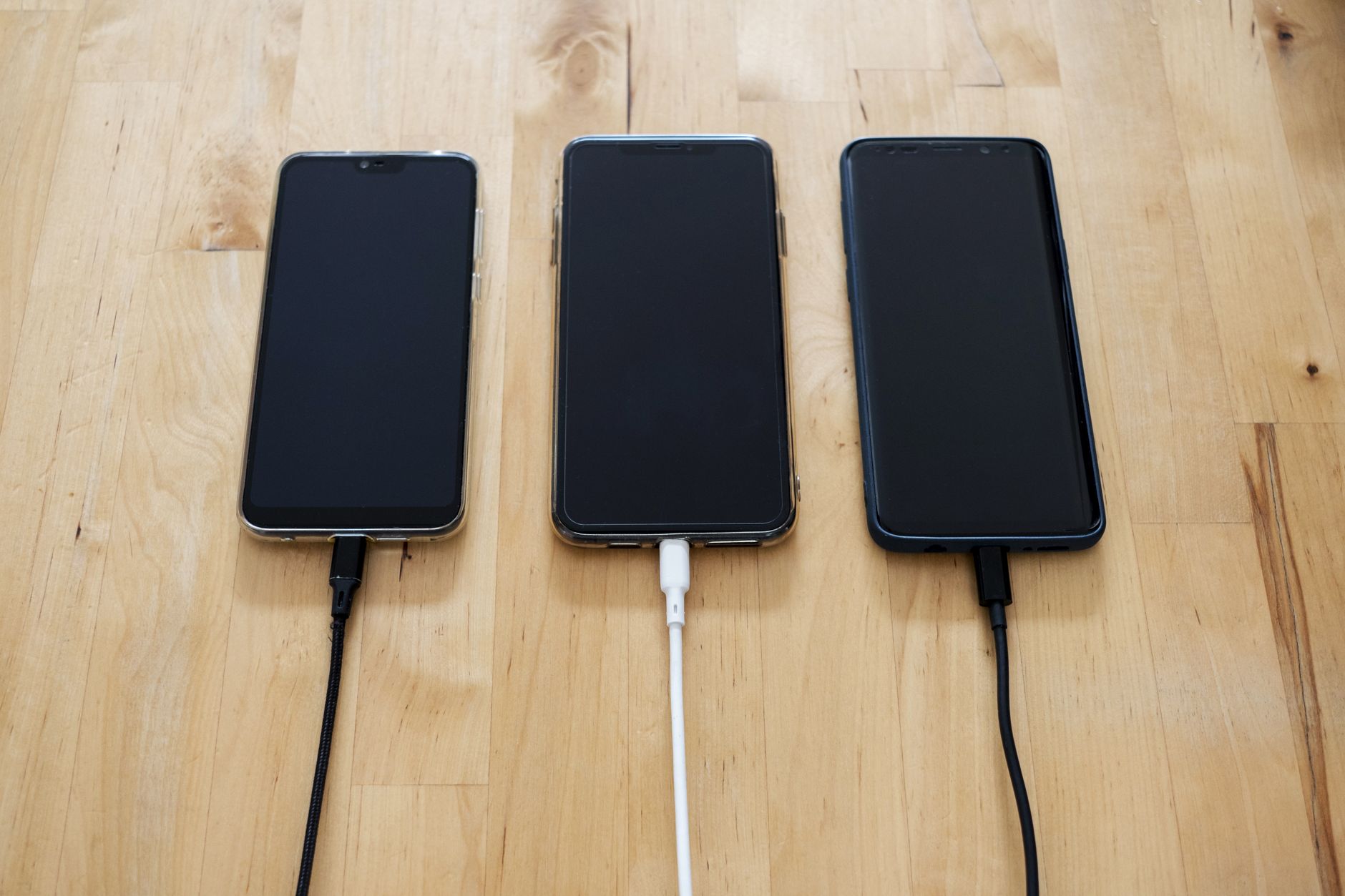
When home doesn’t exist, public spaces become home. Young adults experiencing hidden homelessness develop sophisticated routines around public infrastructure — knowing which library opens earliest, which fast food spot doesn’t rush you, which bus route runs all night. These routines are worth paying attention to.
Libraries, Fast Food, and Transit as Survival Infrastructure
Public libraries, fast food restaurants, laundromats, transit stations, and drop-in centers serve as essential infrastructure for young people without stable housing. If you notice a young adult spending long hours in these spaces — not just passing through, but staying — it may be because those spaces offer warmth, Wi-Fi, bathrooms, and a sense of safety that they don’t have elsewhere.
In Tennessee cities like Memphis, Nashville, Knoxville, and Chattanooga, library staff and transit workers are often among the first people to notice youth in housing crisis — sometimes before any formal service provider does.
Specific Behaviors to Notice
- Charging multiple devices at once in public outlets (phone, tablet, portable battery)
- Eating slowly or ordering the cheapest item to extend time in a warm space
- Using public restrooms to wash up, brush teeth, or change clothes
- Riding buses or trains past their stop — or riding in loops — to stay warm or safe
- Spending entire days in a library or community center without a clear purpose
These are not signs of loitering or bad behavior. They are signs of a young person doing what they need to do to survive the day.
6. They're Aging Out of Foster Care or Left a Family Situation Suddenly
Two of the most common pathways into youth homelessness in Tennessee are aging out of the foster care system and leaving a family situation that became unsafe or untenable. Both often happen suddenly, leaving young adults without any transition plan or support network.
The Foster Care Cliff in Tennessee
In Tennessee, young people in foster care ‘age out’ of the system at 18 — or at 21 if they opt into extended foster care under Tennessee’s Extended Foster Care program. But many don’t know about the extension, or they leave earlier due to conflict or a desire for independence. The result: a sudden loss of housing, financial support, and case management all at once.
Studies consistently show that 36 to 40% of youth who age out of foster care experience homelessness within 18 months of leaving. In Tennessee, the Department of Children’s Services (DCS) offers some transitional support, but gaps remain significant — especially in rural CoC regions like Upper Cumberland and Northeast Tennessee.
Family Conflict as a Pathway to Hidden Homelessness
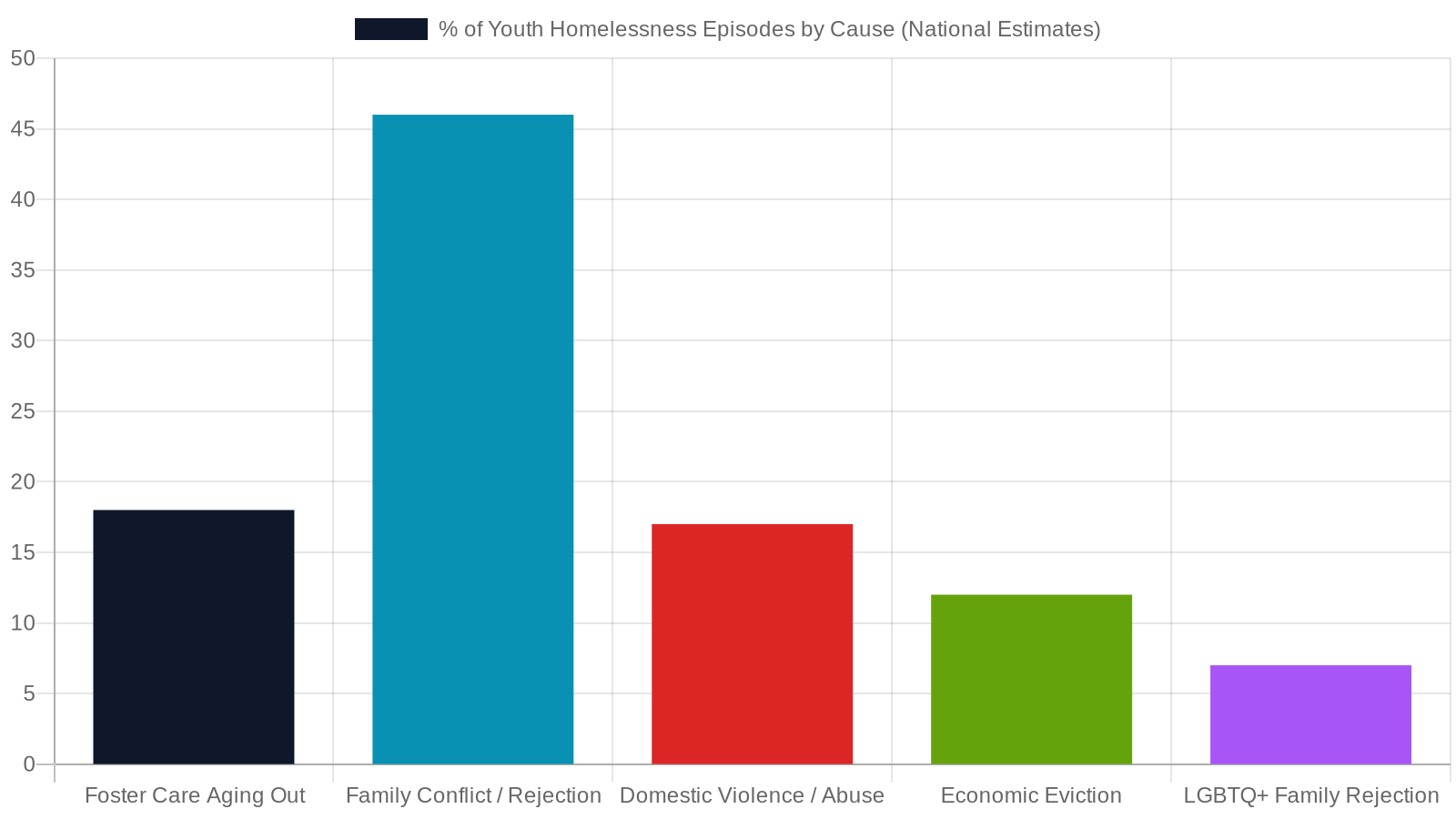
Family rejection — particularly for LGBTQ+ youth — is one of the leading causes of youth homelessness nationally. A young person who left home suddenly after a conflict, who mentions they ‘can’t go back,’ or who describes a chaotic or unsafe family situation may be navigating homelessness without naming it that way.
- LGBTQ+ youth are 120% more likely to experience homelessness than their peers
- Family conflict accounts for approximately 46% of youth homelessness episodes nationally (True Colors United, 2023)
- Young people fleeing domestic violence or abuse also face acute housing instability
7. They Show Signs of Chronic Stress, Anxiety, or Exhaustion

The stress of not knowing where you’ll sleep tonight doesn’t stay neatly contained — it shows up in the body, in behavior, and in relationships. Recognizing the mental and physical toll of housing instability is key to understanding what a young person may be going through beneath the surface.
What Housing Instability Does to the Body and Mind
Living without stable housing is physically and mentally exhausting. Young adults who are couch surfing or otherwise housing insecure often experience chronic sleep deprivation (sleeping in unsafe or uncomfortable places), hypervigilance (always scanning for threats), and high baseline anxiety. Over time, this takes a serious toll on physical health, mental health, and cognitive function.
Research from the American Journal of Public Health found that homeless youth are 3 times more likely to experience depression and anxiety than housed peers, and that these conditions often precede homelessness as much as they result from it — creating a cycle that’s hard to break without stable housing.
Behavioral Signs Worth Noticing
- Visible exhaustion — dark circles, falling asleep in public, difficulty concentrating
- Heightened startle response or hypervigilance in shared spaces
- Irritability, mood swings, or emotional withdrawal that seem out of character
- Reluctance to talk about the future or make plans (‘I don’t know where I’ll be next month’)
- Self-medicating with alcohol or substances as a coping mechanism
These signs overlap with many mental health conditions — which is exactly why a trauma-informed, housing-first lens matters. Addressing the housing instability often improves mental health outcomes significantly.
8. They Struggle with Food Insecurity or Skip Meals Regularly

Food insecurity and housing instability almost always travel together. Understanding this connection helps you see the full picture of what a young person is managing — and points toward resources that can address both needs at once.
Housing and Food Insecurity Are Deeply Linked
Young adults without stable housing almost always experience food insecurity alongside it. Without a kitchen, a consistent income, or a safe place to store food, eating regularly becomes a daily challenge. Many rely on free meal programs, food banks, or the generosity of whoever they’re staying with — which can feel humiliating and precarious.
In Tennessee, food deserts are a significant issue in both rural areas (Upper Cumberland, Northeast TN) and urban neighborhoods (South Memphis, North Nashville). A young person who skips lunch, hoards snacks, or eats very quickly when food is available may be managing scarcity that isn’t immediately visible.
Signs That Food Insecurity May Be Present
- Eating very quickly or eating unusually large amounts when food is available
- Pocketing or saving food from meals at programs, schools, or events
- Mentioning they ‘forgot to eat’ regularly, or skipping meals without explanation
- Showing up to food-related events even when they seem otherwise disengaged
- Asking about food pantries, meal programs, or SNAP benefits
Tennessee’s SNAP program (food stamps) is available to young adults who meet income requirements, including those who are homeless. Connecting a young person to a benefits navigator can be a meaningful first step.
Hidden Homelessness vs. Visible Homelessness: How They Compare
Understanding the difference between hidden and visible homelessness helps you recognize what most people miss — and why the signs in this article matter so much.
9. They Don't Have Consistent Access to ID or Key Documents

The ‘document gap’ is one of the most concrete and solvable barriers facing young adults in housing instability — and one of the clearest signs that something is wrong. When a young person can’t produce basic ID or proof of address, it’s often because their life doesn’t have the stability those documents require.
Why Documents Matter — and Why They're So Hard to Keep
A birth certificate, Social Security card, state ID, and proof of address are required for almost every housing application, job application, benefits enrollment, and educational program. For young adults experiencing hidden homelessness, these documents are both critically important and extremely difficult to maintain. They can be lost when belongings are stolen, left behind during a sudden move, or never obtained in the first place.
Tennessee’s ID Voucher Program allows homeless individuals to obtain a state ID at reduced or no cost, but many young adults don’t know it exists. Without ID, the cycle of instability becomes nearly impossible to break — you can’t get a job, you can’t get housing, you can’t access benefits.
Document-Related Red Flags
- Unable to provide a consistent mailing address for ID or mail
- Mentioning their documents were lost, stolen, or ‘left somewhere’
- Carrying documents in a plastic bag or loose in a pocket (no safe storage)
- Asking for help navigating the process of replacing a birth certificate or Social Security card
- Being unable to complete a job or housing application due to missing documents
Case managers and service providers in Tennessee’s CoC regions can connect young adults to document recovery services — this is often one of the highest-impact interventions available.
10. They're Involved in Survival Behaviors to Meet Basic Needs

This is the hardest sign to talk about — and the most important to understand without flinching. Survival behaviors are a direct response to a system that has failed to provide safe, stable options. The response has to be support, not shame.
Understanding Survival Without Judgment
When basic needs aren’t met through legitimate channels, young adults sometimes meet them through informal or risky means — trading labor, sex, or goods for a place to sleep; engaging in petty theft to eat; or entering exploitative living situations with controlling adults. These are survival strategies born of desperation, not character flaws, and they require a non-judgmental, trauma-informed response.
Commercial sexual exploitation of youth (CSEY) is disproportionately linked to housing instability. The National Center for Missing and Exploited Children estimates that up to 40% of homeless youth have been approached for or engaged in survival sex at some point. Tennessee has specific laws and services addressing CSEY — but young people need to be connected to them without fear of criminalization.
How to Respond Without Making Things Worse
If you suspect a young person is engaging in survival behaviors, the most important thing you can do is not withdraw trust or support. Judgment, lectures, or mandatory reporting threats often push young people further away from help. Instead:
- Maintain the relationship — it’s often the most protective factor
- Connect them to a drop-in center or low-barrier shelter where no questions are required
- Let them know about their rights and options without pressure
- Involve a trained advocate or case manager who specializes in youth homelessness
In Tennessee, each CoC region has youth-specific services — the key is knowing where to point someone.
How Hidden Homelessness Looks Different Across Tennessee's Regions

Hidden homelessness doesn’t look the same in Memphis as it does in a small town in the Upper Cumberland. Understanding the regional differences across Tennessee’s Continuum of Care helps you recognize the signs in context — and know which resources are actually available nearby.
Urban vs. Rural: Different Challenges, Same Crisis
In Memphis, Nashville, Knoxville, and Chattanooga, hidden homelessness often plays out in dense urban environments — young adults cycling through shelters, couch surfing in apartment complexes, or living in encampments near transit corridors. Urban areas have more services, but also more competition for limited shelter beds and housing vouchers.
In rural CoC regions like Upper Cumberland and Northeast Tennessee, the picture is different: young adults may be living in overcrowded trailers, staying with extended family in unsafe conditions, or stranded without transportation to reach any services at all. The isolation of rural homelessness makes it even harder to detect and even harder to address.
What the Numbers Show Across Tennessee CoCs
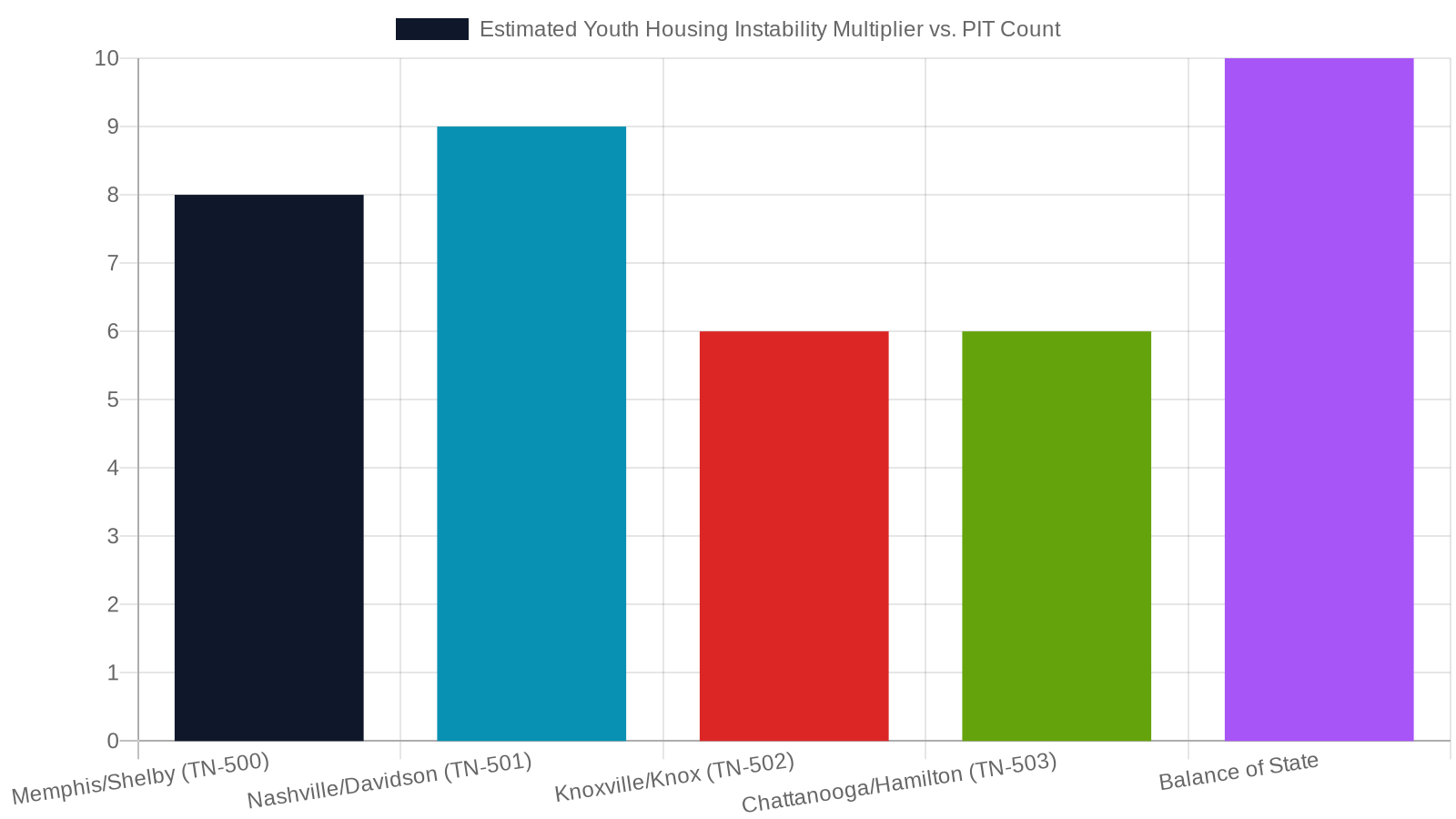
Tennessee’s annual Point-in-Time (PIT) count consistently undercounts youth experiencing hidden homelessness because it only captures people in shelters or visible outdoor locations on a single January night. Researchers estimate the true number of housing-unstable youth in Tennessee is 5 to 10 times higher than the PIT count suggests.
- Memphis/Shelby (TN-500): Largest urban CoC; significant youth shelter capacity but long waitlists
- Nashville/Davidson (TN-501): Rapid growth driving up rents; youth homelessness rising
- Knoxville/Knox (TN-502): Strong CoC collaboration; active youth-specific programming
- Chattanooga/Hamilton (TN-503): Growing youth services infrastructure
- Balance of State regions: Sparse services, long distances, and limited transportation
What You Can Do Right Now — for Yourself or Someone You Know

Recognizing the signs is step one. Step two is knowing what to do next — whether you’re the young person in the situation, a peer who cares about them, or a professional trying to help. Here’s where to start, right now, in Tennessee.
If You're the Young Person Reading This
First: what you’re going through is real, it’s not your fault, and you deserve stable housing. You don’t have to be sleeping outside to qualify for help — couch surfing, doubling up, and staying in unsafe situations all count as homelessness under HUD’s definition, and that means you may be eligible for youth-specific housing programs, rapid rehousing, transitional housing, and other supports across Tennessee.
Start by reaching out to your local Continuum of Care’s youth services, a drop-in center, or a CoC-connected case manager. You can also learn more about what youth homelessness looks like and how to access help in Tennessee — including resources specific to your region.
If you want to turn your experience into advocacy and leadership, find your local Youth Action Board — young adults ages 17 to 25 with lived experience of homelessness are exactly who YAAB is built for.
If You're a Peer, Case Manager, or Service Provider
The most powerful thing you can do is believe young people when they share their situation, and connect them to low-barrier resources without demanding proof or perfect paperwork. In Tennessee, each CoC region has youth-specific entry points — coordinated entry systems, drop-in centers, and youth shelters that don’t require ID to walk in the door.
- Know your local CoC’s youth services contact and share it freely
- Keep a list of low-barrier resources (food, shelter, ID help, mental health) on hand
- Learn the signs in this article and share them with colleagues
- Refer young adults to YAAB Tennessee’s resource directory for statewide and regional support options
You don’t have to have all the answers. You just have to be someone a young person trusts enough to ask.
Frequently Asked Questions
What counts as homelessness for a young adult in Tennessee?
Under HUD's definition, a young adult is considered homeless if they lack a fixed, regular, and adequate nighttime residence. This includes couch surfing, doubling up with others, living in a car, staying in a motel without the means to pay long-term, or staying in a shelter. You do not have to be sleeping outside to qualify for housing assistance in Tennessee.
How do I help a friend who might be secretly homeless?
Start by building trust rather than demanding answers. Offer low-stakes support — food, a phone charger, information about a drop-in center — without requiring them to disclose their situation. Let them know you believe them and that help exists. Connect them to your local CoC's youth services or share YAAB Tennessee's resource page so they can explore options on their own terms.
Can a 17-year-old access homeless services in Tennessee without a parent?
Yes, in many cases. Tennessee's McKinney-Vento Act protections allow minors experiencing homelessness to enroll in school without parental consent. Many youth drop-in centers and shelters serve unaccompanied minors. However, some services require parental consent for those under 18 — a case manager or youth advocate can help navigate what's available in your specific CoC region.
What is the Youth Action Board (YAAB) and how can I join?
The Youth Action Board of Tennessee is a statewide network of young adults ages 17 to 25 with lived experience of homelessness or housing instability. YAAB members advise policymakers, drive advocacy, and connect peers to resources. If you're in that age range and have that experience, you can find and join your local YAAB through the YAAB Tennessee website — no prior advocacy experience required.
Why do so many young people hide that they're homeless?
Stigma, fear of judgment, distrust of systems, and practical concerns all play a role. Many young adults worry that disclosing homelessness will trigger unwanted system involvement, damage relationships with temporary hosts, or mark them as 'less than' in school or work settings. Creating safe, non-judgmental spaces where young people can share their situation without consequences is essential to reaching them.
What Tennessee resources exist specifically for youth experiencing homelessness?
Each of Tennessee's eight Continuum of Care regions has youth-specific services, including drop-in centers, youth shelters, rapid rehousing programs, and transitional housing. Statewide, the Tennessee Department of Children's Services offers Extended Foster Care for eligible young adults up to age 21. YAAB Tennessee's resource directory and your local CoC's coordinated entry system are good starting points for finding what's available in your area.