Quick answer: Young adults ages 17 to 25 across Tennessee who have experienced homelessness or housing instability are not just recipients of services — they are decision-makers. Through the Youth Action Board (YAAB) of Tennessee, members in every major region of the state sit at policy tables, advise Continuum of Care leaders, and push for real changes in how housing programs are designed and funded. Their firsthand knowledge makes Tennessee's homeless response system more effective, more equitable, and more youth-centered.
What 'Lived Experience' Actually Means in Policy Work

Before diving into how Tennessee youth influence housing policy, it helps to understand what lived experience means in this context — and why it carries real weight in rooms where decisions get made. Lived experience is not a feel-good add-on to a policy meeting. It is a form of expertise that no degree or dataset can fully replace.
More Than a Story — It's Expertise
When policymakers talk about lived experience, they mean the firsthand knowledge that comes from actually navigating a broken system — sleeping in a shelter, couch-surfing between relatives, aging out of foster care with nowhere to go, or trying to rent an apartment without a rental history or a co-signer. That knowledge is not abstract. It is specific, detailed, and impossible to replicate in a conference room.
In housing policy, lived experience experts can identify gaps that data alone misses. A young adult who has been through rapid rehousing knows whether the 30-day move-in timeline is realistic. Someone who aged out of foster care at 18 knows whether the transition plan they were handed was actually useful. That ground-level insight is what makes youth voice so powerful at the policy table.
Why Youth Voice Is Different from Adult Advocacy
Adult advocates — case managers, nonprofit directors, researchers — do important work. But they are advocating on behalf of young people, not as young people. Transition-age youth (TAY), defined federally as ages 16 to 24, face a distinct set of barriers: they often cannot sign leases, lack credit history, may be fleeing family conflict, and are still developing the executive function skills that stable housing requires.
When a 20-year-old who has lived this reality speaks to a city council or a CoC board, the message lands differently. It is harder to dismiss, harder to reduce to a statistic, and harder to ignore. Research from the Urban Institute and the National Alliance to End Homelessness consistently shows that programs co-designed with youth are more likely to be used and more likely to succeed.
The YAAB Model: How It Works in Tennessee

Tennessee’s approach to centering youth voice in housing policy is structured — not accidental. The YAAB model gives young adults a formal, compensated, ongoing role in the systems that affect their lives. Here is how that model is built and why it matters.
A Statewide Network, Rooted in Local Regions
The Youth Action Board (YAAB) of Tennessee is a statewide network of young adults ages 17 to 25 who have experienced homelessness or housing instability. YAAB operates across Tennessee’s eight Continuum of Care (CoC) regions, including Memphis/Shelby County, Nashville/Davidson County, Knoxville/Knox County, Chattanooga/Hamilton County, Jackson/West Tennessee, Upper Cumberland, and Northeast Tennessee.
Each local YAAB is embedded in its region’s CoC — the coordinated network of housing and service providers that receives federal HUD funding. That embedding is intentional. It means youth are not advising from the outside; they are inside the rooms where funding decisions, program designs, and policy priorities are set.
Who Can Join and What Members Actually Do
Any young adult ages 17 to 25 in Tennessee who has experienced homelessness or housing instability is eligible to join their local YAAB. Members are not volunteers in a passive sense — they are paid advisors. Compensation for participation is a core YAAB principle, because asking young people who are still working toward stability to give their time for free replicates the same inequity the system is trying to fix.
YAAB members attend CoC meetings, review grant applications, provide feedback on shelter policies, testify at public hearings, and develop peer-to-peer resources. Some members go on to serve on CoC boards or advisory committees in formal voting or advisory roles. The work is real, the stakes are real, and the impact is measurable.
The Continuum of Care: Where Policy Actually Gets Made

To understand how youth shape housing policy in Tennessee, you need to understand the Continuum of Care system — because that is where the real decisions are made. CoCs are not just bureaucratic structures; they are the engines that drive how federal housing dollars get spent at the local level.
What a CoC Is and Why It Controls So Much
A Continuum of Care (CoC) is a regional planning body funded by the U.S. Department of Housing and Urban Development (HUD). Each CoC is responsible for coordinating housing and services for people experiencing homelessness in its area — including transition-age youth. In Tennessee, there are eight CoC regions, each with its own governance structure, funding priorities, and service network.
CoCs control the allocation of tens of millions of federal dollars each year through the HUD CoC Program, Emergency Solutions Grants (ESG), and other streams. They decide which organizations get funded, which programs get prioritized, and how the local homeless response system is designed. If you want to change how youth homelessness is addressed in Tennessee, the CoC is where that change happens.
How YAAB Members Plug Into CoC Governance
YAAB members participate in CoC governance in several concrete ways. They attend general CoC membership meetings, where funding decisions and policy priorities are discussed. They serve on subcommittees focused on youth, data, or program standards. In some regions, YAAB members hold seats on the CoC’s governing board — giving them a formal vote, not just an advisory role.
YAAB members also participate in the annual Point-in-Time (PIT) Count, the federally required census of people experiencing homelessness conducted every January. Youth-specific outreach during the PIT Count, led by peers who know where young people actually sleep, produces more accurate data — and more accurate data leads to better-targeted funding.
Real Ways Youth Voice Changes Programs and Policies

Advocacy is only meaningful if it produces change. Here are specific, concrete ways that YAAB members across Tennessee have used their lived experience to reshape the programs and policies that affect transition-age youth — from shelter rules to statewide funding priorities.
Redesigning Shelter Rules That Push Youth Away
Many traditional homeless shelters were designed for adults, not for young people. Curfews that conflict with work schedules, rules prohibiting partners or LGBTQ+ couples from sharing space, and policies that separate young parents from their children are all examples of shelter rules that — however well-intentioned — drive youth away from the very services meant to help them.
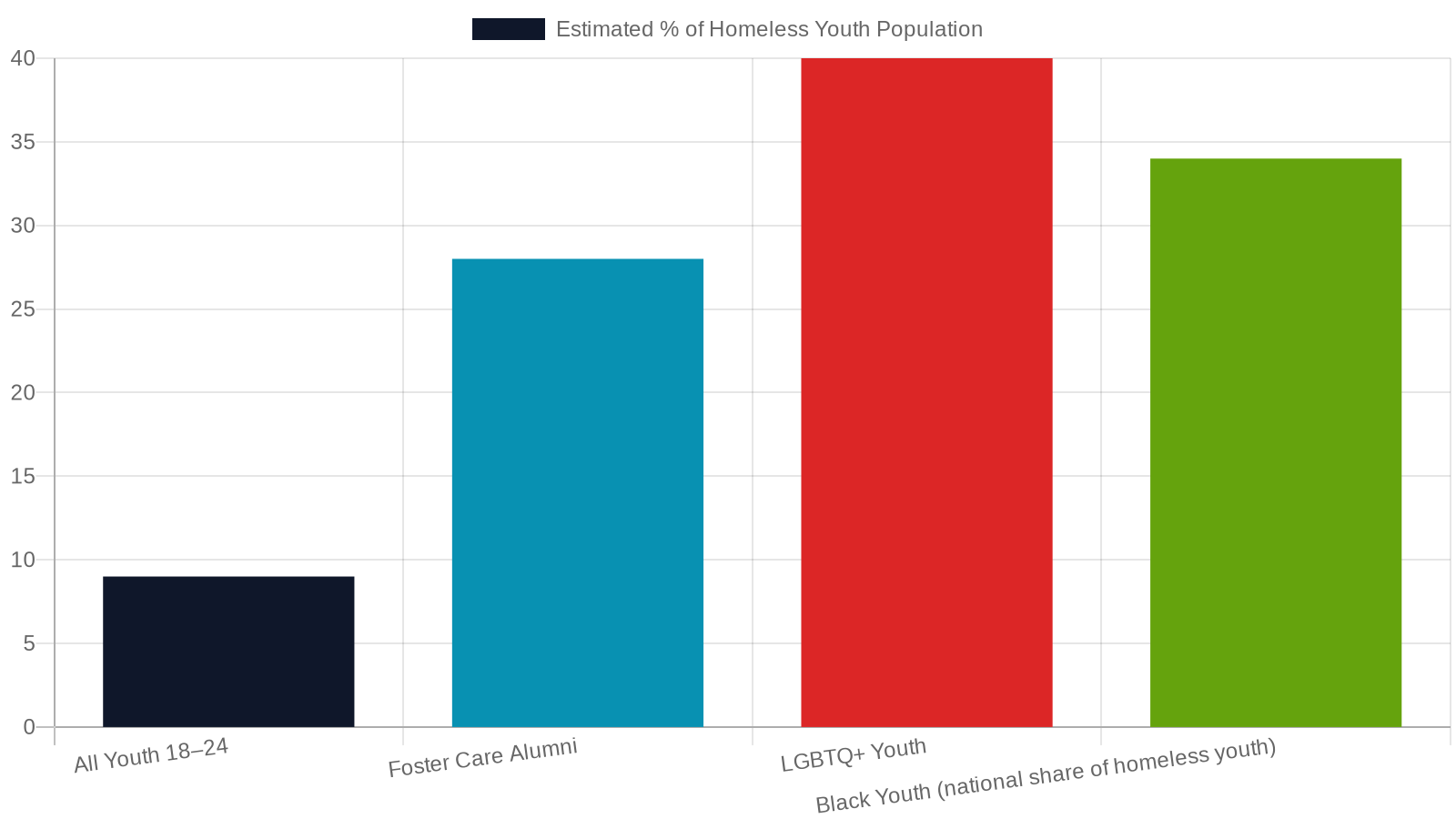
YAAB members in Tennessee have used their platform to flag these barriers directly to shelter operators and CoC leadership. In several regions, youth feedback has led to revised intake processes, extended curfews for working residents, and explicit non-discrimination policies for LGBTQ+ youth, who are disproportionately represented in the youth homeless population (estimates from the Williams Institute put the figure at 40% of homeless youth nationally).
Shaping How Coordinated Entry Serves Young Adults
Coordinated Entry is the standardized process CoCs use to assess people experiencing homelessness and match them to the right housing resource. The assessment tools and prioritization criteria used in Coordinated Entry have an enormous impact on who gets housed first — and youth often score lower on adult-oriented tools even when their need is just as acute.
YAAB members have advocated for youth-specific assessment tools, youth-designated housing slots, and trained youth navigators within Coordinated Entry systems. These are not small asks — they require CoC policy changes, funder buy-in, and provider training. The fact that they have happened in multiple Tennessee regions is a direct result of sustained youth advocacy.
Influencing State-Level Funding Priorities
Beyond local CoC work, YAAB members engage at the state level — participating in Tennessee’s Interagency Council on Homelessness, providing testimony to state legislative committees, and contributing to the state’s Consolidated Plan, which guides how federal Community Development Block Grant (CDBG) and HOME funds are allocated across Tennessee.
When a young adult who has slept in a car testifies before a legislative committee about why youth-specific housing funding matters, it changes the conversation in ways that a policy brief cannot. Several Tennessee YAAB members have done exactly that — and have seen their testimony cited in subsequent funding decisions.
The Data Behind Youth Homelessness in Tennessee

Good advocacy is grounded in data. Here is a look at what the numbers tell us about youth homelessness in Tennessee — and where lived experience fills the gaps that statistics cannot capture.
What the Numbers Tell Us — and What They Miss
According to HUD’s 2023 Annual Homeless Assessment Report (AHAR), approximately 653,100 people experienced homelessness on a single night in January 2023 across the United States — a 12% increase from 2022. Young adults ages 18 to 24 accounted for roughly 9% of the sheltered homeless population nationally. In Tennessee, the 2023 Point-in-Time Count identified over 8,000 people experiencing homelessness statewide, with youth representing a significant and likely undercounted share.
The undercounting problem is real. Young people experiencing homelessness are more likely to be unsheltered — staying with friends, in cars, in abandoned buildings — than to be in shelter. They are harder to find on a single January night, and they are often reluctant to identify themselves to strangers conducting a count. YAAB members who conduct peer outreach during PIT Counts help close this gap.
Disproportionate Impact on Specific Youth Populations
Youth homelessness in Tennessee, as nationally, is not evenly distributed. Young people who have aged out of foster care are dramatically overrepresented — studies estimate that 20% to 36% of youth who age out of foster care experience homelessness within two to four years of leaving care. Black youth are overrepresented relative to their share of the general population. LGBTQ+ youth, as noted above, make up an estimated 40% of homeless youth despite being roughly 10% of the overall youth population.
These disparities are not accidents — they reflect structural inequities in housing, child welfare, and economic systems. YAAB’s work is explicitly equity-focused: members push for data disaggregation so that CoCs can see and respond to these disparities, rather than treating all homeless youth as a single undifferentiated group.
Aging Out of Foster Care: A Pipeline No One Should Face

One of the most urgent issues YAAB members across Tennessee address is the foster care-to-homelessness pipeline. Young people aging out of foster care face a cliff-edge transition that too often ends in housing instability — and lived experience advocates are pushing hard to change that.
What 'Aging Out' Means and Why It Creates Housing Crisis
In Tennessee, youth in foster care typically age out of the system at 18, though extended foster care through the Tennessee Fostering Connections program allows some youth to remain in care until age 21 if they are enrolled in school, working, or participating in an approved program. But even with extended care, the transition is abrupt by any measure. On one day, a young person has a caseworker, a placement, and a support structure. Shortly after, they may have very little of that.
Without stable housing, employment, and social support, many foster care alumni quickly find themselves in crisis. Tennessee’s YAAB includes many members who have aged out of foster care, and their advocacy has been instrumental in pushing for stronger transition planning requirements, extended foster care enrollment outreach, and housing-first approaches for this population specifically.
What Tennessee Is Doing — and What Still Needs to Change
Tennessee has made some progress. The state participates in the federal Chafee Foster Care Program, which provides funding for independent living services, education and training vouchers (ETVs), and room-and-board assistance for youth aging out of care. The Tennessee Department of Children’s Services (DCS) also operates the Transitional Living Program, which provides supervised housing for eligible youth up to age 21.
But gaps remain significant. ETV funding is limited and competitive. Transitional living slots are scarce relative to need. And many youth who aged out of care before these programs were expanded — or who fell through the cracks — are now in the 17-to-25 age range with no retroactive access to support. YAAB members advocate for expanded eligibility, increased funding, and better coordination between DCS and CoC systems so that no young person falls into homelessness simply because they turned 18.
How YAAB Members Build Advocacy Skills

Effective advocacy requires skills — and those skills can be learned. YAAB invests in its members as leaders, not just as voices. Here is how that development happens and where it can lead.
Training, Mentorship, and Peer Learning
Joining a YAAB is not just about showing up to meetings. Members receive training in how policy systems work, how to give effective public testimony, how to read and respond to grant applications, and how to facilitate peer conversations. This training is practical and grounded — it is designed to give young adults the tools to be effective in the rooms they are entering, without requiring them to already have professional experience.
Peer mentorship is a core part of the model. Newer members learn from those who have been in the network longer. Experienced members who have testified before a city council or presented at a statewide conference share what worked and what did not. This creates a culture of learning that compounds over time — each cohort of YAAB members builds on the advocacy wins and lessons of those who came before.
From Local Meetings to Statewide Stages
YAAB members do not stay confined to their local region. Tennessee’s statewide YAAB network creates pathways for members to engage at the state level — participating in statewide convenings, contributing to reports and policy briefs, and representing Tennessee at national forums like the National Alliance to End Homelessness conference or the True Colors United youth advocacy summits.
This progression — from local CoC meeting to statewide policy table to national stage — is intentional. It builds the leadership pipeline that Tennessee’s housing system needs: young adults who understand both the ground-level reality of homelessness and the policy architecture that shapes the response to it. Many YAAB alumni go on to careers in housing, social work, policy, and community organizing.
Tennessee's 8 CoC Regions: Local YAAB Impact by Area

Tennessee is a geographically and demographically diverse state, and youth homelessness looks different in Memphis than it does in the Upper Cumberland. Here is a snapshot of how local YAAB chapters are making an impact across the state’s eight CoC regions.
Memphis, Nashville, Knoxville, and Chattanooga
Tennessee’s four largest metro areas each have their own CoC and their own local YAAB chapter. In Memphis/Shelby County (TN-500), YAAB members have engaged with the Memphis CoC on youth-specific shelter capacity and Coordinated Entry reforms. In Nashville/Davidson County (TN-501), youth advocates have participated in the Metro Homelessness Commission and pushed for increased youth housing units in the city’s affordable housing pipeline.
In Knoxville/Knox County (TN-503), YAAB members have worked with the Knoxville-Knox County Community Action Committee on youth outreach and peer navigation. In Chattanooga/Hamilton County (TN-502), local YAAB participation has focused on shelter access and employment pathways for youth transitioning out of homelessness.
Jackson, Upper Cumberland, Northeast TN, and Beyond
Rural and smaller-metro regions face distinct challenges. In Jackson/West Tennessee (TN-504), transportation barriers and limited shelter options make youth homelessness harder to address — and YAAB members from this region bring that rural reality to statewide conversations. The Upper Cumberland (TN-506) and Northeast Tennessee (TN-507 and TN-509) regions similarly face resource scarcity that urban CoCs do not.
YAAB’s statewide structure ensures that rural youth voices are not drowned out by the larger metro regions. Statewide convenings bring members from all eight regions together, and the network actively works to ensure that policy recommendations reflect the full geographic diversity of Tennessee — not just what works in Nashville or Memphis.
5 Levels of Youth Engagement in Housing Policy
Youth engagement in housing policy exists on a spectrum. The table below shows what each level looks like in practice — and how YAAB's model compares to lower-engagement approaches.
Barriers Youth Face When Trying to Influence Policy

Centering youth voice in policy is the right thing to do — but it does not happen automatically or easily. Understanding the barriers that young advocates face is essential to building systems that actually support their participation.
Tokenism, Burnout, and Not Being Taken Seriously
Youth advocacy in policy spaces is not without obstacles. One of the most common is tokenism — being invited to a meeting as the ‘youth representative’ but not actually having your input shape decisions. Young people with lived experience quickly recognize when they are being used as a symbol rather than engaged as an expert. YAAB’s structure — with formal roles, compensation, and ongoing relationships with CoC leadership — is designed to push back against tokenism.
Burnout is another real risk. Being asked repeatedly to share traumatic experiences in public settings, without adequate support or follow-through on recommendations, is exhausting and re-traumatizing. YAAB addresses this through trauma-informed facilitation practices, peer support structures, and explicit policies about when and how members share their stories.
Practical Barriers: Transportation, Technology, and Stability
Young adults who are still working toward housing stability face practical barriers to policy participation that their housed peers do not. Getting to a CoC meeting across town requires transportation. Participating in a virtual meeting requires a device and reliable internet. Preparing testimony requires time that may be consumed by work, childcare, or basic survival tasks.
YAAB addresses these barriers directly: members are compensated for their time, transportation assistance is provided, and meetings are structured to be accessible. But these supports require funding — and advocating for adequate resourcing of youth engagement infrastructure is itself a policy priority that YAAB members champion at the CoC and state level.
What Meaningful Youth Engagement Looks Like in Practice

Not all youth engagement is created equal. Here is what it looks like when organizations and systems genuinely center lived experience — and what that produces in terms of real policy and program change.
The Difference Between Consultation and Co-Design
There is a spectrum of youth engagement, and not all of it is meaningful. At the low end is consultation: asking young people what they think, then making decisions without them. At the high end is co-design: building programs and policies alongside young people from the beginning, with their input shaping the outcome. YAAB aims for the high end.
Co-design in practice means youth are involved before decisions are made — not brought in after a program is designed to rubber-stamp it. It means their feedback is documented, responded to, and traceable in final policy documents. It means when a recommendation is not adopted, youth are told why. These practices build trust and make the engagement sustainable over time.
Examples of Co-Design Wins in Tennessee
Across Tennessee’s CoC regions, YAAB members have contributed to co-design wins that are concrete and traceable. Youth feedback has shaped the language and format of intake assessments to be less stigmatizing. Youth-led focus groups have informed the design of drop-in center hours and services. YAAB members have contributed to the development of peer navigator programs — where young adults with lived experience are hired to help their peers access housing and services.
Peer navigator programs are particularly powerful because they address two problems at once: they create employment pathways for YAAB members and alumni, and they make services more accessible to youth who are reluctant to engage with traditional providers. This is the kind of systemic, sustainable change that lived experience advocacy can produce when it is genuinely centered.
Comparing Levels of Youth Engagement in Housing Policy
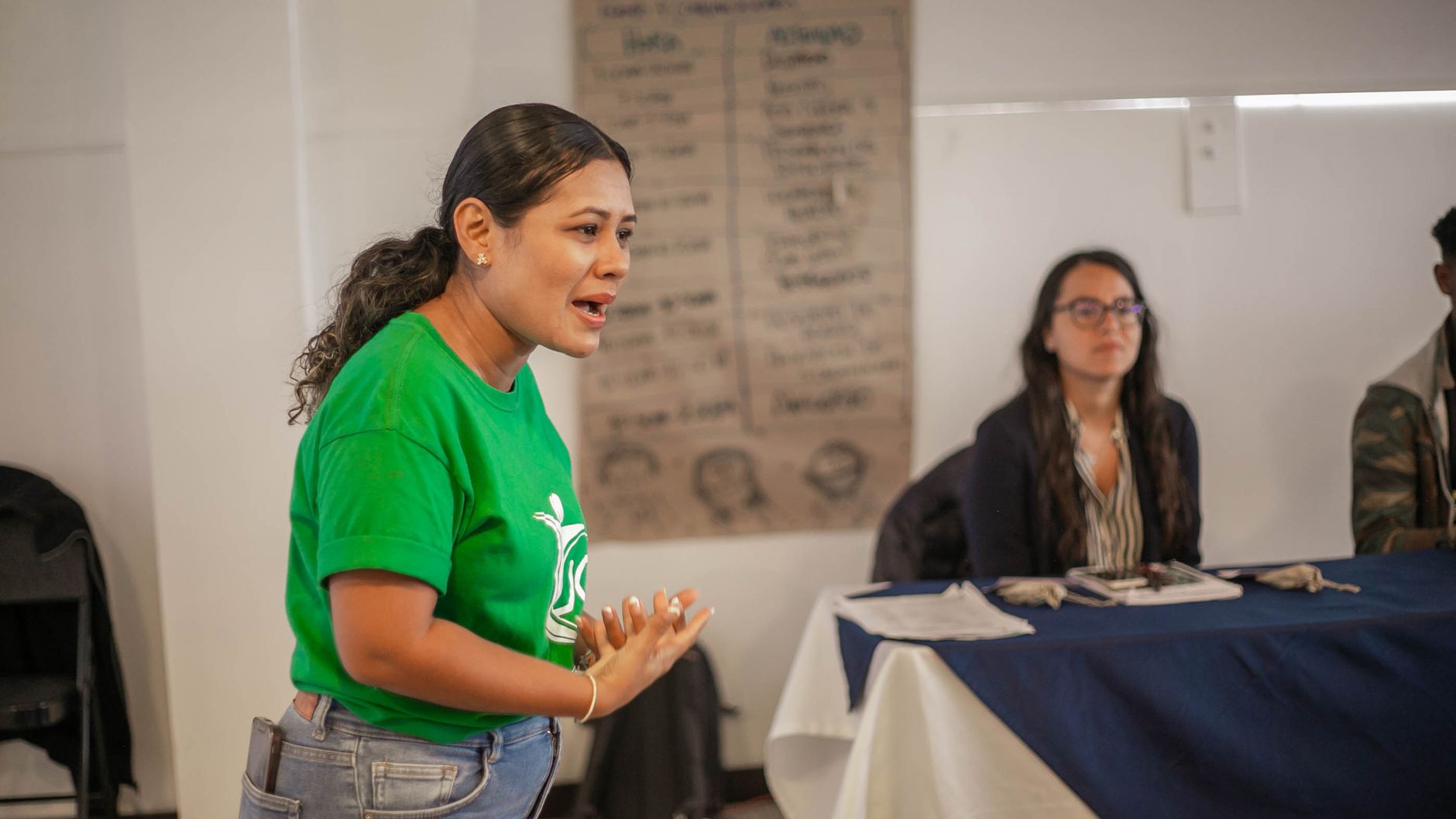
Not every organization engages youth the same way. The table below compares five levels of youth engagement — from the least meaningful to the most — across key dimensions that matter for housing policy work. YAAB’s model is designed to operate at the top two levels.
How to Get Involved with Your Local YAAB in Tennessee

If you are a young adult in Tennessee with lived experience of homelessness or housing instability, your voice belongs in the rooms where housing policy gets made. Here is how to find your local YAAB and take the first step toward turning your experience into advocacy.
Who Can Join and What to Expect
If you are a young adult ages 17 to 25 in Tennessee who has experienced homelessness or housing instability — including couch-surfing, staying in a shelter, living in a car, or being asked to leave your home — you are eligible to join your local YAAB. You do not need to have a certain level of education, a stable job, or a polished resume. Your experience is your qualification.
When you join, you can expect to be welcomed as a peer, not a client. You will receive training, mentorship, and compensation for your participation. You will have real opportunities to shape the programs and policies that affect young people like you across Tennessee. And you will be part of a statewide network of young adults who are doing the same thing in their own regions — building something bigger than any one meeting or one policy win.
Find Your Regional YAAB and Take the Next Step
Tennessee’s YAAB chapters are organized by CoC region. Whether you are in Memphis, Nashville, Knoxville, Chattanooga, Jackson, the Upper Cumberland, or Northeast Tennessee, there is a local chapter working on issues that affect you. You can find your regional YAAB chapter on the YAAB Tennessee website to learn about meetings, membership, and how to connect.
If you are a case manager, service provider, or CoC partner looking to connect young people in your network to YAAB, the same page has information for you. Referring a young adult to their local YAAB is one of the most impactful things a service provider can do — because it moves that young person from being a recipient of decisions to being a maker of them.
Ready to use your experience to change the system? Explore YAAB Tennessee’s advocacy work to see what members are doing right now and how you can add your voice to the movement.
Frequently Asked Questions
What is the Youth Action Board (YAAB) of Tennessee?
YAAB Tennessee is a statewide network of young adults ages 17 to 25 who have experienced homelessness or housing instability. Members advise Continuum of Care regions, shape housing programs and policies, and connect peers to resources across Tennessee. Participation is compensated.
How does lived experience help shape housing policy in Tennessee?
Young people who have navigated homelessness firsthand know where systems fail in ways that data and professional advocates cannot fully capture. YAAB members use that knowledge to identify gaps in shelter rules, Coordinated Entry processes, and funding priorities — and to push for concrete changes at the local and state level.
Can I join YAAB if I am currently experiencing homelessness?
Yes. YAAB is open to young adults ages 17 to 25 in Tennessee who have experienced or are currently experiencing homelessness or housing instability. You do not need to be housed to join. YAAB provides compensation, transportation support, and peer mentorship to make participation accessible.
What is a Continuum of Care and why does it matter for youth?
A Continuum of Care (CoC) is a HUD-funded regional body that coordinates housing and services for people experiencing homelessness. CoCs control significant federal funding and set local policy priorities. YAAB members participate directly in CoC governance, which is where decisions about youth housing programs are actually made.
What happens to young people who age out of foster care in Tennessee?
Youth in Tennessee typically age out of foster care at 18, though extended care is available until 21 through the Fostering Connections program for eligible youth. Without adequate transition planning and housing support, many foster care alumni experience homelessness within a few years of leaving care. YAAB advocates for stronger transition supports and better coordination between the child welfare and homeless response systems.
How do I find my local YAAB chapter in Tennessee?
YAAB chapters are organized by Tennessee's eight Continuum of Care regions, including Memphis, Nashville, Knoxville, Chattanooga, Jackson, Upper Cumberland, and Northeast Tennessee. Visit the YAAB Tennessee website at yaabtn.org/local-yaabs to find the chapter in your region and learn how to connect.