Quick answer: Young adults ages 17 to 25 in Cookeville and the Upper Cumberland region of Tennessee who have experienced homelessness or housing instability can shape the very programs designed to help them by joining the Youth Action Board (YAAB). Through the TN-506 Continuum of Care, YAAB members advise local leaders, review housing policies, connect peers to resources, and build real leadership skills — turning lived experience into lasting change for transition-age youth across the region.
What Is a Lived-Experience Youth Advisory Board?

Before diving into how YAAB shapes Cookeville’s housing programs, it helps to understand exactly what a lived-experience youth advisory board is — and why it’s fundamentally different from the committees that have historically made decisions about young people without including them. The concept is straightforward but powerful: the people most affected by a policy should have a real voice in shaping it.
Defining 'Lived Experience' in Housing Policy
Lived experience means you have personally navigated homelessness, housing instability, the foster care system, or related challenges. In the world of housing policy, it means you have knowledge that no textbook or graduate degree can replicate. When a young adult who has slept in a car, couch-surfed, or aged out of foster care sits at a decision-making table, the entire conversation changes — because the people closest to the problem are closest to the solution.
Advisory boards that center lived experience are now recognized by the U.S. Department of Housing and Urban Development (HUD) as a best practice in Continuum of Care planning. HUD’s 2023 CoC Program Notice of Funding Opportunity explicitly encourages communities to involve people with lived experience in governance and program design.
How a Youth Advisory Board Is Different from a Regular Committee
Traditional advisory committees often pull from professional networks — nonprofit directors, city officials, social workers. A Youth Action Board (YAAB) flips that model. Membership is reserved for young adults ages 17 to 25 who have direct experience with housing instability. That age range matters: transition-age youth face a distinct set of barriers — limited rental history, no co-signers, low wages, and systems that stop supporting them the moment they turn 18 or 21.
- Regular committees: professionals advising on youth issues
- YAAB: young adults with lived experience advising on their own issues
- The difference: authenticity, trust, and policy that actually fits real needs
This peer-centered model has been shown to increase program participation rates by as much as 30% in communities where youth co-design services, according to research published by the National Alliance to End Homelessness.
1. Understanding the Upper Cumberland CoC (TN-506)

To understand how youth advisory work shapes housing programs in Cookeville, you first need to know the system those programs operate within. The Continuum of Care (CoC) is the federally recognized framework that organizes homeless services at the regional level. In Cookeville’s case, that means TN-506 — and knowing how it works is the first step toward changing it.
What Is TN-506 and Who Does It Serve?
Tennessee’s Continuum of Care (CoC) system divides the state into geographic regions, each responsible for coordinating homeless services and housing resources. TN-506 is the Upper Cumberland Continuum of Care, covering a broad swath of Middle and Upper Tennessee that includes Cookeville (Putnam County), as well as Cumberland, DeKalb, Fentress, Jackson, Macon, Overton, Pickett, Smith, Trousdale, White, and Clay counties.
The CoC brings together local nonprofits, government agencies, schools, faith communities, and healthcare providers to plan, fund, and deliver housing and support services. In 2023, TN-506 served hundreds of individuals experiencing homelessness, including a significant proportion of transition-age youth between 18 and 24.
Why Cookeville Is a Regional Hub for Youth Services
Cookeville, as the seat of Putnam County and home to Tennessee Technological University, functions as the economic and service hub of the Upper Cumberland. That means most of the region’s housing programs, workforce development offices, and social service agencies are concentrated here — making it the natural center of gravity for youth advocacy in TN-506.
- Population: Cookeville’s metro area has grown past 115,000 residents as of 2023 census estimates
- Youth homelessness: Rural and small-city CoCs like TN-506 often undercount youth homelessness because young people hide it — couch-surfing and doubling up don’t always show up in Point-in-Time counts
- Key services: Plateau Mental Health Center, Upper Cumberland Human Resource Agency (UCHRA), and local emergency shelters anchor the service landscape
2. How YAAB Members Actually Influence Housing Policy

Joining a youth advisory board isn’t symbolic. YAAB members in Tennessee have concrete, documented ways they influence the programs and policies that affect their peers. Here’s how that influence actually works in practice — from the boardroom to the shelter floor.
Seats at the Table: CoC Governance Participation
YAAB members in TN-506 are not just consulted after decisions are made — they hold seats in CoC governance structures where funding priorities and program standards are set. This includes participating in CoC Board meetings, scoring HUD grant applications, and contributing to the annual Coordinated Entry system review. Coordinated Entry is the process that determines how people experiencing homelessness get assessed and matched to housing resources — and youth advocates have pushed for youth-specific assessment tools that account for the unique barriers young adults face.
When a YAAB member flags that an intake form asks questions that feel invasive or that a shelter’s curfew policy drives young adults away, that feedback can directly change how a program operates within months, not years.
Program Design: From Feedback to Real Changes
Beyond governance, YAAB members in the Upper Cumberland region participate in program design reviews — sitting with service providers to evaluate whether existing housing programs actually work for young adults. Common areas where youth feedback has driven change nationally and in Tennessee include:
- Shelter rules: Curfews, visitor policies, and storage rules that work for families but alienate young adults
- Rapid Rehousing criteria: Rental history and income requirements that screen out youth who have never had a lease
- Case management style: Young adults often prefer peer navigators over traditional social workers
- Application language: Simplifying forms so they don’t require a college education to complete
Each of these changes, small on paper, can mean the difference between a young person engaging with services or walking away.
3. The 5 Core Housing Programs Serving Cookeville Youth

Cookeville and the Upper Cumberland region have a range of housing programs operating within the TN-506 CoC framework. Understanding what each program does — and where young adults fit — is essential context for why YAAB’s advisory role matters so much. Here are the five core program types that YAAB members help shape.
Emergency Shelter and Crisis Housing
Emergency shelter is the first rung of the housing continuum — a safe place to sleep tonight. In the Upper Cumberland region, emergency shelter options for young adults are limited compared to urban centers like Nashville or Memphis, which is itself a finding that YAAB members have brought to CoC planning tables. The Upper Cumberland Human Resource Agency (UCHRA) administers several crisis housing and homelessness prevention programs across the region. Youth-specific emergency shelter beds are scarce, and YAAB advocacy has consistently pushed for more age-appropriate options that don’t mix teenagers with adults in ways that feel unsafe.
Rapid Rehousing (RRH)
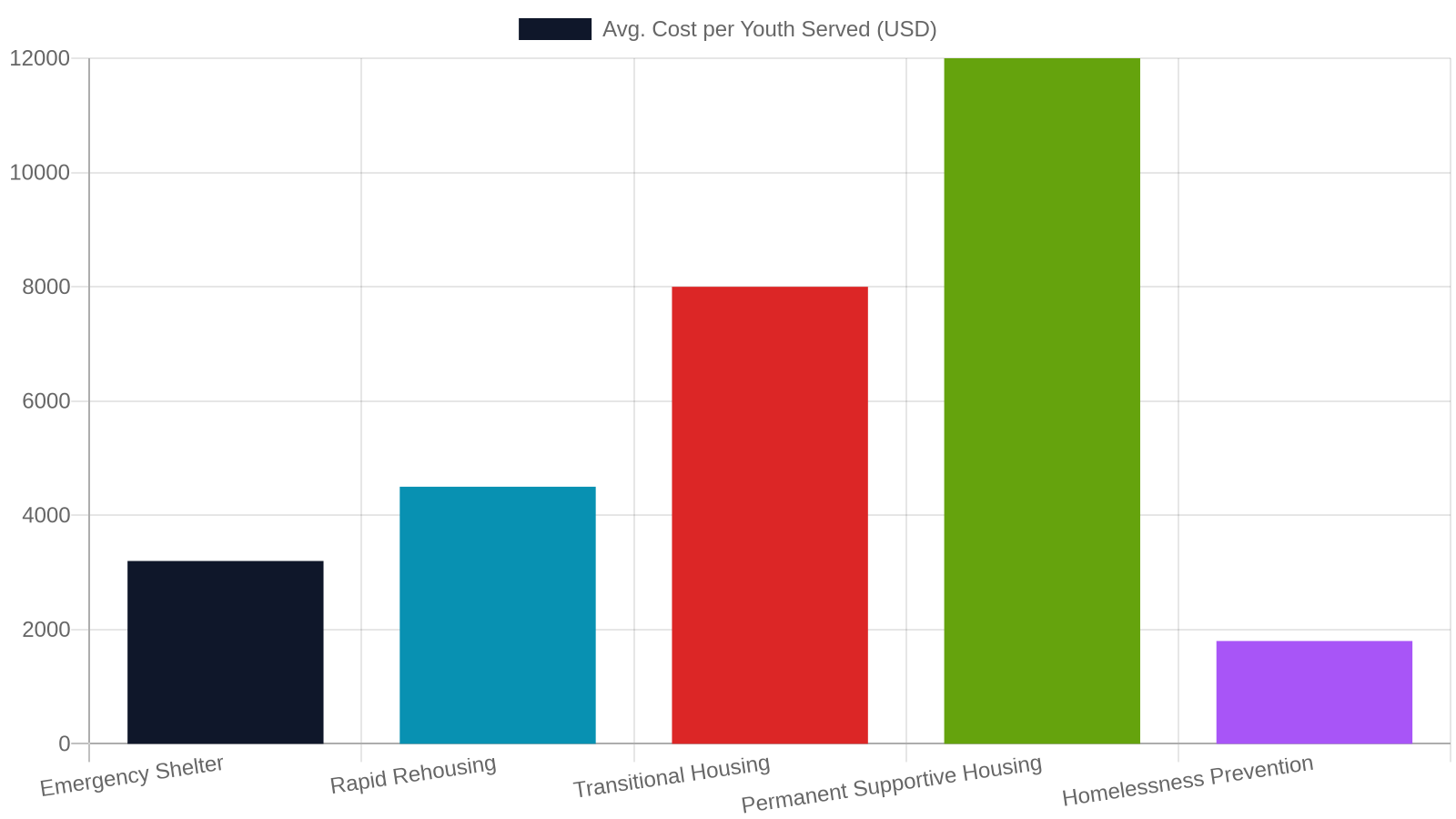
Rapid Rehousing is a short-term rental assistance program that helps people move quickly from homelessness into their own apartment, with case management support. HUD-funded RRH programs in TN-506 are among the most impactful tools for transition-age youth because they don’t require sobriety, employment, or treatment compliance as preconditions — a model called Housing First. Average RRH assistance nationally lasts 3 to 6 months, with a median cost of approximately $4,500 per household. YAAB members have advocated for extending RRH eligibility timelines for youth, recognizing that 18-year-olds need more stabilization time than adults with established work histories.
Transitional Housing and Permanent Supportive Housing
Transitional Housing (TH) provides a structured living environment for up to 24 months, typically with intensive case management. It’s often used for young adults aging out of foster care who need time to build life skills before living independently. Permanent Supportive Housing (PSH) pairs long-term affordable housing with ongoing support services and is typically reserved for youth with the highest barriers — chronic homelessness, serious mental health conditions, or disabilities. Both program types exist within TN-506’s CoC portfolio, and YAAB members have worked to ensure youth-specific units are funded in each HUD grant cycle.
4. Aging Out of Foster Care in the Upper Cumberland

One of the most urgent issues YAAB members in Cookeville and across Tennessee address is the pipeline from foster care to homelessness. For young adults who have spent years in the state’s custody, turning 18 can feel less like a celebration and more like a cliff — and the Upper Cumberland region’s rural character makes the drop even steeper.
The 'Aging Out' Crisis by the Numbers
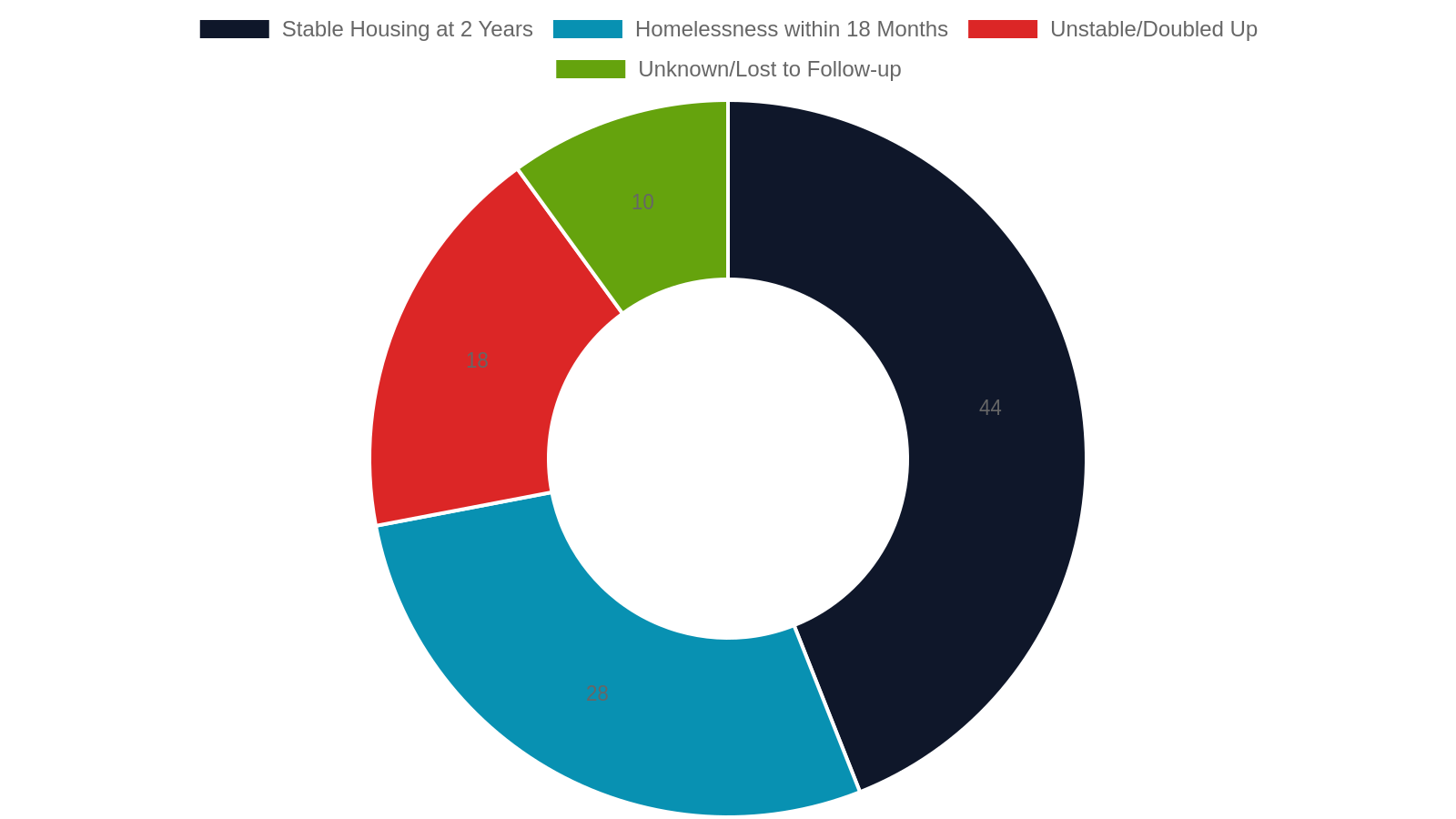
In Tennessee, young people in state custody typically age out of foster care at 18, though extended care through the Tennessee Independent Living Program is available to age 21 for those who qualify. Nationally, approximately 20,000 youth age out of foster care every year, and studies consistently show that 20% to 36% of those youth experience homelessness within 18 months of aging out. In rural regions like the Upper Cumberland, the numbers are harder to track — but the risk is just as real, compounded by fewer shelter options and less public transit.
YAAB members who have aged out of foster care bring irreplaceable insight into how the transition process fails young people — and what would actually help.
What YAAB Advocates for Foster Youth Specifically
YAAB members in Tennessee have identified several specific policy gaps for foster youth that they actively advocate to close:
- Extended foster care awareness: Many eligible youth don’t know they can stay in care past 18 — YAAB does peer outreach to spread the word
- Housing priority: Advocating for foster youth to receive priority on Rapid Rehousing and PSH waitlists
- Records access: Young adults aging out often lack birth certificates, Social Security cards, and medical records — YAAB has pushed for automatic document provision at discharge
- Deposit assistance: First-month rent and security deposit programs that recognize foster youth have no family safety net to call on
5. Employment and Education as Housing Stability Tools

Housing programs don’t exist in a vacuum. For young adults in Cookeville and the Upper Cumberland, sustainable housing requires income — and income requires education and employment pathways that actually fit the realities of someone who may have experienced trauma, missed school, or never had a stable home base. YAAB members advocate for housing programs to be connected to workforce and education supports, not siloed from them.
Why a Job Alone Isn't Enough — But It Helps
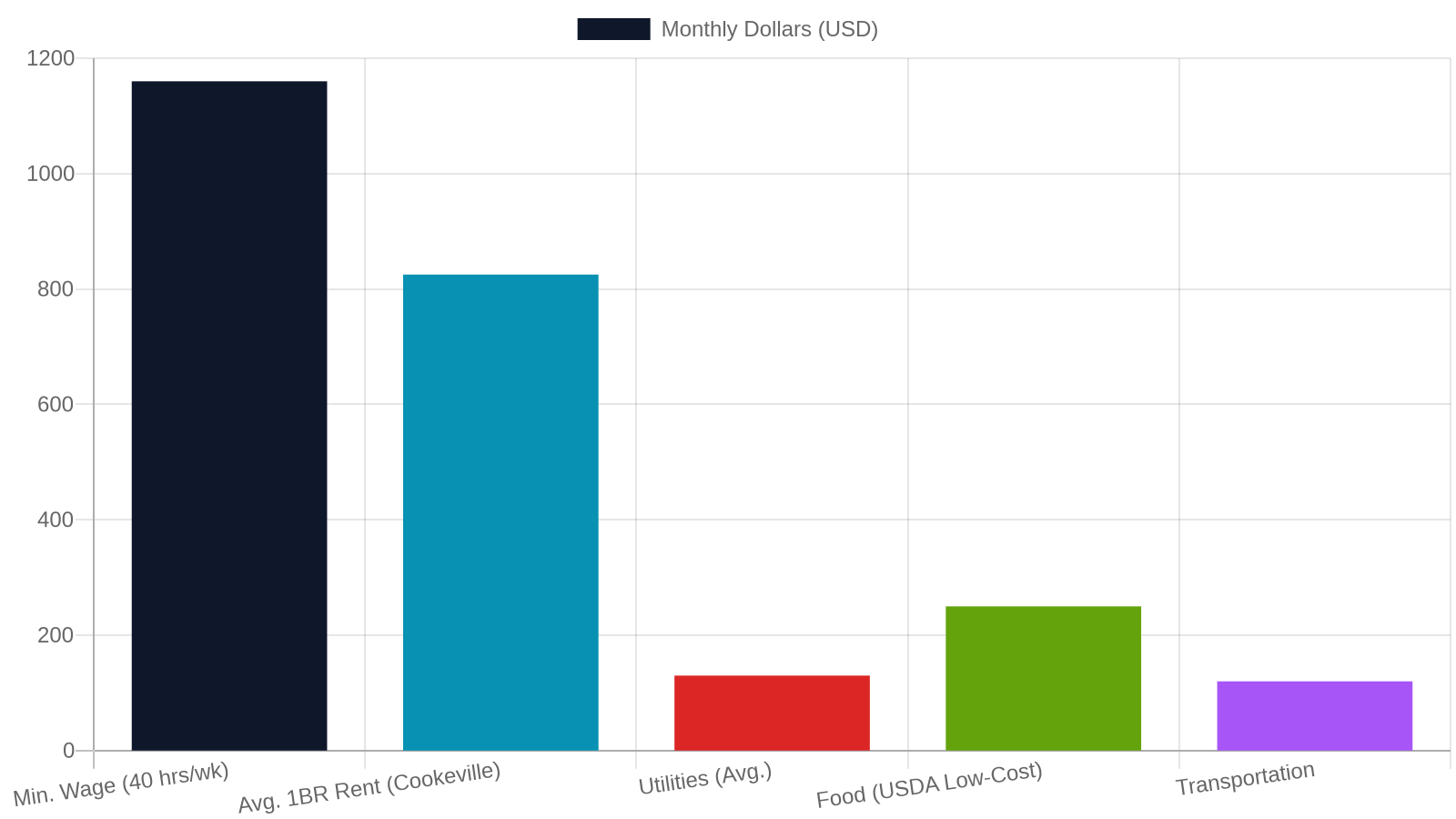
Housing stability and economic stability are inseparable for transition-age youth. A young adult earning Tennessee’s minimum wage of $7.25/hour (the federal minimum, which Tennessee follows) working 40 hours a week brings home roughly $1,160/month before taxes. The average one-bedroom apartment in Cookeville rents for approximately $750 to $900/month as of 2024 — leaving almost nothing for utilities, food, transportation, or emergencies. YAAB members understand this math viscerally, and they advocate for housing programs that don’t require income thresholds that are simply impossible for young adults to meet right away.
GED Pathways and Workforce Programs in Cookeville
Education is one of the most powerful long-term stabilizers for youth experiencing homelessness. Key resources in the Cookeville area include:
- Tennessee College of Applied Technology (TCAT) Crossville: Offers short-term workforce credentials in healthcare, welding, and skilled trades — many programs under 12 months
- Volunteer State Community College: Accessible via Tennessee Promise and Tennessee Reconnect for eligible youth at no tuition cost
- Adult Education GED programs: Available through the Upper Cumberland Human Resource Agency with free testing for qualifying individuals
- Tennessee Reconnect Grant: Covers tuition at community colleges for adults 18+ without a degree — a major resource YAAB promotes to peers
YAAB members often serve as peer ambassadors for these programs, helping to reduce the stigma around GED completion and community college enrollment.
6. Mental Health, Trauma, and Housing: What YAAB Knows

You can’t talk about youth homelessness without talking about mental health — and you can’t talk about mental health services without acknowledging the gaps in rural Tennessee. YAAB members bring a nuanced, non-stigmatizing perspective to this conversation that professional advocates often miss, because they’ve lived it.
The Connection Between Trauma and Housing Instability
Research consistently shows that trauma and housing instability reinforce each other. Youth who have experienced abuse, neglect, family violence, or system involvement are at significantly higher risk of homelessness — and homelessness itself is traumatic. The Substance Abuse and Mental Health Services Administration (SAMHSA) estimates that approximately 50% of youth experiencing homelessness have a diagnosable mental health condition. In rural areas like the Upper Cumberland, mental health services are harder to access — Putnam County has fewer mental health providers per capita than urban Tennessee counties.
YAAB members advocate for housing programs to be explicitly trauma-informed — meaning staff are trained to understand how trauma affects behavior, and rules are designed to support rather than punish young adults who are struggling.
Plateau Mental Health Center and Peer Support in Cookeville
The Plateau Mental Health Center is the primary community mental health provider for the Upper Cumberland region, offering outpatient therapy, crisis services, and psychiatric care. For youth experiencing homelessness, navigating mental health care while unstably housed is a major barrier — appointments require transportation, a phone for reminders, and the cognitive bandwidth to manage scheduling when survival is the daily priority.
YAAB members have advocated for:
- Co-located mental health services within housing programs
- Peer support specialist roles filled by young adults with lived experience
- Telehealth options that don’t require reliable home internet (a significant issue in rural Upper Cumberland)
- Mental health first aid training for shelter and housing program staff
7. Knowing Your Rights as a Young Adult in Tennessee

One of the most empowering things YAAB does is make sure young adults know their rights — because systems that are supposed to help you can also harm you if you don’t know what you’re entitled to. Here are the key legal protections that matter most for transition-age youth in Cookeville and across Tennessee.
McKinney-Vento Rights for Youth in School
The McKinney-Vento Homeless Assistance Act gives students experiencing homelessness specific rights in K-12 education — including the right to immediate enrollment without records, the right to remain in their school of origin, and the right to transportation. For young adults ages 17 to 18 who are still in high school, these protections are critical. Tennessee’s Department of Education maintains a McKinney-Vento liaison in every school district, including Putnam County Schools. If you’re 17 and in school, you have the right to stay enrolled and receive support even if you don’t have a permanent address.
Tenant Rights and Renter Protections in Tennessee
Tennessee’s landlord-tenant law (Tennessee Code Annotated § 66-28) provides baseline protections for renters, but the state has relatively landlord-friendly statutes compared to many states. Key rights young renters should know:
- Security deposit: Must be returned within 30 days of move-out (or 60 days if itemized deductions are claimed)
- Habitability: Landlords must maintain heat, water, and structural safety — if they don’t, you have legal remedies
- Eviction notice: In most cases, landlords must give at least 14 days written notice before filing for eviction for non-payment
- No retaliation: Landlords cannot evict you for reporting code violations
YAAB members advocate for young adults to know these rights before they sign a lease, not after a problem arises.
Tennessee CoC Regions at a Glance: Youth Housing Context
Tennessee's YAAB network spans multiple Continuum of Care regions, each with distinct characteristics that shape local advocacy priorities. This table compares key regions to help members understand where TN-506 fits in the statewide picture.
8. How YAAB Advocacy Has Shaped Tennessee Policy

YAAB isn’t just a local advisory group — it’s part of a statewide movement that has produced real, documented policy change. Understanding what’s already been accomplished helps new members see that their participation matters and that the work produces tangible results, not just feel-good conversations.
Statewide Wins Driven by Youth Voice
YAAB members across Tennessee’s CoC regions — including TN-506 in the Upper Cumberland — have contributed to measurable policy shifts at the state level. While individual YAAB chapters focus on their regional CoC, the statewide YAAB network amplifies those local voices into broader advocacy. Key areas where youth-led advocacy has moved the needle in Tennessee include:
- Pushing for youth-specific Point-in-Time count methodologies that better capture hidden homelessness among young adults
- Advocating for Housing First principles in all CoC-funded programs, removing sobriety and treatment requirements as conditions of housing
- Supporting legislation to extend foster care support to age 21 and improve transition planning
- Influencing the Tennessee Interagency Council on Homelessness to prioritize transition-age youth in its strategic plan
The Power of Peer Testimony
Perhaps the most direct form of YAAB influence is peer testimony — young adults with lived experience speaking directly to policymakers, CoC boards, and funders. Research from the Corporation for Supportive Housing found that decision-makers are significantly more likely to change program design after hearing from people with lived experience than after reviewing data reports alone. YAAB members in Tennessee have testified before state legislative committees, presented at HUD regional forums, and spoken at CoC annual meetings — bringing a credibility and urgency that no consultant can replicate.
If you have a story and you’re willing to share it on your own terms, that story has power. YAAB provides the platform, the training, and the support to use it safely and effectively.
9. Comparing YAAB Regions Across Tennessee

Tennessee’s YAAB chapters don’t operate in isolation — they’re part of a coordinated statewide network. Seeing how different regions compare helps members understand their unique context and learn from peers across the state. The comparison table below gives a snapshot of key CoC regions and their youth-relevant characteristics.
How TN-506 Fits Into the Statewide Network
Tennessee’s YAAB network spans multiple CoC regions, each with its own local board, service landscape, and advocacy priorities. TN-506 (Upper Cumberland/Cookeville) is one of the smaller CoC regions by population but covers a large geographic footprint — meaning transportation and rural access are central advocacy issues in ways that don’t apply as urgently in Memphis or Nashville. Understanding how your region compares helps YAAB members make the case for resources and highlights where cross-regional learning can happen.
For example, Nashville’s TN-500 CoC has a larger inventory of youth-specific housing units, and TN-506 YAAB members have studied that model to advocate for similar investments in Cookeville. Cross-regional YAAB collaboration is one of the network’s greatest strengths.
10. What It's Actually Like to Be a YAAB Member

It’s one thing to describe what a YAAB does on paper. It’s another to understand what it actually feels like to show up, be heard, and watch your input change something real. Here’s a grounded look at the day-to-day reality of membership — what you’re asked to do, and what you get back.
What You Do as a Member
Being a YAAB member is not a passive role. Members typically:
- Attend monthly or bi-monthly regional YAAB meetings (in-person or virtual)
- Participate in CoC governance meetings and subcommittees
- Complete training on housing policy, advocacy skills, and leadership development
- Connect peers to housing resources and referrals
- Contribute to surveys, program evaluations, and grant applications
- Optionally share their story at public events — always on their own terms, never required
Most YAAB chapters offer a stipend or incentive for participation, recognizing that asking young adults with limited income to volunteer their time without compensation is itself a barrier to equity. Time commitments vary but typically range from 4 to 8 hours per month.
What You Gain as a Member
Beyond the direct impact on housing policy, YAAB membership builds skills and connections that serve members for life:
- Leadership and public speaking: Many members report that YAAB was their first experience speaking in a professional setting
- Policy literacy: Understanding how HUD funding, CoC governance, and local government work is genuinely rare knowledge — and it’s marketable
- Professional network: YAAB members connect with nonprofit leaders, government officials, and other young advocates across Tennessee
- Resume and references: YAAB participation is a meaningful credential for jobs in social services, public policy, and community development
- Community: Perhaps most importantly, members find a peer community that understands their experience without judgment
Ready to Join the Upper Cumberland YAAB?

Everything in this article — the policy wins, the program changes, the advocacy victories — happened because young adults in Tennessee decided to show up and use their voice. The Upper Cumberland YAAB in Cookeville is part of that same movement, and it needs members like you. Here’s how to take the next step.
Who Can Join and How to Get Started
If you’re between 17 and 25 years old and you’ve experienced homelessness, housing instability, or the foster care system — or if you’re passionate about advocating for peers who have — you’re exactly who YAAB is looking for. You don’t need a perfect background, a college degree, or experience in policy. You need your story, your perspective, and the willingness to show up.
To connect with the Upper Cumberland regional YAAB and learn about current membership opportunities, visit the TN-506 YAAB page — it’s the best starting point for Cookeville and the surrounding region. You can also explore the statewide YAAB join page to learn about the broader network and what membership looks like across Tennessee.
Resources While You Wait — and Beyond
Whether or not you’re ready to join right now, YAAB wants you to know about the resources available to you. The YAAB Tennessee resources page compiles housing, employment, education, and mental health supports organized by region — including programs specific to the Upper Cumberland. You don’t have to be a YAAB member to use these resources; they’re there for any young adult in Tennessee who needs them.
If you’re in Cookeville or anywhere in the Upper Cumberland and you’re navigating housing instability right now, you don’t have to figure it out alone. YAAB exists because young people with lived experience decided that the system needed to change — and that they were the ones to change it. That work is ongoing, and there’s a seat at the table with your name on it.
Frequently Asked Questions
What is the Youth Action Board (YAAB) in Cookeville Tennessee?
The Youth Action Board (YAAB) in Cookeville is the regional chapter for the TN-506 Upper Cumberland Continuum of Care. It's a group of young adults ages 17 to 25 with lived experience of homelessness or housing instability who advise local service providers and CoC leaders on housing programs, policies, and resources that affect transition-age youth in the Cookeville area and surrounding counties.
How do I join the YAAB in the Upper Cumberland region?
If you're between 17 and 25 and have experienced homelessness, housing instability, or foster care, you're eligible to join. Visit yaabtn.org/local-yaabs/tn-506/ to find current contact information and membership opportunities for the TN-506 Upper Cumberland YAAB. You can also visit yaabtn.org/join/ for statewide information.
What housing programs are available for young adults in Cookeville TN?
Young adults in Cookeville can access emergency shelter, Rapid Rehousing rental assistance, Transitional Housing, and Permanent Supportive Housing through programs coordinated by the TN-506 Continuum of Care. The Upper Cumberland Human Resource Agency (UCHRA) and Plateau Mental Health Center are key local providers. YAAB's resources page at yaabtn.org/resources/ lists current regional programs.
What rights do homeless youth have in Tennessee schools?
Under the federal McKinney-Vento Homeless Assistance Act, students experiencing homelessness have the right to immediate school enrollment without records, the right to stay in their school of origin, and the right to transportation. Every Tennessee school district, including Putnam County Schools, must have a McKinney-Vento liaison to help students access these protections.
Does YAAB pay members for their time?
Most YAAB chapters offer stipends or other incentives for participation, recognizing that young adults with limited income shouldn't have to volunteer without compensation. Specific stipend amounts and structures vary by region and available funding. Contact your local YAAB chapter for current details.
What is the TN-506 Continuum of Care and what counties does it cover?
TN-506 is the Upper Cumberland Continuum of Care, the federally recognized regional system for coordinating homeless services in Middle and Upper Tennessee. It covers Putnam County (Cookeville) plus Cumberland, DeKalb, Fentress, Jackson, Macon, Overton, Pickett, Smith, Trousdale, White, and Clay counties. The CoC coordinates funding, Coordinated Entry, and program standards for housing and homelessness services across the region.